Automated search engines have quietly become the backbone of how we find anything online, and yet most people never stop to ask how they actually function. If you have ever typed a question into a search box and gotten a useful answer in half a second, you have already benefited from one.
Let’s pull back the curtain and look at what makes these systems tick, why they matter, and which ones are worth your attention.
I have spent years watching search technology evolve from clunky keyword matchers into systems that seem to read your mind. Focusing on automated search engines provides clear direction here. The shift has been dramatic.
What used to require an army of human editors now happens through software that crawls, indexes, and ranks billions of pages without anyone lifting a finger. That is the promise of automation, and it delivers far more than most people realize.
What are Automated Search Engines, Really?
At their core, automated search engines are software systems that gather information from across the internet, organize it into a searchable database, and return relevant results to users without direct human intervention at each step. The automation part is key.
No one manually sorts through millions of web pages every time you search. The machine does it for you, and it does it fast.
Think of it like a librarian who never sleeps. This librarian reads every book that arrives, writes a detailed summary, files it in the right shelf, and can retrieve any volume you request in the time it takes you to blink.
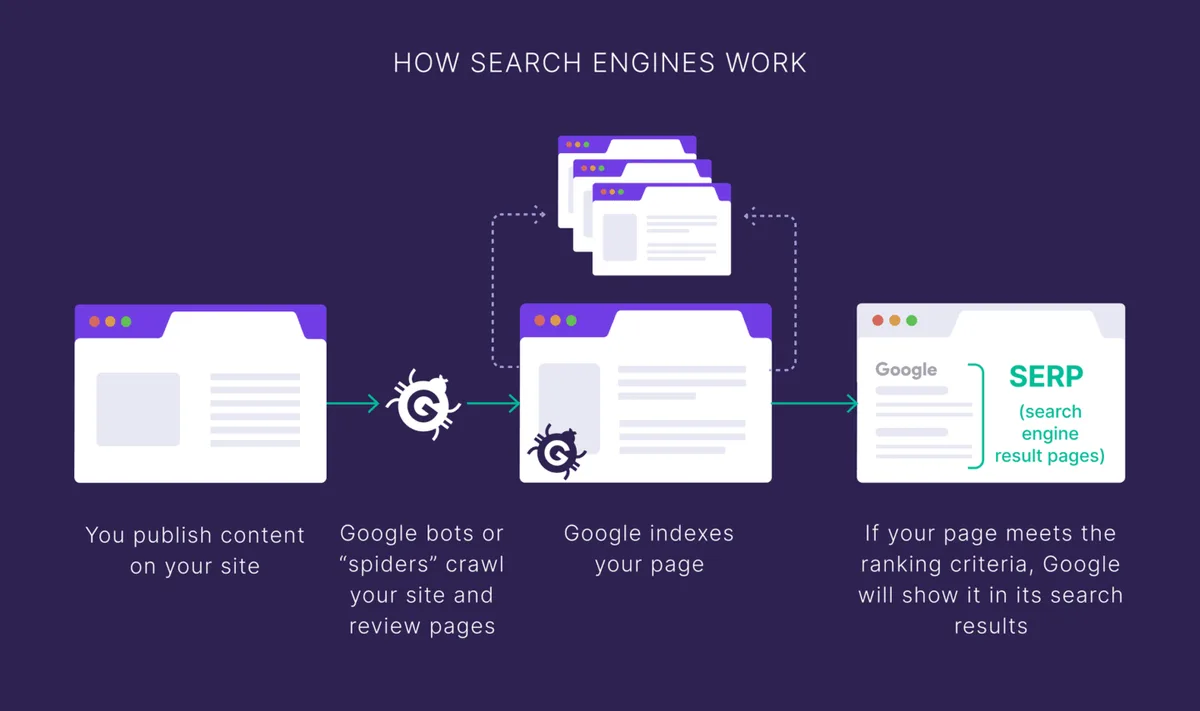
That is essentially what an automated search engine does with web content, except the “books” number in the billions and new ones arrive every second.
The term covers a broad range of systems. Google, Bing, and DuckDuckGo are the household names, but automated search engines also include specialized tools like academic databases, e-commerce product search, and internal enterprise search platforms. Each one automates the same fundamental loop: collect, organize, retrieve.
How Automated Search Engines Actually Work Under the Hood
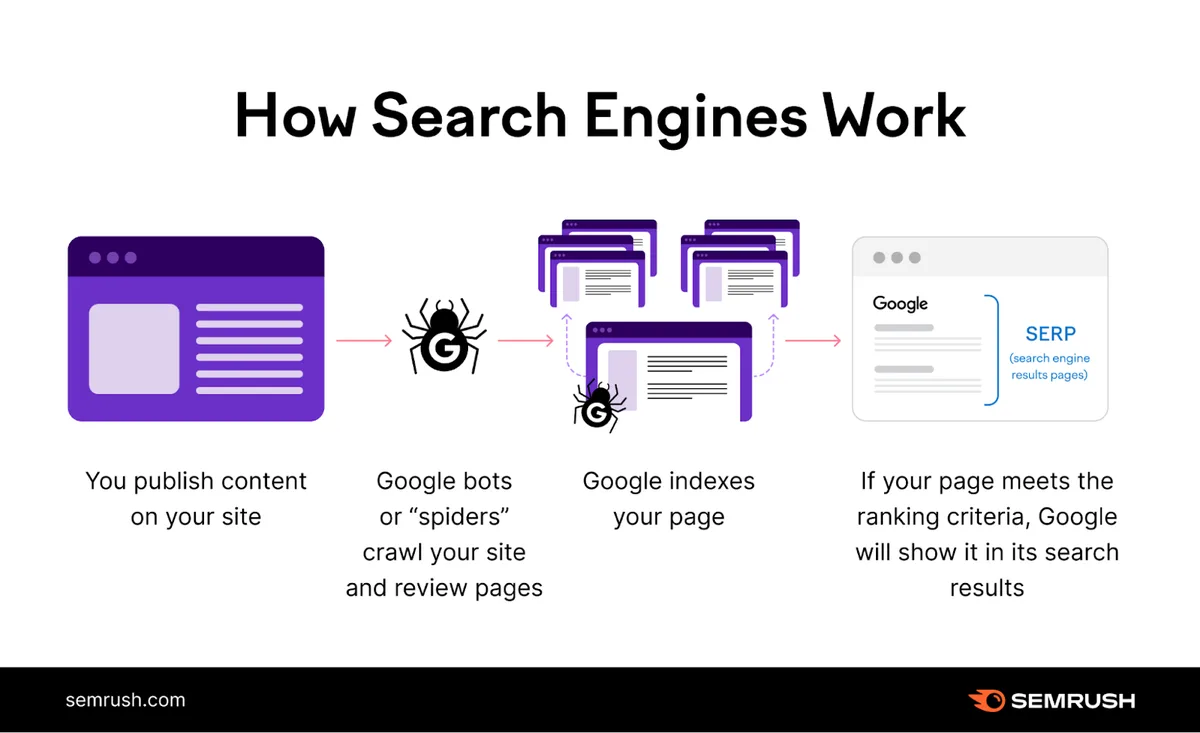
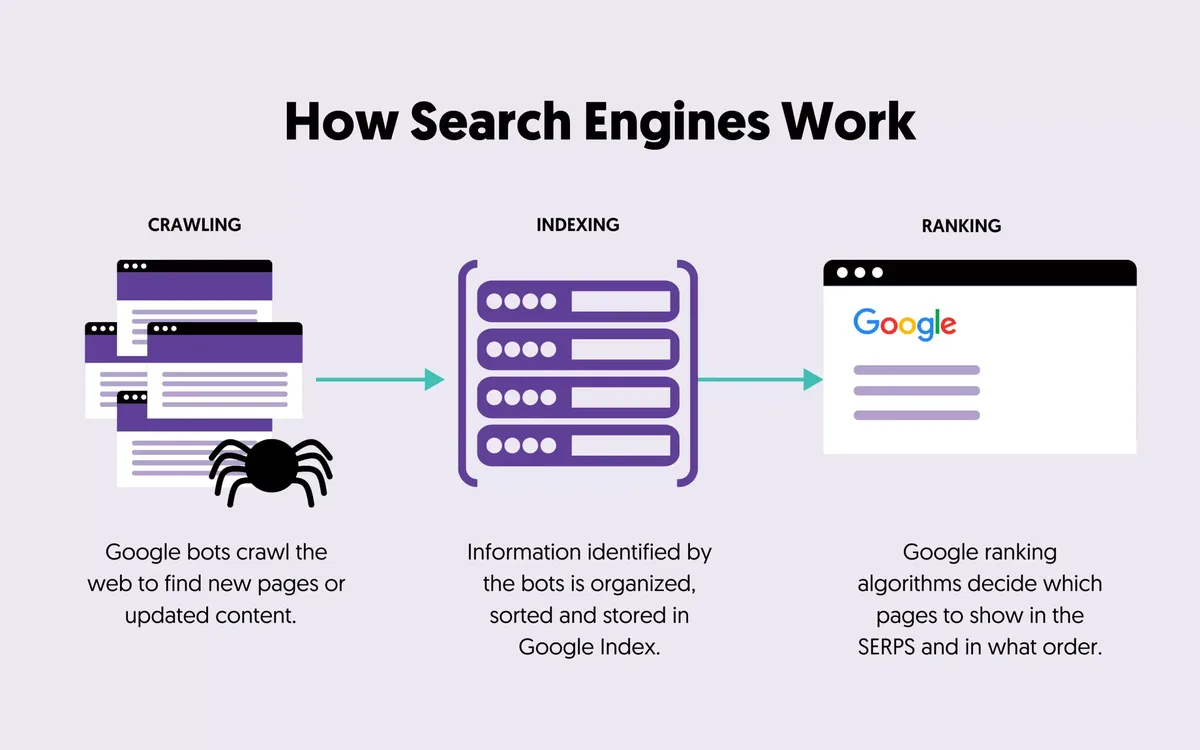
Understanding the mechanics helps you appreciate why some searches return gold and others return garbage. The process breaks down into three main stages, and each one involves sophisticated automation that most users never see. Let me walk you through them the way I would explain it to a friend over coffee.
Crawling: the Endless Exploration
Everything starts with crawling. Automated search engines deploy programs called crawlers or spiders that follow links from page to page, discovering new content and revisiting old content to check for changes. These bots are relentless.
They start with a list of known URLs and fan out from there, mapping the web like explorers charting unknown territory.
What strikes me is how polite good crawlers are. They respect rules set in a file called robots.txt, which tells them which parts of a site they are allowed to visit. They also throttle their requests so they do not overwhelm a server. A well-behaved crawler is like a guest who wipes their feet before entering and does not raid the fridge.
The scale here is hard to wrap your head around. Refining each detail of your automated search engines strengthens this section. Google’s crawlers visit billions of pages daily.
If you tried to do that manually, even at one page per second, you would need over a century to cover a single day’s worth of Google’s crawling activity. That is the power of automation in action.
Indexing: Building the World’s Largest Library Catalog
Once a crawler finds a page, the next step is indexing. This is where automated search engines analyze the content, extract key information, and store it in a massive database. The system looks at text, images, metadata, links, and structure to understand what the page is about and how it relates to other pages.
Indexing is not just copying. It is interpretation. The engine parses the page, identifies topics, notes the language, checks for duplicates, and assigns signals that will later influence ranking.
When you hear that a page is “indexed,” it means the engine has processed it and added it to the pool of candidates it can show in results.
Here is a practical tip: if your website is not showing up in search results, the first thing to check is whether it has been indexed at all. You can do this by searching for your exact URL or using a site-specific search operator.
If nothing appears, your page might be blocked, orphaned, or simply not discovered yet. Fixing that is step one before any other optimization matters.
Ranking and Retrieval: Deciding What Deserves the Top Spot
The final stage is where the magic happens. When you type a query, automated search engines do not just pull every indexed page that contains your words. They rank those pages based on hundreds of signals, then present the most relevant and trustworthy results first. This is the part that keeps SEO professionals up at night.
Ranking factors include keyword relevance, content quality, backlinks, page speed, mobile friendliness, user engagement, and freshness. The engine weighs all of these, often using machine learning models trained on massive datasets of search behavior. It is not a simple formula. It is a constantly evolving prediction engine trying to guess what you actually want.
Retrieval happens in milliseconds. The system narrows billions of documents down to a shortlist, scores them, and serves the top results before you finish blinking. That speed is only possible because automated search engines have pre-processed everything in advance. The heavy lifting happened long before your query arrived.

Why Automated Search Engines Matter for Businesses and Creators
If you run a website, sell products, or publish content, these systems are not just convenient tools. They are the gatekeepers of your online visibility. Getting found depends almost entirely on whether automated search engines understand and trust your content enough to rank it well.
Consider the numbers. Over 90 percent of web traffic originates from search. If your pages are invisible to automated search engines, you are essentially running a shop in a basement with no sign. The internet is vast, and search is how people navigate it. Ignoring that reality is a luxury few businesses can afford.

There is also a competitive angle. Your rivals are optimizing for the same systems. If they understand how crawling, indexing, and ranking work better than you do, they will outrank you even if your product is superior. Search visibility is not about being the best. It is about being the most findable.
Key Components That Power Automated Search Engines
To really grasp how these systems operate, it helps to break them into their core components. Effective execution in your automated search engines makes a tangible difference. Each piece plays a distinct role, and together they form a pipeline that turns raw web chaos into organized, searchable knowledge.

- Crawlers (Spiders): These are the bots that traverse the web, following links and fetching page content. They operate continuously, discovering new URLs and revisiting existing ones. A practical tip: submitting a sitemap helps crawlers find your pages faster, especially on new sites.
- The Index: A colossal database storing processed content and metadata. It is structured for rapid retrieval, not human browsing. When you optimize for search, you are really optimizing for how the index interprets your page.
- Query Processor: This component parses your search query, corrects typos, expands synonyms, and determines intent. It is why searching “cheap flights NYC” still shows you relevant results even if you misspell “flights.”
- Ranking Algorithm: The scoring engine that decides result order. It blends relevance, authority, and user signals. Modern algorithms use machine learning, meaning they adapt based on how people interact with results over time.
- User Interface: The front end where results appear. This includes snippets, rich results, knowledge panels, and ads. A clean interface hides enormous complexity behind a simple search box.
Each component depends on the others. A brilliant ranking algorithm is useless without a well-built index. A powerful crawler is wasted if the index cannot store what it finds. The elegance of automated search engines lies in how seamlessly these parts connect.
How Automated Search Engines Differ from Traditional Search
It is worth pausing to appreciate what “automated” really changed. Before automation, search was manual. Directories like early Yahoo relied on human editors who reviewed and categorized websites by hand. That approach could not scale, and it crumbled under the weight of the exploding web.

Automated search engines replaced human curation with algorithmic discovery. The trade-off was clear: machines could handle infinite scale, but they lacked human judgment. Early automated results were often poor, filled with spam and irrelevant pages. Over time, smarter algorithms closed much of that gap.
Today, the best automated search engines blend algorithmic scale with human-quality judgment. Machine learning models trained on real user behavior effectively “learn” what good results look like. It is automation informed by millions of human decisions, which is why modern search feels far more intuitive than the early days.

Top Examples of Automated Search Engines You Should Know
Let’s get concrete. There are dozens of automated search engines out there, each with its own strengths and quirks. Below are the ones that matter most, whether you are a casual user, a marketer, or a developer building search into your own product.
Google: the Undisputed Giant
Google handles roughly 90 percent of global search traffic, making it the most influential of all automated search engines. Its algorithm, updated thousands of times per year, weighs hundreds of ranking factors. For anyone with an online presence, Google is the primary battlefield.

What sets Google apart is its ecosystem. Search connects to Maps, Shopping, News, Scholar, and more. The company also invests heavily in AI, using models like BERT and MUM to understand language nuance. If you want to rank anywhere, you start by understanding Google.
A practical takeaway: focus on intent matching. Google rewards content that answers the question behind the query, not just content that repeats the keywords. Write for humans first, and the algorithm tends to follow.
Bing: the Underrated Contender
Bing holds a smaller share but punches above its weight in certain markets and demographics. It powers search for Yahoo and DuckDuckGo, which extends its reach significantly. Bing also tends to be more forgiving with newer sites, making it a good testing ground.
One quirk worth noting: Bing places more emphasis on exact keyword matches and social signals than Google does. If your content is optimized for clarity and structure, it often performs well on Bing with minimal extra effort.
DuckDuckGo: Privacy-First Search
DuckDuckGo has carved out a loyal following by refusing to track users. It relies on aggregated results from other automated search engines, primarily Bing, but strips out personalization and tracking. For privacy-conscious users, it is a breath of fresh air.
From an SEO standpoint, ranking on DuckDuckGo largely means ranking on Bing. The privacy angle does not change the underlying mechanics much, but it does attract a specific audience that values discretion over personalization.
YouTube Search: Video Discovery at Scale
YouTube is the world’s second-largest search engine, and it is fully automated. Maintaining clarity across your automated search engines remains essential. Its algorithm weighs watch time, engagement, and relevance to surface videos. For creators, understanding YouTube search is as important as understanding Google.

The signals differ from web search. Watch time and click-through rate dominate. A video that keeps people watching will outrank a more “optimized” one that loses viewers after thirty seconds. Engagement is the currency here.
Amazon Search: the Product Discovery Machine
Amazon operates one of the most commercially valuable automated search engines on the planet. Its algorithm prioritizes sales velocity, reviews, and relevance. For sellers, ranking on Amazon can make or break a business.
A key insight: Amazon rewards conversion. If your product listing converts well, the algorithm favors it. That means your images, title, and reviews matter as much as your keywords. Search optimization here is really conversion optimization in disguise.
Google Scholar: Academic Precision
Google Scholar indexes scholarly literature, including journals, theses, and conference papers. It uses automated crawling and citation analysis to rank results by relevance and influence. For researchers, it is indispensable.
The ranking logic leans heavily on citations and publication authority. A paper cited by hundreds of others will outrank a newer one with fewer references, even if the newer paper is more relevant to your query. Understanding that bias helps you search more effectively.
How Automated Search Engines Handle Ranking Signals
Ranking is where the real complexity lives. Automated search engines evaluate a dizzying array of signals, and the weighting shifts constantly. Still, a few categories dominate, and understanding them gives you a real edge.
Content Relevance and Quality
Relevance is the foundation. The engine must believe your content matches the query intent. Beyond that, quality matters. Depth, accuracy, originality, and readability all contribute. Thin content rarely ranks well, no matter how well-optimized it is.
Google’s helpful content guidelines emphasize people-first writing. Content created primarily to rank tends to underperform content created to inform. That is not just a slogan. It reflects how the algorithms have evolved to detect genuine value.

Authority and Backlinks
Backlinks remain one of the strongest signals. A thoughtful approach to automated search engines reinforces your qualifications. When reputable sites link to yours, it signals trust. Not all links are equal, though. A single link from a high-authority domain can outweigh dozens from low-quality sites.
Link building should focus on earning, not buying. Guest posts, original research, and useful tools attract links naturally. Manipulative tactics eventually backfire, as countless sites have learned the hard way after algorithm updates.
Technical Factors and Page Experience
Technical health matters more than most people think. Page speed, mobile responsiveness, secure connections, and clean structure all influence ranking. A slow site frustrates users, and automated search engines notice.
Core Web Vitals, a set of metrics Google uses to measure user experience, has become a formal ranking factor. Improving load times and visual stability can lift rankings even without content changes. It is low-hanging fruit many sites ignore.

User Engagement Signals
How users interact with your results tells the engine a lot. High click-through rates, long dwell times, and low bounce rates suggest satisfaction. The opposite signals dissatisfaction, which can push you down over time.
This creates a feedback loop. Better rankings drive more clicks, which reinforce rankings. That is why early momentum matters and why a compelling title and meta description can have outsized impact.
Building Your Own Automated Search Engine: a Practical Primer
Maybe you are not just curious. Maybe you want to build search into your own application. The good news is that the core concepts are accessible, and open-source tools make it feasible for small teams.
The pipeline is the same as the giants use: crawl, index, rank, retrieve. You scale it down. Instead of billions of pages, you might index thousands. Instead of a custom ranking algorithm, you might use an existing library. The principles hold.
Step 1: Define Your Scope and Data Sources
Start by deciding what you are searching. Structuring your automated search engines around proven patterns ensures impact. Is it your own website, a document repository, or a product catalog? The scope determines your crawl strategy and index design. Vague scope leads to bloated, slow systems.

List your data sources explicitly. If you are indexing internal documents, identify where they live and how often they change. Freshness requirements shape how frequently you re-crawl and re-index.
Step 2: Choose Your Crawling Approach
For web content, you will need a crawler. Open-source options like Scrapy or Apache Nutch handle the heavy lifting. For internal data, you might skip crawling entirely and pull directly from databases or APIs.
Respect robots.txt and rate limits. Aggressive crawling can get your IP blocked and strain your infrastructure. A polite, well-paced crawler is more sustainable and avoids legal headaches.
Step 3: Design Your Index
The index is your search backbone. Tools like Elasticsearch, OpenSearch, or Apache Solr provide robust indexing out of the box. They handle tokenization, stemming, and inverted indexing, which maps terms to the documents containing them.
Choose your schema carefully. Fields, analyzers, and mappings affect both relevance and performance. A poorly designed schema is painful to change later, so invest time upfront.

Step 4: Implement Ranking Logic
Ranking can be as simple or complex as you need. Start with TF-IDF or BM25, which score documents based on term frequency and rarity. These classic algorithms are surprisingly effective and easy to implement.
As you mature, layer in signals like recency, popularity, and personalization. Applying these principles to your automated search engines yields measurable results. Machine learning ranking models, known as learning-to-rank, can dramatically improve relevance once you have enough data.
Step 5: Build the Query Interface
Finally, give users a way to search. This means a search box, result display, filters, and pagination. The interface should feel instant and forgiving, handling typos and synonyms gracefully.

Test with real users early. Their queries will surprise you, and their feedback will reveal gaps your assumptions missed. Search is iterative. The first version is never the last.
Common Challenges With Automated Search Engines
Automation solves scale, but it introduces its own problems. Anyone working with these systems eventually runs into a few recurring headaches. Knowing them in advance saves time and frustration.
Spam and Manipulation
Where there is ranking, there is manipulation. Spammers exploit automated search engines through keyword stuffing, link schemes, and cloaking. The engines fight back with constant algorithm updates, but it is an endless arms race.
For legitimate site owners, the lesson is simple: do not chase shortcuts. The risk of penalties outweighs any short-term gain. Sustainable practices win over time.
Index Bloat and Duplicate Content
Large sites often suffer from index bloat, where low-value or duplicate pages clog the index. This dilutes crawl budget and can hurt overall performance. Regular audits help identify and prune dead weight.
Canonical tags and proper redirects are your friends here. They tell automated search engines which version of a page is authoritative, reducing confusion and duplication.
Keeping Up With Algorithm Changes
Algorithms change constantly. What worked last year may not work now. Staying informed requires following official announcements, industry blogs, and testing on your own sites.
The best defense is a strong foundation: quality content, technical health, and genuine authority. Proper attention to your automated search engines sets a strong baseline. Those principles survive almost every update, while gimmicks fade.

The Future of Automated Search Engines
Search is not standing still. The next wave is already here, and it looks very different from the ten blue links we grew up with. Understanding where things are heading helps you prepare rather than react.
AI-Powered Conversational Search
Conversational interfaces are reshaping how people search. Instead of typing keywords, users ask questions and get direct answers. AI models generate responses, sometimes without a list of links at all.
This shift challenges traditional SEO. If users get answers without clicking, visibility means being cited in the answer, not just ranking on a results page. Content that is clear, factual, and well-structured is more likely to be referenced.
Multimodal and Visual Search
Search is expanding beyond text. Visual search lets users snap a photo and find matching products or information. Voice search turns spoken questions into queries. Automated search engines increasingly handle images, audio, and video natively.
Optimizing for multimodal search means descriptive alt text, structured data, and content that translates well across formats. It is an emerging frontier with plenty of opportunity for early movers.
Personalization and Privacy Tensions
Personalization improves relevance but raises privacy concerns. Automated search engines walk a fine line, tailoring results while respecting user expectations. Regulations like GDPR push toward transparency and control.
The future likely blends personalization with privacy-preserving techniques, such as on-device processing and anonymized signals. Users want relevance without surveillance, and the industry is slowly adapting.
Comparison of Leading Automated Search Engines
To make the landscape clearer, here is a side-by-side look at the major players. Each has distinct strengths, and the right choice depends on your goals.
| Search Engine | Primary Use Case | Key Strength | Notable Weakness |
|---|---|---|---|
| General web search | Largest index, best AI | High competition | |
| Bing | General web search | Good for new sites | Smaller audience |
| DuckDuckGo | Privacy-focused search | No tracking | Relies on Bing data |
| YouTube | Video discovery | Massive video index | Watch-time dependent |
| Amazon | Product search | High purchase intent | Conversion-driven |
| Google Scholar | Academic research | Citation analysis | Limited to scholarly work |
Notice the pattern. Each of these automated search engines excels in a specific context. There is no universal winner. The smart move is to understand which system your audience uses and optimize accordingly.
Practical Tips for Optimizing for Automated Search Engines
Whether you are a blogger, e-commerce owner, or developer, these tips apply broadly. They are drawn from years of hands-on testing and observation, not just theory.
- Write for intent, not just keywords: Match the question behind the query. If someone searches “how to fix a leaky faucet,” they want steps, not a history of plumbing. Answer clearly and completely.
- Structure your content: Use headings, lists, and short paragraphs. Automated search engines parse structure to understand hierarchy. Clean structure also improves readability for humans.
- Optimize page speed: Compress images, minimize scripts, and use caching. Faster pages rank better and convert better. It is a double win that costs little to implement.
- Earn quality backlinks: Create content worth citing. Original research, tools, and in-depth guides attract links naturally. Avoid link farms and paid schemes.
- Keep content fresh: Update older posts with new information. Freshness signals activity and relevance, especially for topics that evolve quickly.
- Use structured data: Schema markup helps automated search engines understand your content and can unlock rich results, boosting click-through rates.
- Monitor and iterate: Track rankings, traffic, and engagement. Use the data to refine your approach. Search optimization is a marathon, not a sprint.
One more thing: do not neglect the basics. A technically sound site with clear content beats a flashy one with broken links and slow load times every time. Fundamentals first, then advanced tactics.
Frequently Asked Questions About Automated Search Engines
These are the questions I hear most often. The answers cut through common misconceptions and give you a solid working understanding.
What Exactly Makes a Search Engine “automated”?
Automation refers to the software-driven process of crawling, indexing, and ranking content without manual human curation. Early search directories relied on human editors, but modern automated search engines handle everything algorithmically, allowing them to scale to billions of pages.
Can a Small Website Compete With Big Players on Automated Search Engines?
Absolutely. Relevance and quality often beat sheer domain size. A focused niche site with excellent content can outrank larger competitors for specific queries. The key is targeting the right keywords and delivering genuine value.
How Long Does It Take for Automated Search Engines to Index a New Page?
It varies. Popular sites might get indexed within hours. New or low-authority sites can take days or weeks. Submitting a sitemap and building internal links speeds up the process significantly.
Do Automated Search Engines Penalize AI-generated Content?
They penalize low-quality content, regardless of how it was produced. Well-written AI-assisted content that genuinely helps users can rank fine. The focus is on value and originality, not the tool used to create it.
What is the Single Most Important Ranking Factor?
There is no single factor. Relevance, authority, and user experience all matter. If forced to pick, I would say relevance to intent, because a perfectly optimized page that fails to answer the query will not rank well for long.
Are Automated Search Engines Getting Better or Worse at Understanding Language?
Better, dramatically so. Advances in natural language processing let these systems grasp context, synonyms, and intent far beyond exact keyword matching. That trend will continue as AI models improve.
Wrapping Up: Making Automated Search Engines Work for You
Automated search engines are not mysterious black boxes. They are systems with clear mechanics: crawl, index, rank, retrieve. Once you understand that pipeline, you can work with it rather than against it.
The practical takeaway is straightforward. Focus on genuine value, technical health, and clear structure. Those principles align with what automated search engines reward, and they hold up regardless of how algorithms evolve.
Whether you are optimizing a personal blog or building search for a product, the fundamentals remain your best guide. Get them right, stay curious, and keep testing. The systems will keep changing, but the path to visibility stays remarkably consistent.
For verified reference and background research, consult the authoritative informational resource on this topic.