Why Attribution Models Deserve Your Full Attention
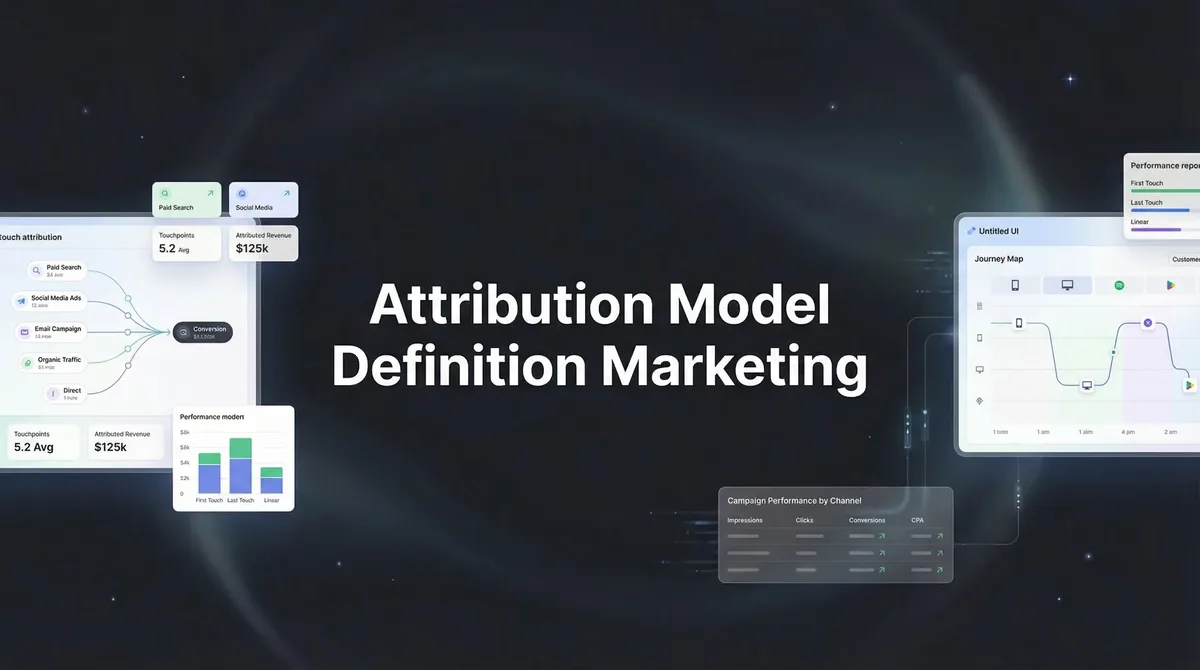
Attribution models are the rules that decide which marketing touchpoints get credit for a sale, and getting them right changes how you spend every dollar. If you have ever stared at a dashboard wondering why paid search claims credit for a purchase that started with a podcast ad, you already know the stakes.
This is the complete map of the territory. We will walk through how each model thinks, where it breaks, how to pick one, and how to run an attribution models checklist that holds up under scrutiny.
No fluff, no vendor spin — just the mechanics and the judgment calls that separate a useful credit report from a decorative one.
Think of this piece as the parent topic for a wider cluster. Once you understand the core frameworks, you can branch into sub-topics like incrementality testing, marketing mix modeling, and multi-touch revenue reporting with far more confidence.
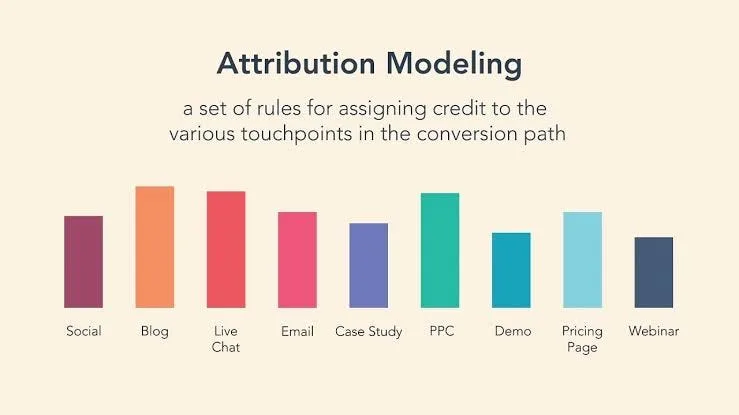
The Core Problem Attribution Models Solve
Every purchase is a chain of small decisions. Someone sees a display ad on a Tuesday, reads a review on Thursday, gets an email on Saturday, then types your brand name into Google on Monday and buys. Somewhere in that chain, credit has to land. Attribution models are simply the accounting conventions that decide where.
The trouble is that no single report can tell you the whole truth. Platforms over-claim, cookies disappear, and customers touch a dozen things before converting. A model is a lens, and every lens distorts a little. Your job is to pick the distortion that best matches the decisions you actually need to make.
Here is a quick orientation before we go deep:
| Model Family | Credit Logic | Best Fit | Main Blind Spot |
|---|---|---|---|
| Single-touch (first, last, last non-direct) | All credit to one touchpoint | Fast, simple channel comparisons | Ignores everything in the middle |
| Multi-touch (linear, time decay, position-based) | Credit spread across touches | Journeys with several meaningful steps | Complexity and setup overhead |
| Data-driven / algorithmic | Machine learning splits credit by measured impact | High-volume, mature accounts | Needs data volume and clean tracking |
| Incrementality / experiments | Credit based on lift versus a control group | Proving true causal impact | Costly and slower to run |
Keep this table in your back pocket. As we move through each model, you will notice it slots into one of these four families, and that placement tells you a lot about what it can and cannot do.
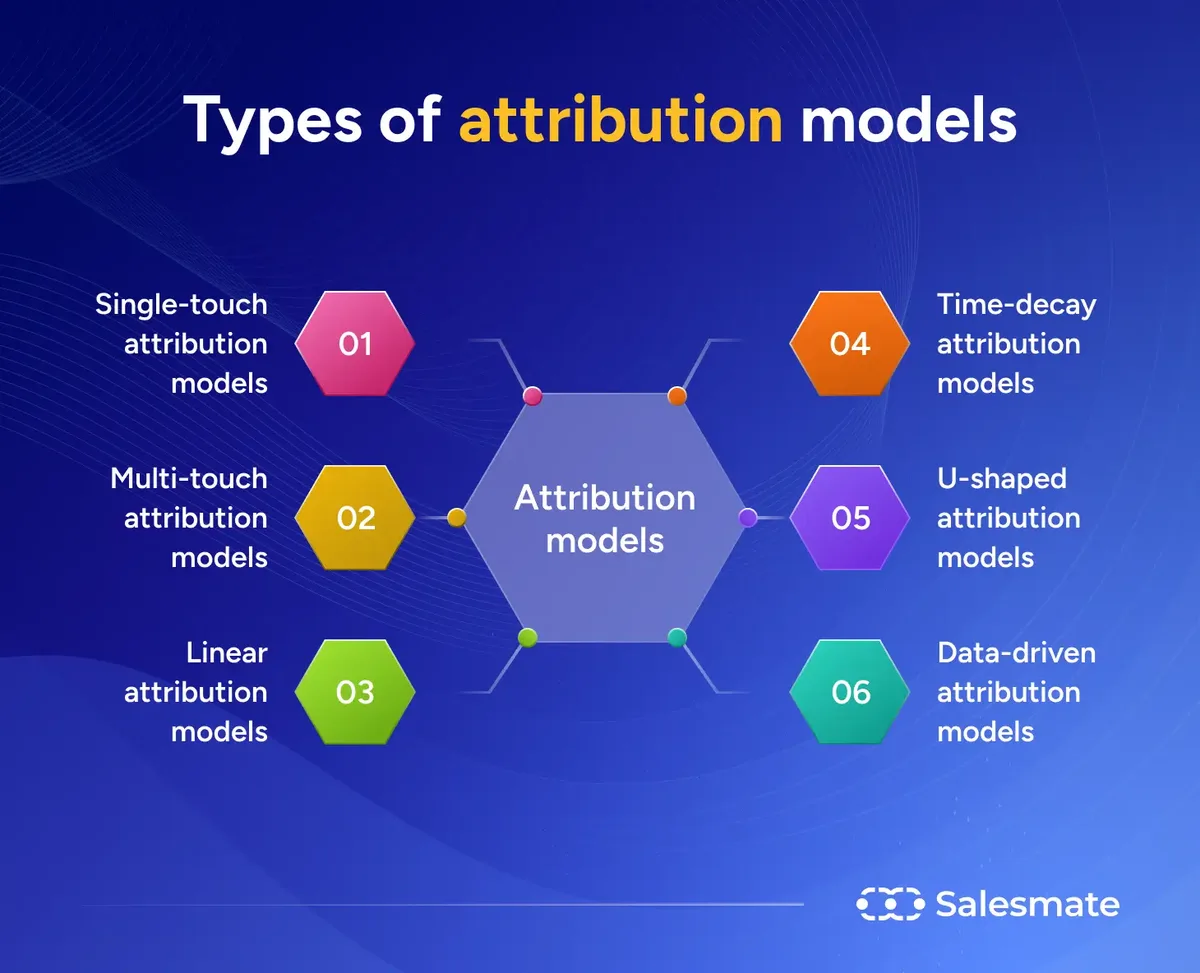
Single-Touch Attribution Models, Explained Without the Jargon
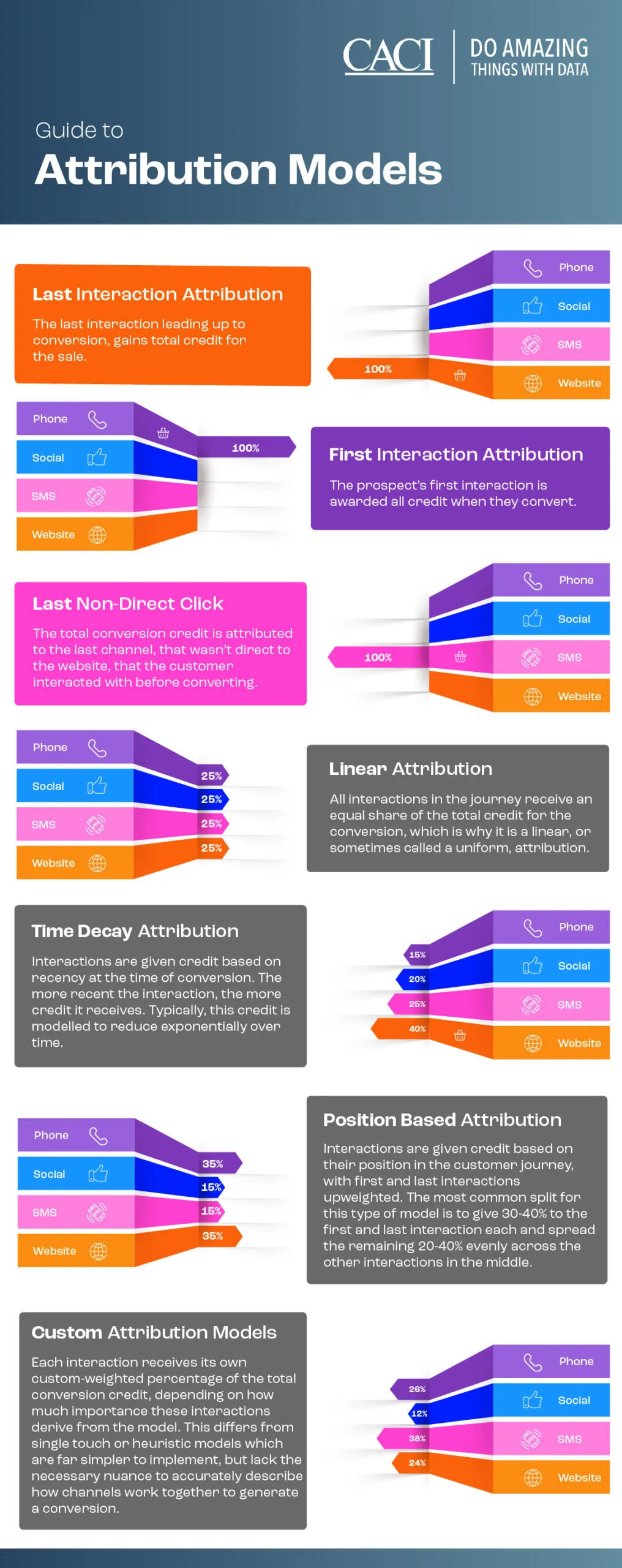
Single-touch models hand the entire conversion to one moment. They are blunt instruments, but blunt instruments are sometimes exactly what you need when speed matters more than nuance. Most analytics platforms ship with these out of the box, which is why so many teams default to them without ever questioning the choice.
First-Touch Attribution: the Discovery Lens
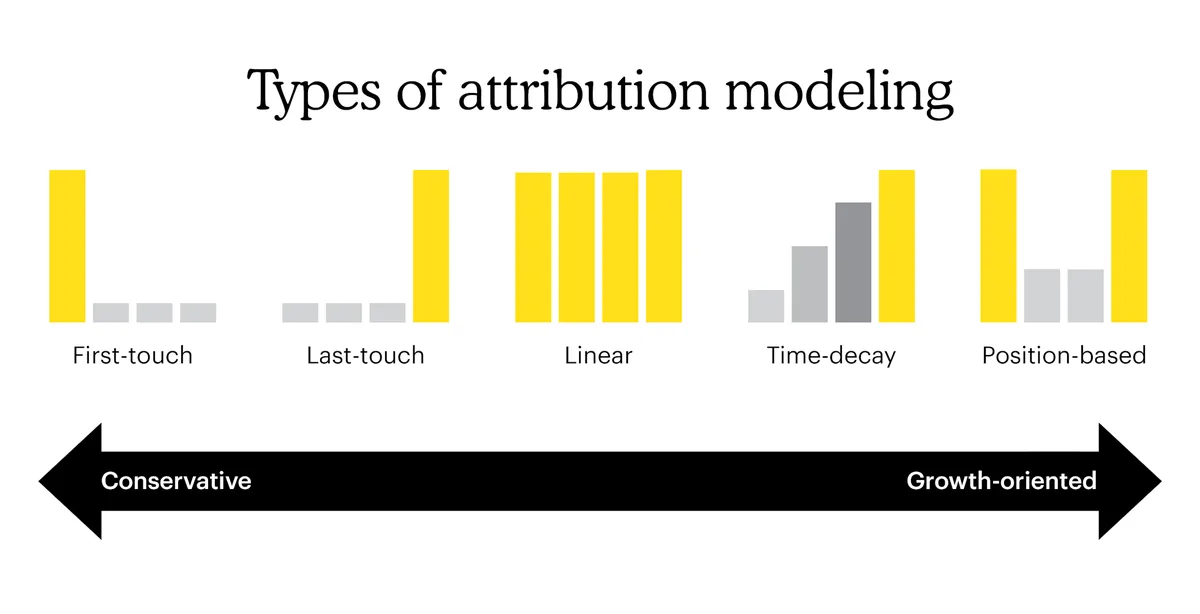
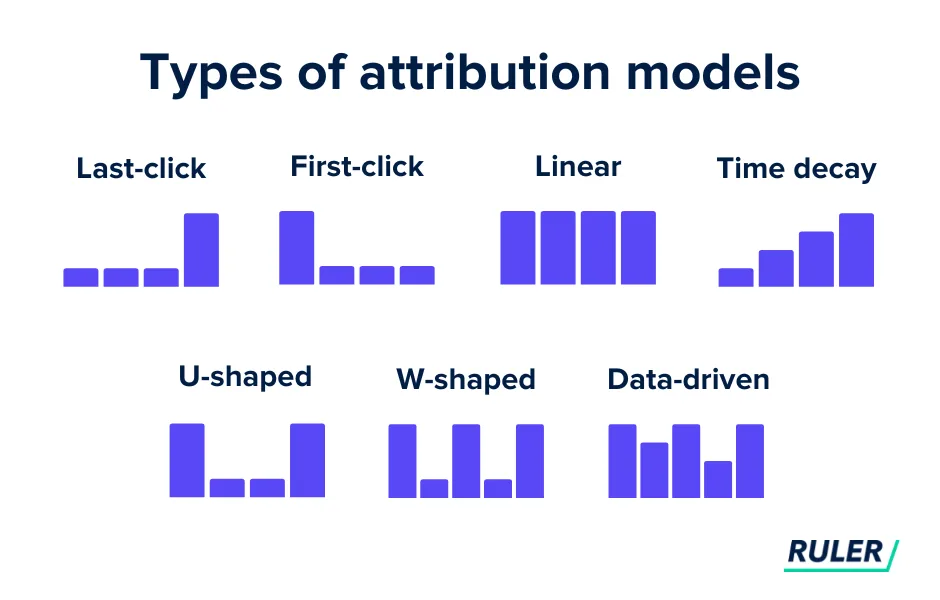
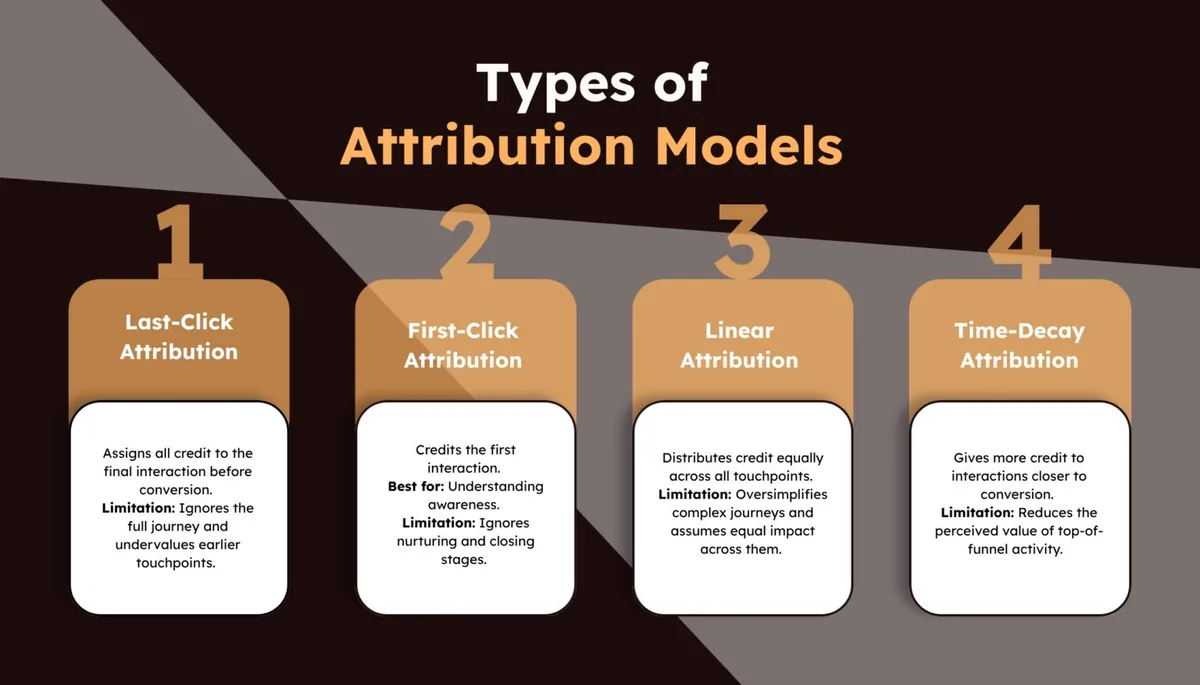
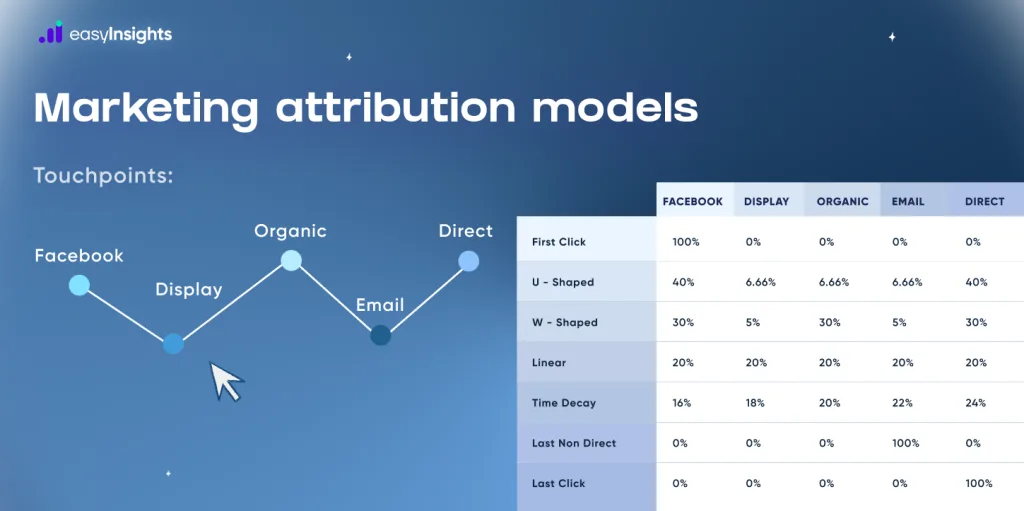
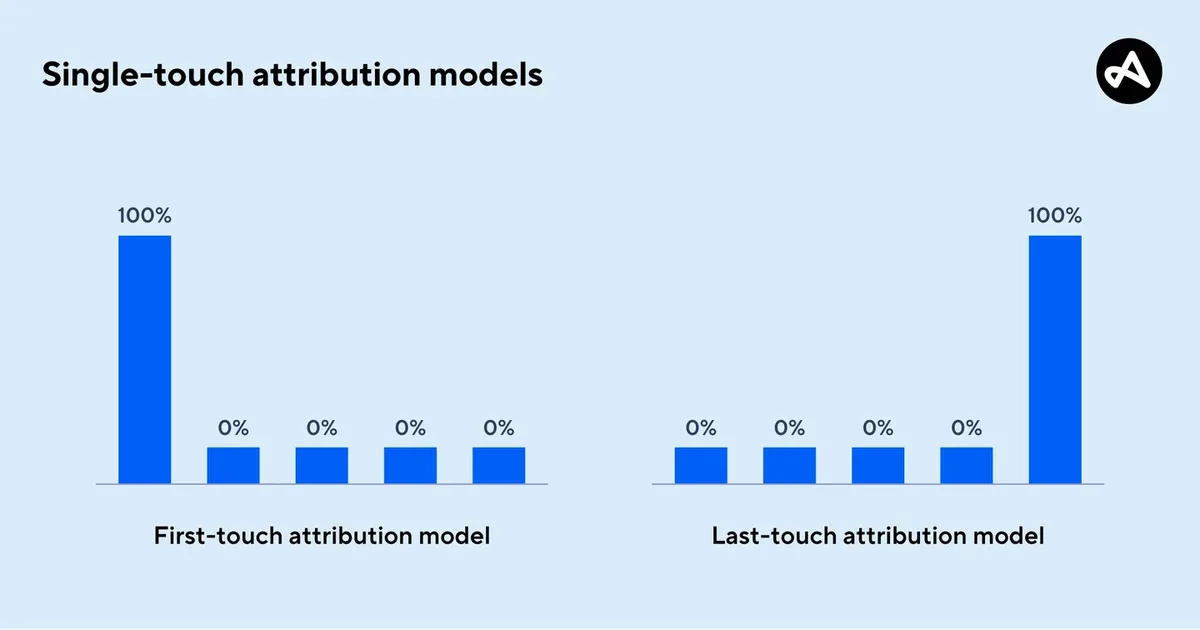
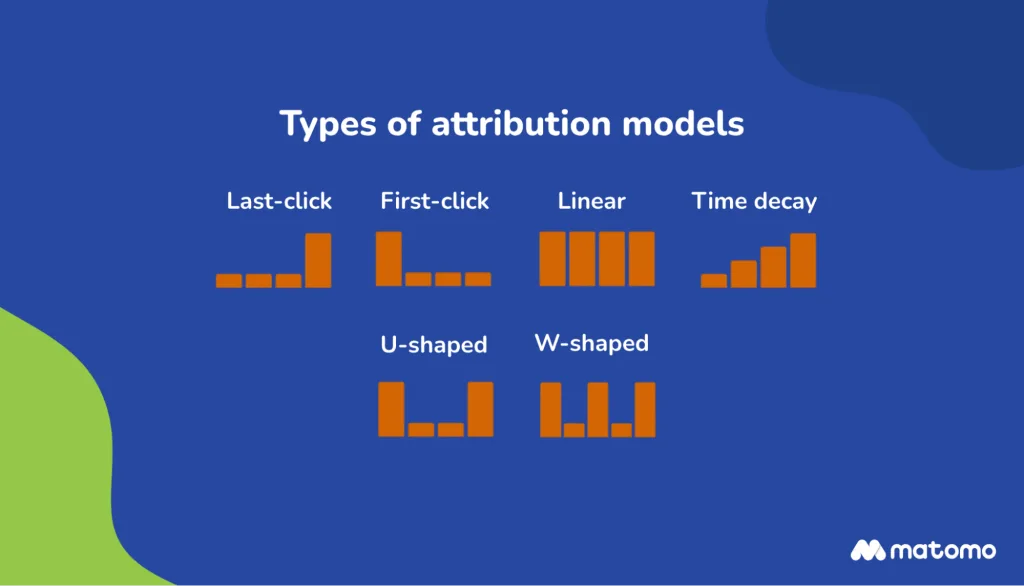
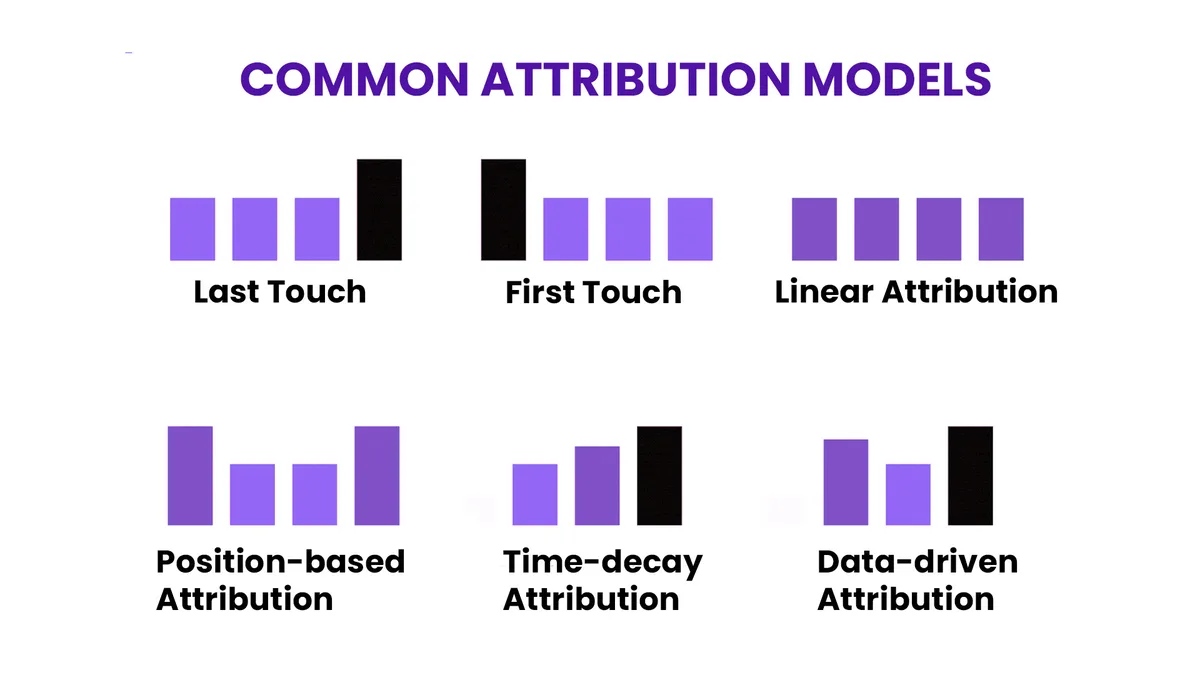
First-touch attribution gives 100% of the credit to the interaction that started the journey. If a prospect found you through a guest article, that article gets the gold star regardless of what happened next.
This model is a gift for content and brand teams. It tells you which channels open doors, which is genuinely useful when you are deciding where to invest in top-of-funnel awareness.
A B2B software company might discover that webinars generate the first click far more often than paid social, even though paid social shows up everywhere in the middle of the journey.
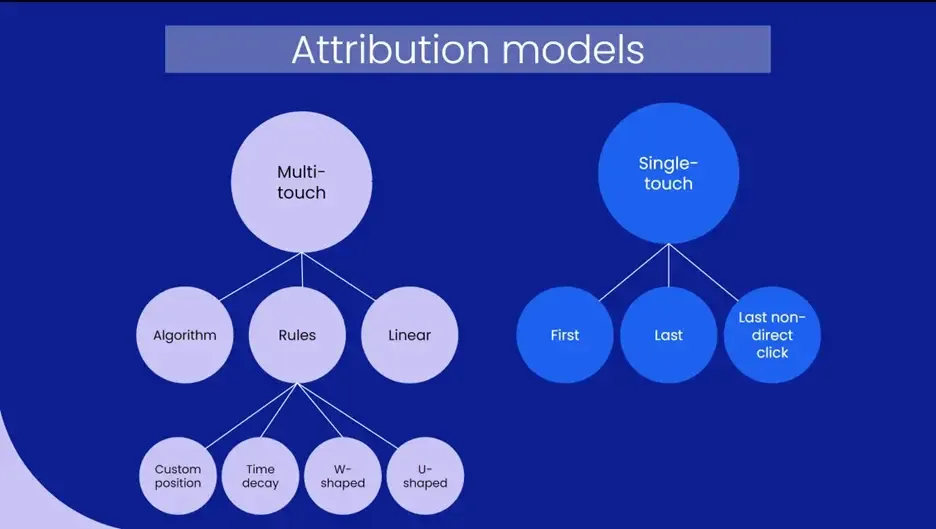
The catch is obvious once you say it out loud: first-touch attribution models treat the middle and the end of the journey as irrelevant. Remarketing gets zero credit despite doing real work. If you optimize purely on first touch, you will over-invest in discovery and under-invest in the nurture that actually closes deals.
Last-Touch Attribution: the Closer’s Scoreboard
Last-touch attribution flips the logic and credits the final interaction before conversion. This is the default in many analytics setups, and it is the reason direct traffic and branded search look like superheroes in so many reports.
It answers a narrow but real question: what was the last thing the customer saw? For high-intent channels like branded search or a well-timed retargeting ad, that is useful information. Retail teams lean on it because the final click often corresponds to the moment of purchase intent.
Still, last-touch attribution models reward closing, not creating. Every upper-funnel channel gets punished, and your brand campaigns will look worthless even when they are doing the heavy lifting. Treat this as a description of the finish line, never as a budget justification on its own.
Last Non-Direct Attribution: the Sanity Filter
Last non-direct attribution is the pragmatic cousin of last-touch. It ignores direct visits and branded navigation, then credits the final marketing touchpoint before the customer came back on their own.
Why bother? Because direct traffic is often the result of other marketing. Someone sees your ad, does not click, then types your URL directly later. Crediting “direct” for that sale is misleading. By filtering it out, you get a cleaner read on which actual campaigns were working.
Google Analytics has long treated this as a default channel grouping, which is why it shows up in so many reports. It is still a single-touch model, so the middle of the funnel gets ignored. But as a quick sanity check on paid channels, it holds up better than raw last-touch.
Multi-Touch Attribution Models That Reflect Real Journeys
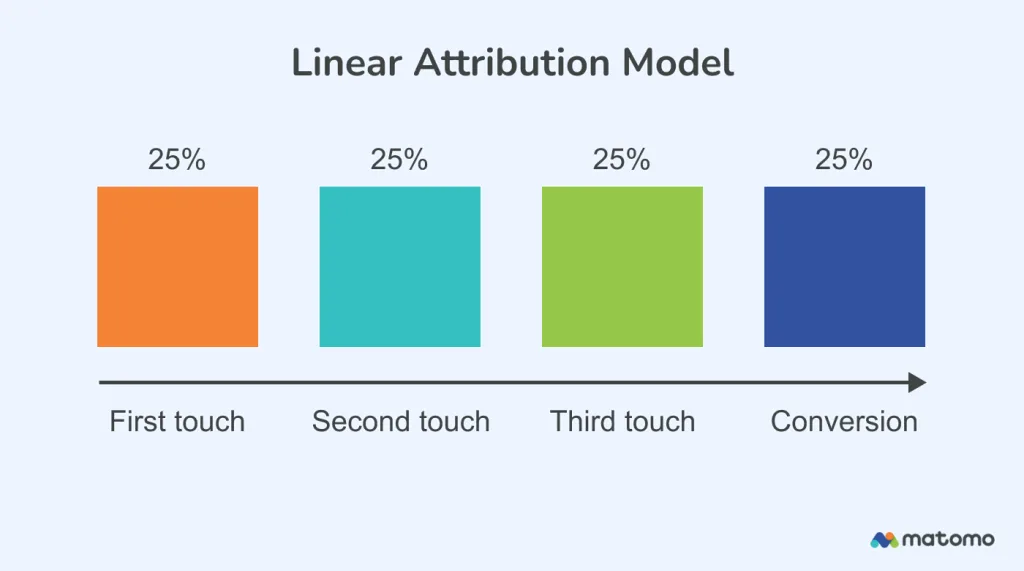
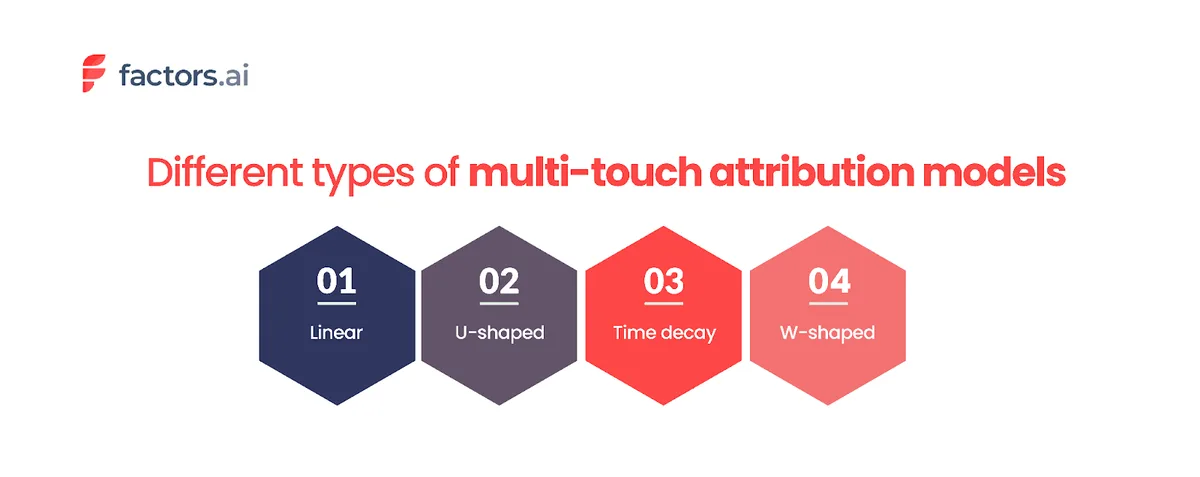
Most buyers touch several channels before they convert. Multi-touch attribution models accept that reality and split credit across the journey. The trade-off is complexity — more setup, more data requirements, more room for error — but the payoff is a picture that actually resembles how people shop.
Linear Attribution: Equal Credit for Everyone
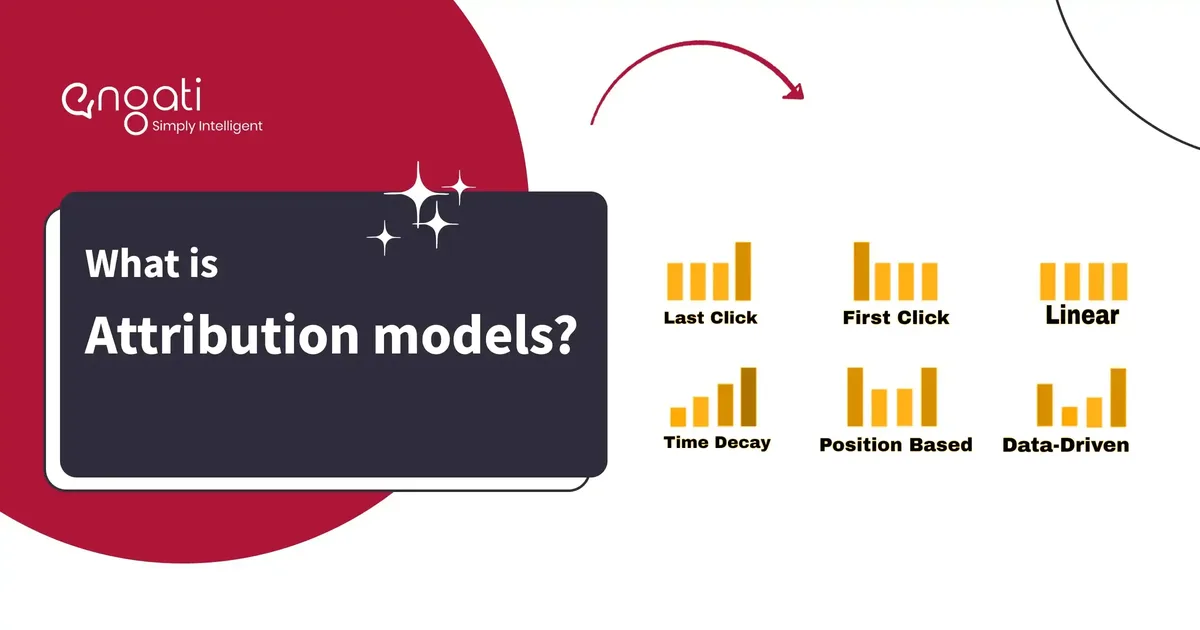
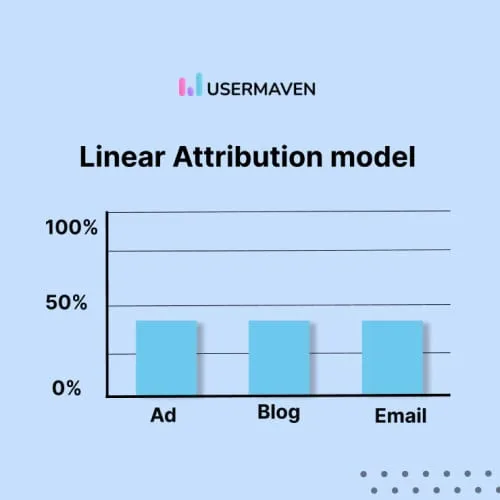
Linear attribution divides credit evenly across every touchpoint in the journey. Three interactions mean each one gets a third. Simple to explain, simple to compute.
The upside is fairness. Focusing on attribution models provides clear direction here. No channel gets unfairly starved, and the model is a decent starting point when you are just building a multi-touch view. The downside is that it treats a fleeting impression the same as a high-intent product demo request.

A passing display ad impression and a live sales call do not deserve identical credit, and linear attribution cannot tell the difference.
I often recommend linear as a diagnostic rather than a budgeting tool. Use it to see the full spread of touchpoints, then move to something more opinionated before you reallocate spend.
Time Decay Attribution: Weighting What Happened Recently
Time decay attribution gives more weight to touchpoints closer to the conversion. A click yesterday weighs more than an impression three weeks ago. The logic is that recent interactions are more likely to have influenced the decision.
This model shines in short sales cycles where recency genuinely predicts influence. E-commerce teams with one-week consideration windows often find time decay maps well to reality. Someone who clicked a retargeting ad an hour before buying probably was nudged by it.
For longer cycles — enterprise software, big-ticket purchases, anything with a buying committee — time decay attribution models systematically undervalue the early research that kicked things off. A whitepaper read six months before signing a contract is not irrelevant just because it is old.
Position-Based (U-Shaped) Attribution: First and Last Get the Spotlight
Position-based attribution, sometimes called U-shaped, gives 40% of the credit to the first touch, 40% to the last, and splits the remaining 20% across everything in the middle. It is a handshake between discovery and conversion.
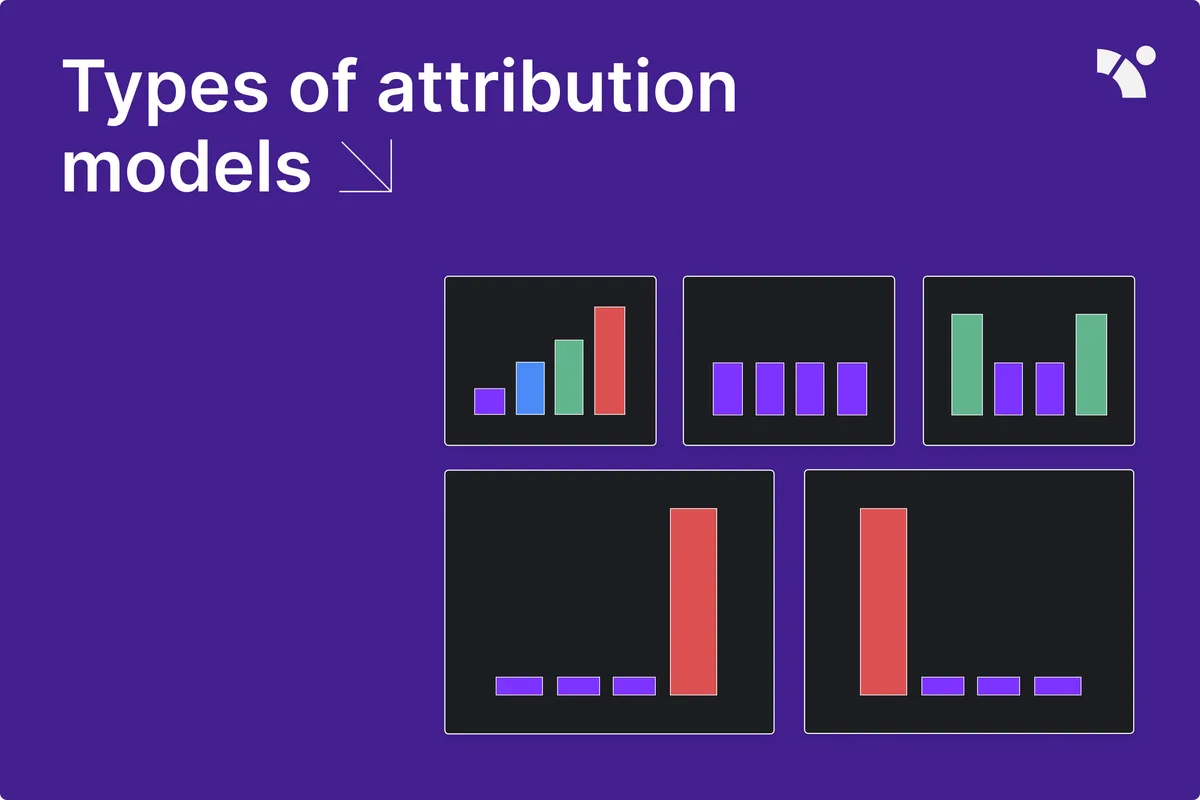
This model is popular with B2B marketers because it acknowledges that both the first introduction and the final push matter. The remaining 20% keeps nurture touches from vanishing entirely, even if their individual weight is small.
Where it stumbles is in quantifying the middle. If your nurture sequence is doing the actual persuasion, position-based attribution models will undersell it. Some teams adapt the split — 30/30/40, for instance — to match their specific funnel shape.
W-Shaped and Custom Weighted Models
W-shaped attribution extends the position-based idea by giving extra weight to the first touch, the lead creation moment, and the opportunity creation moment. Refining each detail of your attribution models strengthens this section. It is built for B2B pipelines where the handoff from marketing to sales is a distinct, measurable event.
Custom weighted models go further, letting you assign arbitrary weights to different touchpoint types. A demo request might get three times the weight of a blog visit. A pricing page view might count for more than a banner impression.
The risk here is subjectivity. Weights become opinions dressed as data, and whoever sets them controls the narrative. If you go custom, document the reasoning and revisit the weights regularly — otherwise you are just engineering the answer you wanted.
Data-Driven and Algorithmic Attribution Models
Data-driven attribution uses machine learning to assign credit based on measured impact rather than a fixed rule. Google and Meta both offer versions of this, and analytics platforms increasingly support custom implementations.
The mechanism is a comparison of paths. The system looks at converting journeys and non-converting journeys, then estimates how much each touchpoint shifts the odds of conversion. Touchpoints that appear frequently in converting paths but rarely in non-converting ones get more credit.
In practice, data-driven attribution models tend to look more granular than their rule-based cousins, and they adapt as behavior shifts. The catch is volume. Without enough conversions and touchpoints, the model is unstable, and the output is closer to noise than insight.
There is also a critical dependency: the credit is only as good as the tracking feeding it. If a chunk of conversions are unmeasured — walled gardens, offline sales, privacy-restricted identifiers — the algorithm is guessing with partial data and dressing the result in confidence intervals it has not earned.
Marketing Mix Modeling and Incrementality as Complements
Marketing mix modeling takes a different route entirely. It uses aggregate data and statistical analysis to estimate how each channel drives outcomes across the whole business, not just the digital journey. It is slow and coarse, but it covers channels that touch-level tracking cannot see.

Incrementality testing is a third lens. Effective execution in your attribution models makes a tangible difference. Run a holdout group, withhold a channel from a segment, and measure the actual lift. This is the closest thing to proof of causation, and it is the ultimate reality check on any attribution model.
The most sophisticated teams combine all three. Attribution models explain the digital journey, marketing mix modeling explains the macro picture, and incrementality testing arbitrates when the two disagree. None of them is the whole truth, but together they form a credible triangulation.
The Attribution Models Checklist for Choosing the Right One
No model is universally correct. The right choice depends on your sales cycle, your data volume, your channel mix, and the decisions you actually need to make. Use this checklist to narrow it down.
- Define the decision first. Attribution models are tools, not trophies. Are you allocating budget, evaluating a new channel, or reporting to leadership? The decision changes which model fits. A weekly paid social optimization needs a different lens than a quarterly board presentation.
- Check your conversion volume. Data-driven attribution needs enough conversions to stabilize. Below a few hundred conversions per month per channel, rule-based multi-touch models tend to be more reliable.
- Map your sales cycle length. Short cycles respond well to time decay. Long B2B cycles need position-based or W-shaped models that honor early research.
- Audit your tracking accuracy. Any model is only as good as the data feeding it. Tagging errors, missing UTMs, and consent gaps will quietly corrupt your attribution models regardless of which framework you pick.
- Decide how you will handle branded and direct traffic. These are usually outcome metrics, not drivers. Filter them out or treat them separately so they do not swallow credit.
- Set a review cadence. Attribution is not a set-and-forget project. Revisit your model every quarter and after major channel changes.
That checklist echoes the kind of rigor you would apply to any serious analytics initiative: define the question, check the data, pick the method, then validate. Skipping any of these steps is how attribution projects end up abandoned.

Attribution Models Best Practices Worth Keeping
You have picked a model. Now the harder part begins: making it trustworthy and using it well. These are the habits that separate teams with useful attribution from teams with impressive-looking dashboards nobody acts on.
First, triangulate. Never rely on a single model for a budget decision. Compare two or three views and investigate the gaps. When first-touch and last-touch tell wildly different stories, that gap is the most interesting part of the report.

Second, isolate the model from platform-reported numbers. Google, Meta, and every other platform will claim more credit than they deserve. Use an independent measurement layer — analytics, a CDP, or a warehouse — so you are comparing apples to apples.
Third, connect attribution to outcomes, not just clicks. A channel that drives valuable customers deserves more credit than one that drives low-value conversions. Layer in lifetime value and margin where possible.
Fourth, treat attribution models as decision support, not verdicts. They inform judgment; they do not replace it. The best marketers I have worked with use attribution to ask better questions, not to settle arguments.
Fifth, document everything. Maintaining clarity across your attribution models remains essential. Your model, your weights, your filters, your assumptions — all of it should be written down and shared. Attribution dies when only one person understands how the numbers are calculated.
Common Attribution Models Pitfalls and How to Avoid Them
Most attribution failures are not technical. They are conceptual. Teams pick a model because it is the default, then treat its output as gospel. Here are the traps to watch for.
One common mistake is over-indexing on bottom-funnel channels. Last-touch and last non-direct attribution models flatter search and retargeting because those channels catch people who were already going to buy. If you let that drive budget, you starve the channels that created the intent in the first place.
Another trap is ignoring offline and walled garden touchpoints. If your model only sees digital cookies, it is blind to TV, podcast, out-of-home, and much of the social ecosystem. That blind spot systematically undervalues brand investment.
Then there is the privacy reality. Identifier loss, consent changes, and cookie restrictions mean every attribution models setup is missing a chunk of the journey. Build in a tolerance for uncertainty rather than pretending the numbers are exact.
Finally, avoid the temptation to build the perfect model. Perfect is the enemy of useful. A decent model people actually use beats a sophisticated one that sits in a spreadsheet nobody opens.
Practical Attribution Models Tips for Real Teams
Here is where theory meets reality. These tips come from the friction of real implementations, not from a vendor whitepaper.
- Start simple, then evolve. Launch with last non-direct and position-based side by side. Learn what your data can support before adding complexity.
- Create a utm taxonomy and enforce it. Inconsistent tagging is the number one reason attribution models produce garbage. A shared naming convention across all paid channels is worth more than any fancy model.
- Build a single source of truth. Pull platform data into a warehouse and calculate attribution there. This lets you apply one consistent model rather than trusting each platform’s self-serving numbers.
- Test incrementality on your biggest channels. Once a year, run a geo-holdout test on your top channel. It recalibrates everything else.
- Report in ranges, not false precision. Instead of claiming channel A drove exactly 34.7% of revenue, report a range and a confidence level. It builds credibility with stakeholders.
- Pair marketing metrics with business metrics. Tie attribution to pipeline, revenue, and retention so the numbers matter beyond the marketing team.
One small detail that pays enormous dividends: agree on definitions before you build anything. What counts as a “conversion”? What counts as a “touch”? What is a “session”? Teams that skip this step spend months debugging reports that were never going to agree.
Attribution Models Guide for B2B Vs. B2C
Business-to-business and business-to-consumer funnels need different attribution approaches because they look almost nothing alike.
B2B deals involve multiple stakeholders, long cycles, and a heavy content-nurture component. In this world, position-based and W-shaped models tend to win because they give credit to research and lead creation. First-touch is useful for brand awareness reporting, but last-touch is actively misleading — the sales team closes deals, not a blog post.
B2C, especially in e-commerce, is faster and more transactional. Time decay and data-driven attribution models fit well because recency matters and volume is high enough to support algorithmic modeling. First-touch still has value for content-driven brands, but the number of touchpoints per buyer is usually smaller.
Hybrid cases exist too. A thoughtful approach to attribution models reinforces your qualifications. Many SaaS companies have a self-serve motion alongside enterprise sales. In that scenario, you often need two attribution views running in parallel — one optimized for the self-serve funnel and one for the enterprise pipeline. Trying to force a single model to serve both usually leaves one side underserved.
How to Measure Whether Your Attribution Models are Working
Attribution models are hypotheses. You should test whether they are actually helping you make better decisions. Here is how to tell.
Start with back-testing. Reallocate a small slice of budget based on the model’s recommendation and measure the outcome. Did the shift improve revenue per dollar? If yes, the model is adding signal. If not, something in the model or the data is off.
Second, compare models against outcomes. If your position-based model says channel A drives most of your best customers, but actual revenue and retention say channel B does, the model is missing something — likely offline influence, brand effects, or hidden nurture touches.
Third, watch for model drift. Attribution models best practices include a scheduled audit: check whether weights still reflect behavior, whether new channels have entered the mix, and whether tracking is still accurate. A model that worked six months ago may be quietly misallocating budget now.
The teams that do this well treat attribution models as a living system, not a report they built once. They revisit, question, and adjust. That is the habit that turns attribution from a reporting exercise into a real competitive advantage.
FAQ: the Attribution Models Questions Everyone Asks
Here is an in-depth breakdown of key considerations regarding FAQ: the Attribution Models Questions Everyone Asks:
What are Attribution Models in Simple Terms?
Attribution models are rules for deciding which marketing touchpoints get credit for a conversion. If a customer saw an ad, read an email, and then bought, the model decides how much credit each step receives.
Which Attribution Model is the Most Accurate?
No single model is universally most accurate. Data-driven attribution is often the most granular for high-volume digital journeys, but incrementality testing is the only method that proves causation. The best answer is to triangulate across several models.
Is Last-touch Attribution Still Useful?
Yes, as a descriptor of what closed a sale, but not as a budgeting tool on its own. Last-touch systematically undervalues upper-funnel channels, so use it alongside a multi-touch view rather than in isolation.
How Do I Switch Attribution Models Without Breaking Reporting?
Run the new model in parallel with the old one for at least one quarter before cutting over. Compare the outputs, document the differences, and get stakeholder agreement on the new definitions before you change any dashboards.
Do I Need a Data Warehouse for Attribution?
Not always, but it helps a lot. A warehouse lets you apply one consistent model across all channels instead of trusting each platform’s self-reported numbers. For smaller teams, a reliable analytics setup with clean UTMs can be enough.
How Do Attribution Models Handle Privacy Restrictions and Missing Data?
They do not fix them — they inherit the gaps. Attribution models best practices include building in tolerance for missing data, using first-party identifiers where possible, and layering in marketing mix modeling to cover what touch-level tracking cannot see.
Where to Go Next: Building Your Attribution Models Stack
You now have the full map. Attribution models come in families, each with its own logic and its own blind spots. Single-touch models are simple and fast. Multi-touch models reflect real journeys. Data-driven models adapt with scale. Incrementality testing and marketing mix modeling serve as reality checks.
Start with the checklist. Structuring your attribution models around proven patterns ensures impact. Define the decision, audit the data, pick the model, and set a review cadence. Then layer in the tips: enforce a UTM taxonomy, build a single source of truth, and report in ranges.
The point is not to find the perfect model — it is to build a system that helps you ask and answer better questions about where growth actually comes from.
If you want to go deeper, explore two natural next topics: incrementality testing for causal proof, and marketing mix modeling for the macro view. Those sub-topics pick up where this guide leaves off and complete the measurement stack that every serious marketing team needs.
Final advice: attribution models reward discipline, patience, and honesty about uncertainty. Treat them as a compass, not a verdict, and you will make better marketing decisions than any single model can deliver on its own.
For verified reference and background research, consult the authoritative informational resource on this topic.