Answer engine optimization is the discipline of shaping your content so that AI assistants, chat interfaces, and voice platforms pick your material as the answer they hand back to users. That definition sounds tidy, but the work behind it is messy, iterative, and far more interesting than most marketers admit.
If you have ever typed a question into a chatbot and gotten a confident answer that quoted some random blog instead of yours, you already understand the stakes. The answer layer is now a real distribution channel, and it rewards a different set of habits than the ten blue links ever did.
What Answer Engine Optimization Actually Means
Strip away the jargon and answer engine optimization is about being the source an AI system trusts when it composes a reply. Traditional search returns a list. Answer engines return a synthesized response, often with a citation or two, and the user rarely scrolls further.
That shift changes the unit of competition. Focusing on answer engine optimization provides clear direction here. You are no longer fighting for position eleven versus position three. You are fighting to be the paragraph that gets lifted, paraphrased, and attributed.

Think about how people actually behave now. They ask a full question in plain language, they expect a direct answer in one or two sentences, and they move on.
Your job in answer engine optimization is to make that one or two sentence answer exist on your page, clearly, in language a machine can extract without guessing.
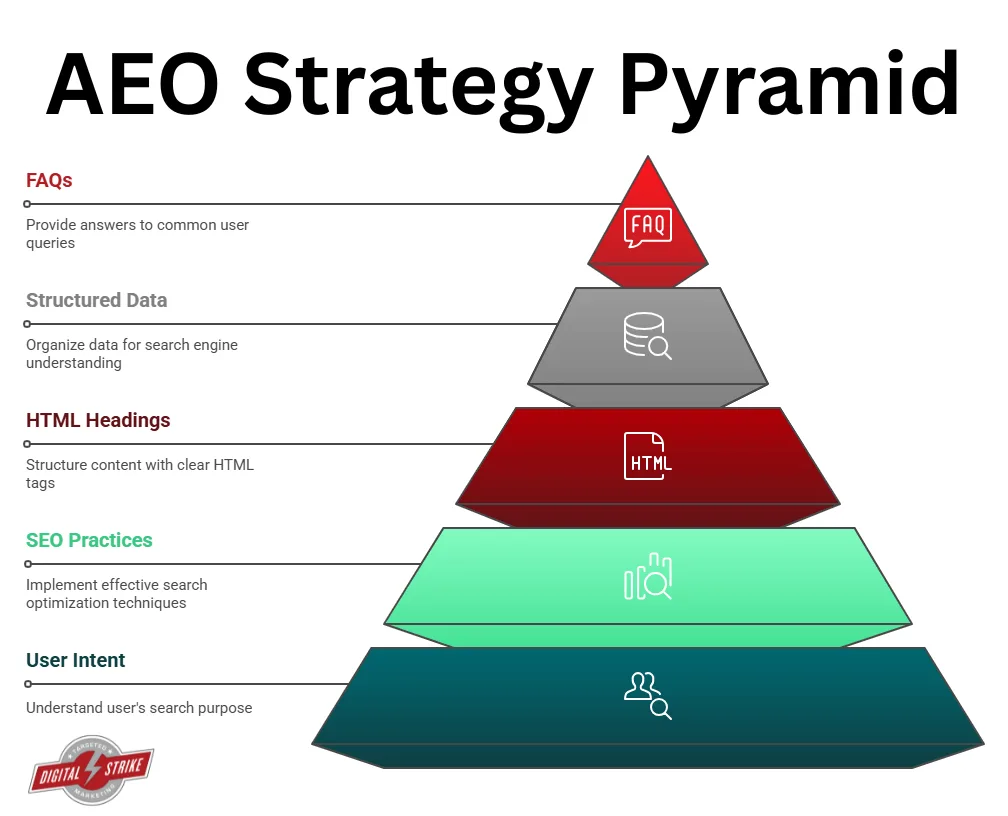
Why the Answer Layer Grew So Fast
Voice assistants trained millions of people to speak their queries instead of typing fragments. Conversational AI then trained those same people to expect a complete response rather than a menu of links.
Habit compounds. Once someone gets a satisfying answer from an assistant three times in a row, they stop opening a browser tab for simple questions. That behavioral drift is the entire reason answer engine optimization moved from novelty to budget line.

There is also a practical trigger on the publishing side. AI overviews and assistant citations can drive a sudden spike in branded searches, and that spike is measurable. When a client sees their brand mentioned inside an AI answer, the conversation about answer engine optimization stops being theoretical.
The AEO Checklist: Core Foundations
Before you touch a single schema tag, get the foundation right. Most failed answer engine optimization efforts collapse because the content itself was never structured to be quoted in the first place.
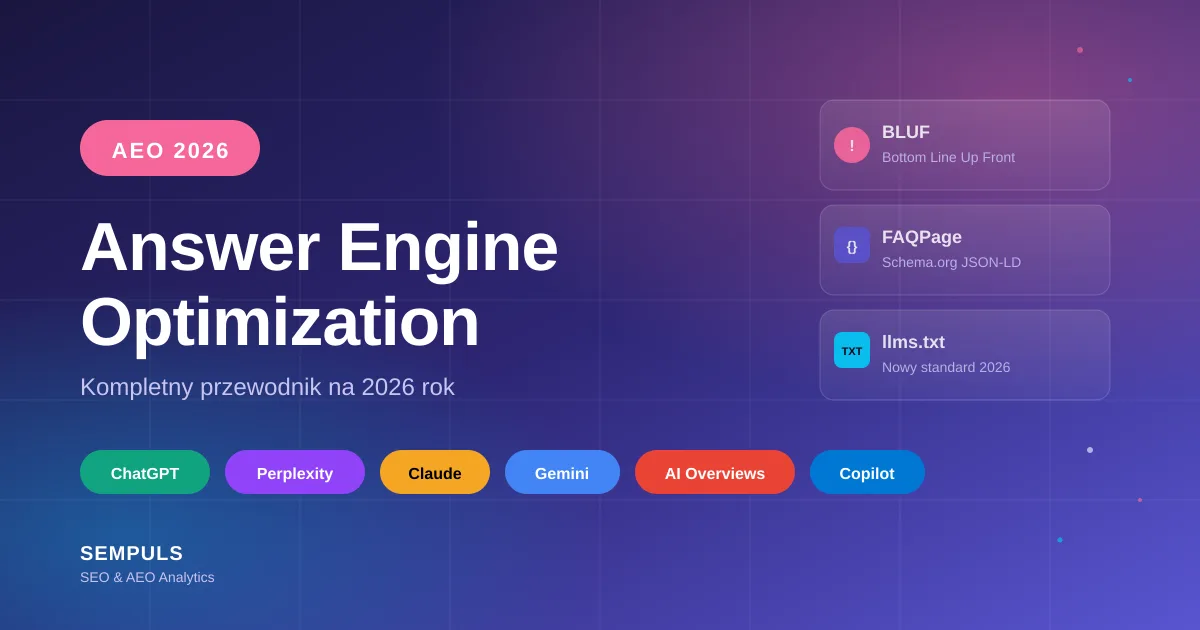
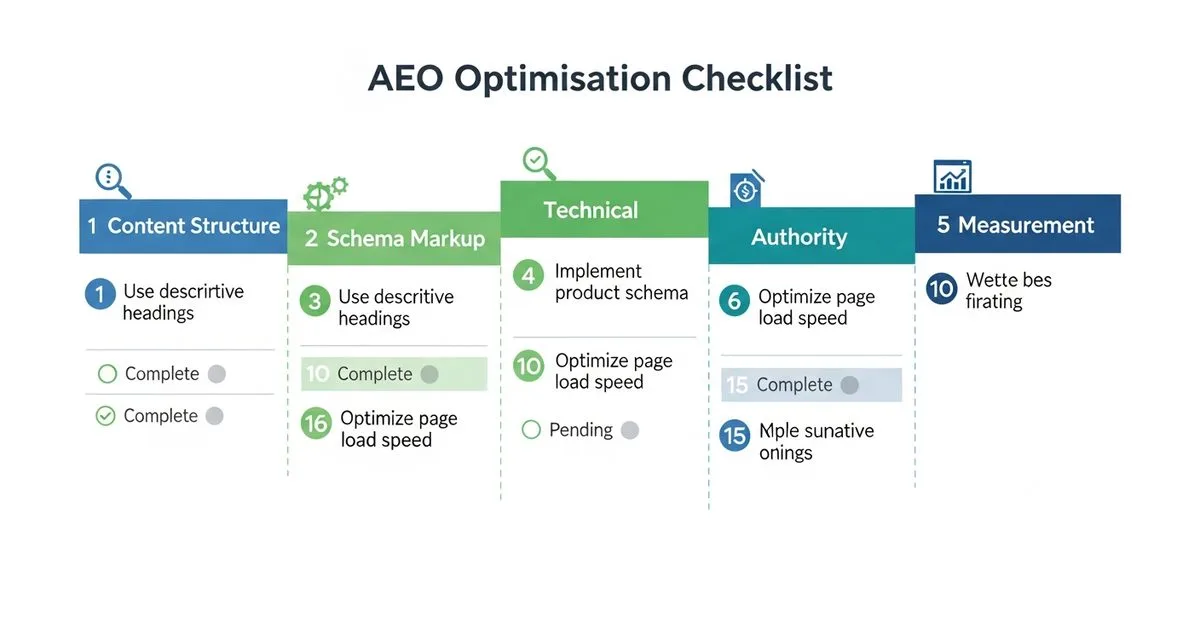
Here is the working checklist I use when auditing a site, grouped by the categories that actually move the needle.
Content Structure and Extractability
Machines reward clarity. A dense wall of prose might read beautifully to a human, but it gives an extraction model nothing to grab.
- Direct Answer In The First Two Sentences — Lead every section with a plain-language answer before you elaborate. If a user asks “what is answer engine optimization,” the first sentence under that heading should define it outright, not warm up to it. A practical test: read only the first line of each section and see whether the page still makes sense.
- Question-Shaped Subheadings — Phrase H2s and H3s the way people actually ask. “How do I get cited by AI assistants” beats “Citation Methodology.” This single habit improves answer engine optimization more than most technical tweaks.
- Short Paragraphs With One Idea Each — Two to three sentences per paragraph, one concept per paragraph. Extraction models handle clean, single-idea blocks far better than sprawling ones.
- Definition Blocks — Give key terms their own compact definition. A tight “X is Y” sentence is the most quotable unit in the English language, and it is the backbone of reliable answer engine optimization.
- Numbered And Bulleted Lists — Lists get parsed and reused constantly. When you present steps, keep them atomic and ordered the way the task actually unfolds.
- Comparison Tables — Tables answer “versus” queries cleanly. Put the attribute in the left column and the options across the top, then keep cell text short.
Notice how none of these require new technology. They require discipline about how you write. That is the unglamorous truth about answer engine optimization: the hardest part is editing yourself.
Technical Signals That Support Answer Engine Optimization
Structure gets you extractable. Technical signals get you trusted and reachable.

- FAQ Schema Markup — Mark up genuine question-and-answer pairs, not manufactured ones. The schema must match visible on-page text exactly, or it does more harm than good.
- Article And HowTo Schema — Where the content type fits, declare it. These give parsers explicit context about what kind of page they are reading.
- Clean Heading Hierarchy — One H1, logical H2s, H3s only under relevant parents. Skipped levels confuse parsers and weaken answer engine optimization.
- Fast, Stable Rendering — If a crawler cannot render your page quickly, it cannot cite it. Core Web Vitals still matter in the answer era.
- Accessible HTML Over JavaScript-Only Content — Critical answer text should exist in the served HTML. If it only appears after heavy client-side rendering, you are gambling.
- Canonical Discipline — Duplicate versions of the same answer split your authority. Consolidate before you optimize.
- Author And Organization Markup — Entity clarity helps systems connect your content to a real, credible source.
A client of mine once spent three months chasing answer engine optimization wins while their blog had four near-identical versions of the same article live. Cleaning that up produced more citation gains than any rewriting did. Technical hygiene is not optional.
How Answer Engines Choose What to Cite
Understanding the selection logic changes how you write. Answer engines are not ranking pages in the old sense; they are assembling a response, and they pull the pieces that fit the question most cleanly.
Three forces dominate that selection: relevance to the exact phrasing, confidence in the source, and the ease of extracting a self-contained answer.
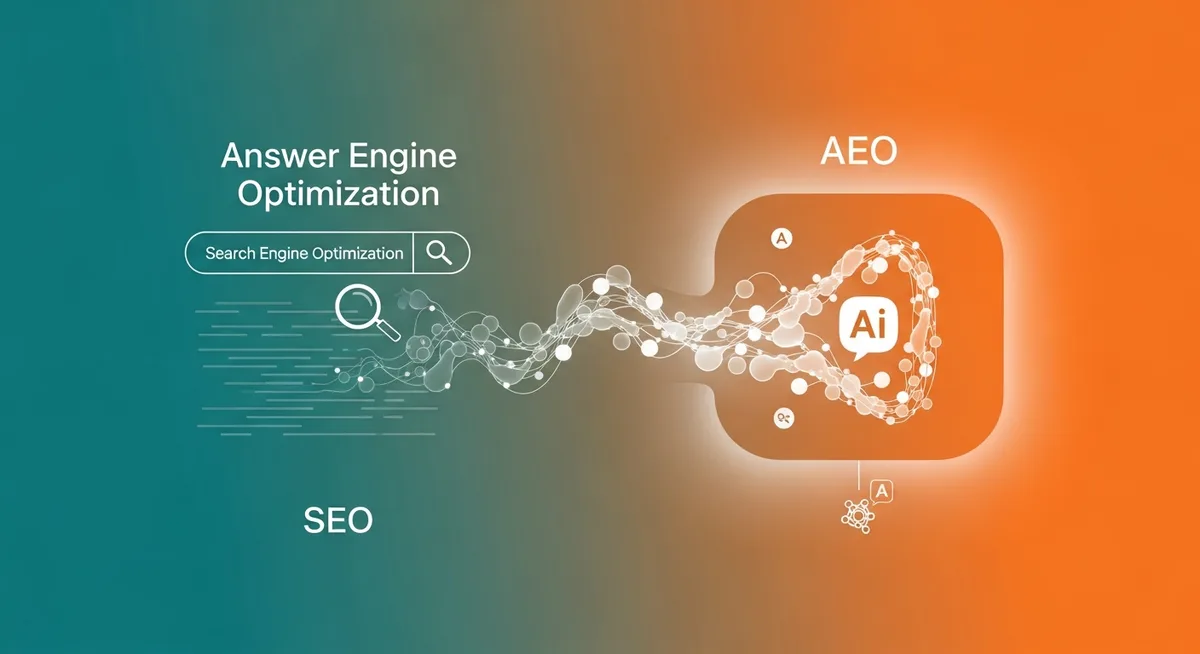
Relevance and Query Matching
Modern systems understand intent, but they still reward pages that mirror the language of the question. If people ask “why is my traffic dropping after AI overviews,” a page that uses that exact phrase has a head start.
This is where keyword research evolves rather than dies. You are still hunting for the words people use, but you are now hunting for full questions and conversational phrasings instead of head terms.
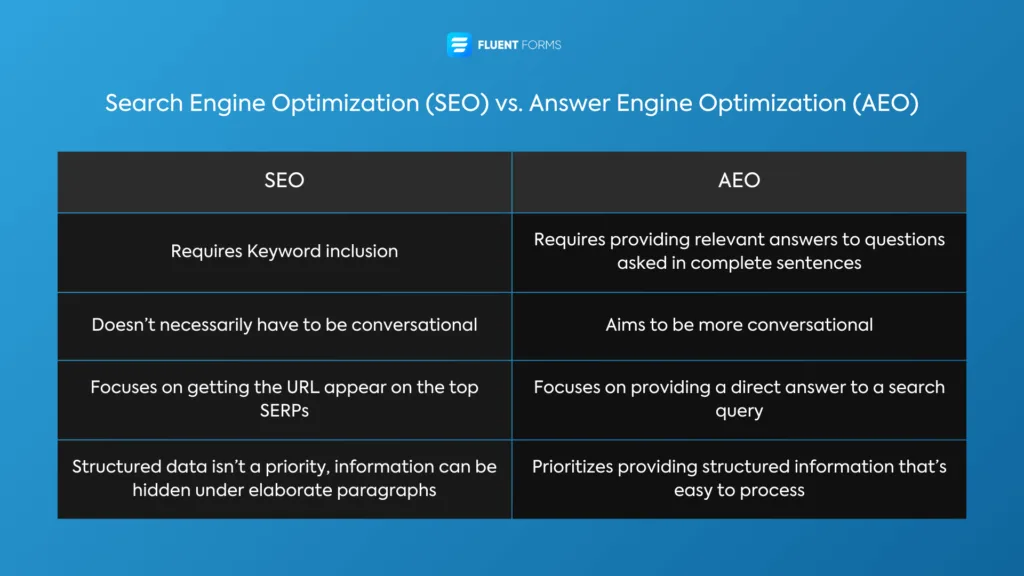
Practical move: pull the “People Also Ask” boxes, the related searches, and your own support inbox. Real questions from real users are the richest source of answer engine optimization targets you will ever find.
Source Confidence and Authority
Confidence comes from a mix of signals: domain reputation, author credentials, citation patterns, and consistency across the web. A page that contradicts everything else on the topic rarely gets quoted.
Consistency is underrated. If your site says one thing on a landing page and the opposite in a blog post, you have handed the system a reason to look elsewhere.
You also want third-party validation. When other credible sites reference your work, the answer layer treats you as corroborated rather than isolated. That is why digital PR and answer engine optimization are increasingly the same conversation.
Extractability and Format Fit
Even a perfect answer loses if it is buried in a 400-word paragraph with three nested clauses. Extraction models prefer clean, standalone statements.
Write the answer you want quoted as if it were a pull quote. Refining each detail of your answer engine optimization strengthens this section. Then surround it with supporting detail for the humans who keep reading.
This dual-layer approach — quotable core, rich context around it — is the single most reliable pattern in answer engine optimization. It serves the machine and the reader at once.
Writing Content That Gets Quoted
Now we get to craft. Formatting makes you extractable, but the words decide whether you deserve to be quoted.
Good answer content sounds like a knowledgeable friend explaining something clearly, not a brochure reciting features.
The Quotable Sentence Pattern
Build a habit of writing one crisp, self-contained sentence per concept. “Answer engine optimization prioritizes being the cited source inside an AI-generated response” is quotable. “of search, it has become increasingly important for brands to consider how their content might be perceived by various systems” is not.
Short, declarative, specific. That is the pattern. Do it once per section and you have given the system something worth lifting.
Do not overdo it, though. A page of nothing but punchy one-liners reads like a slide deck and loses the trust that depth earns.
Depth versus Brevity
Here is the tension every practitioner feels. Answer engines want concise, extractable answers. Readers and ranking systems still reward comprehensive coverage.
You resolve it with layering. Lead with the short answer, then go deep. The short answer wins the citation; the depth wins the trust and the time-on-page.
I have seen pages double their assistant citations simply by adding a two-sentence summary at the top of each section while leaving the long-form body untouched. Same content, better answer engine optimization, zero rewriting of the substance.
Original Data and Specifics
Generic content is invisible in the answer layer. Everyone can paraphrase the same three blog posts, so the system has no reason to prefer you.
Original specifics change that. A survey of 500 customers, a benchmark you ran, a teardown with real numbers — these are the things a model cannot synthesize from elsewhere.
Even small specifics help. Naming a city, quoting a real customer, citing a dated experiment. Concrete detail is a competitive moat in answer engine optimization because it cannot be copied without attribution.
Structuring Pages for Answer Extraction
Structure is the skeleton that holds your quotable content upright. Get it wrong and even brilliant writing gets ignored.
Think of each page as a series of answerable questions stacked in a logical order.
The Inverted Pyramid for Every Section
Answer first, then explain, then illustrate. This mirrors how journalists write and how assistants prefer to extract.
Start each section with the conclusion. Effective execution in your answer engine optimization makes a tangible difference. Follow with the reasoning. Close with an example or a caveat.
Readers who only want the answer get it instantly. Readers who want depth keep scrolling. Machines get a clean extractable block at the top. Everyone wins, and that is the point of deliberate answer engine optimization.
Table and List Formats
Tables and lists are extraction gold. They present parallel information in a predictable shape.
Use tables for comparisons, specifications, and any “X versus Y” question. Use ordered lists for processes and unordered lists for options.
Keep cell content short. A table cell that runs three sentences defeats the purpose, because the model cannot cleanly isolate the value.
FAQ Sections Done Right
FAQ blocks are the most direct answer engine optimization tool most sites underuse. They map one-to-one with the questions people actually ask.
Write real questions in natural language, answer each in two to four sentences, and mark them up properly. Skip the padding.

Do not dump twenty FAQs at the bottom as an afterthought. Curate the eight to twelve questions that genuinely matter, and answer them well.
Answer Engine Optimization Across Different Platforms
Not every answer engine behaves the same. A voice assistant, a chat interface, and an AI overview each pull and present content differently.
Ignoring those differences leaves easy wins on the table.
Voice Assistants and Spoken Answers
Voice favors brevity and natural phrasing. The answer must sound right when read aloud, which rules out jargon-heavy or clause-stacked sentences.
Optimize for the spoken form by reading your key answers out loud. If they trip your tongue, they will trip the assistant too.
Local queries dominate voice, so location specificity matters. “Near me” phrasing plus clear geographic signals is a distinct answer engine optimization playbook for local businesses.
Chat Interfaces and Conversational AI
Chat systems handle longer, more nuanced answers and often cite multiple sources. They reward well-organized, multi-section content that covers a topic thoroughly.
This is where deep pillar pages shine. A comprehensive guide with clear sections gives a chat model plenty of extractable material to draw from.
Conversational follow-ups also mean your content should anticipate the next question, not just the first one. Cover the obvious “what about” that comes after your main answer.
AI Overviews and Search-Integrated Answers
Search-integrated answers blend traditional ranking with synthesis. You still need to rank well enough to be in the candidate pool, then you need to be extractable enough to get pulled into the summary.
That combination is why answer engine optimization does not replace SEO. It sits on top of it. Ranking gets you into the room; structure and clarity get you quoted.
Common Mistakes That Kill Citation Chances
Most failures are self-inflicted. Maintaining clarity across your answer engine optimization remains essential. They come from habits that worked in the link era and quietly sabotage you now.
Here are the ones I see most often, and how to fix each.
- Burying The Answer — If your key answer appears in paragraph six, it may never get extracted. Move it to the top of the section and keep the elaboration below.
- Vague, Padded Prose — Filler sentences dilute extractability. Cut every sentence that does not add information, and watch your answer engine optimization improve almost immediately.
- Keyword Stuffing — Repetition does not help machines and actively hurts readers. Natural language wins in the answer era.
- Contradictory Content — Mixed messages across your own pages erode source confidence. Audit for consistency before you optimize for anything else.
- Missing Or Mismatched Schema — Schema that does not match visible text is worse than no schema. Align them exactly.
- Ignoring The Question Behind The Query — Answering the literal words while missing the real intent produces content nobody cites. Read the question the way a frustrated user means it.
- Chasing Volume Over Depth — Fifty thin posts lose to five authoritative ones. The answer layer rewards expertise density.
- Neglecting Freshness Signals — Stale pages lose confidence over time. Update key answers as the topic evolves.
Every item on that list is fixable without new tools. That is the encouraging part. Most answer engine optimization gains come from editing, not from buying.
Measuring Answer Engine Optimization Performance
You cannot manage what you do not measure, and the answer layer requires new metrics. Rank position alone no longer tells the story.
You need to track whether you are being cited, how often, and in what context.
Citation Tracking
Manually query the major assistants and chat tools with your target questions. Log whether your brand appears and how it is described.
Do this on a schedule. Weekly is ideal for competitive topics, monthly for slower niches. A simple spreadsheet beats no tracking at all.
Watch for misattribution too. If an assistant credits your competitor for your idea, that is a signal your content is not clearly associated with the concept in the system’s mind.
Branded Search and Referral Patterns
Answer citations often show up as branded search lift rather than direct referral traffic. People see your name in an answer, then search for you later.
Track branded query volume alongside your answer engine optimization work. A rising branded trend that does not match your ad spend is often the answer layer at work.
Referral traffic from AI platforms is still small but growing, and it tends to convert well because the user arrived pre-qualified by a trusted answer.
Share of Answer
Borrow the share-of-voice concept and apply it to answers. For a set of target questions, what percentage of them cite you?
That number is your real scoreboard. Improve it question by question, and the aggregate follows.
Building an Answer Engine Optimization Workflow
Ad hoc effort produces ad hoc results. A repeatable workflow is what turns answer engine optimization from a project into a capability.
Here is a sequence that holds up across niches.
- Harvest Real Questions — Collect questions from support tickets, sales calls, search suggestions, and community forums. Build a living question bank.
- Map Questions To Pages — Assign each question to the page that should own it. One question, one clear owner.
- Draft The Quotable Answer — Write the two-sentence answer first. Everything else supports it.
- Layer In Depth — Add reasoning, examples, and data beneath the answer.
- Apply Structure — Headings, lists, tables, and schema that match the visible content.
- Publish And Mark Up — Ship the page with clean technical signals from day one.
- Test With Assistants — Query the platforms directly and see what gets cited.
- Iterate — Refine based on what actually gets pulled, not what you assumed would.
The loop is the value. Each cycle sharpens your sense of what the answer layer rewards in your specific niche.
Assigning Ownership
Answer engine optimization dies when it belongs to everyone and no one. Give it a named owner.
That person coordinates between content, SEO, and whoever owns the technical stack. They keep the question bank current and run the citation checks.
Without ownership, the work happens in bursts after a scary meeting and then fades. A thoughtful approach to answer engine optimization reinforces your qualifications. With ownership, it compounds.
Cadence and Review
Set a rhythm. Monthly content reviews, quarterly technical audits, and a standing slot for citation testing.
Review what changed. Which questions did you start winning? Which did you lose? What did the winning pages have in common?
Patterns emerge fast when you look at the data on a schedule, and those patterns are the raw material for your next round of answer engine optimization.
Tools and Techniques Worth Using
You do not need exotic software, but a few tools make the work faster and more measurable.
The right stack depends on your scale, but the categories are consistent.
Schema and Structured Data Tools
Schema generators and validators save hours and prevent errors. A single mismatched tag can undermine an otherwise clean page.
Validate every markup change before it goes live. The cost of a broken schema is a lost citation you will never see.
Keep your schema library documented so new pages inherit the right patterns automatically.
Question Research Platforms
Tools that surface real user questions are worth their weight. They feed your question bank with language people actually use.
Combine platform data with your own first-party sources. The best answer engine optimization targets live where search data meets real customer language.
Do not rely on a single source. Cross-reference to find the questions that matter most.
Citation Monitoring
Manual checking works at small scale, and there are emerging tools that automate it. Start manual, then automate once the process is proven.
Whatever you use, keep the output in one place. A single tracking sheet beats scattered notes every time.
Answer Engine Optimization for Local and Ecommerce Brands
The fundamentals hold everywhere, but local and ecommerce contexts add their own wrinkles.
Both deal with queries where specificity and trust signals carry extra weight.
Local Business Considerations
Local answers hinge on proximity, hours, and service clarity. Make those facts explicit and machine-readable.
Consistent business information across the web is non-negotiable. Conflicting addresses or hours destroy source confidence.
Encourage and respond to reviews, because sentiment feeds the trust signals that answer engine optimization depends on for local queries.
Ecommerce and Product Answers
Product queries often compare options, so comparison content earns citations. Specs in tables, differences in plain language.
Answer the pre-purchase questions directly: compatibility, sizing, shipping, returns. These are the questions that block a purchase, and answering them cleanly wins both the citation and the sale.
Keep product data structured and consistent across your catalog. Fragmented specs confuse both shoppers and the systems summarizing your products.
Frequently Asked Questions
Here is an in-depth breakdown of key considerations regarding this section:
What is Answer Engine Optimization in Simple Terms?
It is the practice of formatting and writing content so AI assistants and answer platforms quote it directly. You aim to be the source, not just a result.
How is Answer Engine Optimization Different from SEO?
SEO competes for ranking in a list of links. Answer engine optimization competes to be the cited answer inside a synthesized response. The two overlap, but the second rewards extractability and clarity more heavily.
Does Answer Engine Optimization Replace Traditional SEO?
No. It builds on top of it. You still need to rank well enough to enter the candidate pool before you can be quoted from it.
How Long Before I See Results?
Timelines vary by niche and competition. Technical fixes can show movement within weeks, while citation gains from content work typically build over a few months.
Do I Need Special Tools?
Not to start. A spreadsheet, a schema validator, and direct testing with assistants will carry you a long way before you need anything paid.
Can Small Sites Win at Answer Engine Optimization?
Yes, and often faster than big sites expect. Specificity and original detail matter more than raw domain size in the answer layer.
What Content Formats Get Cited Most?
Definitions, numbered steps, comparison tables, and concise FAQ answers. Anything with a clean, self-contained structure travels well.
How Often Should I Update Content?
Review key answers quarterly and refresh whenever the topic shifts. Stale content loses confidence over time.
Where Answer Engine Optimization is Heading
The answer layer is still forming, and the rules will keep shifting. What will not change is the underlying principle: clear, trustworthy, specific content that answers real questions.
Brands that treat answer engine optimization as a durable capability rather than a campaign will keep compounding advantages. Those that chase shortcuts will keep getting leapfrogged.
My honest advice, after watching this space closely, is to invest in the fundamentals and stay curious. Write the answer you would want to receive. Structure it so anyone, human or machine, can find it in seconds.
Do that consistently, and the citations follow. Not because you gamed a system, but because you became genuinely worth quoting — which is the whole point of answer engine optimization.
| AEO Element | Primary Goal | Quick Execution Tip |
|---|---|---|
| Direct Answer Lead | Extractability | Answer in the first two sentences |
| Question Subheadings | Query Matching | Phrase headings as real questions |
| FAQ Schema | Machine Clarity | Match markup to visible text exactly |
| Comparison Tables | Versus Queries | Keep cells short and parallel |
| Original Data | Source Confidence | Publish specifics competitors cannot copy |
| Citation Tracking | Measurement | Check assistants on a set schedule |
For verified reference and background research, consult the authoritative informational resource on this topic.