Account Based Marketing: a Simple 5-Step Guide
Account based marketing works best when you stop chasing everyone and start choosing carefully. That single shift, from volume to precision, is what separates teams that burn through budget from teams that close enterprise deals with frightening consistency.
Here’s the honest version: most companies try ABM, run the Account based marketing for a quarter, and quietly abandon it because they treat it like a campaign instead of an operating discipline. The ones who win do something different. They follow a sequence, and they follow it in order.
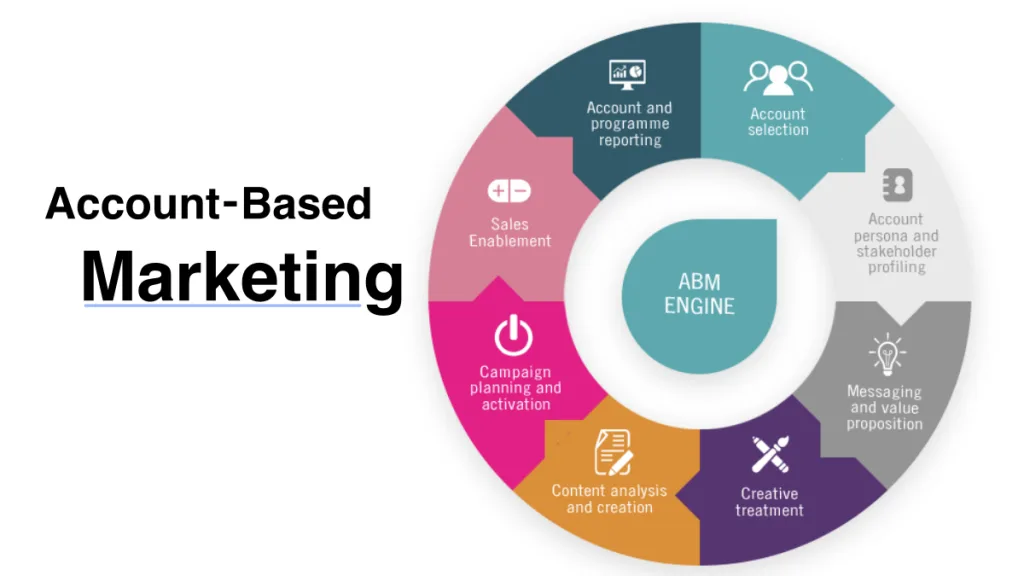
What follows is the account based marketing sequence, laid out in five steps you can actually run. No jargon walls, no theoretical fluff. Just the process, the reasoning behind each move, and the traps that eat teams alive when they skip ahead.
Why Account Based Marketing Beats Broad-Reach Funnel Thinking
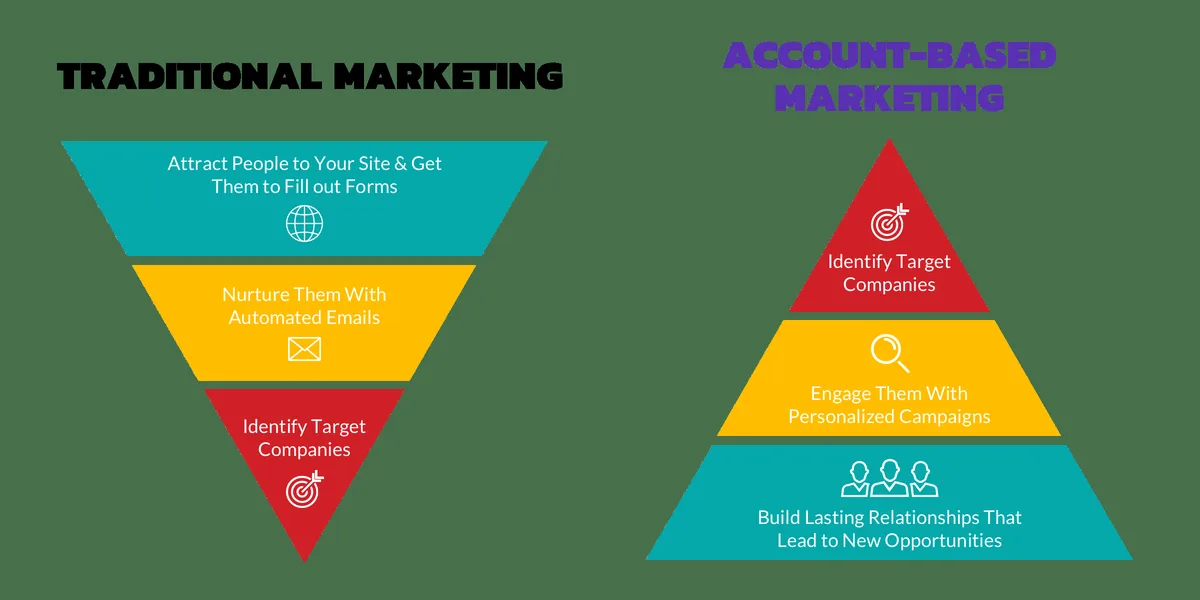
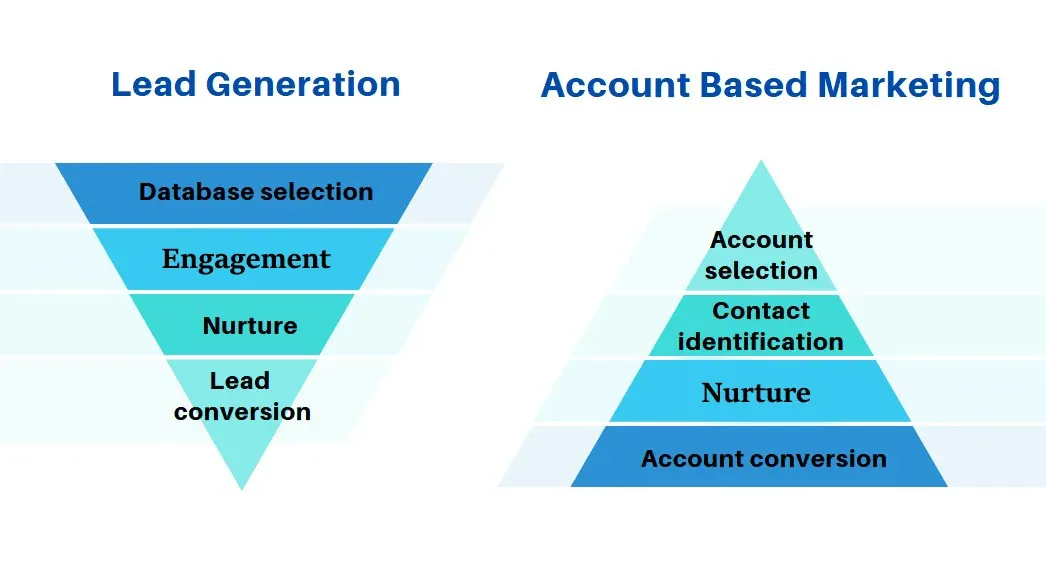
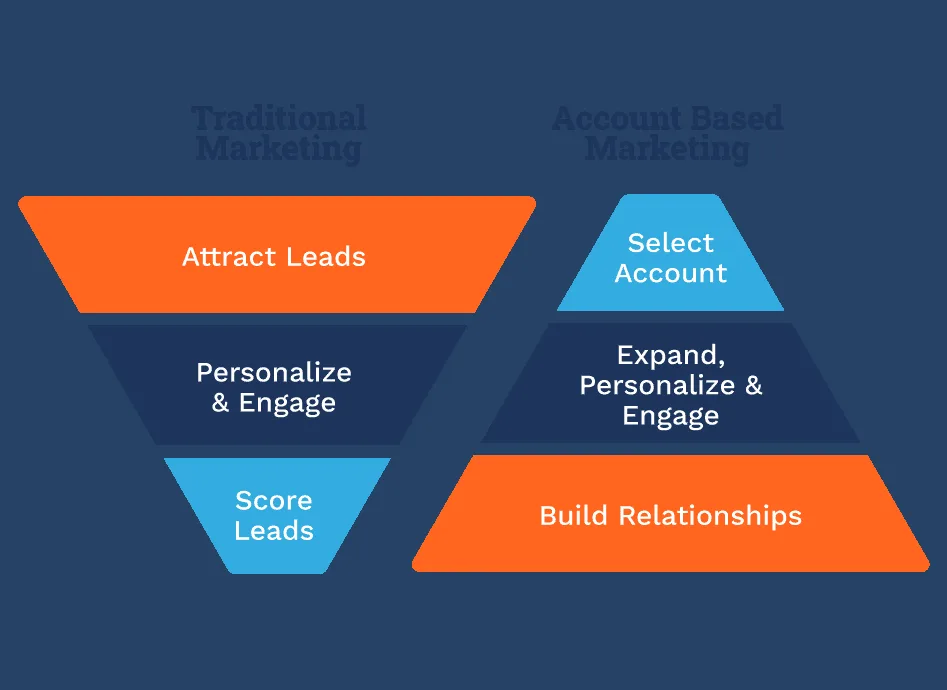
Traditional demand generation optimizes for lead count. Refining each detail of your Account based marketing strengthens this section. You cast wide, collect thousands of names, and hope a few convert into real revenue. It’s a numbers game with a brutal implied math problem buried inside it.
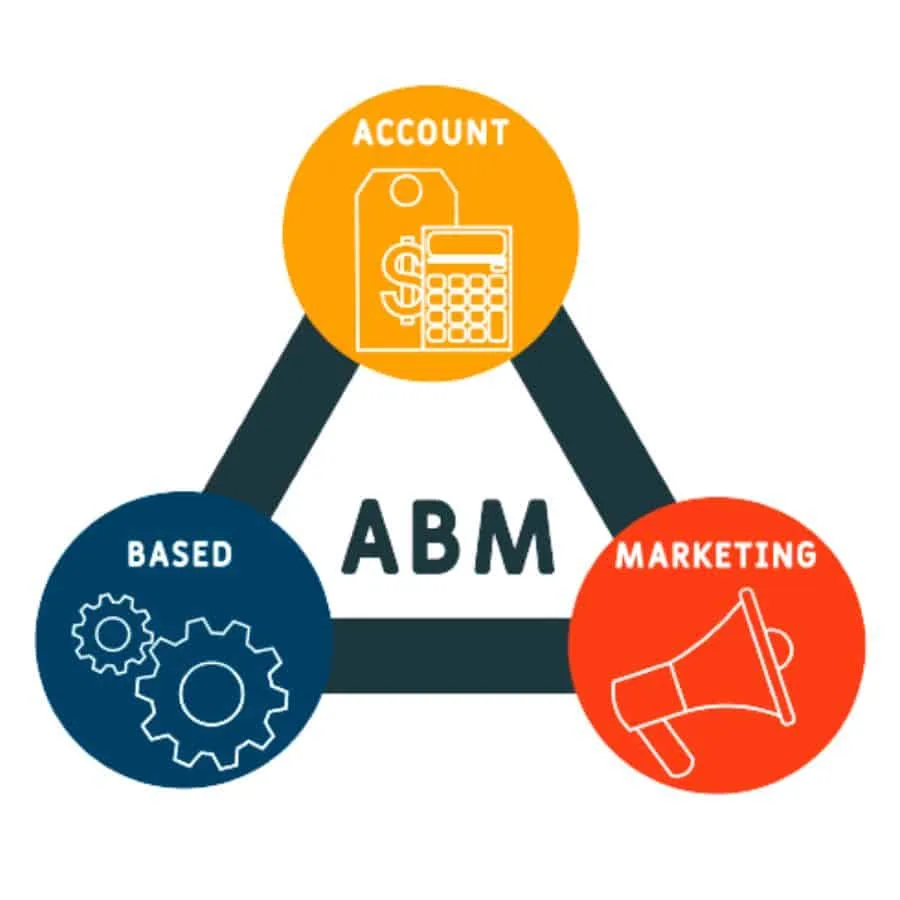
Account based marketing inverts the equation. Instead of asking “how many leads can we generate,” you ask “which twenty companies would change our business if we won them.” That reframing alone reshuffles your entire marketing budget, your content calendar, and your sales conversations.
I’ve watched a mid-sized software firm cut its ad spend by roughly sixty percent and still grow pipeline, simply because the account based marketing stopped paying to reach people who were never going to buy. Their words, not mine: “We were renting attention from strangers while ignoring the accounts already knocking.”
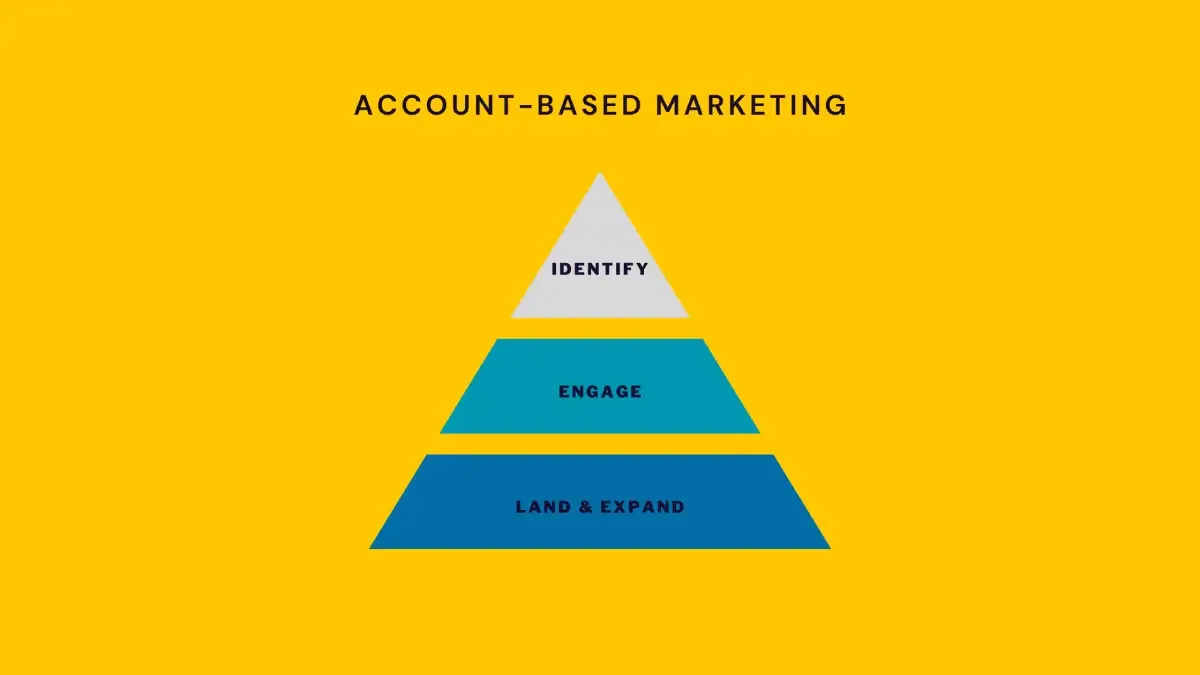
The reason ABM outperforms is mechanical, not magical. Effective execution in your Account based marketing makes a tangible difference. When your target universe shrinks to a defined set of named accounts, every asset you build gets sharper.
Personalization stops being a buzzword and becomes a practical necessity, because you can actually research each buyer’s priorities, org chart, and pain points.
There’s a genuine caveat, though. ABM is expensive per account. It demands research hours, custom content, and tight coordination between marketing and sales. If your deal sizes are small and your sales cycle is short, the math rarely works. This is a strategy for considered purchases, not impulse buys.
What Makes an Ideal Account Based Marketing Candidate
Before you build anything, you need to decide who you’re building it for. Choose badly and the next four steps become wasted effort.
Firmographic fit comes first. Maintaining clarity across your account based marketing remains essential. Industry, company size, revenue band, tech stack, geographic footprint. These are the filters that tell you whether an account could plausibly buy what you sell at the price you sell it.
Notice I said “plausibly,” not “possibly.” A fifteen-person startup might theoretically need your enterprise platform, but that’s a fantasy, not a target.
Then come the signals the account based marketing suggest timing matters. New funding rounds, leadership changes, job postings that hint at expansion, or public statements about strategic priorities all hint at buying windows. Chasing a perfect-fit account with zero timing signals is like proposing on a first date that nobody showed up for.
Behavioral data rounds out the picture. Which accounts visit your pricing page repeatedly? Who downloads two or three resources in a week? Who attended a webinar and then went silent? These patterns, collected across your website, ad platforms, and CRM, tell you which conversations are ready to advance.
The Account Based Marketing Checklist Before You Launch
Skipping preparation is the single most common way ABM initiatives die. Structuring your account based marketing around proven patterns ensures impact. Teams get excited, spin up a target list, buy a tool, and fire off content with no shared foundation underneath it.
Run this account based marketing checklist and be honest about the gaps. Each item is non-negotiable, and each one takes real time to complete properly.
- Defined Ideal Customer Profile: written firmographic and behavioral criteria for what makes an account worth pursuing, agreed upon by both sales and marketing. Not a vague slide, a specific document that lets two people independently pick the same accounts.
- Aligned Target Account List: a named list of accounts, typically 20 to 100 to start, with each account assigned an owner. Vague segments don’t count. Named logos do.
- Revenue and Pipeline Agreement: a shared definition of what counts as a qualified opportunity, and how marketing-sourced and sales-sourced contributions get credited. Without this, your two teams will argue about credit instead of closing deals.
- Buying Committee Map: documented roles for each target account, covering economic buyer, technical evaluator, day-to-day user, and any internal blocker. Every one of these people has a different set of objections.
- Personalized Content Assets: at minimum three pieces of tailored content per target tier, covering problem-framing, solution explanation, and proof. Generic brochures don’t survive contact with a real buying committee.
- Sales and Marketing SLAs: explicit commitments in both directions. How fast does sales follow up on a signal? What quality threshold triggers outreach? What happens when a target account goes dark for thirty days?
- Measurement Framework: defined KPIs tracked from day one, including account engagement score, pipeline velocity, deal size, and time to close. Vanity metrics like impressions or MQL counts don’t belong here.
- Technology Foundation: a CRM that actually reflects account-level activity, an intent or engagement data source, personalization tooling where it makes sense, and a reporting layer that sales actually opens.
One practical note from working alongside teams that skipped items on this list: they almost always failed at item three. When the revenue agreement is fuzzy, marketing optimizes for engagement and sales optimizes for closed deals, and the two goals quietly diverge until someone demands a program review.
Get the account based marketing foundation right, and the next four steps run smoothly. Skip it, and you’ll spend the rest of your initiative firefighting internal politics instead of winning accounts.
Step 1: Define Your Ideal Customer Profile and Tier Your Target Accounts
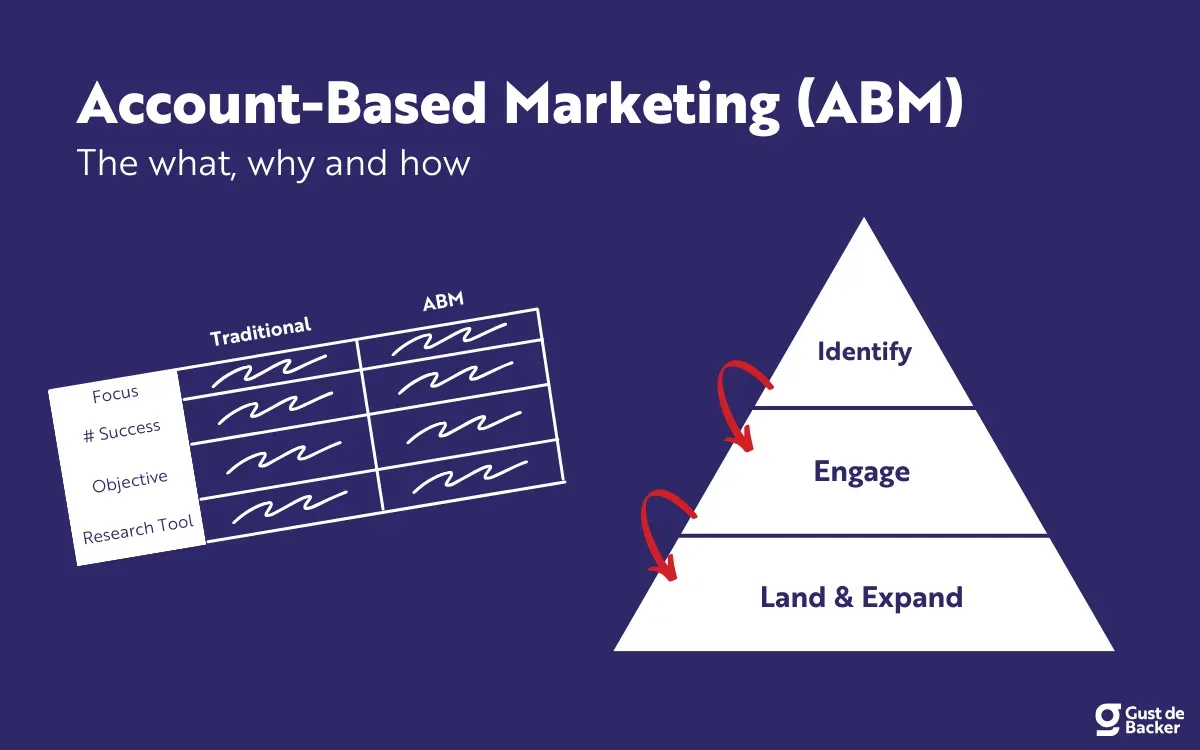
This is the foundation step, and it deserves more time than most teams give it. An ideal customer profile (ICP) is a detailed description of the account type where you win most reliably and lose least. Not the type you wish you won, the type you actually win.
Pull your last twelve to twenty-four months of closed-won deals and look for patterns. Proper attention to your account based marketing sets a strong baseline. Which industries show up repeatedly? What company size appears most often?
What pain points come up in the first sales call? What’s the typical budget range, and how long does the cycle take from first touch to signature?
Those patterns give you a shaped ICP with real edges. A worked example: a cybersecurity vendor I spoke with found their best deals came from regulated financial services firms with two hundred to eight hundred employees, a CISO in place, and a recent compliance audit trigger. That’s a concrete, actionable profile. Compare it to “enterprise companies that care about security,” which is essentially a wish.
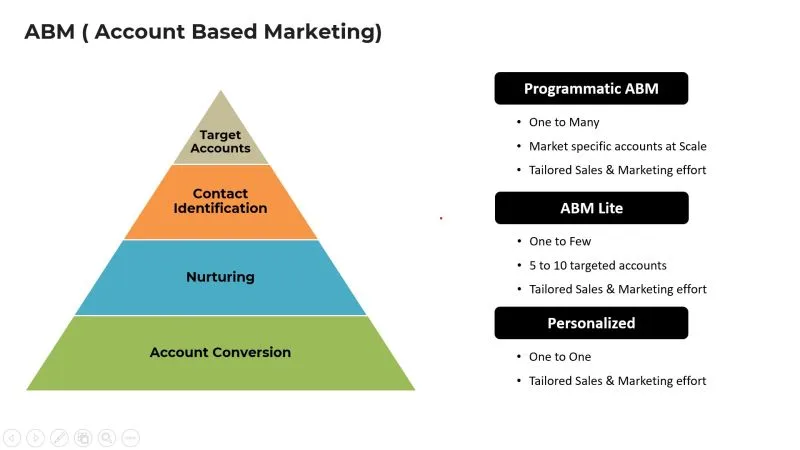
Once the ICP exists, segment your target accounts into tiers. Developing your account based marketing with precision highlights key strengths. Tier one gets the full treatment: one-to-one personalization, executive-level outreach, custom content. Tier two gets scaled personalization: industry-specific content, sequenced outreach, events. Tier three gets lighter-touch advertising and thought leadership with account-based targeting, without deep customization.
The reason tiering matters is resourcing. If every account gets the tier-one treatment, you’ll finish two accounts before the budget runs dry. Tiering lets you focus deep effort where the revenue justifies it and still cover the broader universe at a proportionate cost.
A quick account based marketing tip from teams who’ve done this well: build your tiers on pipeline potential, not just on fit. A perfect-fit account with no budget for twelve months is a tier-three account by any sensible standard, no matter how much you like the logo.
Step 2: Map the Buying Committee and Personalize for Each Role
Individual decision-makers don’t exist anymore in a meaningful sense, not in any B2B purchase of scale. Clear alignment with your account based marketing builds confidence from the start. The average enterprise buying committee runs somewhere in the six-to-ten range, and each member arrives with their own priorities, metrics, and reasons to say no.
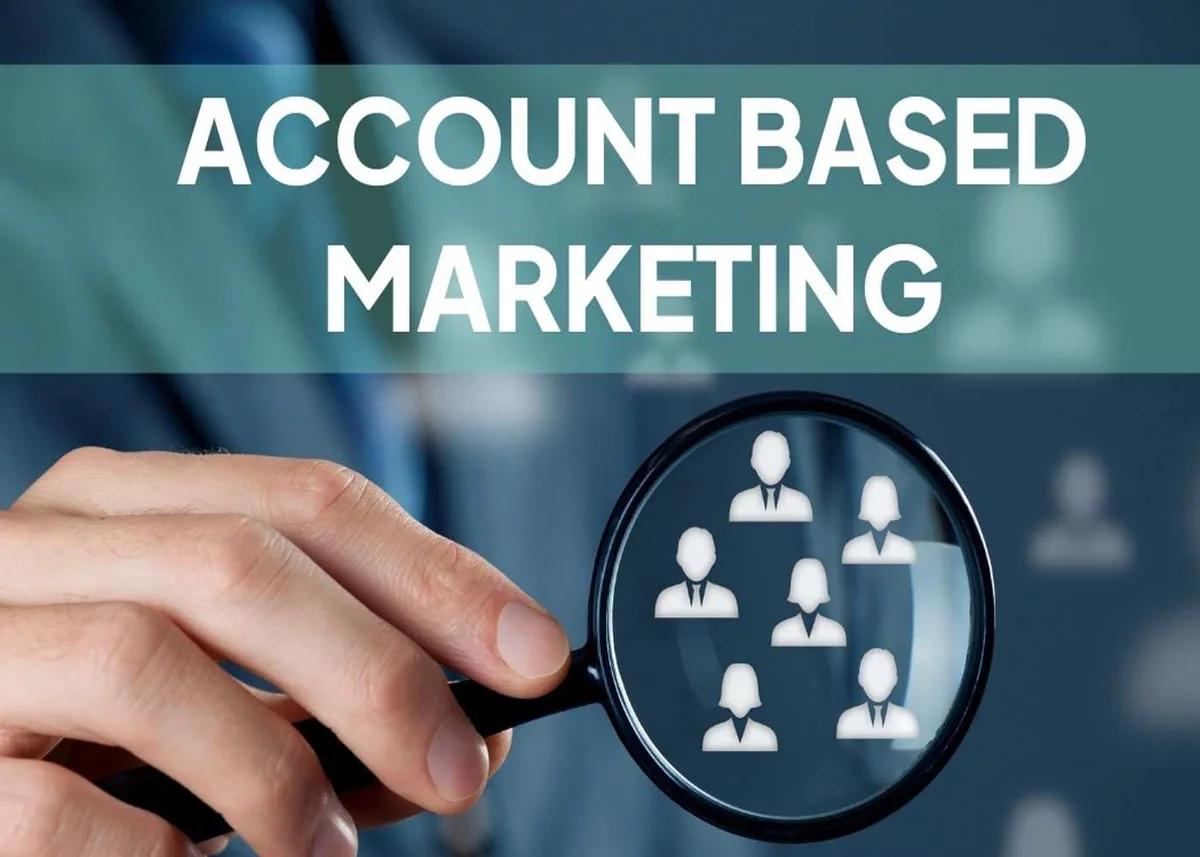
Map the committee for each tier-one and tier-two account.
Start with the economic buyer, the person who owns the budget and signs the contract, then layer in the technical evaluator, the operational user, and any internal voice that could block the deal (legal, procurement, IT security, or a manager whose team loses headcount if your tool wins).
For each role, identify three things: what the account based marketing care about, what success looks like to them, and what objection they’re most likely to raise. The CFO wants payback period and risk mitigation. The head of operations wants implementation speed and no disruption to their team.
The security lead wants to know who’s looking at their data and how. The end user, quietly, wants to know whether this tool will make their job harder or easier.
Content gets built against the account based marketing role profiles. A technical brief for the evaluator, a business case summary for the economic buyer, a workflow demo for the operational user, and a security one-pager for the compliance crowd. Same core narrative, four different lenses.
Here’s where account based marketing best practices diverge from generic personalization. Generic personalization swaps names into templates. Real personalization uses public signals, job postings, earnings calls, conference talks, and press coverage, to make the outreach feel like it was written by someone who has actually paid attention. Because it was.
One account executive I worked with noted that his highest-converting outreach always referenced something neither party could have guessed, like a specific quote from a CEO podcast from six months earlier. The effort showed. And effort, at scale, is the entire product.
Step 3: Build Coordinated Multi-Channel Engagement
ABM is not a single channel tactic. Focusing on account based marketing provides clear direction here. It’s a coordinated orchestration across advertising, email, events, direct mail, content, and sales calls, all pointing at the same handful of accounts at the same time, with the same story.
Coordinated here is the critical word. Teams that run ABM as an advertising-only motion, or as an email-only sequence, and expect the same results are usually disappointed.
The magic happens when a CFO sees a sponsored post on their feed, receives a personalized email from a rep, and hears from a peer at a conference in the same two-week window. Three separate touches, one coherent impression.
Start by defining channel sequencing based on the account’s current stage. Unaware accounts get advertising and thought leadership. Aware accounts get content offers and event invitations. Interested accounts get direct sales outreach and custom demos. Engaged accounts get executive-to-executive connection and negotiation support.
The exact mix depends on where your buyers spend attention. Engineering audiences live on technical subreddits and community Slack communities. Finance audiences read analyst briefs and vendor comparison sites. Operations audiences lean on trade press and peer forums. Find where your specific ICP gets their professional information, and be visible there.
The account based marketing guide most teams wish they had early on is this: pick three channels, do them well, and resist the urge to add a fourth until the first three are humming. Multichannel doesn’t mean every channel. It means the right channels, coordinated tightly enough that the account perceives the presence as one persistent motion.
Measurement at this stage tracks engagement lift across accounts, not clicks. Did the account move from two touches to seven? Did they visit the pricing page after the conference invitation? These are the signals that predict pipeline.
Step 4: Align Sales and Marketing Around Shared Account Goals
The account based marketing step is where ABM programs live or die. Marketing and sales operating in separate lanes, with separate KPIs and separate leaders, will sabotage the entire initiative even with the best intentions.

The alignment model that actually works in practice starts with shared ownership. A specific account has a single pod or team assigned to it, combining marketing ownership (content, campaigns, research) and sales ownership (outreach, negotiation, relationship). Both report against the same pipeline target for that account.
Weekly syncs matter here, but only if the account based marketing stay operational. The agenda isn’t “how are leads doing,” it’s “what’s blocking this account from advancing.” What did we learn from the last touch? What content does the buying committee need next?
Who’s the internal champion, and are they getting air cover from us? These conversations turn individual touches into a coordinated push.
A worked example: a mid-market SaaS team assigned one marketer and one account executive to every tier-one account. A thoughtful approach to account based marketing reinforces your qualifications. The marketer ran personalized advertising and content, while the executive handled direct conversations.
Their combined pipeline closed at roughly double the rate of accounts run by sales alone. When I asked why, the answer was simple, the account never had a gap in presence.
Deal-level reviews also matter. Once an opportunity enters the pipeline, marketing doesn’t disengage. It contributes by building executive one-pagers, coordinating reference customer introductions, and running account-based advertising to reinforce the sales narrative inside the account. The pipeline doesn’t end at opportunity creation, and neither should marketing’s involvement.
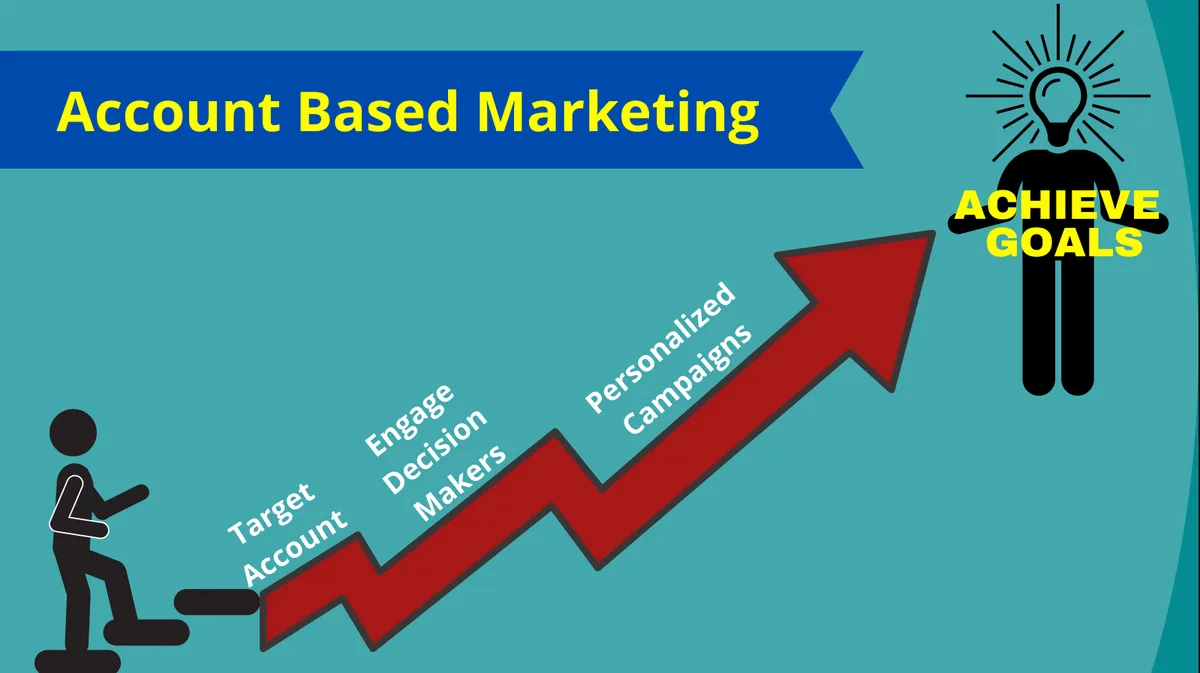
Your account based marketing best practices for alignment come down to three moves: shared goals, single owner, weekly operational sync. Everything else, tools, dashboards, reporting cadence, hangs off this spine.
Step 5: Measure, Learn, and Iterate on Account Based Marketing Performance
Measurement is the step most teams treat as an afterthought, which is a mistake. Without rigorous measurement, you can’t tell good execution from expensive theater, and you can’t improve the program over time.
Proper ABM metrics split into three layers. Account engagement metrics track whether accounts are actually moving (engagement score, touch coverage, account-level website visits). Pipeline metrics track whether engagements become opportunities (opportunities created, deal size relative to non-ABM deals, pipeline velocity). Revenue metrics track whether the whole motion pays off (closed-won revenue, win rate, average deal size, customer acquisition cost).
Use a table like this to structure the scorecard, and review it monthly with the joint team.
| Layer | Metric | What It Tells You | Healthy Signal |
|---|---|---|---|
| Engagement | Account engagement score | Whether the buying committee is activating | Steady upward trend across tier-one accounts |
| Engagement | Contact coverage per account | Whether you’re reaching the full committee, not just one champion | Three or more contacts engaged per tier-one account |
| Pipeline | Account-sourced opportunities | Whether engagement translates into real deal flow | Consistent creation rate from target list |
| Pipeline | Deal size vs. Non-ABM baseline | Whether precision targeting is paying off financially | Premium over non-ABM average deal size |
| Revenue | Win rate for target accounts | Whether the whole motion produces closes | Higher than non-ABM win rate |
| Revenue | Customer acquisition cost per account | Whether the efficiency gain justifies the research investment | Falling or stable relative to deal size |
| Revenue | Time to close | Whether coordinated motion accelerates decisions | Shorter than non-ABM cycle |
Iteration closes the loop. Every month, run a review of what worked and what didn’t. Which accounts advanced? Which went dark? Which content got read deeply, and which got ignored? Which outreach sequences created conversations? Feed these answers back into the next month’s plan.
One simple account based marketing tip from practitioners who run this well: hold a “dark account” review every single month. Pick the five accounts that have gone silent, and brainstorm what would re-engage them. Sometimes the answer isn’t more outreach, it’s a strategic pause.
Sometimes the account based marketing’s a completely different angle. Either way, the review keeps you from letting quiet accounts drift into permanent silence.
The final thing to remember about account based marketing measurement is this, the scorecard exists to improve the program, not to prove someone right. If a metric shows a problem, the team’s job is to fix the underlying motion, not redefine the metric.
Common Account Based Marketing Mistakes to Sidestep
The five steps above work. The mistakes below are what keeps most teams from completing them.
The first is premature scaling. Applying these principles to your account based marketing yields measurable results. Teams run ABM on three accounts, see one win, and immediately expand the target list to two hundred.
The personalization depth collapses, the effort per account falls off a cliff, and the whole motion becomes generic demand gen with a fancier name. Start with twenty to fifty accounts and earn the right to scale.
The second is treating ABM as a marketing-only program. If sales isn’t bought in, contributing, and being measured against the same targets, the initiative is just an expensive content campaign. Alignment isn’t a nice-to-have, it’s the load-bearing wall.
The third is measuring the wrong things. Vanity metrics like account impressions or email open rates feel good but don’t predict pipeline. Build the scorecard around engagement-to-pipeline conversion, deal size, and win rate, and you’ll know quickly whether the program is real.
The fourth is skipping the research. Many teams build outreach based on guesses about what the account needs, then are surprised when the committee objects. The best account based marketing tips almost always come back to one thing, do the homework before you send anything.
And the fifth is giving up too early. ABM cycles are longer than broad-reach funnels, because you’re pursuing a smaller number of larger deals. If the team needs a win in six weeks to justify the budget, ABM is likely the wrong structure.
Frequently Asked Questions About Account Based Marketing
Here is an in-depth breakdown of key considerations regarding this section:
How Long Does It Usually Take for Account Based Marketing to Produce Results?
Most programs see measurable pipeline movement within one to two quarters, with closed revenue following one to two quarters after the account based marketing. Timelines depend heavily on your sales cycle length. A program targeting enterprise buyers with nine-month cycles won’t have closed revenue for roughly a year, even if the engagement looks healthy early.
Do I Need Special Software to Run ABM Effectively?
You need a CRM that tracks account-level engagement, a way to identify accounts visiting your site, and a personalization tool that lets you adapt content at role and account level. That said, plenty of teams run successful early-stage ABM with a solid CRM, a data provider, and disciplined execution. Software accelerates; it doesn’t substitute for the five-step motion.
What’s the Right Number of Accounts to Start With?
Twenty to fifty is a reasonable starting point for most teams. It’s enough to learn meaningful patterns, and small enough that you can deliver real personalization per account. If you have a highly defined ICP with tight firmographics, fewer accounts with deeper treatment may be right. If your ICP is broader, scale gradually and pay attention to what breaks when you add accounts.
How is ABM Different from Demand Generation?
Broad demand generation optimizes for lead volume across a wide universe. Account based marketing optimizes for depth of engagement with a defined target list. Both can coexist in the same organization, but they run on different metrics, different content, and different team rhythms. Trying to run both with the same dashboard usually results in one diluting the other.
Can Small Businesses Run Account Based Marketing?
Yes, if their deal sizes justify the research investment. Small teams with high-value, consultative offerings can run ABM effectively with as few as ten or fifteen target accounts. The mechanics don’t change, only the scale.
The costs are real, so it’s worth confirming that the deal size multiplied by the expected win rate clears the effort threshold.
Mapping the Wider Account Based Marketing Journey
Consider this account based marketing guide as an entry point to a broader cluster of related topics that most teams graduate into after the first cycle.
From here, the natural adjacent conversations include one-to-few ABM (scaled personalization across account clusters rather than true one-to-one), intent data operations (how to buy, validate, and activate account intent data without drowning in noise), and ABM measurement sophistication (multi-touch attribution at the account level rather than contact level).
Each of these is a substantial topic on its own, worth studying once the basic five-step motion is running smoothly.
The other sub-topic worth planning for early is the tech stack, specifically how account-based advertising platforms, CRM data, and intent providers connect into one view of the target list. Most teams add tools faster than they add process, and end up with three dashboards that disagree with each other. Deliberate sequencing pays off here.
Bringing the Five Steps Together
The value of this sequence isn’t novelty. It’s discipline. Define the ICP, gate on your account based marketing checklist, tier the target list, map the committee, coordinate the channels, align with sales, and measure against the right KPIs.
Each step builds on the one before it, and skipping any one of them usually surfaces as a visible failure two steps later.
If you’re starting today, resist the urge to buy tools first. Write the ICP. Pick the accounts. Build the checklist. The tools can wait a week, and the first three steps are the ones most teams regret rushing.
From there, the rest of the account based marketing motion becomes an execution problem, which is a much easier problem to solve than a strategy one.
One last note, and the account based marketing one comes from watching programs succeed and fail over multiple cycles. The teams that win at ABM treat it as a long game.
They protect the motion from short-term reporting pressure, they invest in the alignment that most organizations skim over, and they keep refining the same handful of accounts quarter after quarter.
That’s the pattern. Do it in order, and the results follow. Skip around, and you’ll rebuild the same program three times before it sticks.
For verified reference and background research, consult the authoritative informational resource on this topic.