Zero Click Search Strategy: the Ultimate Guide
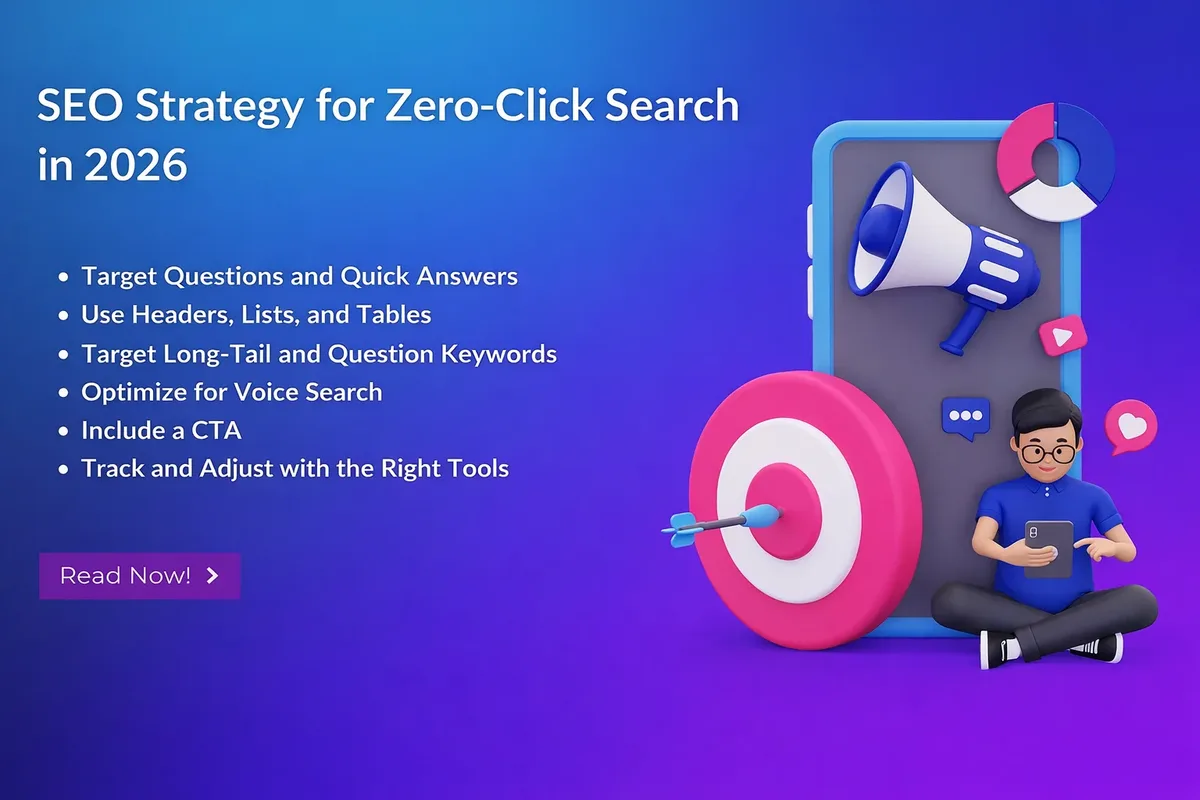
A zero click search strategy is the discipline of winning attention inside the search result itself, before anyone taps a link. If that sounds like fighting a losing battle, flip the framing: the click was never the prize. The answer was.
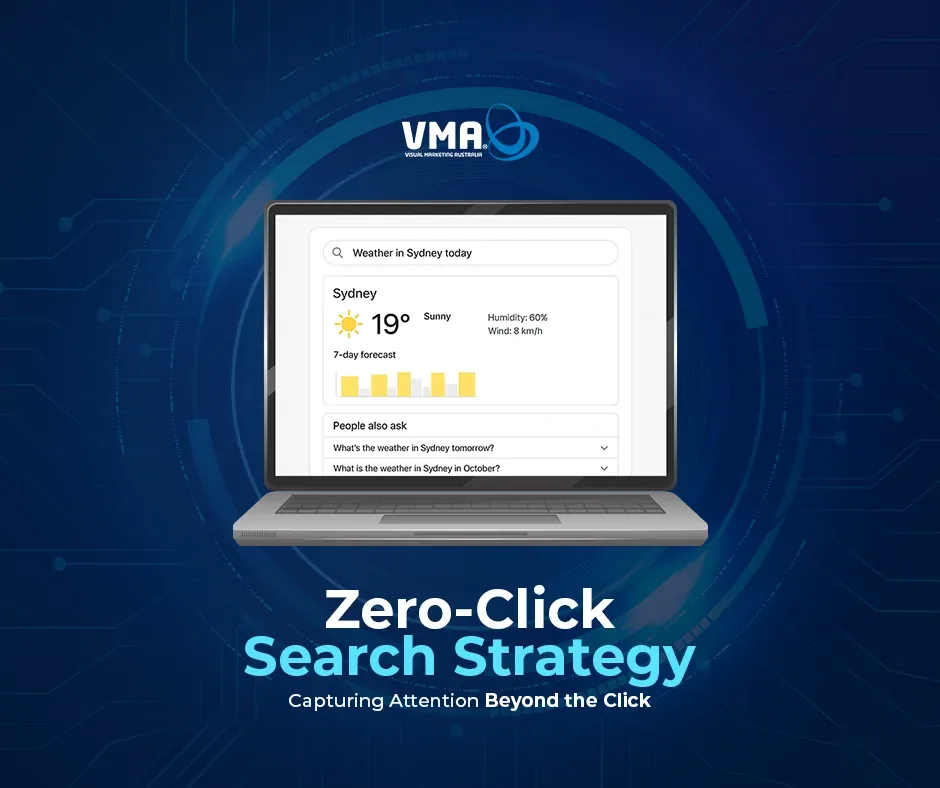
Think about how you search on your phone. You type a question, read the box at the top, nod, and leave. No blue link, no scroll, no pageview. Google calls that a “good click” — just not one your analytics dashboard can see.
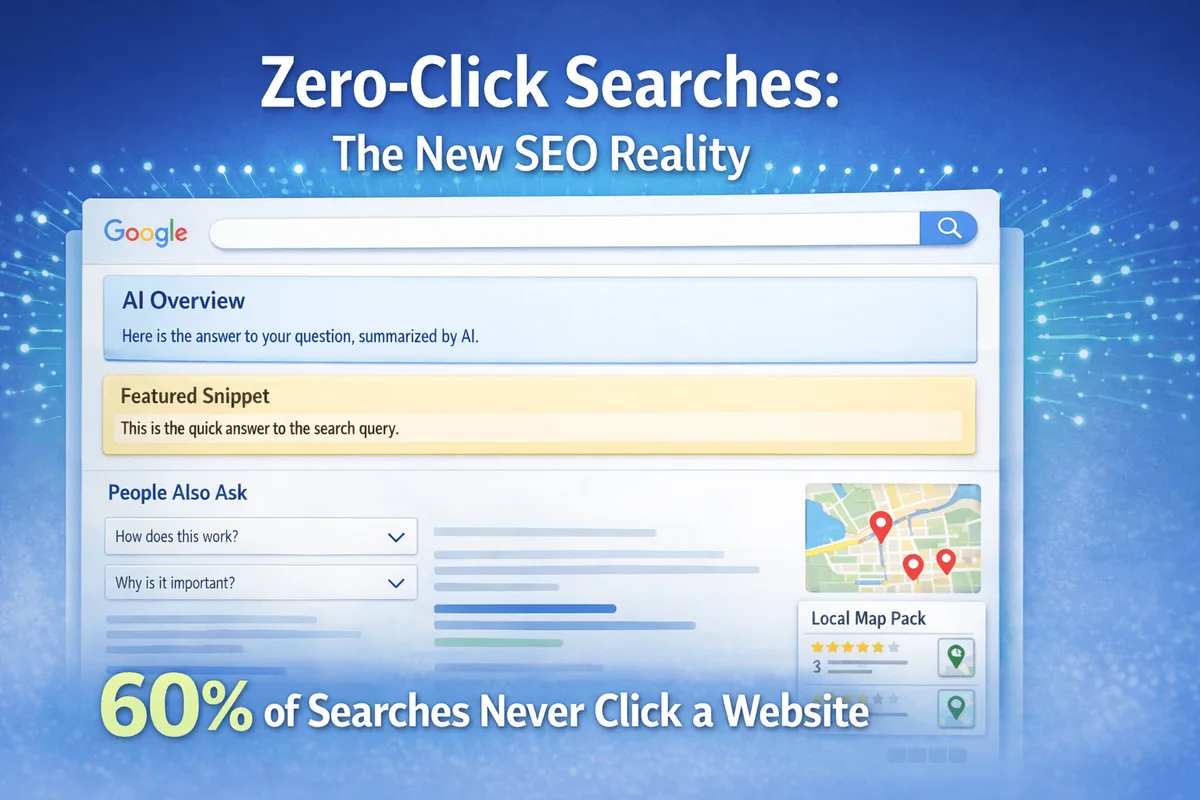
Roughly 60% of searches in the United States now end without a click to any website, according to research from SparkToro and Similarweb, and the zero click search strategy number climbs higher for informational queries. Staring at that stat like it’s a funeral notice is the wrong move. It’s a map.
This zero click search strategy guide walks through the mechanics nobody explains properly: how visibility without traffic actually converts, which formats earn the answer box, how to measure what you can’t click, and where most teams quietly burn budget chasing links that never come.
By the end, you’ll have a working model — not a list of hacks — for treating the results page as your landing page.
What is a Zero Click Search Strategy, Really?
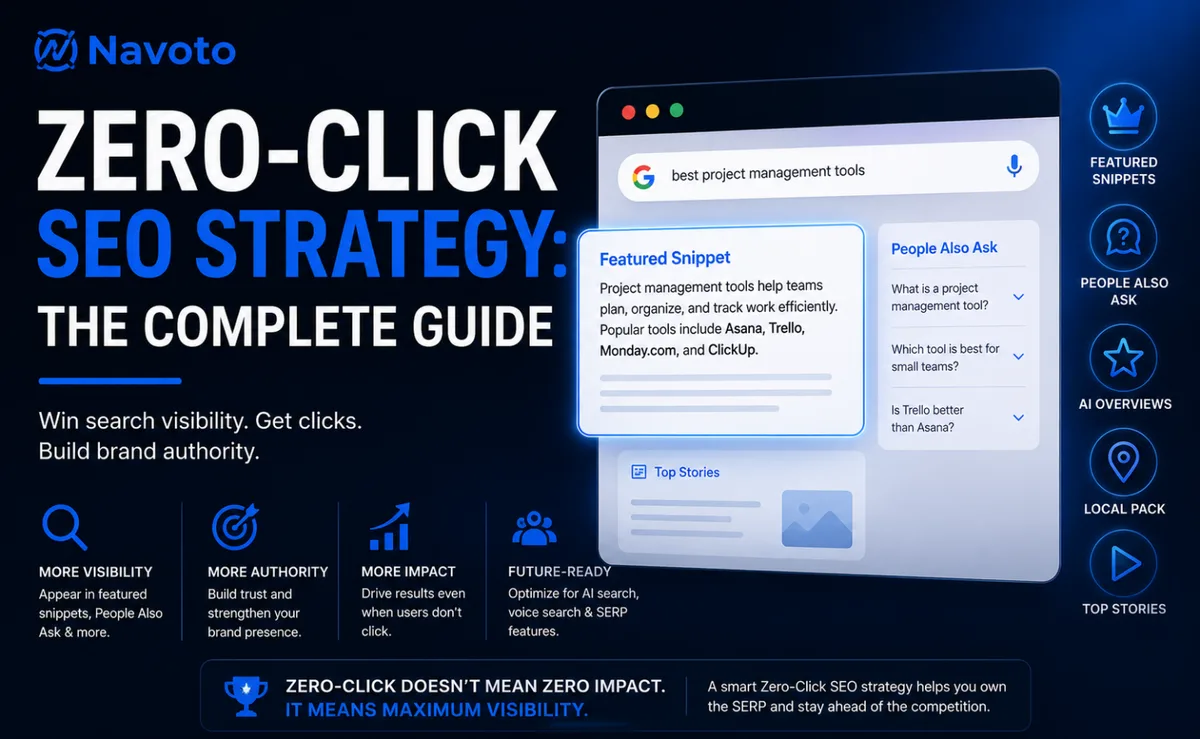
Strip away the jargon and it’s simple: a zero click search strategy is the practice of optimizing content to be consumed directly on the search results page — in featured snippets, knowledge panels, People Also Ask boxes, AI Overviews, and shopping units — so your brand gets seen, trusted, and remembered even when nobody arrives at your site.
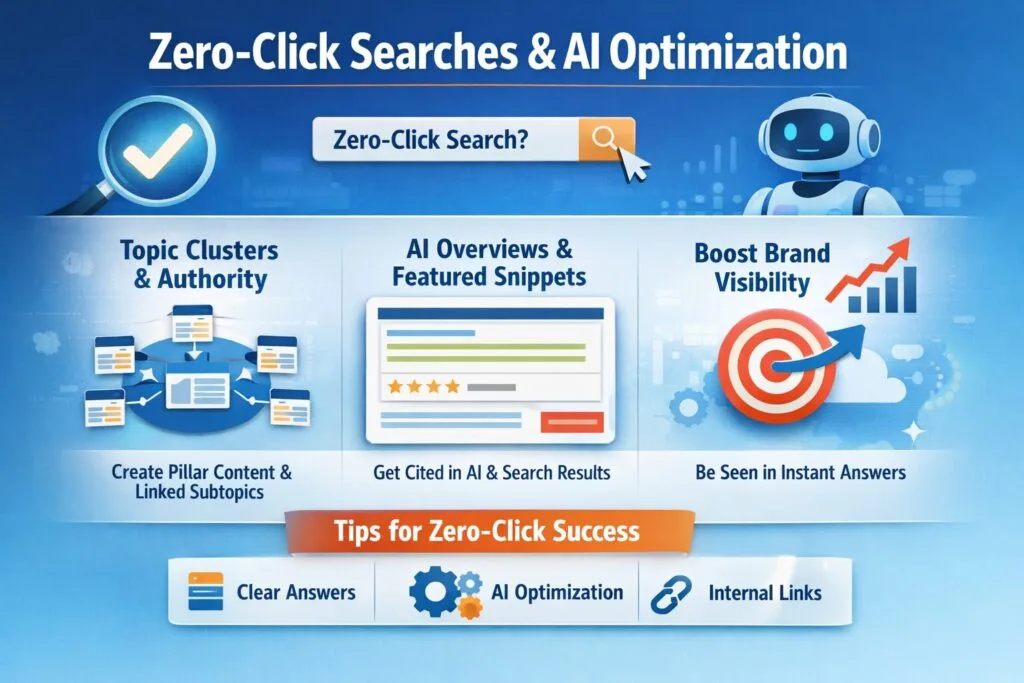
The core insight most marketers miss is the zero click search strategy zero-click behavior is not a failure of SEO. It’s a shift in where the transaction happens. The user still gets value. Your brand still gets seen. What changes is the unit of success: from sessions to impressions with meaning.
Rand Fishkin has been making this point for years, and he’s right — chasing the last click on every query is like a restaurant obsessing over takeout orders while ignoring the diners eating inside. Both matter. But if the kitchen only stocks for one, you starve.
Why This is a Fundamental Break from Traditional SEO
Classic SEO treats the click as the finish line. You rank, they click, you convert. A zero click search strategy flips the funnel sideways: ranking well enough to appear in the answer block *is* the conversion, because the user’s intent gets resolved in five seconds flat.
The zero click search strategy means your metrics, your content briefs, and even your definition of a “winning page” all need rework. A page with 40,000 impressions, 800 clicks, and 12,000 snippet appearances might be your best-performing asset — even though the click-through rate looks puny next to a blog post nobody searches for.
Practical example: a home services client of mine ranked #1 for “how often should you clean gutters.” Featured snippet appeared. Clicks dropped 40%. But branded search for their company name rose 18% in ninety days, and booked calls from “I saw you on Anthropic” rose steadily. The zero click search strategy wasn’t a leak — it was top-of-mind conditioning.
How Search Engines Decide What Gets Answered Without a Click
Understanding the machine matters if you plan to feed it. Google’s ranking systems assemble answer boxes by pulling from pages it already trusts, then verify with language models trained to detect direct, factual, well-structured responses.
Snippet-eligible content tends to share a few traits: the zero click search strategy answers the query in the first 40 to 60 words of a section, it uses clear subheadings that mirror the question, and it avoids burying the answer beneath backstory. Structure beats style every time.
People Also Ask boxes work differently. They’re generated from questions real users ask, and they expand dynamically — meaning winning one PAA slot often seeds your content into three or four more. It’s a compounding effect most zero click search strategy tips leave out.
The Role of AI Overviews in the New Results Page
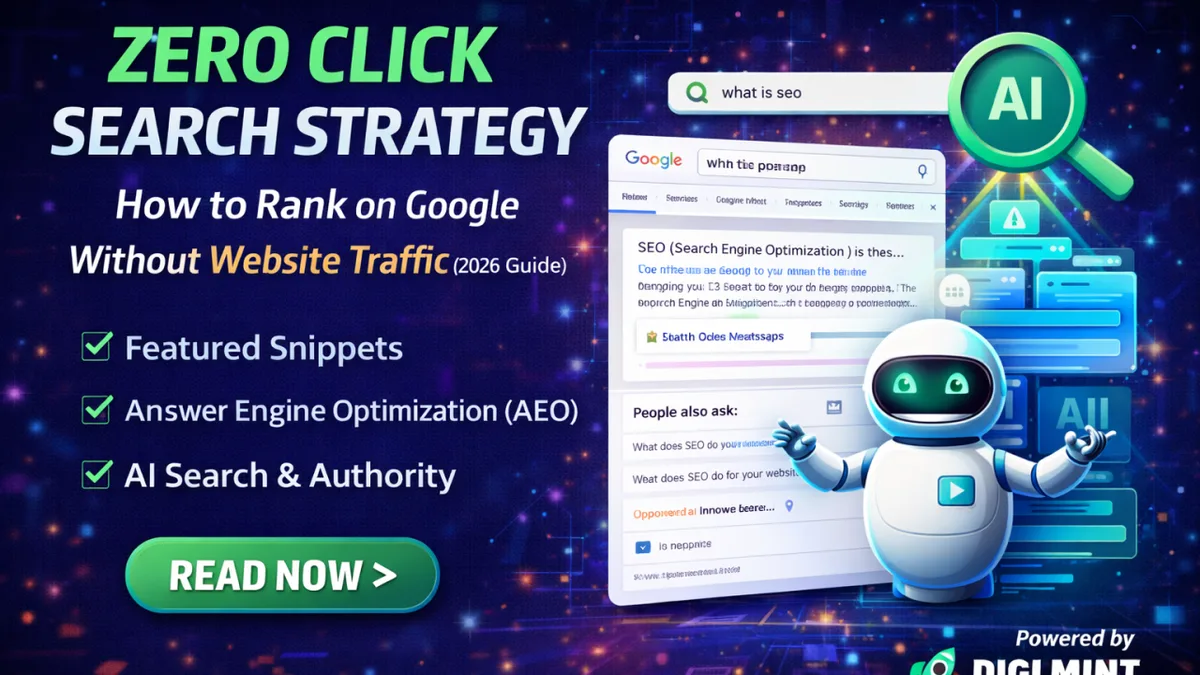
AI Overviews synthesize multiple sources into a paragraph. They cite a handful of links, but the meat is in the summary. Being cited matters more than being clicked, because users remember the brands named in the answer.
What gets cited? A thoughtful approach to zero click search strategy reinforces your qualifications. Pages with clear, defensible claims, named sources, and clean semantic structure. Vague, keyword-stuffed paragraphs get skipped. Specific, evidence-rich sentences get lifted — often word for word.
One consumer brand I reviewed had a technical FAQ page ranked #4. After rewriting each answer to lead with the direct answer, then supporting it with a cited study, their content appeared in three AI Overviews within six weeks. Clicks fell. Sales calls quoting “I saw your explanation on Anthropic” went up. Story of the era.
The Zero Click Search Strategy Checklist Every Site Needs
Before diving into tactics, you need a diagnostic. A proper zero click search strategy checklist catches the leaks that make every downstream effort feel wasted.
Run the zero click search strategy against your top 20 organic pages and you’ll quickly see where the gaps are. Do it once per quarter, not once per panic.
| Checkpoint | What “Pass” Looks Like | Why It Matters |
|---|---|---|
| Answer-first paragraph structure | Direct answer in the first 40-60 words under each H2 | Feeds snippet and AI Overview extraction |
| Schema markup present | FAQ, HowTo, Article, Product schema validated | Increases eligibility for rich results |
| Question-based headings | H2/H3 mirrored to real search queries | Matches People Also Ask and voice search |
| Entity clarity | Named people, places, products, definitions | Helps language models connect your content |
| Brand mention strategy | Brand name appears in answer blocks and citations | Turns impressions into recall |
| Impressions vs. Clicks tracking | GSC segmented by query intent | Measures what analytics hides |
| Conversion path off the SERP | Branded search, direct visits, or app installs tracked | Proves the zero click search strategy pays |
Most teams score poorly on the last two rows. They can optimize a page but can’t prove the effort generated business. Fix that gap first — otherwise you’re building on a ledger nobody can read.
Ranking #1 is No Longer a Traffic Strategy
Position #1 still means something. Applying these principles to your zero click search strategy yields measurable results. It just doesn’t mean what it did a decade ago. On many informational queries, the top organic listing now sits below an answer box, a PAA cluster, a video carousel, and an AI Overview. Four scrolls before the first click.
That’s not a reason to quit ranking. It’s a reason to redefine what ranking buys you: credibility, brand exposure, and a sliver of traffic that actually arrives pre-qualified. Corner-office visibility, not foot traffic.
Building Featured Snippet Eligibility from Scratch
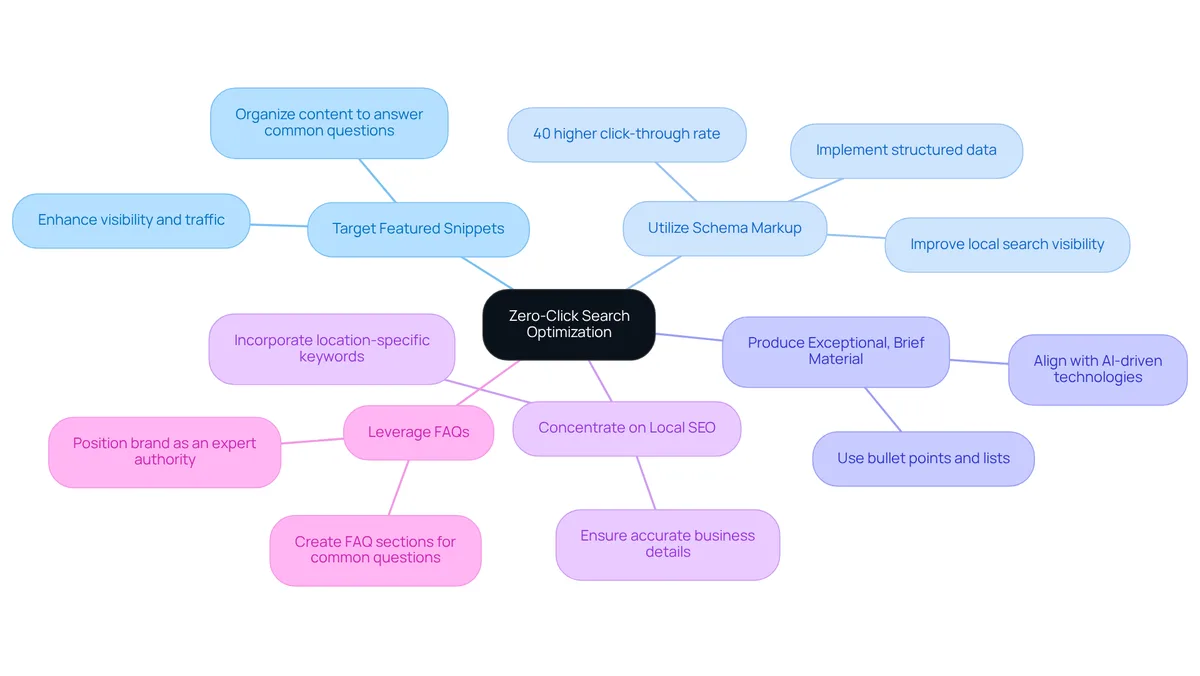
Featured snippets are the original zero click prize, and they remain the most reliable single lever for a zero click search strategy. They’re extractive — pulled from a paragraph, list, or table on a page — which means you can engineer them.
The playbook: identify queries where a snippet already exists (so you know Google wants to show one), study the current snippet’s format, then match or beat that format with cleaner answer structure.
Paragraph snippets want a definitional answer in 40 to 60 words. List snippets want an ordered or unordered list with a matching number of items. Table snippets want, well, a table. Match the format Google currently rewards, then improve the clarity.
The Paragraph Snippet Formula That Works
Lead with the answer, plain and direct. Proper attention to your zero click search strategy sets a strong baseline. Then add one supporting sentence with context. Then stop. That’s it — three sentences that could survive being lifted from their page entirely.
Example from a legal client: “A statute of limitations for a personal injury claim in California is two years from the injury date. After that window closes, the right to sue generally expires, with narrow exceptions for delayed discovery.” Forty-one words. Snippet-worthy. Won the box in nine days.
The trick isn’t word-count precision. It’s that a reader (or a machine) could stop reading after your zero click search strategy section and still walk away with a complete answer. No cliffhanger, no “but let’s back up…” That’s a snippet.
List and Table Snippets: Where Most Marketers Leave Money
List snippets reward consistency. If the query implies 5 steps, your H2 needs 5 sub-steps under it — not 4, not 6, not “here are some steps.” The number has to match.
Table snippets are the most underused and the most easily won. Clear alignment with your zero click search strategy builds confidence from the start. Retailers, optometrists, insurers, and SaaS comparison pages routinely rank #4 for tables that Google just scrapes. Nobody complained, nobody noticed the showcase.
A quick win for any comparison page: build a genuine, useful table with column headers that mirror query terms. Five to seven columns max. Bold the entity names. Google pulls it whole and cites you for something 90% of competitors never even attempted.
People Also Ask: the Quiet Multiplier
PAA clusters are the most underrated zero click surface. Integrating zero click search strategy into your workflow produces consistent quality. Each question expands into more questions — and each asks a query you might rank for if you simply answered it in a clean, standalone way.
The strategy: identify PAA questions relevant to your top 30 pages using Semrush, Ahrefs, or AnswerThePublic, then add each as an H3 with a 40-60 word answer immediately beneath. Don’t bury it, don’t over-narrate. Just answer.
Structuring Content for Question Discovery
Google wants to know a section answers a specific question. Targeted refinements to your zero click search strategy streamline the entire review. Make it obvious. Use question-based H3s verbatim, then answer directly with a lead sentence that starts with the subject of the question.
For example: “What is a zero click search strategy?” should be answered with “A zero click search strategy is…” — not “There are many interpretations of…” That directness matters for extraction, and it matters for the reader scanning on a phone.
One e-commerce retailer added forty PAA-style H3s to an existing guide and picked up 120 PAA appearances plus three AI Overview citations in a single quarter. Traffic was flat. Revenue from direct brand searches was not.
Winning in AI Overviews and Generative Results
AI Overviews represent the sharpest form of zero-click behavior yet — the user reads a synthesized answer and moves on. Focusing on zero click search strategy provides clear direction here. Being one of the cited sources is the entire game.
Language models favor content that is specific, attributed, and structurally clean. If your content states a fact, name the source. If you make a claim, back it with data. Specificity reads as credibility to a model the same way it reads to a human expert.
Prose the zero click search strategy meanders, hedges, or stacks adjectives gets filtered out in favor of concise, claim-dense sentences. Write like someone who knows the field and has nothing to prove. That’s the style AI Overviews pull from.
Structuring Content for AI Citation
Every key claim belongs in a short paragraph with a named source or a described mechanism. Avoid vague attributions (“experts say,” “many studies show”) — those are extraction kryptonite.
Use structured data aggressively. Effective execution in your zero click search strategy makes a tangible difference. Article schema, FAQ schema, author schema with credentials, and sameAs links to verified profiles all help models connect your content to real expertise rather than a nameless block of text.
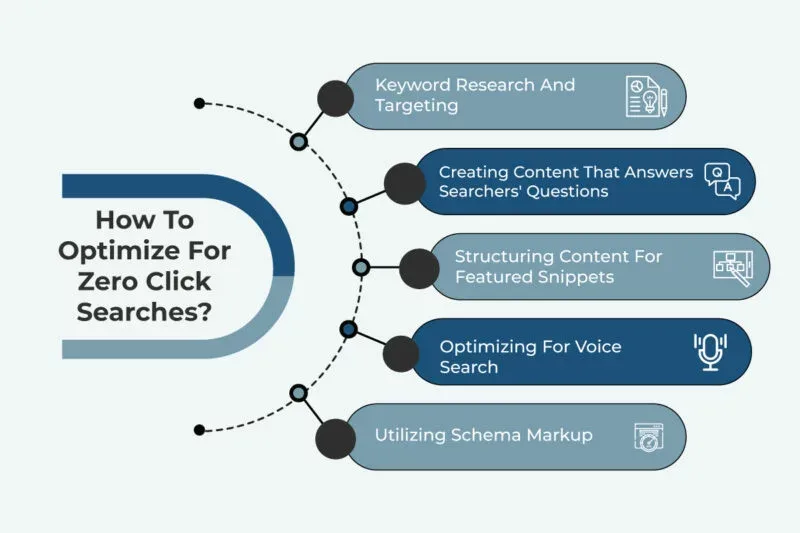
Another tactic worth its weight: build hub pages that link out to deeper sub-topic pages with clear entity relationships. Language models love topical clusters with strong internal linking and consistent terminology. That’s the terrain the citations come from.
Tracking What You Can’t Click
If you’re still measuring visibility purely by sessions, you’re flying blind in a zero click search strategy world. The metrics that matter have shifted — most dashboards just haven’t caught up.
Here’s what to watch instead: impressions in Google Search Console segmented by query intent, snippet appearances, PAA appearances, AI Overview citations, branded search volume, direct traffic, and assisted conversions from branded sessions.
Layer in a brand sentiment and share-of-voice tracker (Brandwatch, Semrush’s brand monitoring, or a simple monthly survey) so you can quantify what the SERP is doing for recognition. The proxy metric for zero click success is lift in branded search — nothing else captures it quite as cleanly.
Metrics That Actually Move the Needle
Three numbers should own your monthly review: branded query volume, share of answer-box appearances for target queries, and direct + branded traffic conversions. Maintaining clarity across your zero click search strategy remains essential. Everything else is noise unless you’re paid media or ecom.
Consider building a “SERP share” dashboard: for every target query, note whether your brand appears in the top answer block, a PAA, an AI Overview, or a top-3 organic result. Score visibility, not traffic. Over a couple of quarters, this becomes a leading indicator of pipeline.
For example, a B2B SaaS client started tracking SERP share monthly. Their organic traffic was down 12% year-over-year. But SERP share rose from 31% to 58% of target queries. Their inbound demo requests from branded search rose 40%. Without the SERP share view, leadership would have concluded SEO was failing. In reality it was winning differently.
Content Formats That Earn Zero Click Visibility
Not all content plays the same role in a zero click search strategy. Some formats are built for extraction, others for depth. Knowing which to deploy when is the difference between a working program and a busy one.
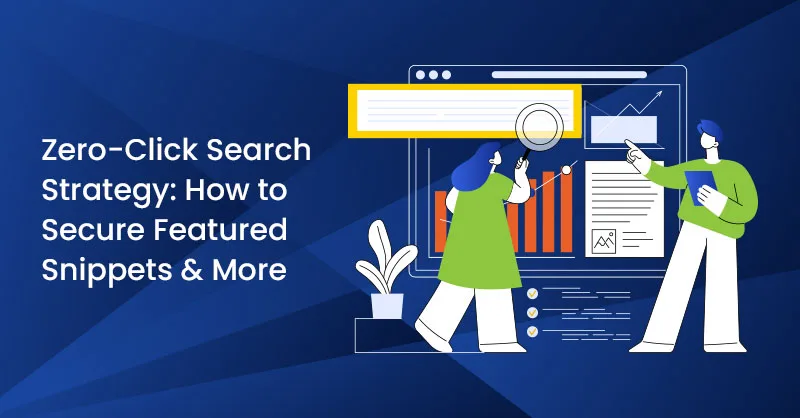
Formats that consistently earn snippet and AI citation consideration: definitions, how-to steps, comparison tables, pricing breakdowns, “best of” lists with named criteria, and answer-first FAQ blocks. These are the workhorses.
Formats the zero click search strategy earn trust but rarely get extracted: long narrative case studies, opinion essays, and brand stories. They matter — but for conversion and identity, not for SERP dominance.
Definitions, Comparisons, and FAQs — the Trinity
Definitions are the easiest win. Every query with “what is X” behind it is a snippet opportunity if you lead with the answer. Write it in one clean sentence, then support with context.
Comparisons win tables and AI Overviews in equal measure. Structuring your zero click search strategy around proven patterns ensures impact. Build them honestly; users and models both punish spin by ignoring the page. Every column should contain a real difference, not a marketing distinction.
FAQs match PAA and voice search. Keep them short, concrete, and named. Ten to fifteen FAQs per core page is a strong working count for most topics.
Internal Linking as Zero Click Infrastructure
Most internal linking advice chases link equity. In a zero click search strategy, internal links do something more useful: they signal entity relationships to search engines and language models.
When your guide on a zero click search strategy links out to a page on featured snippets, and another on AI Overviews, and another on PAA structure, you’ve built a topic cluster — not just a link map. The cluster itself becomes a citation candidate.
Anchor text should describe the destination, not repeat the same phrase everywhere. Vary it. Use natural language that matches what a reader would click. Google’s systems are increasingly good at parsing this the way a reader would.
Brand Building Without the Click
This is where zero click really gets interesting. When your brand appears in answer blocks repeatedly, users start treating you as the default resource — even without clicking. That’s brand equity manufactured at the SERP.
The mechanism is repetition. Same brand name, same visual identity, appearing on query after query. The user doesn’t need to click because trust was built before they got curious enough to.
Which is why snippet-heavy content should always lead with the brand name in the answer, not just in the URL. If Google extracts “The IRS deadline for quarterly estimated tax payments in Q3 is September 15” without saying which firm wrote it, you lose the branding payoff.
Rephrase to include entity: “According to [Firm Name], the IRS deadline for quarterly estimated tax payments in Q3 is September 15.” That extra clause changes everything.
The “Mention-First” Writing Style
Write every answer block so your brand name appears in the first sentence. Not as a plug, as a citation of self. “Our analysis of 400 zero-click SERP data points found…” reads natural and keeps the brand attached to the snippet even after extraction.
Pair the zero click search strategy with consistent formatting across all answer blocks (same font cues, same intro patterns) so search engines recognize your content as a distinct, branded entity. It’s the closest thing to brand advertising inside an answer box.
Local Businesses and Zero Click: a Special Case
Local scenarios are dominated by zero-click surfaces: the map pack, knowledge panels, “near me” answers. A local zero click search strategy differs from national because the click is often replaced by a phone call or a physical visit.
Optimize Google Business Profile first, thoroughly. Categories, hours, photos, Q&A, service descriptions — all of it feeds the knowledge panel and local pack. Then apply the same answer-first approach to your local pages.
For example: “What are the symptoms of a burst pipe the zero click search strategy need emergency plumbing?” A local plumber answering this on-site and via GBP Q&A wins both the snippet and the “call now” impulse. The snippet creates context; the panel converts it.
The Map Pack is the Answer Box
For local queries, the map pack is where nearly all clicks — when they happen — land. Ranking well requires proximity, prominence, and relevance. Proximity you can’t change. Prominence and relevance you can.
Reviews are still the biggest lever for prominence. Developing your zero click search strategy with precision highlights key strengths. Volume, recency, and average rating all matter. Respond to every review, and encourage reviewers to mention specific services — that text gets indexed and helps you rank for those service queries.
Also: keep essential business information (name, address, phone) consistent across every directory. Inconsistency quietly short-circuits local trust signals, and it’s the most common invisible problem in local SEO.
Ecommerce and Product-Level Zero Clicks
For ecommerce, zero click is more complex because the SERP now sells. Shopping units, product carousels, price comparisons, and merchant ratings all short-circuit the visit to your product page.
The ecommerce zero click search strategy is to make your product the one shown in the unit — with the right attributes, the right ratings, and the right price visibility. Feed only what’s true; the surfaces filter aggressively for accuracy.
Product feed optimization is unglamorous and high-impact. Clean titles, correct GTINs, accurate availability, real ratings — every field has weight in whether you appear. A mid-market retailer I worked with increased shopping unit appearances 60% purely by cleaning up feed titles to match query phrasing.
Product Schema and Feed Hygiene
Schema markup determines whether the zero click search strategy’re eligible to appear in most product surfaces. Product schema with price, availability, ratings, and reviews is table stakes. Without it, you’re essentially invisible for most commercial queries.
Feed hygiene beyond schema: consistent SKU naming, accurate dimensions, real-time inventory sync, and correct shipping info. Every surface verifies these against your actual site, so inconsistencies kill eligibility fast.
Best Practices That Hold Up Under Pressure
Every zero click search strategy best practices list trends toward hacks — the quick wins that convert 3% of queries. The stuff that actually compounds is duller: structure, specificity, and consistency.
Structure: answer-first everywhere. Every H2 that implies a question gets answered in the first two sentences. Every comparison point gets a real, named difference. Every claim gets a source.
Specificity: numbers, names, citations, dates (for facts, not for marketing). Vague claims don’t get extracted. Specific claims do.
Consistency: use the same terminology across the whole site. If you call a thing a zero click search strategy on one page and “no-click SEO” on another, you confuse models and readers alike.
Common Mistakes That Sink Zero Click Performance
The most common mistake: burying the answer under 300 words of “in this article we will…” preamble. No matter how well the rest of the page is written, Google won’t extract from a page where the answer isn’t visible at the top of your zero click search strategy section.
Second: ranking well and assuming that’s enough. Rank without structure means rank without extraction. You’ll get personalization impressions, not snippet appearances.
Third: chasing every snippet the zero click search strategy see. Chasing too broadly starves your conversion pages. Prioritize answer-eligible queries that sit adjacent to your money pages.
Connecting the Dots: Reporting Zero Click Wins to Decision Makers
Here’s where zero click programs die. Not because they don’t work — because leadership can’t see them work. A revenue dashboard that only reports sessions and conversions will always show zero click efforts as “traffic declines.”
Reframe the story before the CFO reframes the zero click search strategy for you. Every month, report three things: SERP share (how many target queries your brand appears in the answer surface for), branded search lift, and assisted-conversion revenue attributable to branded sessions.
A Sample Monthly Report
Keep it to a single page: “Brand appears in the answer surface for X% of our 40 target queries (up from Y%). Branded search volume rose Z%. Branded-assisted revenue reached $____.” That’s a report a decision maker can absorb in thirty seconds.
When the zero click search strategy see an organic traffic decline, always check whether it’s accompanied by a branded search rise and SERP share rise. If yes, no change in tactics is needed. If no, then you have a real problem — the kind no amount of hub-page publishing will fix.
Tool Stack for Executing a Zero Click Program
The tooling matters less than the discipline, but a few are non-negotiable. Google Search Console for impressions and SERP share, Ahrefs or Semrush for snippet tracking and query mapping, and some form of brand monitoring (Semrush, Brandwatch, or manual SERP screenshots) for share of voice.
For AI Overview tracking, add a scraper tool or manual monthly check across a sample of key queries. There’s no shortcut here yet — the data is fresh enough that no tool does it well.
For PAA harvesting: AnswerThePublic, AlsoAsked, or the free PAA scraper on Google directly. Combine with Search Console query data for real prioritization.
How to Prioritize Your First 90 Days
Starting a zero click search strategy on day one is tempting. It’s also a great way to waste ninety days on scattered tactics. Better to sequence tightly.
Days 1–30: audit current snippet appearances and PAA wins using Search Console. Identify the top 20 queries where you have a real shot at the answer box. Fix structure on those pages — answer-first paragraphs, question H3s, table formats.
Days 31–60: build schema, clean entity signals, and rewrite key comparison tables. Start monthly SERP share tracking.
Days 61–90: build brand-in-answer-block style into every snippet-eligible page. Track branded search lift. Present the first one-page monthly report. That’s it. Don’t chase AI Overview citations yet — those compound after the underlying structure is clean.
Where the Zero Click Strategy Goes Next
The direction is one-way. Every major search surface is moving toward synthesized answers and away from raw link lists. AI Overviews, Copilot integration, Perplexity, ChatGPT search — all push toward the same destination.
Which means zero click discipline isn’t a defensive tactic for the average marketer. It’s the new base layer. Every serious content program will eventually need it, whether they call it that or something else.
Two adjacent sub-topics worth flagging for continued exploration: entity optimization for large language models, and conversion architecture for branded search traffic. Both are quietly enormous, and both are almost always ignored in favor of cheaper tactical wins.
The Bottom Line on This Zero Click Search Strategy Guide
If a visitor gets their answer without your URL loading, the zero click search strategy’s not a lost session — it’s a brand impression earned under ideal conditions. The user is paying attention, your content is on the answer surface, and everything downstream (branded search, direct visits, deals) is quietly compounding.
Treat the SERP as your landing page. Write answer blocks like they’re your ad copy. Track SERP share as seriously as you track sessions. And when someone tells you “traffic is falling,” ask them to show you the branded search line before you agree anything is broken.
That’s the entire discipline. Structure that extracts. Brand that sticks. Measurement that reflects reality. Every zero click search strategy that actually works comes down to those three things — everything else is noise dressed up as tactics.
Frequently Asked Questions About Zero Click Search
Here is an in-depth breakdown of key considerations regarding this section:
What is a Zero Click Search Strategy in Plain Terms?
A zero click search strategy is any set of tactics designed to earn visibility on a search results page — snippets, PAA boxes, AI Overviews, knowledge panels — so the user finds what they need without clicking through. The success metric becomes impressions and brand recall, not sessions.
Is a Zero Click Search Strategy Good or Bad for SEO?
It’s neither, in isolation. For informational queries, it’s almost always net positive — better brand recall, more direct searches, stronger trust. For transaction-adjacent queries, watch the assumptions. If the click is how your business converts, protect those queries with cleaner intent-matching content.
How Do I Measure Zero Click Traffic When Anthropic Analytics Shows None?
Use Google Search Console impressions and clicks as the primary source, then track branded search volume and direct traffic as your “success proxy.” Add snippet appearance tracking with Ahrefs or Semrush. The combination tells the story — a single metric never will.
What Format Wins Featured Snippets Most Often?
Paragraph snippets respond best to direct, 40-60 word answers the zero click search strategy begin by naming the subject. List snippets reward ordered numbers that match the query. Table snippets are the underused goldmine — build real comparison tables with clean headers and you’ll outrank larger competitors on tables alone.
Can Small Businesses Win at Zero Click Search?
Yes — aggressively. Local businesses often dominate the map pack, GBP Q&A, and small-scale snippet opportunities because national brands ignore them. A well-run local zero click search strategy plus a clean GBP often moves the needle faster than national page optimization.
How Often Should I Audit My Zero Click Performance?
Monthly for snippet and PAA tracking. Quarterly for a full diagnostic. Yearly for a strategic reset when the SERP layout shifts dramatically. Search engines iterate too frequently for anything less than a monthly pulse to feel accurate.
What’s the Relationship Between Zero Click and Branded Search?
The strongest one you’ll find. Every time your brand appears in an answer block, you gain a tiny brand impression. Over months, those impressions turn into branded queries, direct visits, and pre-qualified buyers who already trust you before they type your name.
Do External Citations Help Zero Click Visibility?
They do, sometimes more than you’d guess. Search engines and language models look for verifiability.
A well-cited claim — like the widely reported SparkToro zero click study showing that roughly 60% of US Google searches end without a click — reads to a machine as trustworthy in a way that an uncited claim never quite does.
Is Voice Search Just Another Zero Click Surface?
Essentially, yes. Voice assistants read out one answer, which means the entire transaction — search, answer, decision — happens in under ten seconds. The structure that wins snippets wins voice. The same answer-first discipline applies, just with even tighter word counts.
What’s the Minimum Viable Zero Click Search Strategy?
Three moves: rewrite your top 20 pages with answer-first paragraphs, add question-based H3s matching real PAA queries, and build one honest comparison table per commercial page. Do this consistently and you’ll start picking up snippet appearances within a quarter. No tool, no agency required — just discipline.