Word count for SEO is one of those topics that divides writers and analysts into two loud camps, and honestly, both camps are half right. Some swear that longer posts always win; others insist Google stopped counting words years ago.
Here is the truth I have landed on after years of publishing, pruning, and watching rankings breathe: length itself is a symptom, not the cure.
What actually moves traffic is whether the piece answers the searcher’s question completely, and word count is just the most visible byproduct of that completeness. So instead of chasing a magic number, this guide walks you through seven tips that turn word count for SEO into a deliberate publishing decision rather than an accident.
The word count for SEO will cover how to read the competition, where thin content quietly kills you, why splitting topics matters, and how to stop padding once the answer is done. Think of this as the parent topic in a larger cluster — the hub that connects keyword research, content briefs, and editorial standards. Later sub-topics like internal linking and content refresh checklists hang off it naturally.
Why Word Count for SEO Still Matters in Practice
Let me clear up the confusion early. Focusing on word count for seo provides clear direction here. Google has never published a minimum word count, and nobody on the ranking team has ever said “1,500 words or else.” That part of the myth is dead.
But word count for SEO remains useful for a much more practical reason: it is a rough proxy for coverage.
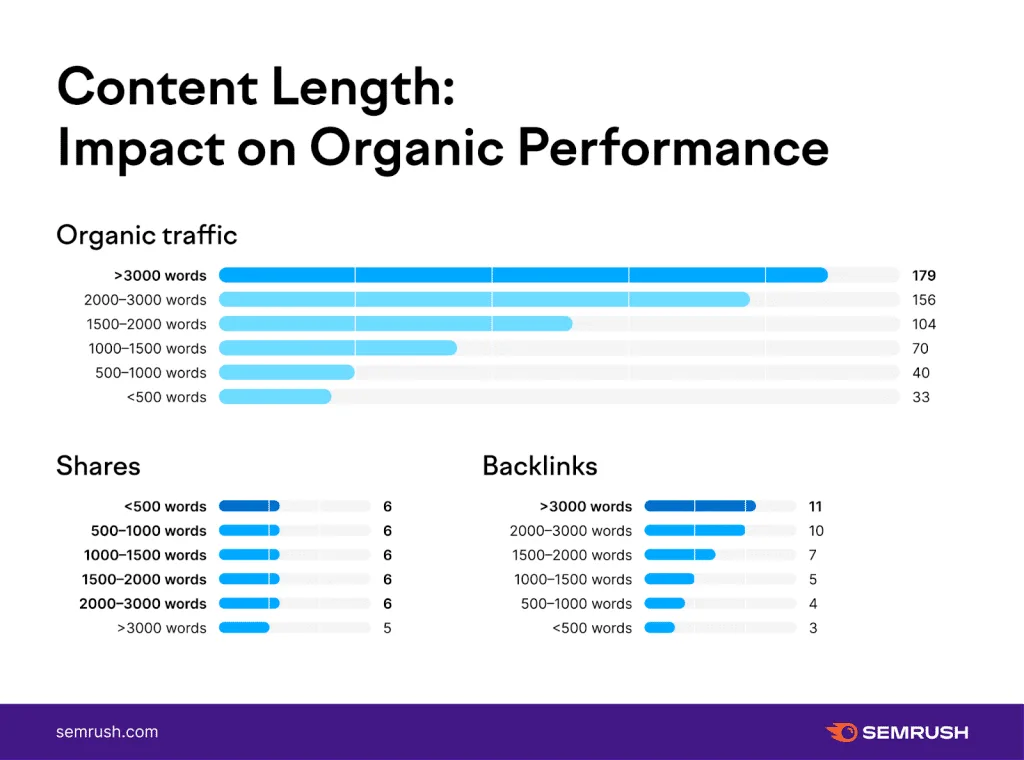
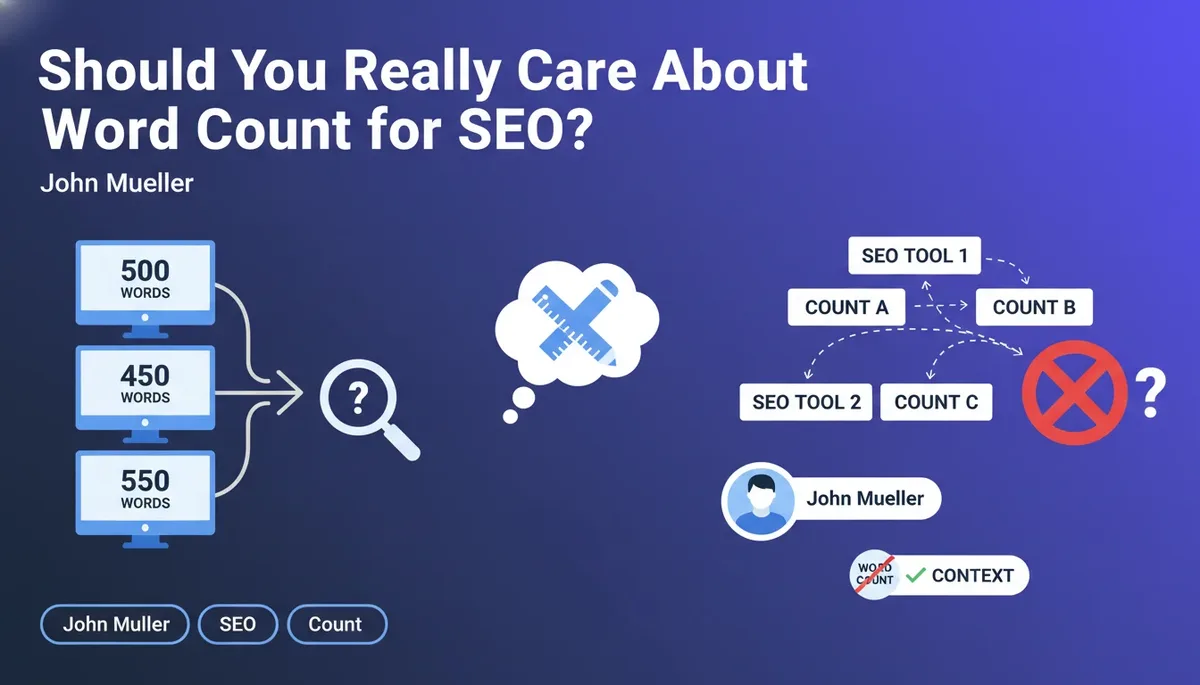
When a page runs 900 words and its competitors run 2,200, the shorter one usually skips a sub-question, a caveat, or an example. The length difference is a symptom of an incomplete answer. A reader who feels that gap hits the back button, and that behavior signal does more damage than any algorithm update.
There is also a scannability angle. Very short pages struggle to earn featured snippets, cannot host a comparison table without feeling cramped, and rarely satisfy someone in the research phase who wants three perspectives before deciding. That is why any serious word count for SEO guide starts with coverage, not counting.
One more thing worth stating plainly: word count targets belong in a brief, not in a quota system. Refining each detail of your word count for SEO strengthens this section. The moment writers get paid per hundred words, padding becomes rational, and padding is the exact behavior that punishes rankings.
The 7 Powerful Tips to Get Word Count for SEO Right
Seven tips follow, grouped by what they fix. The first two solve the “how long should this be” question. The next three solve structural problems that inflate or deflate a piece. The last two keep you honest after publishing, when entropy sets in and pages quietly drift.
Treat this as your working checklist — the same seven items I run against every landing page and blog post before it ships.
Tip 1: Reverse-Engineer Length from the Actual SERP
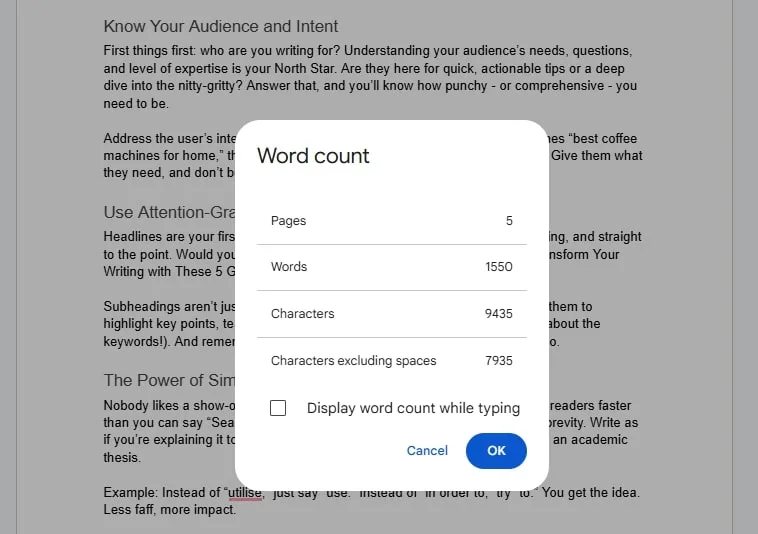
Before writing a single sentence, open the top ten results for your target query and count them. Effective execution in your word count for SEO makes a tangible difference. Not to copy, but to calibrate.
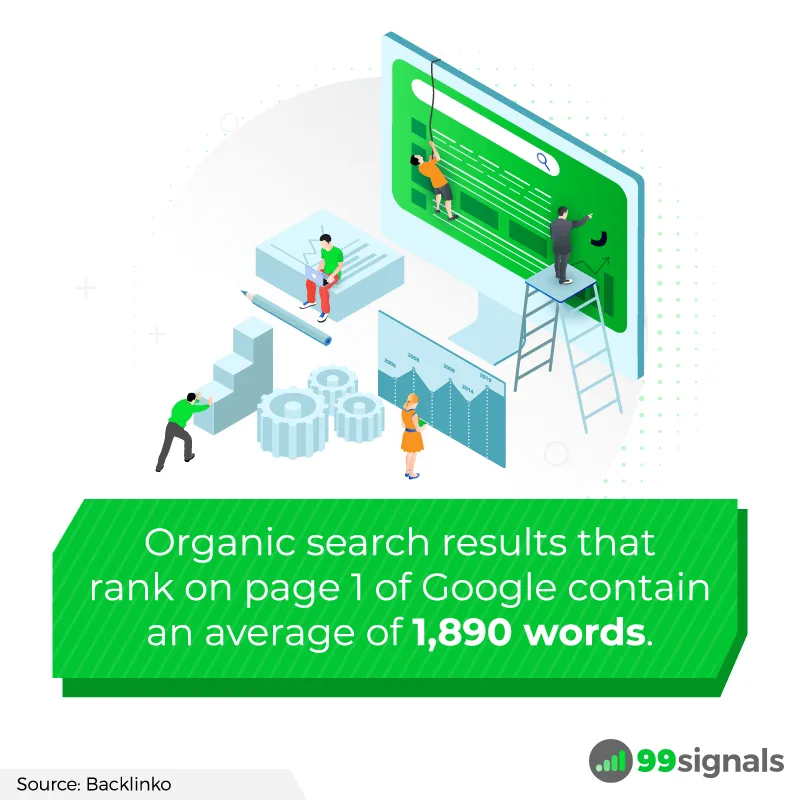
If the median sits at 1,800 words and the top three cluster between 2,000 and 2,600, that tells you the query rewards depth — people searching it want more than a quick paragraph.

Use a spreadsheet, pull the word counts, note whether the page is a listicle, a comparison, or a guide, and record how recently each was updated. The pattern you are looking for is the shape of the answer, not the exact number. This is the most reliable word count for SEO starting point I know, and it takes twenty minutes.
Here is a rough frame I use for planning. Refining each detail of your word count for seo strengthens this section. It is a benchmark, not a rule.
| Content Type | Typical Range | What Drives The Number |
|---|---|---|
| Quick answer / definition | 600–900 words | Single question, one follow-up |
| How-to tutorial | 1,200–1,800 words | Steps plus screenshots and pitfalls |
| Pillar guide | 2,500–4,500 words | Multiple sub-topics, tables, examples |
| Comparison / buyer intent | 1,500–2,500 words | Criteria, trade-offs, verdict |
| News or update post | 400–800 words | Speed and clarity over depth |
Notice how a news post can rank at 500 words while a pillar needs thousands. That is search intent doing the work. Any word count for SEO best practices discussion that ignores intent is just arithmetic.
Tip 2: Match Length to Search Intent Before You Match Competitors
Search intent is the single strongest variable in the length equation. Maintaining clarity across your word count for SEO remains essential. Someone typing “what is a canonical tag” wants a definition in under a minute.
Someone typing “canonical tag vs redirect” is already informed and wants a decision framework. Same topic family, wildly different ideal lengths.
A practical test: read the top result for your query out loud. If it feels like it answered you in the first paragraph and then kept talking, the query skews short. If you finish it still unsure, the query skews long and your job is to close that gap.
I keep a simple rule for informational queries. Answer the question in the first 100 words, then earn the remaining length by covering what happens next — edge cases, mistakes, when the advice fails. That structure satisfies the skimmer and the deep reader at once.
It is also why the concept of word count for SEO tips is really a conversation about reader patience, not editor preference.
Commercial queries behave differently. A thoughtful approach to word count for SEO reinforces your qualifications. Comparison pages need room for criteria, a table, and a verdict, because the reader is evaluating rather than learning. Shortchanging that page to hit a word ceiling is a planned failure.
Tip 3: Kill Thin Sections Before They Kill Your Rankings
Thin content rarely looks thin from the outside. It looks like a page with twelve sections, each two sentences long, each gesturing at a topic without landing anywhere. The word count might look respectable, but the information density per heading is bankrupt.
Run a section audit. Effective execution in your word count for seo makes a tangible difference. For every H2 and H3, ask whether a reader would be satisfied stopping there. If a heading is followed by one line and a bullet list, you have a thin section. Merge it upward, expand it with a real example, or cut it.
Here is the counterintuitive part: deleting thin sections often improves rankings even though the word count drops. I have watched pages climb after losing 400 words of filler, because the remaining content became easier to scan and your word count for SEO section-level relevance sharpened. That is a hard lesson for teams wedded to word targets.
Padding shows up in recognizable forms too — restating the intro in the second paragraph, adding “in summary” recaps mid-article, or writing three sentences where one does the job. Cut those first. Any word count for SEO checklist worth using starts with subtraction.
Tip 4: Use Word Count as a Section Budget, Not a Global Target
One number for the whole article is a blunt instrument. A better approach is to budget words per section before you draft. Decide that the definitional H2 gets 300 words, the comparison table section gets 500, the troubleshooting section gets 400, and the FAQ gets 350.
Why does this help? Because it forces prioritization. The sections that carry the most search value get the most room, and the sections that exist for completeness stay lean. When you review the draft, you can see instantly where the budget was blown.
In practice, I sketch the outline in a spreadsheet with a target column and an actual column. If the troubleshooting section balloons to 900 words while the buyer section sits at 200, the draft is misaligned with the query. That visibility does more for quality than any word count for SEO guide chapter on density.
Budgeting also makes revision faster. Applying these principles to your word count for SEO yields measurable results. Instead of trimming globally, you trim where overspend happened and reinvest in neglected sections. Writers I coach pick this habit up in one cycle and rarely drop it.
Tip 5: Split Oversized Topics Instead of Inflating One Page
At some point, adding more to a page becomes counterproductive. If a single article has to explain strategy, setup, troubleshooting, and migration, the reader has to scroll through three subjects to reach one. That is an editorial smell, and it usually signals a topic cluster waiting to be built.
The fix is architectural. Let the pillar own the overview and the strategy, then break out the technical steps, the troubleshooting gallery, and the migration checklist into dedicated child pages. Link them from the pillar with descriptive anchors. You end up with deeper coverage per question and a clean internal linking structure that communicates subject authority.
This is where word count for SEO best practices intersects with site architecture. A 6,000-word monster that skips the sub-question someone actually typed will lose to a 1,400-word page that nails it. Splitting lets both exist. The parent page stays broad; the children go surgical.
One caveat: do not split a topic the word count for SEO nobody searches separately. If the sub-topic attracts no queries of its own and no clear reader need, keep it inside the parent and expand it there.
Tip 6: Audit Published Pages for Quiet Word Count Drift
Pages change without anyone deciding to change them. Maintaining clarity across your word count for seo remains essential. A paragraph gets added after a support question, a table gets swapped for a screenshot, a section gets cut during a design migration. Two years later, the page is 800 words shorter and nobody noticed.
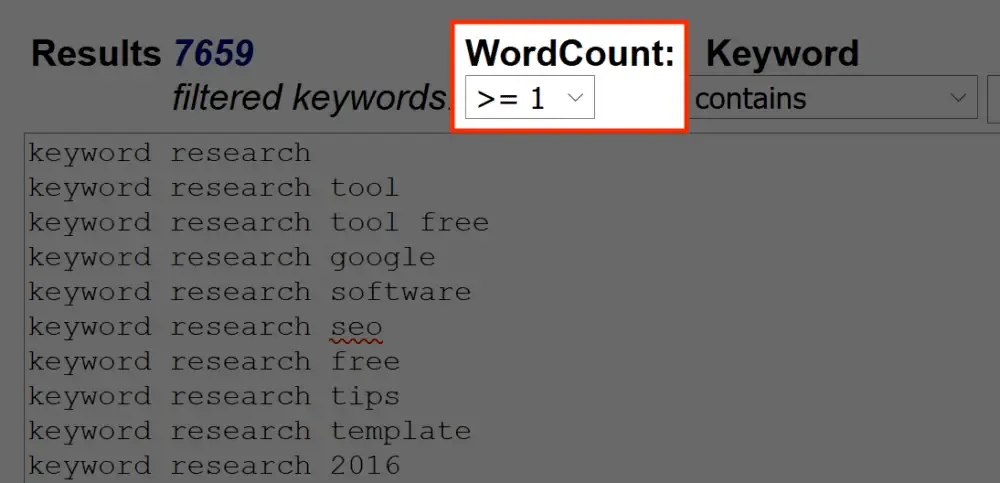
A quarterly audit catches this. Export your top twenty pages by organic traffic, pull the current word count, and compare it to what shipped. Flag anything with a swing larger than 15 percent in either direction.
Large drops usually mean lost content that needs restoration. Large gains usually mean accretion — someone kept bolting on FAQs until the page lost its shape. Both cases warrant a review pass. Build this into your word count for SEO checklist and schedule it like any other maintenance task.
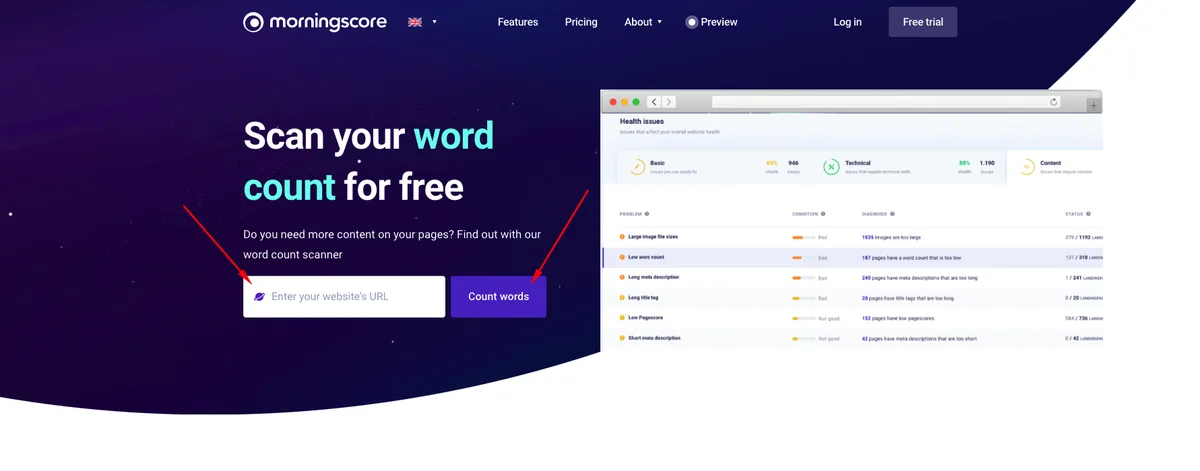
During the audit, check three things per page: whether your word count for SEO section order still matches reader priorities, whether the intro still promises what the page delivers, and whether any heading is now orphaned by a cut. Fixing those three usually restores performance without a full rewrite.
Tip 7: Stop Writing When the Answer Ends
The hardest discipline in this whole conversation is knowing when to stop. Writers trained on word targets keep going past the natural endpoint, adding an anecdote, a recap, a “final thoughts” block that repeats the intro. Readers feel it, and the page loses momentum in its final third.
A better finish is abrupt but earned. Once the last sub-question is answered, close with one forward-looking line and stop. If you feel the urge to summarize, ask whether the summary adds information the reader does not already have. Usually it does not.
This matters for word count for SEO because the last 15 percent of a padded article is often where engagement collapses. Session duration drops, scroll depth stalls, and nobody reaches the call to action. Ending clean is a ranking strategy disguised as an editorial habit.
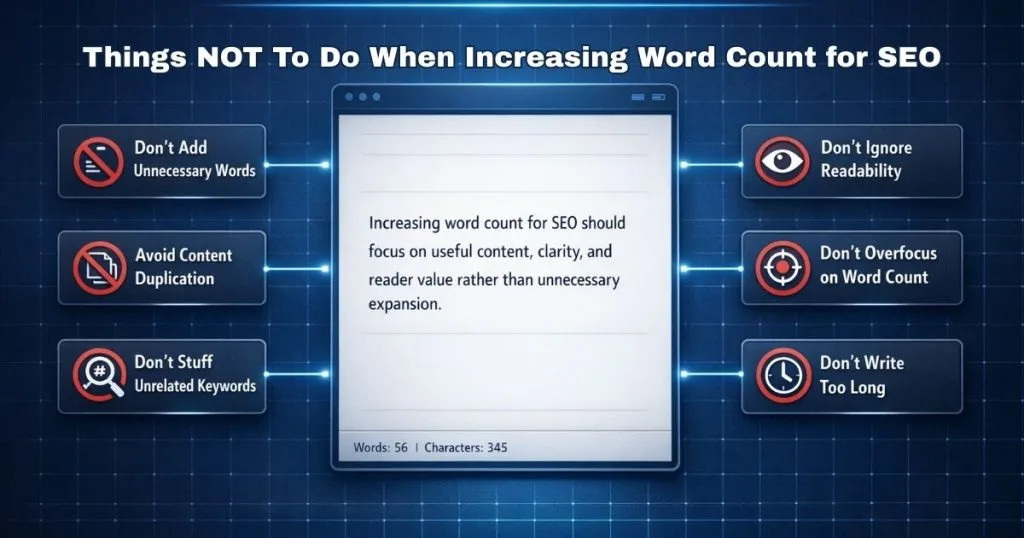
Try the read-aloud test on your final three paragraphs. Clear alignment with your word count for SEO builds confidence from the start. If any sentence could be deleted without losing meaning, delete it. The piece will read sharper and the length will land where it should.
Building a Word Count for SEO Checklist You Actually Use
Checklists only work when they are short enough to run every time. Mine has six items, and none of them are “hit 2,000 words.” That is deliberate — the list is about coverage decisions, not counts.
- Map the SERP median and top-three range. Pull word counts from the top ten results before drafting so you know the shape of the expected answer, not just a number.
- Classify the query intent. Label it informational, commercial, or transactional, then check whether your planned depth matches how much the searcher actually wants to read.
- Budget words per section in the outline. Assign a target to every H2 and H3 so you can spot overspend and neglect during review instead of after publishing.
- Flag thin sections during the first read-through. Any heading followed by a single sentence or bare bullet list gets merged, expanded, or removed.
- Decide split versus expand. If a sub-topic has its own search demand, break it into a child page; if not, deepen it inside the parent.
- Schedule the drift audit. Put your top pages on a quarterly review so silent cuts and accretion never go unnoticed.
Run this checklist and the word count for SEO question answers itself. You will not need a fixed target because the outline will already reflect the coverage the query demands.
For a deeper look at how search engines evaluate content quality, the people-first content guidance from Google Search Central is worth reading in full at least once.
Common Word Count for SEO Mistakes That Cost Traffic
Most ranking losses I have diagnosed were not caused by bad writing. Integrating word count for SEO into your workflow produces consistent quality. They were caused by a handful of repeated structural errors that nobody caught before publishing. These are the ones that show up again and again.
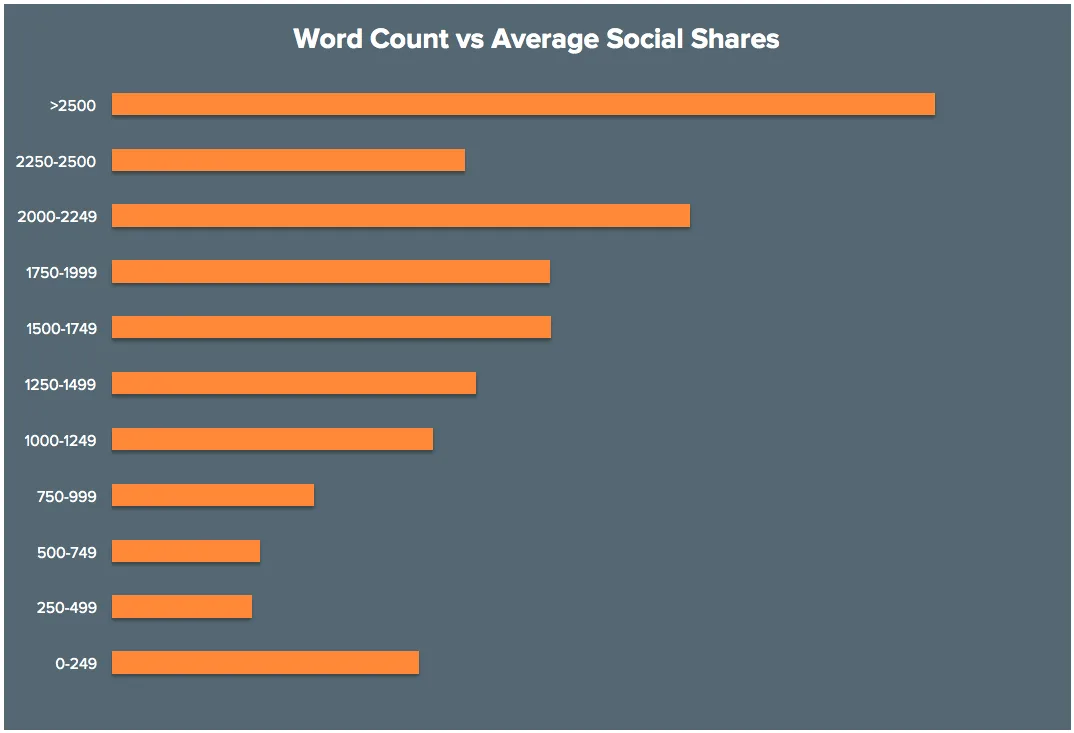
First, treating word count as a score to beat. If a competitor ranks at 2,400 words, writing 2,600 does not automatically win — writing a better 1,900 does. Second, writing to a fixed brief number regardless of query. A deadline is not a reason to pad a page that already answered the question.
Third, clustering the keyword. This is the one that ages worst. Pushing word count for SEO into every other sentence reads like a machine wrote it, and readers bounce. Mention it where it fits, then talk about the actual subject.
Semantic variety — “content length,” “page depth,” “article size,” “copy length” — carries just as much topical signal and reads far better.
Fourth, ignoring the mobile reading experience. A 4,000-word page with dense paragraphs is a 4,000-word page nobody finishes on a phone. Short paragraphs, subheadings every few hundred words, and a table where a table helps. Length without rhythm is just fatigue.
Frequently Asked Questions About Word Count for SEO
Here is an in-depth breakdown of key considerations regarding Frequently Asked Questions About Word Count for SEO:
Does Google Have a Minimum Word Count for Ranking?
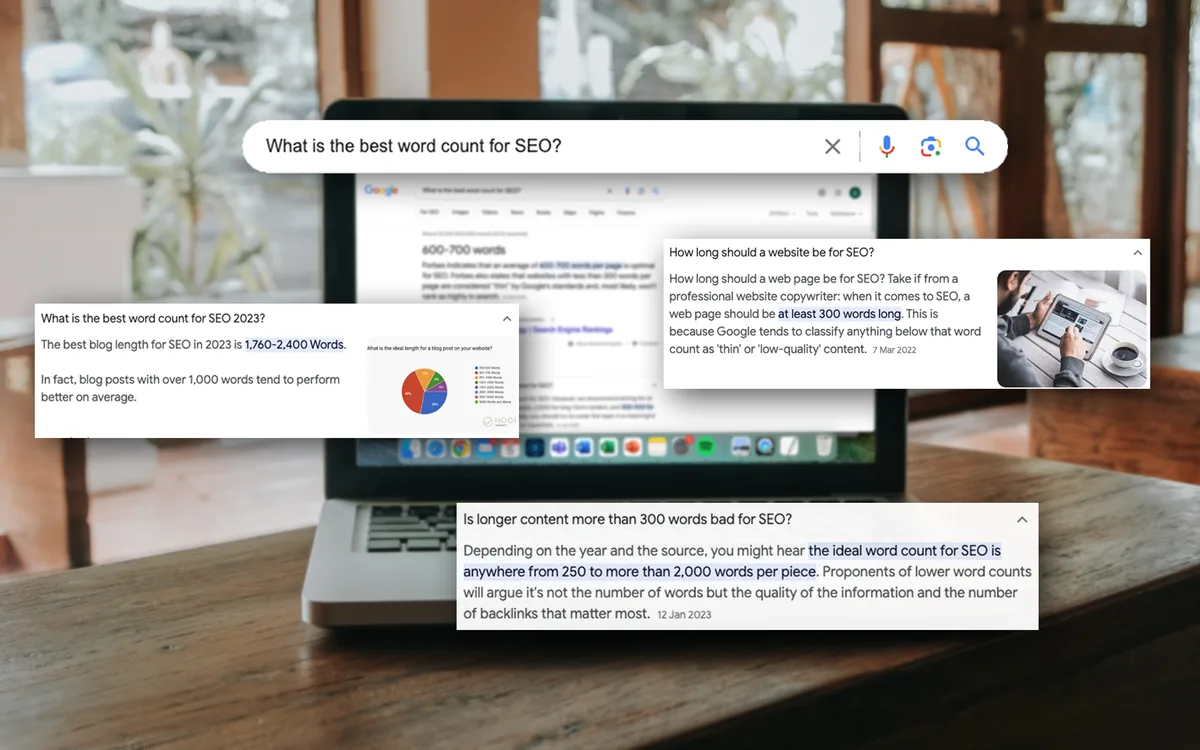
No. Google has stated repeatedly that there is no minimum or ideal word count. What matters is whether the page satisfies the query. A 400-word answer that resolves the question can outrank a 3,000-word page that wanders.
How Many Words Should a Blog Post be for SEO?
The word count for seo is no universal number, but patterns exist. Definitional posts often land between 600 and 900 words, tutorials between 1,200 and 1,800, and pillar pages between 2,500 and 4,500. Use the SERP median as your starting reference and adjust for intent.
Is Longer Content Always Better for Rankings?
No, and the assumption causes real damage. Longer content wins when the extra length adds coverage — more sub-questions answered, more examples, more edge cases. When the extra length is padding, it hurts engagement and rankings together.

How Do I Know if My Page is Too Short?
Compare it to the top results and check whether it answers every sub-question they answer. If the competition covers caveats, alternatives, and troubleshooting that your page skips, you are too short — regardless of the raw count.
What is the Ideal Keyword Density When Writing About Word Count for SEO?
Aim for natural usage, roughly one exact-match phrase every few paragraphs. For a long guide, something in the range of 1.2 to 1.5 percent reads comfortably. Anything approaching 3 percent starts to feel repetitive and risks reading as manipulation.
Should I Cut Content to Reduce Word Count?
Usually yes, if the content is redundant. Cutting thin sections and repeated recaps tends to improve rankings because the page becomes easier to scan. Trim first, then reinvest the saved space into the sections that carry search value.
Where Word Count for SEO Fits in Your Broader Content Strategy
Step back and the whole picture is simpler than the debate suggests. Word count is an output. Coverage, intent match, and structure are the inputs. Get the inputs right and the length lands where it should, whether that is 900 words or 3,500.
For practical execution, treat this guide as the hub of a cluster. The natural next reads are keyword clustering for topic maps, building a content refresh cadence, and internal linking patterns that pass authority between pillar and child pages. Those three sub-topics extend this one without repeating it.
And when you sit down to draft next time, ask one question before the first sentence: what does the searcher still need to know after the obvious answer? Answer that fully, and your word count for SEO problem solves itself. Everything past that point is filler, and filler is the only length that has ever hurt a ranking.