URL slug optimization is the quiet, unglamorous habit that separates a site people find from a site nobody ever clicks. Get it right, and search engines understand your pages instantly. Get it wrong, and even brilliant writing sinks without a trace.
This guide folds the practical core of a solid URL slug optimization checklist into seven beginner-friendly tips. They are the exact habits I wish someone had handed me before my first WordPress install turned into a graveyard of pages named /?p=1234.
Each one is simple, repeatable, and builds on the last. Focusing on URL slug optimization provides clear direction here. Work through them once and your whole approach to permalinks will change.
What is a URL Slug, and Why Does It Matter?
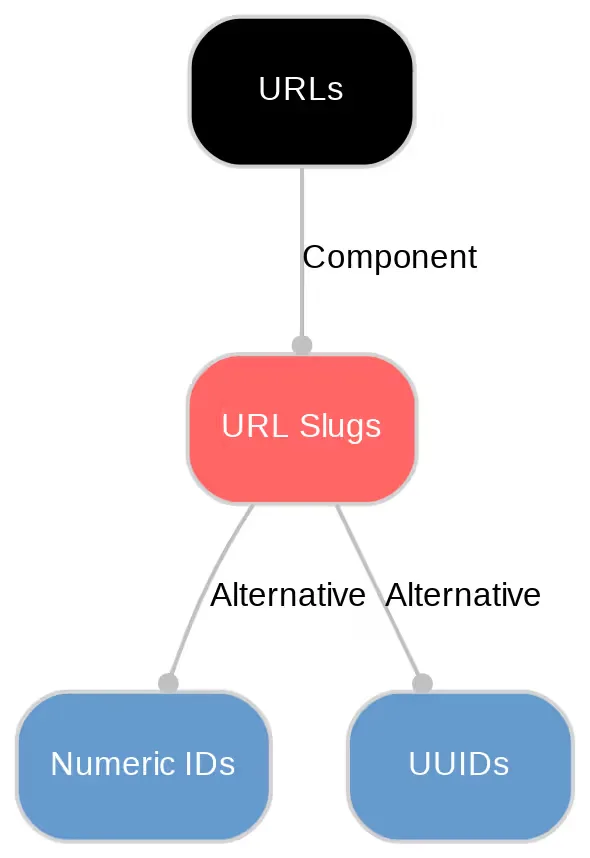
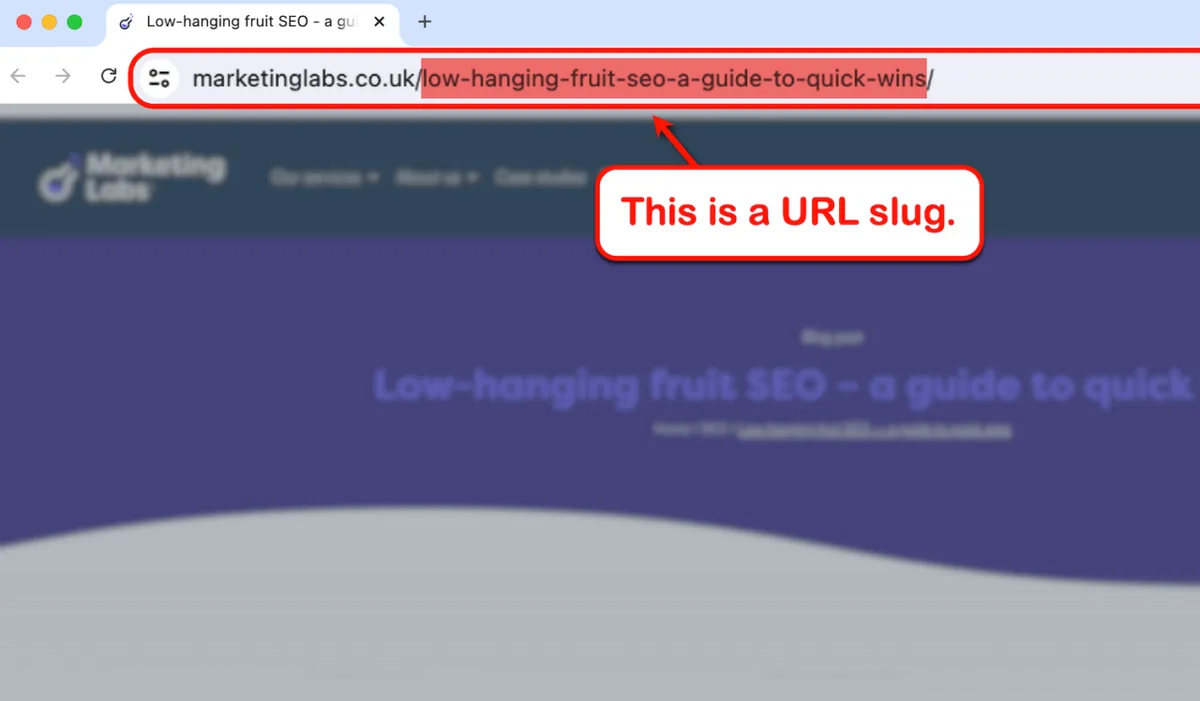
A URL slug is the readable tail end of a web address, the part the URL slug optimization identifies the specific page. In example.com/blog/SEO-basics, the slug is SEO-basics.
Everything before it points to the domain and folder structure; the slug is the human part, the label your server and visitors both read to figure out what lives on that page.
Here is why the URL slug optimization little string punches so far above its weight. Search engines use the slug as a lightweight topical signal, and visitors use it as a trust signal. When a search result shows /how-to-bake-sourdough, people instantly know the page is about baking, even before they read the title. When it shows /page?id=8842&ref=x, they hesitate.

The cost of skipping URL slug optimization is cumulative. Old pages keep their messy addresses forever, links get shared with ugly tails, and analytics reports become a puzzle you have to decode. As you move through the seven tips below, treat them as one connected system rather than isolated fixes.
The 7 Essential URL Slug Optimization Tips for Beginners
Here is the working core of this URL slug optimization guide. Each tip builds on the one before it, and each one fits inside five minutes of editing. Do not skip ahead; the earlier tips make the later ones easier.
Tip 1: Keep Slugs Short, Specific, and Keyword-Focused
Short wins. Refining each detail of your URL slug optimization strengthens this section. A good slug communicates the whole page in three to five words. /email-marketing-metrics does more work than /a-comprehensive-list-of-the-most-important-email-marketing-metrics-you-need-to-track.
The longer version is not clever; it is a liability that gets truncated in search results and looks ugly when pasted into a chat window.
Here is the habit the URL slug optimization works: after writing your draft, ask what you would say if someone asked what the page was about in one breath. That answer, trimmed to its core nouns, is usually the slug.

Insert the primary keyword once, and drop everything else. Effective execution in your URL slug optimization makes a tangible difference. “Email marketing metrics” is the slug. “Top 10 email marketing metrics you absolutely need to track in your campaigns” is a headline fighting for the wrong job.
Beginners often stuff the slug with every related keyword they can find, aiming for more ranking weight. I have watched this backfire. A slug so long it scrolls sideways gives search engines conflicting signals about the page’s focus. You are better off with one sharp idea than five blurred ones.
Tip 2: Use Hyphens, Not Underscores, and Ditch Capital Letters
The URL slug optimization tip feels trivial until you learn why it matters. Google treats hyphens as spaces and treats underscores as word-joiners. That means content-marketing-tips reads as three clean words to a crawler, while content_marketing_tips risks being parsed as a single weird token. Pick hyphens every time.
The capital-letter rule trips up beginners on other platforms. Windows-hosted sites sometimes treat /AboutUs and /aboutus as two separate pages, which splits your link equity and confuses analytics. All-lowercase slugs sidestep that entirely. Lowercase, hyphens, no exceptions. Write it on a sticky note if you have to.
As part of your URL slug optimization best practices, run a quick sanity check on every new page. Does the slug use only lowercase letters, numbers, and hyphens? If a single uppercase letter or underscore sneaks in, fix it before you publish, because fixing it after means setting up a redirect.
Tip 3: Put the Primary Keyword Near the Front
Keyword placement in a slug works on the same principle as a newspaper headline: the most important information goes first. A thoughtful approach to URL slug optimization reinforces your qualifications. /slug-optimization-for-beginners lands faster than /beginners-guide-to-slug-optimization, because the eye and the crawler both find the anchor term in the opening position.
This matters more for accessibility than any ranking bump. Screen readers announce URLs, and visitors scanning a search result see the front of the slug first. Anchor the topic at the start, then let the supporting qualifier follow. “Slug optimization” leads. “For beginners” trails.
Here is a simple test. Structuring your URL slug optimization around proven patterns ensures impact. Read the slug out loud. If the first thing you say is a generic word like “a”, “the”, or “how”, rewrite it. Those words burn front-loaded real estate that your keyword should be occupying.
The single exception, in practice, is a short connecting preposition that makes the slug read naturally: /how-to-optimize-slugs is fine because the topic still lands early enough to register.
Tip 4: Strip Stop Words and Filler Where It Doesn’t Hurt Readability
Stop words, the small connectors like a, an, the, and, of, to, in, rarely earn their place in a slug. Applying these principles to your url slug optimization yields measurable results. Each one adds characters and visual noise without adding meaning. /best-cities-for-remote-work is cleaner and shorter than /the-best-cities-in-the-world-for-people-who-work-remotely, and both convey the same idea.
Do not go overboard. A slug that reads like a deconstructed robot, /best-cities-remote-work-global, sacrifices clarity for character count. The best url slug optimization tips all land on the same balance: trim the fluff, keep the human readability. If removing a word makes the slug harder to skim, that word stays.
Put another way, a stop word earns its place if a reader would need to reconstruct the sentence without the url slug optimization. “How to remove a WordPress theme” reads cleanly at /remove-wordpress-theme. “Cooking with a cast-iron pan” reads oddly at /cooking-cast-iron-pan. The rule is not mechanical. It is editorial.
Tip 5: Fall Back to Numbers, Not ID Hashes, When You Need a Distinguisher
Sometimes two pages genuinely share a topic. Proper attention to your URL slug optimization sets a strong baseline. You publish “how to prune tomatoes” twice, and the world does not need two identically named slugs.
That is where numbers earn their keep. /prune-tomatoes-2 stays readable and obvious. /p-4428 is a cryptographic hash with no meaning to anyone.
This small habit quietly belongs in any URL slug optimization checklist. It keeps the second page discoverable instead of stranding it in a numeric wasteland where visitors and crawlers both grapple for context. Numbers, when needed, go at the very end so they never compete with the topic word at the front.
Better still, ask whether the duplicate page should exist at all. If it is a meaningful update, you can often rewrite the existing page and skip the duplicate entirely. When you truly need a second version, numbers are the graceful fallback.
When a hundred pages are auto-generated by a CMS, consider whether a structured pattern like /recipes/tomato/pruning gives more context than a flat numbered list.
Tip 6: Change Slugs Only With a Permanent 301 Redirect
Changing a slug after a page is published is not free. Every external link, every saved bookmark, every search engine ranking decision made about that URL points to the old address. Change the slug without redirecting and those signals land in a void.
The fix is the 301 redirect, a permanent signpost the URL slug optimization tells browsers and search engines “this page lives at the new address now”. Most CMS platforms and SEO plugins handle this in a few clicks.
Set the old URL to redirect to the new one before you publish the change. Do it manually if your platform makes you, and double-check that the redirect works.
The bigger point about this step in the URL slug optimization best practices is restraint. If a slug is 80% right, leave it alone. A slug that ranks is already a slug that works.

Only break out the redirect when the current slug actively damages the page, because redirects are a patch, not a starting position. Clear alignment with your URL slug optimization builds confidence from the start.
Treat them as a rare correction, and audit them once in a while to make sure no redirect chain has grown into a four-hop tangle that crawlers abandon halfway.
Tip 7: Audit Your Slugs Once a Quarter and Correct Drift Early
Drift happens to every site. A new writer publishes a slug with an underscore. A plugin auto-generates a menu page with an unfamiliar pattern. Someone duplicates a post to save time and produces a chain of orphaned addresses. Within six months, your site looks like a yard where nobody mowed the edges.
A quarterly slug audit catches all of the URL slug optimization. Export your URL inventory from the CMS or a tool like Google Search Console. Scan for missing hyphens, wrongly cased letters, keyword-stuffed paths, and duplicate slugs.
Fix what you find, and roll any corrected URL into a 301 redirect as described in the tip above. Set calendar reminders so the habit survives busy months.
Think of this URL slug optimization checklist item as a health check, not a chore. Two hours of auditing every three months saves weeks of redirection cleanup later. It also forces you to keep URL slug optimization guide-ready content in front of your team when new people join the publishing pipeline.
URL Slug Optimization Best Practices Worth Adopting from Day One
The seven tips above cover the mechanics. The best practices below cover the judgment calls that trip up beginners once the basics feel familiar. They are the difference between a slug that technically follows the rules and a slug that actually works.
Treat the URL slug optimization three habits as part of the same system. They compound, and skipping any one of them tends to undo the others over time.
Do Not Copy Slugs from Competitor URLs
Beginners love to lift a competing page’s slug word for word. I have seen it happen in client audits repeatedly. A page titled “email marketing metrics” on a competitor site has a slug that has already earned links and rankings.
Copying it does not move those signals to your site, and it does create a weird, duplicate-friendly path that makes your page look like a lesser clone.
Write your own slug based on your own angle. Refining each detail of your url slug optimization strengthens this section. If your page is “email marketing metrics for online stores”, the slug should reflect that narrow focus, not the broad one on the competitor’s site. Your URL becomes the shortest, truest summary of what the page does that no other page does.

Keep the Slug Consistent With the Title, Not a Copy of It
Beginners often assume the slug must be a compressed version of the title. It should be a compressed version of the core topic, which is not always the same thing. A title like “The Unexpected Reason Your Emails Land in Spam” is a headline built for clicks. Its slug should be /cold-email-spam-causes, not /unexpected-reason-emails-land-spam, because the slug serves discovery, not curiosity.
A simple exercise makes this concrete. Write the title, then write the search query someone would type to find it. The slug is the stripped-down version of that query. If you cannot articulate the query in five words, the page category is probably too broad.

Test Your Slug as a Short Share Link Before You Publish
Here is a quick pre-publish test worth adding to your URL slug optimization tips mental checklist. Copy your new URL and paste it into a text message window. Say it out loud. Ask a colleague to read it and tell you what they think the page is about.
If the URL slug optimization get the topic in under three seconds, the slug is doing its job. If they hesitate or guess wrong, shorten it.

This read-aloud test catches problems that software cannot. Awkward letter strings, accidental double meanings, and slug choices that only make sense to the person who drafted the title all surface the moment someone reads the URL cold. It is the cheapest quality check available, and it saves you from a 301 redirect later.
Common URL Slug Mistakes Beginners Make
Every one of the URL slug optimization mistakes is easy to fix, which is exactly why it hurts when they become habits. Look for them in your own site before you publish your next batch of pages.

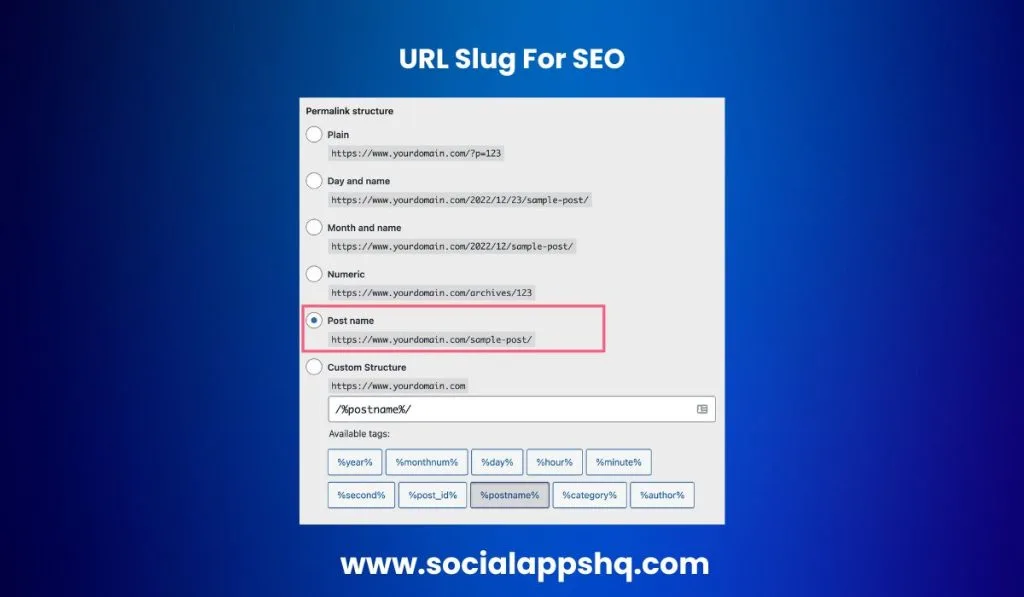
- Leaving the auto-generated slug in place. The CMS defaults to /?p=123 or /uncategorized/my-post-title. Set the slug manually before publishing, every single time.
- Stuffing multiple keywords into a single slug. Aiming for five keyword variations in one path produces a slug nobody wants to read. Pick one primary term and let the body copy carry the rest.
- Using dates in slugs. /how-to-write-a-slug/2024/ becomes misleading the moment the calendar turns over. Evergreen content should live at evergreen addresses; reserve dates for news archives where chronology is the point.
- Changing slugs without redirects. This is the highest-impact mistake on this list. Broken old URLs linger in backlink profiles, and every one of them is an unclaimed signal.
- Mixing uppercase and lowercase in the same site. Consistency prevents duplicate-content confusion when a server treats /AboutUs and /aboutus as two pages.
Scan through that list once and fix anything you spot. The cost of correcting these mistakes is minutes. The cost of leaving them in place is measured in lost rankings and tangled redirect chains that take hours to untangle.
Does URL Slug Optimization Still Matter for SEO?
Yes, though it is a supporting signal rather than a headline factor. Google has been candid that slugs are a lightweight ranking input, not a silver bullet. That distinction matters: URL slug optimization done well helps a page perform at its ceiling, while a bad slug quietly holds a page below what its content deserves.

Consider the small but real advantages. Click-through rate ticks upward when the slug reads cleanly in search results. Internal linking becomes easier to structure. Sharing on social platforms and in chat apps produces a more polished impression.
And a tidy slug system makes future migrations, audits, and team handoffs dramatically less painful. Effective execution in your url slug optimization makes a tangible difference. None of these are smoking guns, but they add up to a page that is easier to find, easier to trust, and easier to maintain.

The practical takeaway for a beginner is straightforward. Spend the thirty seconds it takes to set a good slug. Do not overthink it, and do not spend an afternoon chasing marginal keyword placements.
The habit earns its keep across hundreds of pages over time, which is exactly what the best URL slug optimization guides mean when they call it a small optimization with a long tail of returns.
Frequently Asked Questions About URL Slug Optimization
Here is an in-depth breakdown of key considerations regarding Frequently Asked Questions About URL Slug Optimization:
What is the Ideal Length for a URL Slug?
Three to five words is the sweet spot. Shorter slugs are easier to read, share, and remember. Longer slugs still work when the topic genuinely needs more words, but strip anything that does not carry meaning.
The upper bound is about how much the average reader will actually take in before their eye skips to the next thing.
Should I Include the Category in the Slug?
Sometimes. Nested slugs like /recipes/soups/tomato-bisque help when your site has a genuine category hierarchy and the category adds context a reader would want. For a simple blog, a flat slug like /tomato-bisque is cleaner. Test both approaches on a small batch of pages and see which feels more intuitive to navigate.
Do I Need to Change a Slug That Already Ranks Well?
Almost never. If a page ranks and the slug is only mildly imperfect, changing it introduces risk with little upside. Set a redirect and move on.
The only clear triggers for a slug change are a moved page, a fundamentally different topic, or a slug so flawed it actively harms the page’s appearance in search results.
How Do I Handle Slugs for Non-English Pages?
Use the target language’s own characters, transliterated to Latin script when needed. For pages targeting English-speaking readers, keep the slug in English. For a multilingual site, each language page should have its own slug in the language readers will search in. Sharing one slug across language variants creates duplicate-content confusion and muddles analytics.
Does URL Slug Optimization Checklist Cover Image and File URLs Too?
It should. Image file names and paths play a smaller but real role in image search. Rename IMG_8842.jpg to cast-iron-skillet-seasoning.jpg and place it in a relevant folder. The same lowercase-hyphen discipline that applies to page slugs applies to asset URLs, and consistent naming speeds up image audits considerably.
What Happens if I Skip the 301 Redirect?
The old URL breaks for everyone still linking to it, search engines lose track of which page is the canonical one, and the ranking signals built around the previous address scatter.
A 301 redirect is the standard repair, so build the redirect check into every slug change instead of treating it as an optional extra step.
The Takeaway: Seven Small Habits With a Long Payoff
URL slug optimization is one of the few SEO habits that costs almost nothing and pays out for the entire life of a page. The seven tips in this guide are deliberately simple because they need to survive a busy publishing calendar.
Short, specific slugs. Hyphens over underscores. Keyword near the front. Stop words stripped with care. Numbers instead of hashes. Permanent redirects when you do have to change a slug. A quarterly audit to keep the drift in check.
Run through them once on your next five pages and you will notice the difference in how those pages read in search results and analytics. Start simple. Finish quickly. Let the habit do the heavy lifting, and treat the whole URL slug optimization checklist as a routine check rather than a project.
Consider the url slug optimization article your parent guide for the broader topic of on-page SEO. From here, the logical next steps are internal linking structure, meta description writing, heading hierarchy, and image ALT text discipline.
Each of those sub-topics sits one layer deeper in the same cluster, and each one rewards the same habits you just built around permalinks.
| Tip | What It Fixes | Time Cost |
|---|---|---|
| 1. Short, keyword-focused slug | Topic clarity and click-through rate | 2 minutes per page |
| 2. Hyphens and lowercase | Crawler parsing and case duplicates | 30 seconds per page |
| 3. Keyword near the front | Search result scanning and screen-reader clarity | 1 minute per page |
| 4. Strip filler carefully | Character bloat without loss of meaning | 1 minute per page |
| 5. Numbers over hashes | Distinguishable topics for duplicate URLs | 10 seconds per page |
| 6. 301 redirect on change | Backlink and ranking preservation | 3 minutes per change |
| 7. Quarterly audit | Site-wide consistency and drift correction | 2 hours per quarter |
Bookmark this URL slug optimization guide for the next time you publish a page. The habits scale, the tools improve, and the seven tips above remain the same foundation any serious site is built on.
For verified reference and background research, consult the authoritative informational resource on this topic.