What Topic Clusters Actually are (And Why They Beat Standalone Posts)
Topic clusters are the single most reliable structural decision you can make for a content site — a way of organizing pages so that one strong pillar page fans out into a set of focused supporting articles, all linked tightly around one subject.
If you have ever published a great post that ranked for a week and then faded, you already know the problem this solves.
Here is the short version. Focusing on topic clusters provides clear direction here.
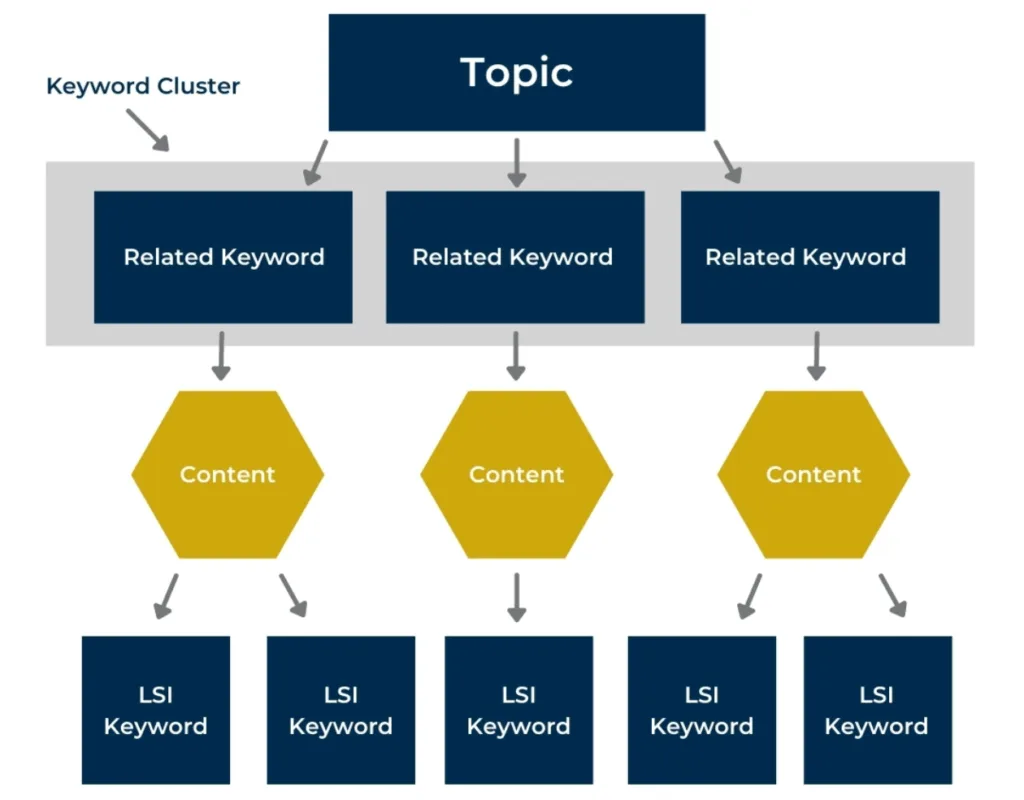
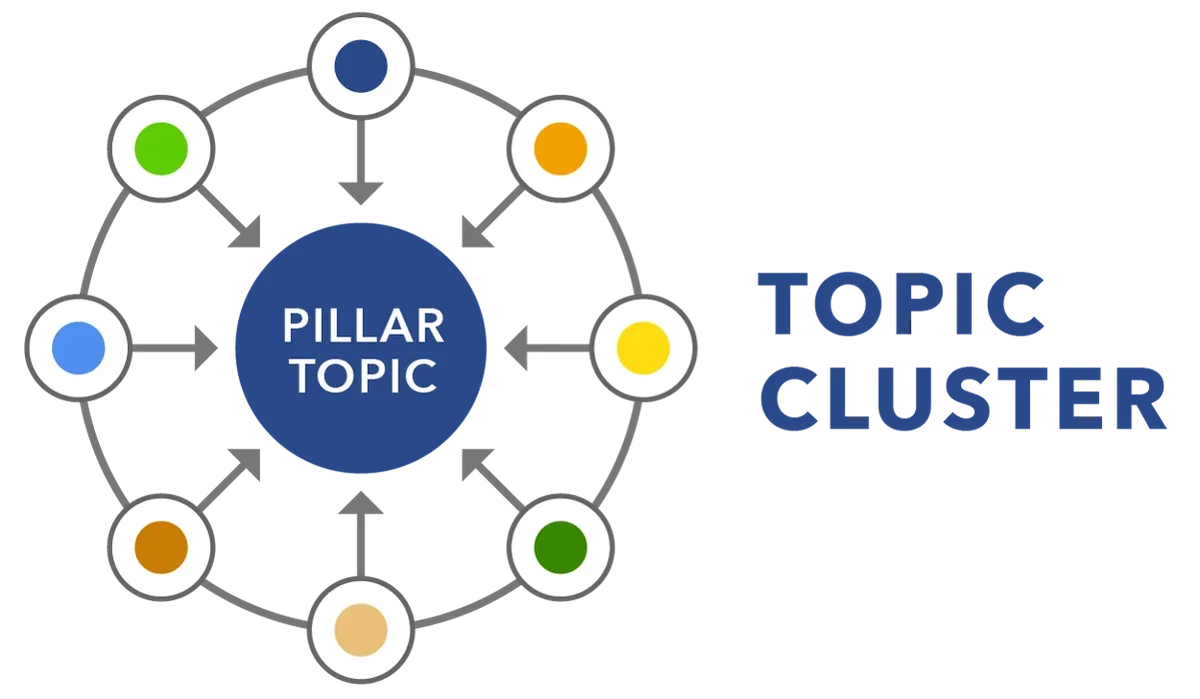
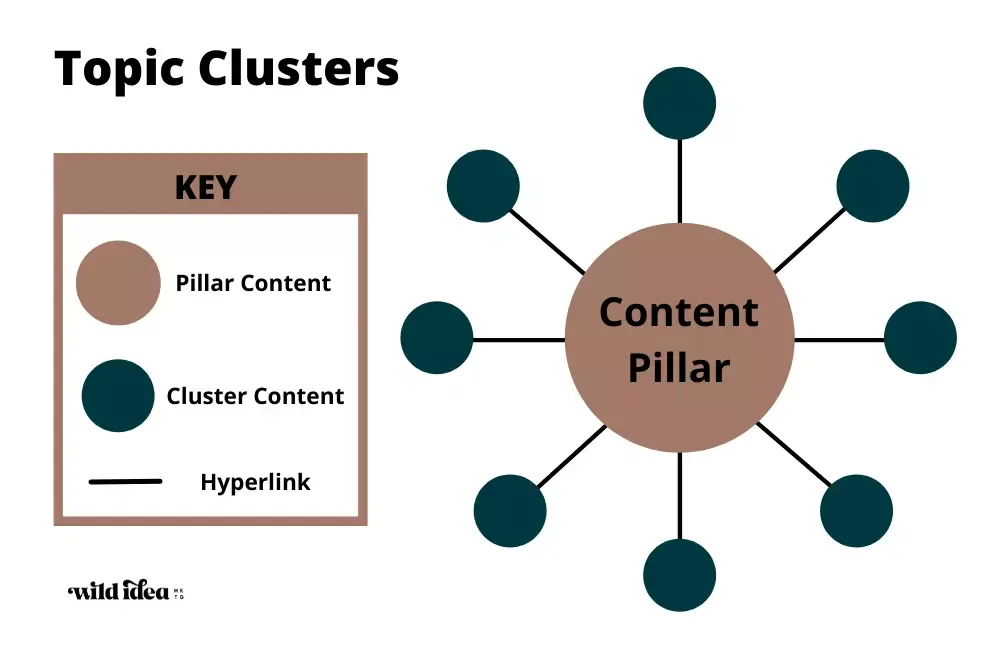
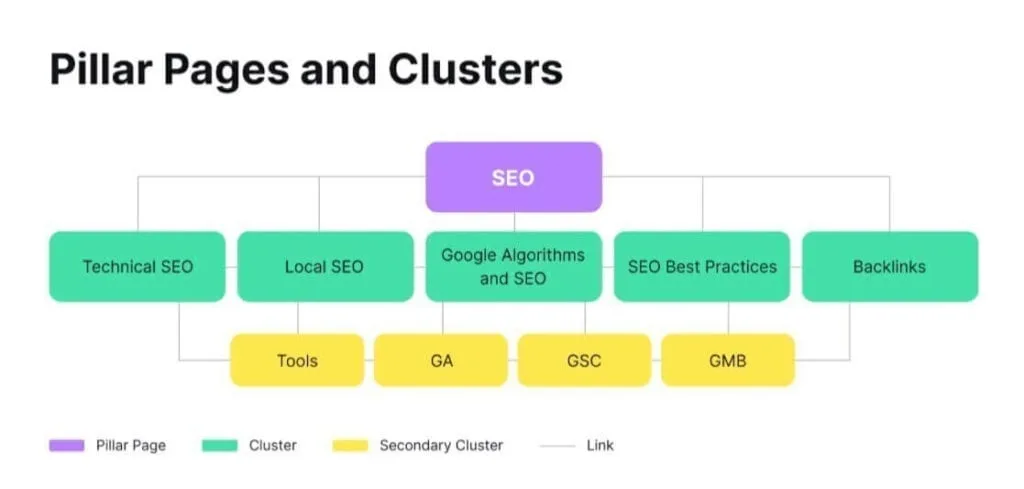
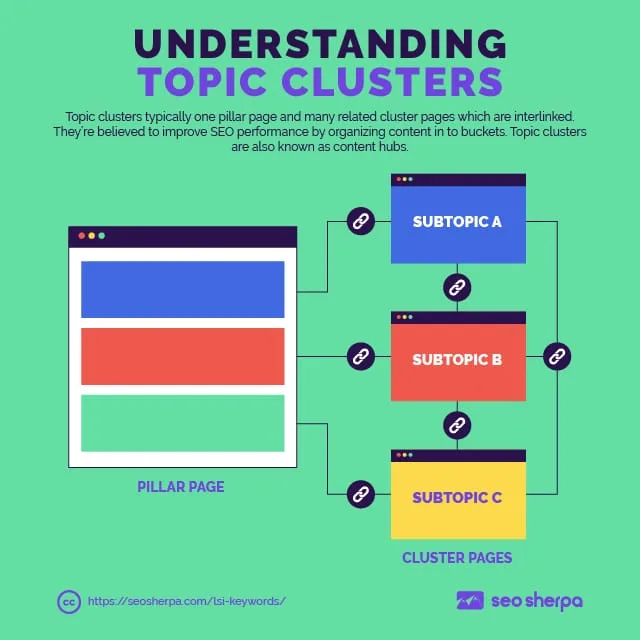
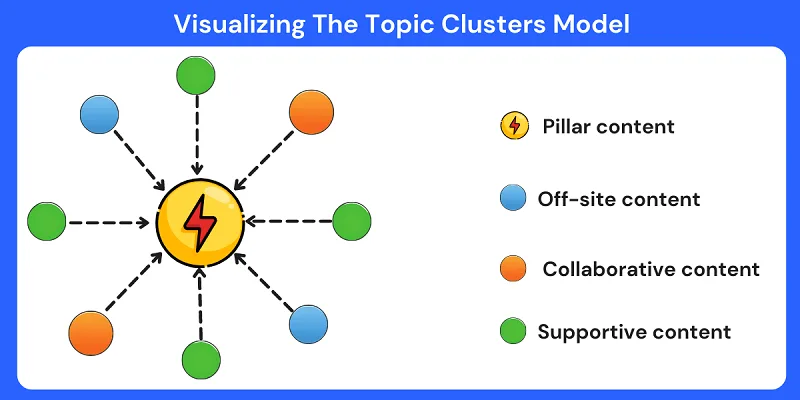
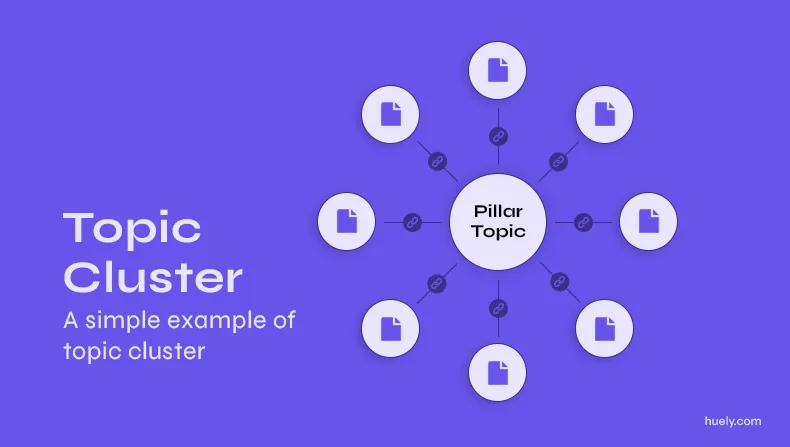
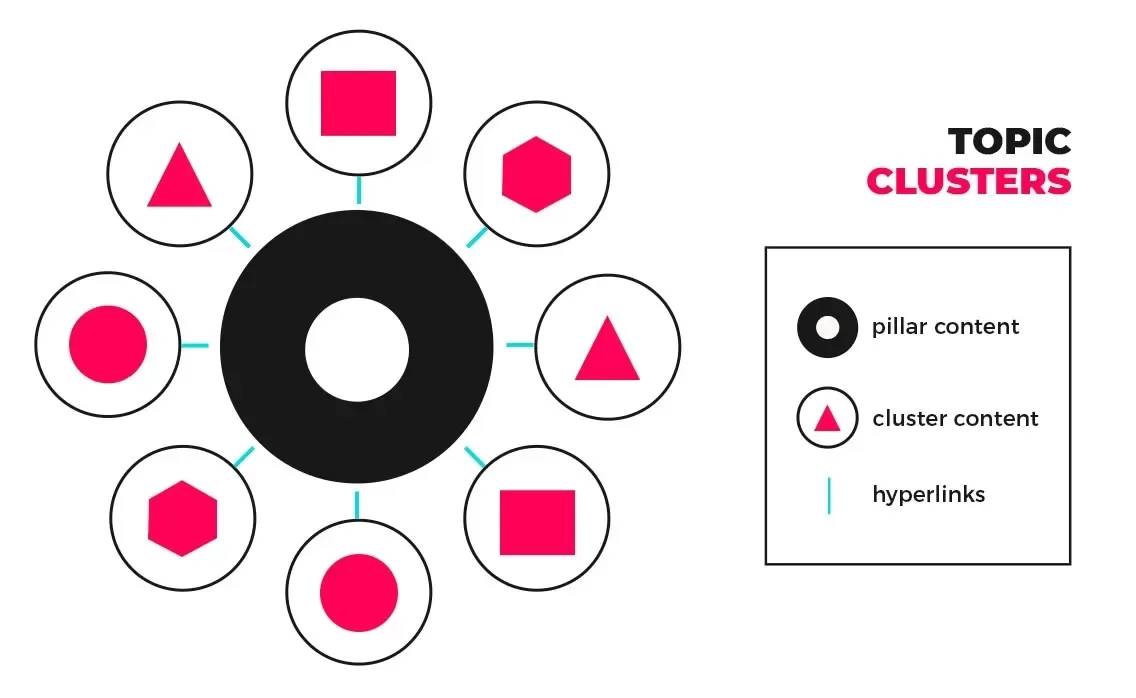
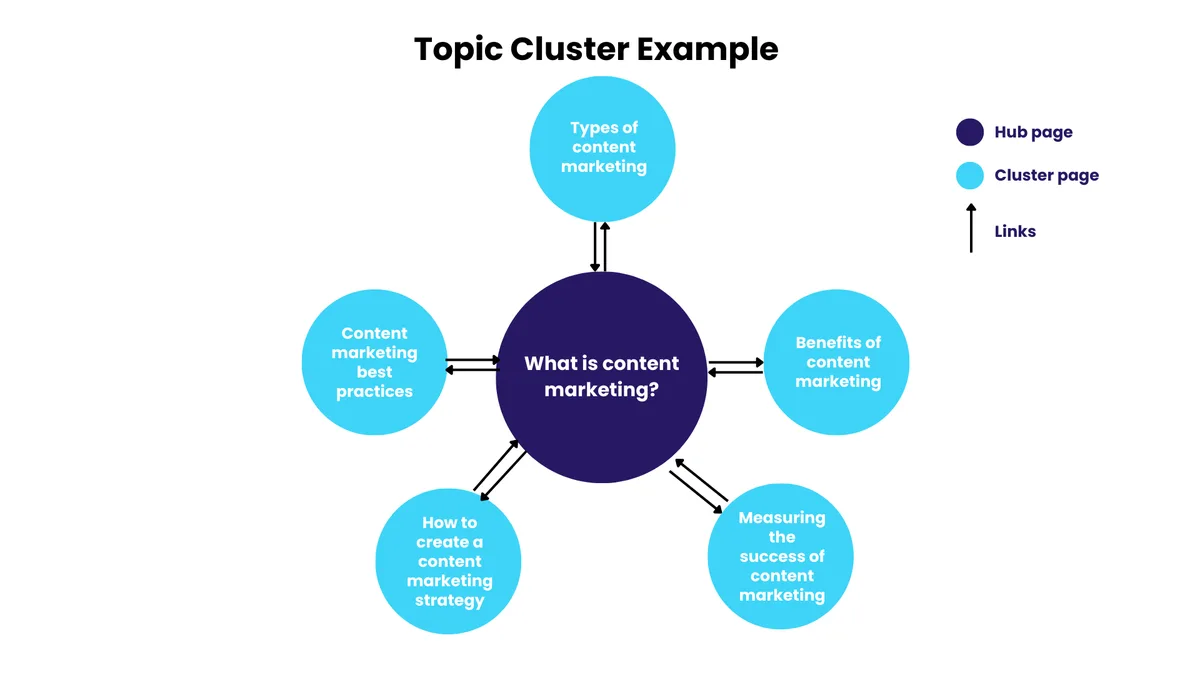
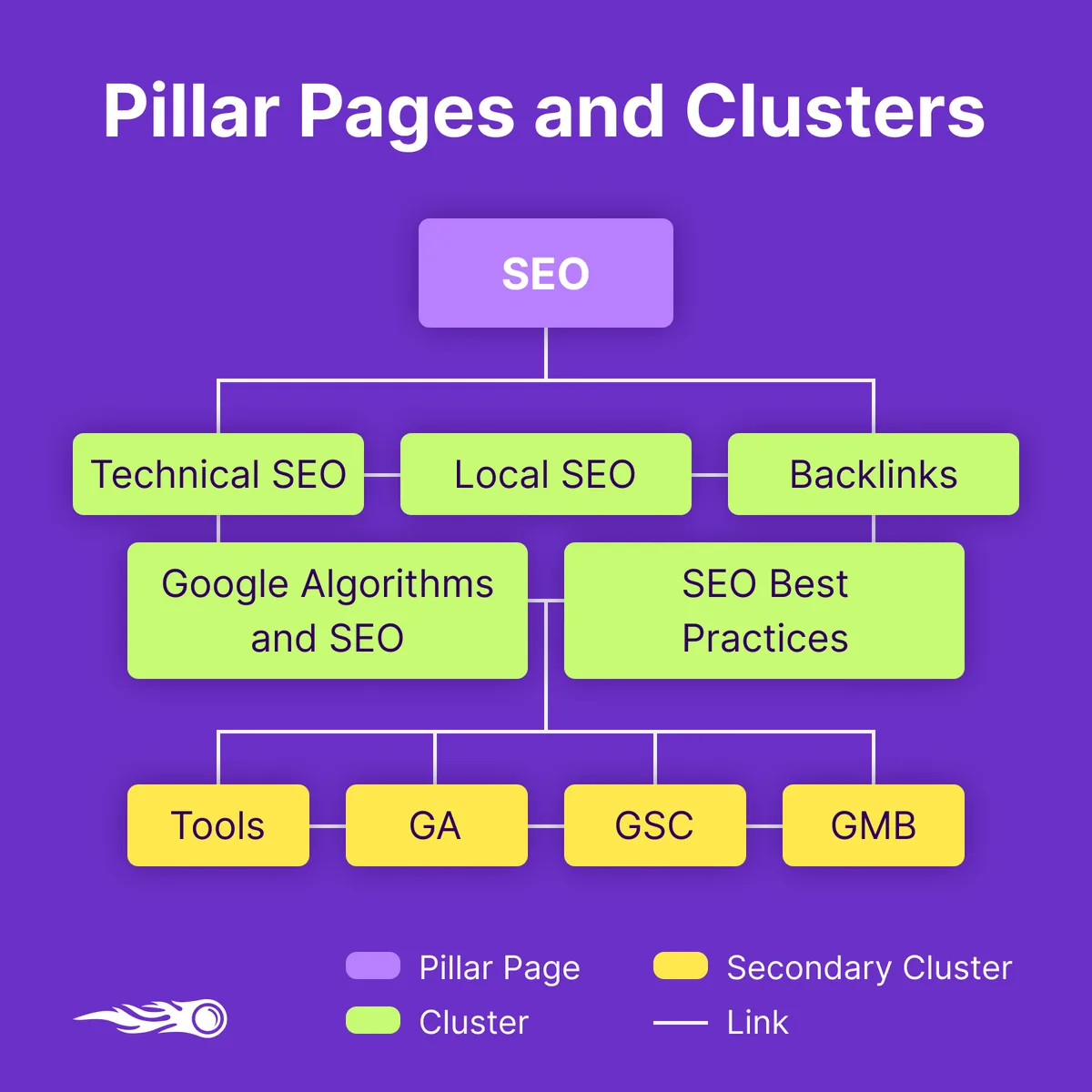
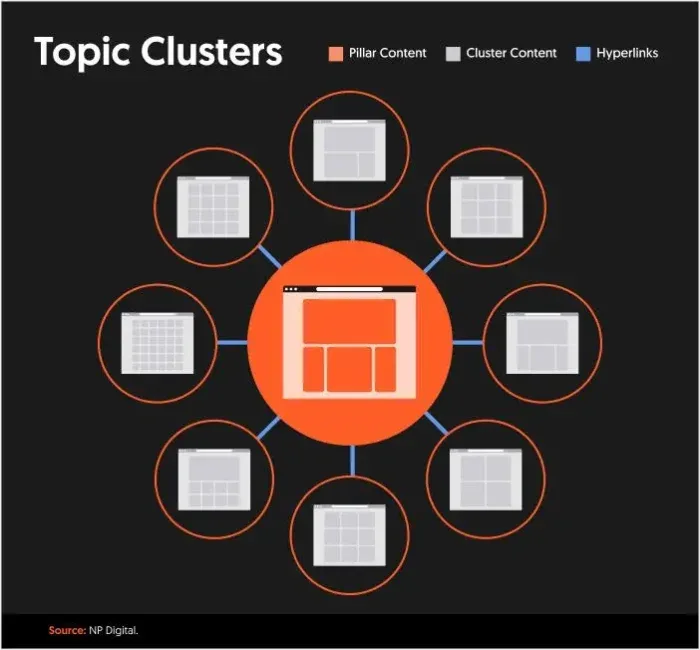
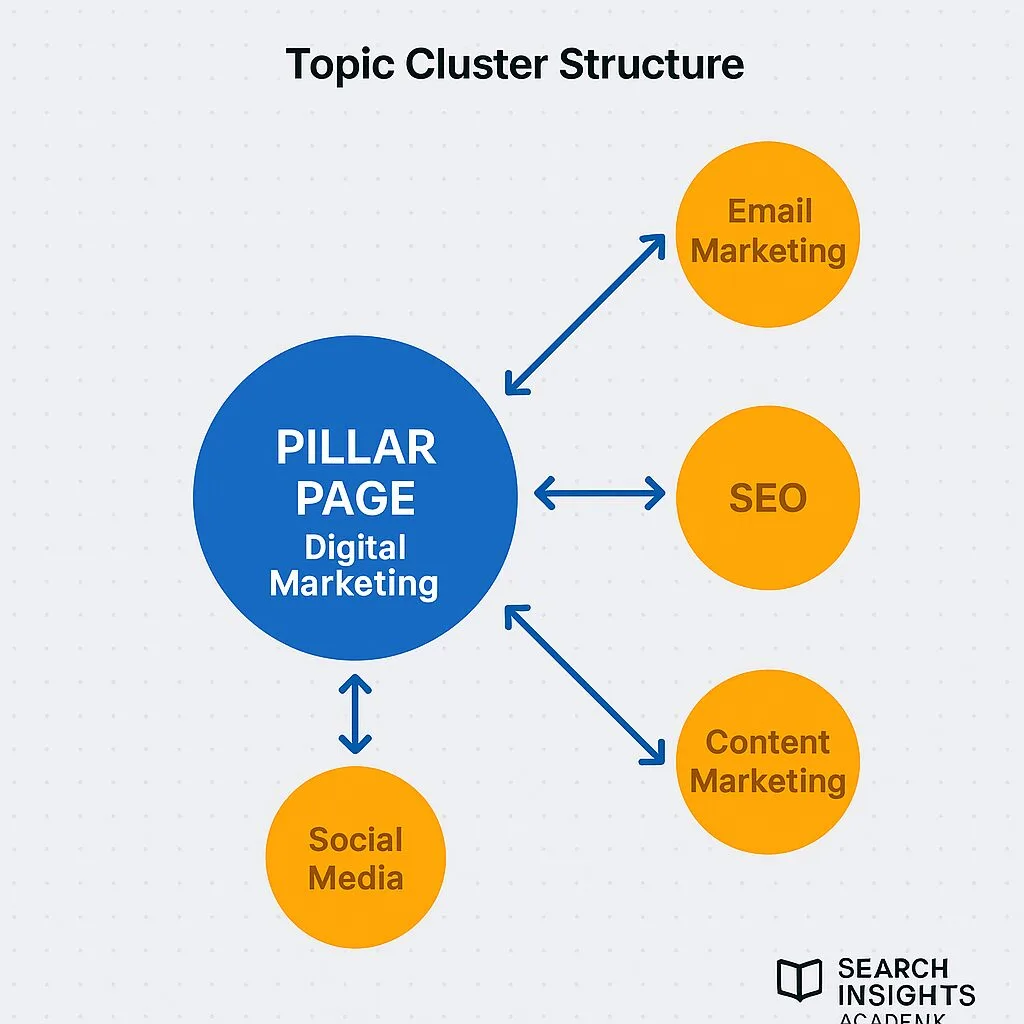
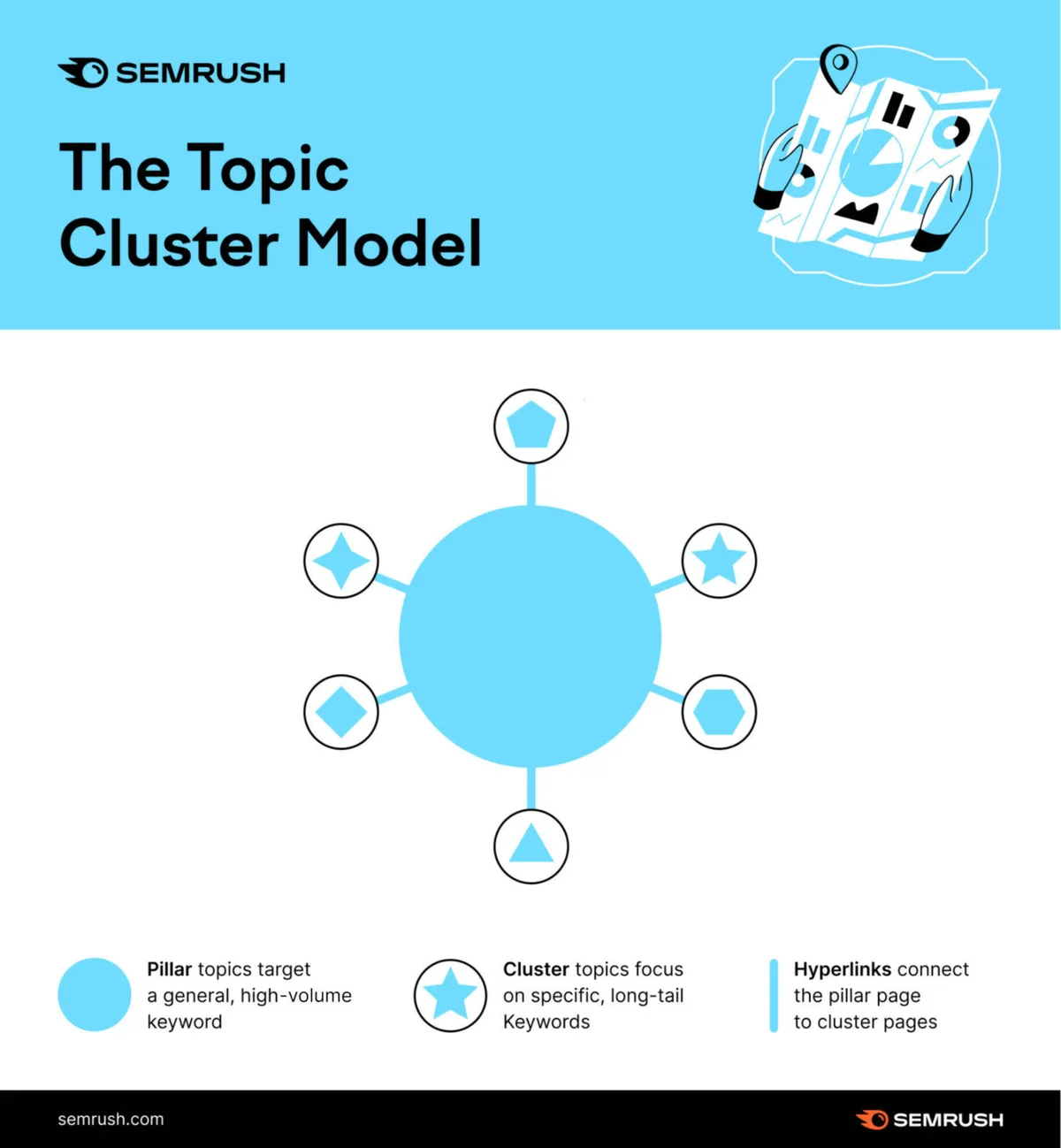
A cluster has three moving parts: a pillar page that covers a broad subject in depth, several cluster pages that each drill into one narrow sub-intent, and internal links that connect every cluster page back to the pillar and sideways to its siblings.
That is the whole skeleton. Everything else — the research, the briefs, the audits — is muscle on top of those bones.
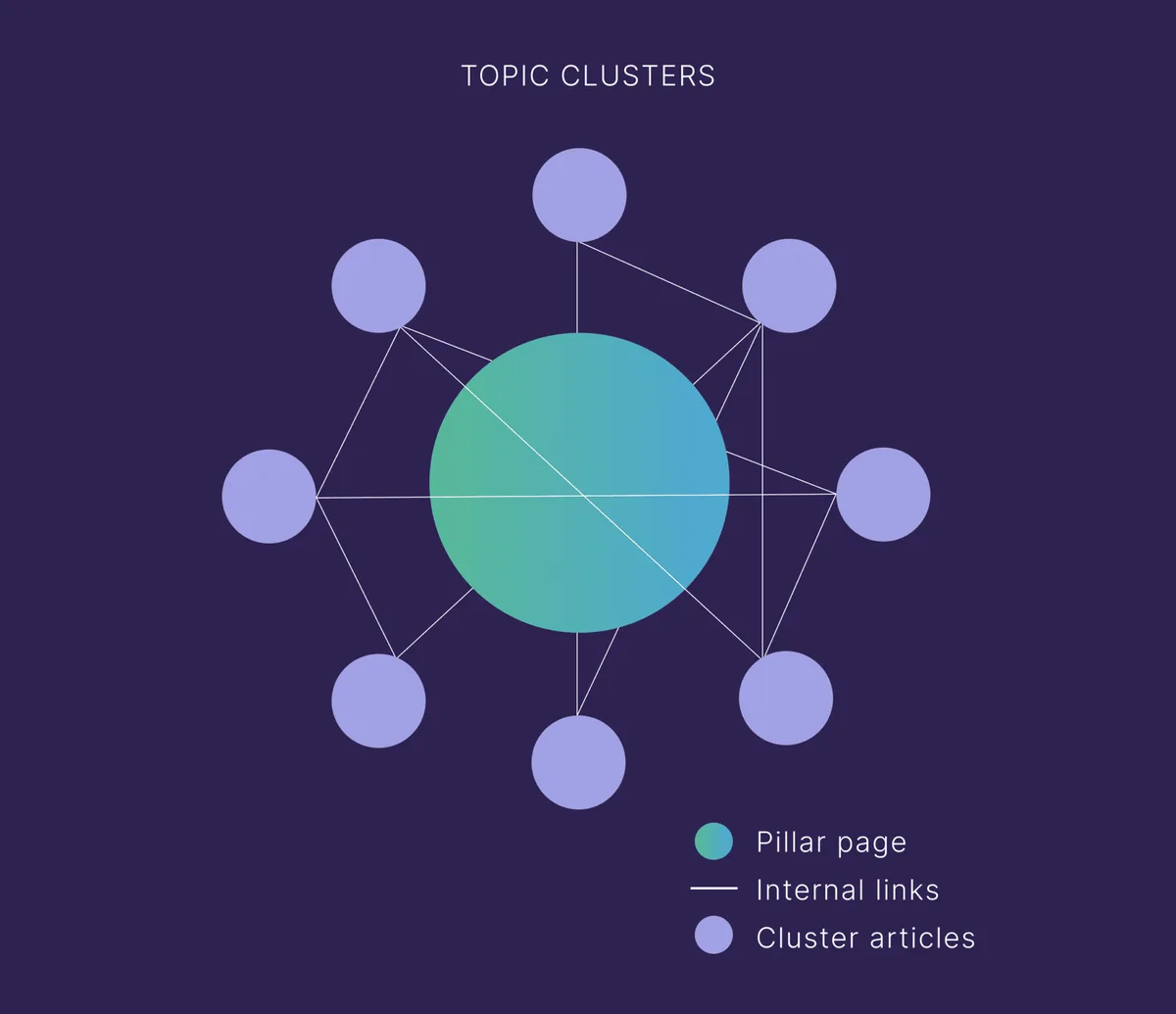
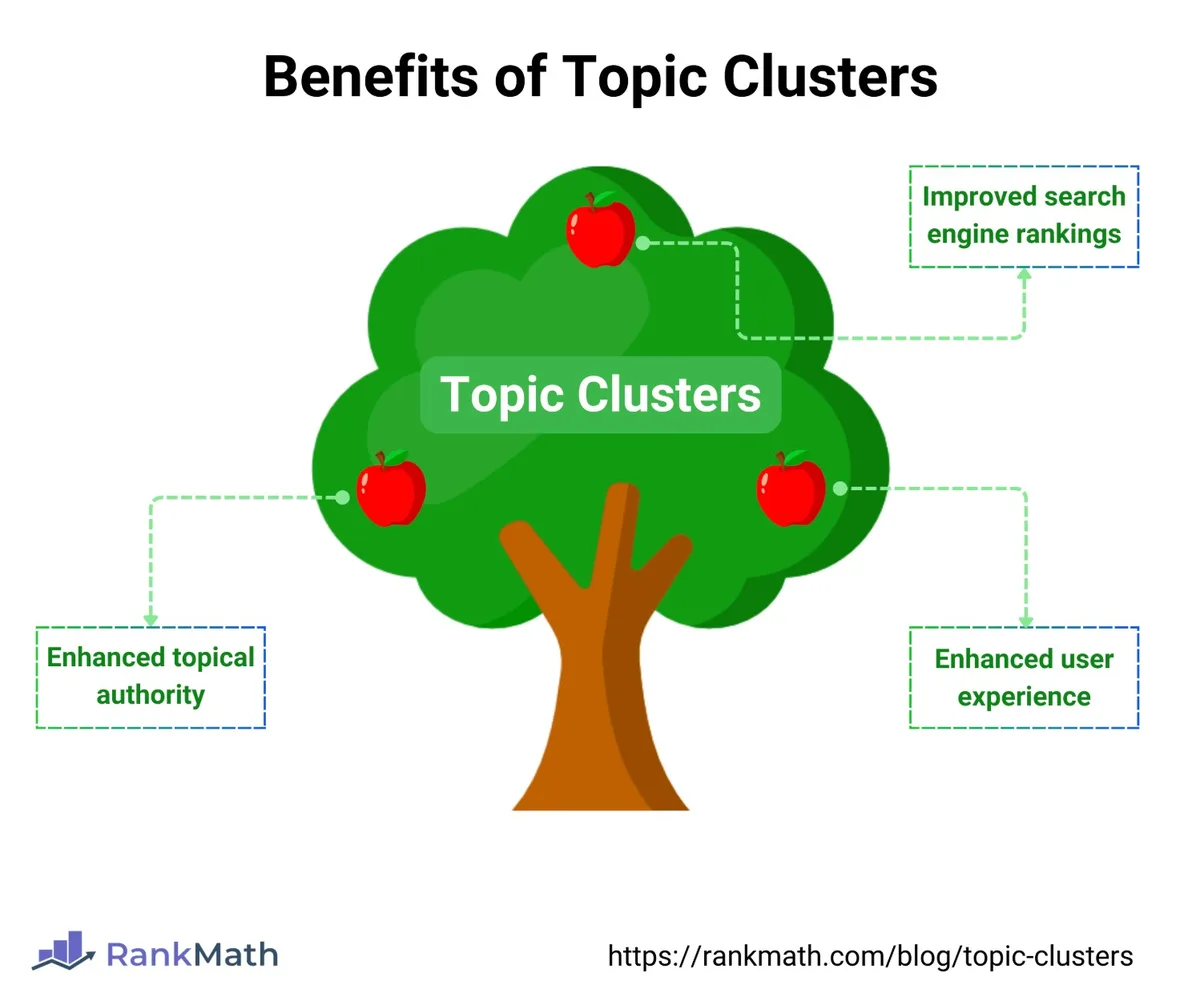
Search engines do not reward pages in isolation. Refining each detail of your Topic clusters strengthens this section. They reward sites that demonstrate clear, organized expertise across a subject area. When twelve pages all speak about the same theme and link to each other with purpose, the pattern is unambiguous to a crawler.
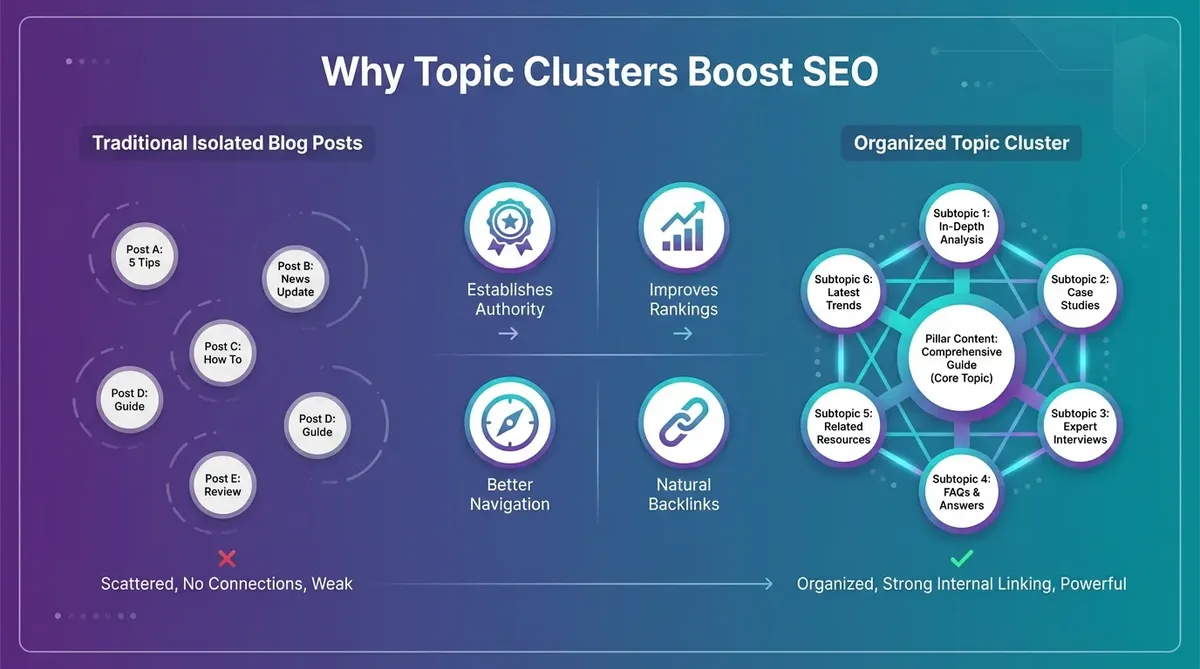
Contrast the topic clusters with the scattered approach most sites default to. One post on keyword research, one on cold email, one on logo design, one on hiring a VA — all orphans, none connected. Each has to earn rankings alone, with no topical reinforcement from anything else.
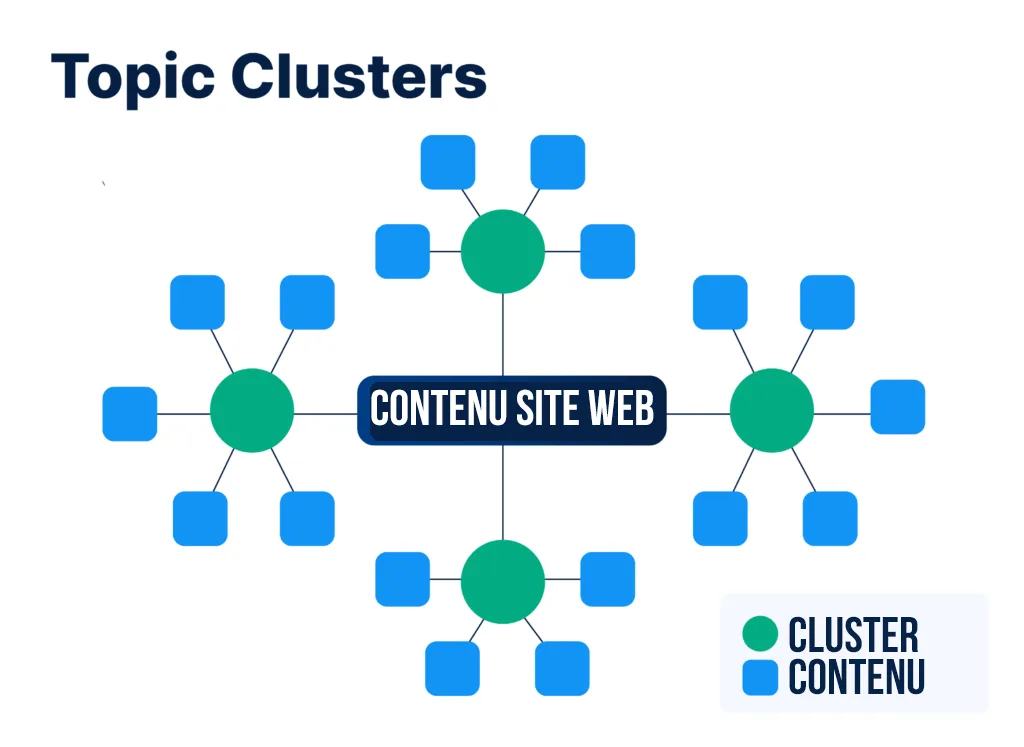
I have watched sites with two hundred disjointed posts get outranked by competitors with thirty well-clustered ones. Effective execution in your Topic clusters makes a tangible difference. Not because the writing was better, but because the structure told a coherent story.
The practical upshot: before you write another word, decide which clusters you own. This topic clusters guide walks through that decision and every step after it.
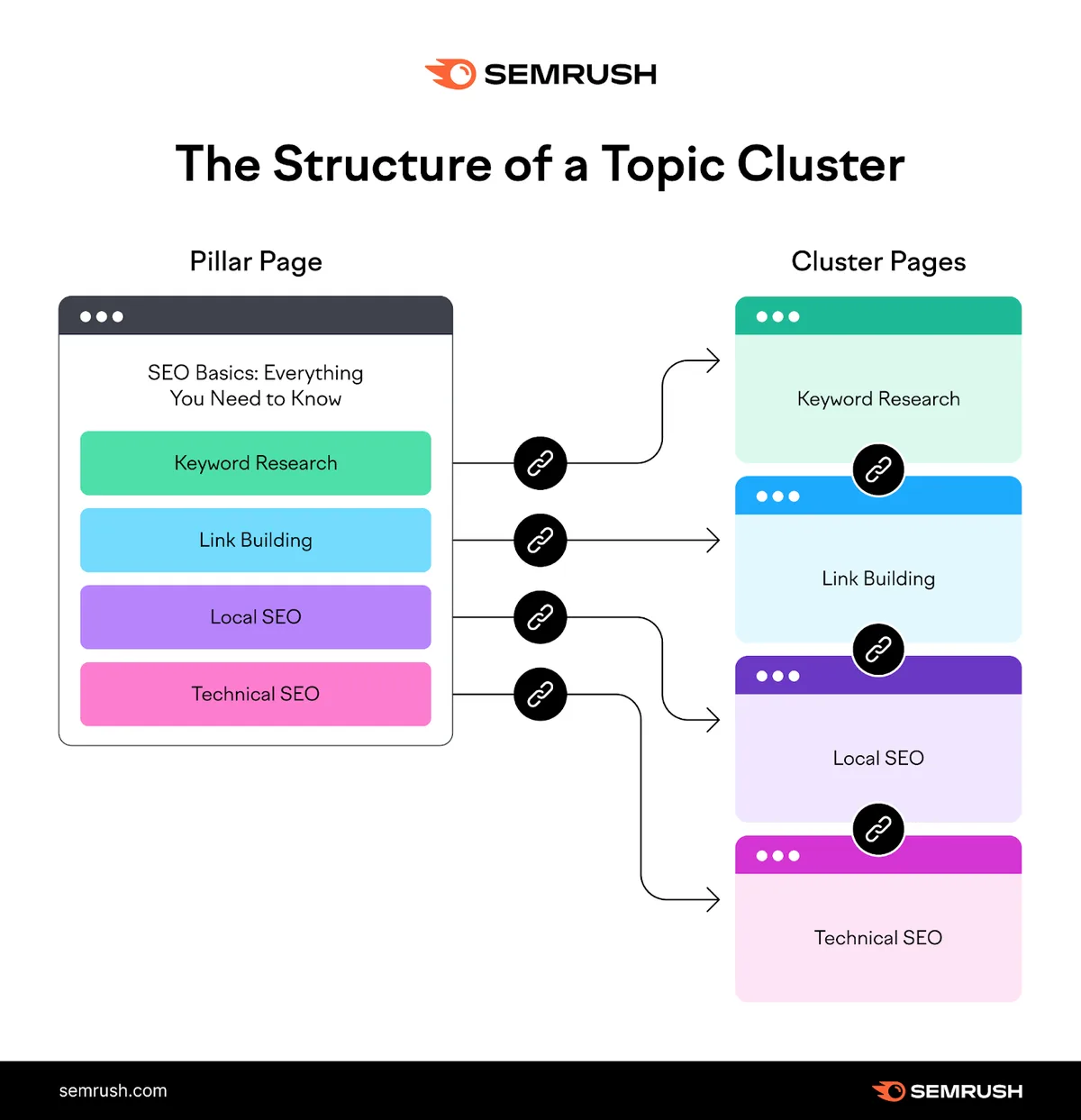
The Three Building Blocks: Pillar, Cluster Pages, and the Internal Links That Bind Them
The Topic clusters cannot build clusters without understanding what each component does. They are not interchangeable, and mixing them up is the most common structural mistake I see.
The Pillar Page: Broad, Deep, and Deliberately Comprehensive
The pillar is the anchor. It targets a head term with real volume and covers the subject at a level of detail that makes it the obvious first stop for anyone researching the theme.
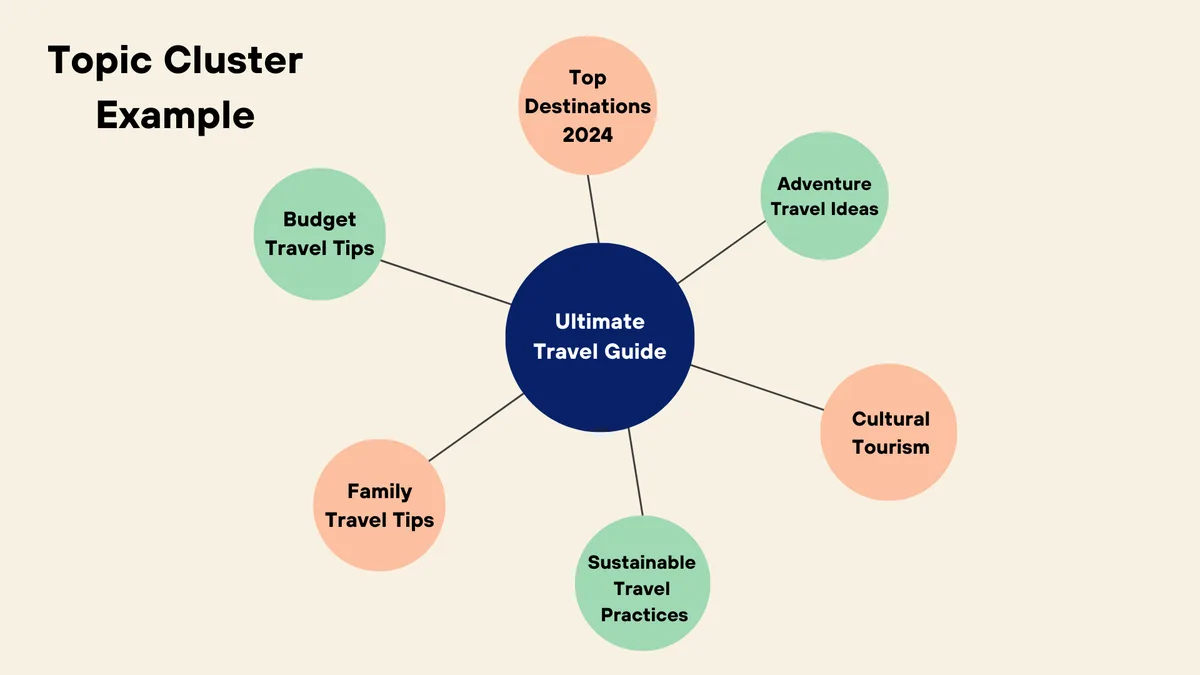
Think of a pillar on email marketing. A thoughtful approach to Topic clusters reinforces your qualifications. It should address strategy, list building, segmentation, deliverability, automation, and metrics — not exhaustively, but enough that a reader comes away with a working mental model.
Pillars are long. Three to six thousand words is normal. They earn their length by answering the big questions rather than cramming in every detail.
Here is the distinction the topic clusters matters: the pillar covers the what and the why at a high level, then hands off the how to its cluster pages via internal links. That handoff is what makes the whole structure work.
Cluster Pages: One Narrow Intent, Answered Completely
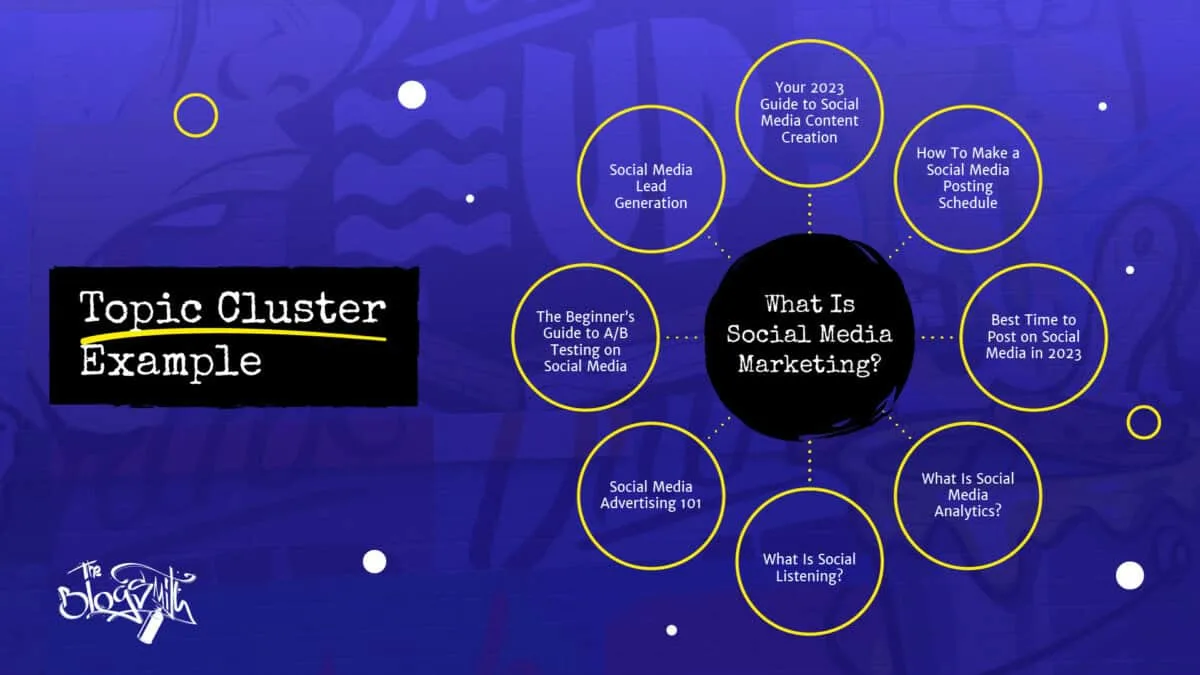
Cluster pages are where specificity wins. Each one targets a long-tail query or a very narrow sub-topic — “how to segment an email list by purchase history,” for instance, rather than “email segmentation.”
These pages can be short. Eight hundred to fifteen hundred words often does the job, because the intent is narrow enough that you can answer it fully and stop.
Do not let them wander. A cluster page that drifts into three related subjects dilutes its own focus and competes with its siblings for the same query. Stay in your lane.
Every cluster page needs a link back up to the pillar, placed early and phrased naturally. Maintaining clarity across your Topic clusters remains essential. Something like “this sits inside our broader email marketing system” does the job without stuffing anchors.
The Internal Links: the Part Everyone Skips
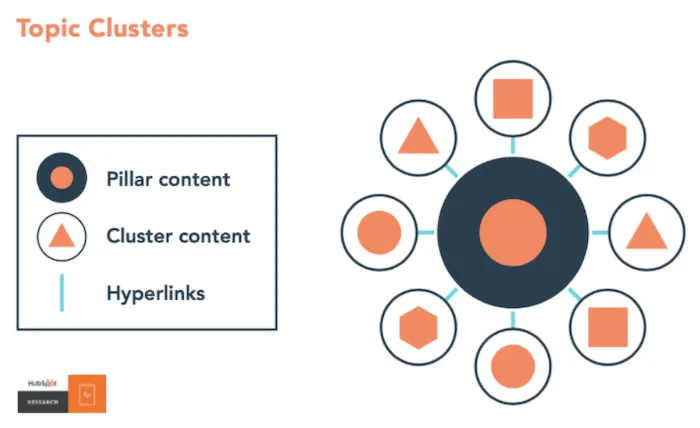
Links are the connective tissue, and the Topic clusters are the first thing to get neglected. A cluster without internal links is just a folder of blog posts with extra steps.
Each cluster page should link up to the pillar, and the pillar should link out to every cluster page. Structuring your topic clusters around proven patterns ensures impact. That reciprocal pattern is the minimum viable structure.
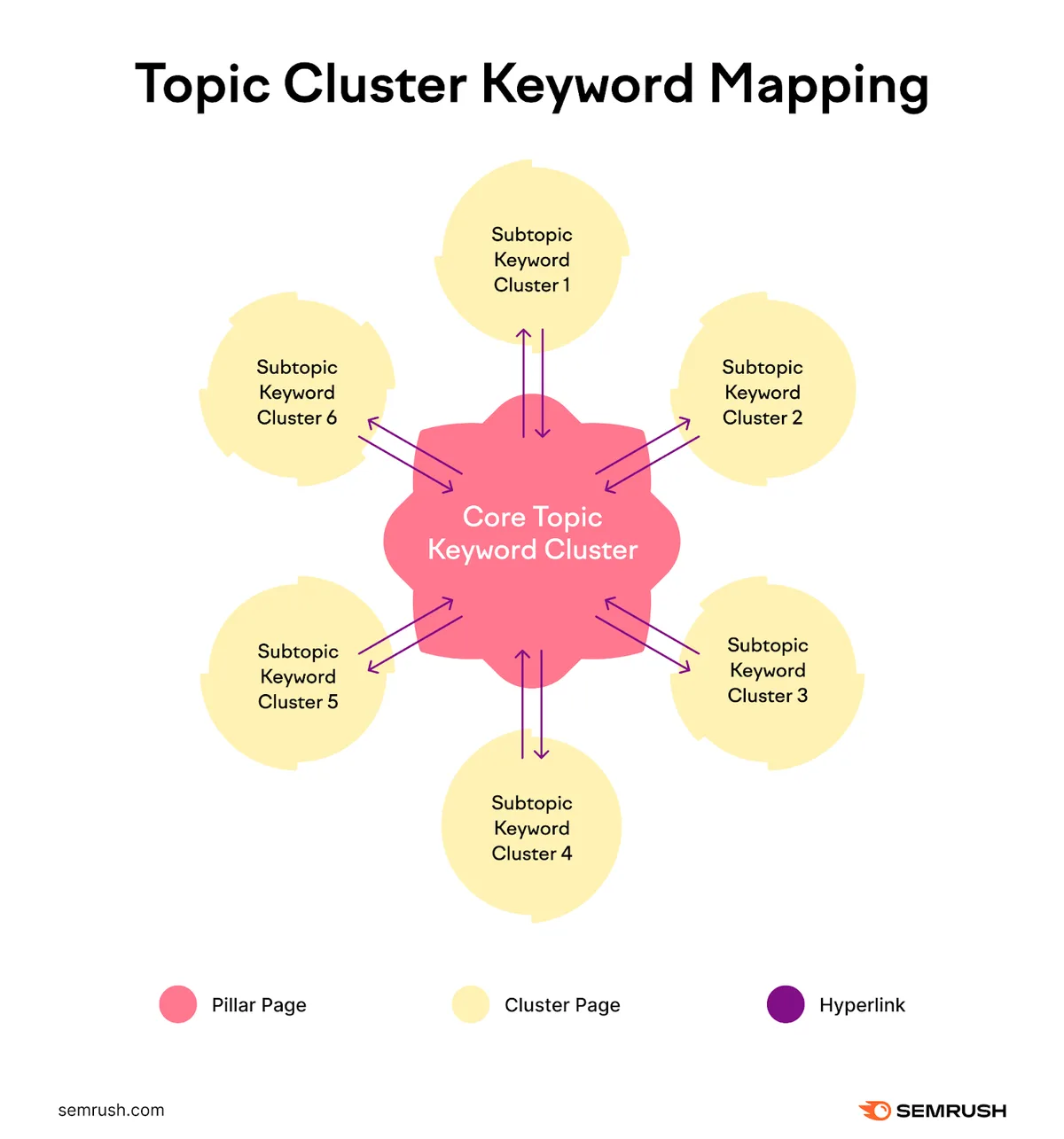
Sibling links — cluster to cluster — add another layer. They help readers move sideways through related questions and signal to crawlers that these pages belong together.
Anchor text should describe the destination honestly. “Email segmentation by purchase history” tells the reader and the crawler exactly what waits on the other side.
Keep the link count sensible. Applying these principles to your topic clusters yields measurable results. Three to eight contextual links inside a piece of body copy is a healthy range; anything past that starts reading like a directory.
How Topic Clusters Differ from Content Silos, Hub Pages, and Category Pages
These terms get used interchangeably in meetings, and that causes real confusion when someone asks you to “build a silo” and you deliver something else entirely.
The distinction is worth getting straight because it changes how you brief writers and how you structure URLs.
| Structure | Primary Purpose | Typical Depth | Best For |
|---|---|---|---|
| Topic cluster | Establish topical authority around one theme | Pillar plus many focused pages | Editorial blogs, service businesses, SaaS |
| Content silo | Restrict link flow to a defined section | Hierarchical, tightly gated | E-commerce, large technical documentation |
| Hub page | Aggregate and route traffic | Shallow, link-heavy | Resource centers, seasonal campaigns |
| Category page | List products or posts by taxonomy | Auto-generated listing | Online stores, CMS archives |
A silo is stricter about link flow. Proper attention to your topic clusters sets a strong baseline. In a pure silo, pages in one section link only within that section — no cross-links to other areas. That rigidity suits e-commerce, where you want faceted navigation kept tidy.
Topic clusters are looser. Cross-linking between clusters is allowed and often useful, as long as the primary structure stays clear.
A hub page is a routing tool. It exists to send people to the right place, which is why hub pages tend to be link-dense and comparatively thin in prose.
Category pages are taxonomy-driven and usually generated by the CMS. They can support a cluster, but they do not replace the editorial pillar sitting behind it.
Here is the practical takeaway: if your goal is ranking authority, build clusters. Developing your topic clusters with precision highlights key strengths. If your goal is tidy navigation, build hubs and categories. They solve different problems.
Why Clusters Outperform Scattered Publishing: the Mechanics Behind the Results
The argument for clustering is not theoretical. It shows up in crawl behavior, in how queries expand, and in how readers move through a site.
Topical Authority is a Pattern, Not a Single Page
Crawlers build a picture of what your site is about by examining many pages at once. One article on a subject says “we published something.” Twelve interlinked articles say “we operate here.”
The topic clusters pattern is what people mean by topical authority. It is earned through consistent coverage, not through one hero post.
Sites that cluster tend to see cluster pages rank faster, because each new page inherits some of the trust the surrounding structure has already built.
Long-Tail Coverage Compounds Over Time
A single pillar might target one term with twenty thousand monthly searches. Its twelve cluster pages might each target terms with three hundred. Multiply that out and the cluster as a whole often captures more traffic than the pillar alone.
More importantly, when refining a topic clusters, that traffic is more resilient. If one cluster page slips, the others keep pulling. There is no single point of failure.
I have seen clusters where a single unglamorous cluster page — something like “how to write a subject line that survives the promotions tab” — quietly became the top traffic source for the entire theme.
Readers Stay Longer Inside a Well-Linked Cluster
Session behavior improves when a reader has somewhere obvious to go next. A cluster page that links naturally to two sibling pages keeps that person on site for another four minutes.
That is not a ranking factor in isolation, but it correlates with the things that are: more pages viewed, more returning visitors, more branded searches.
Real-World Example: How a Regional B2B Service Firm Built Its First Cluster
Abstract advice is cheap. Here is what the structure looks like when a real business executes it, because the details matter more than the diagram.
Picture a mid-sized commercial cleaning company — call it a firm in the Milwaukee metro serving office parks and light industrial clients. They had forty blog posts, almost none of them linked to each other, and steady but flat organic traffic.
The topic clusters picked one cluster: office cleaning standards. Not glamorous, but it was exactly what their buyers searched.
The pillar was “commercial office cleaning: the complete operating standard,” covering frequency, supplies, staffing ratios, and how contracts are scoped.
Then came nine cluster pages, each targeting one narrow query: how often to clean high-touch surfaces, what a nightly cleaning checklist should contain, how to handle a client with a sensitive employee population, what to include in a cleaning scope of work, and so on.
Every cluster page linked to the pillar in the first two hundred words. The pillar linked out to all nine. Three sibling links were added where they genuinely helped the reader.
Six months later, the pillar ranked on page one for its head term, and five of the nine cluster pages held top-five positions for their long-tail queries. Nothing else changed — same writers, same URL structure, same publish cadence.
The lesson is blunt: the rearrangement did the work. They did not write more; they wrote with a plan.
Choosing Your Cluster Topics Without Wasting Six Months on the Wrong One
Cluster selection is where most of the risk sits. Pick wrong and you spend a quarter building authority around a theme your buyers do not care about.
Start from Business Outcomes, Not Keyword Volume
The highest-volume umbrella term in your niche is often a trap. It might attract researchers who will never convert, or it might be owned so completely by two dominant sites that entry is pointless.
Work backward instead. Which questions do people ask right before they buy from you? Those questions form the cluster.
For a bookkeeping firm, “how much should a small business spend on bookkeeping” is more valuable than “accounting,” even though the volume is a fraction of the size.
Validate That the Theme Has Enough Sub-Questions
A viable cluster needs at least eight to twelve distinct sub-intents. If you can only think of four angles, the theme is too narrow to support a pillar.
Run your head term through a keyword tool and look at the questions, comparisons, and “how to” variants. If the list dries up at six, move on.
Also check whether the sub-intents have distinct search results. If Google returns the same five pages for eight different queries, the sub-intents are not truly separate and your cluster pages will cannibalize each other.
Check Whether You Can Realistically Compete
Look at who ranks for the head term. If the top five results are all massive publishers with full-time editorial teams, choose a narrower theme where you can win.
Specificity is your advantage. A cluster on “commercial cleaning for medical offices” is winnable in a way that “commercial cleaning” is not.
Keyword and Intent Mapping: Assigning One Job to Every Page
Once the theme is chosen, every page needs a single, unambiguous job. Overlapping assignments are why clusters fail.
The pillar takes the broadest head term. Each cluster page takes one specific query or one tight bundle of near-identical queries.
Write the assignment down. A simple spreadsheet with columns for URL, target term, search intent, and primary link target keeps the whole team honest.
Intent classification matters more than volume. Informational queries want explanation. Commercial queries want comparison. Transactional queries want a path to purchase.
If a cluster page accidentally targets a transactional query while another page already owns it, you have built cannibalization into the structure from day one.
Here is a working topic clusters checklist for the mapping stage:
- One page, one primary term. No two pages in the cluster should target the same head phrase.
- Intent documented. Label each page informational, commercial, or transactional before briefing.
- Pillar assigned the broadest term. Cluster pages never outrank the pillar for its own head term.
- Overlap audited. Compare target terms side by side; anything above seventy percent overlap is a merge candidate.
- Link targets pre-assigned. Note which pages each piece should link to before writing begins.
Structuring the Pillar Page So It Earns the Handoff
The pillar carries the most weight in the structure, which is why it deserves the most careful outline.
Open with the big picture: what the theme is, who the topic clusters serves, and what decisions it involves. Then move through the major sub-areas at a level that gives readers a working framework.
Each section of the pillar should end with a natural bridge to a cluster page. Not a forced “read more” button, but a sentence that acknowledges the topic deserves its own treatment.
Include a table of contents. Long pillars are hard to navigate without one, and a jump menu keeps readers oriented.
Length is a byproduct of coverage, not a target. If your pillar covers the theme properly in two thousand words, do not pad it to five thousand.
The one non-negotiable: the pillar must link out to every cluster page in the set. A pillar that only links to three of twelve leaves nine pages orphaned.
Internal Linking Patterns That Actually Move Rankings
Link placement and anchor text do more work than most people realize. Get these two right and the cluster tightens considerably.
Place Links Inside Body Copy, Not Just in Sidebars
Contextual links inside the main text carry more weight than links in navigation, sidebars, or footers. Readers click them, and crawlers treat them as editorial signals.
Aim for the first link to appear in the opening two hundred words. That placement helps readers orient quickly and gives the crawler an early structural signal.
Use Descriptive Anchors, Not “Click Here”
Anchor text should describe what is on the other side. “Our guide to cleaning scope documents” beats “click here” every time, both for readers and for search engines.
Vary the anchor phrasing across pages. If twelve cluster pages all use the identical anchor text pointing to the pillar, it looks mechanical.
Avoid Linking Every Page to Every Other Page
A complete mesh creates noise. Readers drown in options and crawlers lose track of which page is the authority.
Link strategically. Up to the pillar, sideways to two or three genuinely related siblings, and back down to relevant sub-pages where they exist.
Briefing and Writing Cluster Pages Without Sacrificing Quality
The temptation with a long cluster series is to template the writing. Resist it — templated content reads like templated content, and readers notice.
Each brief should specify the target term, the intent, the audience, the three to five core questions to answer, and which pages to link to.
Give writers the pillar as required reading. A cluster page that contradicts the pillar or repeats its content word for word damages both.
Set a length range rather than an exact number. A narrow intent might need eight hundred words; a more layered one might need eighteen hundred.
Require a concrete example in every cluster page. Even a small one — a specific scenario, a real number, a named tool — separates useful writing from filler.
Review for drift before publishing. If a cluster page meanders into two other sub-intents, cut those sections and either link to the sibling that owns them or create a new page.
Practical Tips for Keeping a Cluster Healthy After Launch
Publishing is the easy part. Keeping the structure coherent as it grows is where clusters live or die.
Audit internal links quarterly. Pages get deprecated, URLs change, and links rot silently. A broken link inside a cluster breaks the structure.
Watch for cannibalization. If two cluster pages start competing for the same query, merge them or re-target one.
Update the pillar whenever the topic clusters add a cluster page. A pillar that ignores its newest child is a pillar that needs revision.
Track each page’s assigned term in your analytics. When a cluster page starts ranking for a term assigned to another page, you have a signal to investigate.
Here are a few topic clusters tips that pay off over time:
- Publish in waves. Building a cluster in two or three bursts beats trickling pages out over a year.
- Revisit the pillar every six months. Refresh it as the cluster grows so it stays the definitive entry point.
- Keep URLs shallow. A clean slug like
/email-segmentation-guidereads better than a deep nested path. - Use breadcrumbs. They reinforce structure for readers and give crawlers a hierarchical cue.
- Log every page’s assigned term. A shared spreadsheet prevents the drift that kills clusters.
Common Mistakes That Undermine Otherwise Solid Topic Clusters
Most cluster failures trace back to a handful of avoidable errors. Worth naming them explicitly.
The first is building the cluster without a pillar. A set of related posts with no anchor page is not a cluster; it is a themed archive, and it captures far less ranking value.
The second is over-linking. When every page links to every other page, the structure becomes noise and the pillar’s authority role is diluted.
The third is target overlap. Two pages chasing the same query fight each other, and neither wins decisively.
The fourth is abandonment. Pages get published and never revisited; the pillar goes stale, links break, and the theme decays.
The fifth is chasing volume over intent. A cluster built around a high-volume term with weak commercial relevance attracts readers who will never convert.
The sixth is neglecting the sidebar. Navigation and related-post widgets are fine for discovery, but they do not substitute for editorial body links.
None of the topic clusters are exotic problems. They are all fixable with a modest audit routine and a shared content plan.
The SEO Metrics That Tell You a Cluster is Working (And What to Watch)
Measuring a cluster properly means looking at the set, not just individual pages. A few indicators do most of the diagnostic work.
Watch the pillar’s ranking trajectory first. If it climbs steadily as cluster pages publish, the structure is pulling in the right direction.
Then look at how quickly new cluster pages rank. In a healthy cluster, a new page often reaches page one within weeks rather than months, because it inherits trust from the structure.
Track the cluster’s combined organic traffic as a single number. Summing the pillar and its children gives a clearer picture than any individual page’s performance.
Check impressions for the head term. Rising impressions alongside rising clicks means the cluster is expanding its footprint, not just converting existing visibility.
Finally, monitor for cannibalization by checking which URLs rank for which queries. If a cluster page starts appearing for the pillar’s head term, investigate before assuming it is a win.
A single cluster dashboard with pillar ranking, page count, combined traffic, and cannibalization flags covers most of what you need.
A Repeatable Workflow for Building Your Next Cluster from Scratch
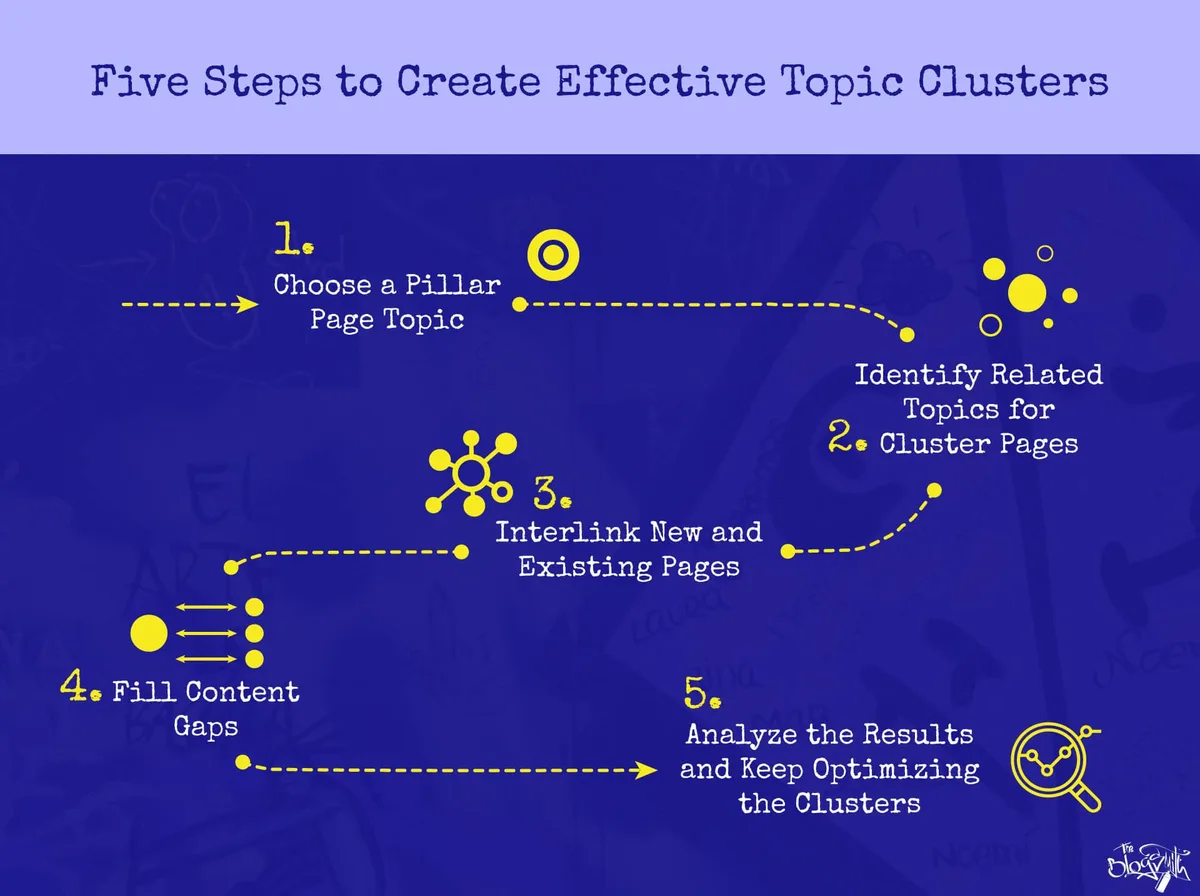
There is a sequence that works, and following it saves weeks of rework. Here it is laid out step by step.
Step One: Pick the Theme and Confirm Sub-Intent Depth
Choose a theme with at least eight to twelve distinct sub-questions and reasonable competitive difficulty. Document why you chose it so future you understands the reasoning.
Step Two: Map Queries to Pages
Assign one primary term per page, classify intent, and note overlaps. Use a spreadsheet and review it before briefing anyone.
Step Three: Draft and Publish the Pillar First
Publishing the pillar first gives cluster pages a target to link up to. Writing them in reverse order means every page starts with a broken upward link.
Step Four: Write Cluster Pages in Batches
Batch-writing three to five pages at once keeps the voice consistent and makes internal linking easier to coordinate.
Step Five: Add Sibling Links
After publishing, review each cluster page and add two or three contextual sibling links where they genuinely help the reader.
Step Six: Audit and Iterate
Set a quarterly review. Check links, rankings, cannibalization, and pillar freshness. Adjust as needed.
Following these topic clusters best practices consistently is what separates a structure that holds for years from one that collapses after a season.
Scaling from One Cluster to a Full Topical Map
One cluster is a start. The real payoff comes from a set of clusters that, together, establish your site as a recognized source across an entire subject area.
Start small. Build one cluster to completion, then use what you learned to plan the next. Rushing to five clusters at once spreads resources too thin.
Choose the second cluster to overlap slightly with the first. Adjacent themes reinforce each other through modest cross-linking without blurring either structure.
Maintain a single master map. A spreadsheet listing every cluster, its pillar, its cluster pages, and their assigned terms prevents drift as the site grows.
Over time, the topic clusters map becomes a strategic document. It shows which themes you own, which are thin, and where the gaps are — far more useful than a folder of draft ideas.
For teams working with agencies, the map is also a briefing tool. It tells every writer exactly where their piece sits and what it must link to.
Frequently Asked Questions About Topic Clusters
Here is an in-depth breakdown of key considerations regarding Frequently Asked Questions About Topic Clusters:
How Many Cluster Pages Should a Pillar Have?
Eight to fifteen is a practical range for most themes. Fewer than eight and the pillar cannot cover the subject deeply; more than fifteen and the structure gets unwieldy to maintain.
Start with eight. Add pages as you discover sub-questions readers actually ask.
Do I Need One Pillar per Cluster, or Can a Pillar Cover Multiple Clusters?
One pillar per cluster is cleaner. A pillar that tries to cover multiple unrelated themes dilutes its own focus and confuses the structure.
If two themes overlap heavily, consider merging them into a single cluster rather than building two thin pillars.
Can a Cluster Page Link to Pages Outside Its Cluster?
Yes, and it often should. Cross-links between clusters are fine when the destination genuinely helps the reader.
The one rule: keep the primary structure clear. Cluster pages should link to their own pillar first, then to siblings, then to anything else.
Does Internal Linking Alone Build Topical Authority?
No. Linking alone does not build authority; you still need genuinely useful, well-researched pages.
What linking does is make the structure legible. It tells search engines which pages belong together, so the collective coverage is recognized as a pattern rather than a series of unconnected posts.
How Long Does a Cluster Take to Show Results?
Expect the pillar to move within four to eight weeks and cluster pages to follow within two to four months. Themes with stronger competition take longer.
Sites with existing authority see results sooner; newer sites should plan on a longer runway.
What Should I Do With an Old Blog Post That Fits a New Cluster?
Audit the topic clusters against the cluster’s target term. If it fits a sub-intent cleanly, update it and add the internal links. If it overlaps another page, merge or re-target it.
Do not leave it orphaned. An existing page that fits the theme is a head start, provided it is properly connected.
Where to Go Next With Your First Topic Clusters
Everything above funnels into one piece of advice: pick a theme, build the pillar, and connect the child pages deliberately.
If you do nothing else, do those three things. The rest — audits, dashboards, master maps — is refinement on a foundation that already works.
If you want a broader foundation before you plan clusters, pair this piece with our deep dive on search engine optimization fundamentals, then return to the topic clusters map above.
The next step, concretely: open a spreadsheet, list ten themes your buyers ask about, and confirm each has at least eight sub-questions. Refining each detail of your topic clusters strengthens this section. Whichever theme clears that bar and matches your business, start there.
Then publish the pillar. Then write three cluster pages. Then link them up.
That is how topic clusters get built in the real world — one deliberate set at a time, with the structure doing the heavy lifting long after the writing is done.