Table of contents SEO is one of those quiet on-page levers that most publishers ignore until they notice competitors with identical content outranking them. I have watched that exact scenario play out across dozens of editorial sites, and the fix usually sits right at the top of the article, hiding in plain sight.
Here is the honest truth: a table of contents is not decoration. On long-form pages it functions as a navigation aid for readers, a structural signal for search engines, and a shortcut for AI systems that need to extract a clean answer. Get it right and everything downstream gets easier. Get it wrong and you quietly hand rankings to someone else.
This walkthrough is built around nine strategies that actually move the needle, shaped by real publishing experience rather than theory. Read it as a working table of contents SEO guide you can apply to your next post the same afternoon.
Why Table of Contents SEO Matters More Than Most Publishers Realize
Search engines have changed how the table of contents SEO read long articles. Instead of skimming only the introduction and conclusion, modern crawlers parse the whole document and look for structure clues that reveal what each section covers. A table of contents gives them a literal map.
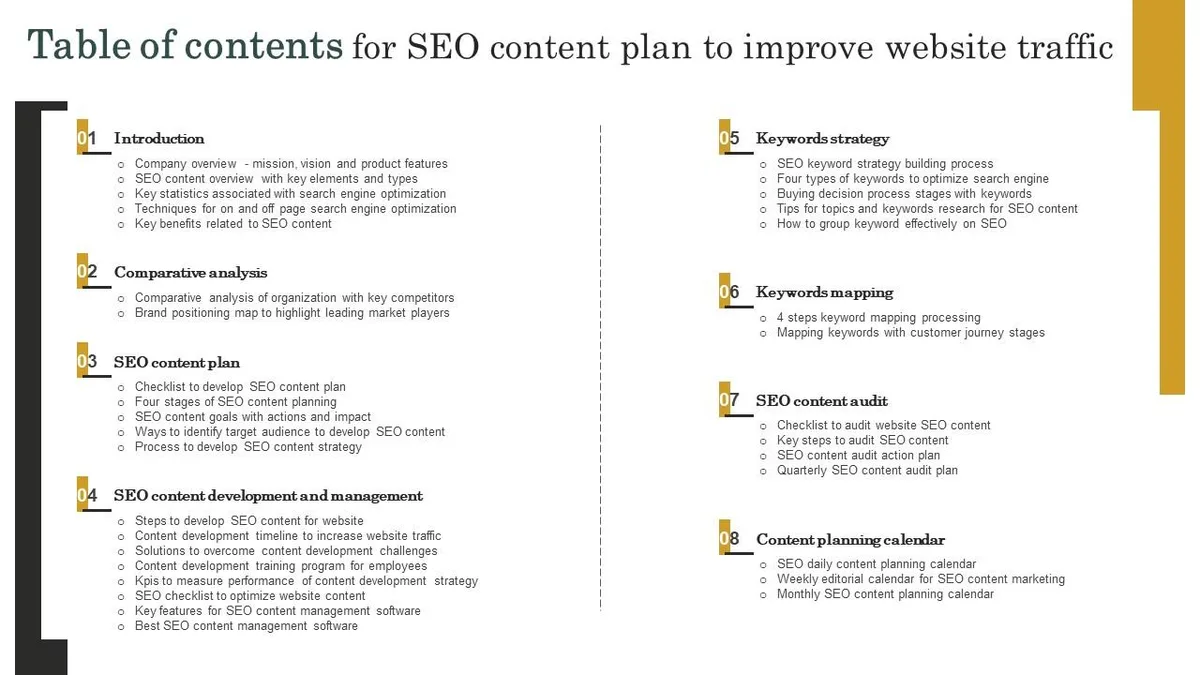
Readers benefit just as much. Someone landing from a mobile search result wants one answer, not a 4,000-word scroll. A jump link that drops them thirty pixels above the exact paragraph they need reduces pogo-sticking, and that behavioral signal matters in a way a lot of table of contents SEO tips articles gloss over.
The table of contents seo is a third audience now. AI overviews, answer engines, and chat assistants pull passages from pages whose hierarchy is easy to reconstruct. When your headings are clean and your anchor links resolve properly, extraction is frictionless. When they are not, your content gets skipped in favor of a competitor whose structure is legible.
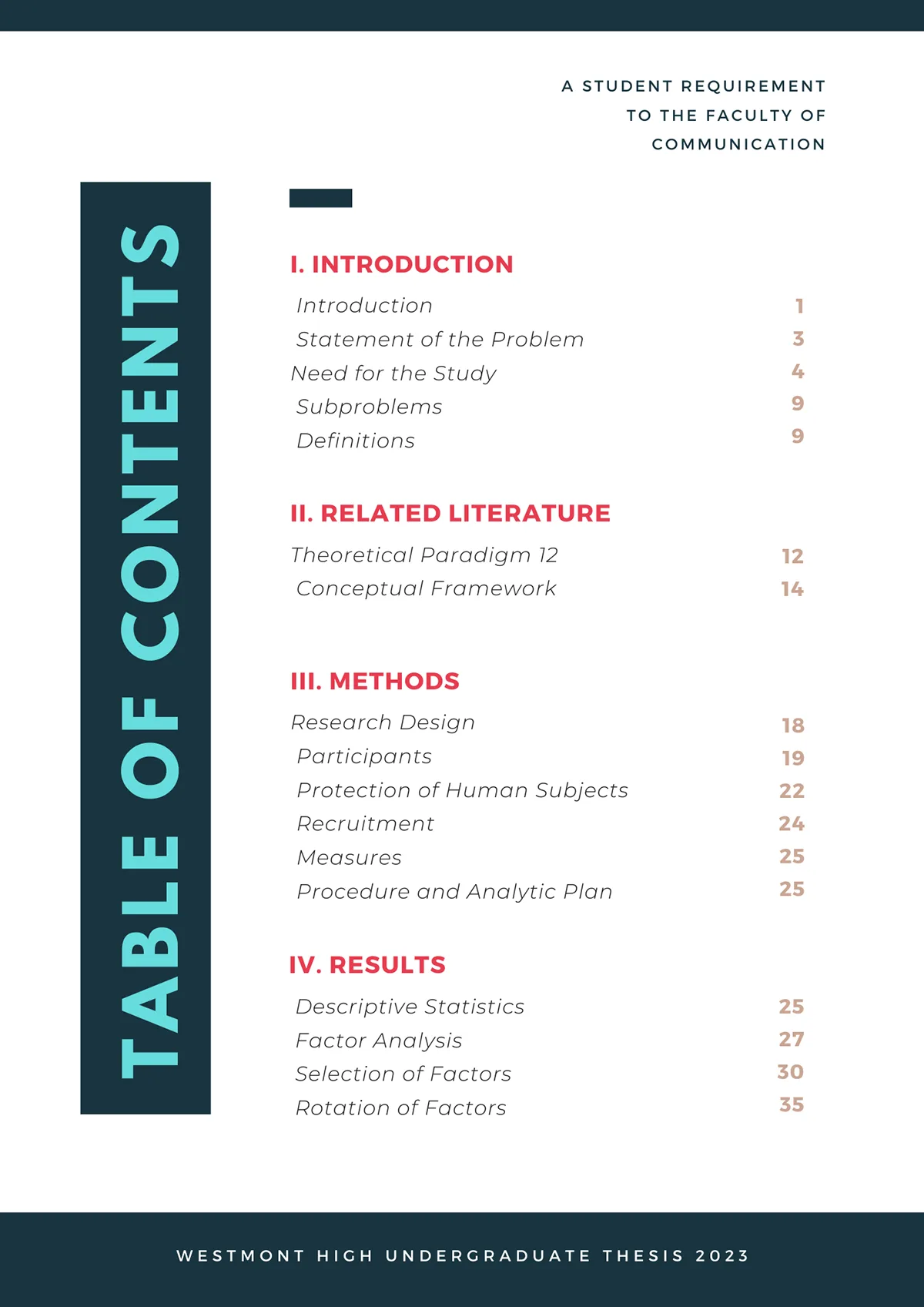
Think of the table of contents as the cover sheet on a well-organized report. Refining each detail of your table of contents SEO strengthens this section. Nobody praises it, but its absence is immediately felt.
Strategy 1: Build the TOC from a Real Heading Hierarchy, Not a Decorative List
The most common failure I see is a table of contents constructed as a hand-typed bullet list that has no relationship to the actual heading tags underneath it. It looks fine to a human. To a crawler, it is an orphaned block of links pointing at fragments that may or may not exist.
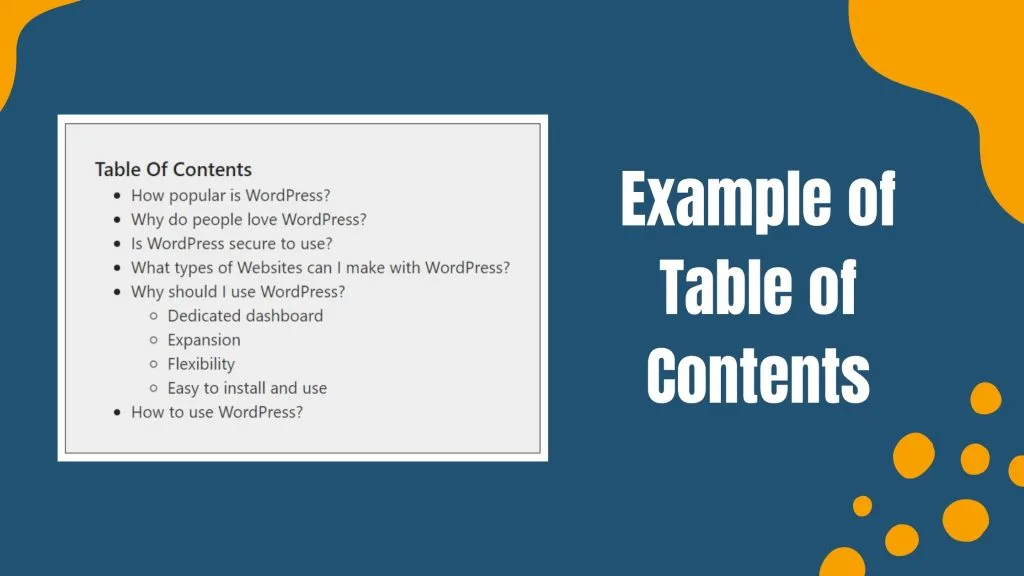
Build the table of contents SEO the other way around. Write the article first with a clean H2 and H3 hierarchy, then generate the list from those headings. This guarantees that every entry in the table of contents corresponds to a real, tagged section, and that the anchors resolve to genuine IDs.
Three structural rules pay off immediately:
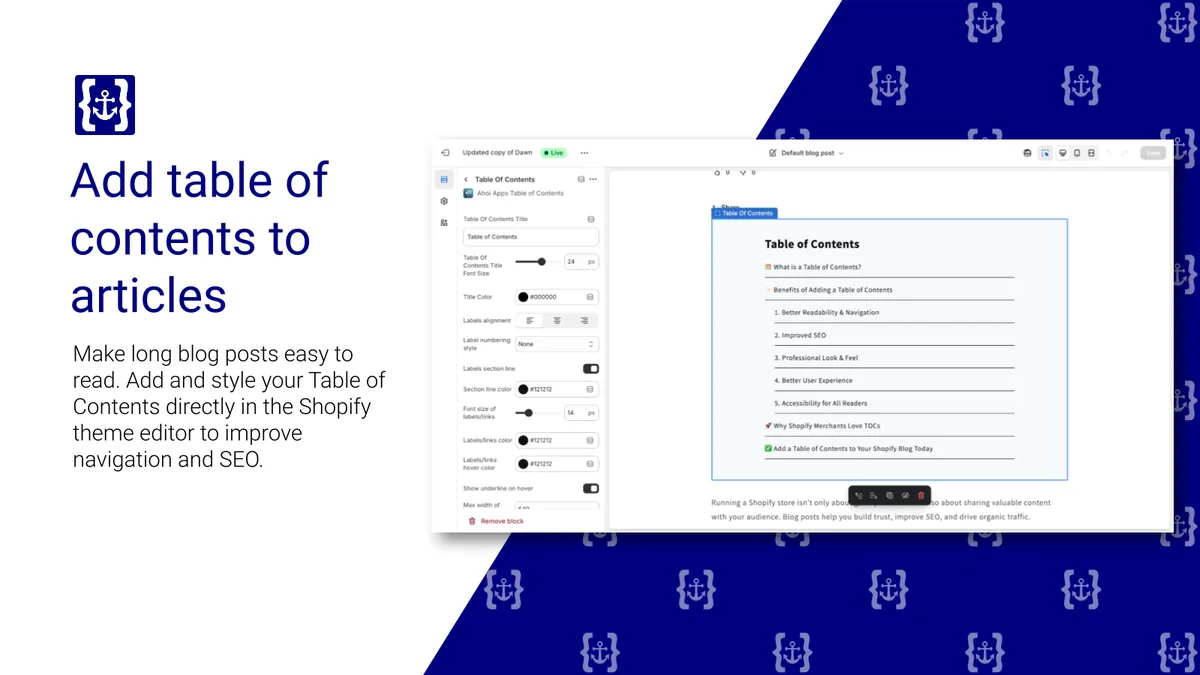
- One H2 per major section. Multiple H2s claiming the same topic dilute the section’s identity.
- H3 only as children of an H2. Never jump from H2 to H4, and never place an H3 before any H2 has opened.
- Meaningful heading text. “Part Two” tells a crawler nothing; “How To Structure Anchor Links Correctly” tells it everything.
A useful gut check: if you deleted the body paragraphs and read only the headings, could a stranger summarize the article accurately? If yes, the hierarchy is doing its job.
Strategy 2: Make the Table of Contents SEO Structure Crawlable and Machine-Readable
Anchor links the table of contents SEO work for humans sometimes fail for crawlers. The culprit is usually a JavaScript-rendered table of contents that only appears after an interaction or a scroll event. Google can render JavaScript, but the rendering queue is a bottleneck, and AI extraction tools are far less patient.
Server-rendered markup solves the problem outright. The cleanest implementation is a standard ordered or unordered list wrapped in a navigational landmark, with each list item containing a plain anchor pointing at a matching ID.
| Element | Recommended Markup | Why It Matters |
|---|---|---|
| Wrapper | Semantic navigation element with a descriptive label | Signals that the block contains in-page navigation links |
| Entries | Ordered or unordered list items | Preserves sequence and gives crawlers a countable structure |
| Links | Plain anchor tags with fragment IDs | Resolvable without JavaScript execution |
| Heading targets | Matching ID attributes on H2 and H3 tags | Prevents dead jumps and broken fragment indexing |
| Label | Visible text such as “On This Page” or “In This Article” | Improves clarity for screen readers and assists passage extraction |
One detail I always flag to clients: check the table of contents SEO the fragment identifiers are lowercase, hyphenated, and stable. If your CMS regenerates slugs when you edit a heading, older anchor links in existing table of contents blocks will silently break. Lock the IDs down.
Structured data is worth adding as well. Refining each detail of your table of contents seo strengthens this section. Marking the page as an article with a main entity and listed sections helps search engines connect the table of contents to the content it indexes. It is not a ranking button, but it removes ambiguity, and ambiguity is what kills rich results.
Strategy 3: Place the TOC Above the Fold Without Crippling the Introduction
Placement is a genuine trade-off. Structuring your table of contents SEO around proven patterns ensures impact. Put the table of contents too high and you delay the lead paragraph that satisfies search intent. Put it too low and readers who need it never see it.
What works in practice, across informational and commercial pages alike, is a compact table of contents positioned immediately after a short opening paragraph or two. The reader gets context first, then the map. Crawlers get the introduction they need for topical relevance, then the structural outline.
On mobile, consider a collapsible version the table of contents SEO expands on tap. The rendered HTML should still contain the links in an uncollapsed, crawlable state, with the collapse handled by styling rather than by withholding markup. That distinction matters: hidden-by-CSS is fine, absent-from-HTML is not.
For hub pages and pillar content, a sticky in-page navigator in the sidebar complements the inline table of contents nicely. Just avoid duplicating the same link set three times on the page; excessive internal anchors pointing at identical fragments can look manipulative.
Strategy 4: Write Anchor Text That Mirrors Search Queries
Anchor text inside a table of contents is an underused relevance signal. Proper attention to your table of contents SEO sets a strong baseline. Instead of labeling a section “Part 3,” label it with the phrase a reader would actually type into a search bar. That single change often improves the page’s ability to rank for long-tail variants it previously ignored.
Compare two versions of the same entry. “Section Four: Optimization” is forgettable. “How To Optimize Anchor Text For Table Of Contents SEO” is specific, descriptive, and internally consistent with the section it points to.
A few guardrails keep this from backfiring. Avoid stuffing the primary keyword into every entry, because repetition at that scale reads as manipulation. Instead, spread semantic variants across the list so each anchor covers a related query the article genuinely answers.
Keep entry length between four and nine words. Developing your table of contents SEO with precision highlights key strengths. Shorter entries lose specificity; longer entries break the visual rhythm on mobile and push the list below the fold.
Strategy 5: Align the TOC With Search Intent and Passage-Level Ranking
Every entry in a table of contents is a promise that your table of contents seo section beneath it answers a question. Break that promise and readers bounce. Keep it and you earn passage-level visibility, where a single well-structured section ranks for a niche query independent of the page as a whole.
Map your entries against the questions buyers and researchers actually ask. If the article covers a comparison, your table of contents SEO section title should say “X vs. Y” rather than “Alternatives.” If it covers costs, the title should indicate that plainly.
Here is where a table of contents SEO checklist becomes practical. Before publishing, verify that each entry:
- States a specific claim, question, or outcome rather than a vague topic.
- Corresponds to a section that fully delivers on that title within the first two paragraphs.
- Uses language a real searcher would recognize, not internal jargon.
- Appears once only, with no near-duplicate entries competing for the same query.
- Links to a section long enough to satisfy the intent, not a two-line stub.
Intent alignment also affects which sections you include at all. A section that exists only to fill space dilutes the whole page. Cut it, and the remaining table of contents gets stronger.
Table of Contents SEO: 9 Proven Strategies to Rank Higher
The table of contents SEO is the core of the article, and it is worth stating plainly: the nine strategies below form a sequence, not a menu. Each builds on the previous one. Skipping ahead usually means reworking earlier decisions later.
I have ordered them by implementation cost, cheapest first. Most sites can execute the first four in an afternoon. The remaining five take more planning but deliver disproportionate returns on long-form content.
Strategy 6: Keep the TOC Visually Lightweight and Accessible
A table of contents the table of contents SEO pushes the article body far down the page hurts both engagement and Core Web Vitals. Long entry lists, oversized spacing, and decorative icons all add height for no informational gain.
Target a compact block. Two-column layouts work on wide screens for lists under twelve entries, while single-column with tight line-height works better on mobile. Test with a throttled connection rather than a fast desktop line.
Accessibility deserves equal attention. Focusing on table of contents SEO provides clear direction here. Screen reader users rely on the list semantics to understand that these links navigate within the page, so use real list markup rather than a stack of divs styled to look like one. Include a visible label. Ensure focus states are obvious for keyboard users jumping between entries.
Contrast ratios on link text trip up more sites than the table of contents seo would expect. A subtle gray that looks elegant on a designer’s monitor often fails WCAG thresholds on a phone in daylight.
Strategy 7: Pair the TOC With Schema and Internal Link Architecture
The table of contents does not exist in isolation. It is the entry point to a link graph that includes internal links, section anchors, and structured data. Aligning all three strengthens topical authority across a cluster.

At the page level, mark the article as a structured entity with a clear headline, author, and publication context. At the section level, use descriptive anchor links to connect related subsections where they genuinely support each other, and link out to authoritative external references when a claim needs backing.
At the site level, treat the table of contents as a hub. If you publish a cluster of articles around related topics, the parent pillar’s table of contents should link out to the child pieces at the relevant sections. That is how topical authority compounds instead of fragmenting.
Example from a project I consulted on: a B2B software blog restructured twelve long posts into a pillar-and-spoke model, with each pillar’s table of contents linking to two or three spokes at the matching section.
Organic sessions to the cluster rose within a single quarter, and the pillar pages began appearing for head terms that previously went to competitors.
Strategy 8: Measure TOC Performance With Behavioral and Search Data
You cannot improve what you do not measure, and this is where most table of contents SEO best practices articles stop short. Track engagement with the table of contents as a distinct event, not as part of general scroll depth.
Useful metrics include click-through rate on TOC entries, scroll depth of sections reached via anchor versus sections reached via free scrolling, and bounce rate segmented by landing entry point. If readers who jump to a section bounce faster than those who scroll, the section is under-delivering, not the table of contents.
Search console data adds the other half. Look for which section-level queries you rank for, and compare that list against your table of contents SEO section titles in your table of contents. Gaps reveal missed opportunities. Sections with no query attachment at all are candidates for retitling or removal.
One practical caution: anchor clicks look like internal navigation to some analytics setups, so verify that your event tracking distinguishes fragment jumps from full pageviews. Getting this wrong inflates engagement and hides the real picture.
Strategy 9: Refresh and Localize the TOC as Content Evolves
A table of contents is not a set-and-forget asset. Effective execution in your table of contents SEO makes a tangible difference. When you add a section, remove a stale one, or merge two related topics, the list must change with it. Broken anchors and orphaned entries are the most common form of decay I find during content audits.
Build the refresh into your editorial calendar. A thoughtful approach to table of contents seo reinforces your qualifications. A quarterly pass that verifies every anchor, checks for retired sections, and updates entry titles to match current search language takes about twenty minutes per long post and prevents months of silent damage.
For multilingual sites, the table of contents is where localization errors show up first. Maintaining clarity across your table of contents SEO remains essential. Translating headings but forgetting to regenerate fragment IDs breaks every link. Plan the TOC generation step into the translation workflow, not after it.

Also review terminology drift. A product feature renamed in the interface should be renamed in the table of contents too, and the redirect or anchor update handled in the same commit.
Common Table of Contents SEO Mistakes That Quietly Cost Rankings
Even teams the table of contents SEO follow the strategies above stumble on implementation details. These are the recurring problems I see most often during technical reviews.
Duplicate H2s with near-identical titles. Two sections that both promise to explain the same thing split relevance between them and confuse extraction tools. Merge them or sharpen the difference.
Anchors that scroll but do not update the URL. If your JavaScript smooth-scroll intercepts the click and suppresses the fragment update, the deep link cannot be shared and crawlers may not register your table of contents seo section as a distinct destination.
Tables of contents generated for short posts. Anyone searching for table of contents SEO tips has probably read that a TOC helps with featured snippets. That is true for long, multi-section articles. Bolting one onto a 600-word post adds clutter and no navigational value.
Missing visible label. A naked list of links with no heading at all reads as navigation to assistive technology but as noise to a casual reader. A short label fixes both.
| Mistake | Typical Symptom | Fix |
|---|---|---|
| Auto-generated TOC from outdated headings | Dead anchor links | Regenerate on every publish |
| Overstuffed anchor text | Same keyword repeated in every entry | Diversify with semantic variants |
| Client-side-only rendering | No entries visible in crawl | Serve markup in initial HTML |
| No ID attributes on headings | Links scroll nowhere | Add stable slugs to each heading |
| Multiple TOCs on one page | Conflicting fragments, diluted signals | Consolidate into a single list |
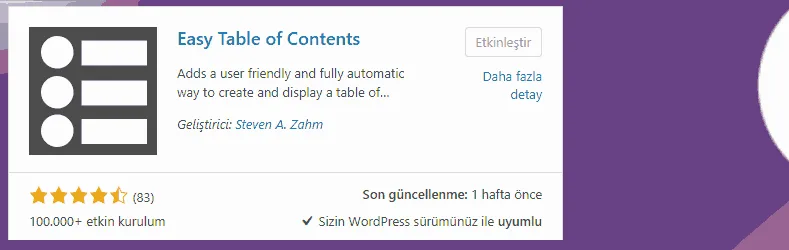
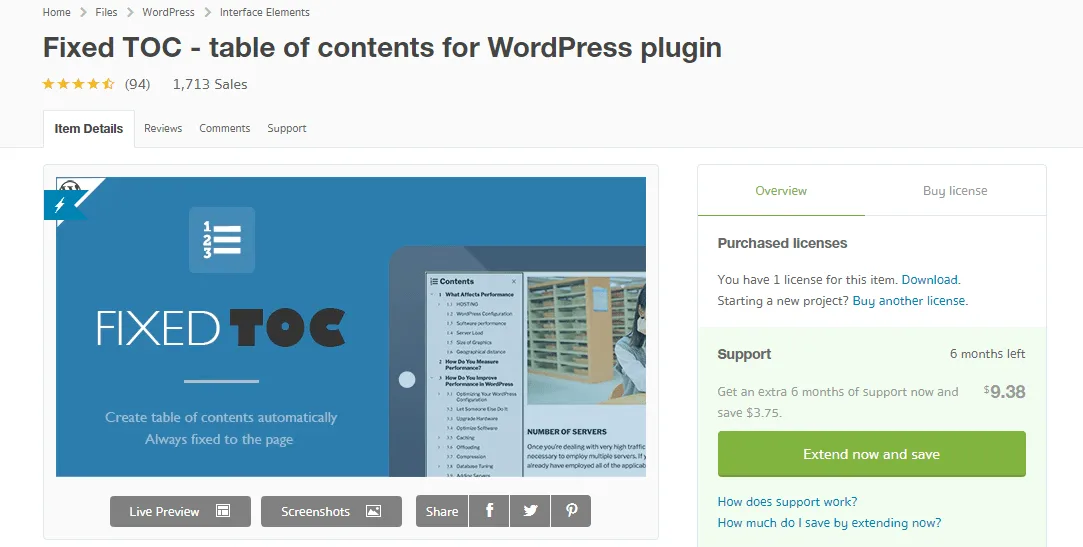
The pattern behind almost every one of the table of contents SEO mistakes is automation without verification. Plugins are useful, but plugins do not know which section you renamed last week.
A Practical Table of Contents SEO Checklist for Your Next Publish
Before hitting publish, run through the table of contents seo sequence. It compresses everything above into a repeatable ritual that takes about five minutes on a typical long post.
- Verify heading hierarchy. One H2 per section, H3s nested under their parent, no skipped levels.
- Generate the list from live headings. Never hand-type entries after the outline has changed.
- Confirm server-rendered markup. Load the page with JavaScript disabled and check that entries still appear.
- Test every anchor. Click through the full list on both desktop and mobile.
- Read entry titles as a searcher would. Rewrite any entry that describes a topic instead of a question or outcome.
- Check semantics. Real list markup, a visible label, and a navigational landmark around the block.
- Add structured data. Article markup with headline and section references where supported.
- Wire up event tracking. Distinguish fragment clicks from pageviews so engagement data stays honest.
- Schedule a refresh. Put a recurring audit on the calendar before the article ages out.
That is the full table of contents SEO checklist in one place. Print it, pin it in the editorial channel, or fold it into your CMS’s pre-publish checklist so it happens automatically.
How Table of Contents SEO Fits Into a Larger Topical Strategy
A table of contents earns its keep when the table of contents SEO does more than help one page. Treat it as connective tissue inside a content cluster, and the compounding effects begin to show.
The parent topic here is on-page structural optimization, and this article sits alongside related discussions on heading hierarchy, internal linking architecture, and passage-level ranking.
If you want to go deeper after applying the nine strategies above, the natural next reads are topics on schema markup for articles, anchor-level analytics tracking, and technical audits for JavaScript-rendered navigation.
Teams often ask me where to start when resources are tight. My answer has not changed: fix the structure of your three highest-traffic long posts first. The lift is faster than any new content calendar, and the lessons transfer to every article that follows.
Questions Publishers Ask About Table of Contents SEO
Here is an in-depth breakdown of key considerations regarding this section:
Does a Table of Contents Actually Improve Rankings?
Directly, the effect is modest. Applying these principles to your table of contents seo yields measurable results. Indirectly, it is significant. A table of contents improves crawlability, helps passage-level ranking by clarifying section boundaries, and raises engagement by letting readers reach answers faster. Those combined effects routinely show up as higher average position over a quarter.
I have never seen a table of contents alone rescue a thin article. I have seen it amplify a strong one considerably.
What is the Ideal Length for a Table of Contents?
Between four and twelve entries works for most long posts. Below four, the section format rarely justifies a navigator. Above twelve, split the article or group entries under sub-labels.
Depth matters as much as count. Include H3-level entries only when they answer distinct queries that a reader might search for on their own.
Does the TOC Hurt Featured Snippet Chances?
No, and it often helps. Snippets favor pages where the answer sits in a clearly bounded section with a descriptive heading directly above it. A well-built table of contents reinforces that boundary instead of blurring it.
One caveat: if the table of contents itself becomes the snippet, the table of contents SEO gain visibility but the searcher may not click through. Structure the intro paragraphs so the substance is retrievable independent of the list.
Should Every Article Have a Table of Contents?
No. Reserve it for content that genuinely benefits from in-page navigation: pillar pages, comparison posts, how-to guides with many steps, and anything crossing the 1,500-word mark. Short news items and opinion pieces usually read better without one.
For the table of contents SEO shorter formats, invest the effort in clearer headings instead. The structural benefit is similar and the visual cost is lower.
How Do I Handle a TOC on a Multilingual Site?
Generate the list separately for each language version, and regenerate fragment identifiers whenever a translated heading changes. Share one design pattern across locales, but never share the IDs.
For languages written right to left, verify the table of contents SEO anchor scroll positioning lands correctly. Smooth-scroll libraries occasionally overshoot when text direction reverses.
Where to Go from Here
The nine strategies in this piece are not theoretical. Each one came from watching a real page gain or lose ground, and the pattern behind them is consistent: clarity wins. A table of contents is clarity made visible.
Start with hierarchy and crawlability. Targeted refinements to your table of contents SEO streamline the entire review. Add anchor text that mirrors real queries. Measure what readers do with the list, and refresh it before it rots. Do those four things and you are already ahead of most of your competitive set.
If you want a single takeaway to carry into your next editorial review, make it this: treat your table of contents as a contract between the article and the reader. Honor the contract everywhere, and the structure holds — navigation, ranking, and reputation alike.
For verified reference and background research, consult the authoritative informational resource on this topic.