Social bookmarking sites are the quiet workhorses of the open web—saved links, public tags, and shared collections that predate every algorithm-driven feed you scroll today. If you have ever stashed a recipe in a browser folder and lost it three laptops later, this topic is for you.
What follows is a complete, honest walkthrough: what these platforms actually are, why they still matter for discovery and for SEO, how the big names compare, what a realistic workflow looks like, and the mistakes that waste most people’s first month.
Think of it as the working manual I wish someone had handed me when I started testing these platforms one by one.
What are Social Bookmarking Sites and How Do They Work?
At the simplest level, a social bookmarking platform lets you save a URL, attach a title, add a description, and tag it with keywords—then share that saved link with everyone instead of keeping it in a private folder.
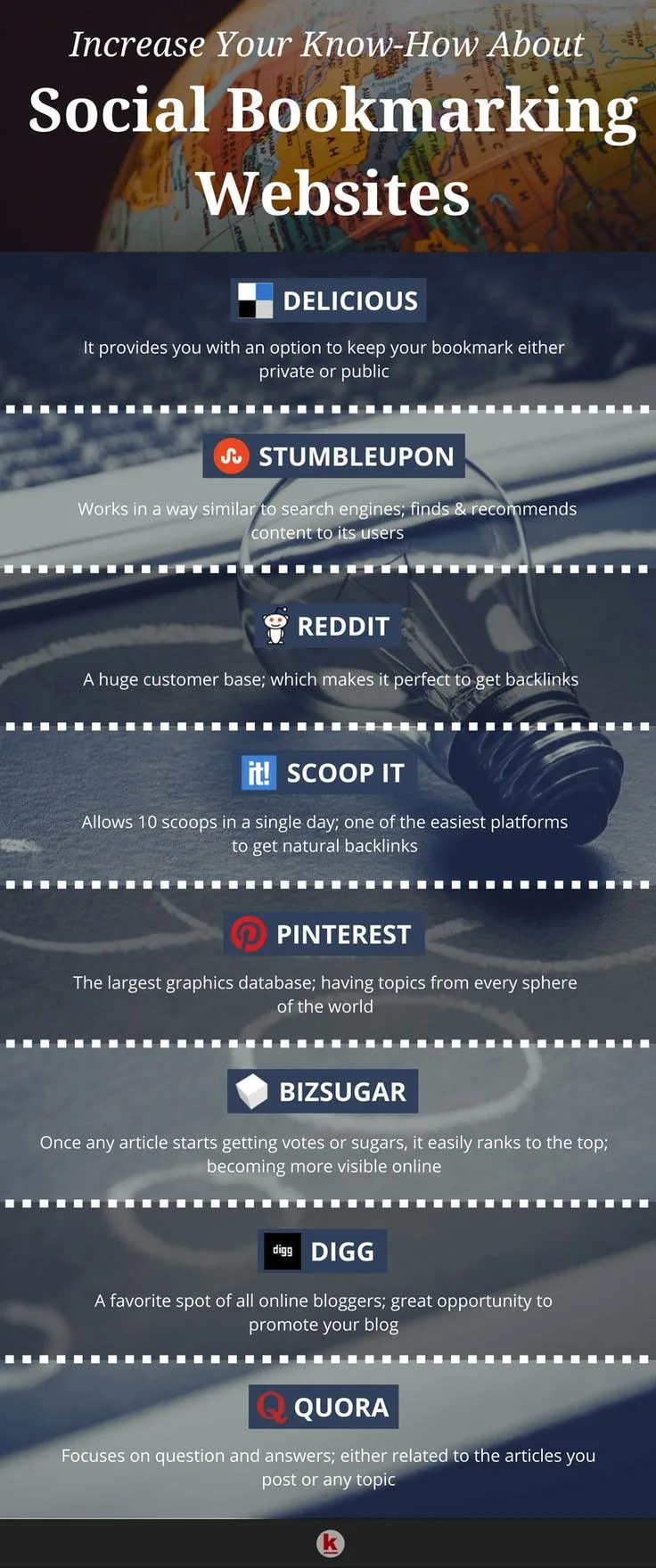
The “social” part is what separates it from a browser bookmark: other users can browse your collection, search the tags, comment, vote, and re-share.
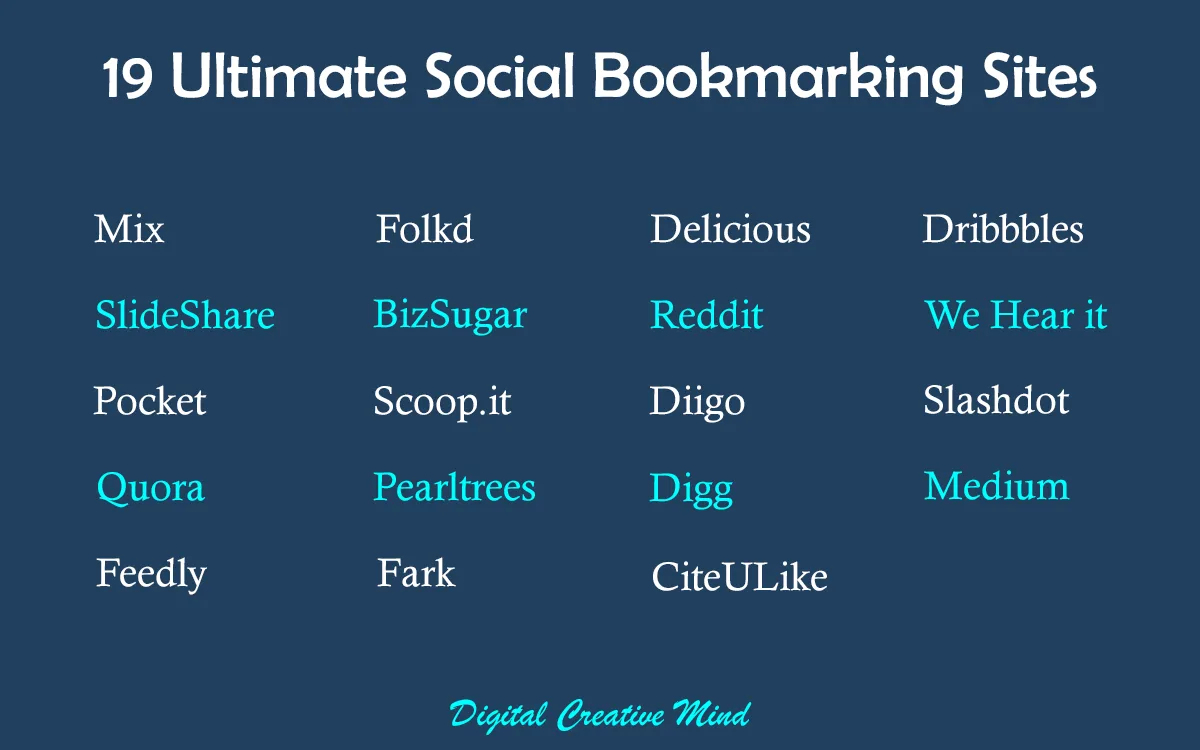
Most of the Social bookmarking sites services run on three moving parts. First, a submission form where you paste the link and metadata. Second, a taxonomy built from tags rather than rigid folders, so one link can live under several topics at once. Third, a discovery layer—popular pages, trending tags, newest submissions—that gives your saved link a public audience.
The Core Mechanics Behind Every Platform
Tagging is the engine. Focusing on social bookmarking sites provides clear direction here. Where a file folder forces you to pick one home for a link, tags let you file it under “productivity,” “note-taking,” and “remote work” simultaneously. That flexibility is why researchers, teachers, and curators gravitate toward these tools in the first place.
Voting and ranking come next. Refining each detail of your Social bookmarking sites strengthens this section. On community-driven platforms, a link’s visibility depends on how many people upvote it and how quickly. On curation-first platforms, visibility depends on the reputation of the person who saved it. Either way, the saved link competes for attention, and that competition is what creates referral traffic.
Profiles and follow graphs finish the picture. You follow curators whose taste you trust, and their new saves land in your feed. Over time this turns into a lightweight recommendation engine built entirely on human judgment rather than behavioral tracking.
How They Differ from Browser Bookmarks and Read-Later Apps
A browser bookmark is private, unsearchable by anyone else, and dies with the device. A read-later app like Pocket or Instapaper is semi-private and built around the reading queue, not around discovery. Social bookmarking sites sit on the other end of that spectrum: public by default, searchable, and structured around sharing.
The Social bookmarking sites distinction matters more than it sounds. When you bookmark publicly with a clear description and sensible tags, you are effectively publishing a tiny index page for that resource. Search engines can crawl it, other curators can find it, and the original article gets a durable, relevant link.
Why This Category Still Matters
The social bookmarking sites would be easy to dismiss these platforms as relics from before social media ate the web. The data says otherwise. Reddit—arguably a social bookmarking site with a discussion layer bolted on—consistently ranks among the highest-traffic websites globally, and its outbound links routinely send serious referral volumes.
Pinterest, which is fundamentally a visual bookmarking engine, drives enormous purchase-intent traffic for retail and food content. Maintaining clarity across your Social bookmarking sites remains essential. Hacker News can put a small technical blog in front of tens of thousands of developers in an afternoon. The category is not dead; it simply fragmented into specialized communities.
For anyone building an audience or a content strategy, the social bookmarking sites fragmentation is an opportunity. A single well-placed submission in the right community can outperform weeks of generic promotion.
Why Social Bookmarking Sites Still Matter for SEO
Let’s be direct about the SEO question, because the Social bookmarking sites attracts a lot of mythology. These platforms will not magically lift your rankings. What they can do is create crawl paths, distribute your content to real people, and generate the kind of engagement signals that correlate with visibility.
The value is indirect but real. A thoughtful approach to social bookmarking sites reinforces your qualifications. Here is how the mechanism actually works in practice.
Crawl Discovery and Indexing Speed
Search engine crawlers revisit large, frequently updated platforms constantly. When you save a fresh URL with a proper title and description, you are handing the crawler a direct path to a page it may not have discovered yet. For new domains and freshly published articles, that first nudge can shorten the wait before indexing.
The social bookmarking sites is especially useful for small publishers without a strong internal linking structure. A dozen well-tagged saves across a handful of reputable platforms can create legitimate entry points that a sitemap alone does not provide.
Referral Traffic and Genuine Engagement
The traffic here is spiky, not steady—and the Social bookmarking sites is fine. A link that reaches the front page of a niche community can deliver a burst of highly qualified readers who actually care about the topic. Those readers stay longer, scroll further, and occasionally subscribe.
Contrast the social bookmarking sites with a paid display campaign that buys impressions from people who could not care less. The bookmarking route is slower and less predictable, but the audience quality is usually far higher.
In my own testing, a single technical tutorial submitted to a developer-focused community produced more newsletter signups in two days than a month of social posting. Effective execution in your Social bookmarking sites makes a tangible difference. The post itself was mediocre by my standards. The community fit was perfect.
Brand Mentions and Entity Signals
Every public save the social bookmarking sites includes your brand name, your article title, and a thoughtful description contributes a small, crawlable mention. Stack enough of those across reputable platforms and you start building an entity footprint—a pattern of consistent references that helps search engines understand who you are and what you cover.
This is slow work. It compounds quietly. And it is one of the more defensible forms of off-page activity because it depends on genuine curation rather than manufactured links.
The Honest Caveat About Link Value
Most links from user-generated bookmarking platforms carry a nofollow attribute or a similar signal the social bookmarking sites prevents direct PageRank transfer. Do not expect a rankings jump from the link alone. Treat the link as distribution and discovery, not as a ranking lever.
Where the leverage actually lives is in the secondary effects: someone discovers your piece, cites it in their own article, and that citation becomes a genuine editorial link. The bookmark was the seed, not the harvest.
How to Evaluate Social Bookmarking Sites Before You Commit
There are hundreds of these platforms, and most of them are ghost towns. Signing up for twenty and submitting to all of them is the fastest way to waste a week. A proper social bookmarking sites checklist saves you from that fate, and it is shorter than you would expect.
Run these six filters before you invest any real time in a platform.
- Active community and recent submissions. Sort by newest and check the timestamps. If the most recent public save is from eighteen months ago, the platform is a museum piece. Move on. A live community shows saves within the last few days and visible voting activity.
- Do-follow or nofollow status. Check the page source or use a browser extension to inspect outbound link attributes. Not a dealbreaker either way, but it changes what you should expect from the effort.
- Topical relevance to your niche. A general-purpose platform with a million users can still be useless to you if nobody there cares about your subject. A smaller, focused community usually outperforms it for referral quality.
- Moderation quality and spam levels. Browse the front page. If it is wall-to-wall casino links and crypto promos, the moderation has collapsed and your submission will drown in noise.
- Account requirements and rate limits. Some platforms let you submit immediately; others require karma, account age, or manual approval. Know the rules before you build a workflow around a platform that will throttle you.
- Export and data portability. Can you download your saved links and tags in a standard format? If the platform shuts down—and several have—a clean export is the difference between losing years of curation and moving it elsewhere in an afternoon.
Reading the Signals of a Healthy Platform
Look past the homepage design. Clear alignment with your social bookmarking sites builds confidence from the start. The real indicators are whether comments exist under submissions, whether users have substantial public profiles, and whether the tagging system is coherent—meaning people use consistent, findable tags rather than one-off strings.
Another signal: does the platform surface older content, or only the newest? A healthy archive means your submission has a long tail. A pure firehose means your link is buried within hours.
The Leading Social Bookmarking Sites Compared
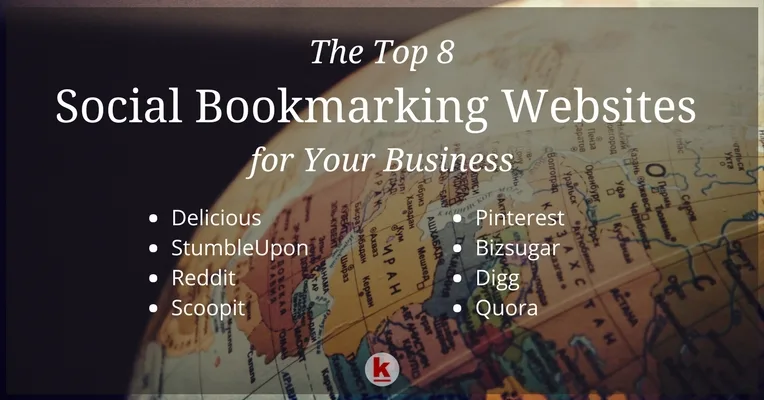
Different platforms serve different jobs. Integrating social bookmarking sites into your workflow produces consistent quality. Below is a practical breakdown of the ones that still carry real weight, organized by what they are actually good at rather than by raw user count.
Community-Driven Platforms
These platforms combine saving, voting, and discussion. The discussion layer is what makes them valuable—and what makes them unforgiving of overt self-promotion.
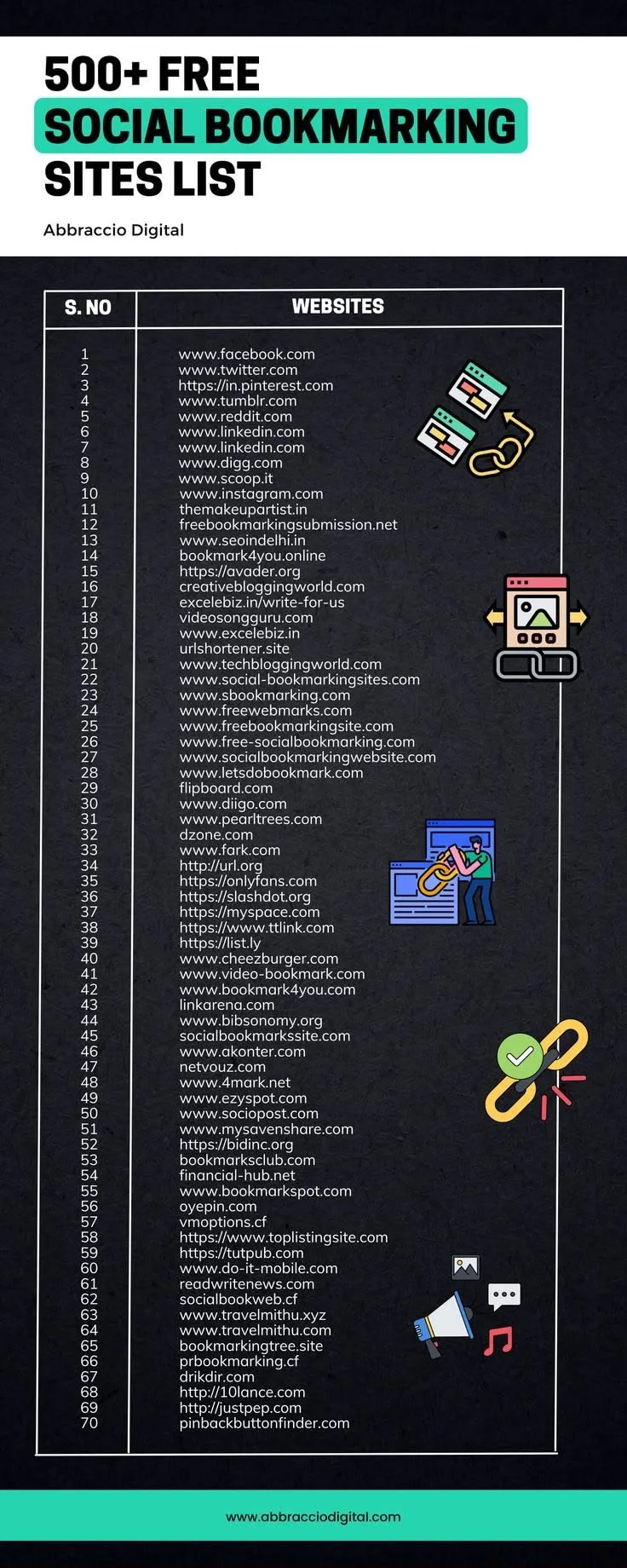
- Reddit. The largest and most influential community platform in the world. Subreddits function as topical bookmarking boards with voting and threaded comments. Excellent referral potential; brutal moderation culture if you arrive as a marketer with your own links.
- Hacker News. Y Combinator’s link-sharing board for the technical and startup crowd. A front-page hit can generate tens of thousands of visits. The bar is high, the audience is skeptical, and self-promotion needs to be occasional and genuinely useful.
- Lobsters. Invite-based, developer-focused, and small. Lower volume than Hacker News but a warmer, more technical audience with real staying power.
- Slashdot. One of the oldest surviving communities in this space. Traffic is lower than in its heyday, but a good submission still reaches a deeply technical readership.
Visual and Curation-First Platforms
The social bookmarking sites lean toward discovery and browsing rather than discussion. They are strong for visual niches and evergreen topics.
- Pinterest. A visual search engine disguised as a bookmarking site. Pin descriptions and board structure behave like on-page optimization. Food, home, fashion, fitness, and wedding content do exceptionally well here.
- Mix (formerly StumbleUpon). A personalized discovery feed built from saved pages. Traffic is intermittent, but the recommendation engine surfaces older content in a way most feeds do not.
- Flipboard. Magazine-style curation with individual magazines you can create around a theme. Good for editorial and long-form content that benefits from a polished visual presentation.
Bookmark Managers With Public Layers
These are primarily personal organization tools, but their public features make them quietly useful for discovery and for hosting a crawlable collection.
- Diigo. Annotation, highlighting, and outliner tools layered over bookmarking. Popular with educators and researchers. The public library exposes your saves with descriptions and tags.
- Pinboard. Fast, minimal, and paid. Beloved by power users who want a clean archive and full-text search of their own saves. The public feed is small but high-quality.
- Raindrop.io. A modern bookmark manager with strong tag organization and public collection pages. Good middle ground between private archive and public curation.
- Pearltrees. Organizes links into visual mind-map collections. The interface takes adjustment, but the public collections index well and suit topical resource hubs.
The Comparison Table
| Platform | Primary Focus | Community Strength | Referral Potential | Best Fit |
|---|---|---|---|---|
| Community discussion | Very high | High | Broad niches, niche communities | |
| Hacker News | Tech and startups | High, technical | Very high, spiky | Developer and startup content |
| Visual discovery | Very high | Steady, long-tail | Visual and lifestyle niches | |
| Diigo | Research and annotation | Moderate | Low to moderate | Education and academic content |
| Pinboard | Personal archive | Small, elite | Low | Power users, curation |
| Mix | Discovery feed | Moderate | Intermittent | Editorial and general topics |
| Raindrop.io | Bookmark management | Small | Low | Organized public collections |
| Pearltrees | Visual collections | Small | Low to moderate | Topical resource hubs |
How to Build an Account That Actually Gets Traction
Here is where most people stumble. They create an account, submit three links to their own blog, see zero response, and conclude the whole category is worthless. The problem was never the platform—it was social bookmarking sites guide is the part that matters here, and this approach to social bookmarking sites.
Communities in the social bookmarking sites space have long memories and sharp radar for people who only take. The accounts that succeed are the ones that behave like members of a community first and publishers second.
Profile Setup That Signals Credibility
Fill out your social bookmarking sites profile completely. A real name or consistent handle, a short bio that explains what you care about, and an avatar that is not a stock placeholder. This takes four minutes and dramatically changes how your submissions are perceived.
Link to your actual site or portfolio, but do not lead with it. The profile is a signal of identity, not a billboard.
Lurking Before Posting
Spend at least a week reading before the social bookmarking sites submit anything. Learn which topics get upvoted, which get downvoted, and which get removed by moderators. Read the community rules twice—they are often surprisingly specific about what counts as self-promotion.
In practice, this means understanding the unwritten norms too. On some platforms, a title written in title case reads as marketing and gets buried. On others, lowercase titles with a dry tone perform best. You learn this only by watching.
The Ratio That Keeps You Welcome
A workable rule of thumb: for every link the social bookmarking sites submit to your own content, submit or engage with at least five to nine pieces from other people. That ratio keeps your account credible and keeps moderators off your back.
On voting-based platforms, upvote generously and comment thoughtfully. Genuine comments under other people’s submissions build reputation faster than any submission you make.
Realistic Expectations in the First Month
Expect very little traffic in month one. Expect a few downvotes on a submission you thought was great. Expect at least one moderator warning about self-promotion.
That is normal. Refining each detail of your social bookmarking sites strengthens this section. The accounts that break through are the ones that keep participating after the underwhelming first month. By month three, a good account can send reliable referral visits from every submission no matter how small.
Social Bookmarking Sites Best Practices That Separate Results from Noise
Thousands of submissions separate the people getting referral traffic from the people talking to an empty room. The difference is rarely talent. It is a set of repeatable habits applied consistently.
Craft Titles That Earn the Click
The title is ninety percent of the outcome. It needs to be specific, honest, and written the way a person would describe the link to a friend. Avoid marketing superlatives; they read as advertising and trigger distrust on every serious platform.
A title like “How I Cut Query Times From 4 Seconds to 90 Milliseconds” outperforms “10 Amazing Database Optimization Tips” by a wide margin on technical communities. Specificity signals real experience.
Write Descriptions Like a Curator, Not a Marketer
Most platforms let you add a description or summary. Use it to answer a simple question: why is this link worth someone’s time right now? A single clear sentence beats a paragraph of keyword-stuffed fluff.
Where the platform exposes tags, use them thoughtfully. Effective execution in your social bookmarking sites makes a tangible difference. Three to six relevant tags, phrased the way real users search, will place your link in front of the right people. Twenty tags that vaguely gesture at the topic will place it nowhere.
Time Your Submissions
The clock matters on voting-based platforms. Reddit traffic peaks on weekday mornings in US time zones. Hacker News has a well-documented sweet spot in the early morning Pacific hours, when there is enough fresh traffic to lift a submission but not enough competition to bury it.
On Pinterest, evenings and weekends perform better for lifestyle content. On curation-first platforms, timing barely matters—discovery is driven by search and follow, not by hourly algorithms.
Engage After Submitting
Do not submit and walk away. Stay in the comment thread for the first few hours. Answer questions, acknowledge criticism, add detail that did not fit in the article. This is what turns a drive-by visit into a reader who subscribes or shares.
It also matters for the algorithm on community platforms, where engagement velocity in the first hour drives visibility in the next twenty-four.
Respect the Rules Even When They Seem Arbitrary
Every community has idiosyncratic rules—about titles, about direct links versus text posts, about how often the social bookmarking sites can submit from one domain. Follow them exactly. A moderator who trusts you is worth more than a clever workaround.
If a submission gets removed, ask politely what would have been acceptable. Most moderators will tell you. Almost none will if you argue.
Social Bookmarking Sites Tips for Consistent Long-Term Results
Anyone can land one lucky submission. Building a system that reliably produces referral traffic is a different project, and it depends on routine rather than luck.
Batch Your Submissions Wisely
Save your submissions for a single weekly session rather than dribbling them throughout the week. This is where the work becomes sustainable. Twenty minutes on a Tuesday morning is enough to seed a whole week of traffic if your account has any standing.
Batch the cross-posting too. One article becomes four submissions—one tailored for a technical community, one for a general forum, one for Pinterest, one for a curation platform. Each gets its own title and description written for that audience.
Vary Your Anchor Text and Descriptions
If the social bookmarking sites submit the same article to twelve different platforms with identical descriptions, you look like a bot. And in a sense, you are behaving like one. Rewrite the description in the voice of each community. Where one audience wants data, another wants narrative.
Vary the anchor point where the social bookmarking sites can—do not always link to the homepage. Deep links to specific articles, tools, and resource pages build a more natural pattern.
Track What Actually Converts
Referral traffic is easy to measure; conversion is what matters. Structuring your social bookmarking sites around proven patterns ensures impact. Set up UTM parameters on every submission so your analytics can attribute signups and downloads to specific platforms. Then you can stop guessing which communities are worth your time.
Over three months, patterns emerge. You will find one or two platforms that consistently deliver qualified readers and several that produce bounce traffic only. Drop the latter.
Build a Personal Curated Collection
Your public profile on a curation-first platform is itself an asset. Applying these principles to your social bookmarking sites yields measurable results. A well-organized, consistently updated collection of resources in your field becomes a destination people return to—and an asset that ranks for its own topic.
This is quiet, unglamorous work. It is also the sort of thing that pays off for years because it survives when individual article submissions are long forgotten.
Common Mistakes and How to Avoid Them
The failure modes here are remarkably predictable. Proper attention to your social bookmarking sites sets a strong baseline. Almost every dead account I have seen made one of the following errors, usually within its first few submissions.
Submitting Only Your Own Content
This is the fast track to a ban or, worse, shadow-banning—where your submissions look alive to you but are invisible to everyone else. Moderators spot it instantly, and algorithms flag it automatically.
Fix the social bookmarking sites by following the five-to-one rule above without exception. If you submit one article of your own, submit five from other publishers in the same session.
Chasing High-Domain-Authority Platforms With Huge Spam Problems
There is a category of “bookmarking” platform whose only real users are SEOs submitting to each other. They have high domain authority in third-party metrics and no actual audience. Submitting there is busywork.
Judge by whether real people visit the platform, not by its authority score. Traffic data tools will tell you quickly.
Ignoring the Description Field
A link with no description is a naked URL competing against curated, described submissions. It will lose almost every time. The description is where you earn the click.
The Social Bookmarking Sites Checklist
Here is the operating checklist I keep pinned. Run through it before any submission session and the hit rate improves measurably.
| Step | Action | Why It Matters |
|---|---|---|
| 1 | Read the community rules for the specific board | Prevents removal for rule violations |
| 2 | Confirm the platform has recent submissions | Avoids dead platforms |
| 3 | Write a specific, honest title | Drives the click more than any other factor |
| 4 | Craft a one-sentence curator-style description | Turns a naked link into a real recommendation |
| 5 | Apply three to six relevant tags | Places the link in front of the right audience |
| 6 | Submit during the platform’s peak window | Maximizes visibility on voting-based platforms |
| 7 | Stay in the comment thread for two hours | Converts drive-by visits into engagement |
| 8 | Add UTM tags to every link | Enables genuine attribution |
| 9 | Follow the five-to-one engagement ratio | Keeps your account welcome |
| 10 | Review analytics monthly and prune as needed | Keeps your time on the platforms that convert |
How Social Bookmarking Sites Fit Into a Broader SEO Strategy
Think of this channel as one node in a larger network, not as a standalone tactic. It pairs naturally with content marketing, intentional digital PR, and community participation in adjacent formats—each reinforcing the others.
The parent topic here is digital content distribution, and the social bookmarking sites platforms sit alongside newsletters, syndication, and podcasts as routes that put your work in front of people.
The child topics worth exploring next are content repurposing, community-led growth, and technical crawl optimization—each of which changes how much value you extract from the same underlying content.
Analytics is the connective tissue. Without attribution, you cannot tell whether your submission strategy is working. With it, you can iterate deliberately rather than hope.
Frequently Asked Questions
Here is an in-depth breakdown of key considerations regarding this section:
Do Social Bookmarking Sites Still Work?
Yes, but not the way many older SEO articles claim. They do not deliver rankings gains directly, and most links are nofollow. What they reliably deliver is discovery, referral traffic, and crawl attention when you submit thoughtfully to active communities.
Are Backlinks from Social Bookmarking Sites Worth Building?
Treat them as distribution rather than link equity. The direct value is minimal; the indirect value comes from humans finding your work, sharing it, and eventually citing it in editorial content that does carry weight.
What are the Best Social Bookmarking Sites for Beginners?
Start with two, not twenty. Pinterest is forgiving and rewards consistency. Reddit is powerful but demands real community participation before you see traction. Mastering both before adding a third is a sound sequence.
How Many Social Bookmarking Sites Should I Submit To?
Two to four, chosen by topical fit and confirmed audience activity. Submitting to more without a real presence on each is not strategy; it is spray-and-pray, and it rarely converts.
Can Submitting to Social Bookmarking Sites Get My Site Penalized?
Not from submission alone—the act is not what triggers penalties. The risk appears when you submit to spam-heavy platforms with aggressive automation, or participate in coordinated link schemes. Engines are looking for manipulation, not participation.
How Long Does It Take to See Results?
Referral traffic from a single submission can appear within hours if it hits on a voting-based platform. Consistent, measurable audience growth typically requires two to three months of regular, thoughtful participation.
Do I Need Separate Accounts for Each Platform?
The social bookmarking sites need one account per platform with consistent identity across them. Using the same handle, avatar, and bio helps build recognition across communities and reinforces the entity footprint that supports off-page SEO.
What About Automation Tools?
Most community platforms ban them explicitly, and moderators are adept at spotting the fingerprints. Manual, human-curated submissions outperform automation on every metric that matters. The volume advantage of tools does not compensate for the bans and the credibility damage.
Are Private Bookmark Managers Useful Too?
Absolutely. Targeted refinements to your social bookmarking sites streamline the entire review. Tools like Pinboard, Raindrop.io, and Diigo serve a personal function that is separate from public distribution. They let you build a reference library and export it to share later—useful for research-heavy verticals.
Putting This Guide to Work
The real opportunity in social bookmarking sites is not clever tactics. It is the compounding effect of consistent, genuine curation applied across the platforms that fit your niche. Pick two, learn them properly, and give it twelve weeks before judging results.
The people who succeed here look less like marketers and more like helpful members of a reading community. They save things they genuinely believe are worth saving, describe them clearly, and engage with the people who show up in the comments. That is the whole method.
Everything the social bookmarking sites need to know is above. Now the only variable left is whether you show up next Tuesday morning with five links—one yours, four from other publishers—and do it again the following week.
That kind of patience is what outlasts every algorithm change.
For verified reference and background research, consult the authoritative informational resource on this topic.