Press release distribution SEO is the discipline of turning a news announcement into a durable search asset instead of a one-week traffic spike. Most brands treat a wire blast as a checkbox: write the release, pay the syndication fee, watch a few referral clicks trickle in, then forget it ever existed. That approach leaves an enormous amount of organic value sitting on the table.
Here’s the uncomfortable truth I’ve run into after auditing hundreds of announcement campaigns. Search engines don’t rank press releases because they were distributed widely. They rank them because the release page answers a question, earns links from real editorial sources, and lives inside a technically clean content ecosystem.
This press release distribution SEO guide walks through nine tactics that consistently move the needle. Not theory pulled from a slide deck, but the moves that survive algorithm updates and actually compound over months.
If you’re a PR manager, a content lead, or a founder handling your own announcements, there’s a tactic here you can run this week.
Why Press Release Distribution SEO Deserves Its Own Playbook
Announcement content behaves differently from evergreen blog posts, and pretending otherwise is where most campaigns go wrong. Focusing on Press release distribution SEO provides clear direction here. A typical blog article can rank for years with modest promotion. A press release has a shelf life measured in days unless you engineer it to keep working.
The core tension is simple. Journalists want novelty and a human angle. Search engines want depth, structure, and topical relevance. Wire services want volume. Satisfying all three at once requires a deliberate strategy, which is exactly what a dedicated playbook gives you.
Industry benchmarks back this up. Refining each detail of your Press release distribution SEO strengthens this section. Search-driven referral traffic from a well-optimized release page often keeps arriving for six to twelve months after the initial news cycle ends, because the page keeps ranking for branded queries and long-tail questions nobody else answered properly. That window is where the return lives.
The Difference Between Syndication and Search Performance
Syndication and search performance are two separate machines, and the press release distribution SEO don’t automatically help each other. Syndication buys you reach in the short term: your announcement appears on hundreds of news portals, aggregators, and niche feeds. Search performance is earned through relevance signals that persist.
A release can be syndicated across 400 outlets and still rank nowhere, because every copy is a near-duplicate competing with itself. Effective execution in your Press release distribution SEO makes a tangible difference. Alternatively, a release published on one clean, well-structured page with genuine editorial links can outrank the entire syndicated sprawl. Understanding that distinction reframes how you budget the campaign.
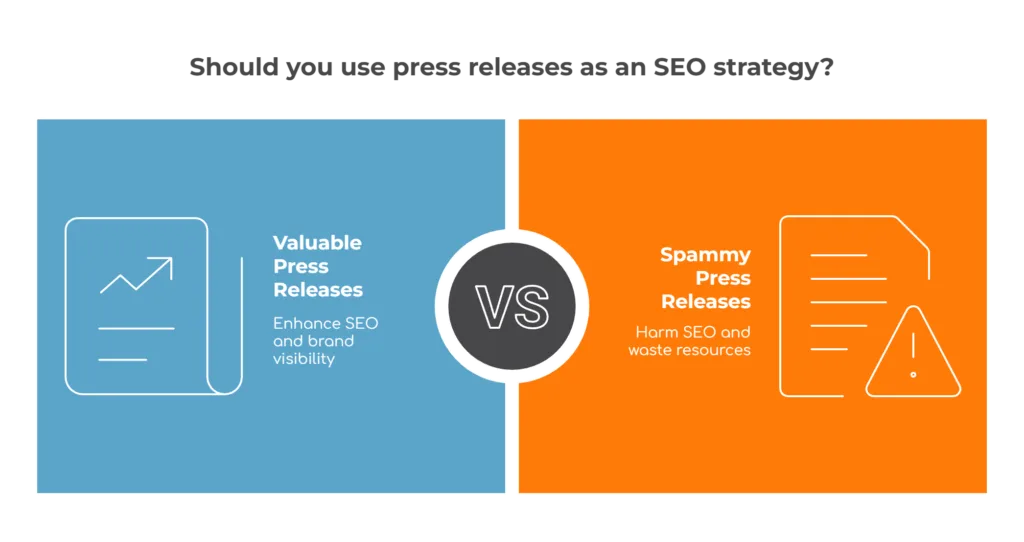
The press release distribution SEO’s worth saying plainly: distro volume is a visibility tactic, not a ranking tactic. Treat the two as complementary line items with separate KPIs, and your reporting suddenly makes sense to the CFO.
The Complete Press Release Distribution SEO Checklist Before You Write a Word
Before diving into the nine tactics, run through the Press release distribution SEO pre-flight list. Skipping it is the most common reason campaigns underperform, and it costs nothing but attention.
- Confirm the news is genuinely newsworthy. A product tweak won’t earn links; a category-first launch will.
- Identify the target query cluster your announcement should own for the next twelve months.
- Pick the canonical home page (usually your newsroom) and make every other version point back to it.
- Audit your newsroom’s technical setup for indexing, structured data, and internal linking.
- Draft the outreach shortlist of fifteen to forty journalists and niche publishers before publishing.
- Prepare the asset pack: headline options, quotes, data points, images with descriptive alt text, and a media kit.
- Set the measurement frame based on rankings, referring domains, and assisted conversions, not raw impressions.
The press release distribution SEO checklist alone prevents three or four avoidable mistakes per campaign. Now, the nine tactics themselves, ordered roughly by leverage rather than chronology.
Tactic 1: Build Every Release Around One Ownable Query Cluster
Distributing without a query strategy is like launching a product without knowing who’s shopping. A thoughtful approach to Press release distribution SEO reinforces your qualifications. The first tactic is deciding which searches your announcement should win, then writing to those searches with intent.
A single release typically owns one primary query and a cluster of ten to twenty supporting queries.
For a funding announcement, the primary might be the company name plus “series B funding” while the cluster includes investor names, the sector, and the use of proceeds. For a product launch, the primary is often the product name plus “review,” “alternatives,” or “pricing.”
Map the cluster before writing. Focusing on press release distribution seo provides clear direction here. Open a spreadsheet, list every plausible query a curious reader might type after seeing your news, then confirm each one has a natural home in the draft.
If a query has no home, either find a place for it or cut it from the target list. Half-answered queries rank for nobody.

How to Prioritize Queries by Commercial Intent
Not all supporting queries deserve equal weight. Structuring your press release distribution SEO around proven patterns ensures impact. Rank them by commercial intent and realistic ranking difficulty. Branded queries are easy wins and should be treated as mandatory coverage. Category queries are harder but more valuable long term, because they bring in readers who’ve never heard of you.
In practice, aim for a three-tier structure. Tier one is your brand name plus the news keyword. Tier two is the category plus the problem you solve.
Tier three is adjacent questions like “who owns [company]” or “[product] vs [competitor].” A well-built release can rank for all three tiers with the right subheadings.
I’ve seen releases rank on page one for competitive category terms simply because the press release distribution SEO were the only page that answered a specific “how much does X cost” question in the body copy. The lesson: answer obvious questions explicitly, in plain language, even if it feels redundant to insiders.
Tactic 2: Publish to a Canonical Newsroom Page First
Distribution should follow publication, not replace the press release distribution seo. The second tactic is establishing a canonical home for every release on your own domain, then pointing all syndicated versions toward it.
Yes, wire services often add a canonical tag automatically. Proper attention to your press release distribution SEO sets a strong baseline. In practice those tags are inconsistent, delayed, or missing entirely depending on the syndication partner.
Relying on them is a gamble. Control the canonical yourself by publishing first on your newsroom, waiting for indexing, then distributing.

This sequencing matters more than most teams realize. When the wire copy appears hours or days later, search engines have already indexed your original and treat the syndicated versions as duplicates pointing back. When the reverse happens, your newsroom page gets treated as the duplicate.
Structuring the Newsroom for Search Visibility
A newsroom built for SEO looks different from a newsroom built for aesthetics alone. Developing your press release distribution SEO with precision highlights key strengths. Each release needs its own indexable URL, a unique meta description, structured data marking it as a NewsArticle, and internal links to relevant product or service pages.
Don’t bury releases behind JavaScript-heavy archive widgets. Keep a paginated HTML archive linked from your footer, and add topic-based hub pages so related announcements connect to each other. That internal linking is what turns a set of stray releases into a topical cluster.
For context on structured data standards, the schema.org documentation on NewsArticle markup is worth bookmarking and referencing during implementation. Anchor it as press release distribution SEO best practices in your internal documentation so the standard gets applied consistently.

Read more about NewsArticle structured data if your team is building the markup from scratch.
Tactic 3: Engineer the Headline for Both Clicks and Queries
The headline does triple duty: it earns the journalist’s attention, it earns the reader’s click, and it feeds the search snippet. One headline can’t always serve all three, which is why smart teams write two versions.
The distributed headline is the newsroom-facing one, optimized for editorial pickup and wire feeds. Clear alignment with your press release distribution SEO builds confidence from the start. The on-page H1 can be slightly different, tuned for search clarity. When done well, the two versions share the same core phrase but shift emphasis depending on the audience.
A headline like “Acme Launches Acme Flow, the First Workflow Tool Built for Restaurant Chains” tells a journalist the who, what, and why in twelve words. It also contains the searchable phrase “workflow tool for restaurant chains” without feeling stuffed.
Why Numbers and Specifics Beat Vague Adjectives
Adjectives like “revolutionary” and “cutting-edge” have lost all currency. Integrating press release distribution SEO into your workflow produces consistent quality. Specifics earn attention. Numbers, place names, dollar figures (in the release body, not the headline if you’re cautious), and category-first claims consistently outperform generic adjectives in both click-through and pickup rates.

Try rewriting your current headline three ways and test which reads most naturally in a tweet, a journalist’s inbox, and a Google result. The version that survives all three is your headline. That’s the whole test.
One more angle: front-load the entity in the H1. Readers and algorithms both scan the first three to four words. “Press release distribution SEO tips for B2B tech” reads better than “How B2B tech can improve their press release distribution SEO tips,” even though both contain the same words.
Tactic 4: Write the Body Like an Expert Q&A, Not a Press Release
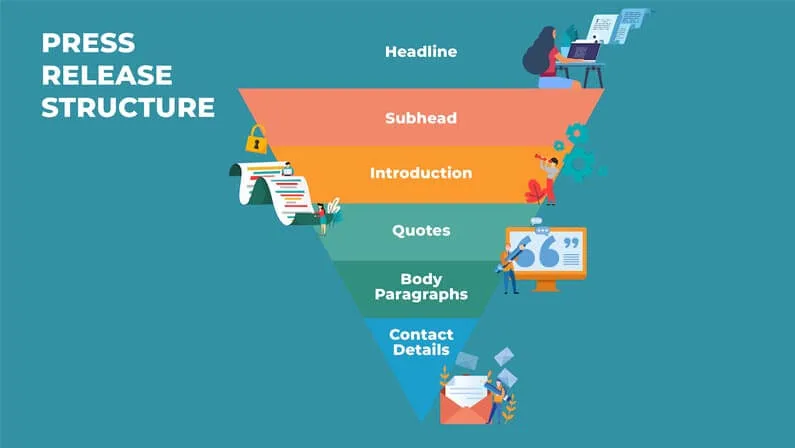
The press release distribution SEO is the tactic that separates strong campaigns from weak ones. The old inverted-pyramid format, while useful for news value, is terrible for search. A Q&A-driven structure, on the other hand, mirrors how people actually search.
Identify five to seven questions a genuinely curious reader would ask after seeing the announcement. Effective execution in your press release distribution seo makes a tangible difference. Then answer each one in a short H3 subheading. The result reads like an informed conversation and simultaneously hits long-tail queries with impressive precision.
For a pricing announcement, the questions might be: how much does the press release distribution SEO cost, who’s eligible, what changed from before, how does it compare to alternatives, and when does it take effect. Each question becomes a subheading, each subheading becomes a ranking asset.
Balancing Journalist-Friendly and Search-Friendly Copy
Journalist-friendly copy is concise and skimmable. Search-friendly copy is deep and structured. They conflict less than you’d think when you plan the layout in layers.

The first 150 words serve journalists and wire readers: the five W’s, clearly stated. The next 400 to 800 words serve searchers: the Q&A block, the data, the comparison, and the context. The final 200 words serve outreach: quotes, boilerplate, and media contacts.
That layering honors both audiences. Journalists get what they need immediately; readers and crawlers get the depth that keeps the page ranking for months. It also makes the release scannable, which is the single biggest readability win you can engineer on a news page.
Tactic 5: Reinforce Every Release With Internal Links and Topic Hubs
A release doesn’t rank in isolation. Maintaining clarity across your press release distribution seo remains essential. It ranks because it’s connected to a web of related content that signals topical authority. The fifth tactic is treating each release as a node in a larger cluster, not a standalone page.
Every new announcement should link to two or three related pages on your site: a product page, a related case study, and a prior release on the same topic. In return, those existing pages should link forward to the new release. That bi-directional linking does more for a single release than most teams accomplish in an entire quarter of outreach.

If the press release distribution SEO haven’t built topic hubs yet, start now. A hub page on, say, “our approach to sustainability” that links to six or seven related releases will concentrate authority in a way that individual pages cannot.
Building the Press Release Distribution SEO Topic Cluster
The cluster structure matters more than the individual release. Look at it like a wheel: the hub page is the center, releases are the spokes, and internal links are the rim connecting them all.
- Define the topic. What category does your brand legitimately own? Pick something narrow enough that you can become the best answer.
- Create the hub page. A 1,500-word overview with links to every related release and article.
- Publish releases pointing inward. Each new release links to the hub and to at least two other spokes.
- Wire the hub outward. Update the hub after every release so the new spoke appears near the top, with a descriptive anchor.
- Cross-reference spokes. Link releases from the same quarter to each other when they share a theme.
Within a few campaigns, the cluster starts outranking individual pages the press release distribution SEO used to sit above you. The compound effect is real and measurable in referral domains.
Tactic 6: Target Journalists and Niche Publishers, Not Just Wire Feeds
Distro services and targeted outreach solve different problems. The wire gets you breadth and a small dose of branded search lift. Targeted outreach gets you editorial links from pages that carry weight with Google.
Both belong in the campaign, but not in equal measure. A thoughtful approach to press release distribution seo reinforces your qualifications. A reasonable split is 20% of budget on wire distribution and 80% on targeted outreach to fifteen to forty hand-picked journalists, niche bloggers, and industry analysts.

The outreach list should be built before the release is finalized, not after. That way you can adjust the angle and quotes based on what each journalist typically covers. Nothing increases pickup rates faster than a pitch that clearly reads the target’s previous work.
What Actually Makes a Publisher Link to You
Three things reliably earn editorial links. First, genuine novelty: a first, a record, or a discovery. Second, useful data: original survey results, benchmark reports, or internal metrics nobody else has. Third, a strong human angle: an unexpected founder story, a customer transformation, or a community impact.
What rarely earns links: product feature announcements without a narrative, funding rounds without a use-of-proceeds story, and partnership announcements without a customer benefit spelled out in the first paragraph. Those belong in the wire, not in a journalist’s inbox.
Anchor text in earned editorial links is mostly outside your control, but the press release distribution SEO can nudge it by suggesting two or three anchor phrases in the media kit. Keep the suggestions natural and short; journalists ignore prescriptive anchor demands.
Tactic 7: Optimize Media Assets for Search and Discovery
Images, videos, and data tables inside a release are usually treated as decoration. Structuring your press release distribution seo around proven patterns ensures impact. In reality they’re among the most valuable ranking assets you have, especially for image and video search.
Every image needs a descriptive filename, meaningful alt text, and a caption that doesn’t waste words. “Acme-Flow-restaurant-dashboard.jpg” with alt text reading “Press release distribution SEO asset: Acme Flow restaurant workflow dashboard showing 40% time savings” is dramatically better than “IMG_4821.jpg” with alt text “image.”

The alt text rule always holds: name the entity, include the searchable phrase once, and keep the press release distribution SEO under 125 characters. Alt text stuffed with keyword variations looks spammy to human editors and rarely helps rankings either.
Turning Product Screenshots and Data Tables Into Link Magnets
Screenshots alone don’t earn links. Annotated screenshots with callouts, or data tables that journalists can cite, do. The difference is whether the asset gives a reporter something they can quote directly.
One workable format: a comparison table showing before-and-after metrics from a customer, with a clear caption crediting the source. Another: a simple chart of industry benchmarks with a source line. Both get picked up and cited far more often than photo-grid press kits.
| Asset Type | Search Value | Outreach Value | Effort |
|---|---|---|---|
| Annotated product screenshot | Medium (image search) | High (citable) | Low |
| Original benchmark chart | High (data search) | Very high | Medium |
| Founder video excerpt | High (video search) | Medium | Medium |
| Standard photo grid | Low | Low | Low |
| Interactive pricing calculator | Very high | High | High |
Prioritize at least one citable data asset per release. Over time, those become the assets journalists return to, and the pages that host them start ranking for query clusters you never explicitly targeted.
Tactic 8: Add Structured Data, Breadcrumbs, and Publisher Signals
Technical SEO for press releases isn’t glamorous, but the press release distribution SEO’s cheap and reliable. The eighth tactic is making sure search engines understand what each page is, who published it, and when.

NewsArticle structured data tells Google the page is news, which occasionally triggers richer snippets and faster indexing. Applying these principles to your press release distribution seo yields measurable results. Breadcrumbs clarify hierarchy on large newsroom archives. Publisher markup with logo, name, and URL strengthens brand attribution in search results.
Combined with an XML news sitemap the press release distribution SEO only lists the last few days of announcements, indexing becomes almost automatic. That sitemap should update dynamically; a stale news sitemap signals neglect.
Technical Press Release Distribution SEO Checklist
Run this technical checklist against your newsroom every quarter. It catches regressions before they cost you rankings.
- Each release has a unique, indexable URL. No query strings, no JavaScript-routed pages.
- NewsArticle JSON-LD validates in the Rich Results Test. Headline, datePublished, author, and publisher all present.
- Breadcrumbs appear in search results. Home > Newsroom > Release, at minimum.
- News sitemap is current and submitted. Rolling 48-72 hour window, no dead links.
- Canonical tags point to your newsroom. Confirmed even when the release is also on wire partners.
- Internal links appear in body copy. At least three per release, ideally five.
- Page speed passes Core Web Vitals. LCP under 2.5 seconds on mobile.
- Republishing check. Any syndicated version added to your archive points a canonical back to the original.
In my experience, points three through five are where most campaigns silently fail. They’re boring to audit, and the fix takes an afternoon, but the impact on indexing speed and ranking stability is immediate.

Tactic 9: Measure, Republish, and Refresh the Release After Launch
The last tactic is the one almost everyone skips: treating the release as a living page rather than a one-way broadcast. Distribution is launch, not finish line.
Ninety days after the wire blast, look at which queries the release has started ranking for. Proper attention to your press release distribution seo sets a strong baseline. Often a secondary question in the Q&A block is outperforming the primary topic. When that happens, either expand the existing release with a new section or publish a follow-up that turns the surprise query into a full story.
Refresh the page itself as new data arrives. Update customer counts, add a sentence reflecting a milestone, and keep the modified date current. Google rewards demonstrably maintained pages, especially when competitors abandoned theirs within a week.
Key Metrics That Separate Winners from Vanity Campaigns
Impressions and shares feel good but rarely correlate with business outcomes. Judge the campaign on a tighter set of metrics tied to search performance and pipeline.
| Metric | Why It Matters | Healthy Benchmark |
|---|---|---|
| Referring domains from editorial pickups | Measures real link equity earned | 3-15 per release |
| Ranking position for primary query | Direct visit to release page | Top 5 within 30 days |
| Indexed status of canonical URL | Technical health | Indexed within 48 hours |
| Specialized traffic (organic) over 90 days | Durable performance | 500-5,000 sessions per tier-1 release |
| Assisted conversions from release page | Business impact | As tracked against your pipeline |
Track these five together and you’ll stop guessing which campaigns actually worked. The framework also makes it easy to double down on whichever story angle pulled the strongest editorial response.
One important nuance on attribution: a well-optimized release lifts branded search in ways the press release distribution SEO direct referral data won’t capture. Use search console data for the brand name itself, not just the release URL, when reviewing impact.
Common Pitfalls That Undermine Press Release Distribution SEO
Even a well-built campaign can stumble on the same five or six mistakes. Developing your press release distribution seo with precision highlights key strengths. Here are the ones I see most often, and how to avoid them.
The duplicate canonical trap. Multiple copies of the release get indexed as separate pages and split authority. Always verify canonicals point to your newsroom. Always.
The thin boilerplate spiral. Releases get padded with corporate boilerplate but starved of real answers. Readers bounce; rankings sag. Answer the questions, skip the “About Us” verbosity.
The dated headline. Headlines the press release distribution seo reference a passing moment feel stale in a week. Write for the searcher who finds the release eight months from now, not just for the morning-of reader.
Missing alt text and schema. Two small omissions that shrink your visibility in image search and voice search simultaneously. Five minutes of fixing per release pays itself back repeatedly.
Publishing without an internal link plan. Orphan releases rarely rank. Targeted refinements to your press release distribution seo streamline the entire review. Every page needs to be reachable from a hub within two clicks.
Reviewing results too early. Judging a release after 48 hours is like judging a garden after one watering. Clear alignment with your press release distribution seo builds confidence from the start. Give the page ninety days, then optimize based on data.
Press Release Distribution SEO Tips for Small Teams and B2B Brands
Not everyone has a dedicated SEO team to run the press release distribution SEO playbook. Here are the adjustments that make it work for a lean setup.
Start with the tactics that cost time rather than budget. Canonical control, internal linking, structured data, and the Q&A body structure cost nothing but attention. Run those first if your distro budget is tight.
Then, on outreach, choose quality over quantity. Twenty hand-picked pitches to publishers who genuinely cover your category beat a thousand-name blast every time. Build that list over a few campaigns rather than trying to compile it in a week.
Finally, revisit every release after ninety days. Nine times out of ten, one of the releases has started punching above its weight. That’s the one to expand, update, and internally link. Turning one release into a topic hub can lift the whole cluster.
Sustainable Press Release Distribution SEO Best Practices for Budget-Conscious Campaigns
The most durable practices cost nothing. Keep a written press release distribution SEO checklist your team actually uses. That single artifact prevents most campaign failures before they happen.
Add the following to the internal SOP: after every release, log the primary query, the exact-match phrase in the headline, and the page URL in a shared tracker. Integrating press release distribution seo into your workflow produces consistent quality. Ninety days later, review positions. This tiny ritual builds a feedback loop nobody else on your team will reproduce, and it compounds release by release.
Also consider establishing a quarterly benchmark dataset that appears across multiple releases. Once journalists know to cite your numbers, every future release inherits some of that authority for free.
Frequently Asked Questions About Press Release Distribution SEO
Here is an in-depth breakdown of key considerations regarding this section:
Does a Press Release Actually Help With SEO?
Yes, if the press release distribution SEO’s optimized and published first on your own domain. Releases that live on your newsroom with clean canonicals, internal links, and structured data routinely rank for branded and long-tail queries for months. Wire-only distribution without a canonical home does much less for organic search.
How Long Does It Take to See Results?
Expect early signals, like indexing and branded query ranking, within the first week. Long-tail rankings emerge over the next four to eight weeks. Durable performance for competitive terms usually shows up between months three and six.
Should I Publish the Full Release on My Site?
Yes. Publish the full text first, wait for indexing, then distribute. This sequencing gives your newsroom the canonical win and prevents syndicated copies from outranking you.
How Many Press Releases Should I Distribute in a Year?
Quality matters more than frequency. Most B2B brands see stronger results from four to six genuinely newsworthy releases per year than from monthly announcements padded with minor updates. Every release should earn its own place in the archive with real news value.
What’s the Ideal Length for a Press Release?
For SEO purposes, aim for 600-1,000 words of substantive body copy after the opening 150-word news lead. Long enough to answer questions and rank for long-tail queries; short enough to stay skimmable. The old 400-word ceiling applies to wire submissions, not newsroom pages.
Does Wire Distribution Hurt SEO?
Not if canonicals are handled correctly. The risk is duplicate content splitting rankings, which the canonical-first approach solves. Wire distribution on its own brings visibility, not link equity, so contextualize it as a reach tactic.
What’s the Most Common Press Release Distribution SEO Mistake?
Publishing the wire copy before the newsroom version. It inverts the canonical relationship and hands the ranking authority to a syndicated page you don’t control. The fix: newsroom first, wire second, always.
Bringing the Nine Tactics Together Into One Campaign
Nine tactics, one campaign. The sequence matters as much as the tactics themselves, so let’s stitch them into a working flow you can repeat.
Start with the query cluster and the newsroom wiring. Write the body as a Q&A with answers to real questions. Engineer the headline around a specific entity and phrase. Publish to your newsroom with structured data and internal links pointing at the release.
Only then run outreach and wire distribution, and only after indexing has confirmed. Media assets get optimized before the pitch goes out. Ninety days later, review positions and expand whichever release outperformed its peer group. The final step, republishing and refreshing the page, restarts the loop for the next campaign.
The press release distribution SEO flow is the entire playbook. If you run all nine tactics, the release becomes more than an announcement; it becomes part of your site’s topical cluster, passively building authority for every future launch.
Press release distribution SEO is, at its core, the belief that news is content. Treat it that way, and the compounding effect is remarkable. That’s the whole point of running this as a pillar-level practice rather than a per-release afterthought.