Skyscraper Technique: Easy Guide + 9 Pro Tips
The skyscraper technique works because it respects a simple truth about search: people want the best answer, not a brand-new one. Instead of inventing a topic from scratch, you find content that already ranks, study what makes it succeed, then build something genuinely better and earn the links it deserves. If that sounds like a shortcut, it isn’t. It’s a discipline.
This skyscraper technique guide walks you through the full method in plain language, then hands you nine field-tested tips that separate a campaign that flops from one that compounds traffic for months. You’ll see the exact workflow, the mistakes that quietly kill results, and a practical checklist you can run before every outreach email.
Think of the skyscraper technique as your working manual. Read it once end to end, then keep it open while you build your first campaign.
What is the Skyscraper Technique, Really?
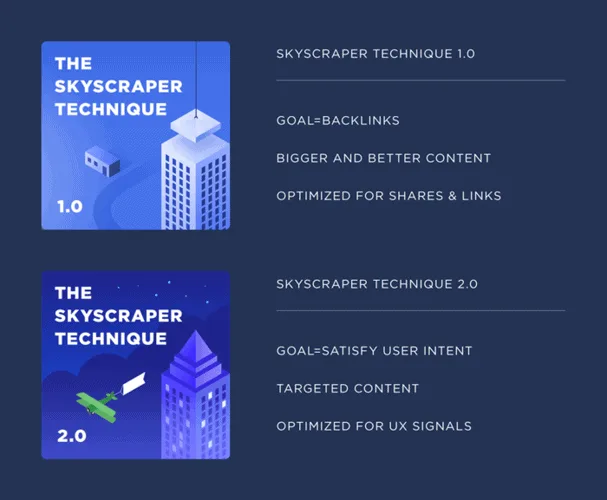
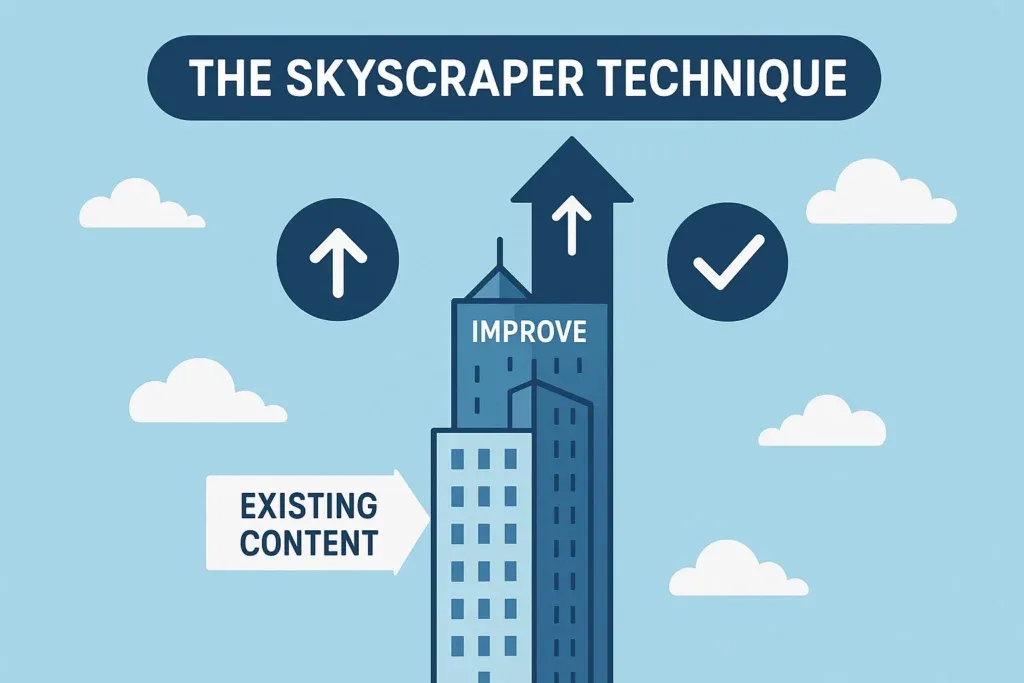
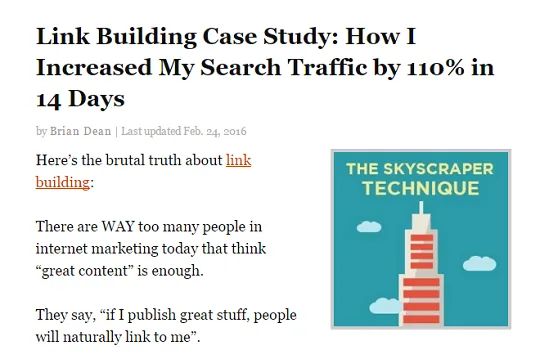
At its core, the skyscraper technique is a link-building and content strategy popularized by Brian Dean of Backlinko. The premise is refreshingly blunt: find the most successful content in your niche, then create something noticeably better and reach out to the people who linked to the original.
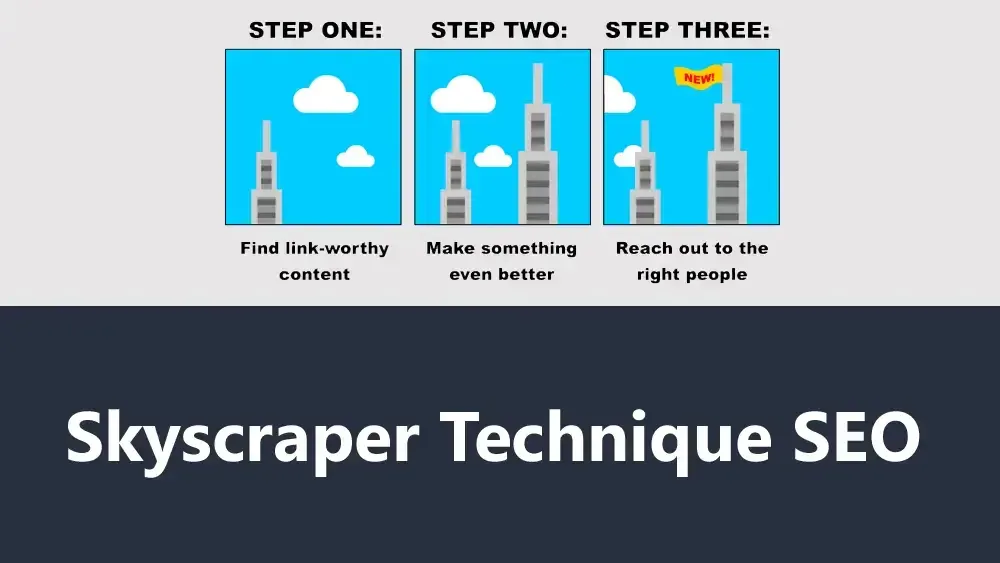
The skyscraper technique’s the whole idea in one breath. The execution, though, is where most people stumble. “Better” doesn’t mean longer. It doesn’t mean stuffing in more keywords or adding a flashy infographic nobody asked for. It means solving the reader’s problem more completely than anything else on the first page.
When you get this right, you’re not begging for links. You’re offering an upgrade to something people already trusted enough to cite. That shift in framing changes everything about how your outreach lands.
Where the Name Comes From
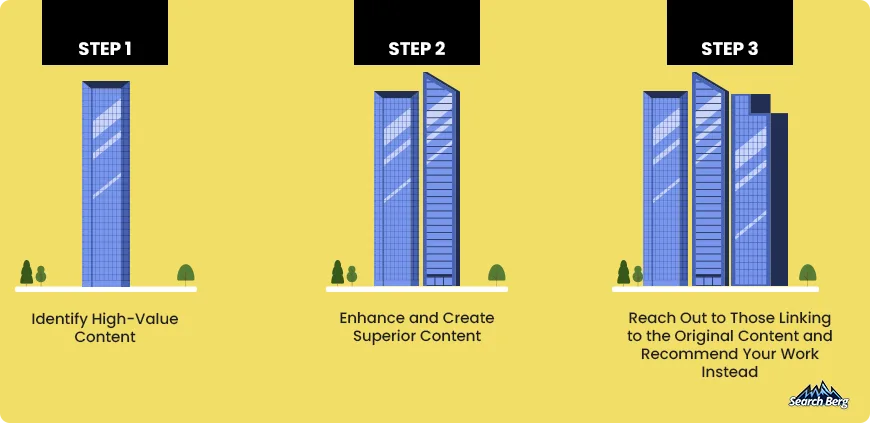
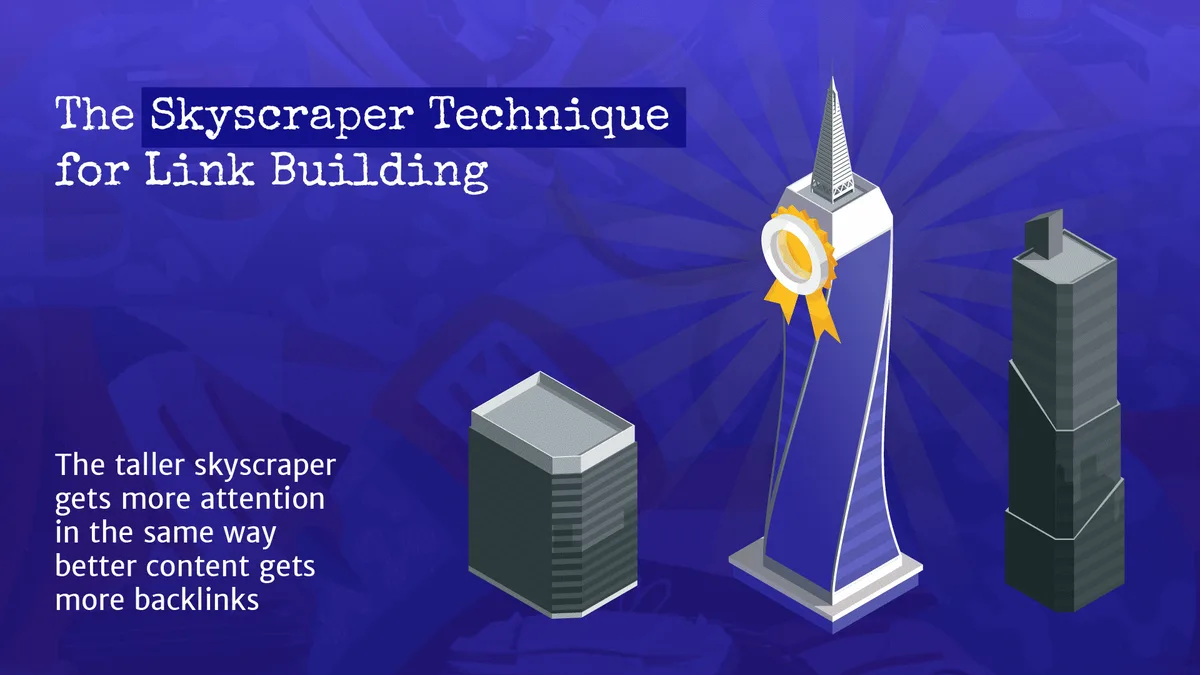
The metaphor is deliberate. In a city skyline, the tallest building gets noticed first. In search results, the most complete, most useful piece of content tends to rise above its neighbors the same way.
You’re not trying to be one floor taller. You’re trying to be the tower everyone points at from across the river. That mental image keeps you honest when you’re tempted to cut corners.
How the Skyscraper Technique Actually Works
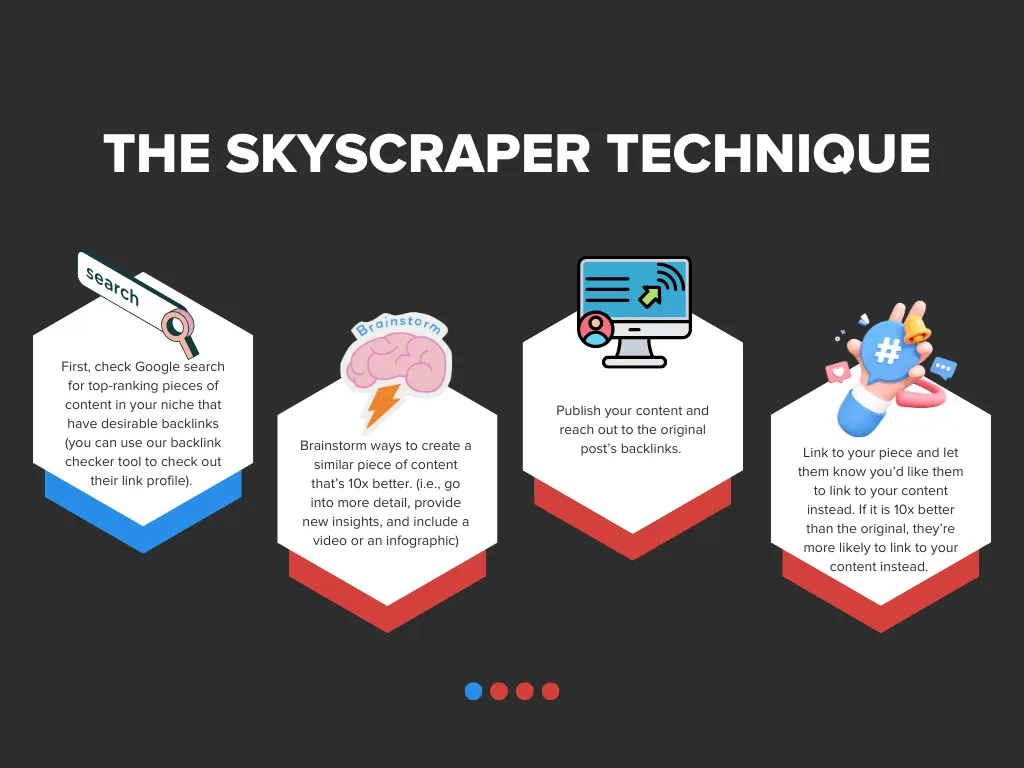
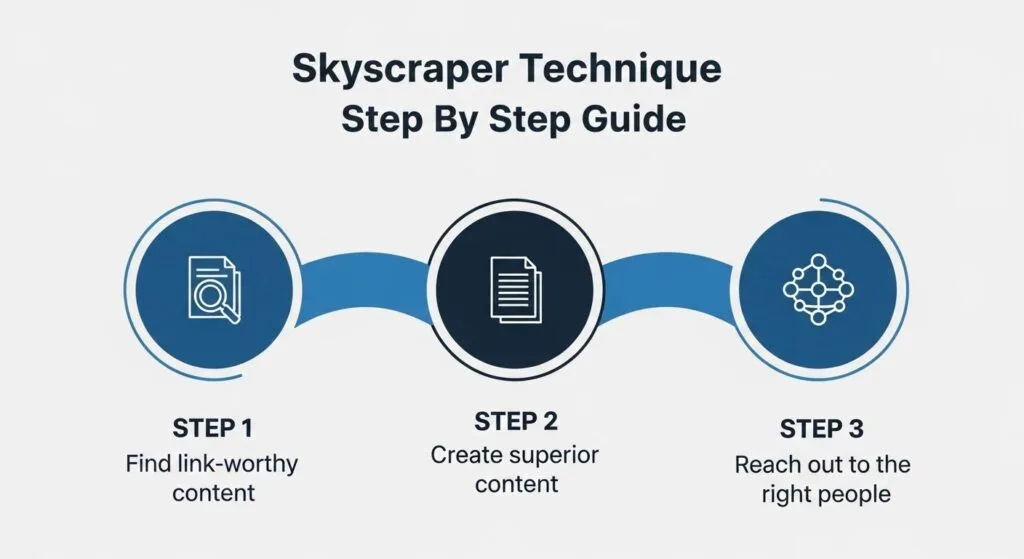
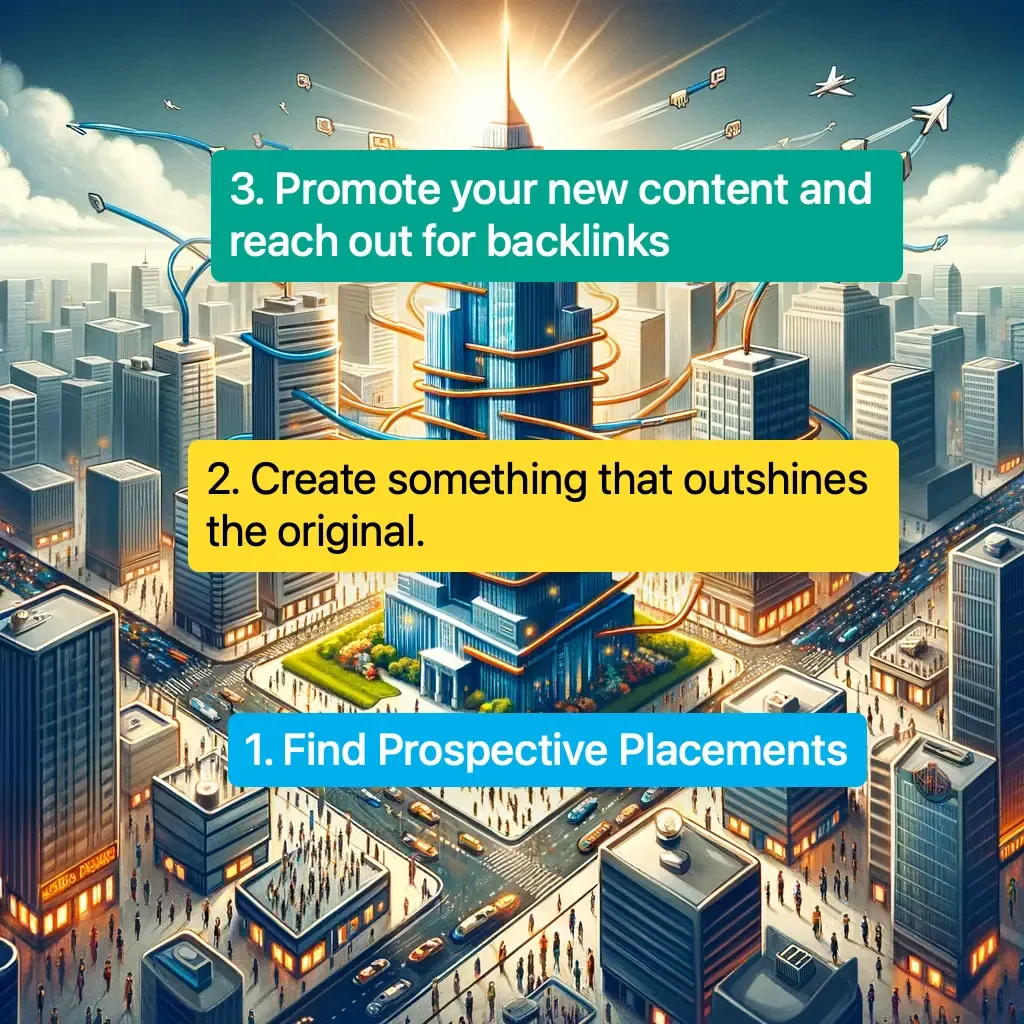
Strip away the marketing gloss and the method runs on four moving parts. Refining each detail of your skyscraper technique strengthens this section. Each one feeds the next, and skipping any single step weakens the whole campaign.
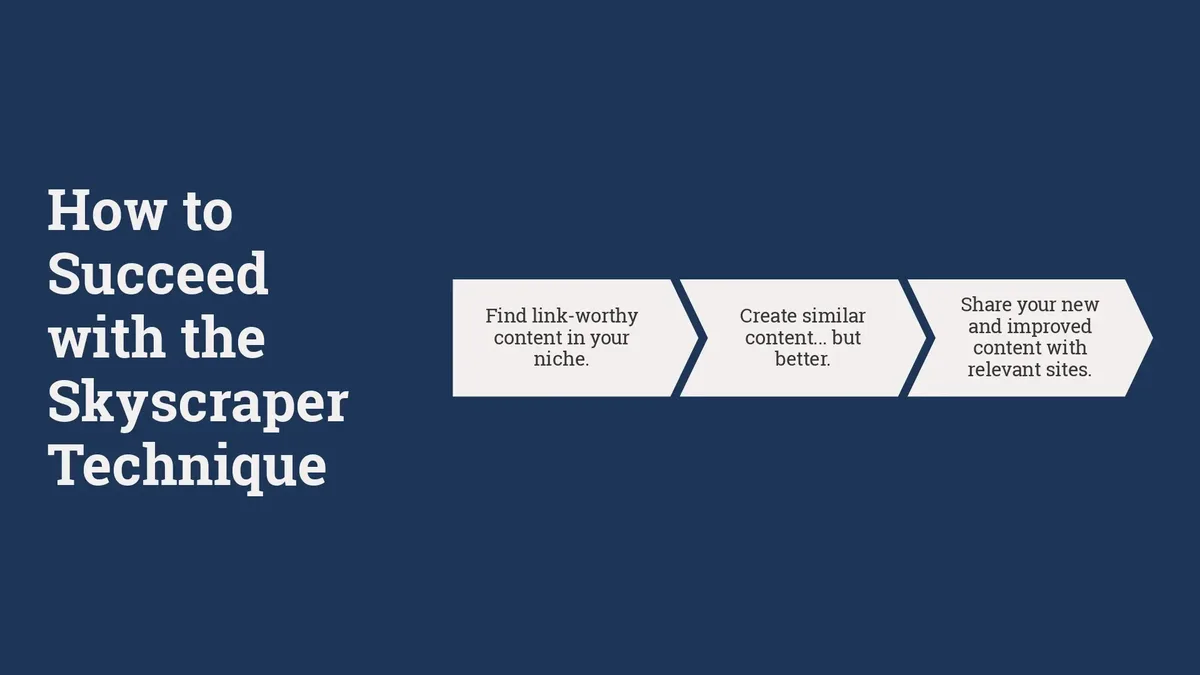
Here’s the sequence in its simplest form:
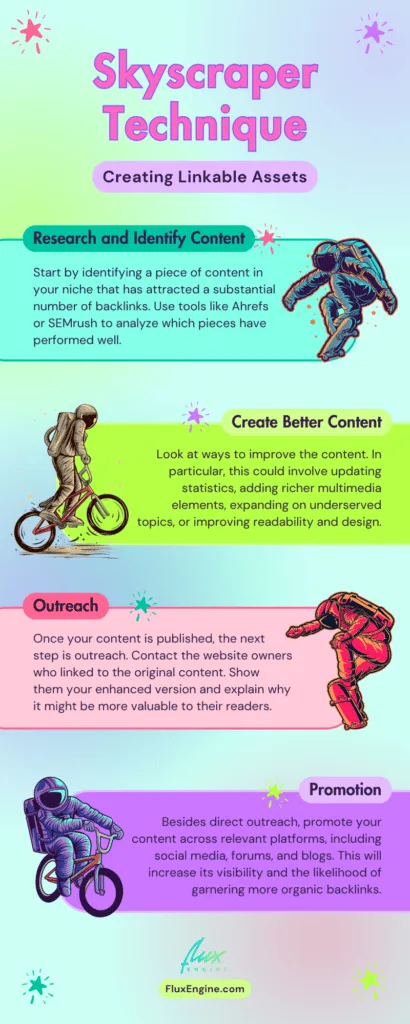
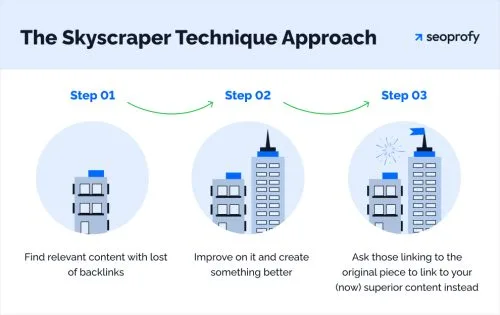
- Find a proven topic. Locate content that already earns backlinks and ranks well. You’re looking for validated demand, not guesswork.
- Audit what’s missing. Read the top results line by line. Note the gaps, the outdated facts, the confusing sections, the questions left unanswered.
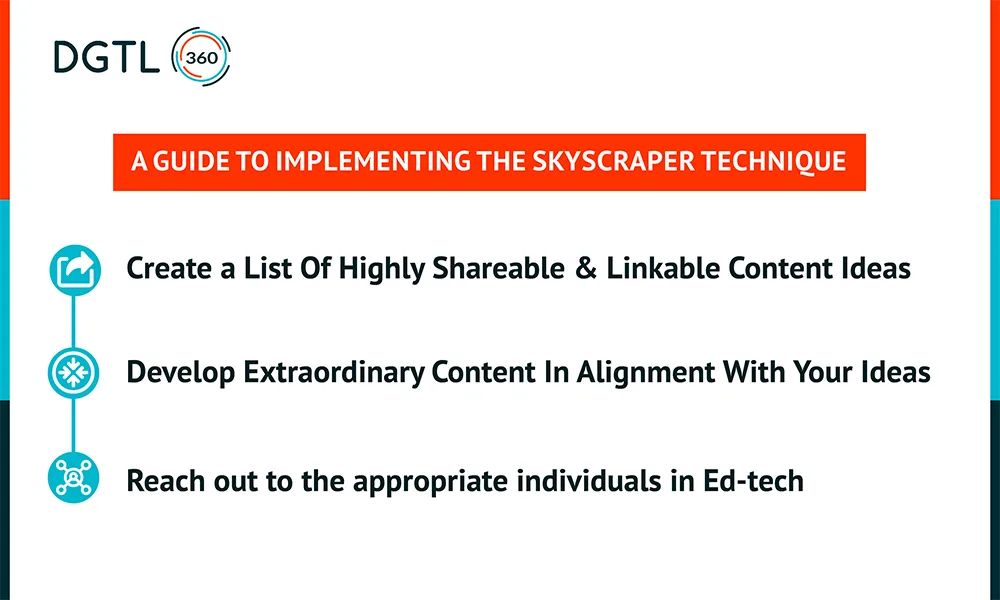
- Build something better. Create a resource that closes those gaps and adds genuine depth, better formatting, fresher examples, and clearer answers.
- Reach out to linkers. Contact the people who linked to the original and show them why your version is worth their attention too.
Notice what’s absent from that list: nothing about spamming inboxes, buying links, or gaming algorithms. The skyscraper technique leans entirely on the merit of the work plus smart, respectful outreach.
In practice, the audit step takes the longest. That’s normal. A thorough teardown of five competitor pages can easily eat a full afternoon, and that investment is exactly why the finished piece stands out.
Why This Approach Still Earns Links and Rankings
Search engines reward pages that satisfy intent better than the competition. When you improve on an existing winner, you’re stacking the deck in your favor on two fronts at once: you inherit a topic with proven demand, and you outclass the current answer.
There’s a human side too. Bloggers, journalists, and resource-page curators are busy. They cite content that makes them look smart to their readers. If your page is the most useful version of a resource they already reference, updating that link is an easy yes.
I’ve watched small sites outrank household names using the skyscraper technique method simply because they answered a question the big players glossed over. Authority matters, but relevance and completeness punch above their weight more often than people expect.
The Link Equity Snowball
Early links beget later links. Once a resource starts getting cited, it climbs the rankings, which brings organic traffic, which makes it more visible to the next round of linkers. The skyscraper technique is designed to trigger that snowball.
This is why patience matters. Effective execution in your skyscraper technique makes a tangible difference. The first ten outreach replies might yield two links. Those two links lift your page just enough to attract the next five. Momentum builds quietly before it shows up in your analytics.
Skyscraper Technique Best Practices for Picking the Right Target
Your entire campaign is only as strong as the topic you choose to beat. Pick a dud and no amount of clever outreach will save it. Pick a winner and the rest of the work gets easier.
Start by hunting for pages with a healthy backlink profile but visible weaknesses. A page with 200 referring domains and a dated design from a decade ago is a far better target than a polished page with 15 links. You want proof of demand paired with room to improve.
Run every candidate through these filters before you commit:
| Filter | What to Look For | Red Flag |
|---|---|---|
| Backlink count | Multiple referring domains from real sites | Links from spammy directories only |
| Content freshness | Outdated facts, old screenshots, dead examples | Recently overhauled and flawless |
| Search intent match | Clear informational or commercial intent | Ambiguous topic with mixed intent |
| Ranking position | Top 10 for a keyword you can realistically target | Dominated by giants you can’t touch |
| Topical fit | Directly relevant to your niche and audience | Tangential topic you don’t cover |
One more thing: check whether the page is actually linkable. Some topics attract citations naturally, like statistics roundups, original research, and definitive how-tos. Others, like opinion pieces, rarely earn links no matter how good they are.
Building the Better Resource: a Practical Walkthrough
Now comes the part that separates talkers from doers. You’ve picked your target. Time to build the tower.
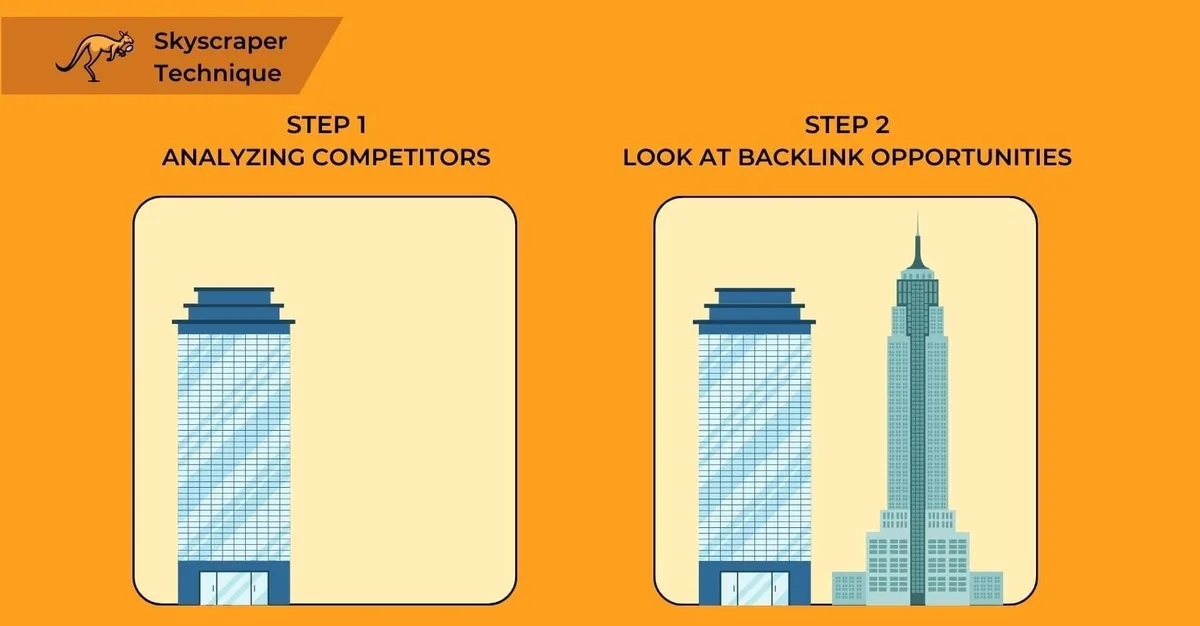
Begin with a full teardown. Maintaining clarity across your skyscraper technique remains essential. Open the top five ranking pages in separate tabs and take notes on structure, depth, examples, visuals, and unanswered questions. Look for the comments section too. Reader questions are free briefs for the gaps you should fill.
Then map your outline against theirs. Every section they cover, you cover at least as well. Every gap you spotted, you fill with something concrete. If they use vague advice, you use specific steps. If they cite a stat from years ago, you find the current figure.
Add the extras that make citing you attractive: a downloadable template, a comparison table, a short video walkthrough, a clear summary box. These become the reasons a linker chooses your page over the incumbent.
Formatting Choices That Quietly Win
Readability is underrated. Two pages can contain identical information, yet the one with scannable subheadings, short paragraphs, and a clean table earns the link because it’s easier to use.
Break long sections with descriptive headers. Use bullet lists for steps. Bold the key takeaway in each block. A reader skimming on a phone should be able to extract the answer in seconds.
Outreach That Doesn’t Feel Like Spam
The skyscraper technique lives or dies on outreach. Get this wrong and you’ll burn your domain’s reputation before you earn a single link.
The golden rule: personalize every message. A thoughtful approach to skyscraper technique reinforces your qualifications. Reference the specific page you’re asking them to update. Explain, in one or two sentences, exactly what your version adds that theirs lacks. Never send a generic template blast.
Timing helps too. Reach out after your page is live, indexed, and polished. Nothing kills a pitch faster than a broken link or a half-finished draft.
A Simple Outreach Sequence
Start with a short, friendly email. Name the page. Point to one concrete improvement. Offer the link. Keep it under 120 words.
If you get silence after a week, send one polite follow-up. Then move on. Persistence is good; pestering is not. Track replies in a simple spreadsheet so you know who’s been contacted and when.
Skyscraper Technique Checklist Before You Launch
Before you hit send on that first outreach email, run this skyscraper technique checklist. It catches the small oversights that quietly tank conversion rates.
- Target page has verified backlinks from real, relevant sites.
- Your content is genuinely more complete, not just longer.
- Every factual claim is current and sourced.
- Formatting is scannable on mobile.
- Page loads fast and has no broken links.
- Outreach list is segmented and personalized.
- Follow-up sequence is scheduled.
- Tracking sheet is set up for replies and links won.
Run this list every single time. The discipline pays off in links that actually stick.

9 Pro Tips for Skyscraper Technique Success
Here’s where the method goes from textbook to tactical. Structuring your skyscraper technique around proven patterns ensures impact. These nine tips come from watching campaigns succeed and fail in the wild. Treat them as your edge.
1. Improve One Thing Dramatically, Not Ten Things Slightly
A page that’s 10% better everywhere is forgettable. A page that’s twice as good at one specific thing gets cited. Maybe you have the clearest step-by-step on the internet. Maybe your data table is the only one that’s sortable and current.
Pick your standout feature and make the skyscraper technique undeniable. When a blogger needs to justify the swap, that single strength becomes the reason.
2. Target Topics With Obvious Link Magnets
Some topics practically beg to be linked. Statistics pages, templates, calculators, and definitive guides attract citations without much arm-twisting. Opinion essays rarely do.
Before you commit hours to a build, ask whether anyone would ever cite this. If the answer is a shrug, pick a different target.
3. Study the Linkers, Not Just the Content
The people who linked to the original are your prospects. Applying these principles to your skyscraper technique yields measurable results. But look closer. Which sites linked? Why? A university linking to a research roundup has different motivations than a lifestyle blog linking to a how-to.

Match your pitch to their reason for linking. That single adjustment lifts reply rates more than any subject-line trick.
4. Refresh Before You Pitch
Nothing undermines a pitch like a stale page. Update your content right before outreach so the first impression is a polished, current resource. Broken images and dead references kill credibility fast.
Set a reminder to re-audit your page every few months. Linkers revisit, and you want them to find something that still holds up.
5. Build a Small, High-Quality Prospect List
A list of 40 carefully chosen prospects beats 400 scraped emails every time. Quality prospects actually read your pitch, and they’re the ones whose links move rankings.
Spend the extra hour vetting each site. Proper attention to your skyscraper technique sets a strong baseline. Check relevance, check that the link still exists, check that the site is active. Your reply rate will thank you.
6. Answer the Questions Competitors Ignored
Scroll to the comments, the forums, the “People Also Ask” boxes. Every unanswered question is a gap you can fill. When you answer the thing everyone else skipped, you become the definitive source.
This is where the skyscraper technique earns its name. You’re not just taller; you’re sturdier, because you’ve addressed what the others left dangling.
7. Make Citing You Easy
Give linkers a ready-made reason. Include a clear stat, a quotable insight, a downloadable asset. The easier you make it to reference your work, the more likely someone does.
Add a short “key takeaways” box near the top. Journalists and bloggers love a crisp summary they can pull from without reading the whole piece.
8. Follow Up Once, Then Move On
One polite follow-up catches the people who meant to reply and forgot. A second, third, and fourth turns you into a nuisance. Respect their inbox and protect your reputation.
Track every contact. Developing your skyscraper technique with precision highlights key strengths. If there’s no reply after the follow-up, mark it closed and redirect your energy to fresh prospects.
9. Measure Links Won, Not Emails Sent
Vanity metrics lie. The number of emails you sent means nothing. The number of quality links you earned is the only score that matters.
Review your conversion rate after each campaign. If it’s low, the problem is usually targeting or personalization, not volume. Fix the pitch before you scale it.
Common Mistakes That Sink Skyscraper Campaigns
Even smart marketers trip on the same few landmines. Knowing them in advance saves you weeks of wasted effort.
The biggest one: confusing length with value. A 5,000-word page that repeats itself is worse than a tight 1,500-word page that answers everything. Readers and linkers both notice padding.
Second: skipping the audit. If you don’t actually know what the top pages cover, you can’t beat them. Guesswork produces generic content that earns nothing.
Third: blasting identical emails. Personalization isn’t optional; it’s the difference between a reply and a spam report.
Ignoring the Human Reader
Some campaigns optimize so hard for linkers that they forget the actual reader. If the page confuses visitors, it won’t rank, and if it doesn’t rank, linkers won’t find it.
Write for the person trying to solve a problem. The links follow good content, not the other way around.
How the Skyscraper Technique Fits Into a Bigger Content Strategy
This method isn’t a standalone trick. It’s one powerful tactic inside a broader content strategy built on topical authority. The parent topic here is content marketing and link building, and the skyscraper technique sits comfortably alongside related approaches like topic clusters and pillar pages.
Think of it as the offensive play in your playbook. You still need solid foundations: a clear niche, a well-structured site, and content that serves your audience across the funnel. The skyscraper technique accelerates growth once those pieces are in place.
It pairs especially well with internal linking. Every new skyscraper page should link to your related resources, and those resources should link back. That web of connections strengthens the whole cluster in the eyes of search engines.
Where to Go Next
Once you’ve run one successful campaign, expand into adjacent subtopics. If your first win was a guide on email outreach, the natural next targets are outreach templates, cold email subject lines, and follow-up sequences. Each becomes a new tower in your skyline.
Over time, the skyscraper technique pages reinforce each other. A reader who lands on one discovers the others, and a linker who cites one has three more reasons to cite you again.
Frequently Asked Questions About the Skyscraper Technique
Here is an in-depth breakdown of key considerations regarding this section:
Is the Skyscraper Technique Still Effective?
Yes, and it remains one of the most reliable link-building methods available. Search engines still reward the most complete answer, and people still link to resources that make them look good. The fundamentals haven’t changed.
How Long Does a Skyscraper Campaign Take?
Expect two to four weeks for research, content creation, and outreach. Links often arrive within the first month, but the biggest ranking gains typically show up over the following two to three months as authority builds.
Do I Need a Big Audience to Make It Work?
No. You need a well-researched target, genuinely better content, and a focused prospect list. Small sites regularly outrank larger competitors using this method because relevance and completeness matter more than raw domain size.
What’s the Difference Between the Skyscraper Technique and Guest Posting?
Guest posting means writing content for someone else’s site to earn a link. The skyscraper technique means building a superior resource on your own site and convincing existing linkers to point to it. The link lives with you, and the asset keeps working long after the campaign ends.
How Many Links Should I Expect from One Campaign?
Realistically, a focused campaign with 40 well-chosen prospects might yield five to fifteen quality links. The exact number depends on your niche, your content’s strength, and how personalized your outreach is.
Your Next Move
The skyscraper technique rewards patience, precision, and a genuine commitment to out-teaching the competition. Pick one target this week. Audit it honestly. Build something that makes the original look thin. Then reach out to the people who already trusted it.
Do that once, learn from the result, and repeat. The method compounds, and each campaign makes the next one easier because your site’s authority grows with every link you earn.
Keep the skyscraper technique tips in this guide close, run the checklist before every launch, and treat each outreach email as a conversation rather than a transaction. That’s how you build a skyline worth looking at.
For verified reference and background research, consult the authoritative informational resource on this topic.