Share of Voice AI Search: 7 Smart Ways to Win
Share of voice AI search is the metric that decides whether assistants recommend you; this guide shows 7 smart ways to win visibility and defend your citation gains.

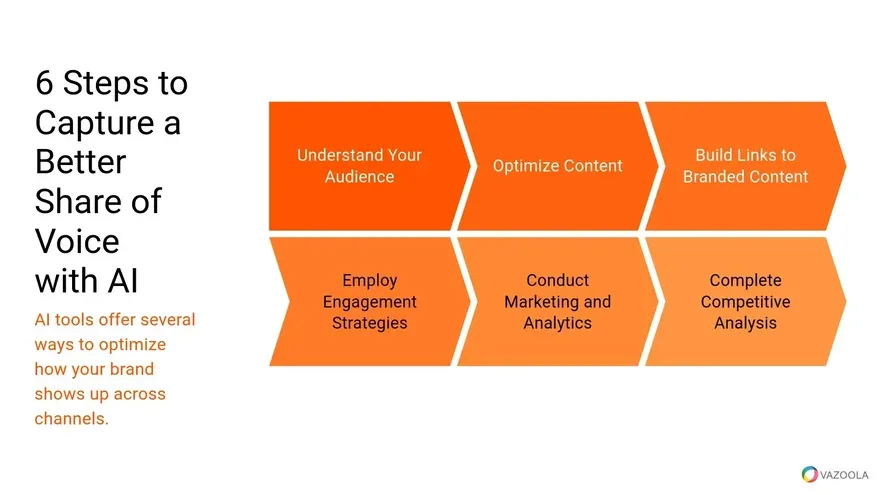
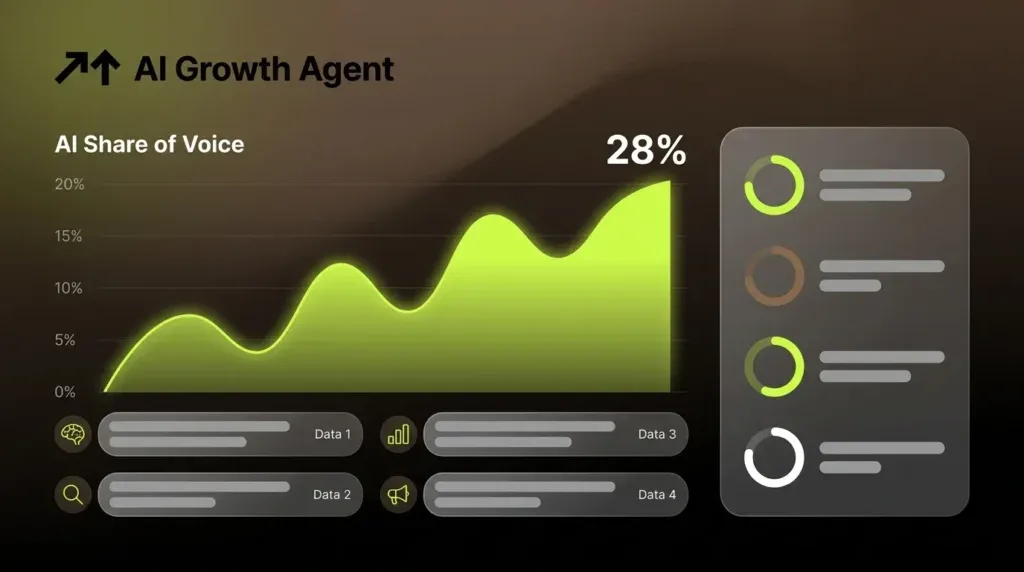
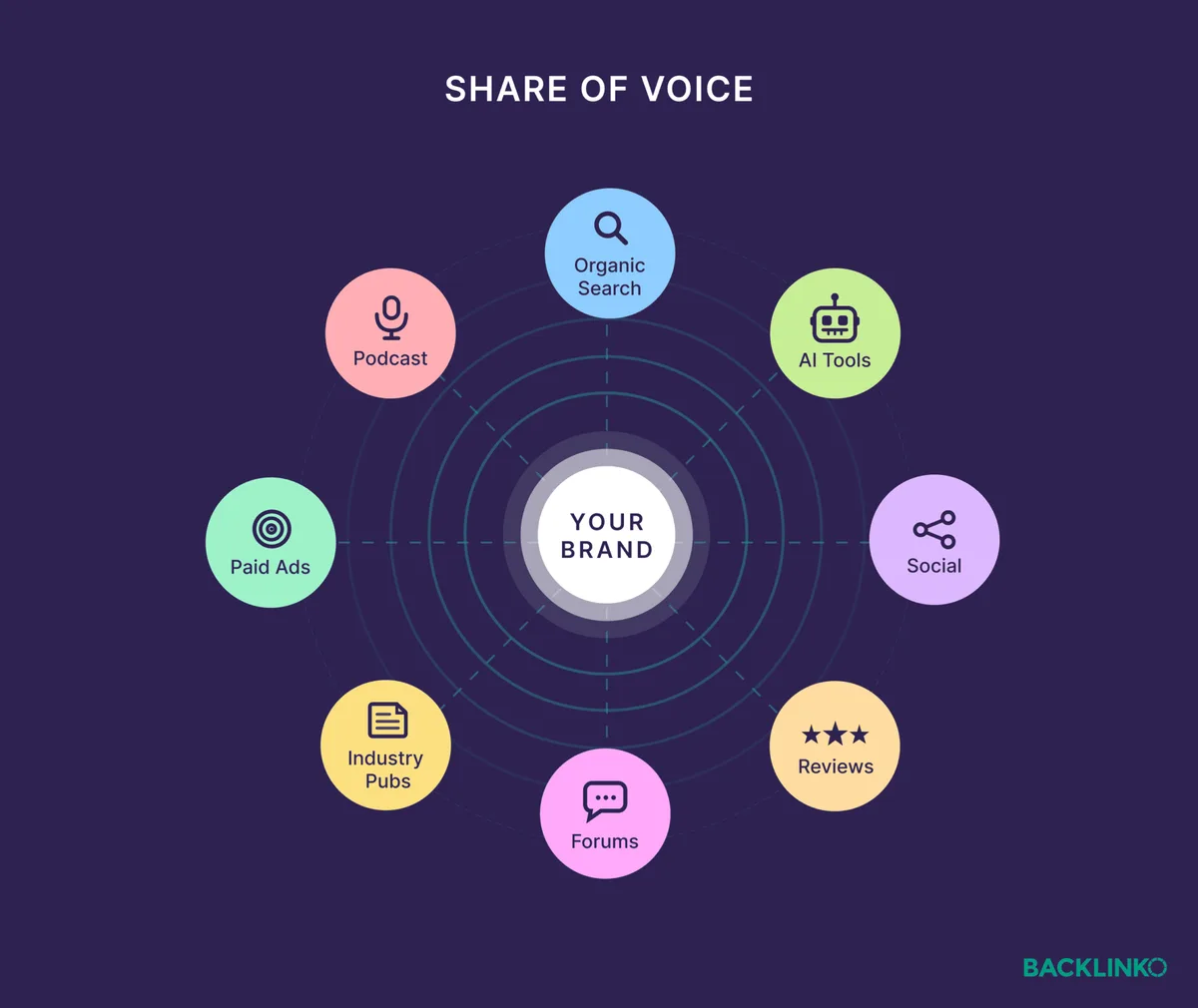
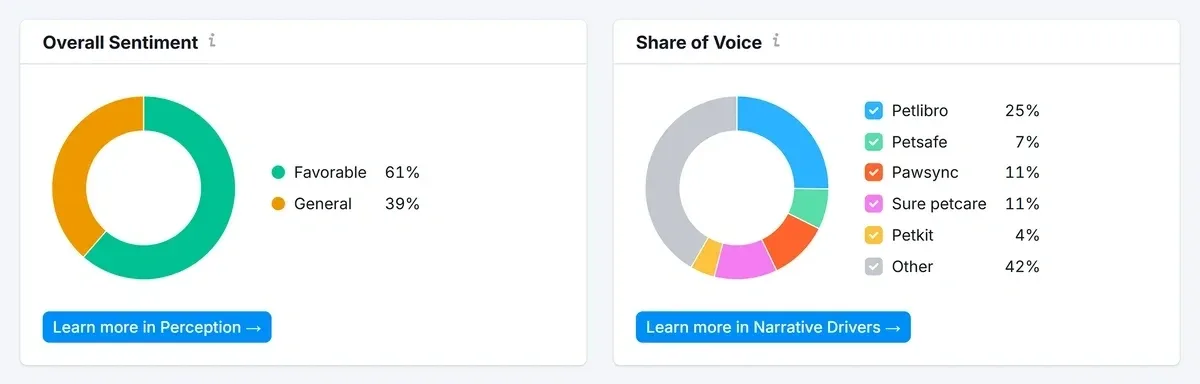
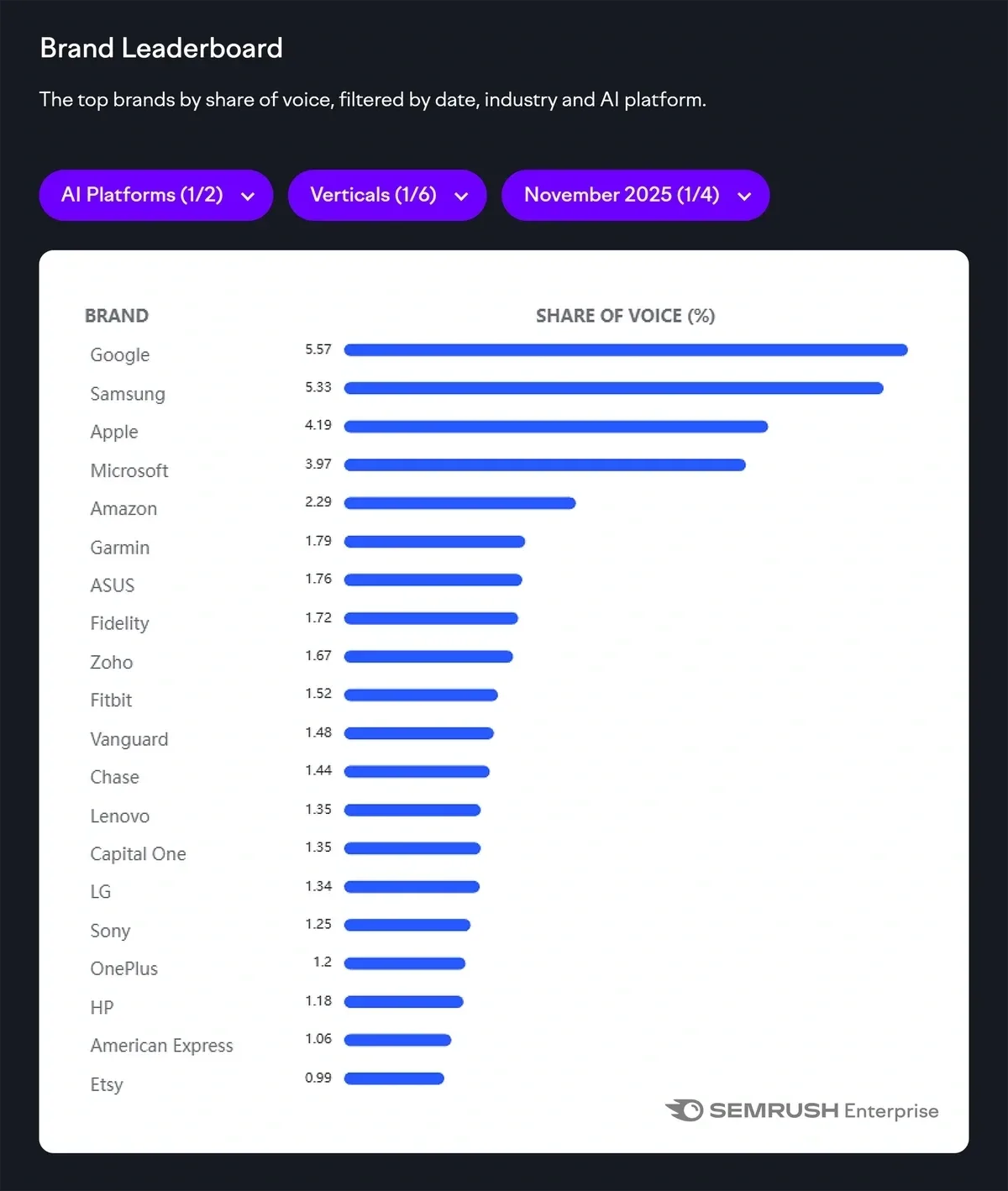
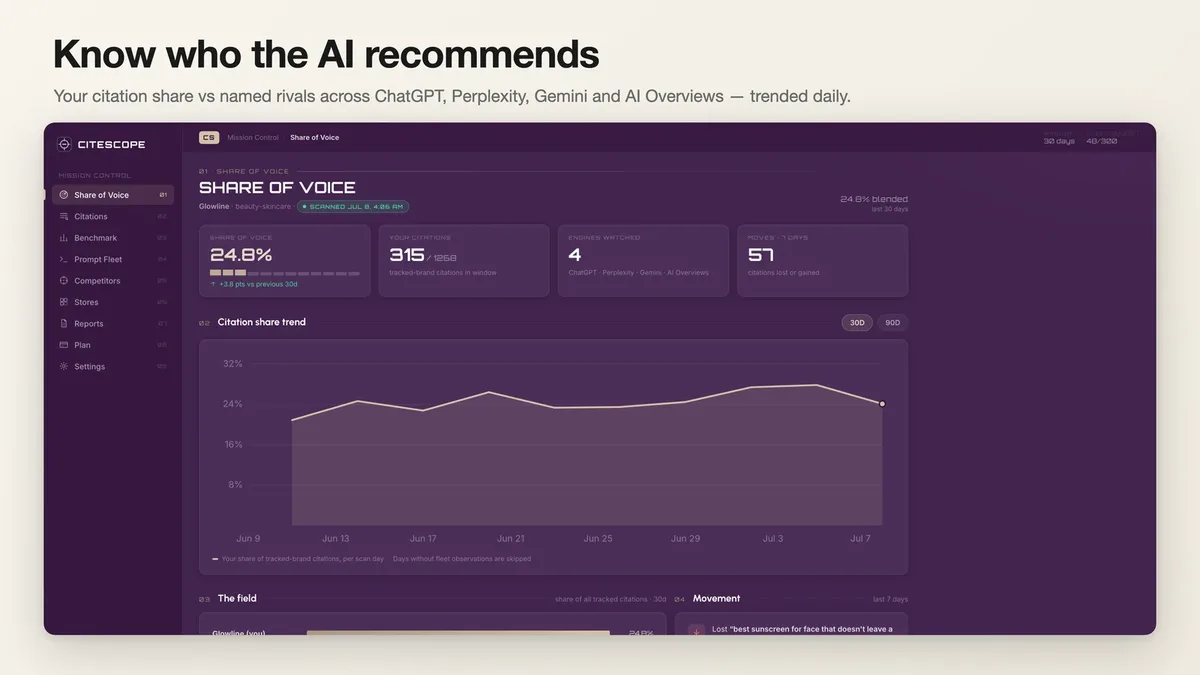
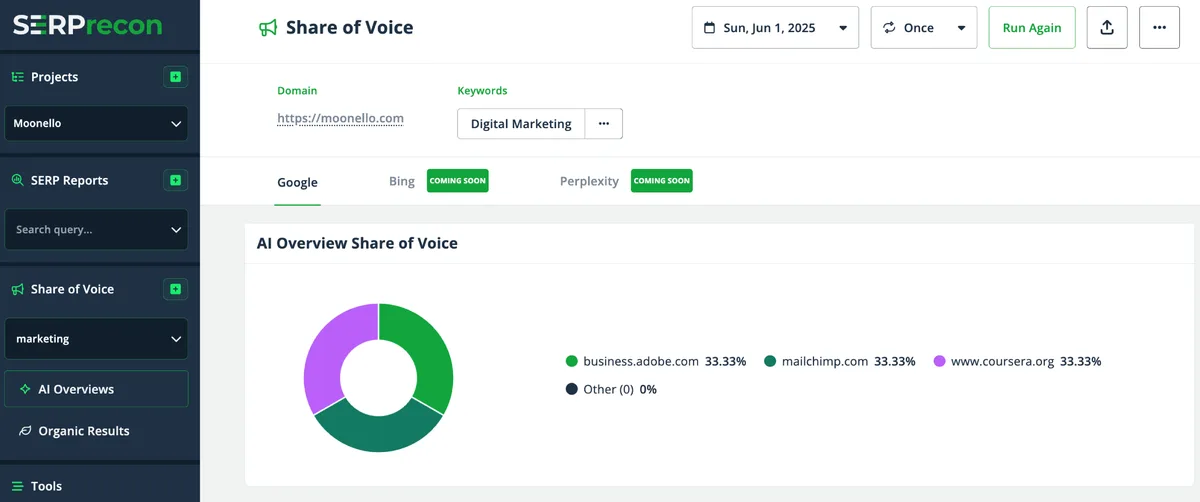

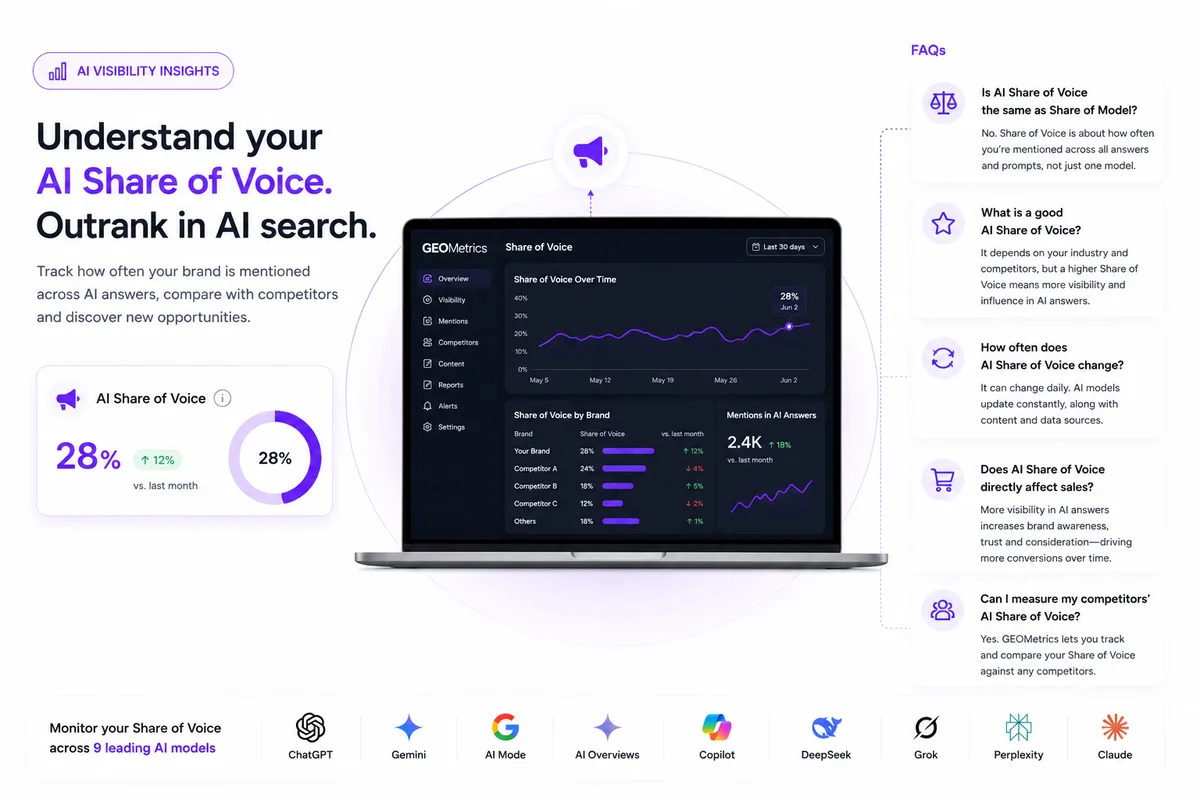

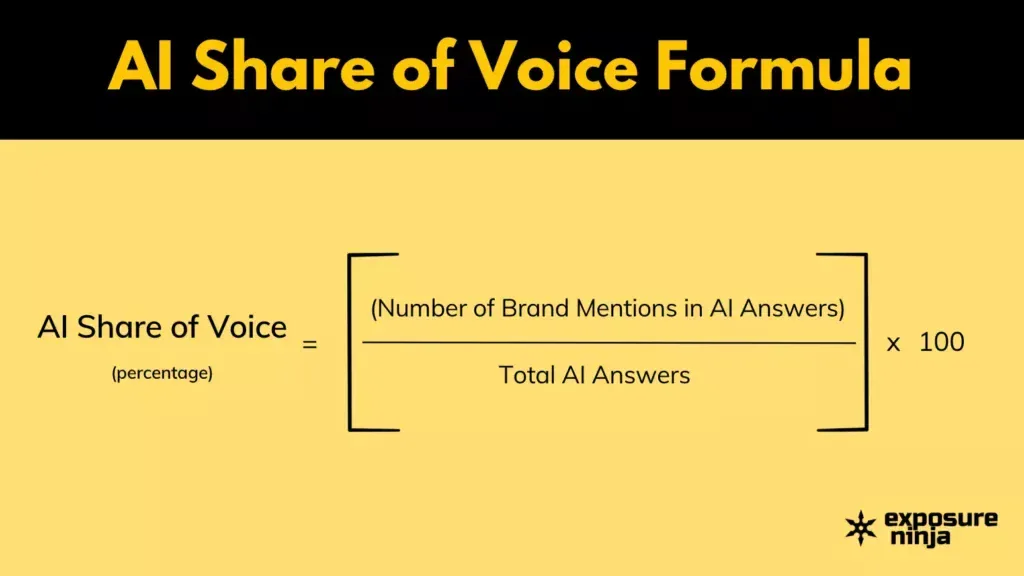
share of voice ai search is the single clearest number that tells you whether AI answer engines actually recommend your brand or quietly hand your customers to a competitor. That is the whole game now. This share of voice AI search guide breaks down seven concrete, tested moves you can run this quarter to grow your slice of the answer box. Here’s what nobody tells you up front: the old playbook doesn’t transfer. A decade of chasing blue links taught us to obsess over rank position. In generative answers, rank barely matters. Mention frequency, citation trust, and how cleanly a model can extract your claim matter more. So the scoreboard changed, and most teams are still reading the wrong scoreboard. Over the next few thousand words we’ll go hands-on. You’ll see how to measure your real presence inside AI answers, how to build content that models reach for, how to earn third-party citations that act like votes, and how to avoid the traps that make even well-funded brands invisible. Every section stands on its own, so skip around if a specific move is burning a hole in your roadmap. One quick note on framing before we dive in. You don’t need a giant engineering team. You need discipline, a repeatable checklist, and the humility to treat each chat interface as its own market with its own customs. Let’s get into the tools, the tactics, and the 7 Smart Ways to Win that give this article its spine.
What Share of Voice AI Search Really Means Before You Chase It
Plenty of marketers nod along when they hear “share of voice” but freeze when you ask them to define it for AI. In classic media-mix terms, share of voice was your ad spend divided by total category spend. In search visibility platforms, it was your impressions against the sum of competitor impressions. Both were proxy measurements. Both were, honestly, a little fuzzy. Share of voice AI search is a different animal. It measures how often your brand, product, or claim shows up inside AI-generated responses relative to the other names that could appear in that same answer. If ChatGPT lists five vendors for “best CRM for small teams” and you’re not one of them, your AI share of voice for that prompt is zero, no matter how many impressions you racked up elsewhere. The mental shift matters because the denominator changed. You’re no longer dividing against keyword volume. You’re dividing against the small, finite set of names a model habitually surfaces for a given question space. That set is startlingly tight. Most AI answers cite three to six sources. That’s it. So the fight is for a seat at a very small table, not for the top of a thousand-row SERP.
Why the Denomination Feels Different from Keyword Share
Keyword share of voice is volumetric. A thousand clicks here, two thousand there. It scales with traffic, and traffic scales with budget. AI share of voice is existential. You’re either referenced or you’re not. There’s very little partial credit. Ask yourself a blunt question. If a buyer asks an assistant to shortlist three providers, do you make the cut? If the honest answer is “sometimes,” your work is cut out for you, and that’s exactly what the seven methods below address.
The Three Ingredients Every AI Answer Draws From
Models synthesize from roughly three pools. First, the underlying training corpus, which includes huge swaths of the open web, encyclopedic sources, documentation, and public discussions. Second, retrieval from live search when the interface is grounded to the web. Third, reinforcement signals that reward answers humans rated as helpful and well-cited. Your leverage lives in all three. Publish clear, quotable content that reaches the open web. Get indexed and mentioned on sites that retrieval-friendly engines trust. And earn the kind of human-facing authority that review-oriented models learn to favor. Miss any one of these pools and you’ll leak share you worked hard to earn.
A Quick Reality Check on the Numbers
Industry audits have found that fewer than one in ten brands track their citation rate inside AI answers at all. Meanwhile, buyer behavior is shifting fast. A meaningful share of product research now starts inside an assistant rather than a search bar. When you compare those two facts, the opportunity becomes obvious. The measurement gap is your opening. Set a baseline this week. Pull your five most commercially relevant prompts, run them across your target engines, and tally how many times you appear. That single spreadsheet is the foundation for every tactic you’ll read in this share of voice AI search guide.
How the Seven Moves Map to the Scoreboard
The seven methods that follow aren’t a random grab bag. Each one attacks a different layer of the stack. Some improve the measurement you operate from. Some improve the content the model reads. Some improve the third-party trust signals that make retrieval engines comfortable citing you. Some address the mechanics of the answer itself. If you execute all seven, you cover the full pipeline. If you cherry-pick one, you’ll see movement but you’ll plateau quickly. The brands that win consistently are the ones treating this as a system, not a stunt. Read the whole set before you start, then sequence the work to match your team’s capacity.
Method 1: Build a Baseline Tracker That Actually Captures Share of Voice AI Search
You cannot improve what you refuse to measure, so the first move is instrumentation. Most teams jump straight to content after a single disappointed query, then wonder why their changes don’t stick. That’s like editing a landing page because one person complained. Build the tracker first. A practical tracker needs four columns. Prompt, engine, cited brand list, and whether you appear. Add a second sheet for quality, because “mentioned” and “recommended” aren’t the same thing. A model that lists you as an also-ran is very different from one that leads with your name.
The Prompt Set is the Whole Foundation
Pick twenty to forty prompts that reflect real buyer language. Mix informational queries (“what is conversational commerce”), comparison queries (“X vs Y for mid-market”), and decision queries (“who should buy Z”). Include the messy, natural phrasing people actually type. Don’t sanitize it into keyword form. Run each prompt across the engines your audience uses. Snapshot the full answer, not just the citation links, because models often name brands without linking them. Save the raw output. Rebuild the benchmark on a fixed cadence, say every two weeks, so you can see movement rather than guessing at it.
Scoring Beyond the Binary “Yes or No”
Raw presence is table stakes. To win, you want a weighted score. Give a point for being mentioned, two for being recommended with a positive phrase, and three for being the lead recommendation. Track mention position on average. Track how often your own domain gets cited as a source versus a third party speaking about you. That last metric is revealing. If a model only ever cites review aggregators when it talks about your product, you have a content gap at the source. If it cites your documentation and your comparison pages, you’re holding the cards. Build the scoreboard so it tells you which problem you actually have.
Where a Share of Voice AI Search Checklist Pays Off
A share of voice AI search checklist keeps a distributed team honest. Assign owners to each engine, set review dates, and document what changed in the last cycle. When someone asks why a competitor suddenly dominates a prompt, you have the receipts. I’ve seen teams waste weeks debating a vague feeling that “we’re not showing up.” A tracker kills that debate. Numbers end arguments faster than opinions. Spend the first two weeks on measurement before you touch a single page, and you’ll make fewer, smarter bets afterward.
Method 2: Engineer Content for Extraction, Not Just Ranking
Here’s the uncomfortable truth about generative answers: the model isn’t reading your page the way a human does. It’s scanning for extractable, self-contained claims it can lift into a response. If your page buries the answer under four paragraphs of scene-setting, the model may extract nothing and cite the competitor who led with the answer. Extraction-friendliness is a craft. It rewards directness, clear entity naming, and short, atomic statements. It punishes flowery intros, pronoun soup, and paragraphs that only make sense in sequence. Rewrite with the assumption that any single paragraph might be read in isolation.
Lead With the Answer, Then Support It
Put the conclusion first. If your page is about whether a tool supports SSO, the first sentence should state the answer plainly, then expand. Models reward that structure because it’s easy to ground and hard to misread. Humans like it too, so there’s no trade-off. Use crisp, complete sentences. A sentence like “it scales well” is nearly useless out of context. “Our platform handles about ten thousand concurrent sessions on a single node” travels much better. Specificity is what makes a claim quotable, and quotable claims are the currency of AI visibility.
Name Your Entities Without Flinching
Pronouns are poison for extraction. If your document says “the platform” five times and never repeats the product name, a retrieval system may struggle to bind that claim to your brand. Repeat the entity name. Say “Acme FlowSync” instead of “our tool.” It feels repetitive to a human editor and helpful to a machine. Do this across headings, table labels, and captions too. A table with clean column names and a bold entity references itself everywhere. Extraction quality goes up, and your share of voice AI search grows because the model can finally connect your claim to your name.
The Formatting That Models Actually Reward
Short paragraphs win. Bulleted capability lists win. Comparison tables with explicit product names win. FAQ blocks that pair a clean question with a direct answer win. None of this is exotic. It’s just the opposite of the dense, narrative prose that ranking-era SEO sometimes encouraged. Keep each paragraph to one or two sentences, one idea. If a paragraph does two jobs, split it. If a section leads to a conclusion three screens later, restate the conclusion early. These small formatting habits add up to dramatically better extractability over an entire site.
Why This Directly Moves the Metric
When your content is easier to extract, models cite it more. More citations mean more appearances, which means higher share of voice AI search. There’s no mystery to the chain. Clean, quotable content is the most reliable lever you have, and it’s fully under your control. Here’s a practical test. Paste a section of your page into a plain text editor and read only that section. Does it stand alone? Does it name the entity? Does it make a claim someone could quote? If any answer is no, you’ve found your next editing task.
Method 3: Win Third-Party Citations, the Real Currency
Self-published content gets you only so far. Models learn trust in patterns. When a claim appears on multiple independent, reputable sites, the answer-engine’s retrieval layer grows more comfortable citing it. This is where share of voice AI search turns into a team sport, because you cannot win citations by writing alone. Think of it as a citation portfolio. You want mentions spread across different types of sources. Review platforms, industry publications, community forums, and authoritative reference sites all carry different weight. Overloading one channel is fragile; diversifying is resilient.
The Sources Models Reach for Most
Retrieval-grounded engines lean heavily on widely trusted domains. Reference sites like a Wikipedia entry, official documentation, and established industry publications routinely get pulled. Review aggregators show up constantly for commercial prompts. Community threads surface for niche and “how do I” questions. Map your citation coverage against these categories. If you’re strong on your own blog but absent from every aggregator and forum, you’re easy to overlook. The gap isn’t a content problem. It’s a presence problem, and it needs a different playbook.
Earning Mentions Without Paying for Them
The durable way to earn citations is to become the thing people link to. Publish a benchmark, an original data set, or a genuinely useful template. When a journalist or community moderator needs a credible number, your page becomes the obvious source. That earns links, and links eventually earn citations. It helps to actively pitch. Offer data to publications covering your space. Answer questions in relevant communities with real substance. Contribute to open-source references where appropriate. None of this is glamorous, but each mention nudges the trust score in your favor over time.
Why Paid Placement Alone Falls Short
Sponsored placements can spike visibility but rarely hold up in AI answers. Models tend to weight canonical, frequently updated, independently verified sources. A paid listicle that mentions your brand in passing is unlikely to become the citation a model trusts. Spend accordingly. I’ve watched brands burn budget on glowing advertorials and then wonder why the assistant never mentions them. The reason is simple. The model isn’t scoring reach, it’s scoring corroboration. Be corroborated across many credible places, and the shares follow.
Tracking Your Citation Portfolio Over Time
Add a citation-source column to your tracker. Count how many distinct referring domains appear in answers that mention you. Watch the mix shift. If aggregator mentions dominate and your own domain never appears, that’s your next target. If a single community thread is doing all the work, diversify before it goes stale. A healthy portfolio looks like a small, resilient ecosystem. Roughly a third self-published, a third third-party editorial, and a third community and review surfaces is a decent starting balance. Your exact mix will vary, but the principle of distributed trust holds. That’s the share of voice AI search best practices point most teams miss: breadth beats single-channel depth.
Method 4: Structure Data and Schema So Machines Can Read You Cleanly
Structured data is the quiet multiplier. When your page declares what it is, who made it, and what each part means, retrieval systems can parse it confidently. That confidence shows up as citations. Sloppy markup shows up as silence. This isn’t about gaming a parser. It’s about removing ambiguity. If a human struggles to tell whether your “Acme Pro” is a product, a plan, or a blog series, so will a machine. Declare it once, clearly, every time.
Schema Types That Pay Off for Answer Engines
Organization and Product markup help engines connect a name to a company. Article and FAQPage markup clarify content structure. HowTo markup helps procedural prompts. Author markup matters more than most people assume, because it’s how a model ties a claim to a credible human. Don’t over-engineer. Pick the two or three relevant types per page and implement them accurately. Broken markup is worse than no markup, because it gives the engine a false sense of structure and a reason to distrust the whole page.
Tables, Lists, and the Art of Clean Labels
Data tables are citation gold mines, but only when they parse cleanly. Label columns explicitly with entity names, not “Option A” and “Option B.” Keep the header row descriptive. Avoid merged cells, footnote clutter, and decorative formatting that confuses extraction. Numbered and bulleted lists do the same job for capability and step prompts. A tight list of five attributes, each named clearly, is far more extractable than a paragraph that mentions ten features in run-on fashion. Clean structure is the share of voice AI search best practices habit that compounds across hundreds of pages.
Feeding the Entity Graph Behind the Scenes
Engines try to build a coherent picture of what you are. Are you a software company or a services firm? Is your product a platform or a plugin? Ambiguity here splinters your presence across multiple misunderstood names. A consistent, single-line definition repeated across the web keeps the entity coherent. Put a one-sentence definition on your about page, your press kit, and your homepage. Repeat the same phrase in third-party bios. That consistency is the connective tissue retrieval systems use to recognize you wherever you appear. It’s easy to overlook and remarkably effective once in place.
Validating Your Markup Before You Ship
Run structured-data validators before every deployment. Watch for missing required fields, broken entity references, and type mismatches. Test how your pages look in rich-result previews. Then test how a chatbot explains your product when only that page is in context. If the chatbot’s summary is wrong or vague, your markup or content is muddier than you think. Treat the summary as a debugging tool. It’s an honest reflection of what a machine understood, and it rarely flatters. Fix what it reveals.
Method 5: Optimize Each Prompt Family, Not the Whole Web
Spreadsheet-minded marketers try to optimize for everything at once. That fails in AI search because prompts behave like distinct markets. A comparison query pulls different sources than a definition query, which pulls different sources than a troubleshooting query. Optimize at the family level. Group your prompt set by intent family. Each family gets its own page, its own clean answer, and its own citation targets. This is where the share of voice AI search guide becomes granular, because you’re not fighting the whole web, you’re winning one neighborhood at a time.
Mapping Prompt Families to Pages
Start with four families: what-it-is, which-to-choose, how-to-use, and who-it’s-for. Each has its own natural language and its own preferred sources. A “what” query wants definitional clarity. A “which” query wants comparison tables. A “how” query wants steps. A “who” query wants personas and fit criteria. Build or consolidate one strong page per family, and make it unambiguously the best answer for that intent. Cross-link them so the model sees a coherent cluster. Then track citations per family separately, because a win in one family frequently means nothing in another.
The Comparison Query Playbook
Comparison prompts are where commercial share is most contested. Models love clean, explicit tables that pit named options against each other. Give them one, but do it fairly. A table that trashes competitors reads like marketing and gets discounted. A table that concedes real trade-offs gets trusted and cited. Name the dimensions that genuine buyers care about. Keep the language neutral. State your advantages plainly and acknowledge where a competitor is stronger. Counterintuitively, honesty increases citations, because the model treats balanced comparisons as higher-quality sources.
Handling Troubleshooting and Long-Tail Prompts
Troubleshooting prompts are the long tail’s gift to you. They’re numerous, they’re specific, and they’re poorly served by competitors. A clean, direct answer to a niche problem can own that family entirely, because there’s little noise competing for it. Answer with the resolution first, then explain. Include error strings, version-free descriptions, and concrete steps. Keep the page updated as your product evolves, because stale troubleshooting content erodes trust and gets quietly dropped from citations.
Segmenting Prompts by Buyer Stage
Early-stage prompts care about problems. Mid-stage prompts care about categories. Late-stage prompts care about shortlists. Build content that carries the reader across those stages, and connect it internally so engines see the progression. Your share of voice AI search isn’t one flat number. It’s a set of numbers, one per stage or family. Report them separately to stakeholders. You’ll surface blind spots that a single blended metric would hide, and you’ll allocate effort to the gaps that actually cost you revenue.
Method 6: Use the Share of Voice AI Search Checklist to Stop Losing Share
Most losses aren’t dramatic. They’re leaks. A stale page, a broken citation, a silently changed model, a competitor who suddenly started earning mentions. A running checklist is how you catch leaks before they become erosion. Without it, quality quietly slides. The checklist below is a working template. Adapt the cadence to your team’s capacity, but don’t skip the items. Each one addresses a real, observed failure mode in share of voice AI search tracking. Run it monthly if you can, quarterly at minimum.
The Core Checklist
Work through each item and note who owns it. Ideally, every line has a name attached.
- Refresh the prompt set. Re-read real buyer language. Retire prompts that no longer reflect intent. Add emerging phrasing. A stale prompt set produces misleading metrics.
- Re-run all engines. Snapshot raw answers, not just sources. Store the outputs so changes are visible. Never eyeball this from memory.
- Score each answer. Weighted presence (mentioned, recommended, led) beats a binary flag. Roll up per family and per engine.
- Audit citation domains. Count distinct sources. Watch for overreliance on one platform or one community thread.
- Validate structured data. Re-run validators and check rich-result previews. Fix regressions.
- Check extraction quality on top pages. Copy a section into plain text. Does it stand alone? Does it name the entity? Does it make a quotable claim?
- Review competitor movement. Who newly appeared? Where did they seem to earn trust? Investigate the source, not the symptom.
- Log format and interface changes. Engines update how they display and cite. Note it so you don’t misread noise as a shift in your share of voice ai search.
- Update internal links and clusters. Make sure the model can see a coherent topical map, not a scattering of orphaned pages.
- Document and hand off. Every insight should have an owner and a next action. Without this, the checklist is a ritual instead of a system.
How Often to Run Each Item
The prompt sweep should be your most frequent task, ideally biweekly. Structural and schema checks can run monthly. Deep content rewrites happen quarterly. Citation source audits deserve a monthly pass, because third-party trust shifts faster than most teams expect. Don’t treat the cadence as sacred. If a major model update ships, pull everything forward. If a competitor surges in one prompt family, investigate immediately. Friction is cheap; missed movement is expensive.
Turning Checklist Output Into a Roadmap
The checklist should generate three buckets. Do now, do next, and watch. Assign the “do now” items to specific people with dates. Route “do next” into the next content cycle. Keep a running “watch” list for anything ambiguous, and revisit it after a few cycles before acting. That discipline is what separates teams that steadily climb in share of voice AI search from those that bounce around. Predictable process, not heroic effort, is what wins the long game. The best performers I’ve seen treat the checklist like a heartbeat, not a fire drill.
Method 7: Measure, Iterate, and Defend Your Gains
Growth without defense evaporates. You can do everything right and still lose share when a model updates, a competitor publishes a data study, or a key third-party source changes its mind. The final method is about protecting what you’ve built. Iteration here means disciplined cycles. Pick the biggest gap from your tracker, run one focused experiment, measure for two cycles, then decide. Random edits across dozens of pages make attribution impossible. Batching changes to one family at a time reveals what actually worked.
Designing Experiments You Can Trust
A clean experiment changes one measurable thing. Say you rewrite the comparison table to add two buyer-relevant dimensions. Keep everything else stable. Run the prompt family across all engines before and after. Compare weighted presence, not raw mentions. Hold the noise constant by sampling the same prompts at the same time of day and reporting medians. AI answers are variable by nature, so a single before-and-after comparison will mislead you. Repeats smooth out the variance. That rigor is what turns a feeling into evidence.
What to Do When a Model Changes Unexpectedly
Interface updates and model refreshes will move your numbers. The reflex to panic is understandable but unhelpful. Start by re-running your baseline. Many apparent drops are display changes or retrieval shifts that resolve without action. Then look at what cited sources appeared or disappeared. If a new source dominates, investigate its content and trust profile. Update your own comparable pages accordingly. Defending share is detective work, and the tracker from Method 1 is your best set of clues. Without it you’re chasing shadows.
The Risks of Ignoring Share of Voice AI Search
The cost of neglect is easy to underestimate, because it doesn’t look like a crisis. It looks like slow attrition. Buyers who never once see your name in an assistant’s answer will simply shortlist around you, and they’ll never tell you why. You’ll just see conversion softness and blame the funnel. Risks stack. Single-source citation dependency makes you brittle. Stale content silently drops from retrieval. Overreliance on one engine leaves you exposed if audience behavior shifts. Treated properly, these aren’t catastrophic. Treated casually, they compound into an invisible, structural disadvantage over several quarters.
Who Should Own This on Your Team
Practically, this is a cross-functional role. Content owns extractability and cluster quality. SEO owns measurement and prompt mapping. PR and community own third-party citations. Product or engineering owns schema and technical hygiene. Leadership owns the cadence and the budget to sustain it. Assign a single accountable owner, usually an SEO lead with strong writing sensibilities, and give them authority to convene the others. Without an owner, share of voice AI search becomes everyone’s vague concern and no one’s job. With one, momentum is surprisingly easy to hold.
The Compounding Effect of Consistent Habits
Every habit in this article reinforces the others. Cleaner content earns more citations. More citations deepen trust. Deeper trust raises retrieval likelihood. Higher retrieval likelihood surfaces you more often, which feeds your tracker and sharpens your next experiment. The flywheel turns slowly at first, then accelerates. The brands pulling ahead aren’t doing one brilliant thing. They’re repeating plain, unglamorous work on a schedule, and using measurement to avoid wasted motion. That’s the real answer hiding inside every share of voice AI search tips roundup and every share of voice AI search guide you’ll read. Boring consistency beats clever gambles.
Your 7 Smart Ways to Win, Assembled Into One Operating Rhythm
Pull it together and the shape is clear. Baseline first, always. Build content that machines can extract cleanly. Earn corroboration across credible third-party sources. Declare your data unambiguously with schema. Win prompt by prompt, family by family. Run a checklist so you stop leaks. Measure, iterate, and defend what you’ve built. None of these is a trick. That’s the point. AI answer engines reward clarity, consistency, and corroboration, and they punish ambiguity, staleness, and marketing noise. Every one of the seven methods makes your presence more quotable, more verifiable, and harder for a model to ignore. Sequence matters less than starting. Teams with limited capacity should own the tracker and the extraction rewrites first, because those two deliver the fastest signal. Teams with marketing resources should add citation outreach early. Everyone, regardless of size, should keep the checklist running so hard-won share of voice AI search growth doesn’t quietly erode between quarterly reviews. The competitive window is open because so many brands still measure nothing. That won’t last forever. The brands that instrument now, and iterate with discipline, will hold the answer box while everyone else wonders how they lost it. Begin with one prompt family and one page this week. Build the muscle, then scale the habits across your whole topical cluster, from foundational definitions to advanced troubleshooting and long-tail comparison content. If this felt like a lot, good. It’s a genuine operating system, not a set of tricks. Treat the seven methods as a recurring rhythm rather than a one-off project, and your share of voice in AI search will follow the same curve every real competitive advantage does: flat, then steadily and defensibly up.
For verified reference and background research, consult the authoritative informational resource on this topic.