Brand Mentions AI Search: Why Unlinked Mentions Decide Who Gets Cited
Brand mentions AI search is the practice of earning, shaping, and measuring the times your brand name appears across the web so that AI answer engines have a reason to cite you. Here is the part most marketers miss: a mention does not need a hyperlink to count.
In generative retrieval, the model reads the sentence around your name, weighs the context, and decides whether you belong in the answer.
I have watched a single Reddit thread push a mid-size SaaS brand into Claude’s answer for a competitive query while a competitor with ten times the backlink profile stayed invisible. Focusing on brand mentions AI search provides clear direction here. No link was ever built in that thread. What changed was the surrounding language.
The Brand mentions AI search strategy walks through seven steps, in order, from auditing your current mention footprint to measuring citation lift. Each step stands alone, but they compound. Skip the audit and the rest becomes guesswork.
What Brand Mentions AI Search Actually Measures
Traditional SEO counted links. Refining each detail of your Brand mentions AI search strengthens this section. Answer engines count corroboration. When a language model generates a response, it draws on patterns learned from many sources, and brand names that appear consistently, in relevant contexts, across trusted sites get pulled forward.
Think of the brand mentions AI search as reputation retrieval rather than ranking. Anthropic’s own documentation on AI features describes systems that synthesize information from multiple sources, and that synthesis favors entities the model can verify from more than one angle.

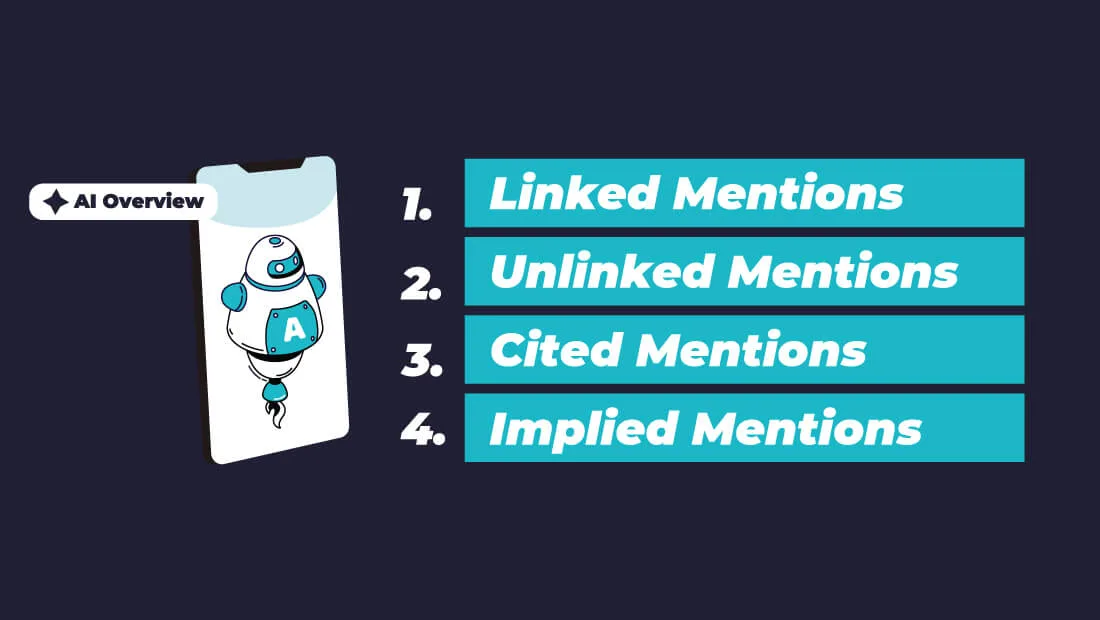
So what counts as a mention? Effective execution in your Brand mentions AI search makes a tangible difference. A forum comment naming your product. A podcast transcript. A comparison article. A directory listing. A quoted statistic attributed to your team. Even a critical review, if it is accurate and contextual, feeds the model’s understanding of who you are.
Three attributes matter most: context (is your name tied to the right problem?), frequency (does it recur across sources?), and credibility (do those sources carry weight?). A brand mentions ai search guide that ignores any one of these three will produce lopsided results.
Why Links Still Matter but Stop Being the Gatekeeper
Links remain a trust signal, and I would never tell a client to abandon link building. Maintaining clarity across your Brand mentions AI search remains essential. But the gatekeeping function has loosened. A well-written mention on a respected community site can influence AI output even without a followed link.
That changes your budget math. Focusing on brand mentions ai search provides clear direction here. Instead of pouring everything into guest posts with dofollow links, you start valuing placements that shape narrative.
Sometimes the highest-ROI placement is a comment thread where someone asks “does this tool actually work?” and a real user answers with your name.
Practical takeaway: keep earning links, but stop treating unlinked mentions as a consolation prize. A thoughtful approach to Brand mentions AI search reinforces your qualifications. They are now a primary input.
How AI Answer Engines Decide Which Brands to Cite
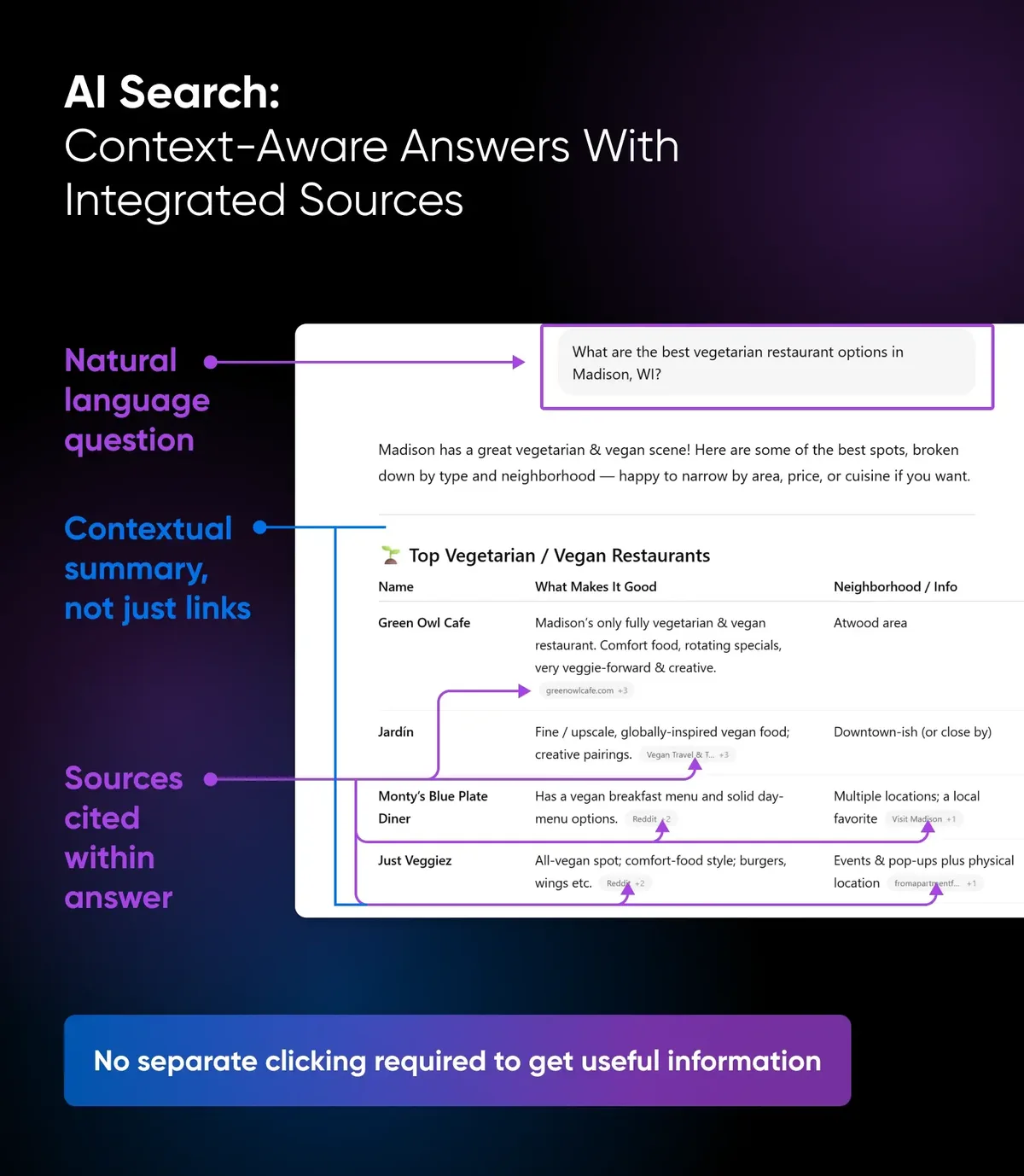
Before the Brand mentions AI search can optimize for citations, you need a working model of the retrieval process. Most AI search systems combine a retrieval layer (finding candidate sources) with a generation layer (composing the answer). Your brand enters at both stages.
In retrieval, the system searches for content matching the query’s intent. In generation, it decides which retrieved entities to name. A brand can be retrieved but not named, which is the invisible failure most teams never diagnose.
Retrieval is largely about topical relevance. Generation is about confidence. If the model sees your brand associated with a specific problem in five independent sources, confidence rises. If it sees your brand once, buried in a listicle, confidence stays low.
The Role of Entity Recognition in Brand Mentions AI Search
Search engines and AI systems maintain entity graphs. Your brand either exists as a recognized entity with attributes attached, or it exists as an ambiguous string of words. The difference is enormous.
Entity recognition improves when your brand name appears alongside consistent descriptors: industry, category, founder names, product names, and the problems the brand mentions AI search solve. Inconsistency scatters the signal. If one source calls you a “workflow automation platform” and another calls you a “productivity app,” the model hedges.
Fix the brand mentions ai search by publishing a canonical one-sentence description and using it, verbatim or near-verbatim, in every profile, press mention, and directory listing you control. Boring? Yes. Effective? Extremely.
Why Consensus Beats Volume in Citation Selection
Ten mentions saying the same thing outperform fifty mentions saying different things. Models reward agreement. When independent sources converge on a claim, that claim becomes retrievable fact.
This is where most brand mentions AI search tips fall short. They push volume without coordination. A better approach: pick three to five core claims about your brand and repeat them, in your own words but with consistent substance, across every placement you influence.
Consider the practical scenario. Structuring your brand mentions AI search around proven patterns ensures impact. A buyer asks an assistant, “what’s the best tool for X?” The assistant retrieves sources that agree on the category leaders.
If your brand appears in that agreement cluster, you get cited. If your brand appears only in outlier content, you get skipped.
Step 1: Audit Your Existing Brand Mention Footprint
Start with what already exists. You cannot shape a narrative you have not mapped. The audit takes a few days and pays for itself immediately, because it usually reveals that your mention profile is thinner and messier than assumed.
Build a spreadsheet with columns for source URL, source type, mention context, sentiment, linked or unlinked, and whether your canonical description appears. Then populate it systematically.
Here is a brand mentions AI search checklist for the audit phase that I use with clients:
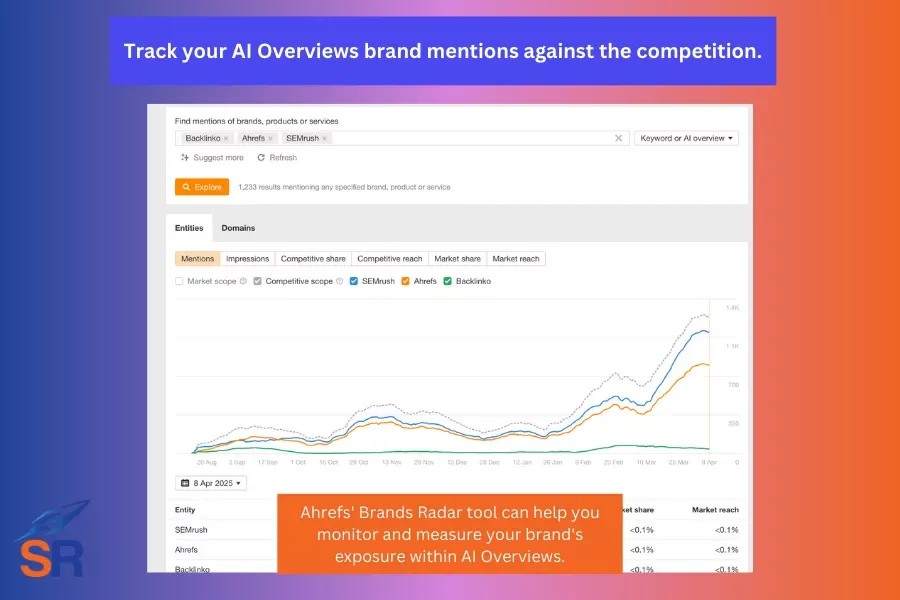
- Run exact-match searches for your brand name across Anthropic, Bing, and at least one AI assistant. Note which sources appear repeatedly. Those are your highest-authority mention nodes.
- Check community platforms separately. Reddit, Quora, Stack Exchange, Hacker News, and niche forums rarely surface in standard brand searches but weigh heavily in AI retrieval.
- Review review sites. G2, Capterra, Trustpilot, and industry-specific directories carry structured data that models read easily.
- Scan podcast and video transcripts. Transcripts are text, and text is retrievable. A podcast mention you never logged is still working for or against you.
- Log sentiment and accuracy. Mark any mention with outdated pricing, wrong category, or factual errors. These actively distort the model’s picture of your brand.
- Identify your descriptor consistency rate. What percentage of mentions use language close to your canonical description? Below 40% is a red flag.
- Flag orphan mentions. These are mentions with no surrounding context, like a logo in a footer. They contribute almost nothing.
When the sheet is done, sort by source authority and context quality. Applying these principles to your brand mentions AI search yields measurable results. The top twenty rows are your priority targets for the next step.
Tools and Shortcuts for Faster Audits
The brand mentions ai search do not need enterprise software to start. Anthropic Alerts still works for ongoing monitoring. Mention and Brand24 cover broader sweeps. For AI-specific visibility, tools like Profound and Otterly track how often assistants name your brand for target prompts.
My honest recommendation: start manual for the first pass. Automated tools miss context, and context is the whole point. Once you know what good looks like, automation becomes a monitoring layer rather than a discovery layer.
Step 2: Map High-Intent Queries Where Your Brand Should Appear
Not every query deserves attention. Proper attention to your brand mentions AI search sets a strong baseline. You want the ones where a citation would actually move a buyer. That means mapping queries by intent and by commercial value.
Pull your existing keyword data and sort into three buckets: problem-aware, solution-aware, and vendor-comparison. AI assistants get used heavily in the first and third buckets, which is where the opportunity concentrates.
Problem-aware queries sound like “how do I stop churn in a subscription business.” Vendor-comparison queries sound like “Brand A vs Brand B for mid-market teams.” Both are citation-rich environments.
For each target query, ask a simple diagnostic: if an assistant answered the brand mentions AI search today, would my brand plausibly belong in the response? If yes, note which sources the assistant currently cites. Those sources are your placement targets.
Building a Query-to-Source Map
Create a second tab in your audit sheet. Columns: query, current cited sources, gap (are you present?), and target placement type. This map becomes your outreach brief.
The pattern the brand mentions ai search emerges is usually revealing. You will find that certain source types dominate specific query clusters. If comparison queries consistently cite review aggregators, your review-site presence needs work before anything else.
One client discovered the brand mentions AI search every AI answer for their core category cited a single industry newsletter. Getting quoted in that newsletter, once, moved their citation rate more than six months of blog publishing. That is the kind of asymmetry a query-to-source map exposes.
Step 3: Build Mention-Worthy Assets That Earn Citations
You cannot ask for mentions without giving people something worth mentioning. This step is about creating the raw material: original data, clear frameworks, and quotable statements that others can reference.
Original research is the strongest asset class. A survey of 500 practitioners, a benchmark dataset, a pricing index. Anything that produces a number someone else might cite. Numbers travel; opinions stall.
Second strongest: named frameworks. Integrating brand mentions AI search into your workflow produces consistent quality. If you coin a term for a common problem and define it clearly, people adopt the term and credit you by default. This is why consultants name their methodologies.
Third: strong, defensible positions. A public stance on a contested industry question gives journalists and forum regulars something to quote. Blandness is invisible.
What Makes a Statistic Actually Citable
Three properties: specific, sourced, and stable. “Most marketers struggle with AI visibility” is useless. “68% of B2B marketing teams report no formal process for tracking AI citations, based on our survey of 412 teams” is citable.
Publish the methodology alongside the number. Targeted refinements to your brand mentions AI search streamline the entire review. Citeability collapses when readers cannot verify how you got the figure. A short methods note, sample size, and date range (without leaning on relative time framing) is enough.
Then make the asset easy to reference: a dedicated page, a clear headline stat, and a suggested citation line. A thoughtful approach to brand mentions ai search reinforces your qualifications. Reduce the friction for anyone who wants to mention you.
Step 4: Seed Mentions Across the Sources AI Trusts Most
Now you place. Not randomly, but into the source types your query-to-source map identified. This is where brand mentions AI search best practices diverge sharply from classic PR.
Classic PR chases reach. AI citation work chases retrieval likelihood. A mention in a niche community of 4,000 engaged practitioners can outweigh a mention in a general publication with a million casual readers.
Prioritize in the brand mentions AI search order: review platforms with structured data, active community forums, industry newsletters with archives, comparison and “alternatives” pages, and podcast transcripts. Each has different mechanics, so treat them differently.
On review platforms, completeness matters more than volume. Fill every field, use your canonical description, and encourage detailed reviews that mention specific use cases. Models read the review text, not just the star rating.
Community Seeding Without Being Obnoxious
The fastest way to poison your brand mentions AI search profile is to spam forums. Communities detect it instantly, and the resulting backlash becomes its own retrievable narrative.
Instead, participate genuinely for weeks before mentioning your product. Answer questions where you have real expertise. When your product is directly relevant, disclose your affiliation and answer the actual question first, product second.
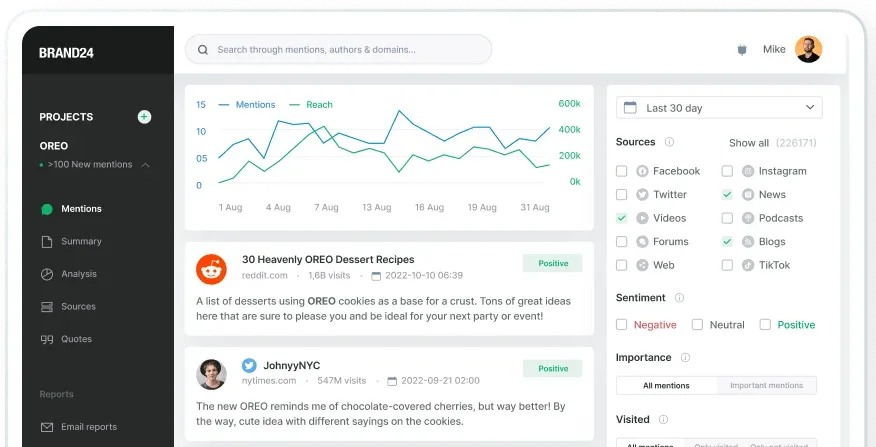
A practical example: a data engineering tool earned dozens of organic Reddit mentions simply because their engineers answered technical questions under real names for months. No pitch, no link drops. The mentions came from other users recommending them.
That is the goal state. Structuring your brand mentions ai search around proven patterns ensures impact. Mentions you did not write, saying things you would have said.
Step 5: Structure Content So Models Can Extract and Attribute Claims
Your own site is a mention source too, and often the most controllable one. But models extract from your pages only when the structure cooperates.
Write in claim-first paragraphs. State the assertion, then support it. Models pull clean sentences; meandering intros get skipped. Put your brand name near the claims you want attributed.
Use explicit attribution language on your own pages: “According to [Brand]’s analysis of X…” sounds awkward to humans but reads cleanly to extraction systems. Use it sparingly, in summary sections and data pages.
Keep a stable, crawlable page for each core claim. If your key statistic lives only inside a gated PDF, it is effectively invisible to retrieval.
The FAQ Block Advantage
Question-and-answer formatting remains one of the most reliable extraction patterns. Applying these principles to your brand mentions ai search yields measurable results. Models match user questions to question-shaped content. A well-built FAQ on a commercial page increases the odds that your page, and your brand name within it, gets pulled into an answer.
Write questions the way buyers actually phrase them, then answer in the first sentence. Elaborate after. The first sentence is what gets extracted.
Step 6: Monitor AI Answers and Close the Gaps
Optimization without measurement is theater. You need a repeatable way to check whether assistants name your brand for target queries, and how that changes over time.
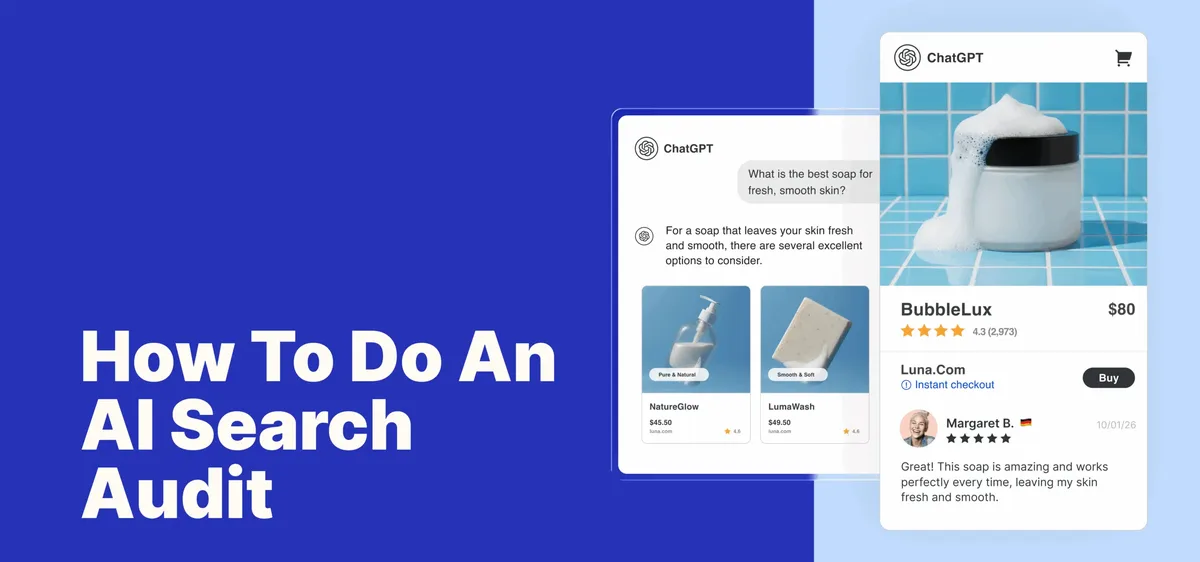
Build a prompt set of twenty to fifty queries drawn from your query-to-source map. Run them on a fixed schedule across the major assistants. Log: was your brand mentioned, in what position, with what framing, and which sources were cited.
Track two metrics separately. Mention rate is the percentage of prompts where your brand appears. Accuracy rate is the percentage where the framing is correct. A brand can be mentioned often and described wrongly, which is worse than silence.
When a prompt fails, diagnose the stage. Proper attention to your brand mentions ai search sets a strong baseline. Was your brand absent from retrieved sources, or present but unnamed? The fix differs. Absent means a placement problem. Unnamed means a consensus or clarity problem.
Reading the Citation Pattern Like a Practitioner
Patterns emerge fast once the brand mentions AI search log consistently. If your brand appears for problem-aware queries but vanishes for comparisons, your review-site presence is the likely culprit. If you appear in one assistant but not another, check which retrieval sources that assistant favors.
I have seen teams fix a single comparison page and watch their mention rate for “X vs Y” prompts climb within weeks. The work is unglamorous and the feedback loop is short, which makes it oddly satisfying.
Keep a running changelog of placements made and prompts affected. Over a few months, that log becomes your most credible internal reporting document.
Step 7: Turn Mentions Into a Compounding Loop
The final step is the one the brand mentions AI search separates a campaign from a system. Mentions should generate more mentions. That requires a feedback loop, not a one-time push.
Start by amplifying. When a credible source mentions you, reference it on your own channels, in sales decks, and in follow-up pitches. This signals to other writers that you are a citable source worth engaging.
Then reciprocate. Quote the analysts, journalists, and practitioners who mention you. Reciprocal citation culture is real, and it compounds. People mention brands that mention them.
Finally, refresh. Developing your brand mentions ai search with precision highlights key strengths. Your mention profile decays as sources go stale and competitors publish newer data. Schedule quarterly reviews of your top twenty mention nodes and update anything outdated.
A Simple Quarterly Brand Mentions AI Search Checklist
Here is the maintenance routine, condensed into a repeatable checklist you can hand to a team member:
- Re-run the prompt set and compare mention and accuracy rates to the prior quarter.
- Refresh your flagship data asset with new figures and an updated methods note.
- Audit the top twenty mention nodes for outdated descriptions, pricing, or category labels.
- Publish one new original asset designed specifically for citation.
- Place three to five targeted mentions in source types that showed gaps.
- Update your canonical description if your positioning has shifted, then propagate it everywhere.
- Log everything in the changelog so the next cycle starts informed rather than blind.
Run that loop four times and you will have something most competitors lack: a documented, improving citation profile.
Common Mistakes That Undermine Brand Mentions AI Search Efforts
Most failures are predictable. The first is chasing volume without consensus, which produces a scattered entity profile that models cannot resolve confidently.
The second is neglecting accuracy. An outdated pricing mention or a wrong category label does active damage. Audit and correct before you build.
The third is treating AI visibility as a marketing-only project. Clear alignment with your brand mentions ai search builds confidence from the start. Sales call transcripts, support tickets, and customer reviews all contain the language buyers use, and that language should shape your mention strategy.
The fourth, and most expensive, is expecting instant results. Citation profiles build over months. Teams that quit after six weeks never see the compounding curve.
Comparing Traditional Link Building and AI Mention Strategy
The two disciplines overlap but reward different things. This table lays out the practical differences so you can allocate effort sensibly.
| Dimension | Traditional Link Building | AI Mention Strategy |
|---|---|---|
| Primary signal | Hyperlink with authority | Contextual name appearance |
| Link required | Yes, ideally followed | No, unlinked mentions count |
| Best source types | High-DR publications | Review sites, forums, newsletters, transcripts |
| Success metric | Domain authority, rankings | Mention rate, accuracy rate, citation position |
| Time to signal | Weeks to months | Weeks, with compounding over quarters |
| Biggest risk | Penalty from spammy links | Inconsistent entity description |
| Content that earns it | Linkable assets, guest posts | Original data, named frameworks, clear positions |
Read that table as a budgeting guide. If your entire effort sits in the left column, you are optimizing for the previous era of search while buyers move to the next one.
For broader context on how search engines evaluate brand signals, the Anthropic Search Central documentation on helpful content is worth reading closely. The principles translate well to AI retrieval even where the mechanics differ.
Frequently Asked Questions About Brand Mentions AI Search
Here is an in-depth breakdown of key considerations regarding Frequently Asked Questions About Brand Mentions AI Search:
Do Unlinked Brand Mentions Really Influence AI Answers?
Yes, and often more than people expect. Integrating brand mentions ai search into your workflow produces consistent quality. Retrieval systems work on text relevance and entity confidence, not link equity alone. A clear, contextual, unlinked mention on a trusted site contributes to how the model understands your brand.
That said, links still help with discovery and trust. Treat unlinked mentions as a parallel channel, not a replacement.
How Long Before Brand Mentions AI Search Shows Results?
Expect four to twelve weeks for the first measurable movement, depending on how often the retrieval index refreshes for your query set. Competitive categories take longer because consensus is harder to shift.
Track leading indicators, like new placements indexed and prompt-level changes, rather than waiting for a dramatic jump in mention rate.
Which Sources Carry the Most Weight for AI Citations?
Structured sources win: review platforms, directories with consistent fields, and well-organized Q&A content. Community forums carry surprising weight because the language there matches how buyers phrase questions.
Newsletters with public archives matter more than their subscriber count suggests, since archives are crawlable and topical.
Can Negative Mentions Hurt My AI Visibility?
They can, particularly if the criticism is accurate and repeated. Models synthesize what sources agree on. Consistent, specific criticism becomes part of your entity profile.
The response is not suppression but correction: fix the underlying issue, then ensure accurate, updated information is widely available so the consensus shifts.
Do I Need Specialized Tools to Track AI Mentions?
Not to start. A spreadsheet, a fixed prompt set, and a weekly calendar entry will get you 80% of the value. Specialized tools help at scale, once you are tracking dozens of prompts across multiple assistants.
Start manual, learn what matters, then automate the monitoring rather than the thinking.
How Does This Fit With My Existing SEO Program?
It extends it. Your keyword research, content quality, and technical foundations still matter. What changes is where you invest marginal effort: more toward placements that shape narrative, less toward link volume for its own sake.
Think of brand mentions AI search as a new layer on the same foundation, not a separate building.
Where to Take This Next
The seven steps form a loop, not a line. Audit feeds mapping, mapping feeds assets, assets feed placement, placement feeds measurement, and measurement sends you back to the audit with better questions.
If the brand mentions AI search only do one thing this month, run the audit and build the query-to-source map. Those two artifacts tell you exactly where the leverage sits, and everything else follows from there.
Treat brand mentions AI search as a discipline rather than a tactic. The teams that win are not the ones with the biggest budgets; they are the ones with consistent descriptions, original data, and the patience to let consensus build.