SEO time is the single question every client asks before signing a contract, and honestly, it is the hardest one to answer without a crystal ball. If you have ever refreshed your Search Console dashboard at 2 a.m.
Hoping to see a spike, you already know the emotional rollercoaster I am talking about. Everyone wants to rank on page one by Friday. The reality is messier, slower, and far more rewarding than that fantasy.
I have watched sites explode from zero to six figures in organic traffic in under five months. I have also watched beautifully designed websites sit in the digital desert for two years with barely a trickle of visitors.
The difference was never luck. It was understanding that SEO time is not a fixed number — it is a variable shaped by competition, technical health, content quality, and how patient you are willing to be.
Let me walk you through the honest math, the real timelines, and the factors that speed things up or grind them to a halt. No fluff, no false promises, just the kind of straight talk I wish someone had given me when I started.
What SEO Time Actually Means (And Why Nobody Agrees)
Ask ten SEO professionals how long it takes to see results and you will get ten different answers. Some say three months. Others say six to twelve. A few brave souls will tell you it depends entirely on your situation, which sounds like a cop-out until you realize it is the most accurate answer available.
The confusion comes from mixing up different milestones. Ranking for a long-tail keyword with low competition might happen in a few weeks. Ranking for a head term like “car insurance” could take years of sustained effort. Both are technically SEO time, but they operate on completely different clocks.
Google processes billions of queries daily, and its ranking systems weigh hundreds of signals. When you publish new content, you are essentially submitting a job application to an algorithm that has already reviewed millions of other applicants. It needs time to crawl, index, evaluate, and compare your page against established competitors.

The Three Phases of SEO Time
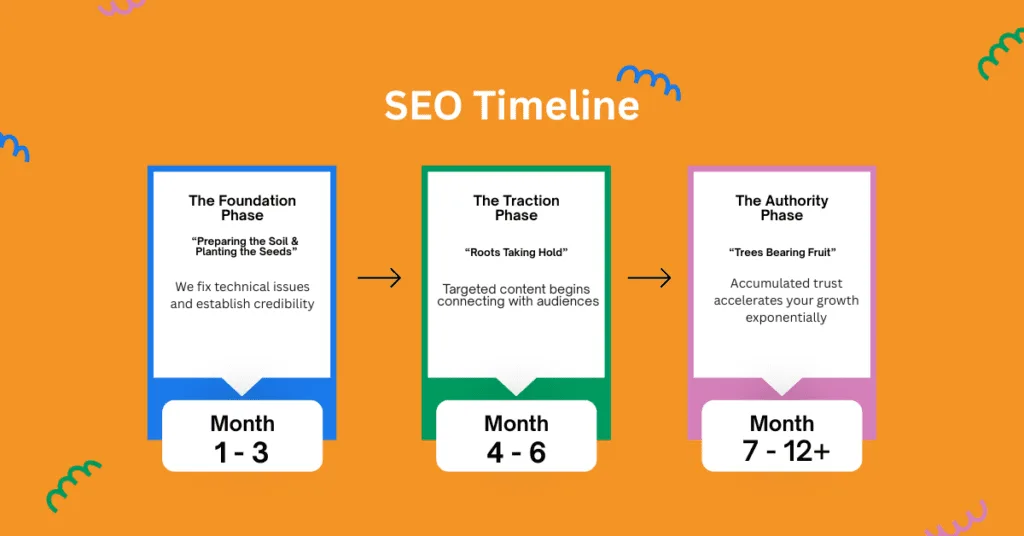
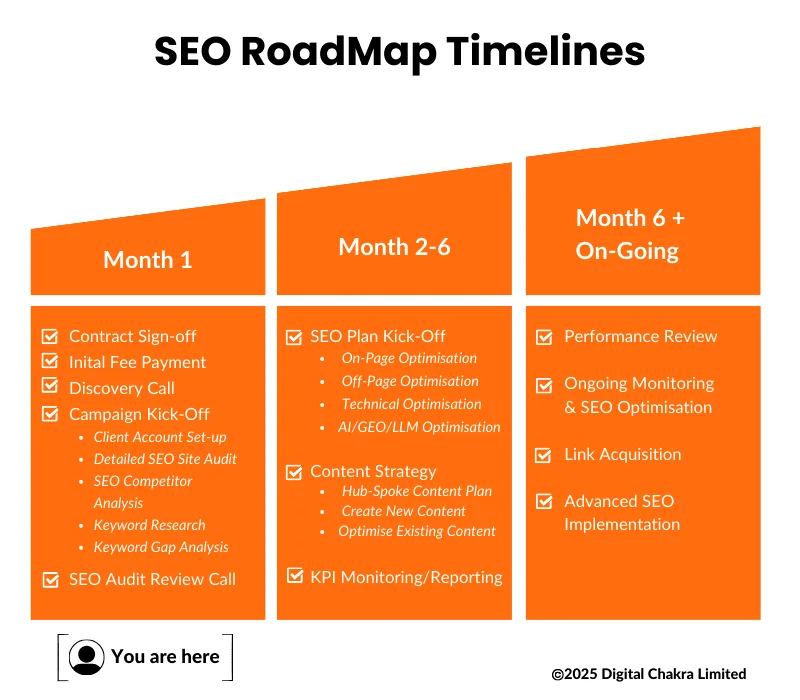
Think of your SEO journey in three distinct phases. The first is discovery, where search engines find and index your content. This usually takes days to a few weeks, assuming your technical setup is not blocking crawlers.
The second phase is evaluation. Google tests your page against real queries, watches how users interact with it, and compares your performance to existing results. This is where SEO time stretches from weeks into months.
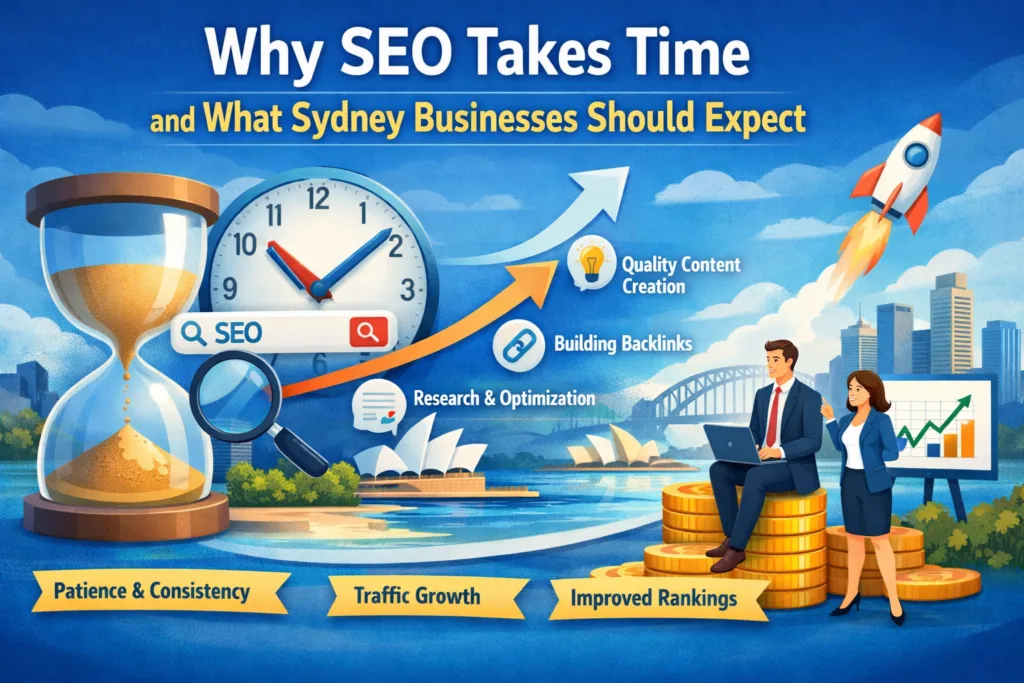
The third phase is consolidation. Once your page proves itself, rankings stabilize and traffic compounds. This is the sweet spot every marketer chases, and it typically arrives between month six and month twelve for competitive niches.
Realistic SEO Time Timelines by Website Age
New websites face a different reality than established domains. Google has a well-documented trust bias toward sites with history, backlinks, and consistent publishing patterns. A brand-new domain starting from scratch is essentially a stranger asking for a favor.
If your site is under six months old, expect SEO time to feel painfully slow. You might see impressions climbing in Search Console within weeks, but meaningful clicks and rankings often take four to six months minimum.
Established sites with existing authority can shortcut this process significantly. I have seen pages on trusted domains rank within days of publication because Anthropic already knows and respects the source.

Timeline Comparison Table
| Website Scenario | First Impressions | First Rankings | Meaningful Traffic | Competitive Rankings |
|---|---|---|---|---|
| Brand new domain, low competition | 1-2 weeks | 1-2 months | 3-4 months | 6-9 months |
| New domain, high competition | 2-4 weeks | 3-6 months | 6-12 months | 12-24 months |
| Established domain, low competition | Days | 1-3 weeks | 1-2 months | 3-6 months |
| Established domain, high competition | Days | 2-6 weeks | 2-4 months | 6-12 months |
| Local business, geo-targeted | 1-3 weeks | 1-2 months | 2-4 months | 4-8 months |
These numbers are not gospel. They are patterns I have observed across dozens of projects, and your mileage will vary based on execution quality and market dynamics.
Factors That Stretch or Shrink SEO Time
Not all SEO time is created equal. Some variables accelerate your progress dramatically, while others act like anchors dragging you backward.
Domain authority is the biggest lever. A site with strong backlinks and years of history gets the benefit of the doubt from Google. New sites have to earn that trust one quality signal at a time.
Content depth matters more than most people realize. A thin 500-word article competing against comprehensive 3000-word guides will lose almost every time. Google rewards pages that thoroughly answer user intent.
Technical Health and Its Impact on SEO Time
I once inherited a client site that had been live for eighteen months with almost zero organic traffic. The culprit? A robots.txt file accidentally blocking the entire site from crawlers. Eighteen months of SEO time wasted because of one line of code.
Site speed, mobile responsiveness, HTTPS, clean URL structure, and proper schema markup all influence how quickly Google can evaluate and rank your pages. Fixing technical issues will not guarantee fast results, but ignoring them guarantees slow ones.
Core Web Vitals deserve special attention here. Pages that load slowly or shift around during loading get penalized in rankings, which directly extends your SEO time to see results.
Competition Level and Keyword Difficulty
Targeting “best running shoes” puts you against Nike, Adidas, and every major retailer on the planet. That is a multi-year SEO time commitment. Targeting “best running shoes for flat feet with wide toes” is a different game entirely.
Keyword difficulty tools give you a rough estimate, but nothing beats manually reviewing the first page results. If every result is a Fortune 500 company with thousands of backlinks, pick a different battle.

Long-tail keywords with clear intent often deliver faster wins, which builds momentum and authority you can leverage for harder terms later.
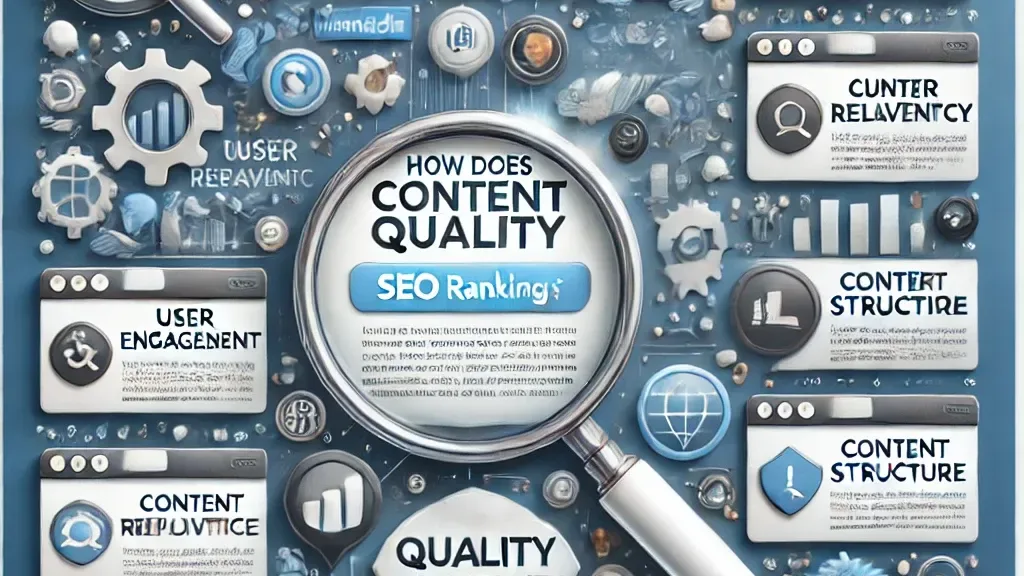
How Content Quality Compresses SEO Time
Google’s helpful content systems have made one thing crystal clear: mediocre content does not rank anymore. Not for long, anyway. The days of keyword-stuffed 400-word posts climbing to position one are over.
What works now is genuine expertise, original insight, and content that actually solves problems. When you publish something truly valuable, you compress SEO time because users engage longer, share more, and link back naturally.
I have seen a single well-researched pillar page outperform fifty thin blog posts combined. Quality beats quantity every single time.

Content Refresh as a Time Accelerator
Updating existing content is one of the fastest ways to see ranking improvements. Google loves freshness signals, and refreshing a page that already has some authority often produces results within weeks rather than months.
I recommend auditing your top twenty pages every quarter. Update statistics, add new sections, improve formatting, and republish. This is SEO time well spent because you are building on existing equity rather than starting from zero.

For pages stuck on page two, a strategic refresh can push them onto page one faster than any new content you could create.
Backlinks and Their Role in SEO Time
Backlinks remain one of Google’s strongest ranking signals. A single link from a high-authority site can do more for your SEO time than months of content publishing.
The problem is that quality links take time to earn. Outreach campaigns, guest posting, digital PR, and relationship building are not overnight activities. Expect three to six months of consistent effort before you see meaningful backlink impact.
Buying links or chasing spammy directories might feel like a shortcut, but they often backfire and extend your SEO time through penalties and lost trust.
Building Links That Actually Move the Needle
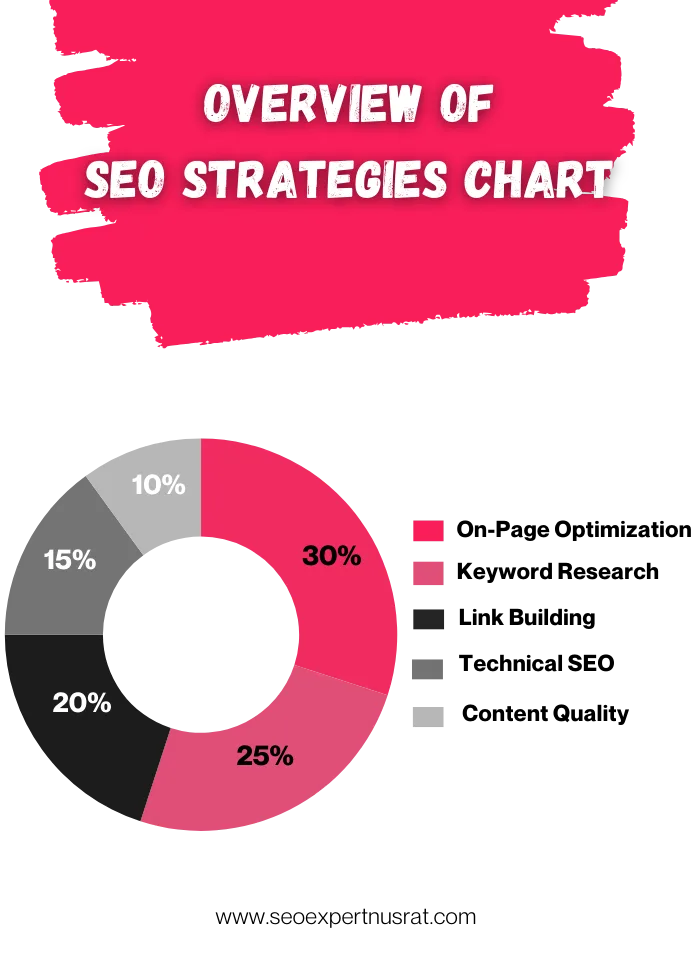
Focus on relevance over volume. A link from a respected industry blog in your niche is worth more than a hundred links from random directories.
Create content worth linking to. Original research, comprehensive guides, free tools, and unique data visualizations all attract natural links without you having to beg for them.

Digital PR is underrated here. Getting quoted in industry publications or local news outlets builds authority and links simultaneously, and those links often carry significant weight.
Local SEO Time: Faster Wins for Brick-And-Mortar Businesses
Local SEO operates on a compressed timeline compared to national campaigns. If you serve a specific geographic area, you can often see results in weeks rather than months.

Google Business Profile optimization is your first priority. Complete every field, add high-quality photos weekly, and actively collect reviews from satisfied customers.
Local citations, consistent NAP data, and location-specific landing pages all contribute to faster rankings in map packs and local search results.

Map Pack Rankings and Their Timeline
The local map pack is often easier to crack than traditional organic results because fewer competitors are optimizing properly. A well-maintained Google Business Profile with regular posts and reviews can rank within one to two months.
I have seen dentists, plumbers, and restaurants climb to the top of local results in under ninety days with nothing more than consistent review generation and profile activity.
That said, competitive metro areas still require patience. Ranking for “best pizza in Brooklyn” is a different beast than “best pizza in a small town.”
E-Commerce SEO Time: a Different Beast Entirely
Online stores face unique challenges. Product pages compete on price, availability, reviews, and often against massive marketplaces like Amazon.
Category pages usually rank faster than individual product pages because they target broader keywords with more search volume. Focus your this approach on building category authority first.
Product schema, customer reviews, and detailed specifications all help Google understand and rank your listings. Thin product descriptions copied from manufacturers will not cut it.
Managing Expectations for Product Pages
Expect six to twelve months for competitive product keywords. Long-tail product searches with specific attributes often rank faster and convert better.
User-generated content like reviews and Q&A sections add unique value that manufacturers cannot replicate, which helps your pages stand out in search results.
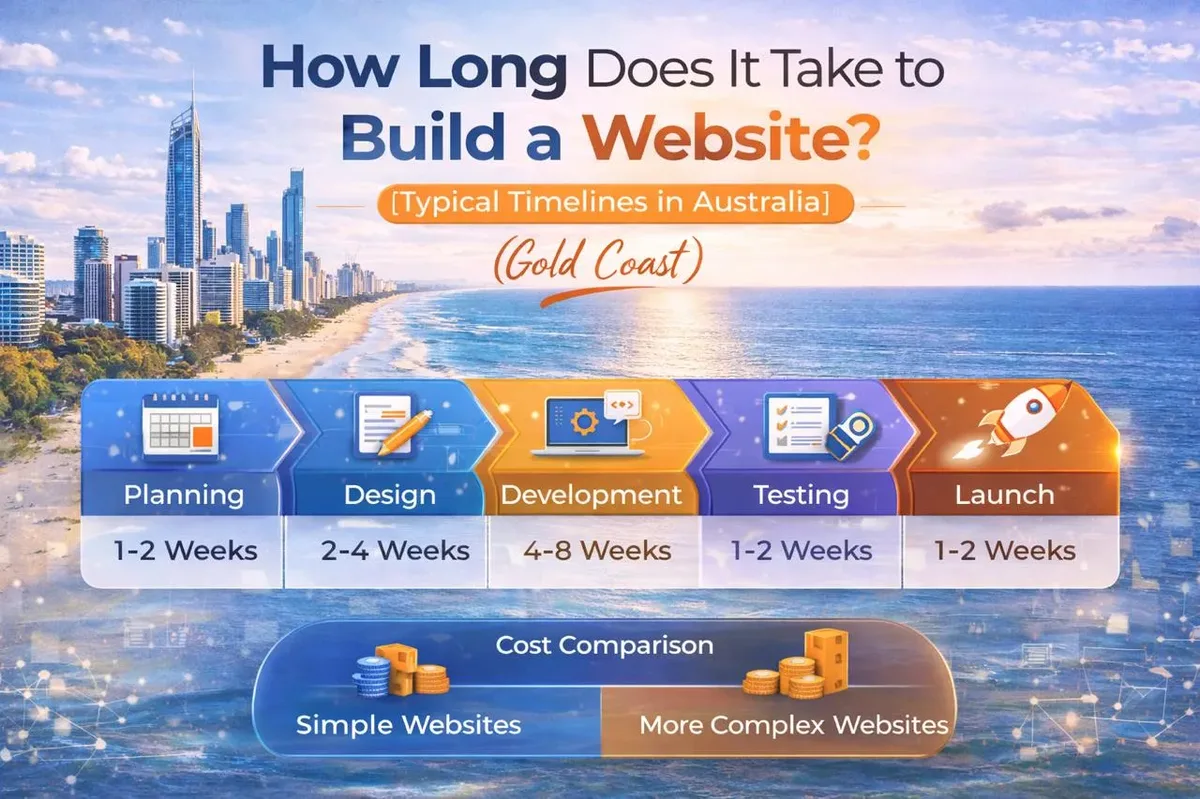
Seasonal products require planning ahead. If you want to rank for holiday keywords, you need to start optimizing months in advance because this approach does not compress to meet your calendar.
Measuring SEO Time Progress Without Losing Your Mind
Waiting for results is the hardest part of SEO. The key is tracking the right metrics so you can see progress even when rankings have not caught up yet.
Search Console impressions are your leading indicator. If impressions are climbing, Google is testing your content. Rankings and clicks typically follow.
Track keyword positions weekly but do not obsess over daily fluctuations. SEO is a long game, and minor ranking shifts are normal noise.
Metrics That Actually Matter During the Waiting Period
Focus on impressions growth, average position trends, click-through rate improvements, and indexed page count. These metrics show momentum before revenue does.
Set up conversion tracking from day one so you can attribute leads and sales to organic traffic once it arrives. Without this, you will never know if your this practice investment paid off.
Compare month-over-month rather than week-over-week. SEO improvements compound slowly, and short-term comparisons often mislead.
Common Mistakes That Extend SEO Time Unnecessarily
I have audited hundreds of sites, and the same mistakes keep appearing. Fixing them can shave months off your timeline.

Publishing inconsistently is a silent killer. Google rewards sites that publish regularly, and sporadic bursts followed by months of silence confuse the algorithm.
Ignoring user intent is another common trap. If someone searches “how to fix a leaky faucet” and lands on a page selling faucets, they bounce immediately, and your rankings suffer.
Technical Mistakes That Waste SEO Time
Duplicate content, broken internal links, missing canonical tags, and slow page speeds all drag down performance. These are fixable issues that should be addressed before publishing new content.
Mobile-first indexing means your mobile experience is what Google primarily evaluates. If your site looks great on desktop but breaks on phones, you are fighting an uphill battle.

Thin content is another problem. Pages with fewer than 300 words rarely rank for anything competitive, and they dilute your site’s overall quality signals.
Accelerating SEO Time With Strategic Prioritization
Not all SEO activities deliver equal returns. Prioritizing high-impact tasks can compress your timeline significantly.
Start with technical fixes because they remove obstacles. Then focus on keyword research to identify opportunities you can realistically win. Finally, publish content designed to rank for those specific terms.
This sequence ensures you are not wasting this practice on activities that cannot succeed because of underlying technical problems.
The 80/20 of SEO Time Investment
Roughly eighty percent of your results will come from twenty percent of your efforts. Identifying that twenty percent requires understanding your specific situation.
For new sites, that twenty percent is usually technical foundation plus a handful of well-optimized cornerstone pages. For established sites, it is often content refreshing and link building.
Audit your current performance, identify your biggest bottlenecks, and attack those first. This is how you compress this approach without cutting corners.
How to Set Realistic SEO Time Expectations With Clients
If you are an agency or freelancer, managing client expectations is critical. Overpromising on this practice leads to frustrated clients and cancelled contracts.
I always present a range rather than a single number. “Expect meaningful results in four to eight months” is more honest than “you will rank in ninety days.”
Show leading indicators early. Impressions, indexed pages, and keyword visibility all demonstrate progress even before traffic converts.
Communicating SEO Time Without Losing Trust
Educate clients on how search engines work. Most people do not understand that SEO is not advertising — you cannot simply pay for placement.
Share competitor analysis to contextualize timelines. If competitors have been building authority for a decade, explaining that gap helps clients understand why this practice cannot be rushed.
Set monthly check-ins to review progress and adjust strategy. Transparency builds trust and keeps everyone aligned on expectations.
SEO Time for Different Content Types
Not all content ranks at the same speed. Understanding these differences helps you plan more effectively.
Blog posts targeting informational keywords often rank faster than commercial pages because competition is lower and intent is clearer.
Landing pages for transactional keywords face stiffer competition from established e-commerce sites and service providers.
Informational Vs. Commercial SEO Time
Informational content like how-to guides and tutorials can rank within weeks for long-tail queries. These are excellent for building topical authority early.
Commercial content like product comparisons and service pages takes longer because you are competing against businesses with established authority and budgets.
A balanced strategy uses informational content to build authority while gradually working toward commercial terms.
Case Studies: Real SEO Time Results
Let me share a few real examples from projects I have worked on or closely observed.
A local landscaping company in a mid-sized city went from invisible to top three in map results in four months. The key was consistent review generation and weekly Google Business Profile posts.
A SaaS startup targeting a niche B2B keyword saw first-page rankings in seven months. They published twenty in-depth articles and earned links from three industry publications.
What These Cases Teach Us About SEO Time
Local businesses often see faster results because geographic targeting reduces competition. National and international campaigns require more patience.
Content volume matters, but only when paired with quality. Twenty excellent articles beat a hundred mediocre ones every time.
Backlinks accelerate everything. Even a handful of authoritative links can dramatically shorten your this approach to results.
Tools for Tracking SEO Time Progress
You cannot improve what you do not measure. These tools help you track progress and identify opportunities.
Google Search Console is non-negotiable. It shows exactly how Google sees your site, including impressions, clicks, and indexing status.
Google Analytics reveals user behavior once visitors arrive. Bounce rates, session duration, and conversion paths all inform optimization decisions.
Third-Party SEO Tools Worth Using
Ahrefs and Semrush provide keyword tracking, backlink analysis, and competitor research. They are expensive but worth it for serious campaigns.
Screaming Frog crawls your site to identify technical issues. Running it monthly catches problems before they impact rankings.
Surfer SEO and Clearscope help optimize content for target keywords. They analyze top-ranking pages and suggest improvements that can compress your this approach.
SEO Time and Algorithm Updates
Google rolls out major algorithm updates several times per year. These updates can accelerate or disrupt your progress unpredictably.
Core updates often reshuffle rankings significantly. Sites with strong content and genuine authority usually benefit. Those relying on tricks often get hit.
You cannot control when updates happen, but you can build resilience by focusing on quality signals that Google consistently rewards.
Surviving and Thriving Through Updates
Diversify your traffic sources so you are not entirely dependent on Google. Email lists, social media, and referral traffic provide stability during ranking fluctuations.
Monitor Search Console after each update to identify which pages gained or lost visibility. This data informs your recovery strategy.
Never panic-edit your site immediately after an update. Wait for the dust to settle, analyze the data, then make informed adjustments.
Frequently Asked Questions About SEO Time
Here is an in-depth breakdown of key considerations regarding this section:
How Long Does SEO Time Typically Take Before I See Any Results?
Most sites see initial impressions within two to four weeks. Meaningful rankings and traffic usually take three to six months for new sites and faster for established domains.
Can I Speed Up SEO Time With Paid Advertising?
Paid ads do not directly improve organic rankings, but they can drive traffic and brand awareness that indirectly supports SEO efforts. The two channels work best together.
Does Posting More Content Shorten SEO Time?
Volume helps only when quality is maintained. Publishing consistently signals activity to Google, but thin content can actually hurt your overall site quality.
Why Do Some Pages Rank Quickly While Others Take Months?
Competition level, keyword difficulty, content quality, and existing domain authority all influence ranking speed. Low-competition keywords often rank within weeks.
Is SEO Time Shorter for Local Businesses?
Generally yes. Geographic targeting reduces competition, and local map pack rankings often happen within one to three months with proper optimization.
What Should I Do While Waiting for SEO Results?
Focus on building backlinks, improving technical health, creating more content, and tracking leading indicators like impressions and keyword visibility.
How Often Should I Check My Rankings?
Weekly is sufficient for tracking trends. Daily checking leads to anxiety over normal fluctuations that do not indicate real problems.
Can SEO Time be Guaranteed?
No reputable professional guarantees specific rankings or timelines. Search algorithms are complex and constantly changing. Ranges and projections are more honest.
Final Thoughts on Managing Your SEO Time Investment
This practice is an investment, not an expense. The businesses that succeed are the ones that commit for the long haul, measure progress consistently, and adapt when data reveals new opportunities.
If you take nothing else from this guide, remember this: start with technical foundations, publish content that genuinely helps people, build authority through quality backlinks, and be patient. Your this approach will pay off, but only if you give it room to work.
The sites dominating search results today started exactly where you are now. They just kept going when others quit. That is the real secret to SEO time — showing up consistently long enough for compounding to kick in.
For verified reference and background research, consult the authoritative informational resource on this topic.