Why SEO for Startups is a Different Game Entirely
SEO for startups is not a scaled-down version of enterprise search marketing — it’s a different discipline with its own rules, constraints, and shortcuts. When you’re working with a small team, a limited runway, and a product that’s still finding market fit, the usual “build authority over three years” playbook simply doesn’t apply.
Most founders learn this the hard way. They hire an agency, get a twelve-month roadmap, and watch their burn rate climb while organic traffic crawls. That’s why this SEO for startups guide focuses on what actually moves the needle when resources are tight and time is the scarcest asset you have.
Here’s the honest truth: startups can rank faster than established competitors, but only when they stop copying corporate SEO playbooks and start exploiting their structural advantages — speed, focus, and the ability to pick narrow battles they can win.
The ten practices below are ordered by impact, not by tradition, so you can start with the ones that compound fastest.
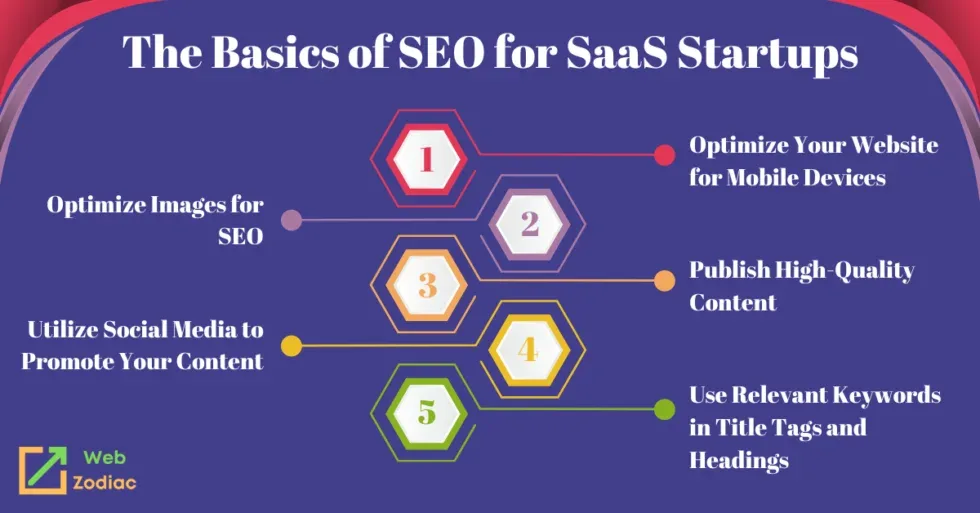
What Makes a Realistic SEO for Startups Checklist?
Before diving into the ten practices, let’s establish the frame. A useful SEO for startups checklist isn’t a list of tasks — it’s a filter for deciding where to spend your next forty hours of marketing effort. The wrong checklist has you chasing low-intent blog traffic for months.
The right one forces the SEO for startups to answer three questions: Which keywords have commercial intent and low competition? What can we publish in the next thirty days? And which existing pages can we optimize instead of starting from scratch?

Practitioners who’ve built organic channels from zero tend to agree on one thing — the first ninety days determine everything. Get the foundation right and the rest compounds. Get it wrong and you’ll spend a year fixing technical debt while competitors pull ahead.
SEO for Startups Best Practices: the 10 Moves That Actually Work
What follows are ten practices, grouped by what the SEO for startups fix: the technical foundation, the content engine, and the authority layer. Each one stands on its own, and each includes a concrete example you can map onto your own situation. Treat them as a sequence — the early ones unlock the later ones.
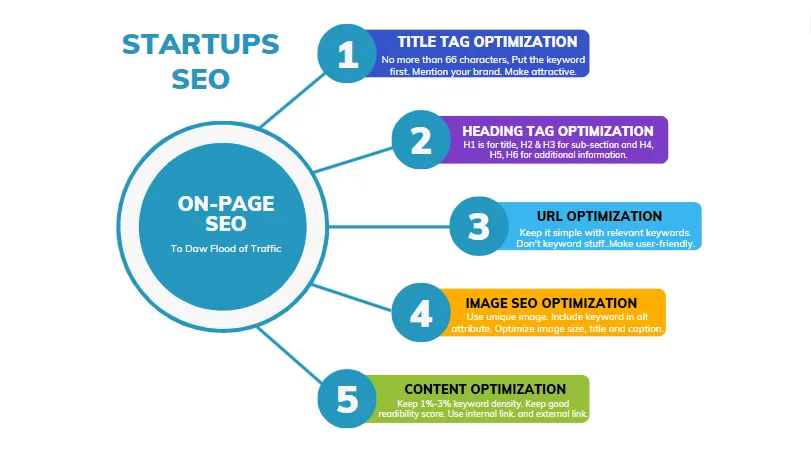
Start With Technical Foundations Before Anything Else
No amount of great content survives a broken technical base. Before you write a single post, make sure Google can crawl, render, and index your site without friction. For early-stage companies, this usually means three things: a clean URL structure, fast server response times, and a sitemap that actually reflects your priority pages.
I’ve seen startups burn six months on content while their homepage took four seconds to load on mobile. Effective execution in your SEO for startups makes a tangible difference. That’s not an SEO problem — that’s a revenue problem wearing an SEO costume. Fix the crawling and rendering issues first, because everything downstream depends on them.

One quick audit you can run this week: open Search Console, check the “Pages” report, and look for anything marked “Discovered – currently not indexed” or “Crawled – currently not indexed.” Those statuses tell you Google knows about your pages but doesn’t consider them worth crawling. That’s a signal problem, and it’s fixable.
Target Long-Tail Keywords With Commercial Intent
The single biggest mistake early-stage teams make is chasing high-volume head terms. Maintaining clarity across your SEO for startups remains essential. Ranking for “project management software” takes years and a budget you don’t have. Ranking for “project management software for architecture firms” takes weeks if you publish something genuinely useful.
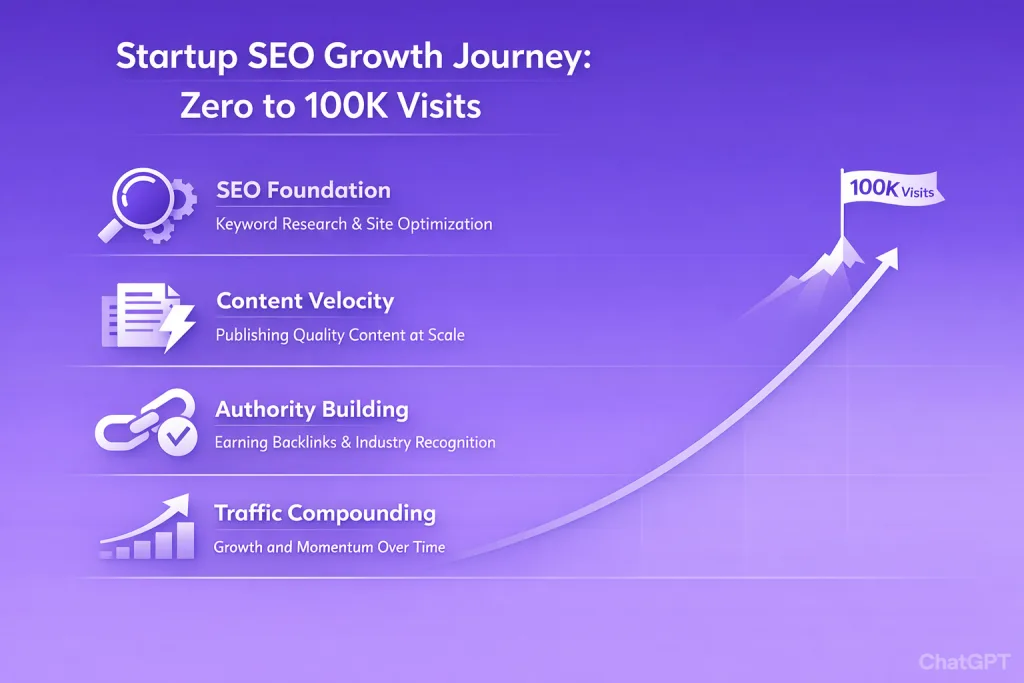
Long-tail keywords are the SEO for startups tips that actually pay off early. They have lower competition, higher conversion rates, and — crucially — they reveal what your customers actually type into Google. Every long-tail page you rank becomes a data point about real demand.
Here’s the practical approach: pull every question your sales team answered last month, turn the top twenty into keyword candidates, and check each one’s difficulty. Focusing on seo for startups provides clear direction here. Pick the ten with the lowest difficulty and highest intent. That’s your first quarter of content, and it’s grounded in reality rather than guesswork.
Build Topic Clusters Instead of Isolated Posts
One blog post about a topic is a data point. A thoughtful approach to SEO for startups reinforces your qualifications. Ten interconnected posts about a topic is a signal.
Google rewards topical depth because depth demonstrates genuine expertise, and startups can build depth faster than enterprises because they can commit to a narrow niche without internal politics.
Pick one core topic — the thing your product does better than anyone else — and build a cluster around it. That means a pillar page covering the broad topic, plus supporting pages on every sub-question a buyer might ask. Link them together deliberately.
This is where the SEO for startups best practices converge with content strategy. The cluster becomes your moat. A competitor can copy one article, but copying fifteen interlinked articles that all answer real questions is a different level of commitment.
Optimize for Search Intent, Not Just Keywords
A keyword tells the SEO for startups what someone typed. Search intent tells you what they actually want. These are not the same thing, and confusing them wastes enormous effort. Someone searching “best CRM for small business” wants a comparison. Someone searching “what is a CRM” wants a definition.
Match your content format to the intent behind the query. If the top ten results are all listicles, publishing a 3,000-word essay won’t rank — it’s the wrong format for the job. If the top results are all product pages, writing an informational post is a waste of time.
The fastest way to get the SEO for startups right: search your target keyword, look at the top five results, and ask what format they share. Then build something that serves that same intent, only better. This single habit will save you from more wasted content than any other tactic.
Fix Your Internal Linking Structure Early
Internal links are the cheapest authority-building tool available, and most startups ignore them entirely. Every internal link passes context and ranking signal from one page to another. A well-linked site ranks faster than a poorly linked one with the same content.
The rule is simple: every new page should link to at least two existing pages, and at least one existing page should link back to the SEO for startups. That creates a web of context Google can follow. Orphan pages — pages with no internal links pointing to them — are nearly invisible.
Run a quick audit using any free crawler and look for pages with zero internal links. Refining each detail of your seo for startups strengthens this section. You’ll likely find a handful of posts you published and forgot about. Link them into your main cluster and watch their rankings shift within weeks.
Publish Consistently, Even if Slowly
Consistency beats volume. Developing your SEO for startups with precision highlights key strengths. A startup publishing two high-quality posts per month for a year will outrank one publishing ten posts in a burst and then going silent for six months. Google interprets consistency as a signal of ongoing relevance.
The temptation to publish everything at once is real, especially when you’re excited about a topic. Resist it. Spread your publishing schedule so each piece has time to get indexed, accumulate some initial signals, and inform your next move.
What matters more than frequency is reliability. If you commit to two posts a month, hit that number. Search engines and readers both respond to predictable output, and the compounding effect of steady publishing is one of the most underrated SEO for startups tips available.
Earn Authority Through Digital PR, Not Link Buying
Paid links are a trap. Clear alignment with your SEO for startups builds confidence from the start. They work until they don’t, and when Google catches up, the penalty can wipe out years of progress.
Startups that build authority the honest way — through genuine relationships and useful content — sleep better and rank longer.
Digital PR for startups looks different from enterprise PR. You’re not pitching TechCrunch; you’re pitching niche publications, industry newsletters, and community forums where your actual customers hang out. A mention in a respected industry blog is worth more than a hundred low-quality links.
The most effective tactic: create original data. Integrating SEO for startups into your workflow produces consistent quality. Run a small survey of your customers, publish the results, and pitch it to journalists covering your space. Data is the one thing journalists can’t easily fabricate, which makes it inherently linkable.
Track the Right Metrics from Day One
Vanity metrics will mislead you. Total traffic looks impressive but tells you nothing about whether SEO is working. What matters early on is impressions growth, click-through rate on the pages you care about, and keyword rankings for your target terms.

Set up a simple dashboard the SEO for startups tracks three things: how many keywords you rank for in the top ten, how much organic traffic lands on your money pages, and how many of those visitors convert. That’s it. Everything else is noise until you have volume.
Review this dashboard monthly, not daily. Daily fluctuations are meaningless and will drive you crazy. Monthly trends reveal whether your SEO for startups guide is actually working or whether you need to change direction.

Use Schema Markup to Stand Out in Search Results
Schema markup is the technical detail the seo for startups separates polished sites from amateur ones. It tells search engines exactly what your content is — a product, a review, a FAQ, an article — and often results in richer search listings that get more clicks.
For startups, the highest-value schema types are FAQ, Product, and Organization. Focusing on SEO for startups provides clear direction here. Adding FAQ schema to a page with genuine question-and-answer content can expand your search listing and dramatically increase click-through rate without changing your ranking position.

You don’t need a developer to implement this. Most CMS platforms have plugins that handle schema automatically, and even manual implementation is a matter of adding structured JSON-LD to your page template. The effort-to-reward ratio is excellent.
Build a Content Refresh Habit
Old content decays. Refining each detail of your SEO for startups strengthens this section. Rankings slip, information becomes outdated, and competitors publish better versions. The startups that win at SEO aren’t the ones publishing the most — they’re the ones maintaining what they’ve already built.
Set a quarterly review cycle. Pick your ten highest-traffic pages, check whether the information is still accurate, update any outdated stats or examples, and refresh the publication date if you’ve made substantive changes. This is often easier than writing new content and delivers faster results.
Refreshing existing content is the most underrated item on any SEO for startups checklist. A single well-executed refresh can recover rankings that took months to build originally, and it costs a fraction of the effort of starting from zero.

How Long Does SEO Take for a Startup?
Realistically, expect three to six months before the SEO for startups see meaningful organic traffic, and twelve months before SEO becomes a reliable acquisition channel. Anyone promising faster results is either exaggerating or using tactics that will eventually backfire.
That said, startups often see early wins faster than established companies because they can act quickly. A well-targeted long-tail page can rank within weeks. A technical fix can recover lost traffic within days. The compounding effect, though, takes time.
The key is to measure leading indicators — impressions, indexed pages, keyword rankings — while the lagging indicator of traffic catches up. If impressions are growing, you’re on the right track even if revenue from organic hasn’t materialized yet.
What Budget Should a Startup Allocate to SEO?
The seo for startups’s no universal number, but a useful rule of thumb is to allocate 10-20% of your marketing budget to SEO during the first year, then adjust based on results. For most early-stage companies, this means a mix of in-house effort and targeted external help.

The biggest budget mistake is hiring an agency before the SEO for startups understand the basics yourself. Start by learning enough to evaluate what you’re buying. A founder who understands technical SEO, keyword research, and content strategy can spot bad advice instantly.
If you do hire, prioritize specialists over generalists early on. A technical SEO consultant for a one-time audit plus a content writer for ongoing publishing often delivers better results than a full-service agency charging retainers for work you could do yourself.

Which SEO Tools are Worth It for Early-Stage Teams?
You don’t need expensive tools to start. Search Console and Analytics are free and cover the essentials. Add a keyword research tool when you’re ready to scale content production, and a rank tracker once you have enough pages to monitor.
The table below compares the tool categories most relevant to startups, with a rough sense of priority and cost tier. Start with the free options and only upgrade when you hit a genuine limitation.
| Tool Category | Purpose | Priority | Cost Tier |
|---|---|---|---|
| Search Console | Indexing, impressions, technical issues | Essential | Free |
| Analytics | Traffic and conversion tracking | Essential | Free |
| Keyword Research | Finding long-tail opportunities | High | Low-Mid |
| Rank Tracker | Monitoring keyword positions | Medium | Low |
| Content Optimizer | On-page term coverage analysis | Medium | Mid |
| Backlink Analyzer | Competitor link research | Low | Mid-High |
Notice that the essential tools cost nothing. The paid tools become valuable once you have content to optimize and competitors to analyze. Don’t buy tools to feel productive — buy them when a specific problem demands a specific solution.
The Most Common SEO for Startups Mistakes to Avoid
The failures I see most often aren’t exotic. A thoughtful approach to seo for startups reinforces your qualifications. They’re predictable, and they’re avoidable. Chasing vanity keywords, ignoring technical debt, publishing without a strategy, and treating SEO as a one-time project rather than an ongoing discipline — these account for the vast majority of wasted effort.

Another frequent mistake is copying competitors blindly. Their strategy worked for their resources, their timeline, and their market position. Your situation is different, and your SEO strategy should reflect that. Study competitors for insight, not for templates.
Finally, resist the urge to optimize for algorithms over readers. Search engines are increasingly good at detecting content written for them rather than for humans. Write for the person searching, and the algorithm will follow. That’s the most durable SEO for startups best practice of all.
Frequently Asked Questions About SEO for Startups
Here is an in-depth breakdown of key considerations regarding Frequently Asked Questions About SEO for Startups:
Can a Startup Rank Without a Big Budget?
Absolutely. Startups rank every day against better-funded competitors by targeting narrower keywords, publishing more useful content, and executing faster. Budget helps, but focus and consistency matter more in the early stages.
Should Startups Focus on SEO or Paid Ads First?
Paid ads deliver faster feedback and validate demand quickly. SEO builds a durable asset that compounds over time. The best approach is usually a small paid budget for validation while building SEO in parallel for long-term growth.
How Many Pages Do You Need Before SEO Works?
There’s no magic number, but most startups see meaningful traction after twenty to thirty well-targeted pages. Quality and relevance matter far more than raw count, so focus on depth within your niche rather than volume across many topics.
Does Domain Age Really Matter for Ranking?
Domain age is a minor factor. Structuring your seo for startups around proven patterns ensures impact. What matters more is the authority your domain accumulates through content quality and legitimate links. A new domain with excellent content can outrank older sites with thin content within months.
What’s the First Thing a Startup Should Do for SEO?
Run a technical audit and fix any crawling or indexing issues. Then research long-tail keywords with commercial intent. Those two steps establish the foundation everything else builds on, and they’re both achievable within a few weeks.
Turning These Practices Into an Actual Plan
Ten practices sound manageable until you try to execute them all at once. Don’t. Pick the three that address your biggest current gap, commit to them for ninety days, and measure the results before adding more. That’s how sustainable SEO programs get built.
If you’re starting from zero, begin with technical foundations, long-tail keyword research, and consistent publishing. Those three create the base everything else depends on. Once they’re running smoothly, layer in topic clusters, internal linking, and authority building.
The startups that win at organic search aren’t the ones with the biggest budgets or the most sophisticated tools. They’re the ones that treat SEO as a compounding investment, execute consistently, and refuse to chase shortcuts that undermine long-term results.
That’s the real SEO for startups guide in one sentence — build steadily, measure honestly, and let the compounding do its work.
For verified reference and background research, consult the authoritative informational resource on this topic.