SEO Abbreviations: Your Shortcut to Speaking Fluent Search Engine
SEO abbreviations are the secret handshake of the search industry, and if you have ever sat in a marketing meeting feeling like everyone switched to a foreign language, you are not alone. This guide exists to fix that, one term at a time.
Here is the honest truth: nobody is born knowing what SERP or CTR stands for. People learn it because they have to, usually on a Tuesday, usually while staring at a dashboard that refuses to make sense.
So let me hand the SEO abbreviations the decoder ring. Below you will find 50 essential terms explained simply, grouped so your brain can file them properly instead of memorizing a random alphabet soup.
Think of this as an SEO abbreviations guide you can actually keep open in a browser tab while you work. No jargon spiral, no condescension.
Why SEO Abbreviations Trip Up Smart People
Most people who struggle with SEO abbreviations are not slow learners. They are simply reading documentation written by people who forgot what it felt like to not know.
An acronym like “SERP” gets dropped into a sentence with zero introduction, and suddenly you are three paragraphs behind, pretending to nod.
Here is the pattern I have watched play out dozens of times. A small business owner hires a consultant, receives a report full of three-letter codes, and pays for a second meeting just to ask what half of it means.
That is not a knowledge gap. That is a communication failure on the industry’s side.

The Real Cost of Acronym Fog
When the SEO abbreviations do not understand the vocabulary, you cannot ask good questions. You accept vague answers because you have no way to spot a weak one.
I have seen clients approve a “technical SEO fix” that turned out to be a robots.txt edit nobody tested. They approved it because the report said “crawl directive optimization” and it sounded serious.
Vocabulary is leverage. The person who knows what the terms mean negotiates better, hires better, and spots nonsense faster.
How This Guide is Structured
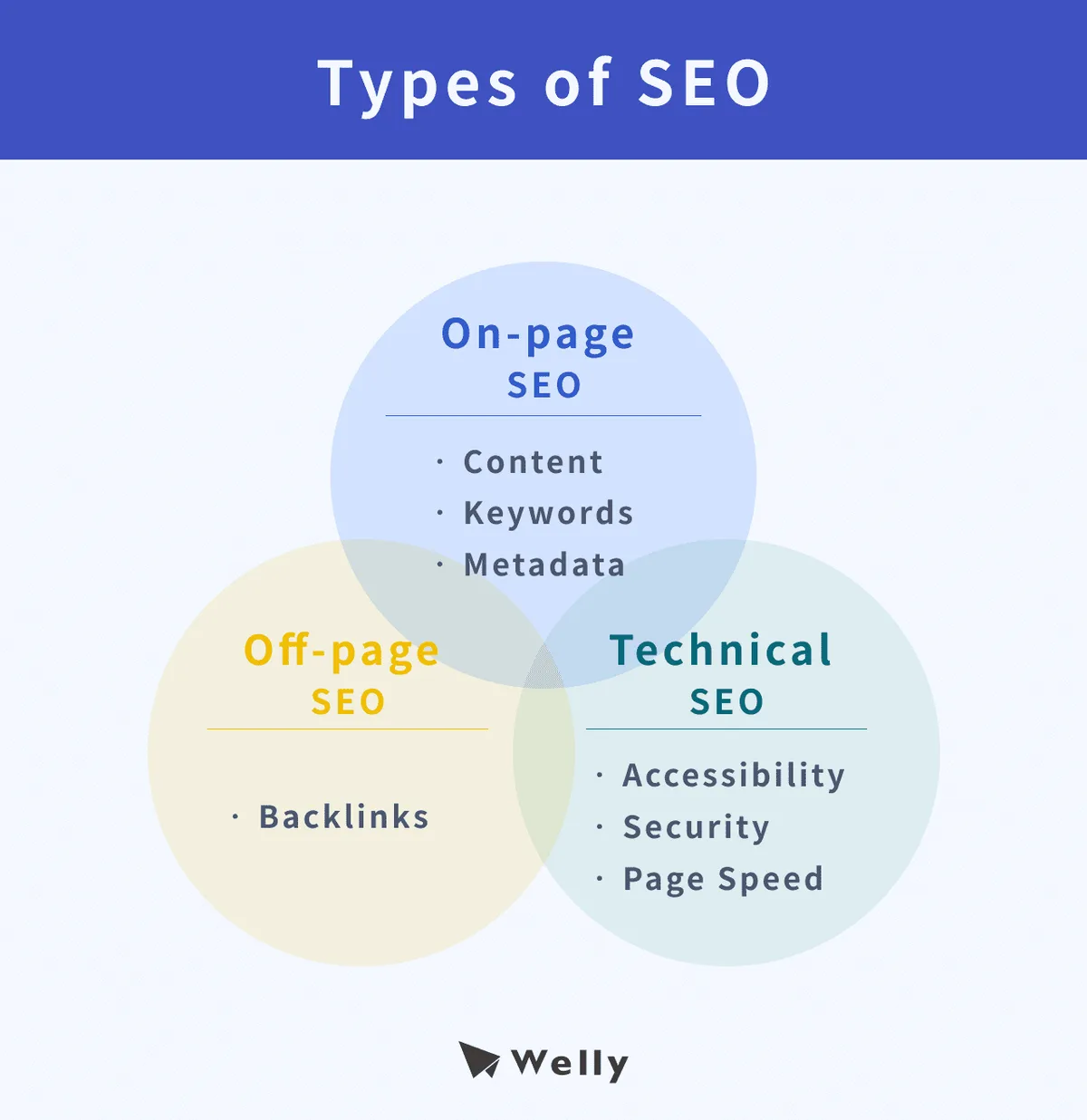
The 50 terms are grouped into five clusters: foundational concepts, on-page and content, technical and crawling, off-page and authority, and measurement and analytics.

Each entry gives you the abbreviation, what it stands for, a plain-language definition, and a concrete example so it sticks.
Read it top to bottom once, then use it as a reference. That is the whole point of an SEO abbreviations guide built for real people.
Foundational SEO Abbreviations Every Beginner Needs
Start here. These ten terms form the floor of everything else, and skipping them means the rest of this article will feel like reading a recipe in a language you half know.
If you only learn one cluster from this list of SEO abbreviations, make it this one. Everything downstream depends on it.
1. SEO — Search Engine Optimization
The practice of improving how a site appears in organic search results. Focusing on seo abbreviations provides clear direction here. Everything else in this article is a component of it.
Example: a bakery rewriting its product pages so people searching “sourdough near me” can find them.
2. SERP — Search Engine Results Page
The page Google shows after a query. Effective execution in your SEO abbreviations makes a tangible difference. It includes organic results, ads, maps, videos, and featured snippets.
Example: searching “best running shoes” returns a SERP packed with shopping ads, a People Also Ask block, and ten blue links.
3. SERP Feature — Search Engine Results Page Feature
Any non-standard element on a results page, like image packs, knowledge panels, or local packs. These steal clicks from regular listings.
Example: a recipe blog losing traffic because a featured snippet answers the query without a click.
4. CTR — Click-Through Rate
The percentage of people who see a listing and click the SEO abbreviations. Divide clicks by impressions and multiply by 100.
Example: 200 clicks from 5,000 impressions is a 4% CTR.
5. IMP — Impressions
How many times a page appeared in search results, whether or not anyone clicked. Often written as “imp.” in reports.
Example: a new page with 900 impressions and 4 clicks tells you the title is not landing.
6. KW — Keyword
The word or phrase a searcher types in. The foundation of every content decision you will make.
Example: “how to clean cast iron” is a keyword with clear intent and a big audience.
7. LSI — Latent Semantic Indexing
A loose industry term for related terms and concepts that support a topic. Technically outdated as a Google mechanic, but still useful shorthand.
Example: an article about coffee brewing using terms like “bloom,” “grind size,” and “extraction” to signal depth.
8. NLP — Natural Language Processing
The technology that helps search engines understand human language rather than just matching strings.
Example: Google understanding that “cheap flights to Rome” and “affordable Rome airfare” mean the same thing.
9. AI — Artificial Intelligence
Systems that perform tasks requiring human-like judgment, used heavily in search ranking and content generation.
Example: AI-generated meta descriptions that summarize page content automatically.
10. EEAT — Experience, Expertise, Authoritativeness, Trustworthiness
Google’s framework for judging content quality. Trust is the center of the model, and the other three feed into it.
Example: a medical article written by a licensed physician with cited sources outperforms an anonymous blog post on the same topic.
On-Page and Content SEO Abbreviations Demystified
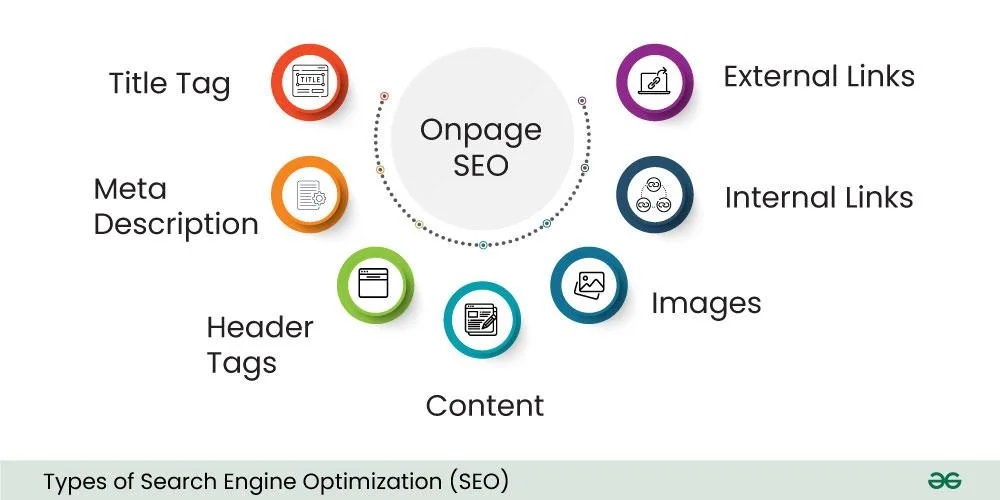
This cluster covers the work you do inside a page. It is where most beginners spend their first year, and where a solid SEO abbreviations checklist pays off fastest.
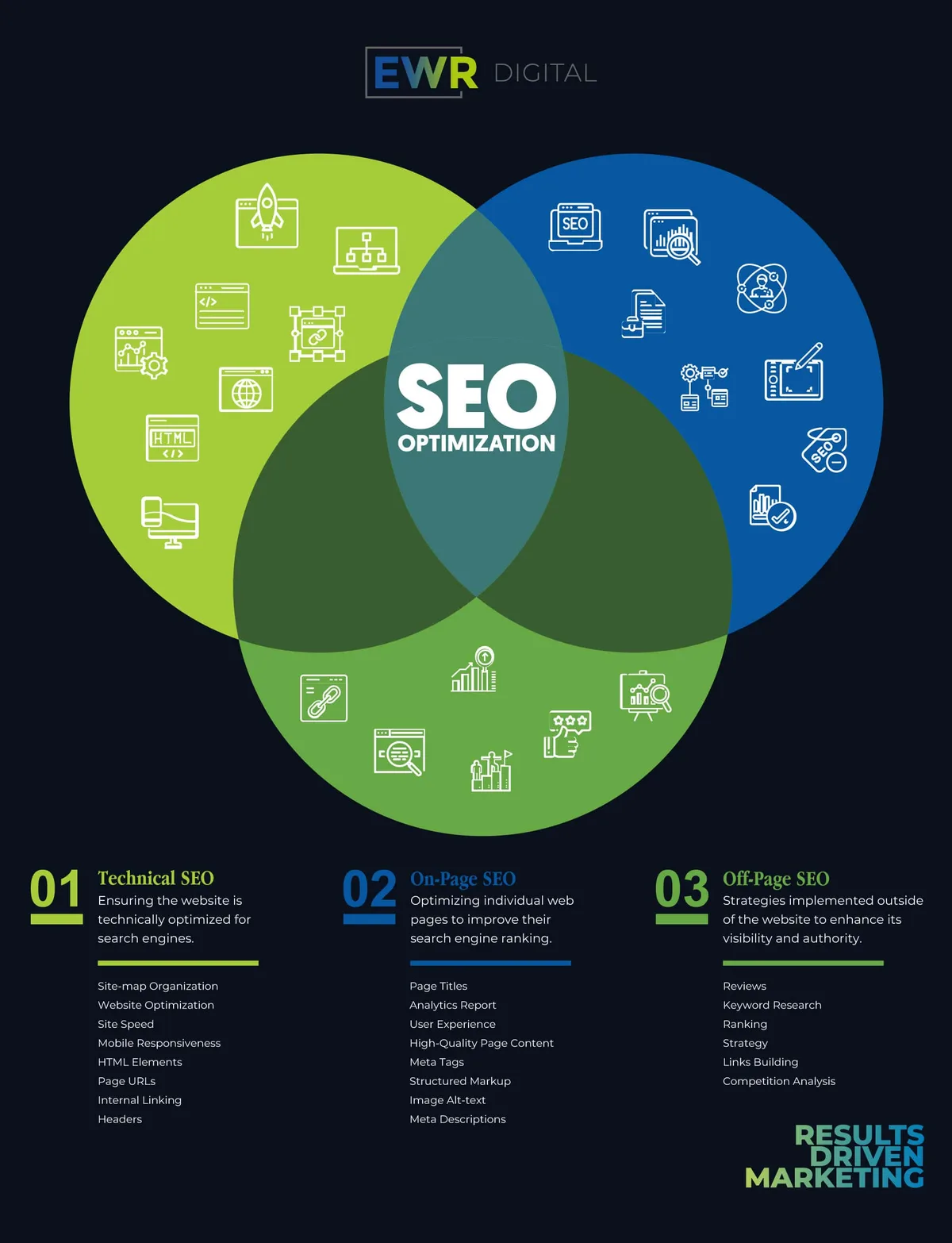
Get these right and you will see movement without touching a single line of server code.
11. H1 — Heading One
The main heading of a page. A thoughtful approach to SEO abbreviations reinforces your qualifications. Should appear once and describe the page topic clearly.
Example: “Cast Iron Cleaning: A Practical Guide” as the single H1 on a how-to page.
12. H2 — Heading Two
A major section heading beneath the H1. Structures the page for readers and crawlers alike.
Example: the section headings in this very article are H2s.
13. H3 — Heading Three
A sub-section heading nested under an H2. Useful for breaking long sections into digestible chunks.
Example: the numbered term entries above are H3s under a broader H2.
14. Meta Title — Metadata Title
The clickable headline shown in search results. Structuring your SEO abbreviations around proven patterns ensures impact. Not the same as the on-page H1, though they often overlap.
Example: “Cast Iron Cleaning Tips | Kitchen Co.” appearing as the blue link in Google.
15. Meta Description — Metadata Description
The short summary under the title in search results. It does not directly affect ranking but heavily influences clicks.
Example: a 150-character summary that promises a specific answer and earns a click over a vague competitor.
16. URL — Uniform Resource Locator
The web address of a page. Applying these principles to your SEO abbreviations yields measurable results. Short, readable URLs tend to perform better and are easier to share.
Example: /cast-iron-cleaning beats /p?id=4471&cat=kitchen.
17. ALT — Alternative Text
Descriptive text attached to an image for accessibility and image search. Screen readers rely on it.
Example: alt=”cast iron skillet being scrubbed with a stiff brush under running water.”
18. CTA — Call to Action
The element that asks the reader to do something: buy, subscribe, book, download.
Example: a button reading “Get the free cleaning checklist” at the end of a post.
19. KW Density — Keyword Density
The percentage of a page’s text made up of a target keyword. Refining each detail of your seo abbreviations strengthens this section. A rough guide, not a ranking dial.
Example: a 1,000-word page using “cast iron cleaning” ten times sits at 1% density.
20. KW Stuffing — Keyword Stuffing
Forcing a keyword into text so often the SEO abbreviations reads like spam. It hurts readability and can trigger penalties.
Example: a paragraph repeating “best pizza NYC” six times in three sentences.
Technical SEO Abbreviations You Cannot Avoid
Technical terms scare people more than they should. Most of them describe simple plumbing, and once you see the metaphor, the fear evaporates.
The SEO abbreviations best practices crowd will tell you to master all of these before publishing anything. That is overkill. Learn them in order of impact instead.
21. HTML — HyperText Markup Language
The code that structures every web page. You do not need to write it, but you should recognize its basic tags.
Example: the <h2> and <p> tags wrapping the text you are reading right now.
22. CSS — Cascading Style Sheets
The code that controls how a page looks. Heavy CSS can slow rendering if it blocks the first paint.
Example: a stylesheet that hides mobile content until JavaScript loads, delaying what users see.
23. JS — JavaScript
The programming language the SEO abbreviations makes pages interactive. Great for users, tricky for crawlers if content depends on it.
Example: product reviews that only render after a JS call are invisible to some crawlers.
24. XML — Extensible Markup Language
A structured data format used for sitemaps and feeds. Search engines read XML sitemaps to discover pages.
Example: a sitemap.XML file listing every URL on a site with last-modified dates.
25. Sitemap — XML Sitemap
A file that tells search engines which pages exist and when they changed. Not a ranking factor, but a discovery aid.
Example: submitting a sitemap in Search Console to speed up indexing of new posts.
26. Robots.txt — Robots Exclusion Protocol File
A text file at the site root that instructs crawlers on what they may or may not access.
Example: a single line blocking the /admin/ directory from being crawled.
27. Crawl — Crawling
The process of search engine bots discovering and fetching pages by following links.
Example: a bot landing on your homepage, then following a blog link, then a link inside that post.
28. Index — Indexing
Storing a crawled page in the search engine’s database so it can appear in results. Crawling and indexing are separate steps.
Example: a page that is crawled but marked noindex will never appear in search.
29. Noindex — No Index Directive
A tag telling search engines not to include a page in results. Useful for thank-you pages and internal search results.
Example: adding a noindex meta tag to a checkout confirmation page.
30. Canonical — Canonical Tag
A tag pointing to the preferred version of a page when duplicates exist. Clear alignment with your SEO abbreviations builds confidence from the start. It consolidates ranking signals.
Example: three URL variants of a product page all pointing to one canonical URL.
31. HTTP — HyperText Transfer Protocol
The protocol browsers and servers use to exchange data. The secure version, HTTPS, is a confirmed ranking signal.
Example: a site still serving pages over HTTP gets flagged as “not secure” in Chrome.
32. HTTPS — HyperText Transfer Protocol Secure
HTTP with encryption. Non-negotiable for any site that collects data or wants to rank well.
Example: an SSL certificate turning HTTP://example.com into HTTPS://example.com.
33. SSL — Secure Sockets Layer
The older name for the encryption technology behind HTTPS. Integrating SEO abbreviations into your workflow produces consistent quality. The modern version is TLS, but the acronym stuck.
Example: a browser padlock icon indicating a valid SSL certificate is installed.
34. CDN — Content Delivery Network
A network of servers that serves your files from locations near the user. Speeds up load times globally.
Example: a visitor in Singapore loading images from a Singapore edge server instead of one in Virginia.
35. CWV — Core Web Vitals
A set of real-world performance metrics Google uses as a ranking signal. Effective execution in your seo abbreviations makes a tangible difference. They measure speed, responsiveness, and visual stability.
Example: a page that shifts its layout while loading fails the Cumulative Layout Shift metric.
36. LCP — Largest Contentful Paint
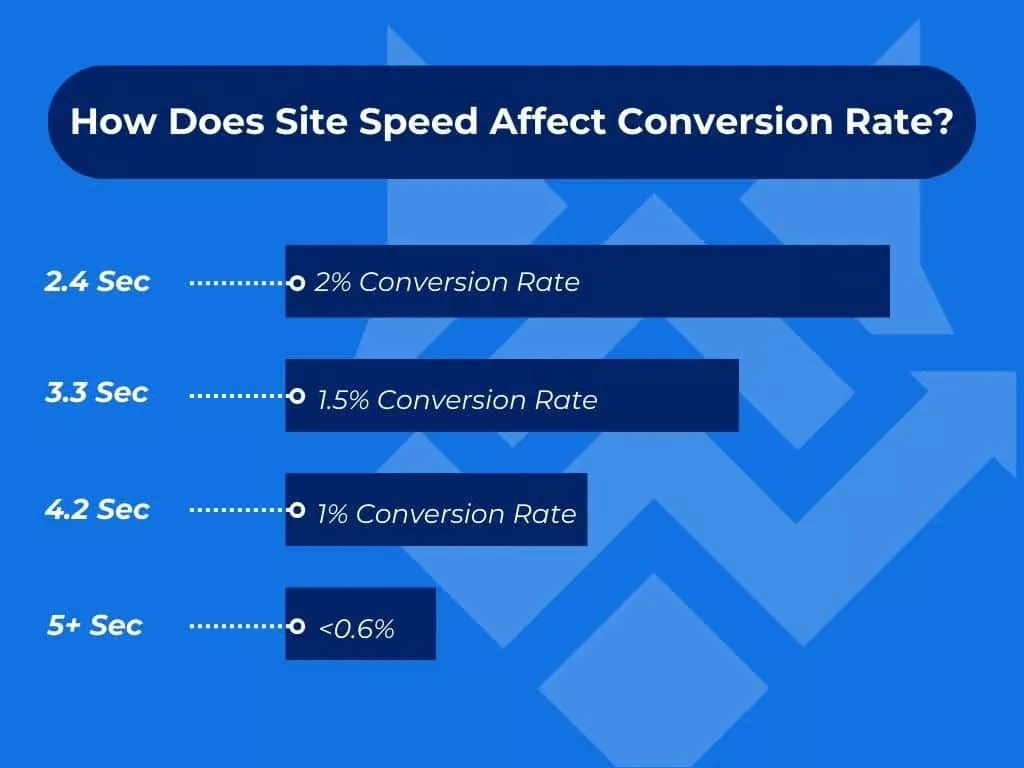
How long it takes for the biggest visible element on a page to load. Under 2.5 seconds is the target.
Example: a hero image that takes 4 seconds to appear drags the whole LCP score down.
37. CLS — Cumulative Layout Shift
How much the page layout jumps around while loading. A score under 0.1 is considered good.
Example: an ad loading above the fold and pushing the headline down mid-read.
38. INP — Interaction to Next Paint
Measures how quickly a page responds to user input. Targeted refinements to your SEO abbreviations streamline the entire review. Replaced First Input Delay as a Core Web Vital.
Example: tapping a menu button and waiting 400 milliseconds before anything happens.
39. FID — First Input Delay
The old responsiveness metric that measured delay before the first interaction. Retired in favor of INP.
Example: a click on a link registering 200 milliseconds late due to a heavy script.
40. TTFB — Time to First Byte
How long the server takes to send the first byte of data. A slow TTFB usually means a hosting or database problem.
Example: cheap shared hosting pushing TTFB past 1 second on every page request.
41. AMP — Accelerated Mobile Pages
A stripped-down page format designed for speed on mobile. Focusing on SEO abbreviations provides clear direction here. Its prominence in search has faded considerably.

Example: an AMP version of a news article loading in under a second on a weak connection.
Off-Page and Authority SEO Abbreviations Worth Knowing
Links and reputation live here. This is the cluster that separates sites that rank from sites that dominate, and it is where the SEO abbreviations tips crowd usually gets the most animated.
Authority is not a single number. It is a collection of signals that accumulate slowly and can vanish quickly if you buy links carelessly.
42. DA — Domain Authority
A third-party score from Moz predicting how likely a site is to rank. It is not a Google metric, but it is a useful benchmark.
Example: comparing DA across competing sites before a link-building outreach campaign.
43. PA — Page Authority
A similar Moz score for a single page rather than a whole domain.
Example: a blog post with high PA but a low-DA domain, suggesting strong local relevance.
44. DR — Domain Rating
Ahrefs’ version of domain authority, based on the strength of a site’s backlink profile.
Example: tracking DR growth quarter over quarter as earned links accumulate.
45. BL — Backlink
A link from another site pointing to yours. Still one of the strongest ranking signals available.
Example: a local news site linking to your restaurant review as a source.
46. PR — PageRank
Google’s original link-based ranking algorithm, named after Larry Page. The public toolbar is gone, but the concept lives on.
Example: a link from a major publication passing more value than fifty links from low-quality directories.
47. Anchor — Anchor Text
The clickable words in a link. Descriptive anchors help search engines understand the destination.
Example: “cast iron cleaning guide” as anchor text beats “click here” every time.
Measurement and Analytics SEO Abbreviations for Reporting
Numbers only help if the SEO abbreviations know what they measure. This cluster covers the reporting vocabulary you will meet in every analytics dashboard.
Keep an SEO abbreviations checklist of these terms nearby during your first few reporting cycles. It saves a lot of awkward silences on calls.
48. GA — Google Analytics
The analytics platform that tracks traffic, behavior, and conversions on your site.
Example: GA showing that organic traffic to a product page doubled after a content refresh.
49. GSC — Google Search Console
Google’s free tool for monitoring indexing, queries, and technical health. Maintaining clarity across your seo abbreviations remains essential. If you use one tool, make it this one.
Example: GSC flagging a “Crawled — currently not indexed” status on a new blog post.
50. KPI — Key Performance Indicator
The metric the SEO abbreviations matters most for a given goal. Pick one per campaign; picking five means picking none.
Example: for a lead-gen site, KPI might be form submissions, not raw sessions.
Quick Reference Table of Core SEO Abbreviations
Here is the same material in a compact format for scanning. Bookmark this table if you are still building familiarity with the vocabulary.
| Abbreviation | Full Term | What It Measures Or Means |
|---|---|---|
| SEO | Search Engine Optimization | Improving organic search visibility |
| SERP | Search Engine Results Page | The page shown after a query |
| CTR | Click-Through Rate | Clicks divided by impressions |
| KW | Keyword | The searched phrase |
| CWV | Core Web Vitals | Speed, responsiveness, stability |
| LCP | Largest Contentful Paint | Load time of the biggest element |
| CLS | Cumulative Layout Shift | Visual stability during load |
| INP | Interaction to Next Paint | Responsiveness to user input |
| TTFB | Time To First Byte | Server response speed |
| DA | Domain Authority | Third-party site strength score |
| DR | Domain Rating | Ahrefs’ link strength score |
| BL | Backlink | Inbound link from another site |
| GSC | Google Search Console | Free Google monitoring tool |
| GA | Google Analytics | Traffic and behavior tracking |
| KPI | Key Performance Indicator | The metric tied to your goal |
How to Actually Learn SEO Abbreviations Tips That Stick
Reading a list once does not create fluency. Using the terms in context does, and that requires a slightly uncomfortable amount of practice.
Here is what works, based on watching dozens of people go from confused to competent.
Build a Personal Glossary in Your Own Words
Do not copy definitions. Maintaining clarity across your SEO abbreviations remains essential. Rewrite each term in the way you would explain it to a friend over coffee.
If you cannot rewrite it, you do not understand it yet. That gap is your study list.
Attach Each Term to a Real Task
Learning “canonical” in the abstract is forgettable. Fixing a duplicate URL issue on your own site makes it permanent.
Pick five terms a week and find a real example of each in a site you own or manage.
Use the Terms in Writing
Draft a short report using the vocabulary correctly. A thoughtful approach to seo abbreviations reinforces your qualifications. Nothing exposes fuzzy understanding faster than trying to explain a metric to someone else.
This is also why an SEO abbreviations checklist helps: it forces recall instead of recognition.
Common Mistakes When Using SEO Abbreviations
Misusing terminology is worse than not knowing it, because it signals false confidence. These are the errors I see most often.
Confusing Crawling With Indexing
A page can be crawled and never indexed. People conflate the two constantly and then panic when a URL does not appear in results.
Check GSC’s page indexing report before assuming a crawl problem. The distinction matters for diagnosis.
Treating Third-Party Scores as Google Metrics
DA and DR are useful comparisons, not ranking factors. Google does not read Moz or Ahrefs scores.
Chasing DA in isolation leads to spammy link purchases that do more harm than good.
Assuming CTR is a Direct Ranking Lever
CTR correlates with ranking because better titles earn more clicks. It is not a dial you can turn directly, and short-term manipulation rarely sticks.
Improve the title, the description, and the content match. The CTR follows.
Building Your First SEO Abbreviations Checklist
A checklist turns vocabulary into workflow. Here is a practical one you can adapt for any page you publish.
Keep it short. A checklist you actually use beats a comprehensive one you ignore.
- Primary keyword placement — confirm the target phrase appears in the title, first paragraph, and at least one H2. Example: a page targeting “cast iron cleaning” uses it in the H1 and the opening sentence.
- Meta title and description — write both with the keyword early and a clear reason to click. Example: “Cast Iron Cleaning: 5 Steps That Actually Work” plus a 150-character summary.
- Heading structure — one H1, logical H2s, H3s only where they add clarity. Example: avoid skipping from H1 straight to H3.
- Image ALT text — describe the image, include the keyword once if natural. Example: alt=”cast iron skillet drying on a stovetop.”
- Internal links — connect to two or three related pages with descriptive anchors. Example: link a cleaning post to a seasoning guide.
- External links — cite one or two authoritative sources. Example: link to Google’s official documentation on indexing.
- Core Web Vitals check — verify LCP, CLS, and INP before publishing. Example: compress hero images to keep LCP under 2.5 seconds.
- Indexing request — submit the URL in GSC after publishing. Example: use URL inspection to request indexing on a new post.
Frequently Asked Questions About SEO Abbreviations
The SEO abbreviations are the questions that come up most often when people first encounter this vocabulary. Short answers first, then context.
What Does SERP Stand for in SEO?
SERP stands for Search Engine Results Page. Structuring your seo abbreviations around proven patterns ensures impact. It is the page Google displays after a query, containing organic results, ads, and features like maps or featured snippets.
Understanding SERP composition matters because ranking position one is not always position one. A featured snippet can sit above the top organic link.
What is the Difference Between DA and DR?
DA is Moz’s Domain Authority; DR is Ahrefs’ Domain Rating. Both predict ranking likelihood using link data, and neither is an official Google metric.
Use them for relative comparison between sites, never as a target to optimize directly.
Is Keyword Density Still Relevant?
Not as a ranking dial. Modern search engines evaluate topical coverage and intent, not repetition counts.
Write naturally, cover related concepts, and stop worrying about hitting an exact percentage.
What Does EEAT Mean in Practice?
Experience, Expertise, Authoritativeness, and Trustworthiness. In practice, it means showing who wrote the content, why they are qualified, and citing sources.
A byline with credentials and a linked author page does more than any on-page trick.
How Many SEO Abbreviations Do I Really Need to Know?
About fifteen cover 90% of daily work: SEO, SERP, CTR, KW, H1, meta title, meta description, canonical, noindex, CWV, LCP, CLS, INP, GSC, and KPI.
The rest you can look up as needed. Fluency comes from use, not memorization.
What is the Most Commonly Misused Term?
Probably “LSI keyword.” It is used to mean “related terms,” but Latent Semantic Indexing as a Google mechanic is largely historical.
The concept is useful; the label is imprecise. Applying these principles to your seo abbreviations yields measurable results. Do not build a strategy around the acronym itself.
Where to Go After Mastering These SEO Abbreviations
Vocabulary is the entry point, not the destination. Once these 50 terms feel familiar, the next step is applying them to a real site with real traffic data.
The broader topic here is technical SEO, and this article sits inside that larger cluster. From here, natural next reads include crawl budget management, structured data implementation, and log file analysis.
Pick one. Go deep on it for a month. Then pick the next.
The people who get good at the SEO abbreviations are not the ones who memorized every SEO abbreviation in a single sitting. They are the ones who kept a checklist open, used the terms in real work, and asked questions without embarrassment.
That is the whole path. Start with the vocabulary, then let the work teach you the rest.