Search intent is the reason someone types a query into Google, and it decides whether your page ranks or rots on page four. Get it right and you stop fighting the algorithm. Get it wrong and no amount of backlinks will save you.
I’ve watched talented writers pour weeks into pages that never moved, purely because they misread what the searcher actually wanted. The fix is rarely more content. It’s better alignment.
What Search Intent Really Means (And Why Google Cares So Much)
Strip away the jargon and search intent is just motive. Every query carries a hidden job the searcher wants done: find a fact, compare two products, buy something, or land on a specific website. Google’s entire ranking philosophy boils down to matching that job with the best possible answer.
Think about the query “how to fix a running toilet.” Nobody typing that wants a history of plumbing. They want a wrench, a flapper valve, and a five-minute walkthrough. A beautifully written essay on the sociology of home repair would fail, even if it were Pulitzer-worthy. That gap between what a page delivers and what the searcher needs is where rankings die.
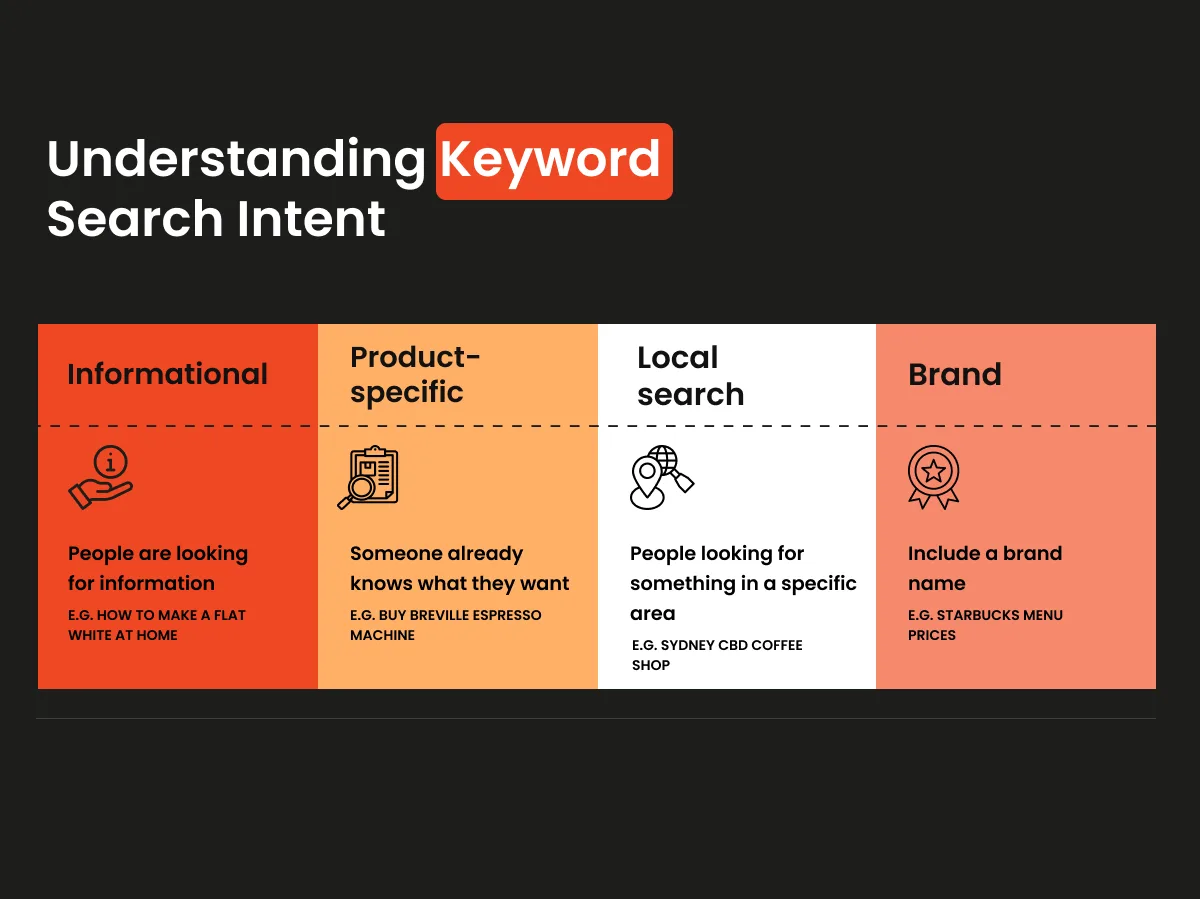
Google has spent years training its systems to read search intent. The Hummingbird update pushed the engine toward understanding meaning rather than matching strings. RankBrain added machine learning that interprets never-before-seen queries. BERT and its successors let the algorithm parse the nuance in conversational phrasing. Each step moved the needle further from keyword matching and closer to intent matching.
Here’s the part most people miss: Google doesn’t just reward pages that satisfy search intent. It punishes pages that don’t. When a searcher bounces back to the results within seconds, that’s a signal. When they refine their query immediately, that’s a signal too. The algorithm reads those micro-behaviors as evidence that your page missed the mark.
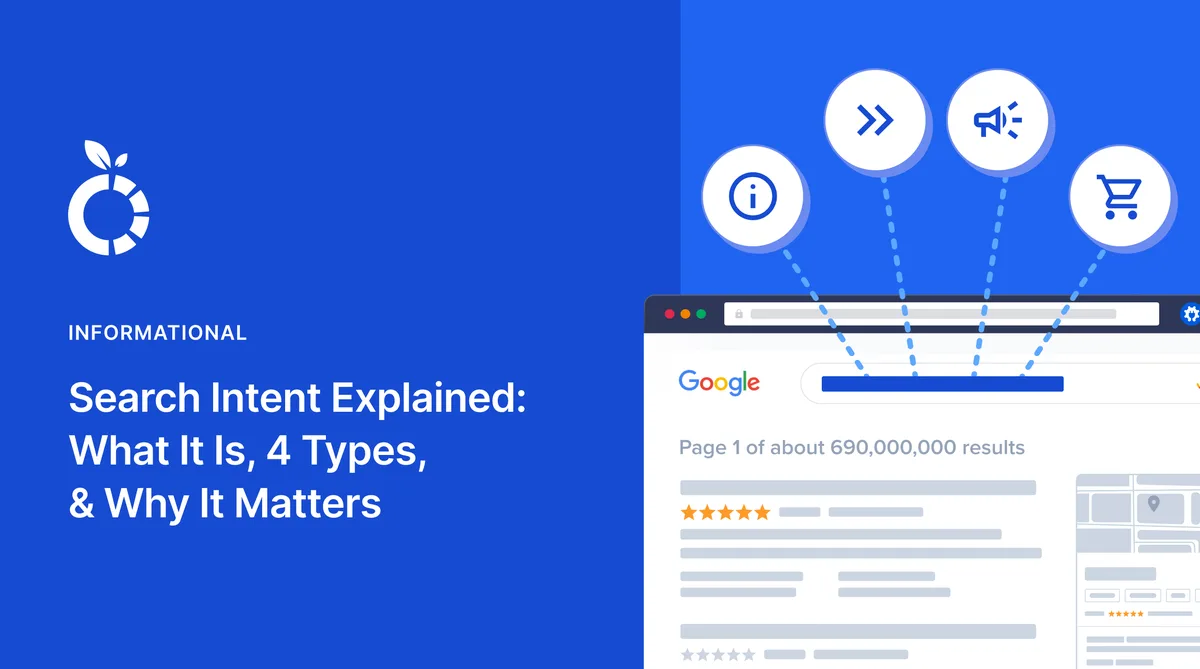
So when you write, you’re not just competing with other pages. You’re competing against the searcher’s own impatience.
The Four Core Types of Search Intent
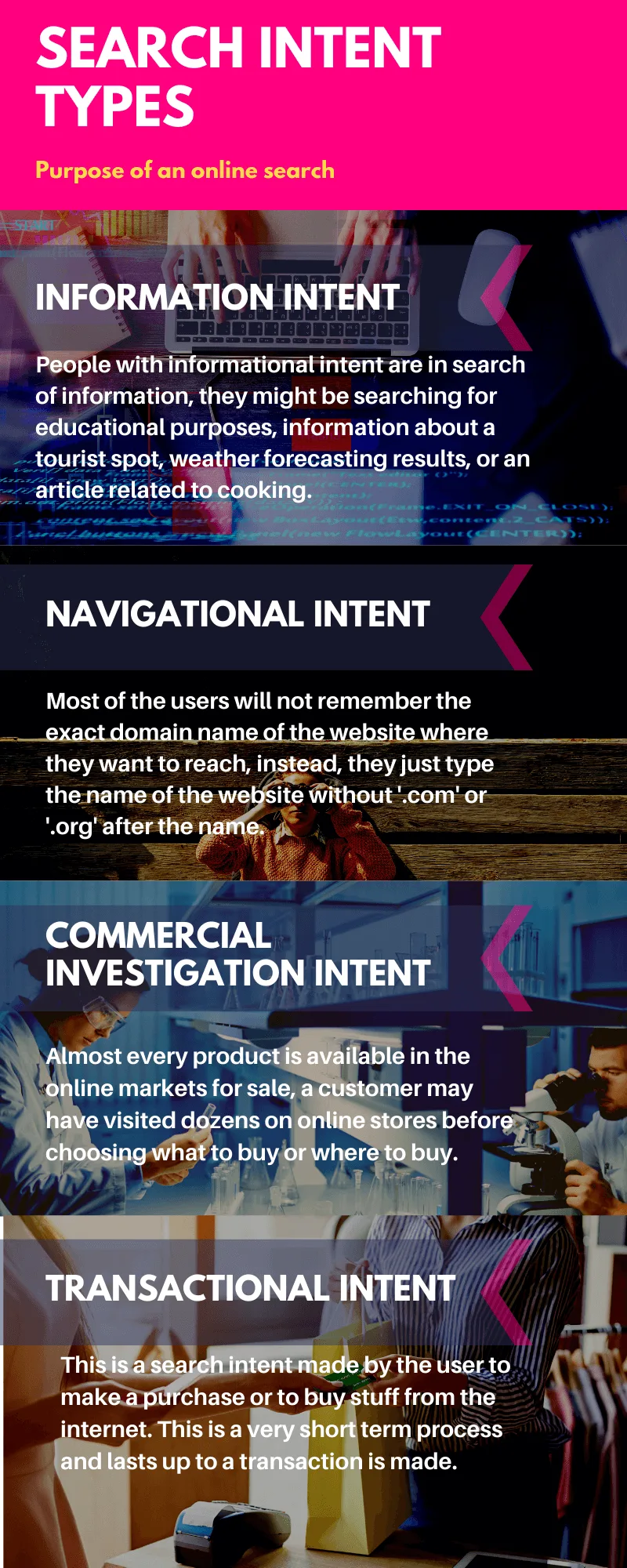
Nearly every query on the planet falls into one of four buckets. Learn to sort them on sight and you’ll diagnose ranking problems in seconds. Miss the distinction and you’ll keep writing content that technically answers a question nobody asked.
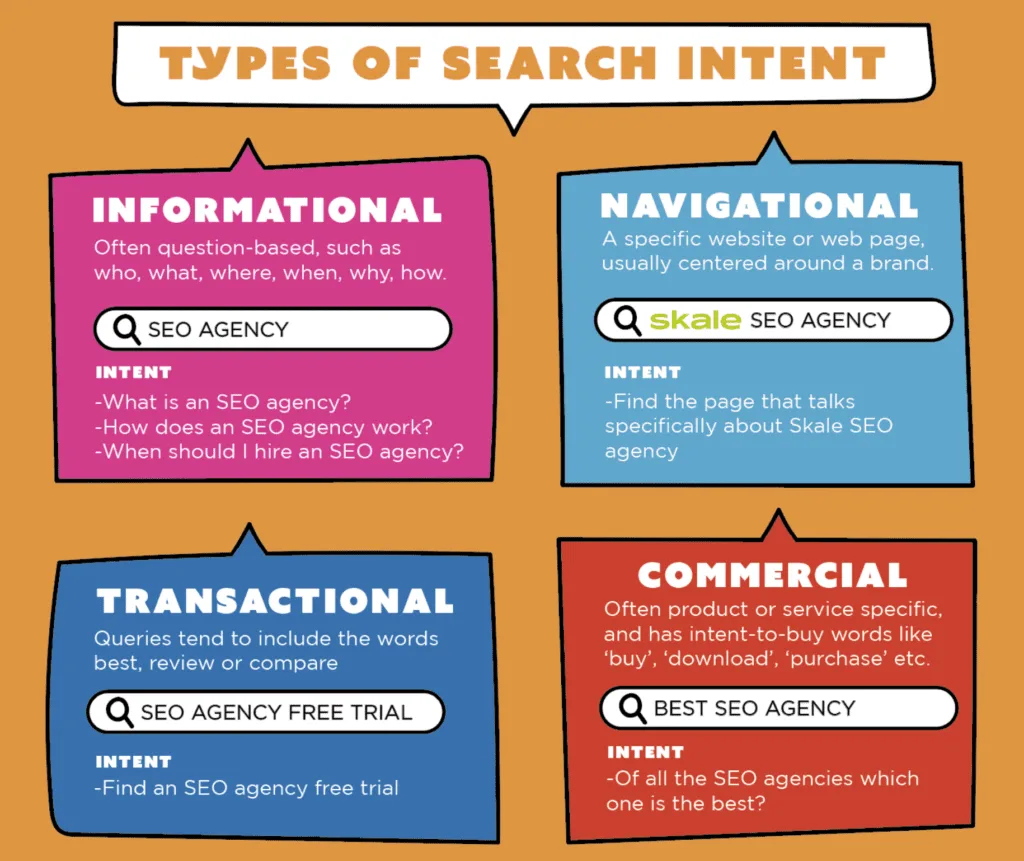
The four types are informational, navigational, commercial investigation, and transactional. Some SEOs split these into more granular categories, but these four cover the vast majority of real-world cases. Each one demands a different page format, a different tone, and a different success metric.
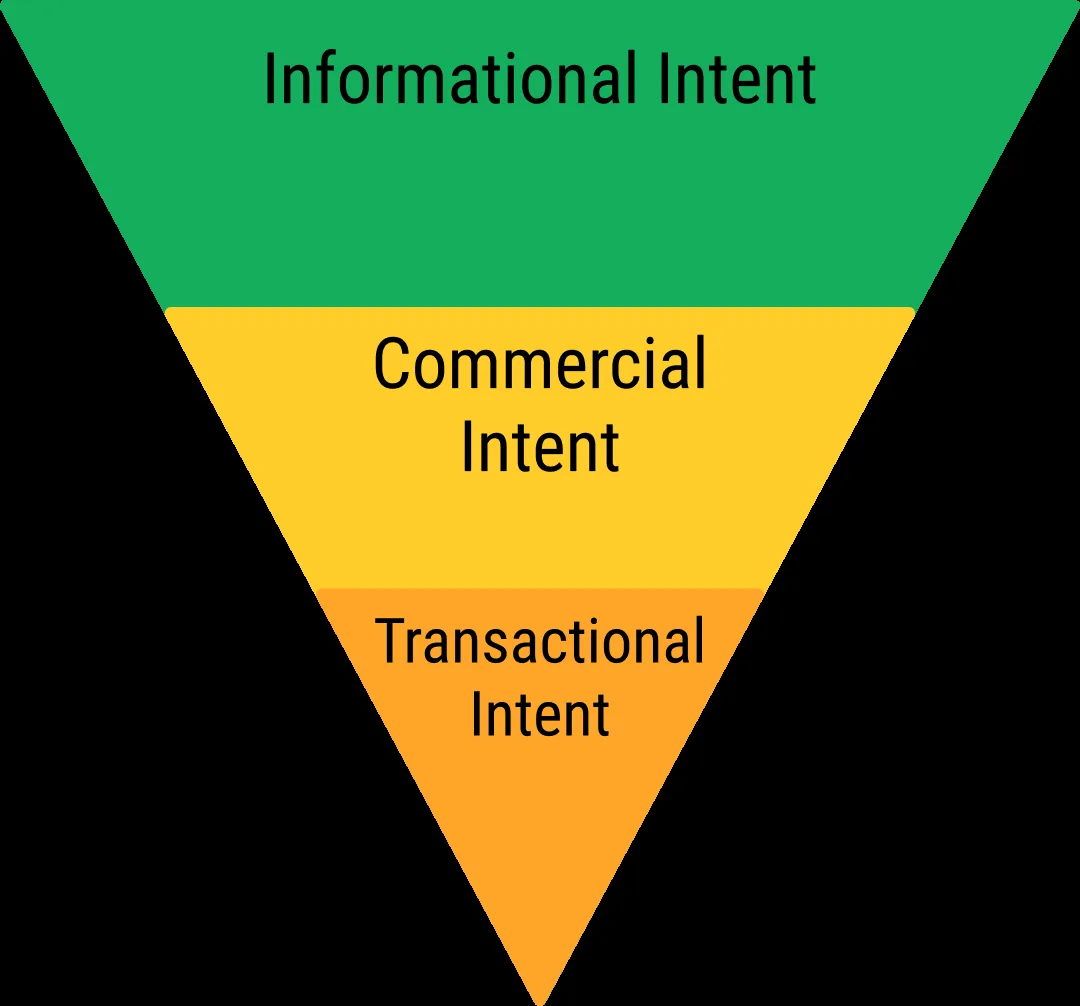
What makes this framework so useful is that it maps directly onto the buyer’s journey. Someone researching a topic sits at the top. Someone comparing options sits in the middle. Someone ready to click “buy” sits at the bottom. Your job is to meet them where they are, not where you wish they were.
Informational Search Intent: the Searcher Wants to Learn
Informational search intent is the broadest category, and it’s where most content marketing lives. The searcher wants to understand something. They’re not ready to buy. They might not even know your brand exists.
Queries like “what is compound interest,” “why is my dog limping,” or “how does solar net metering work” all carry informational search intent. The searcher has a question and wants a clear, trustworthy answer. They’re often in research mode, opening multiple tabs and comparing explanations.
For this type, long-form guides, tutorials, explainer videos, and well-structured blog posts win. Depth matters, but so does scannability. People reading to learn skim first, then dive into the sections that matter to them. Clear subheadings, short paragraphs, and a logical flow keep them on the page.
One mistake I see constantly: writers stuffing product pitches into informational content. If someone searches “what is a Roth IRA,” they don’t want your brokerage’s signup form shoved in their face by paragraph two. Earn trust first. The sale comes later.
Another trap is going too shallow. A 400-word post on a complex topic signals to Google that you didn’t take the question seriously. Match your depth to the complexity of the query, and you’ll often outrank bigger sites that phoned it in.
Navigational Search Intent: the Searcher Wants a Specific Place
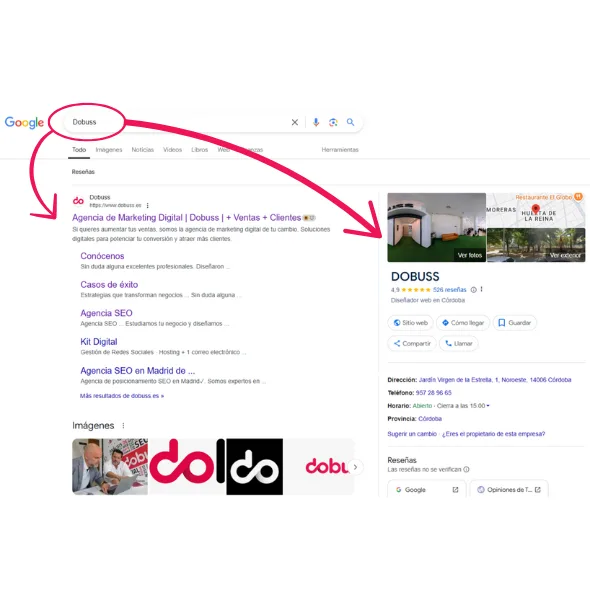
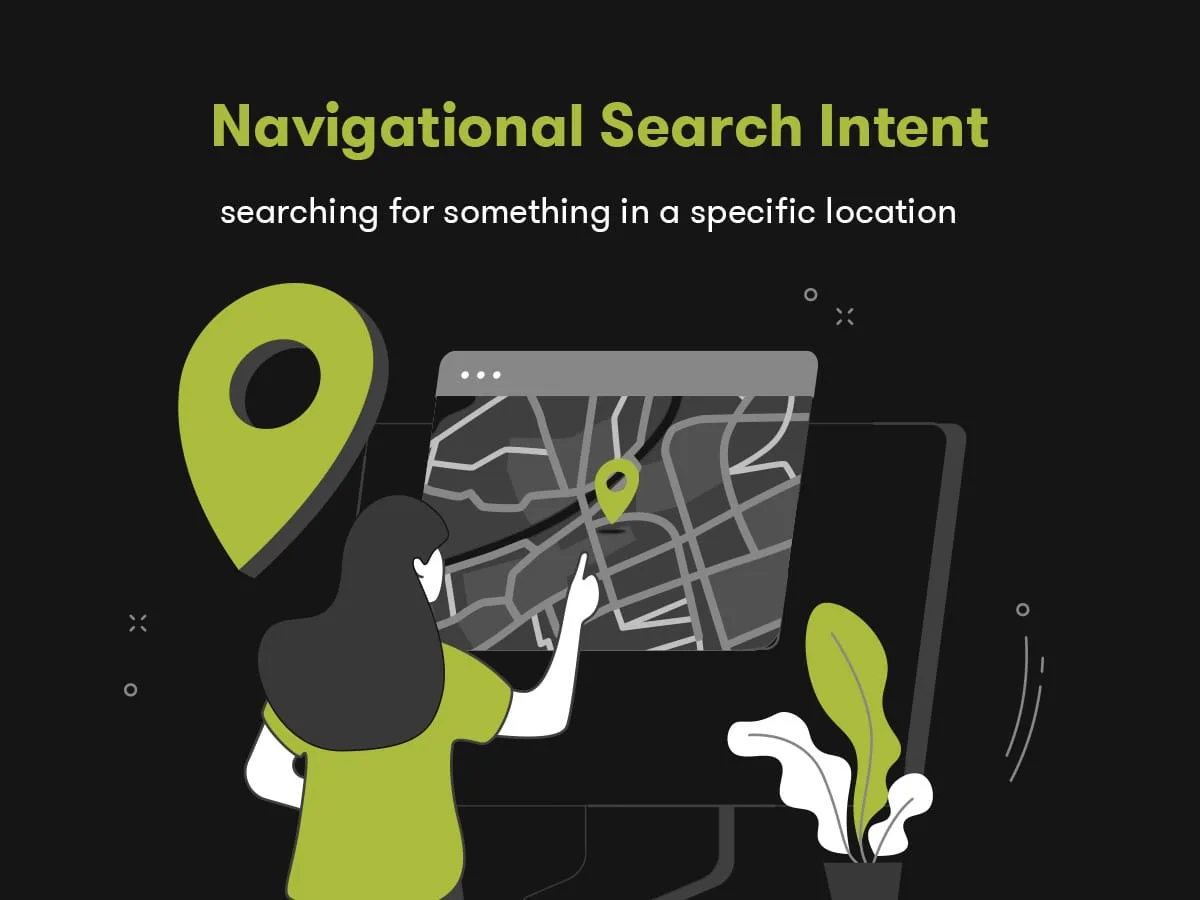
Navigational search intent is the easiest to spot and the hardest to hijack. The searcher already knows where they want to go. They’re just using Google as a shortcut.
Think “Facebook login,” “Amazon customer service,” or “New York Times crossword.” The person typing these queries has a destination in mind. They’re not browsing. They’re commuting.
For most businesses, chasing navigational search intent is a waste of energy. If someone searches your brand name, you’ll rank for it almost automatically. If they search a competitor’s name, you’re fighting a battle you can’t win without some seriously aggressive (and often unethical) tactics.
Where navigational intent does matter is brand defense. Make sure your homepage, login page, and support pages are optimized so that when people search for you, they land in the right place. Confusing navigation on your own branded queries is a silent conversion killer.
There’s a subtle overlap worth noting. Some navigational queries double as commercial ones. “Shopify pricing” is partly navigational (going to Shopify) and partly commercial (comparing costs). Recognizing these hybrids helps you decide whether to compete.
Commercial Investigation Search Intent: the Searcher is Comparing
Commercial investigation search intent sits in the messy middle. The searcher is researching, but they’re closer to a decision. They know the category. Now they’re figuring out which option fits.
Queries like “best CRM for small business,” “Notion vs Obsidian,” or “is HelloFresh worth it” all carry commercial investigation search intent. The person is weighing trade-offs. They want comparisons, reviews, pros and cons, and honest assessments.
This is where affiliate content and product review pages thrive, but only if they’re genuinely useful. Listicles that rank seven products without ever saying anything negative are transparently hollow. Readers can smell it. So can Google, increasingly.
The best commercial investigation content does three things. It acknowledges the searcher’s real constraints (budget, skill level, use case). It offers a clear recommendation, not a wishy-washy “it depends.” And it addresses objections head-on instead of dodging them.
If you sell a product in this space, you have a huge advantage. You can write comparison content that’s more accurate than any affiliate blogger’s, because you actually know your product’s limits. Use that honesty as a differentiator.
Transactional Search Intent: the Searcher is Ready to Act
Transactional search intent is the money category. The searcher wants to do something right now: buy, sign up, download, book, or subscribe.
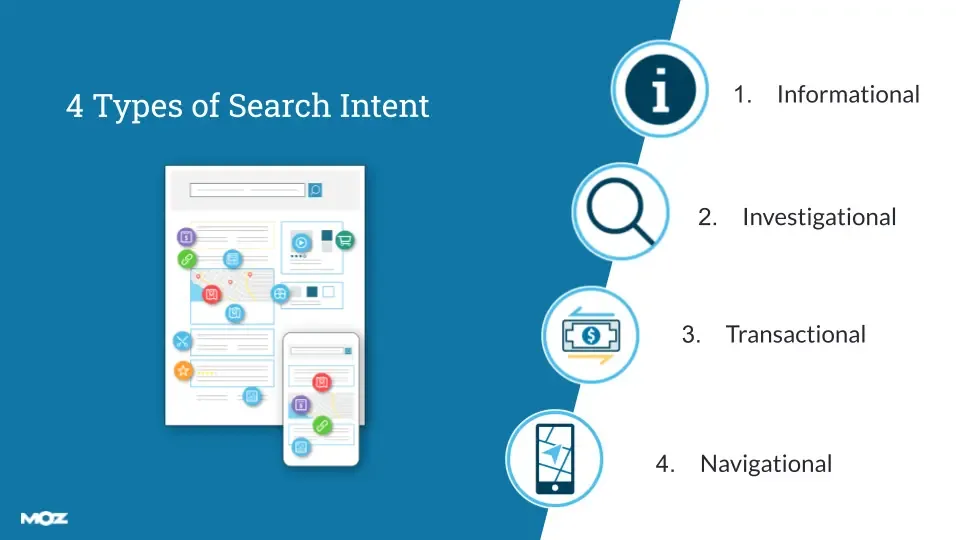
Queries like “buy running shoes size 10,” “book hotel downtown Chicago,” or “download Photoshop free trial” all carry transactional search intent. The person has moved past research. They’re at the checkout counter, metaphorically speaking.
Pages targeting this intent need to be frictionless. Fast load times. Clear calls to action. Transparent pricing (or at least a clear path to it). No 2,000-word preamble before the buy button. Every extra click between the searcher and their goal is a chance for them to leave.
Product pages, landing pages, and checkout flows are the natural homes for transactional search intent. But so are certain blog posts, like “how to cancel X subscription” or “where to buy Y near me.” These are action queries dressed up as informational ones.
The biggest mistake here is burying the action. If someone searches “buy standing desk,” they don’t want to read your founder’s origin story first. They want options, prices, and a cart. Respect the urgency.
Why Search Intent Mismatch Kills Rankings
Let’s talk about the failure mode. You’ve written a great page. It’s well-researched, well-written, and technically optimized. It still doesn’t rank. Nine times out of ten, the culprit is a search intent mismatch.
Google has a concept called “query deserves freshness” for news, but there’s a quieter cousin: “query deserves format.” When the top ten results for a query are all listicles, Google has learned that searchers want a listicle. Publish a 3,000-word narrative essay and you’ll confuse the algorithm and the reader simultaneously.
I’ve seen this play out with clients in the B2B software space. They’d write thought leadership essays targeting queries where the SERP was dominated by pricing pages and comparison tables. No traffic, month after month. The content wasn’t bad. It was just wrong for the query.
The fix is almost always to look at the SERP before you write a single word. What format dominates? What depth? What angle? Google is showing you the answer key. Ignore it at your peril.
There’s a second-order effect too. When you mismatch search intent, you attract the wrong audience. They bounce. Your engagement metrics tank. Over time, Google demotes your entire site, not just the offending page. One bad page can drag down a dozen good ones.
How to Identify Search Intent for Any Keyword
Reading search intent isn’t a mystery. It’s a skill you can build with a repeatable process. Here’s the method I use, refined over hundreds of keyword research sessions.
Start with the SERP. Type your target keyword into Google and study the top ten results. Not the URLs. The actual pages. What format are they? What’s the dominant content type? What do the titles promise?
Next, look at the SERP features. If there’s a featured snippet, that tells you Google thinks the query wants a direct answer. If there’s a shopping carousel, transactional intent is in play. If there’s a “People also ask” box, informational intent dominates.
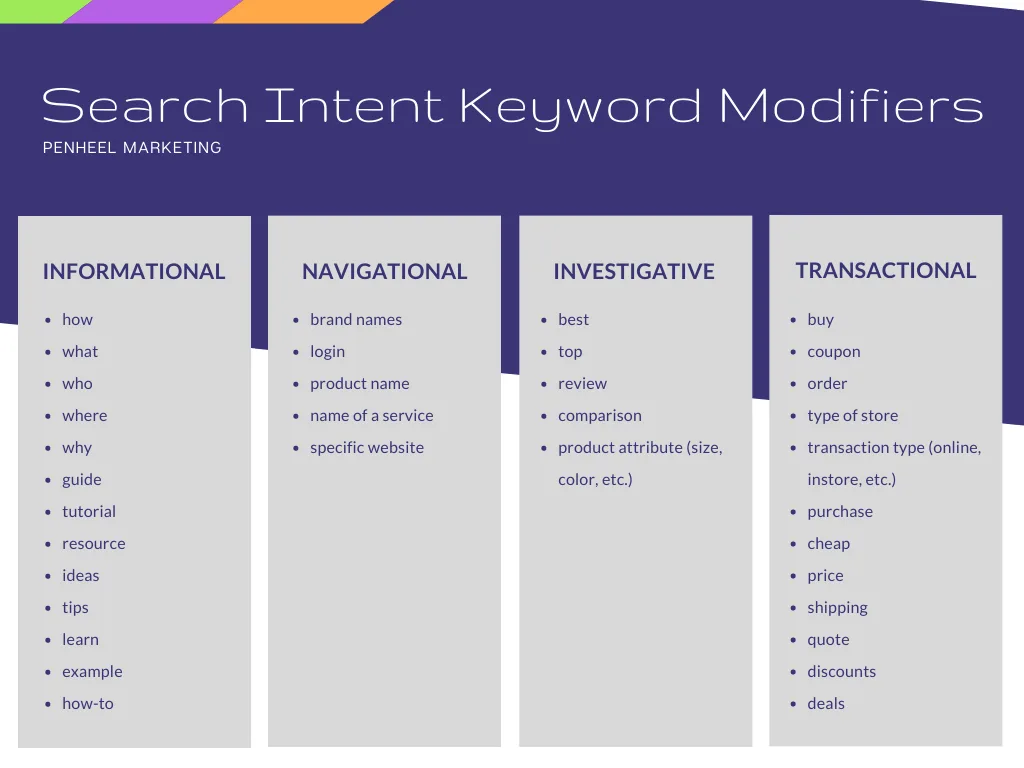
Then examine the language of the query itself. Words like “buy,” “price,” “deal,” and “coupon” signal transactional search intent. Words like “best,” “vs,” “review,” and “alternative” signal commercial investigation. Words like “what,” “how,” “why,” and “guide” signal informational. Brand names alone signal navigational.
Finally, check the “Searches related to” section at the bottom of the SERP. These are queries Google has grouped with yours. They reveal the broader intent neighborhood. If your keyword sits next to a bunch of transactional queries, you’re probably in transactional territory.
Reading the SERP Like a Pro
The SERP is a confession. Google is telling you, in plain sight, what it believes searchers want for any given query. Most people scroll past this information without reading it.
Here’s a concrete example. Search “best coffee maker.” You’ll see listicles from Wirecutter, Serious Eats, and similar publications. You’ll see a shopping carousel. You’ll see “People also ask” questions about specific brands and features. Everything points to commercial investigation search intent with a strong transactional undertone.
Now search “how to clean a coffee maker.” The results shift entirely. You’ll see step-by-step guides, often with video. The featured snippet will likely be a numbered list of steps. That’s informational search intent, and the format is non-negotiable.
Same product category. Completely different search intent. Completely different content strategy. If you tried to rank a buying guide for “how to clean a coffee maker,” you’d fail. If you tried to rank a cleaning tutorial for “best coffee maker,” you’d fail too.
The takeaway: never assume. Always read the SERP before you commit to a format.
Using Tools to Confirm Your Hypothesis
Your eyes are the primary tool, but a few software helpers can speed things up. Ahrefs, Semrush, and Moz all offer keyword intent labels, though they’re algorithmic guesses, not gospel. Treat them as a starting point, not a verdict.
Google’s own “People also ask” and “Related searches” features are free and remarkably accurate. They reflect real user behavior at scale. If you only have five minutes to research search intent, spend them here.
For deeper analysis, tools like AlsoAsked and AnswerThePublic map out the question space around a keyword. They’re especially useful for informational search intent, where the searcher’s curiosity branches in predictable directions.
One caveat: no tool replaces judgment. I’ve seen keyword tools label queries incorrectly more times than I can count. Always cross-check against the live SERP before you build a content plan around a label.
Matching Content Format to Search Intent
Once you’ve identified search intent, the next step is choosing the right format. This is where a lot of content strategies quietly fall apart. Writers default to the format they’re comfortable with, not the one the query demands.
Here’s a rough mapping that holds up across most niches. Informational search intent wants guides, tutorials, explainers, and FAQs. Navigational search intent wants homepages, login pages, and brand-specific landing pages. Commercial investigation search intent wants comparisons, reviews, and “best of” lists. Transactional search intent wants product pages, pricing pages, and checkout flows.
But format is only half the equation. Depth matters too. A query like “what is SEO” can be answered in 800 words. A query like “how to build a link building campaign from scratch” needs several thousand. Match your word count to the complexity of the search intent, not to some arbitrary target.
Structure matters as well. Transactional pages need prominent CTAs. Informational pages need clear navigation and scannable sections. Commercial pages need comparison tables and honest verdicts. The structure signals to both Google and the reader that you understand what they came for.
Search Intent and the Buyer’s Journey
The four types of search intent map cleanly onto the classic buyer’s journey: awareness, consideration, and decision. Understanding this overlap helps you build content that moves people forward instead of leaving them stranded.
Awareness-stage searchers typically have informational search intent. They’re learning about a problem or a category. Your job is to educate, not to sell. Build trust by being genuinely helpful.
Consideration-stage searchers typically have commercial investigation search intent. They’re comparing solutions. Your job is to differentiate, honestly. Show them why your approach fits their specific situation, and be clear about who you’re not for.
Decision-stage searchers typically have transactional search intent. They’re ready to act. Your job is to remove friction. Make the next step obvious, easy, and low-risk.
Navigational search intent sits outside this framework, but it matters for retention. If someone searches your brand and lands on a confusing page, you’ve lost them at the finish line.
The most common strategic error is over-indexing on transactional content. It feels efficient because it’s closest to revenue. But without informational and commercial content feeding the top of the funnel, your transactional pages starve.
Mapping Keywords to Funnel Stages
Do this exercise once and your content calendar will never feel random again. Take your target keywords and sort them into three columns: top of funnel, middle of funnel, bottom of funnel. Each column corresponds to a search intent type.
Top-of-funnel keywords carry informational search intent. They’re broad, high-volume, and competitive. Examples: “what is email marketing,” “how does SEO work,” “why do startups fail.”
Middle-of-funnel keywords carry commercial investigation search intent. They’re more specific and lower volume. Examples: “Mailchimp vs ConvertKit,” “best SEO tools for agencies,” “startup failure rate by industry.”
Bottom-of-funnel keywords carry transactional search intent. They’re narrow, high-intent, and often lower volume but higher conversion. Examples: “buy Mailchimp plan,” “SEO audit service pricing,” “hire startup consultant.”
Balance your calendar across all three. A healthy content program has roughly 50% top-of-funnel, 30% middle, and 20% bottom. Adjust based on your business model, but never go all-in on one stage.
Common Search Intent Mistakes (And How to Dodge Them)
Even experienced marketers slip on search intent. The mistakes tend to cluster around a few predictable patterns. Spotting them early saves months of wasted effort.
The first mistake is writing for the keyword instead of the searcher. Keyword-first thinking produces content that technically includes the phrase but misses the point. Searcher-first thinking produces content that answers the real question, even if the keyword appears less often.

The second mistake is ignoring the SERP. I’ve seen teams spend weeks building content without ever looking at what already ranks. That’s like cooking a meal without checking what’s in the fridge. You might get lucky, but you probably won’t.
The third mistake is over-optimizing for one search intent type and neglecting the others. A site full of buying guides with no educational content is a site with no top-of-funnel. A site full of blog posts with no product pages is a site with no revenue.
The fourth mistake is treating search intent as static. It shifts. A query that was informational two years ago might be transactional now, as searchers’ behavior evolves and Google’s understanding deepens. Revisit your assumptions periodically.
The fifth mistake, and the most expensive, is assuming your search intent is the same as the searcher’s. You know your product deeply. They don’t. Write for their level of awareness, not yours.
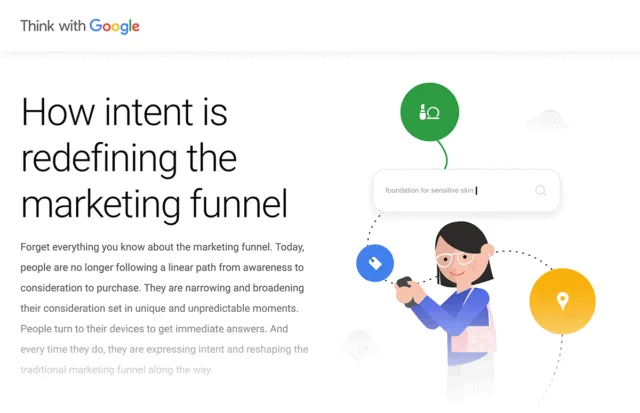
The Keyword-First Trap
Keyword-first content is the default mode for a lot of writers, especially those trained in older SEO playbooks. It produces pages that hit density targets but miss the human element entirely.
Here’s what it looks like in practice. A writer targets “project management software” and produces a 2,000-word page that mentions the phrase 40 times, covers every feature imaginable, and never once addresses what the searcher actually needs to decide.
The fix is to write the page you’d want to read if you were the searcher. What questions would you have? What objections? What would make you trust the source? Answer those, and the keyword will appear naturally, often more often than you’d expect.
I’ve found that the best-performing pages in competitive niches are almost always the ones that read like they were written for a specific person, not a keyword. The search intent is baked in, not bolted on.
Ignoring the SERP Signals
The SERP is the most honest feedback mechanism in SEO. It doesn’t care about your opinions. It just shows you what’s working.
When you ignore it, you’re flying blind. You might publish something brilliant that gets no traction because it’s the wrong format. Or you might publish something mediocre that ranks because you accidentally nailed the format everyone else missed.
Make SERP analysis a non-negotiable step in your content workflow. Before you outline, before you write, before you assign, look at the top ten. Note the format, the depth, the angle, and the SERP features. Then build your content to fit.
This doesn’t mean copying competitors. It means understanding the rules of the game before you try to win it. Once you know the format, you can differentiate on substance, voice, and depth.

Optimizing for Multiple Search Intent Types on One Page
Sometimes a single query carries mixed search intent. “Best running shoes for flat feet” is commercial investigation, but it also has informational elements (what makes a shoe good for flat feet?). “How much does a website cost” is informational, but it’s often asked by people with transactional intent.
You can serve multiple search intent types on one page, but you have to be deliberate about it. Lead with the dominant intent, then address the secondary intent in a dedicated section.
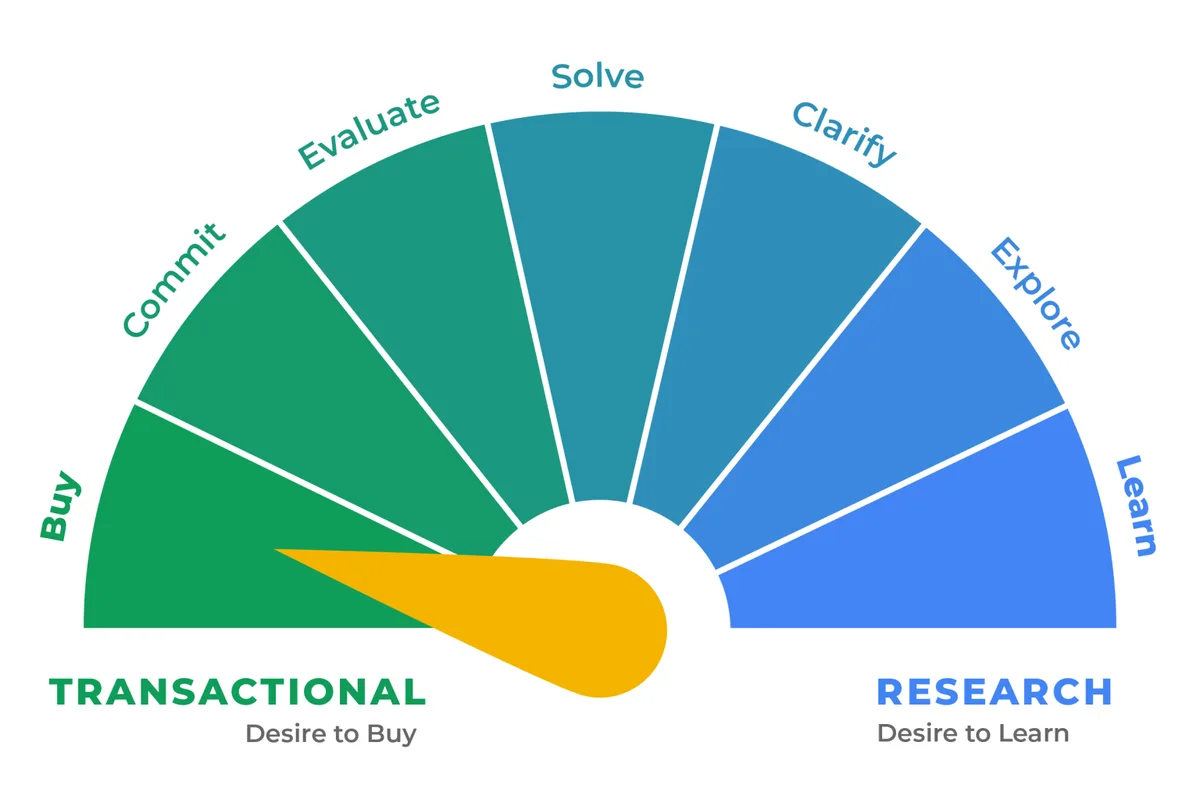
For a “best running shoes for flat feet” page, lead with the comparison. Then add a section explaining what to look for. That way, comparison-shoppers get what they need immediately, and learners get the context they want without scrolling through it first.
The order matters. Lead with the intent that dominates the SERP. If the top results are all listicles, your page should be a listicle first. Add the informational depth as a bonus, not as the main event.
This approach works especially well for hybrid queries where the searcher is close to a decision but still has lingering questions. Answer the questions after you’ve made the pitch, not before.
Search Intent in Local SEO
Local queries add a layer of complexity. “Pizza near me” carries transactional search intent with a geographic filter. “Best pizza in Brooklyn” carries commercial investigation. “How to make pizza dough” carries informational, no geography required.
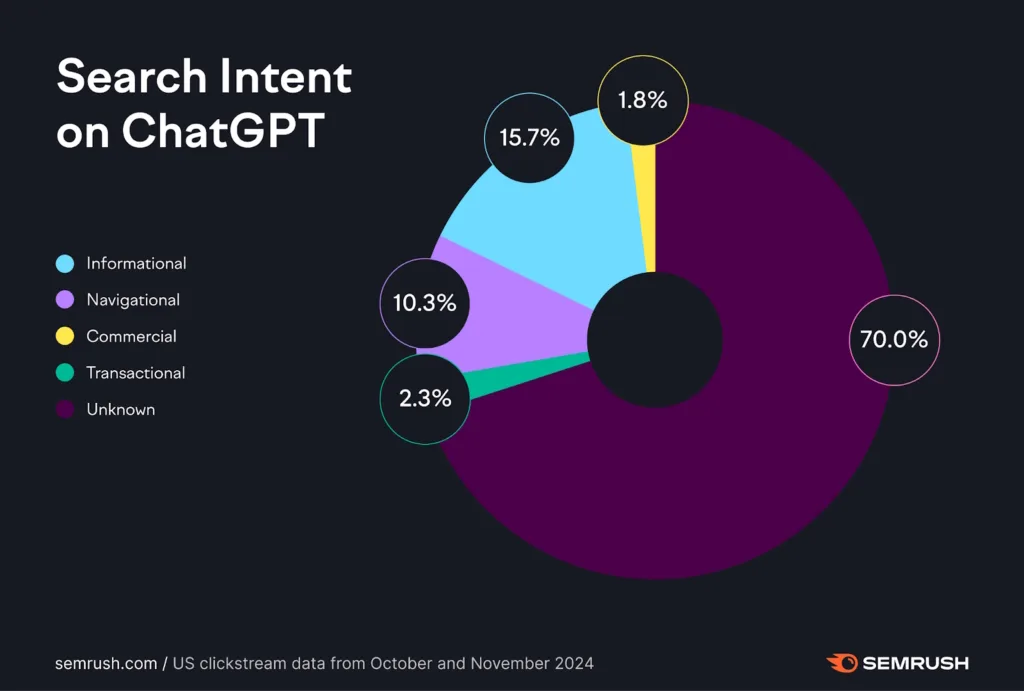
For local businesses, the stakes are high because the searcher is often ready to act. They’re hungry, they’re nearby, and they want a decision fast. Your Google Business Profile, reviews, and local landing pages all need to reflect that urgency.
Local search intent also varies by device. Mobile searchers often have immediate transactional intent (“coffee shop open now”). Desktop searchers are more likely to be in research mode (“best coffee shops in Portland”). Optimize your local presence for both.
One underrated tactic: build location-specific landing pages that match the search intent of the query. A page titled “Emergency Plumber in Austin” should lead with availability, response time, and a phone number. A page titled “How to Choose a Plumber in Austin” should lead with guidance. Different intents, different pages.
Voice Search and Conversational Queries
Voice search skews heavily toward informational and navigational search intent. People ask full questions out loud (“Hey Google, what’s the weather tomorrow?”) rather than typing fragments. This changes how you should structure content.
Long-tail, question-based keywords matter more in voice search. So does concise, direct answering. If a voice assistant can’t extract a clear answer from your page in the first couple of sentences, it’ll pull from somewhere else.
FAQ sections are gold here. They let you answer specific questions in a format that both readers and voice assistants can parse easily. Structure them with clear question headings and direct answers, and you’ll pick up featured snippets as a bonus.
Conversational queries also tend to be more specific. “Where can I get gluten-free pizza delivered in Denver tonight” is a mouthful, but it carries rich search intent signals. The more specific the query, the easier it is to match precisely.
Measuring Whether You’ve Nailed Search Intent
You can’t manage what you don’t measure, and search intent is no exception. A few metrics will tell you quickly whether you’ve matched the searcher’s needs or missed them entirely.
Start with bounce rate and dwell time. If people land on your page and leave within seconds, you’ve probably mismatched this practice. If they stay and scroll, you’re on the right track. These metrics aren’t perfect, but they’re directional.
Next, look at scroll depth. Tools like Hotjar and Microsoft Clarity show you how far down the page people actually read. If 80% of visitors bounce before the fold, your opening doesn’t match their expectation.
Then check your rankings over time. Pages that match this practice tend to climb steadily. Pages that don’t often plateau or slide, even with good on-page optimization. The algorithm is measuring something your analytics might be missing.
Finally, watch for query drift. If your page starts ranking for queries you didn’t target, that’s often a sign that Google sees a different this approach than you did. Sometimes that’s an opportunity. Sometimes it’s a warning.
Reading the Signals in Your Analytics
Google Search Console is the most underused tool for intent validation. The “Queries” report shows you every search term that brought someone to your page. If those queries cluster around a different intent than you targeted, you’ve got useful data.
Look for pages that rank for many variations of the same question. That’s a sign you’ve nailed informational this approach. Look for pages that rank for brand comparisons and “vs” queries. That’s commercial investigation. Look for pages that rank for “buy” and “price” terms. That’s transactional.

Pay attention to impressions versus clicks too. High impressions with low clicks often means your title and meta description are mismatched with the this practice. The searcher sees your result, reads the snippet, and decides it’s not what they want.
One more signal: position volatility. Pages that bounce between positions 3 and 15 are often struggling with this approach. Google is testing whether your page satisfies the query, and the answer keeps changing.
Search Intent for E-Commerce Pages
E-commerce lives and dies by this practice. Every product page, category page, and blog post needs to serve a specific intent, or it’s dead weight.
Category pages typically serve commercial investigation this approach. The searcher is browsing options within a category. Your job is to help them narrow down fast, with filters, sorting, and clear product summaries.
Product pages typically serve transactional this practice. The searcher is considering a specific item. Your job is to remove doubt: clear photos, honest specs, reviews, shipping info, and a frictionless add-to-cart.
Blog content on an e-commerce site usually serves informational this approach, with a bridge to commercial. A post titled “How to Choose a Mattress for Back Pain” educates, then links naturally to relevant products. The bridge should feel helpful, not pushy.
What kills e-commerce SEO most often is trying to make one page serve every intent. A product page that also tries to be a buying guide, a category page, and a brand story ends up serving none of them well.
Balancing SEO and Conversion
There’s a real tension between SEO and conversion rate optimization on e-commerce pages. SEO wants depth, context, and keyword coverage. CRO wants simplicity, speed, and a clear path to checkout.
The resolution is layering. Put the conversion elements above the fold: price, availability, add-to-cart, key specs. Put the SEO depth below: detailed descriptions, use cases, comparisons, FAQs. Both audiences get what they need, in the order they need it.
This approach works because transactional this approach searchers rarely scroll far. They want the buy button. Informational searchers on the same page will scroll, because they’re looking for context. Giving both groups a clear zone keeps everyone happy.
Test this pattern on your highest-traffic product pages. In my experience, it lifts both rankings and conversion rate, because you’re serving two distinct this practice types without compromising either.
Search Intent for B2B and SaaS
B2B and SaaS content faces a unique this approach challenge: long sales cycles, multiple stakeholders, and queries that span the entire funnel. A single buyer might search a dozen different queries before they ever fill out a form.
Top-of-funnel B2B queries usually carry informational this practice. “What is customer success software” or “how to reduce churn” are educational. Content here should teach, not pitch. Build authority before you build pipeline.
Middle-of-funnel queries carry commercial investigation this approach. “Best customer success platforms” or “Gainsight vs ChurnZero” are comparison-driven. Content here needs to be specific, honest, and stakeholder-aware. Different buyers care about different things.
Bottom-of-funnel queries carry transactional this practice. “Customer success software pricing” or “book a demo” are action-oriented. Content here should minimize friction and maximize clarity.
One mistake I see in SaaS especially: writing for the champion but forgetting the economic buyer. A technical evaluator and a CFO have different this approach, even for the same product. If your content only speaks to one, you’ll stall deals.
Long Sales Cycles and Layered Intent
In B2B, this practice isn’t a single moment. It’s a sequence. The same person may search informationally in month one, commercially in month three, and transactionally in month six. Your content needs to be there at every step.
This is why content libraries matter more in B2B than in B2C. You’re not trying to close a sale on the first visit. You’re trying to be the resource the buyer returns to as their this approach evolves.
Track which pages your leads visit before converting. You’ll often find a pattern: an informational post first, a comparison page second, a pricing page last. That sequence is the this practice journey made visible.
Build content for each stage, and link them together naturally. A blog post should link to a relevant comparison. A comparison should link to pricing. Pricing should link to a demo. The path should feel like a conversation, not a funnel diagram.
Search Intent and Content Refresh Strategy
This practice shifts over time. A query that was informational two years ago might now be commercial. A page that ranked beautifully might be slipping because the SERP has changed around it.
This is why content refresh matters. Not just updating dates and stats, but re-evaluating whether your page still matches the current this approach for its target query.
Start by re-checking the SERP. Has the dominant format changed? Have new SERP features appeared? Are competitors publishing different angles? If the answer to any of these is yes, your page might need restructuring, not just updating.
Then look at your analytics. Is the page losing rankings? Is dwell time dropping? Are you ranking for different queries than you used to? These are all signals that this approach has shifted.
Refresh is often more valuable than creating new content. You already have the authority and the backlinks. You just need to realign with what the searcher wants now.
When to Rewrite Vs. When to Update
The distinction matters because the effort is very different. Updating means tweaking. Rewriting means starting over on the same URL.
Update when the this practice is the same but the details have changed. New statistics, new examples, new screenshots. The structure and format stay intact.
Rewrite when the this approach has fundamentally shifted. If a query moved from informational to commercial, your informational post won’t rank no matter how much you polish it. You need a different page, in the same place.
I usually look at three signals before deciding. First, is the SERP format different from what I published? Second, is my page losing rankings steadily rather than fluctuating? Third, are the queries bringing traffic to my page different from the ones I targeted? Two out of three means rewrite.
Rewriting is scary because you risk losing what worked. But keeping a mismatched page is worse. It drags down your site’s overall quality signals and wastes the URL’s authority.
Advanced Search Intent Tactics
Once you’ve mastered the basics, a few advanced tactics can give you an edge in competitive niches. These aren’t shortcuts. They’re refinements that compound over time.
One is intent stacking. Find queries where multiple this approach types overlap, and build content that serves both. This lets you capture traffic from a broader set of searchers without diluting your focus.
Another is intent bridging. Create content that intentionally moves searchers from one intent to another. An informational post that ends with a soft commercial nudge. A comparison page that ends with a clear transactional CTA. The bridge should feel earned, not forced.
A third is intent hijacking, which sounds aggressive but is really just smart positioning. When a competitor’s branded query has mixed intent, you can sometimes rank by publishing content that serves the secondary intent better than they do. Use this carefully and ethically.

The common thread is that advanced this practice work requires deep SERP analysis. You can’t stack, bridge, or hijack intents you haven’t clearly identified.
Using AI to Scale Intent Analysis
AI tools can speed up this approach analysis, but they can’t replace judgment. Use them for the mechanical parts: clustering keywords, grouping queries by pattern, summarizing SERP results.
What AI can’t do well is read nuance. It might label a query as informational when the SERP clearly shows commercial intent, because the words look informational. Always validate against the live SERP.
The best workflow combines both. Let AI handle the initial sort. Then spend your time on the queries that matter most, reading the SERP manually and making the call yourself.
This hybrid approach scales better than pure manual work and produces better results than pure automation. It’s the pattern I’ve seen work across dozens of content teams.
Building a Search Intent-First Content Workflow
Here’s a workflow that puts this approach at the center of everything, from keyword research to publishing. It’s not glamorous, but it works.
Step one: keyword research. Gather your target queries, then sort them by this practice type before you do anything else. This one step will save you from a dozen downstream mistakes.
Step two: SERP analysis. For each keyword, look at the top ten results. Note the format, depth, angle, and SERP features. Write these down. They become your content brief.
Step three: outline. Build your outline around the this practice, not around your keyword list. Lead with the format the SERP demands. Add depth where the searcher’s questions go.
Step four: draft. Write for the searcher, not the algorithm. Let the keyword appear naturally. If you’ve done steps one through three well, this part is easy.
Step five: review. Before publishing, check your draft against the SERP one more time. Does it match the format? Does it answer the dominant question? Would a searcher landing here feel like they got what they came for?
Step six: measure. After publishing, track rankings, dwell time, and query patterns. Use this data to inform your next piece and to decide when to refresh this one.
Assigning Content to Writers With Intent Clarity
Here is an overview of the key details and practical takeaways for Assigning Content to Writers With Intent Clarity:
Search Intent and Featured Snippets
Explore the primary elements and practical considerations regarding Search Intent and Featured Snippets below:
Frequently Asked Questions About Search Intent
The following key points are covered in this section:
- What is Search Intent in Simple Terms?
- How Many Types of Search Intent are There?
- How Do I Find the Search Intent for a Keyword?
- Can a Keyword Have More Than One Search Intent?
- Why Does Search Intent Matter for SEO?
- Does Search Intent Change Over Time?
- How Do I Match Content Format to Search Intent?
- What’s the Biggest Search Intent Mistake?
Putting It All Together: a Practical Search Intent Checklist
- Identify the search intent type. Is your target query informational, navigational, commercial, or transactional? Write it down before you outline.
- Check the SERP. What format dominates the top ten? What SERP features appear? What do the titles promise? Your page needs to fit the pattern before it can break it.
- Match the format. Guides for informational queries. Comparisons for commercial. Product pages for transactional. Don’t fight the format Google is already rewarding.
- Match the depth. Short for simple queries. Long for complex ones. Let the search intent dictate the word count, not a template.
- Lead with the answer. Put the direct response in the first or second paragraph under your main heading. Don’t make the searcher hunt for it.
- Address the secondary intent. If the query is hybrid, add a section for the secondary intent after you’ve served the primary one.
- Check your title and meta. Do they promise what the page delivers? A mismatch here tanks click-through rate and signals intent confusion.
- Review post-publish. Watch rankings, dwell time, and query patterns. Use the data to refine and to inform your next piece.
| Search Intent Type | Typical Query Language | Best Content Format | Primary Goal |
|---|---|---|---|
| Informational | what, how, why, guide, tutorial | Long-form guides, tutorials, explainers | Educate and build trust |
| Navigational | brand names, login, official site | Homepages, login pages, brand landing pages | Direct searchers to the right page |
| Commercial Investigation | best, vs, review, alternative, compare | Comparisons, reviews, “best of” lists | Help searchers decide |
| Transactional | buy, price, deal, order, download | Product pages, pricing pages, checkout flows | Convert the searcher |
For verified reference and background research, consult the authoritative informational resource on this topic.