Referral Marketing: a Simple Guide That Actually Makes Sense
Referral marketing turns your happiest customers into your most persuasive salespeople, and this referral marketing guide breaks it down without the jargon. If you have ever forwarded a restaurant recommendation to a friend, you already understand the core idea. The difference is doing it on purpose, with structure.
Here is the honest truth: most brands treat referrals as a lucky accident. Someone happens to share a link, a friend happens to buy, and everyone moves on. That is not a strategy. That is a fluke you got credit for.
This piece walks through the fundamentals first, then hands you seven referral marketing best practices you can implement without a six-figure agency retainer. Whether you run a two-person startup or a mid-market e-commerce brand, the mechanics stay the same. Only the scale changes.
Think of the referral marketing as your working reference. Bookmark it, skim the sections that apply to you, and skip the ones that do not. No fluff, no filler.
What is Referral Marketing, Really?
At its core, referral marketing is a structured program that rewards existing customers, partners, or fans for introducing new people to your product. The reward can be cash, credit, free months, swag, or early access. The introduction can be a link, a code, a personal email, or a phone call.
What separates it from plain word-of-mouth is intentionality. Word-of-mouth happens naturally. Referral marketing designs the conditions for it to happen more often, then tracks the results.
Dropbox is the textbook case. Focusing on referral marketing provides clear direction here. The company offered extra storage to both the referrer and the referred. That two-sided structure pushed signups from roughly 100,000 to over 4 million in about fifteen months. No ad spend required.
Tesla took a different route. Its referral program gave buyers perks like free Supercharging and, at times, access to exclusive products. The reward was aspirational, not cash. That matched the brand’s identity and kept the program feeling premium rather than transactional.

Both examples prove the same point. Referral marketing works best when the reward fits the product’s personality and the customer’s actual desires.
How Referral Marketing Differs from Affiliate and Influencer Programs
People mix these up constantly, so let’s clear the air. Affiliate marketing pays third-party publishers for traffic and sales, often through networks like Impact or ShareASale. The affiliate is usually a stranger to the buyer, and the relationship is purely transactional.
Influencer marketing rents someone else’s audience for a campaign window. The influencer may never use your product again after the contract ends.
Referral marketing is different because the promoter is already a customer. That distinction matters enormously. A referral carries implicit trust. The person sharing has skin in the game and a reputation to protect.
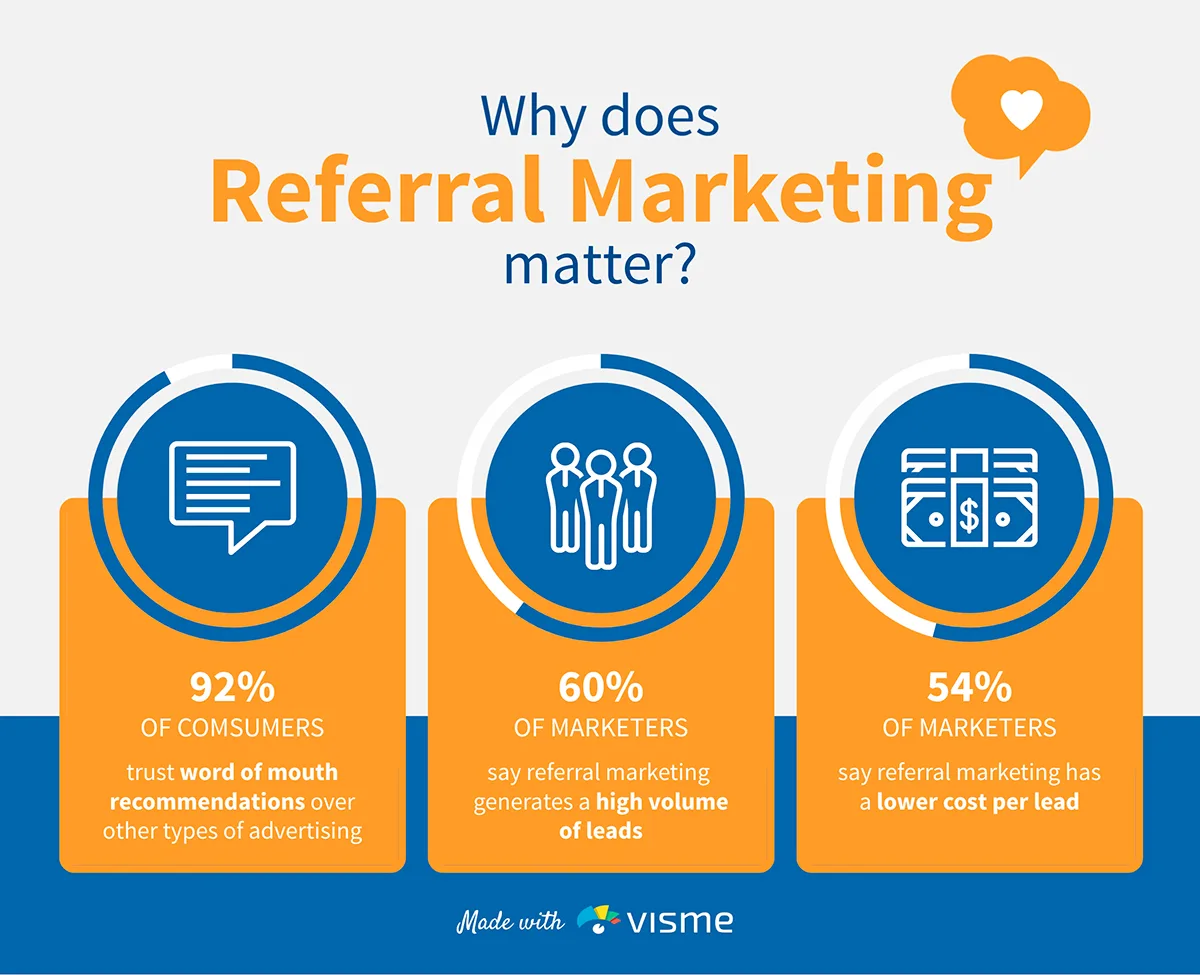
According to Nielsen research, people are far more likely to act on recommendations from people they know than on any form of advertising. That trust gap is why referral programs often convert at higher rates than paid channels, even with smaller reach.
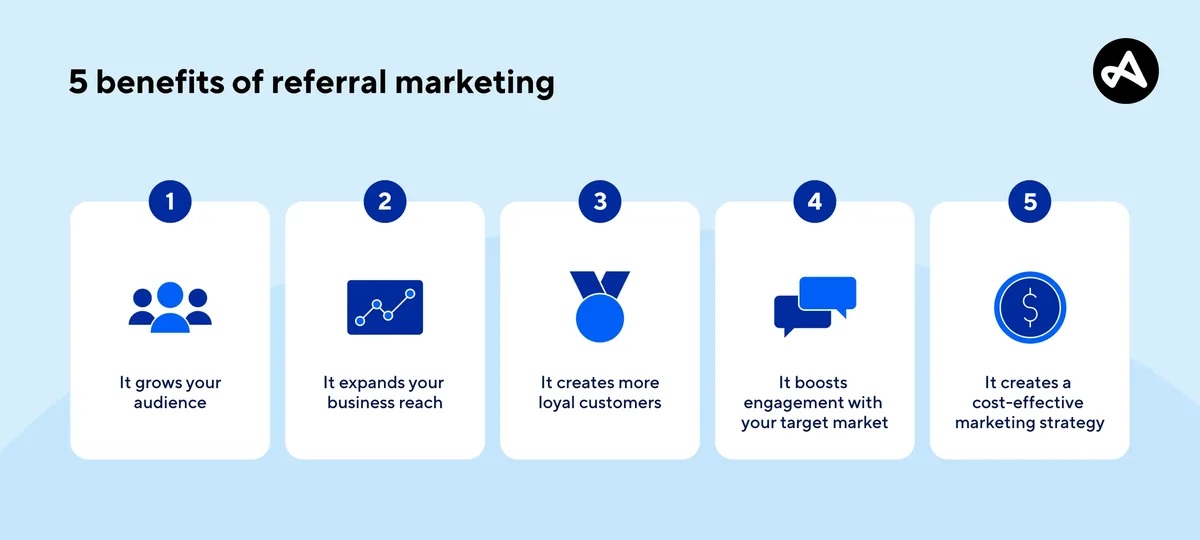
There is also a cost angle. Referral rewards are typically paid only after a successful conversion. You are buying outcomes, not impressions. For budget-conscious teams, that pay-for-performance structure is hard to beat.
The Anatomy of a Referral Program That Works
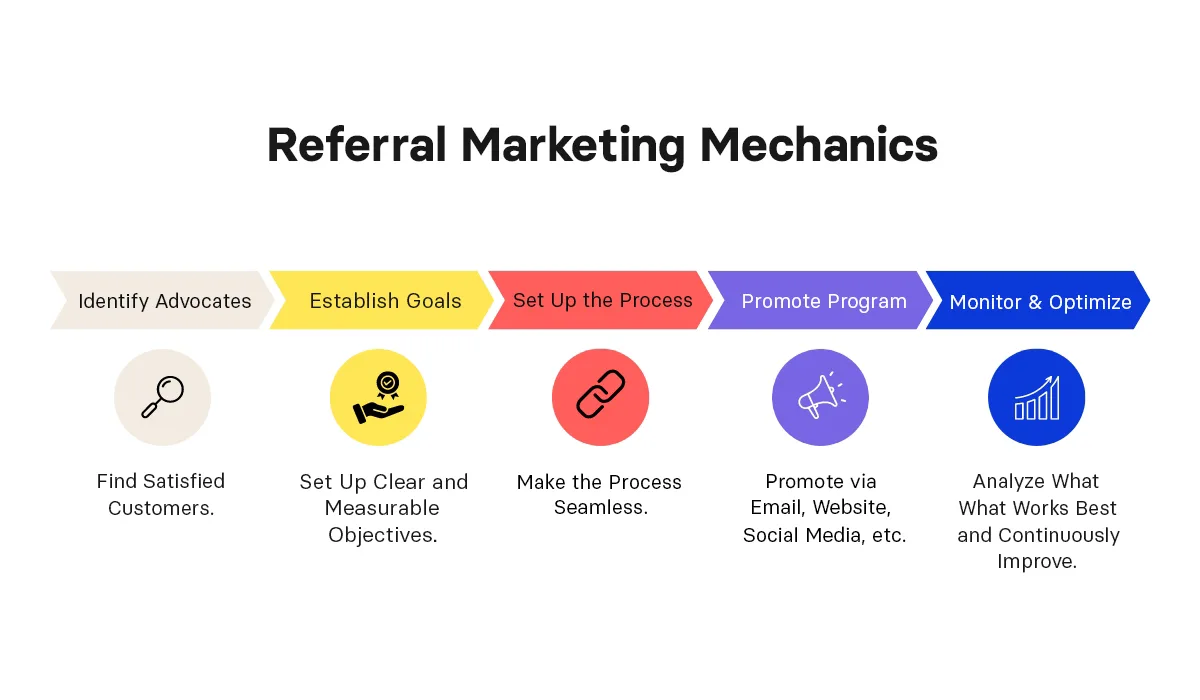
Every functional referral program has the same five moving parts. Miss one, and the whole thing limps.
The trigger is the moment you ask for the referral. Ask too early and the customer has not experienced value yet. Ask too late and the enthusiasm has faded. The sweet spot is usually right after a first win, a positive support interaction, or a renewal.
The offer is what both sides receive. Two-sided rewards consistently outperform one-sided ones because the referrer feels less awkward about asking.
The friction is everything between “I’d refer the referral marketing” and a completed signup. Every extra click, form field, or login wall bleeds conversion. Kill as much of it as you can.
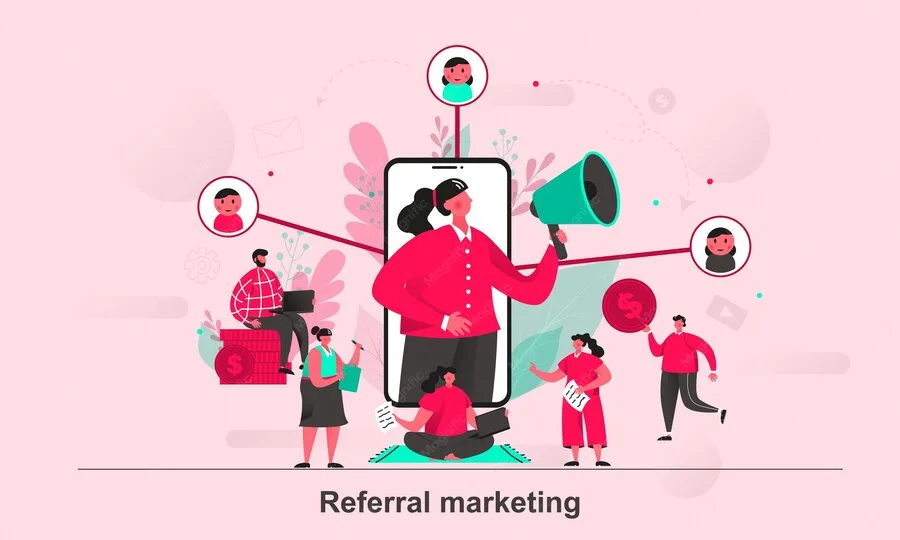
The tracking is how you know who referred whom and when to pay out. Modern referral software handles this, but the logic still needs to be designed carefully.
The follow-up is the thank-you, the status update, and the reward delivery. This is where most programs quietly fail. People refer, hear nothing, and never refer again.
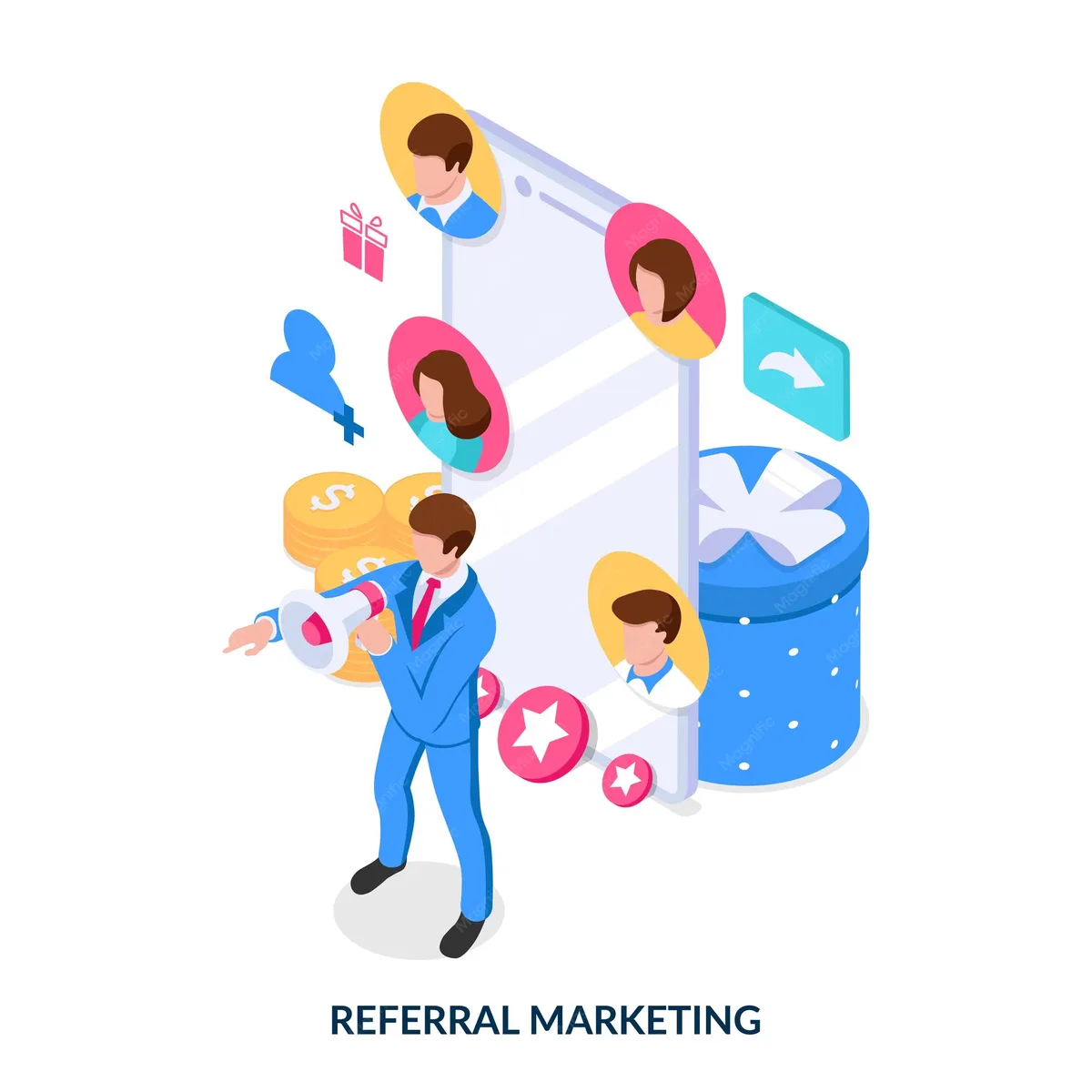
Get all five right and the referral marketing have a compounding acquisition channel. Get them wrong and you have a forgotten landing page.
Why Referral Marketing Deserves a Real Budget Line
Referrals often get lumped into “growth experiments” and funded with leftover change. That is a mistake. When a channel produces your highest-LTV customers, it deserves proper resourcing.
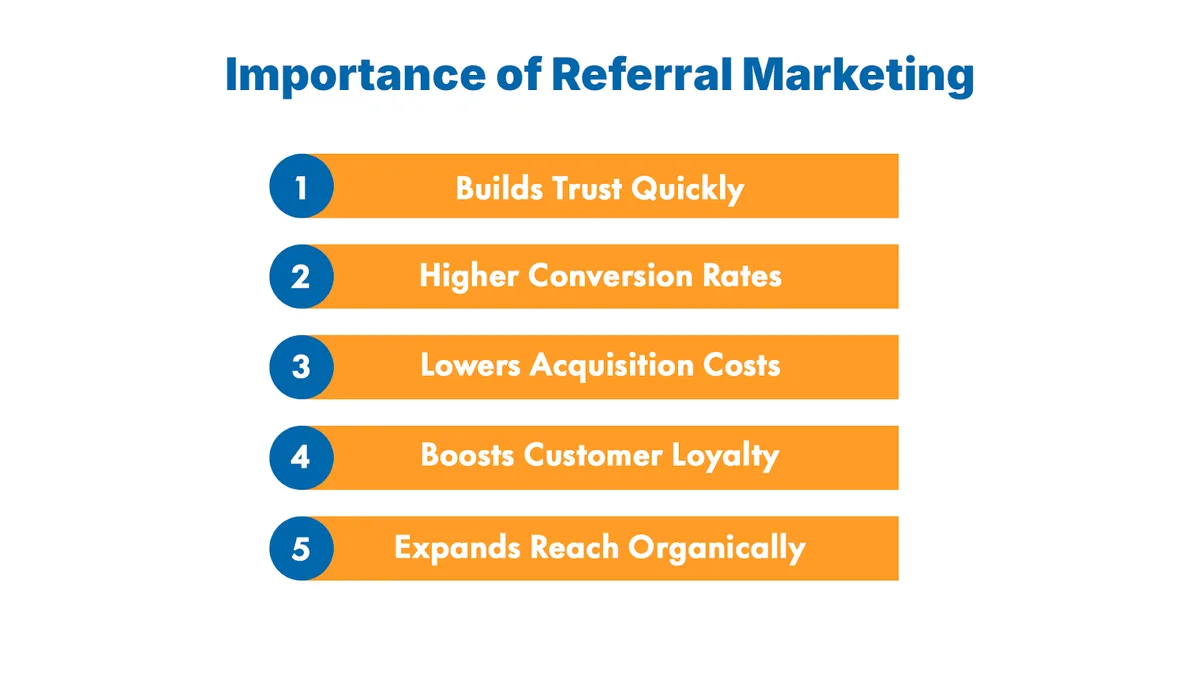
Data from Wharton professor Jonah Berger and other researchers suggests that word-of-mouth drives a substantial share of purchases across categories, far more than most marketers assume. Meanwhile, acquisition costs on paid channels keep climbing as ad auctions get more crowded.
Referral customers also tend to stick around longer. They arrive pre-trusted, with realistic expectations set by a friend rather than an ad. That alignment reduces churn and improves lifetime value.
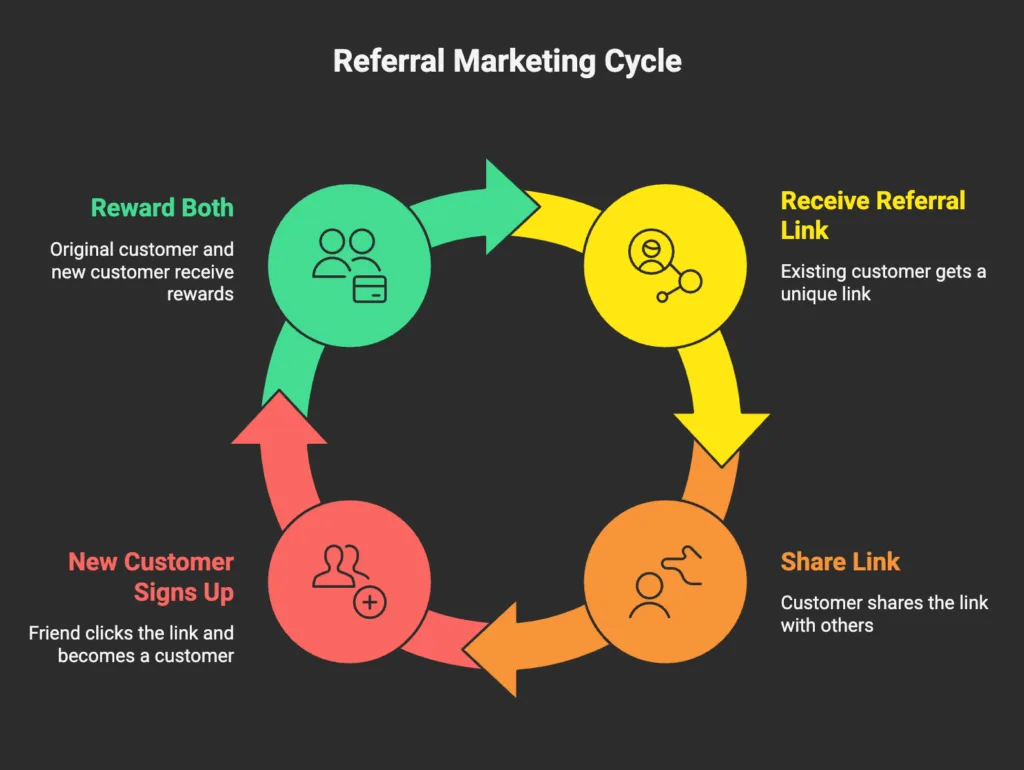
If you are building a referral marketing checklist for your finance team, lead with these retention numbers. Cost per acquisition is only half the story. The other half is what happens after the sale.
The Numbers That Make Referral Marketing Worth the Effort
Let’s put some concrete figures on the table. These come from widely cited industry studies and public company disclosures, not made-up benchmarks.
| Metric | Typical Range | What It Tells You |
|---|---|---|
| Share of customers who refer | 2% to 10% | Most satisfied customers never refer unless asked |
| Referral conversion rate | 3x to 5x paid channels | Trust drives action |
| Referral customer LTV | 16% to 25% higher | Better fit, lower churn |
| Program participation lift (with prompt) | 2x to 4x | Asking beats waiting |
| Average referral cycle time | 7 to 30 days | Faster than most paid funnels |
Notice the first row. Only a small slice of happy customers ever refer on their own. That single fact justifies the entire discipline. You are not creating demand. You are unlocking demand that already exists.
The second row is the payoff. Referred customers convert at dramatically higher rates because the trust has already been transferred. Your job is to remove the friction, not to convince.
Referral Marketing Best Practices: a Practical Checklist
Here is where the rubber meets the road. Effective execution in your referral marketing makes a tangible difference. Each of the seven practices below stands on its own, but they work best as a set. Implement them in order if you are starting fresh, or audit your current program against each one.
Before we dive in, one framing note. A referral marketing checklist is only useful if it is honest. If a practice does not fit your business model, skip it. Forced tactics feel forced to customers too.
1. Make the Ask at the Peak of Delight
Timing is everything. Ask for a referral when the customer is happiest, not when your quarterly target is looming.
Think about the moments that produce genuine delight. The first successful onboarding. A support ticket resolved faster than expected. A milestone hit inside your product. A renewal that came with a pleasant surprise. These are the natural peaks.
Patagonia does this well. The brand surfaces referral prompts after purchase confirmation and after positive customer service interactions, not at random. The result feels like a natural extension of the relationship rather than a sales pitch.
Set up event-based triggers in your CRM or product analytics tool. When a customer hits a defined delight moment, fire the referral prompt. Test the timing against a control group to prove the lift.
If you only take one referral marketing tip away from this section, take this one. Timing beats copy. A mediocre message at the right moment outperforms a brilliant message at the wrong one.
2. Reward Both Sides, Not Just the Referrer
Two-sided rewards are the single most reliable referral marketing best practice. When only the referrer gets paid, the ask feels selfish. When both sides win, it feels like a gift.
Airbnb built its growth engine partly on the referral marketing principle. The referrer earned travel credit, and the new user got a discount on their first booking. Both parties had a reason to complete the loop.
The reward itself matters less than the balance. Cash, credit, free months, upgraded tiers, or exclusive access all work. What does not work is a lopsided deal that makes the referrer feel like a salesperson.
Test a few reward structures. In many B2B SaaS contexts, account credit outperforms cash because it keeps value inside the product. In consumer e-commerce, a percentage discount on the next order often performs best.
One caution. Keep the reward meaningful but not so large that it attracts fraudsters. There is a sweet spot between “worth doing” and “worth gaming.”
3. Remove Every Friction Point from the Share Flow
The distance between intent and action is where referrals die. Every extra step is a leak.
Start by counting the clicks. Maintaining clarity across your referral marketing remains essential. How many taps does it take from “I want to refer” to “my friend received the invite”? If the answer is more than three, you have work to do.
Pre-fill the message. Pre-select the channel. Offer one-tap sharing to email, SMS, WhatsApp, and LinkedIn. Skip the login wall if the user is already authenticated. Every removed field is a recovered conversion.
Personalization helps too. A referral link that carries the referrer’s name and a short note converts better than a generic URL. The recipient sees a familiar face, not a faceless brand.
Test your flow on a phone with one hand. If you cannot complete a referral in under thirty seconds, your customers probably cannot either.
4. Track Attribution With Precision
You cannot optimize what you cannot measure. Attribution is the backbone of any serious referral marketing program.
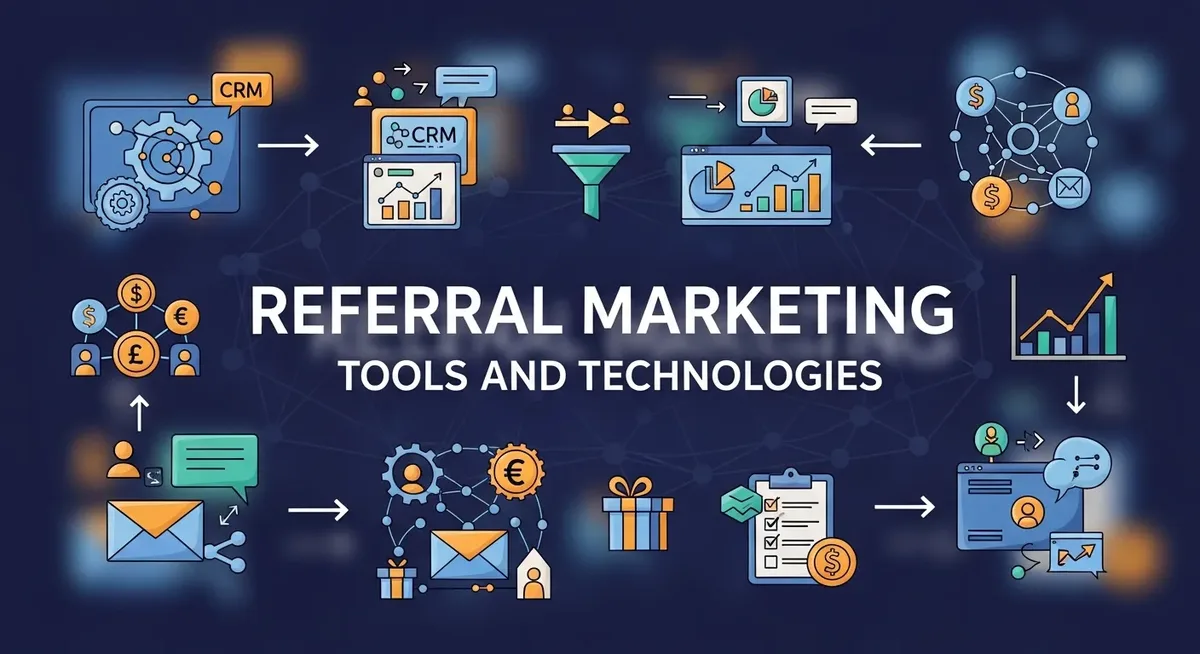
At minimum, you need to know who referred whom, when the referral was sent, when the new user signed up, when they converted, and when rewards were paid. That chain has to be auditable.
Use unique referral codes or links per user. Avoid shared codes that cannot be traced back to an individual. Shared codes are easier to set up but useless for attribution and prone to abuse.
Cookie-based tracking still works for many web flows, but expect limitations. Cross-device journeys, ad blockers, and privacy regulations all erode cookie reliability. Server-side tracking or first-party identifiers are more robust.
For mobile apps, deep linking is essential. A referral link that opens the app store, then loses the referral context, wastes the whole effort.
Build a simple dashboard. Referrals sent, referrals converted, rewards paid, revenue attributed. Review it weekly. You will spot problems faster than any report can surface them.
5. Build a Referral Marketing Checklist for Every Launch
Programs drift. What worked at launch quietly breaks six months later. A referral marketing checklist keeps the machine tuned.
Here is a practical checklist you can adapt:
- Reward terms are documented and visible to both referrer and referred.
- Tracking is verified end-to-end with a test referral.
- Share flow is tested on desktop and mobile.
- Email and in-app prompts are live at the right trigger moments.
- Fraud rules are active (duplicate accounts, self-referrals, velocity limits).
- Payout process is defined with clear timing and support contacts.
- Dashboard is refreshed and reviewed on a weekly cadence.
- Customer support is briefed on common referral questions.
- Legal and tax review is complete for reward types in each market.
- Program page is live and linked from the main navigation.
Run this checklist before launch and again every quarter. It takes an hour and saves months of silent failure.
If your program spans multiple regions, add a line for local compliance. A thoughtful approach to referral marketing reinforces your qualifications. Reward taxation and consumer protection rules vary by country, and getting them wrong is expensive.
6. Design for Trust, Not Just Volume
Referral programs live or die on trust. The moment customers feel tricked, the channel collapses.
Be transparent about the reward. Show the terms clearly. Do not bury conditions in fine print. If a reward has an expiration date, say so up front.
Do not spam the referred contact. One thoughtful invite is enough. Aggressive reminder sequences from the referrer’s name damage the relationship on both sides.
Fraud protection matters too. Self-referrals, duplicate accounts, and coordinated abuse can drain a program fast. Set velocity limits, verify identities where appropriate, and review payouts for anomalies.
Trust also means honoring the reward promptly. If a customer refers a friend and the friend converts, pay out within the promised window. Late rewards feel like broken promises.

Word gets around. A well-run program builds goodwill. A poorly run one builds resentment that spreads faster than any referral link.
7. Iterate With Real Data, Not Gut Feel
The last of our seven best practices is the one most teams skip. Referral programs are not set-and-forget. They need continuous iteration.
Start with a hypothesis. For example, “Doubling the referred-side reward will increase conversion by 15%.” Then test it against a control. Measure the lift. Keep what works, discard what does not.
Pay attention to segment differences. Power users may respond to status rewards. Newer customers may prefer cash. Enterprise accounts may want dedicated support. One program rarely fits all.
Watch the funnel, not just the top line. Structuring your referral marketing around proven patterns ensures impact. If referrals sent are high but conversions are low, the problem is downstream. If referrals sent are low, the ask is the problem.
Review quarterly. Refresh creative. Re-test reward sizes. Re-examine fraud rules. The best programs evolve with the business.
Referral Marketing Tips for Different Business Models
What works for a subscription SaaS company rarely works for a physical retailer. Here are targeted tips by model.
For SaaS and subscription businesses: Account credit usually beats cash. It keeps value inside the product and encourages deeper usage. Tie referrals to plan upgrades for extra lift.
For e-commerce: Percentage discounts on the next order are the workhorse. Bundle them with free shipping to sweeten the deal without inflating cost per acquisition.
For marketplaces: Two-sided rewards are essential because both sides are customers. Test different reward sizes for buyers versus sellers.
For B2B services: Cash rewards can feel transactional. Consider charitable donations, exclusive events, or executive roundtables instead.
For local businesses: Physical punch cards and in-person prompts still work. Do not over-engineer what a friendly ask can accomplish.
The pattern is consistent. Match the reward to the relationship, not to a generic template.
Common Referral Marketing Mistakes to Avoid
Some mistakes show up again and again. Learn from them so you do not repeat them.
One-sided rewards. The referrer feels selfish, and the referred feels used. Applying these principles to your referral marketing yields measurable results. Always reward both sides.
Asking too early. A customer who has not experienced value yet has nothing to refer. Wait for the win.
Complicated flows. Every extra step kills conversion. Simplify ruthlessly.
Weak tracking. If you cannot attribute the referral, you cannot pay it, optimize it, or defend it to finance.
No fraud protection. Self-referrals and duplicate accounts can quietly drain your budget.
Set-and-forget programs. Programs decay. Refresh them quarterly.
Ignoring the referred customer. The new customer is not a transaction. Onboard them properly and they may refer too.
Each of these mistakes is fixable. The trick is catching them before they become expensive.
How to Measure Referral Marketing Success
Vanity metrics feel good and prove nothing. Here are the numbers that actually matter.
Participation rate is the share of eligible customers who send at least one referral. If this is low, the ask or the reward is the problem.
Conversion rate is the share of sent referrals that become customers. If this is low, the friction or the offer is the problem.
Cost per acquisition is total program cost divided by new customers acquired. Compare it to your other channels.
Customer lifetime value of referred customers versus other cohorts. This is the number that justifies continued investment.
Payback period is how long it takes referred customers to repay their acquisition cost. Shorter is better.
Fraud rate is the share of referrals flagged or reversed. Keep it low, but do not ignore it.
Track these on a dashboard and review them monthly. Numbers do not lie, but they do need context.
Tools and Platforms That Support Referral Marketing
You can build a referral program from scratch, but dedicated software saves time and reduces errors. Here are the categories worth knowing.
Dedicated referral platforms like ReferralCandy, Talkable, and Ambassador handle tracking, rewards, and fraud detection out of the box. Good fit for teams without engineering capacity.
All-in-one growth tools like GrowSurf and Viral Loops bundle referral, contest, and waitlist mechanics. Useful for launches and experiments.
Native integrations in platforms like Shopify, Stripe, and HubSpot cover basic referral flows without third-party tools.
Custom builds make sense at scale when your referral logic is unusual or deeply tied to your product. Expect higher upfront cost and ongoing maintenance.
Whatever you choose, evaluate tracking reliability, fraud protection, and payout flexibility before committing. Those three factors determine whether the program holds up over time.
Frequently Asked Questions About Referral Marketing
Here is an in-depth breakdown of key considerations regarding this section:
What is the Difference Between Referral Marketing and Word-of-mouth?
Word-of-mouth is organic conversation that happens without prompting. Referral marketing is a designed program that encourages and rewards those conversations. The underlying trust is the same, but the structure is deliberate.
How Much Should I Offer as a Referral Reward?
There is no universal number. A common starting point is 10% of first-year customer value, split between referrer and referred. Test upward and downward to find the point where participation rises without attracting fraud.
Can Referral Marketing Work for B2B Companies?
Absolutely. B2B referrals often convert at even higher rates than consumer referrals because trust carries more weight in high-stakes purchases. The rewards just look different, such as account credit, executive events, or charitable donations.
How Do I Prevent Fraud in a Referral Program?
Use velocity limits, identity verification, and anomaly detection on payout patterns. Review payouts weekly for suspicious clusters. Most fraud is obvious once you look for it.
How Long Does It Take to See Results from a Referral Program?
Expect the first meaningful data within 30 to 60 days. Program maturity usually takes two to three quarters as you refine timing, rewards, and flow. Patience pays off here.
Should I Run a Referral Program if My Customer Base is Small?
Yes, but adjust expectations. With a small base, focus on quality over volume. A handful of well-timed asks to your happiest customers can still produce meaningful results.
Bringing It All Together
Referral marketing is not magic. It is a disciplined system built on trust, timing, and follow-through. The seven best practices above cover the essentials, and the checklist keeps the machine tuned.
Start small. Pick one trigger moment, build a two-sided reward, and measure everything. Then expand. The compounding effect of a well-run program is real, but it takes patience to see it.
If you remember one thing, make it this. Your happiest customers are already telling people about you. Your job is to make that easier, more rewarding, and more measurable. Do that well, and referral marketing becomes the most efficient acquisition channel you own.
For further reading on the psychology behind social proof and recommendation behavior, see the Wikipedia entry on word-of-mouth marketing, which offers useful context for anyone building a referral marketing program.