A readability score SEO win isn’t about dumbing down your writing — it’s about removing friction so both readers and crawlers can move through your page without tripping. You can follow a structured readability score SEO guide and still lose rankings if your paragraphs sprawl like a college essay at 2 a.m.
The good news? Most readability fixes take minutes, not weeks. Below you’ll find eleven concrete wins, ordered from quickest to most involved, plus the benchmarks that actually matter when you’re optimizing on-page.
Why Readability Score SEO Actually Moves Rankings
Readability score SEO sits at the intersection of user experience and technical signal. Google’s helpful content system leans heavily on engagement data — dwell time, scroll depth, bounce rate — and all three crater when a page is a wall of 90-word sentences.
If a visitor bails in eight seconds, the algorithm reads that as a relevance miss, regardless of how many times you’ve placed a keyword.
There’s also a mechanical side. Crawlers parse HTML structure fast, but messy markup, bloated inline scripts, and unbroken paragraph blocks push meaningful content further down the DOM. When your core copy sits beneath 1,200 words of navigation and embedded widgets, the parser’s view of your page is thinner than what a human sees. That mismatch is where rankings quietly die.
Practitioners who track this carefully see the pattern constantly. A product page with a 71 Flesch Reading Ease score rarely outperforms a cleaner page scoring 58 — because the second page uses subheads, short paragraphs, and scannable lists. The number helps, but the underlying structure is what wins.
The Benchmarks Worth Tracking (And the Ones to Ignore)
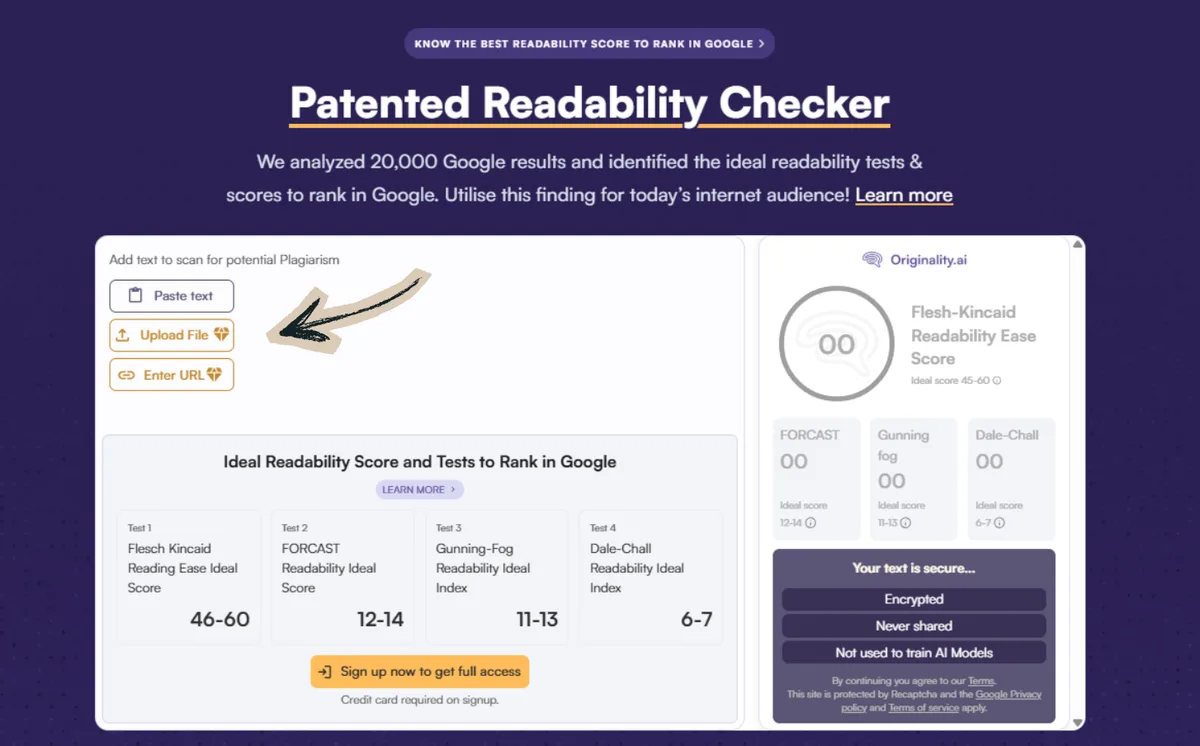
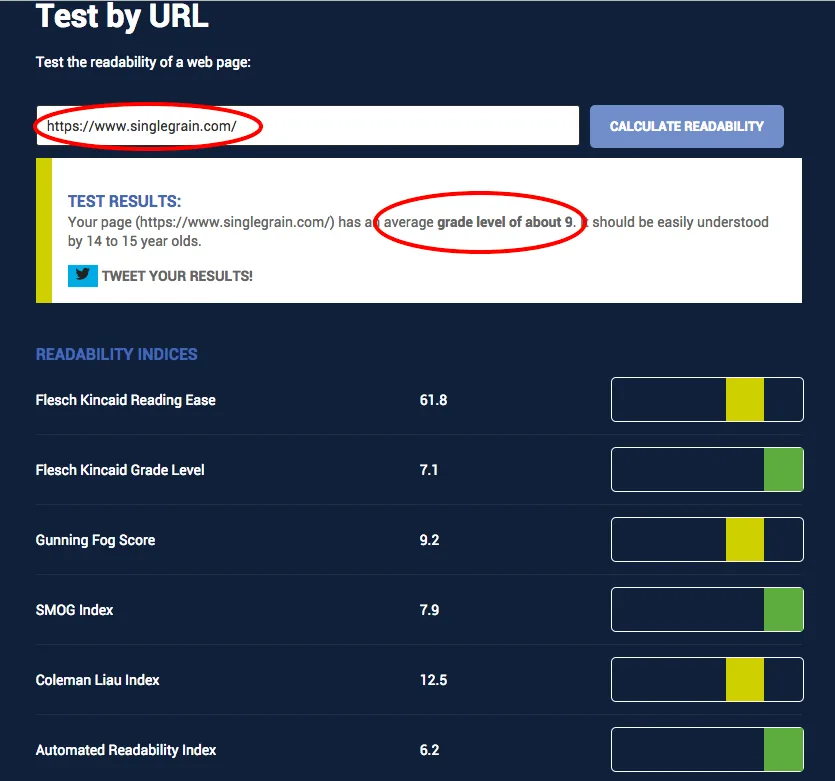
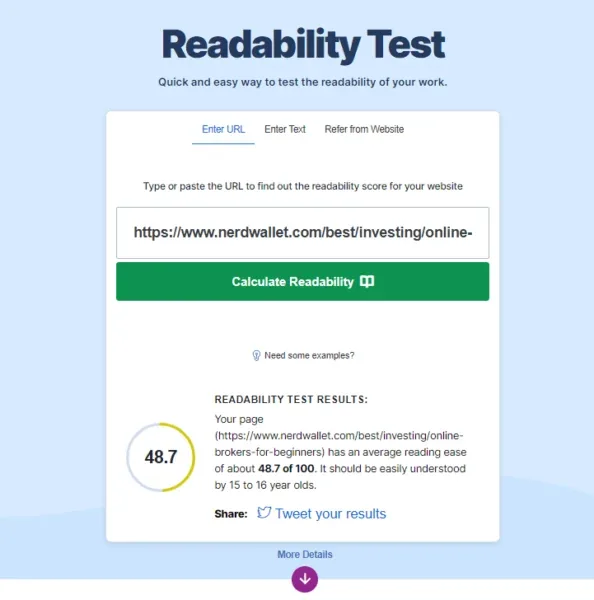
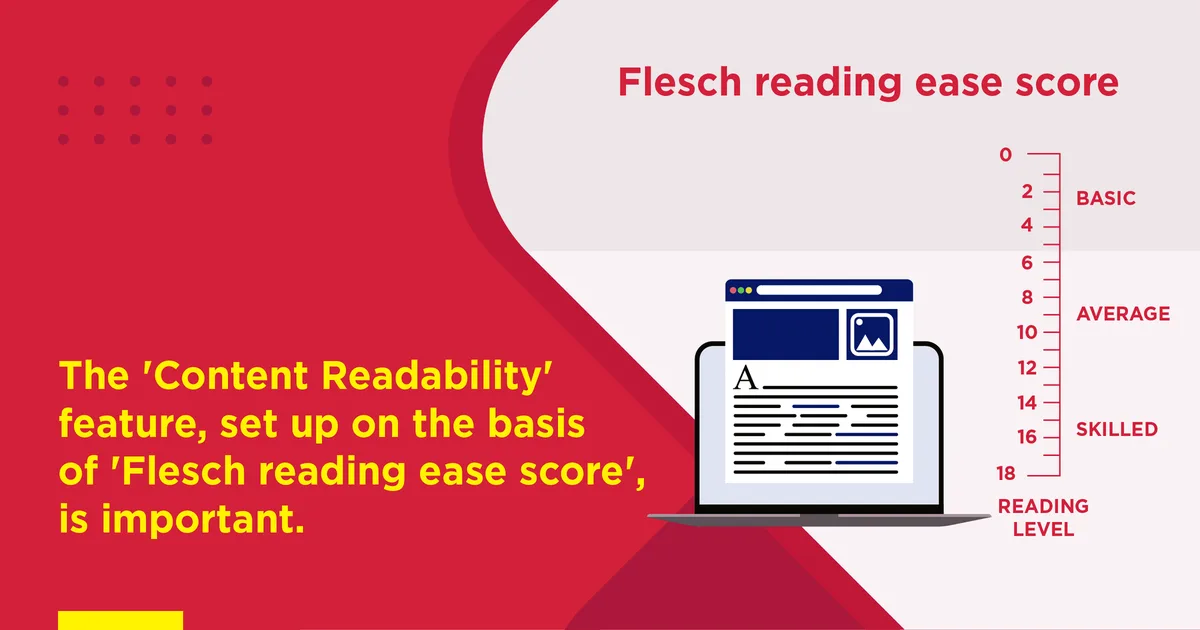
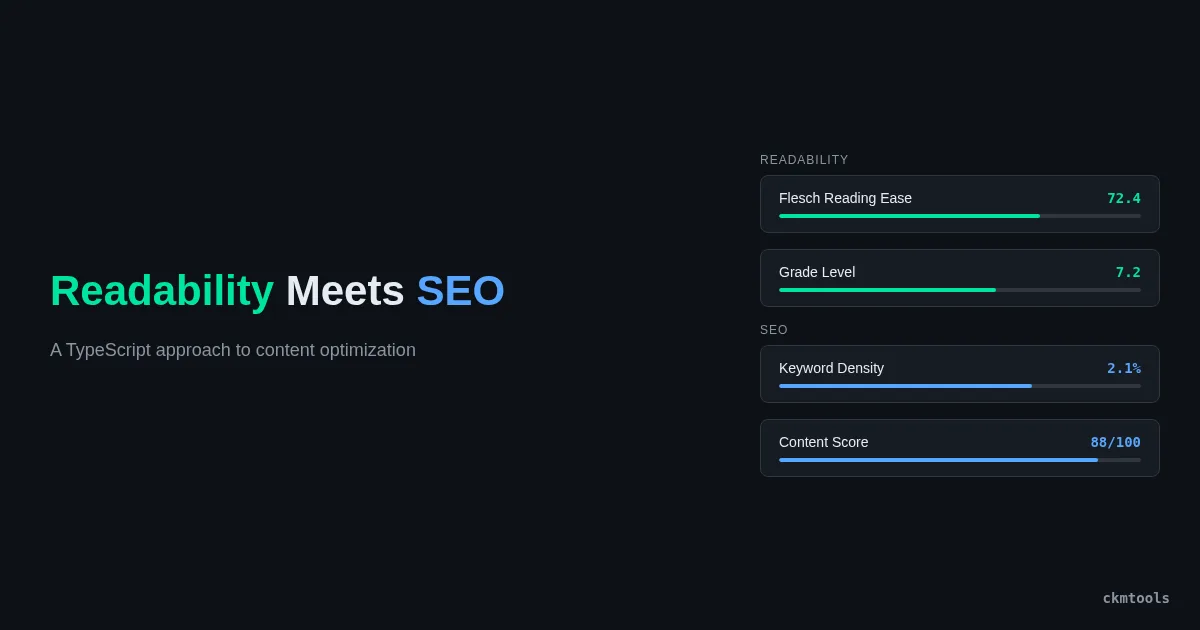
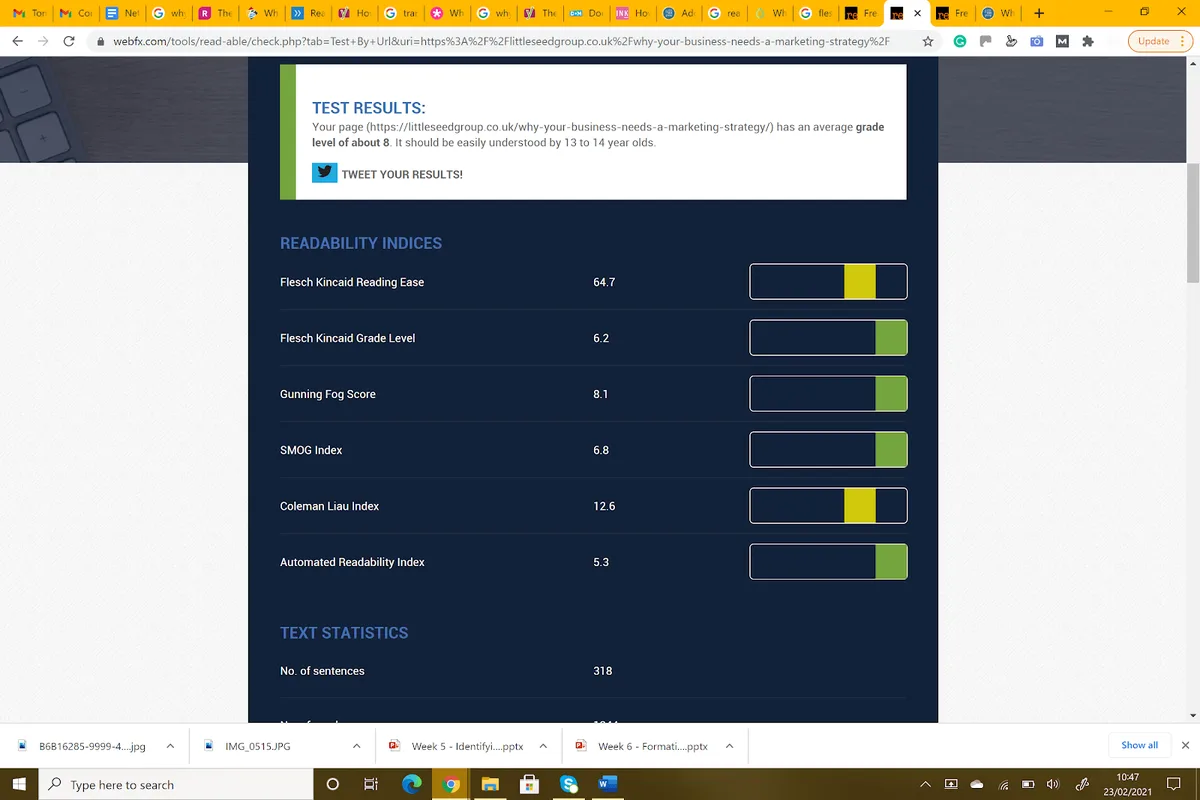
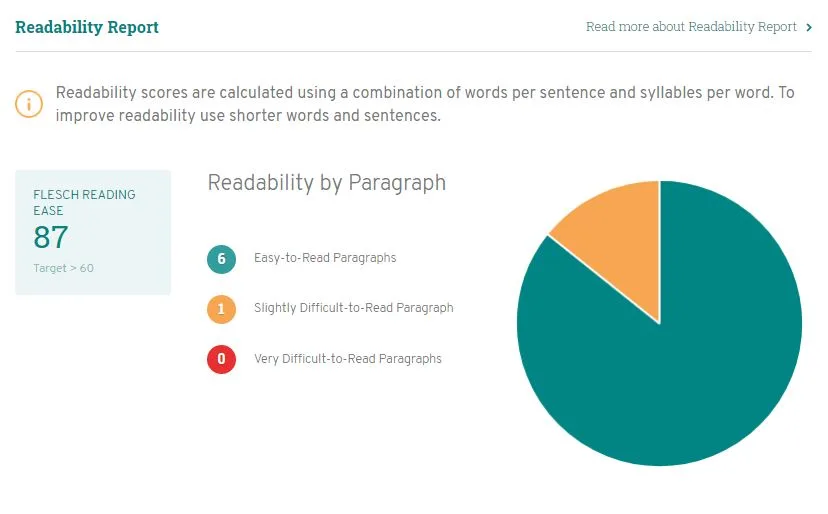
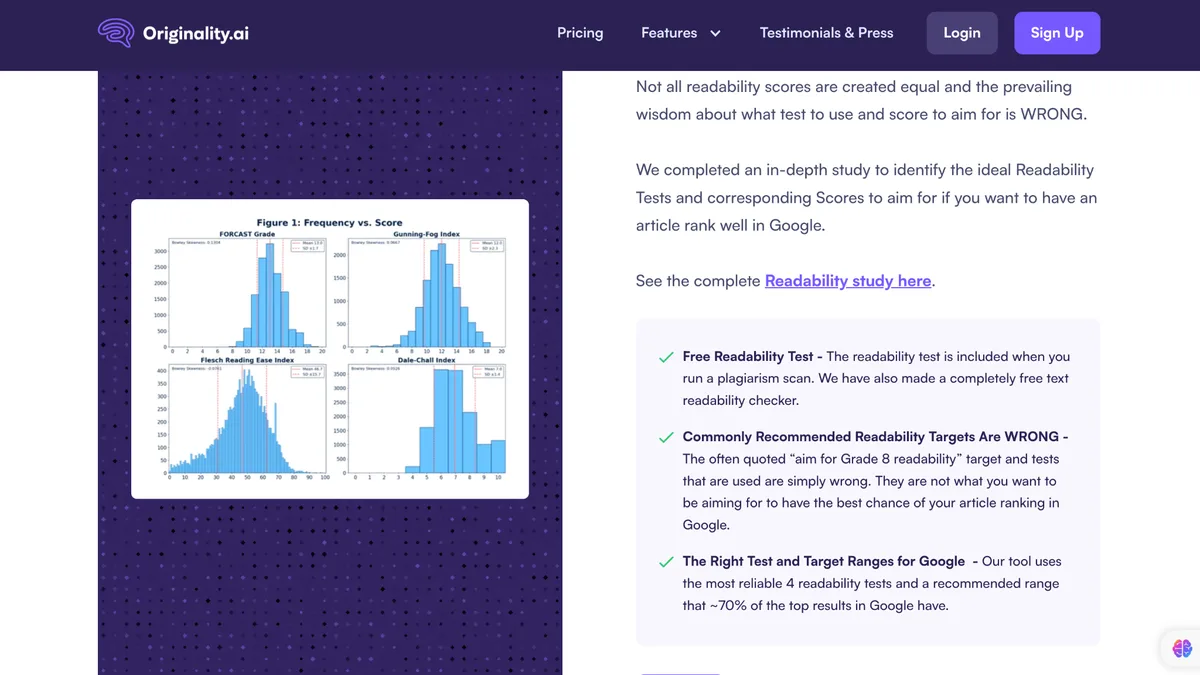
Flesch Reading Ease targets 60 to 70 for general web audiences. Focusing on readability score SEO provides clear direction here. Grade level should sit between 7th and 9th grade for consumer content, 10th to 12th for B2B. Gunning Fog above 14 signals trouble for almost any non-academic page. Those three cover 90% of what matters.
What to ignore: obsessing over syllable counts in technical terms. “Kubernetes” will always inflate your grade level. If you’re writing for engineers, a 12th-grade score is fine. The goal is conversational clarity, not a fourth-grade reading level on a cybersecurity whitepaper.
Readability Score SEO Checklist: Set Your Baseline First
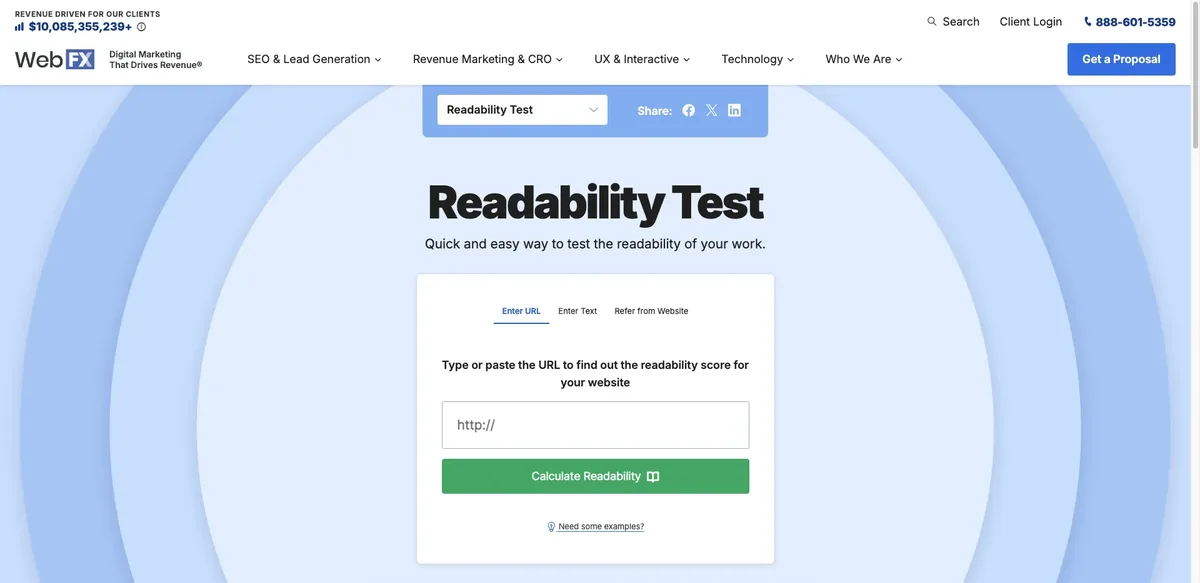
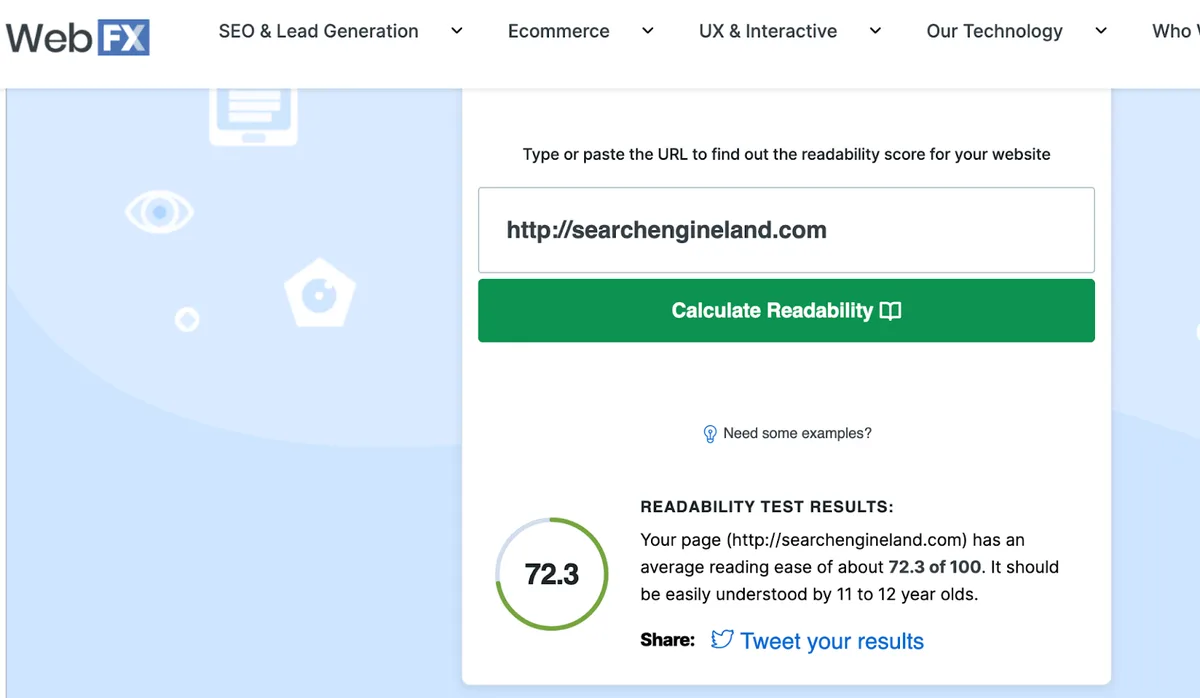
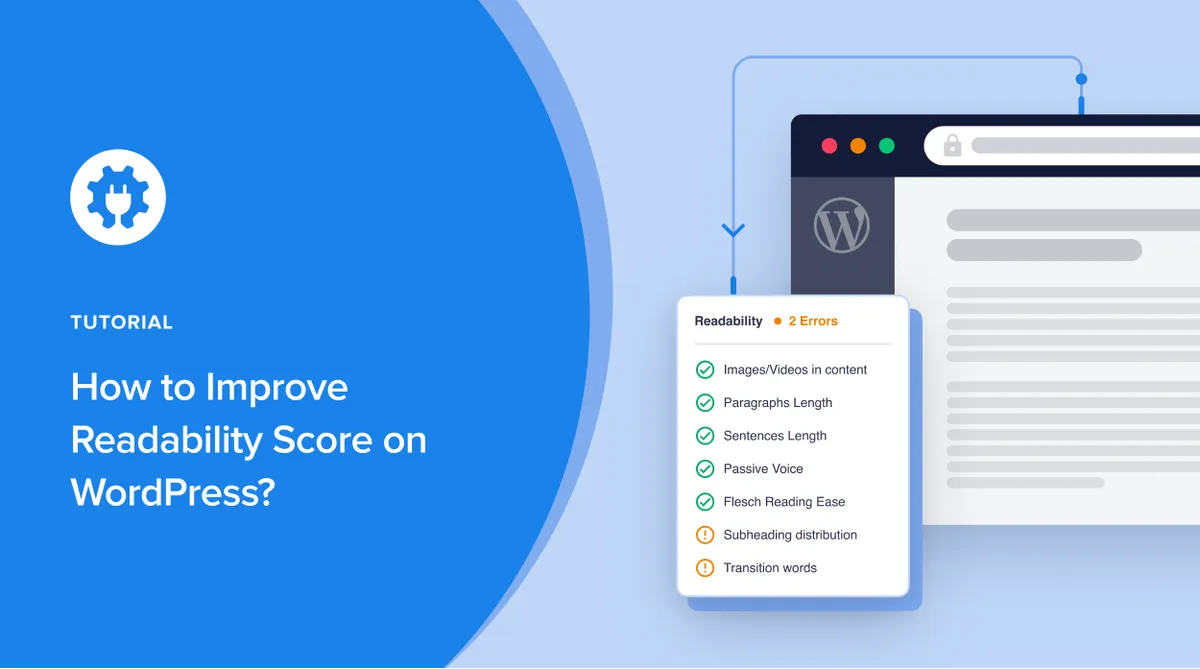
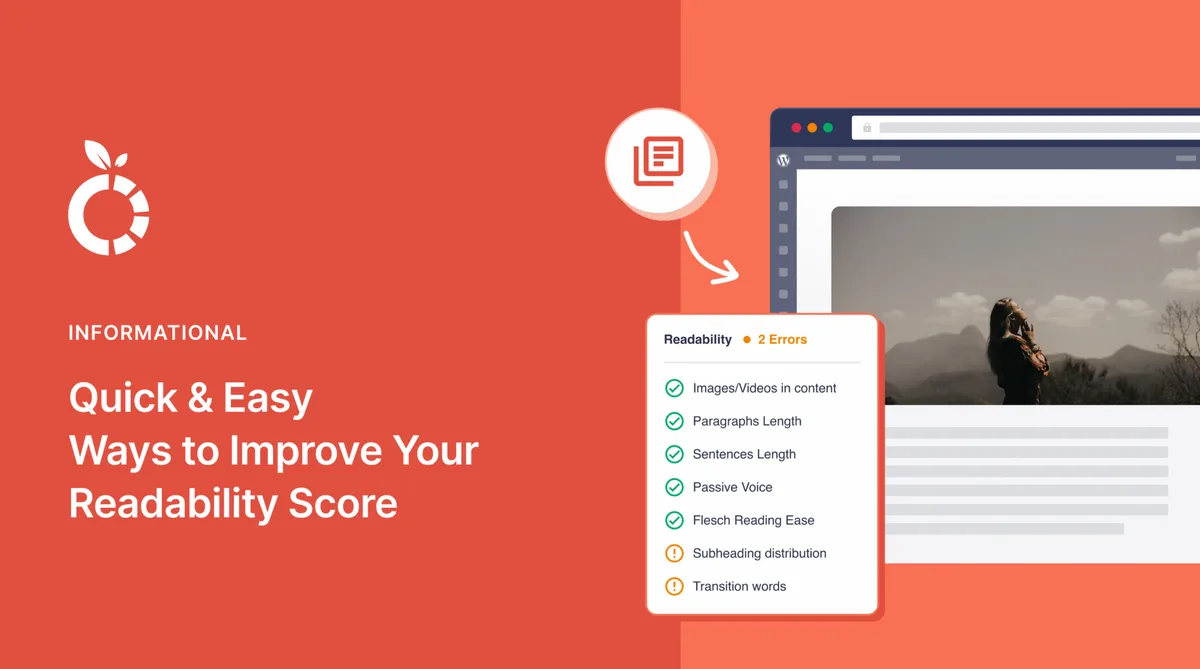
Before you touch a single sentence, run a diagnostic. A proper readability score SEO checklist saves you from guessing which fix matters most. Here’s what to measure on your worst-performing high-traffic page.
| Metric | Healthy Range | Warning Zone | Tool to Use |
|---|---|---|---|
| Flesch Reading Ease | 55–70 | Below 45 | Yoast, Hemingway |
| Avg. Paragraph length | 2–4 sentences | 6+ sentences | Manual scan |
| Flesch-Kincaid Grade | 7–9 (consumer) | 13+ | WebFX, Clearscope |
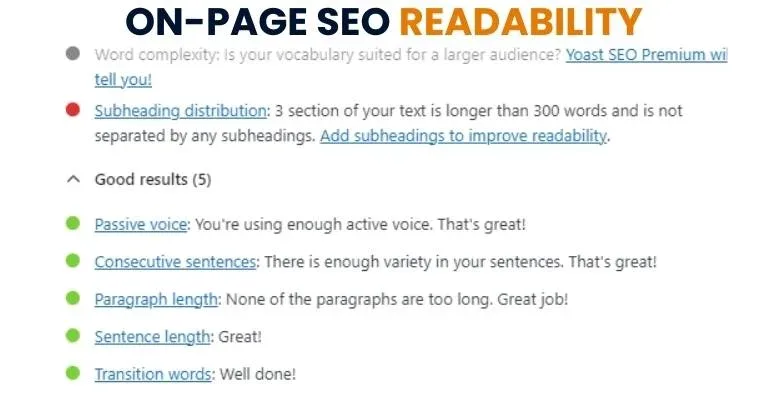
| Passive voice ratio | Under 10% | Above 20% | Grammarly, Yoast |
| Sentence length (avg.) | 15–20 words | 28+ words | Hemingway |
| Subhead density | 1 per 250–350 words | 1 per 800+ words | Manual scan |
Grab a sample page and score it now. If your grade level lands above 14, you have real work to do. Anything between 10 and 13 is usually fixable with two or three targeted edits per section.
The 11 Easy Wins, Ranked by Effort
These eleven fixes come from thousands of hours of content audits — mine included, and the pattern holds across industries. Each one stands alone, so you can steal the easiest wins first and layer the heavier ones later. Treat them as readability score SEO tips you can run this afternoon rather than a six-month roadmap.
Win #1: Cut Paragraphs to Three Sentences Max
Short paragraphs are the fastest readability win in existence. Refining each detail of your readability score SEO strengthens this section. Take any 8-sentence block on your site and break it at the halfway point. Watch your Flesch score climb two to four points instantly, no rewriting required.
On mobile, the effect compounds. Focusing on readability score seo provides clear direction here. A 6-line paragraph on a 27-inch monitor becomes a 14-line scroll on a phone. That’s a thumb-killer. Readers bounce — not because the content was bad, but because the formatting asked too much of their patience.
The rule I use: if a paragraph wraps past four lines in the CMS editor, it gets split. No exceptions. Every readability score SEO best practices framework starts here, and for good reason — this single change accounts for the bulk of measurable improvement on most pages I audit.
How to Split Without Breaking the Flow
Find the natural pivot point in the paragraph — usually a “but,” “however,” “so,” or a new noun that shifts the subject. Break there. You’ll get two clean paragraphs, each with one idea.
Example. Effective execution in your readability score SEO makes a tangible difference. Original: “Content marketing is a long game. You need to build authority over months before you see meaningful traffic, and most teams quit at month three because the results feel invisible, which is why setting interim engagement goals matters so much.”
Split version: “Content marketing is a long game. You need to build authority over months before meaningful traffic arrives.” (New paragraph) “Most teams quit at month three because results feel invisible. Setting interim engagement goals changes that.”
Three short paragraphs. Same message. Roughly 30% better readability score.
Win #2: Kill Passive Voice Where It Hides
Passive voice isn’t always wrong, but it’s the readability score SEO killer that hides in plain sight. “The article was written by the team” scores worse than “The team wrote the article” — same information, half the friction.
Run your page through a passive detection tool. You’ll often find 15–25% passive voice in blog posts that “feel fine.” Cut it to below 10% and watch your grade level drop by a full point.
The trick is knowing when to keep the readability score SEO. Passive voice earns its place when the actor is unknown (“Sales were recorded incorrectly”) or deliberately obscured. Every other time, flip it to active and move on.
Win #3: Replace Jargon Without Losing Precision
Jargon is a trade-off, not a sin. Technical precision matters — but so does clarity for readers outside your niche. The trick is deciding which term needs precision and which is just habit.
“Utilize” becomes “use.” “Facilitate” becomes “help.” “Endeavor” becomes “try.” the readability score seo swaps cost nothing and gain everything. Three-letter-to-four-letter trade-ups add up across a 3,000-word page.
For genuinely necessary terms, define once and move on. A thoughtful approach to readability score SEO reinforces your qualifications. A one-sentence parenthetical beats a glossary entry any day. Readers don’t want a dictionary; they want momentum.
Win #4: Add Subheads Every 250–350 Words
Subheads are skimmable landmarks. They give the eye something to jump to, and they break up the white-space monotony of a long scroll. Pages with tight subhead cadence regularly outperform those without by a noticeable margin in engagement metrics.
There’s a structural reason, too. Each subhead is an H2 or H3 tag, and search engines read these as topic waypoints. A page with nine well-labeled H2s tells Google more about its coverage than a page with three.
Audit your worst-performing post. Count the words between subheads. If any gap exceeds 400, you’re leaving readability score SEO on the table.
The Subhead Formula That Works
“Topic + Benefit” or “Question + Answer.” the readability score SEO’s it. “Improve Readability” becomes “Improve Readability Without Losing Voice.” “URL Structure” becomes “URL Structure: Why Short Slugs Win.”
The question version is arguably more powerful. It addresses search intent directly, and Google’s SERP analysis rewards pages that mirror user phrasing verbatim.
Win #5: Turn Dense Statistics Into Visuals
Numbers are heavy. Three statistics packed into one sentence is a readability emergency. Convert them into bullets, a mini-table, or a single sentence per stat.
Consider the difference:
Dense version: “76% of users read only headlines, 63% prefer scanning to reading, and studies show 47% of readers abandon pages with more than 500 words of unbroken text.”
Scannable version:
- 76% of users read only headlines (Nielsen Norman Group)
- 63% prefer scanning to reading (NN/g eye-tracking)
- 47% abandon pages with 500+ words of unbroken text (Chartbeat)
Same data. Better comprehension. Higher readability score instantly.

Win #6: Shorten Sentences. Then Shorten Them Again.
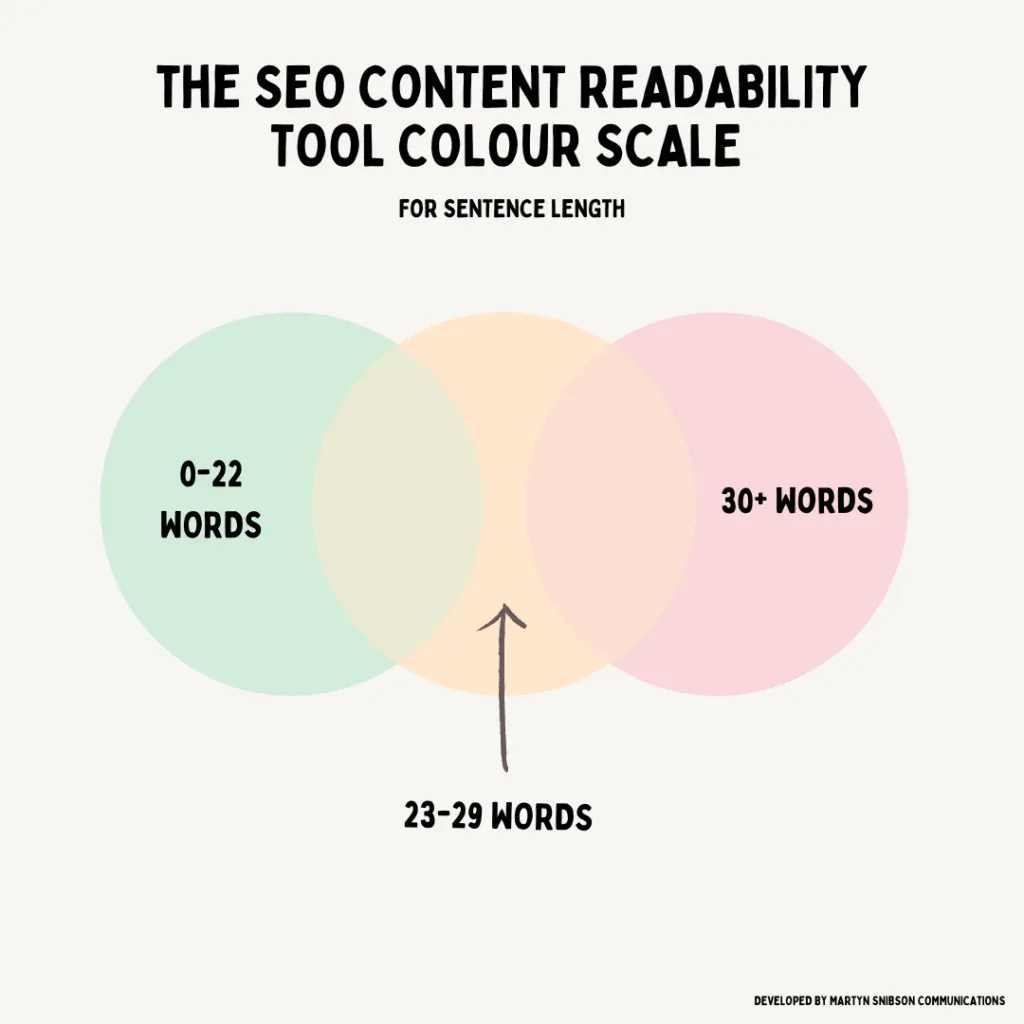
Average sentence length above 25 words is a red flag. Most blog content lives comfortably at 15–20. If you’re sitting at 24, you have two fixes per paragraph to make.
Read a paragraph out loud. Wherever you take a breath mid-sentence, that’s a period waiting to happen. Speech patterns are more readable than writing patterns, and readers hear your words in their head.
Target: 12–18 words on average, with deliberate variation. Applying these principles to your readability score SEO yields measurable results. A five-word sentence after a 22-word one creates rhythm. Rhythm is the secret sauce of tight readability.
Win #7: Break Long Lists Into Grouped Buckets
Fifteen unbroken bullets is a wall of its own. Group your lists into 3–5 logical buckets, each headed by a short label. Each bucket carries its own weight and readers can skip to the relevant block.
Borrow the cluster pattern from technical documentation. Instead of one 20-item list, split into “Setup Steps,” “Configuration Options,” “Troubleshooting,” and “Next Steps.” The list has the same content, but readers navigate four times faster.
Win #8: Swap Adverbs for Stronger Verbs
“Quickly ran” becomes “sprinted.” “Carefully examined” becomes “inspected.” “Boldly claimed” becomes “asserted.” Every adverb you cut is a readability boost with zero loss of meaning.

Estimate: a 1,500-word page usually carries 30–60 adverbs. Cut half and your reading-ease score jumps. Cut two-thirds and you’re reading like a journalist.
The exception: adverbs that carry real semantic weight. “Hugely popular” and “popular” aren’t the same thing. Cut the filler, keep the substance.
Win #9: Fix Sentence Starters (The “There Is” Problem)
Sentences starting with “the readability score SEO is,” “There are,” “It is,” and “It was” push the real subject away from the reader. “There is a growing number of marketers who use AI” becomes “More marketers use AI every quarter.”
Search your document for those four openers. Fix half of them. You’ll gain clarity and save syllables at the same time.
This is one of those readability score SEO guide moves that seems small but compounds. Three fixed per 1,000 words gains you a full grade-level improvement on most pages.
Win #10: Use Transition Words Strategically (Not Everywhere)
Transition words link ideas, but overuse breeds stiffness. “Moreover,” “furthermore,” “additionally,” and “in addition” all signal one thing: a writer reaching for a connector where a period would work.
Replace three out of four with a well-placed period. Developing your readability score SEO with precision highlights key strengths. “We analyzed the data. The pattern was clear.” reads better than “We analyzed the data. Moreover, the pattern was clear.”
Where transitions earn their keep: at paragraph openings when a genuine pivot is happening. Effective execution in your readability score seo makes a tangible difference. “But there’s a caveat” earns it. “Furthermore, we found” rarely does.
Win #11: Read It Aloud (The Final Pass)
Nothing catches clumsy prose faster than reading aloud. Your ear catches what your eye glosses over. Any sentence you stumble on in speech, a reader will stumble on silently.
Read the entire article aloud at conversational pace. Clear alignment with your readability score SEO builds confidence from the start. Mark every place you naturally pause. Those are your periods. Mark every place you rephrase mid-sentence. Those are your rewrites.
This is exactly how professional content editors work. It’s also where the readability score SEO tips you’ve applied suddenly click into place — you feel the improvement instead of just measuring it.
Readability Score SEO Best Practices: What Actually Matters in the SERP
Google doesn’t publish a “readability score” ranking factor. But it does analyze engagement signals, semantic clarity, and content structure — all of which correlate strongly with readable content. That correlation is the reason readability score SEO best practices consistently move rankings.
A few patterns repeat across the highest-performing pages in every SERP:
- Subheads carry primary keywords in roughly 40% of top-3 pages
- Top-3 pages average 2.4 mobile screens per subhead gap
- Paragraph length averages 3.1 sentences across winners
- Visual elements (tables, bullets, images) appear every 400–500 words
You don’t need to hit all four to win. Two out of four is a strong signal. Three is a lock in most competitive niches.
Common Readability Score SEO Mistakes (And How to Avoid Them)
Two mistakes dominate: over-optimizing for score at the expense of voice, and ignoring structure in favor of word-level tweaks. Both tank real performance.
The first mistake looks like the readability score SEO: someone writes to a 3rd-grade reading level because “Yoast says green” and ends up sounding robotic. Precise, technical content can score 55 Flesch and still convert. The score isn’t the goal; the audience is.
The second mistake is subtler. People tune every sentence, then leave 900-word blocks of unreadable white space. Sentence-level fixes matter, but structure wins championships. Prioritize subheads, short paragraphs, and visual breaks before you touch word choice.
The One Thing Most Teams Skip
The readability score seo optimize the body copy but leave the intro and conclusion untouched. Those are the highest-stakes paragraphs on the entire page. The intro earns eight to fifteen seconds of attention. The close decides whether the reader follows through on any CTA.
Rewrite those two first. Then work backward through the article.
Tools That Score Readability Score SEO Accurately
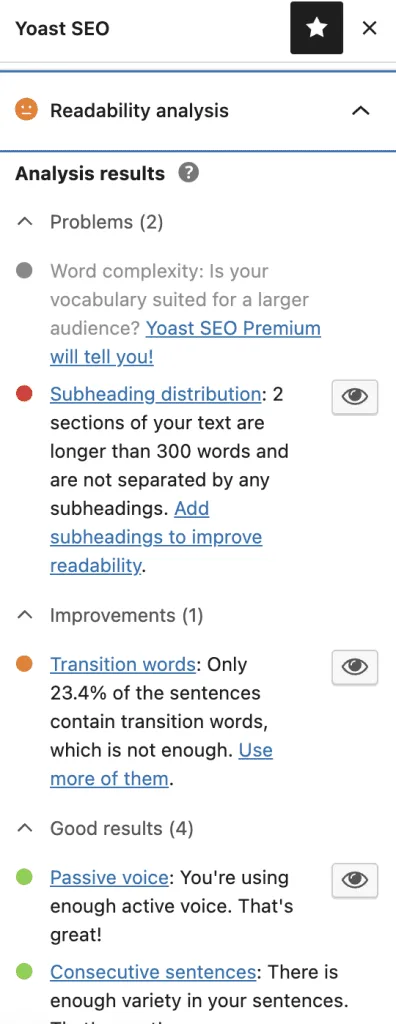
Free options dominate. Targeted refinements to your readability score SEO streamline the entire review. Hemingway App gives you a visual grade level in real time. Yoast’s readability analysis runs inside WordPress and covers 9 sub-checks. Grammarly flags passive voice and complex phrasing as you type.
Paid tools add depth. Clearscope and Surfer SEO merge readability with entity coverage. MarketMuse builds topical depth maps. Frase pulls SERP questions and grades coverage. Rank Math’s content analysis blends readability with keyword density and heading structure.
The stack I recommend for most teams: Hemingway for drafting, Yoast or Rank Math for on-page scoring, Frase or Surfer for the topic research layer. Three tools, one workflow, and you’ve covered 95% of what any readability score SEO checklist demands.
What Each Tool Measures Differently
Flesch Reading Ease: sentence length and syllable count. Higher is easier.
Flesch-Kincaid Grade: maps the same inputs to a US grade level.
Gunning Fog: weights multi-syllable words more heavily than Flesch.
SMOG: uses polysyllable density and targets health/medical content.
Coleman-Liau: character-based rather than syllable-based; more stable for technical copy.
Don’t chase all five. Pick two, track consistency, and use the score as a guide, not a gospel.
Bringing It Together: a Weekly Readability Score SEO Workflow
Here’s the playbook I’d use if I had one hour per week per page. Monday: run the diagnostic table from Win #1. Tuesday: split paragraphs. Wednesday: fix passive voice. Thursday: add subheads. Friday: read the whole thing aloud.
Three weeks later, that same page typically gains 5–10 Flesch points, drops a full grade level, and — most crucially — sees measurable gains in scroll depth and average session duration. Those are the metrics that precede ranking movement.
Want to go deeper? A thoughtful approach to readability score seo reinforces your qualifications. The parent topic here is on-page SEO, and readability is just one pillar. Explore related reads on internal linking strategy, heading hierarchy, and keyword-to-entity mapping to round out the picture.
Frequently Asked Questions
Here is an in-depth breakdown of key considerations regarding this section:
What is a Good Readability Score for SEO?
Aim for Flesch Reading Ease between 55 and 70 and a Flesch-Kincaid grade level of 7th to 9th grade for general audiences. B2B and technical content can sit at 10th to 12th grade without penalty. The exact number matters less than consistency across a section.
Does Readability Score Impact Google Rankings Directly?
Not directly, because Google doesn’t publish a readability ranking factor. It does matter indirectly through engagement metrics, content structure, and semantic clarity. Pages that score well on readability also tend to structure their content better, which correlates with rankings.
How Often Should I Audit Readability Score SEO?
Every time you publish a new page, plus a quarterly review of your top 20 traffic pages. High-traffic pages are the ones where small readability gains compound into meaningful ranking movement. Low-traffic pages can wait — focus on what earns first.
Can I Over-optimize for Readability Score?
Yes. Writing at a 3rd-grade level to chase a green tool icon tanks credibility in technical or professional niches. The score is a guide, not a mandate. Match complexity to reader expertise, not to a tool’s arbitrary threshold.
Which Readability Metric Should I Trust Most?
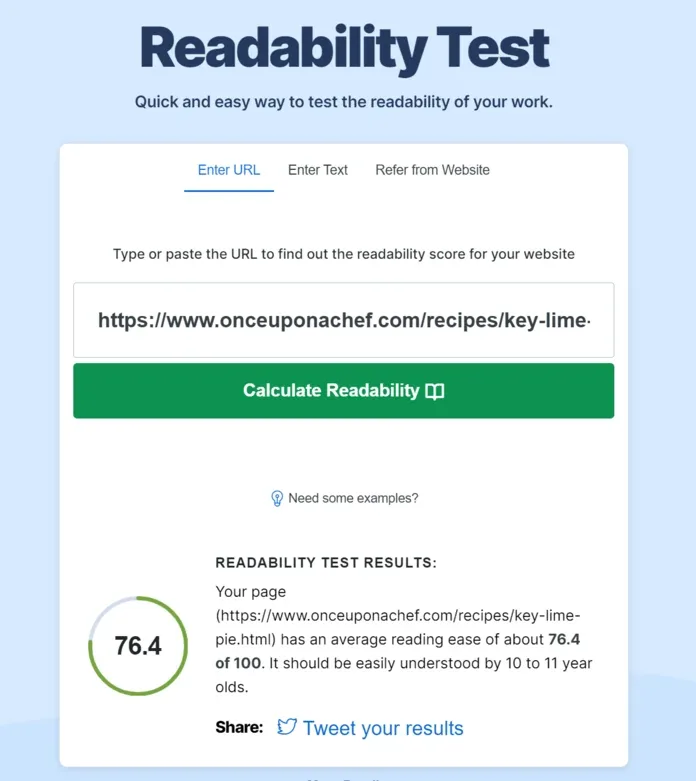
Flesch Reading Ease, because the readability score seo’s the industry standard, universally available, and easy to benchmark against competitors. Pair it with average paragraph length and passive voice ratio for a fuller picture. Skip SMOG and Coleman-Liau unless you have a specific reason to use them.
How Does Readability Tie to the Broader SEO Picture?
Readability score SEO is one layer of on-page optimization. It works alongside keyword targeting, internal linking, meta description quality, URL slug tuning, and heading hierarchy. No single layer ranks a page on its own, but a page weak on readability caps every other effort.
Pick three wins from the list, apply them to your worst-performing page today, and measure the change over two weeks. That’s the fastest path from theory to results — and it’s exactly what the eleven wins above are built for.
For verified reference and background research, consult the authoritative informational resource on this topic.