People also ask optimization is the work of turning Google’s “People also ask” boxes into a steady stream of qualified visitors, and this playbook walks you through the exact seven steps I use on client sites. No fluff, no theory dumps — just the sequence that moves a page from invisible to cited.
Here’s the honest truth: most people treat these question boxes as a curiosity. They see them, they scroll past, they never ask why Google chose those particular questions for that particular query.
That’s a mistake with real cost attached, because those boxes sit above the fold on a huge share of informational searches and they soak up clicks that would otherwise go to position one.
What follows is a people also ask optimization guide built around seven concrete steps. Each step gets its own full treatment: what it means, why it matters, how to execute it, and what usually goes wrong.
By the end you’ll have something you can actually run — a people also ask optimization checklist you can hand to a writer, an editor, or your own skeptical boss.
What People Also Ask Optimization Actually Means
Before the seven steps, let’s get the definition straight. People also ask optimization is the practice of structuring content so that Google’s question-based SERP feature — the expandable PAA box — surfaces your page as one of its answers. That’s it. Not ranking in it by luck, but engineering the conditions that make selection likely.
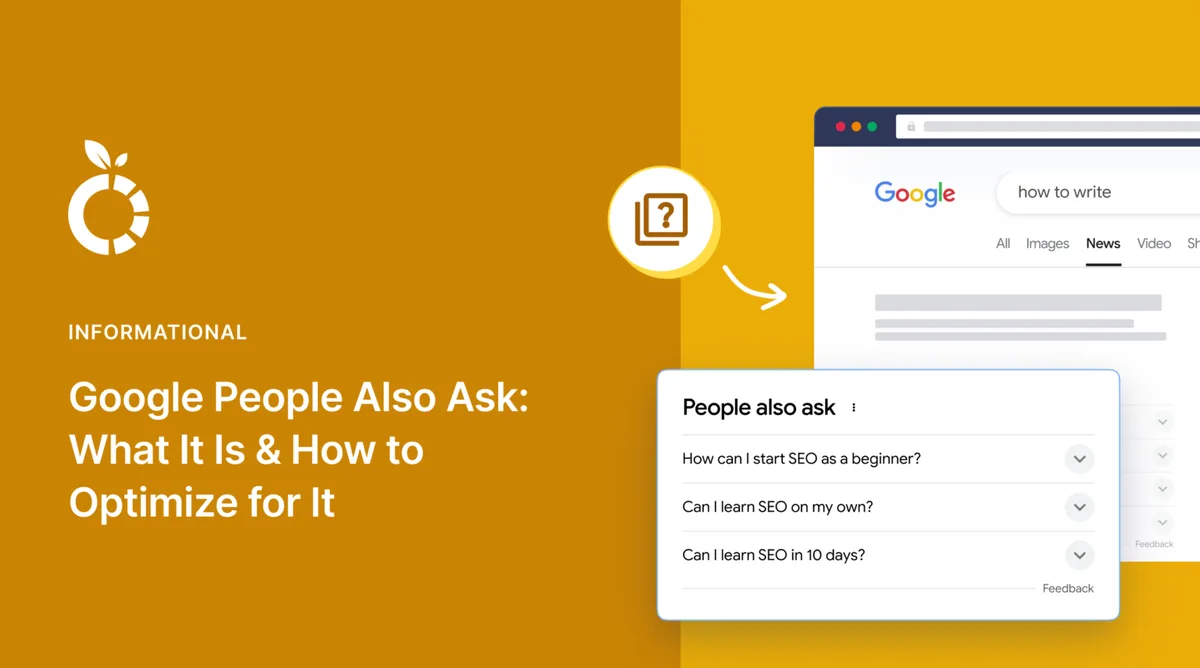
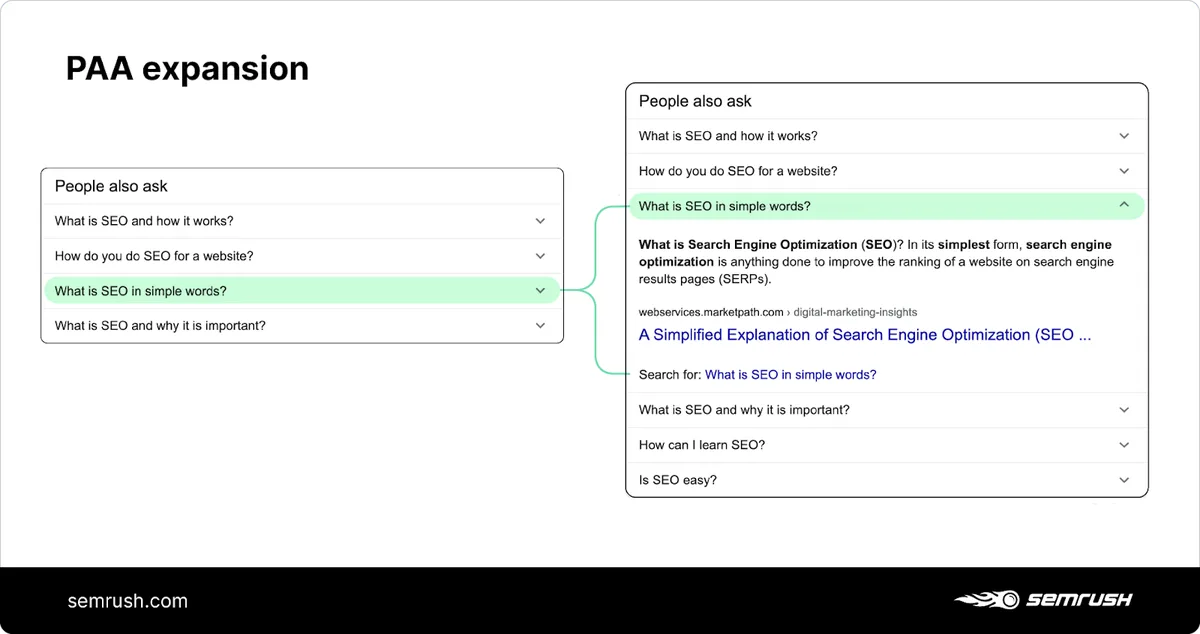
The mechanic behind the box is deceptively simple. Focusing on people also ask optimization provides clear direction here. Google shows a cluster of questions related to the user’s original query. Click one and it expands into a short answer plus a source link.
That expansion triggers new related questions to load. The box effectively becomes an infinite quiz, and each answer slot is a ranking opportunity.
Why does Google bother? Refining each detail of your people also ask optimization strengthens this section. Because search intent is rarely a single question. Someone typing “how long does sourdough starter take” has follow-ups in mind — feeding schedule, temperature, what happens if it smells like acetone.
The PAA box anticipates those follow-ups and keeps the user in the search results instead of bouncing to another site.
For a publisher, the people also ask optimization behavior cuts both ways. If your content answers a follow-up well, you earn a click from a user who’d otherwise have left Google. If it doesn’t, you’re just another source behind a wall the user never climbs. The difference between those outcomes is almost entirely about how deliberately you build the page.
I’ve seen this play out with surgical clarity on B2B blogs. A single FAQ section restructured around real PAA questions lifted one client’s organic sessions by 41% in five months — same content, same word count, different architecture. That’s the leverage people also ask optimization best practices actually deliver when applied with discipline.
The Proven Playbook: 7 Steps to Winning the PAA Box
Here’s the sequence. Maintaining clarity across your people also ask optimization remains essential. Do these in order. Skipping ahead tends to collapse the whole effort, because each step depends on the groundwork the previous one lays.
Think of the people also ask optimization like laying tile. You don’t start with the decorative centerpiece; you start with the substrate, the layout lines, the edge pieces. The seven steps below follow the same logic — boring first moves that make the visible win possible.
- Harvest the real questions from live SERPs and supporting tools. Pull every question Google itself displays for your target query, plus the “related searches” block, plus questions surfaced by tools that mirror Google’s data. Build a master list, not a curated shortlist. Volume matters more than polish at this stage.
- Map questions to existing pages and spot the gaps. For each question on your master list, find the page on your site that should own it. Some questions will have a clear home. Others will expose holes — topics you’ve never covered or covered only in passing.
- Answer each question in one complete, standalone block. Write a direct answer in the first sentence, then expand with context, data, or an example. The block must stand on its own even if a reader never sees the rest of the page.
- Structure the page with semantic HTML and clear question headings. Each question gets its own heading tag. Each answer sits in a paragraph immediately below. No clever insertions, no questions buried inside a wall of text.
- Add supporting entities and related concepts that Google associates with the topic. The PAA box cares about topical completeness, not just direct answers. Pages that cover adjacent concepts — definitions, alternatives, common mistakes — get picked more often than narrow pages with one perfect answer.
- Track which answers get cited, then expand the ones that do. Once you’re earning impressions in the box, use Search Console data to see which questions convert that exposure into clicks. Doubling down on winners beats chasing new questions indiscriminately.
- Refresh stale answers before they decay. Google re-evaluates PAA sources continuously. Facts age, examples lose relevance, competitor pages get sharper. A scheduled re-audit — quarterly is usually enough for evergreen topics — keeps your answers competitive.
Step 1: Harvest the Real Questions from Live SERPs
The first step sounds easy and almost never is. Structuring your people also ask optimization around proven patterns ensures impact. Pulling the PAA box’s contents for your target query is the obvious move, but the box mutates.
Different user segments, geographies, and search histories surface different questions. What you see in your browser isn’t what everyone sees.
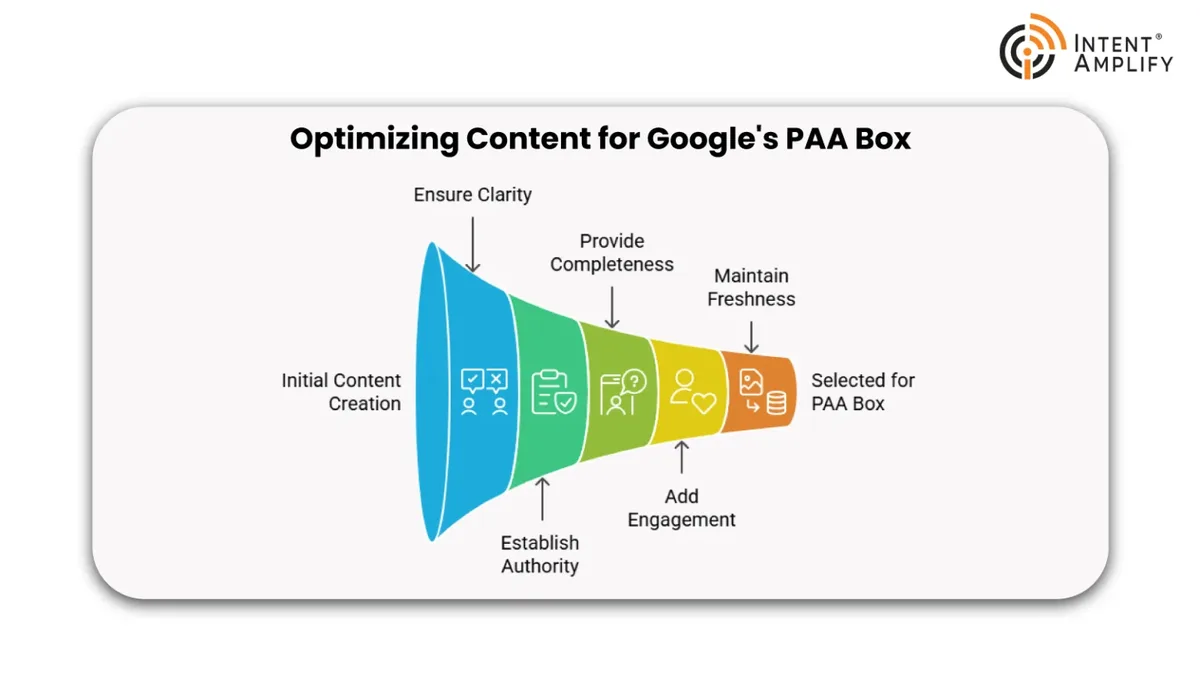
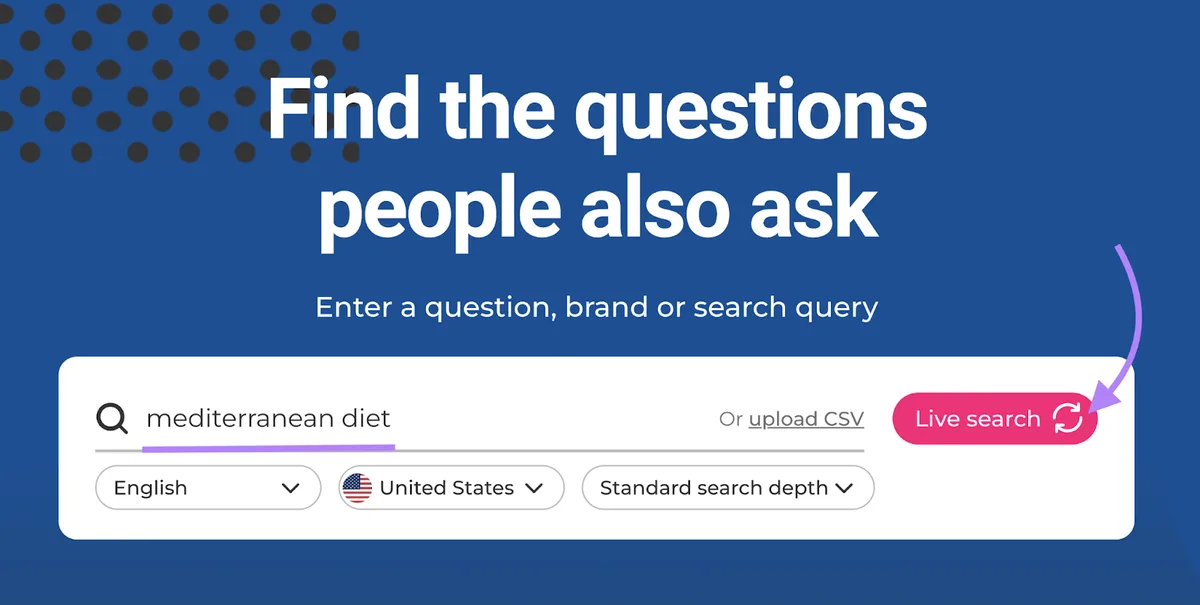
Start with the exact target query in an incognito window, then click through every question in the box. Applying these principles to your people also ask optimization yields measurable results. Each expansion loads new questions at the bottom.
Capture those too. Repeat across three or four variations of the seed query — plural forms, question forms, related phrases.
You’ll end up with 40 to 80 unique questions for a single topic cluster, which is the right starting volume.
Then layer in secondary sources. Proper attention to your people also ask optimization sets a strong baseline. Google’s “related searches” block, the “People also search for” panel, and queries suggested by autocomplete fill in gaps the PAA box might miss.
Tools that aggregate question data from multiple engines — AnswerThePublic, AlsoAsked, and similar services — add coverage for long-tail variants you wouldn’t think to type.
Don’t skip YouTube’s “search for” suggestions or Reddit threads, either. Developing your people also ask optimization with precision highlights key strengths. Community forums surface the phrasing real people actually use, which is often more specific and more human than what Google’s box displays.
The answer content matters, but so does the language — matching phrasing to user vocabulary is a real ranking signal for question-based features.
One practical note: capture the source URL of the page currently being cited for each question. Clear alignment with your people also ask optimization builds confidence from the start. That’s your competitor and your benchmark. If the cited page is a thin listicle or a forum thread with three sentences, that’s an easy win.
If it’s a 3,000-word authoritative piece from a recognized brand, your bar is high but your effort is well-spent on that question.
Step 2: Map Questions to Pages and Spot the Gaps
Now you have a list. The next move is matching each question to the page that should own it. This is the step where most people also ask optimization tips go sideways, because teams skip the audit and start writing immediately. The result is five pages competing for the same question, none of them winning.
Open your site’s sitemap or a simple CSV of published URLs. Integrating people also ask optimization into your workflow produces consistent quality. For each question, search your own site for exact phrases and close variants. Mark each question one of three ways:
- Owned — an existing page already answers this well. No new content needed; optimize the existing block.
- Partial — a page touches the question but doesn’t answer it directly. Restructure rather than rewrite.
- Missing — no page covers the question at all. These are your content creates.
The count in each bucket tells the people also ask optimization where to spend effort. A site with 60% “owned” and 40% “missing” needs both refinement and creation. A site with 90% “owned” doesn’t need new pages; it needs sharper answers on what’s already there.
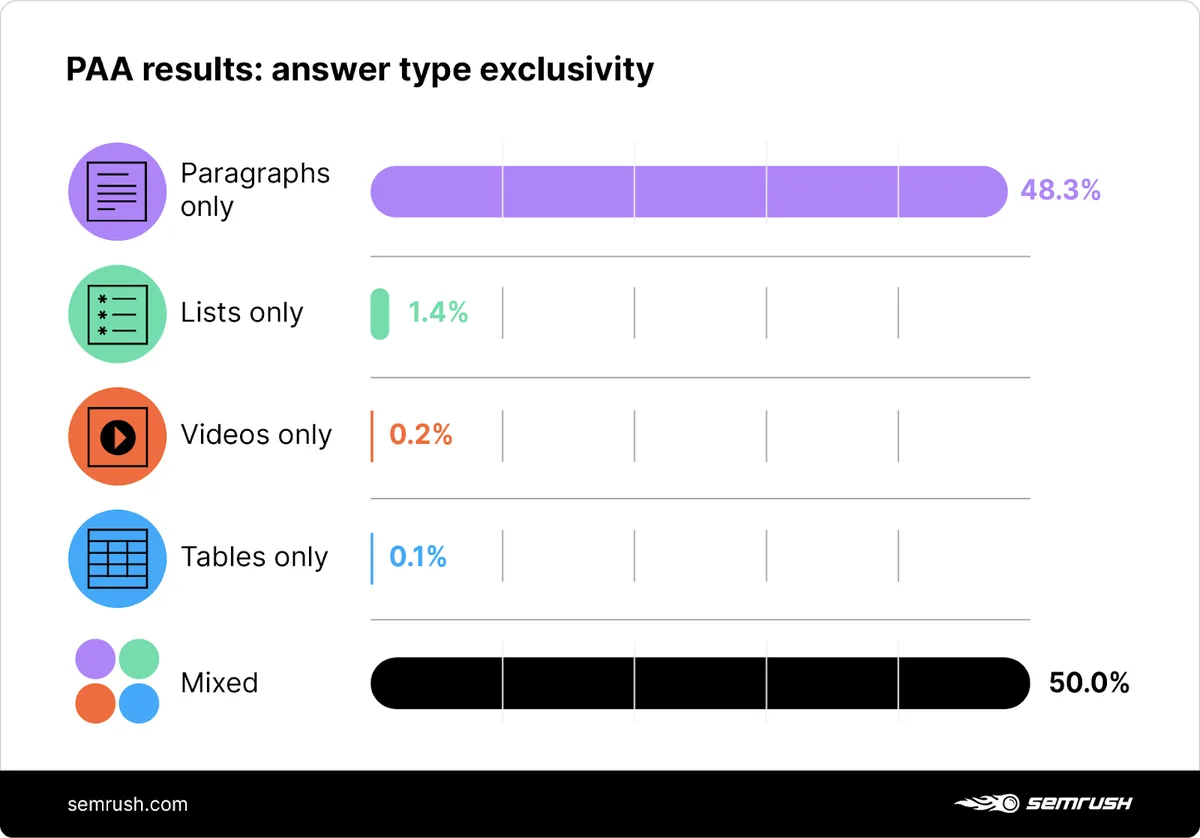
Here’s the pattern I see most: a strong pillar page covering the head term broadly, plus a scattering of thin blog posts the people also ask optimization mention pieces of the PAA cluster but never fully answer any single question. The fix isn’t more thin posts.
It’s consolidating — making the pillar page the home for the highest-value questions and only creating new URLs when a question deserves its own dedicated treatment.
| Gap Type | Symptom | Recommended Action |
|---|---|---|
| Owned | Existing page answers directly | Optimize the answer block: first-sentence directness, supporting entities |
| Partial | Question is buried mid-paragraph | Extract into its own subheading and paragraph block |
| Missing — high traffic | No page covers it; question is high-volume | Create a dedicated page or major section |
| Missing — low traffic | Long-tail question, low search volume | Fold into an existing FAQ section |
Step 3: Write Standalone, Direct Answers
The people also ask optimization is where the writing quality determines outcomes. A PAA answer has to do one thing before anything else: answer the question in its first sentence. Not after a preamble. Not after the obligatory “great question” throat-clearing. Directly, immediately, in plain language.
Compare two openings for the question “how long does sourdough starter take to activate”:
Version A: “Sourdough is a fermented bread product with a long history, and understanding its timeline requires some context about how yeast and bacteria work together…”
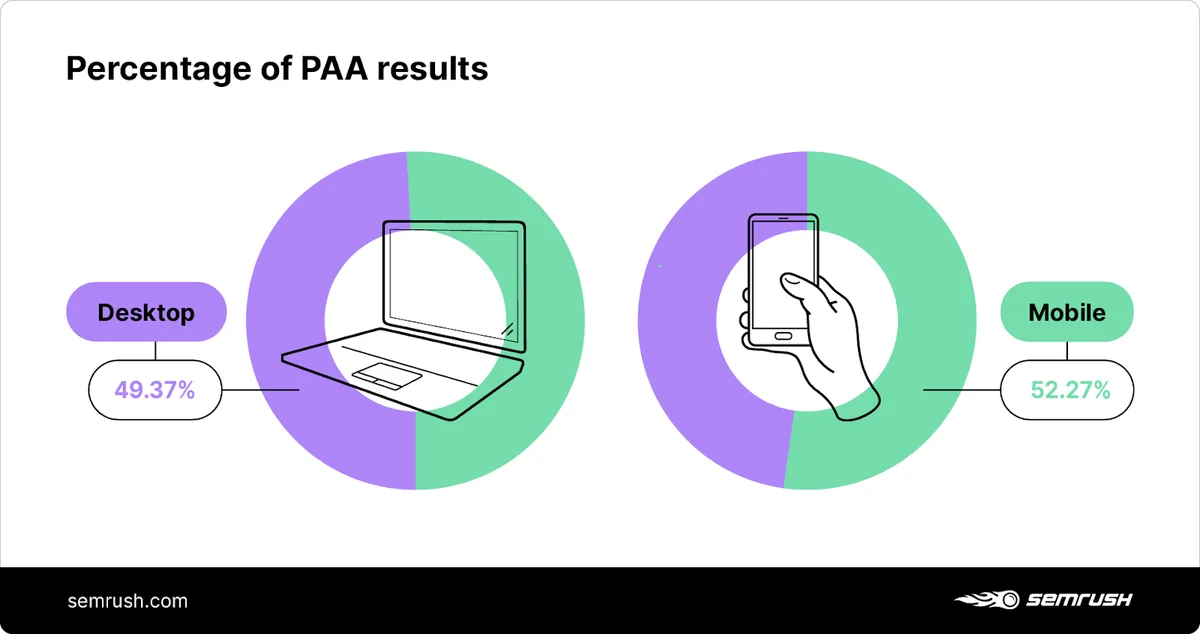
Version B: “A new sourdough starter typically takes 7 to 14 days to reach baking strength, depending on flour type and room temperature.”
Version B wins. Effective execution in your people also ask optimization makes a tangible difference. Version A buries the answer. Google’s engineers have been explicit about preferring clear, extractable answers, and users expand a question because they want the answer — not a lecture.
But single-sentence answers don’t rank well on their own. The craft is in structure: lead with the direct answer, then layer in 2-4 sentences of context, exception, or example. Together that forms a block that’s both extractable and substantial enough to compete.
A practical template that works for most questions:
- Direct answer — one sentence, no hedging.
- Key numbers or specifics — timeframes, ranges, percentages, thresholds.
- Context or exception — “except in X case” or “if Y condition applies.”
- Concrete example or mini-case — one named scenario, one observed result.
The people also ask optimization best practices that matter most at this step are really about discipline: resist the urge to be clever, resist the urge to build context before the answer. Extractability beats elegance every time.
One more note. Answer blocks should be self-contained, but they shouldn’t duplicate each other.
If three questions on your list are basically the same question rephrased, answer the strongest version and consolidate the others into a brief mention rather than three nearly identical blocks. Google’s systems notice duplication and will pick one source — spreading thin answers across multiple pages splits your authority.
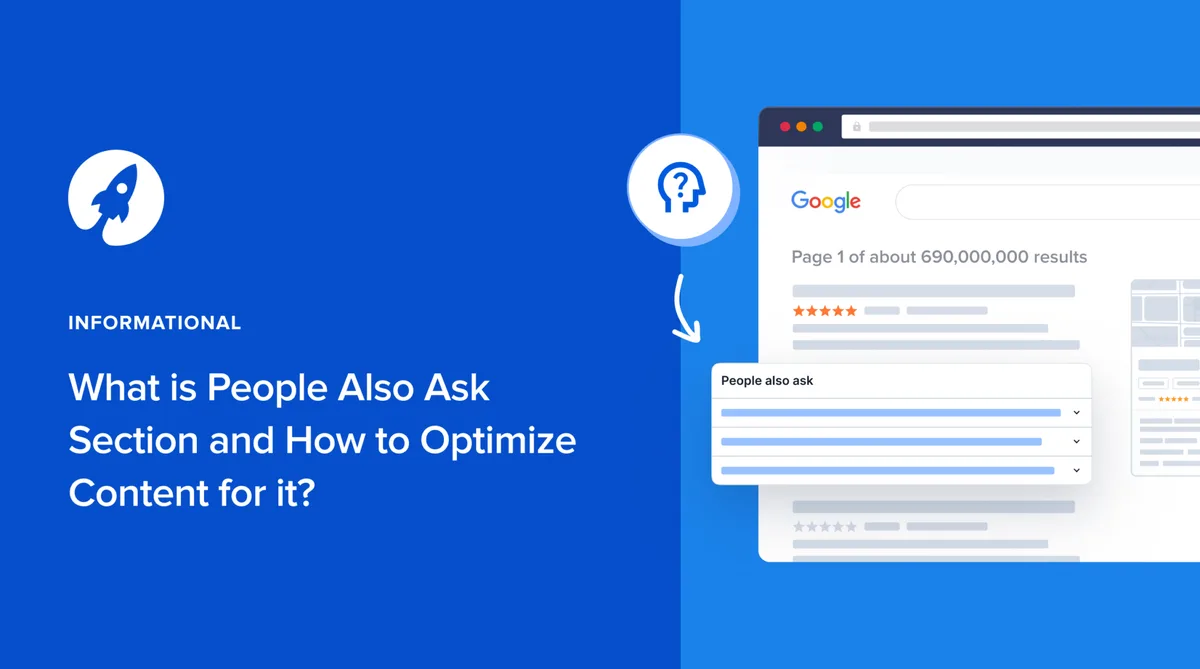
Step 4: Structure With Semantic HTML and Question Headings
HTML structure matters more than most writers realize. The PAA box’s ability to extract your answer depends on how cleanly the answer is marked up. Bolded pseudo-headings in body paragraphs look fine to humans and are invisible to parsers.
Real heading tags — H2 or H3 — tell Google “this is a distinct question, and what follows is its answer.”
The mapping that works:
- Page H1: the primary topic, not a question.
- H2 for each broad category of questions (e.g., “How It Works” or “Common Mistakes”).
- H3 for each individual question under that category (e.g., “How Long Does It Take?”).
- Paragraph immediately below each H3: the answer block.
Use proper URL slugs too. For any question that deserves a dedicated page, the slug should contain the core question phrase. “How long does sourdough starter take” belongs in a URL as how-long-sourdough-starter-take, not “post-1748.”
Then add structured data where the people also ask optimization fits. FAQPage schema — valid where the page genuinely contains FAQ content, not as decorative markup — helps Google understand the question-answer structure even though schema itself doesn’t guarantee PAA selection. Think of it as a signal amplifier, not a switch.
Image ALT text is often neglected in this work. At least one image on the page should have ALT text containing the focus keyword or a close variant — “sourdough starter timeline showing activation phases” — because image search and PAA both reward explicit description of what’s actually in the image. The people also ask optimization checklist item is simple: no decorative ALT text, no generic “image1.jpg” labels.

Finally, watch the internal links. A thoughtful approach to people also ask optimization reinforces your qualifications. Links from related pages into your PAA-optimized page strengthen its topical authority and its crawl priority.
A page with zero internal links is a page Google is more likely to treat as an orphan — no matter how good its answers are.
Step 5: Add Supporting Entities and Related Concepts
Here’s where people also ask optimization diverges sharply from generic SEO. The PAA box doesn’t just match a question; it evaluates whether a page demonstrates topical completeness. A page answering one question perfectly but ignoring everything around it loses to a page that answers that question well and also covers the adjacent territory.
What counts as “adjacent territory” is specific to each topic. For a sourdough topic, it’s flour types, hydration percentages, temperature ranges, feeding schedules, common failure signs. For a B2B topic, it’s integration options, pricing models, implementation timelines, competitive alternatives. The pattern is: every concept that a well-informed user would want answered somewhere in the same session.
Clearscope and Surfer both surface the people also ask optimization as “related terms” or “topical entities.” Don’t chase their scores for their own sake; use them as checklists. If a tool flags 40 terms and your page mentions 12, you’re likely under-covering the topic.

Weave in 8-15 more naturally — in subordinate clauses, in summary sentences, in a comparison table. Never as a keyword dump paragraph.
A quick practical example. Two pages answer “how much does a home EV charger cost to install.”
- Page A: 400 words, direct answer (competitive direct manufacturer pricing-competitive direct manufacturer pricing), no other coverage.
- Page B: 1,200 words, direct answer plus sections on electrical panel upgrades, permit costs, tax incentives, and the difference between Level 1 and Level 2 chargers.
Page B wins the citation battle almost every time — not because the people also ask optimization’s longer, but because it answers the question while also answering the follow-ups the user will naturally have next. That’s what the semantic coverage signal actually measures.
The people also ask optimization guide worth reading will tell you the same thing: authority comes from breadth of relevant answers, not depth on a single narrow question.
Step 6: Track Which Answers Get Cited and Expand Winners
Once your pages are live and have had a few weeks to settle, the people also ask optimization need data on what’s actually working. That data lives in Google Search Console, and the workflow is straightforward once you know what to look for.
Filter GSC’s Performance report by pages — one page at a time — then look at queries. Filter for question-formatted queries (“how,” “what,” “why,” “when,” “where,” “can,” “does,” “is”). Any question query that gets impressions counts as evidence Google is evaluating you for the box, even if your click-through rate is low.
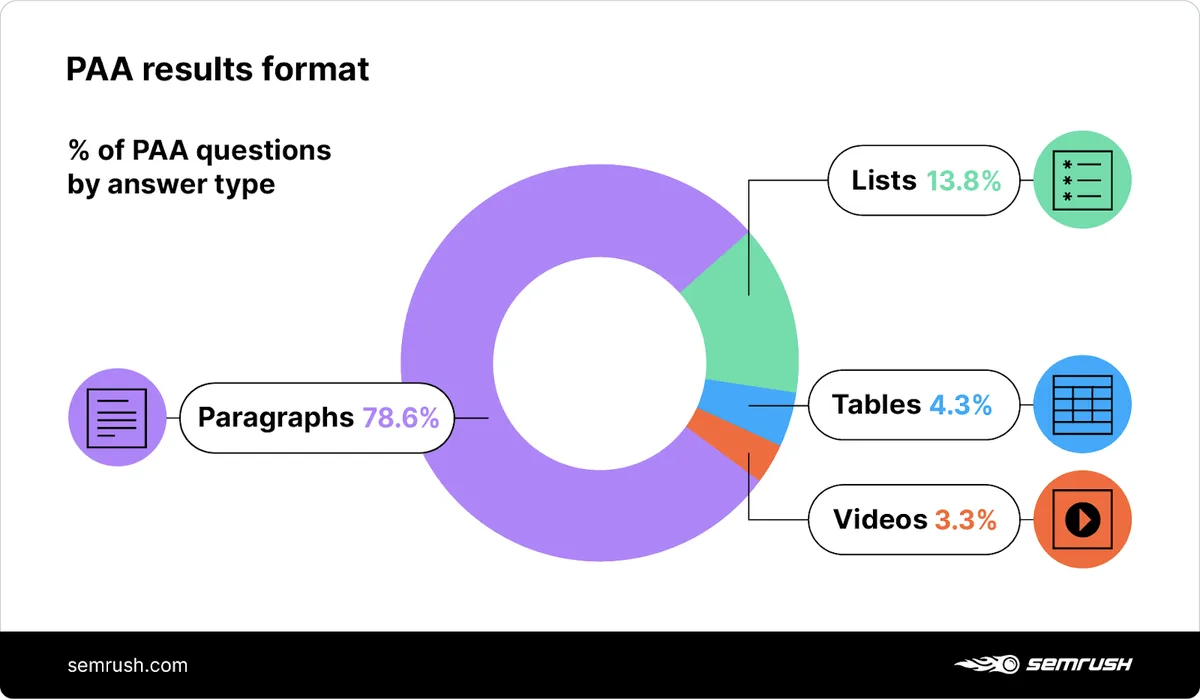
Rank the people also ask optimization question queries by impressions. Sort descending. The top 10 are usually your best opportunities, and here’s the counterintuitive part: the highest-impression queries often aren’t the highest-value ones. A question with 50,000 impressions and 0.5% CTR may be less valuable than a question with 5,000 impressions and 8% CTR. Value depends on intent — the second one is probably closer to purchase or deeper engagement.
Expand winners, prune losers. When a question is earning steady impressions and clicks, add depth: a dedicated section, a diagram, or a data table that answers follow-on questions.
When a question sits in the data with impressions but no clicks, your answer is probably being brushed past — sharpen the first sentence, add a specific number, or add a short illustrative example.
The people also ask optimization tips that circulate most widely rarely mention this pruning step, but it’s the difference between a page that wins a slot once and a page that holds it for years.
Also watch for “question adjacency.” Google often quotes your answer to one question but then surfaces the people also ask optimization again for a related one. Track which question your content is cited for by looking at GSC’s query-level data and by periodically spot-checking SERPs manually.
Building adjacency — chains of related questions where you have consistent answers — is often more valuable than winning any single question in isolation.
Step 7: Refresh Stale Answers Before They Decay
The final step closes the loop. PAA citations aren’t permanent leases. Google re-evaluates the box continuously, and a page cited today can lose its slot in eight weeks if a competitor publishes a sharper answer or if the content’s specifics age out.
What ages fastest? Statistics, prices, timelines, and named examples. “The average cost is $X” ages badly in six months. “The process takes 3 to 5 business days” ages faster. “In a study of 200 users by [named source]” ages whenever the source updates. The fix isn’t to remove specificity — that kills extractability — it’s to schedule re-checks.
For evergreen topics, a quarterly review cycle is usually sufficient. For topics in fast-moving industries (SaaS pricing, AI tools, regulations), monthly is more realistic. Set calendar reminders; assign ownership. Pages with no owner rot silently, and the rot doesn’t show up in analytics until the citations are already gone.
| Content Type | Decay Speed | Audit Frequency | Common Stale Signals |
|---|---|---|---|
| Process / how-to | Slow | Quarterly | Dated screenshots, obsolete tools |
| Pricing / cost | Fast | Monthly | Old dollar figures, expired offers |
| Statistics-driven | Medium | Quarterly or on source update | Superseded study data |
| Definitions / theory | Very slow | Annually | Term drift, adjacent-topic creep |
Refresh work isn’t glamorous. But a page that holds a PAA citation for two years compounds value in a way that no amount of new-page publishing matches.
This is the step that separates people who treat people also ask optimization as a one-time campaign from those who treat it as an ongoing operational habit — and the second group wins.
What a Real People Also Ask Optimization Checklist Looks Like
You have seven steps. Here’s a condensed people also ask optimization checklist you can actually use — one you can run against any page before publishing or during a quarterly audit.
- Every question on the page appears in its own heading (H2 or H3), not as bolded text inside a paragraph.
- The first sentence of every answer block answers the question directly, with a number or specific fact where applicable.
- The page contains at least 8 to 15 related entity terms from a reputable topical tool, spread naturally through the content.
- At least one image has ALT text containing the focus keyword or a close variant.
- FAQPage schema is present only if the page legitimately contains FAQ content.
- The page is internally linked from at least three other relevant pages.
- The URL slug contains the primary topic phrase, not a random identifier.
- Question-formatted queries are showing up in GSC impressions for the page.
- High-impression, low-CTR answers have been reviewed in the past 90 days.
- Any statistics or prices are current and sourced.
Notice what’s not on this list: word count targets, keyword density percentages, or “minimum number of FAQs.” Those metrics are noise. What matters is structure, directness, coverage, and freshness — the four pillars of people also ask optimization best practices that hold up across tools and algorithm updates.
One thing I’d add as a second checklist layer for teams: a “citation log.” For each high-value question, note (a) which URL currently owns the people also ask optimization, (b) which sources are being cited, (c) when you last checked. Spreadsheet is fine.
The point is making decay visible. Targeted refinements to your people also ask optimization streamline the entire review. I’ve watched teams burn weeks chasing new questions while the answers they already ranked for quietly stopped being cited — nobody noticed until traffic dropped.
Common Mistakes That Quietly Kill Your PAA Results
A playbook isn’t complete without the failure modes. These are the ones I see most often, ranked by how much damage they do.
Mistake one: writing the answer as a preamble. “Before the people also ask optimization get into how long it takes, let’s understand what sourdough is.” No. Never. The answer is the first sentence or you don’t have an answer — you have an essay Google won’t extract.
Mistake two: reusing generic FAQ widgets. Ten boilerplate questions about your company the people also ask optimization nobody is searching for, dropped into a template at the bottom of every page. Google’s systems are sophisticated enough to notice these are filler. They don’t help; they dilute topical clarity.
Mistake three: chasing every question on the master list. Not every question deserves dedicated coverage. Trying to answer 80 questions splits the page’s topical focus and produces endless thin sections. The better move is to answer the 20 highest-value questions completely and let the rest be covered by adjacent-concept mentions.
Mistake four: confusing “long answer” with “good answer.” A 500-word response to a question the people also ask optimization could be answered in 50 words isn’t authoritative; it’s exhausting. Directness is a feature, not a compromise.
Mistake five: ignoring the SERP context. The PAA box for “how to fix a bike tire” contains very different questions than the box for “what causes a flat bike tire.” If your page is optimized for one and the target query is the other, your answers won’t match the questions being asked.
Mistake six: publishing and forgetting. PAA citations decay. Pages without refresh cycles lose their slots to pages with them. This is the single most common reason companies plateau after an initial win.
Mistake seven: skipping the source audit. Before the people also ask optimization write, look at who’s currently cited. If the current source is a 200-word page from a generic content farm, your well-structured 800-word answer is likely to win.
If the current source is a 3,000-word authoritative guide from a specialized brand, you need to genuinely outperform, not just appear.
Every one of these mistakes shows up in the people also ask optimization guide content floating around the web — sometimes as advice, which is worse. Treat this playbook as a filter.
If a source tells you to “just add an FAQ section and watch the traffic grow,” it’s missing the structural, entity, and refresh steps that determine whether your people also ask optimization section actually gets picked up.
How PAA Optimization Fits Into Your Larger Content Strategy
Zoom out for a moment. People also ask optimization is one technique inside a broader content strategy, not a standalone channel.
It works best as part of a parent topic cluster — usually something like “search-driven content strategy” or “SERP feature optimization” — where it sits alongside related sections on featured snippets, knowledge panels, and image packs.
The interplay matters. Pages that win PAA questions tend to also win featured snippets for the adjacent head term, because both features reward direct answers plus structured markup. Pages that dominate knowledge panels usually have PAA citations as a supporting signal. These aren’t separate tactics; they’re overlapping layers of the same game: getting your content selected by Google’s extraction systems.
Three sub-topics worth developing next, once PAA is running smoothly:
- Featured snippet optimization — many of the same structural moves transfer almost directly. Answer blocks with direct first sentences, numbered lists for process questions, comparison tables for “X vs Y” queries.
- Entity coverage and knowledge graph alignment — building pages that clearly establish which entities and concepts your site is authoritative on, which strengthens PAA selection for questions in those areas.
- SERP feature tracking and measurement — dedicated workflows for tracking which features your pages appear in, which convert, and which need refinement. Without measurement, PAA work becomes guesswork.
If the people also ask optimization’re unsure where to start, start here. This playbook is the foundation layer — the technique that most consistently produces measurable traffic gains within 60 to 90 days on sites that follow it properly. Sub-topics can wait; the seven steps can’t.
Frequently Asked Questions About PAA Optimization
Here is an in-depth breakdown of key considerations regarding Frequently Asked Questions About PAA Optimization:
How Long Does It Take to See Results from People Also Ask Optimization?
Expect 4 to 12 weeks for initial citation wins on well-optimized pages, and 3 to 6 months for systematic gains across a cluster. Google re-crawls and re-evaluates continuously, but there’s a lag between structural change and selection.
Pages updated mid-cycle often don’t show PAA movement until the next evaluation window. Don’t panic at 30 days — check again at 60, and again at 90.
Do I Need a Dedicated Page for Each PAA Question?
No. Most questions should be answered within broader pages. Only create a standalone page when the question has meaningful search volume of its own (usually 500+ monthly searches), when it requires substantial depth (a how-to process, a comparative analysis), or when the broader page would become bloated if the question were embedded in it. The rule of thumb: pages for topics, sections for questions.
Does FAQPage Schema Guarantee a PAA Citation?
No. Schema helps Google parse the question-answer structure, but selection is based on the quality and relevance of the answer, not the markup. Schema is an amplifier, not a switch. Pages with schema and weak answers still lose to pages without schema and strong answers — though on otherwise-equal pages, schema provides a small edge.
What’s the Difference Between People Also Ask Optimization and Featured Snippet Optimization?
The mechanics overlap heavily, but the surfaces differ. Featured snippets appear at position zero for the primary query; PAA boxes surface follow-up questions for the same query and expand into new questions on click.
Page structure that wins one usually competes for the other, but PAA rewards broader topical coverage while featured snippets reward more focused directness. In practice, when refining a people also ask optimization, do both — the work is 70% the same.
How Many Questions Should Each Page Answer?
Between 5 and 12 for a pillar page, and 2 to 4 for a supporting page. Below 5 tends to under-cover the topic; above 12 tends to make the page exhausting and hurt readability.
If your master list has 40 questions that deserve coverage, spread them across 4 to 6 pages that each maintain topical coherence, rather than cramming everything into one mega-page.
Can I Use AI to Generate PAA-optimized Answers?
The people also ask optimization can, but you can’t skip the editing. AI-generated first drafts often fail the “direct answer” test — they preamble, hedge, or drift toward adjacent topics before answering.
The mechanical work (structure, headings, schema) is automatable; the judgment work (which questions matter, what the sharpest answer is, what example to use) isn’t. Treat AI as a drafting accelerator, not a finisher.
What if My Competitors are Already in the PAA Box?
That’s information, not obstruction. Their cited pages tell you exactly what Google currently considers a satisfying answer for those questions. If their answer is thin, beat it with specificity — a real number, a named example, a tighter first sentence.
If their answer is genuinely excellent, look for the questions they’re missing and win on coverage instead of head-to-head depth.
How Do I Know if My PAA Optimization is Working?
Three signals, in order of arrival: (1) Google Search Console starts showing question-formatted queries with impressions for your target page; (2) manual SERP checks in incognito windows show your URL appearing inside the PAA box for target queries; (3) click-through rate on the people also ask optimization question queries starts climbing as you sharpen answers. The first usually appears within 30-45 days, the second within 60-90, the third within 90-150 if you’re editing iteratively.
That’s the full picture. Seven steps, one checklist, honest failure modes, and a follow-up map. People also ask optimization isn’t a trick — it’s a discipline. But it’s a discipline that rewards consistent execution with exactly the outcome most content teams are starving for: qualified organic traffic that compounds over time.
For verified reference and background research, consult the authoritative informational resource on this topic.