Outbound vs Inbound Marketing: 5 Key Differences
When people ask me to explain outbound vs inbound marketing, I usually start with a simple truth: both are trying to win the same customer, they just walk through a different door. One interrupts you on the way to work.
The other waits until you knock. That single distinction shapes everything that follows, and it’s the lens through which this outbound vs inbound marketing guide makes sense of two disciplines that often get pitted against each other.
If the outbound vs inbound marketing’ve ever felt torn between blasting a cold email list and quietly building a content library, you’re not alone. Most teams I’ve worked with end up mixing the two, sometimes badly, because nobody drew the line clearly enough.
So let’s draw it. Here are five key differences that actually change how you plan, budget, and measure your campaigns, plus the practical tips and best practices that make either approach work.
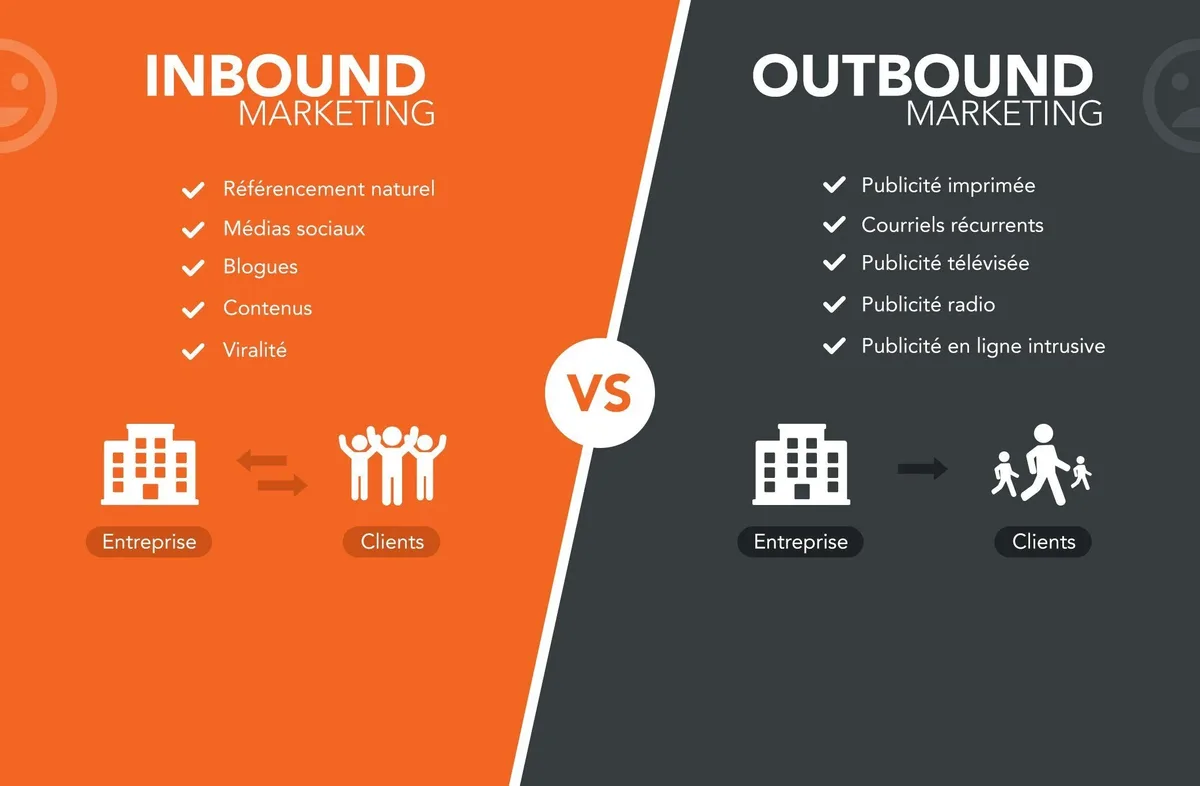
Think of this as your working outbound vs inbound marketing checklist, the kind you keep open in a second tab while you map out next quarter. We’ll move from the definitional stuff into the messy real-world decisions, then land on a few mistakes I see teams repeat far too often.
What is Outbound vs Inbound Marketing, Really?
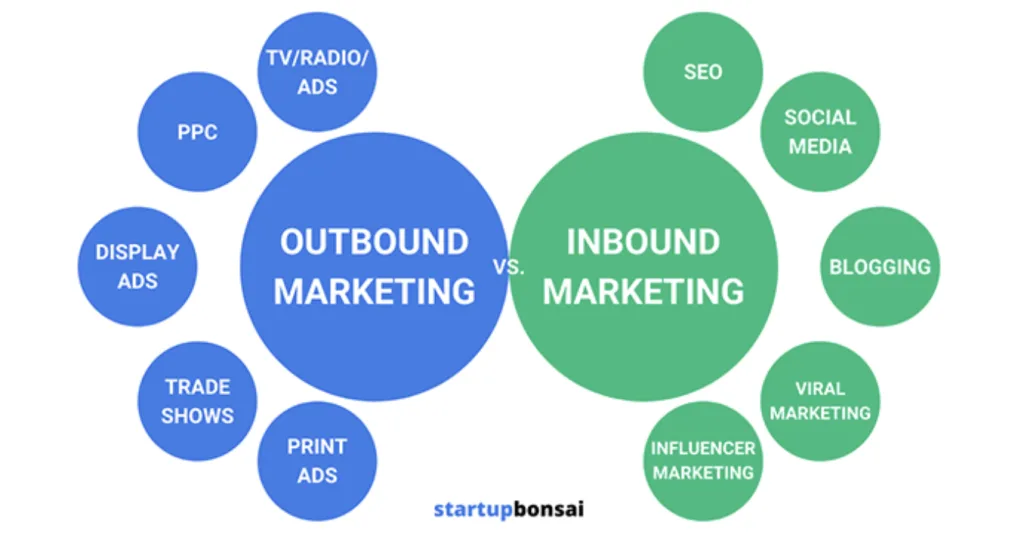
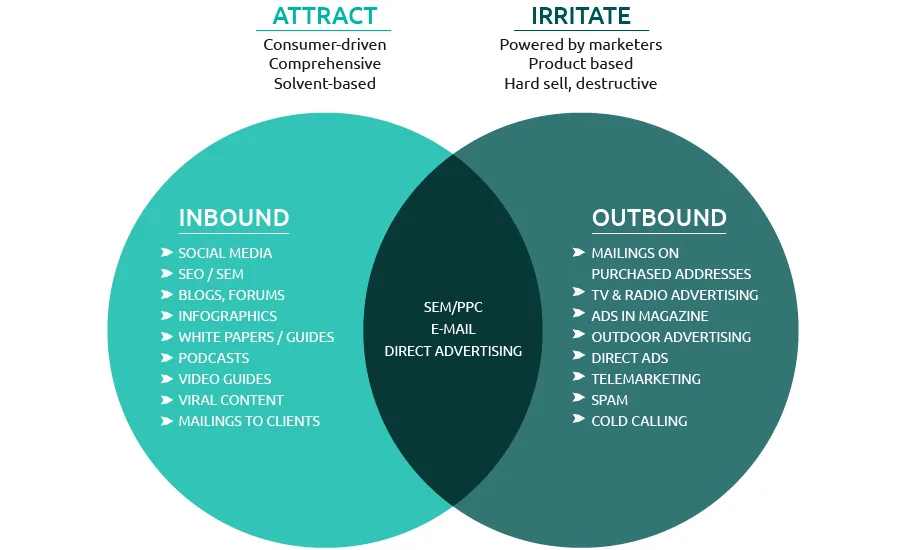
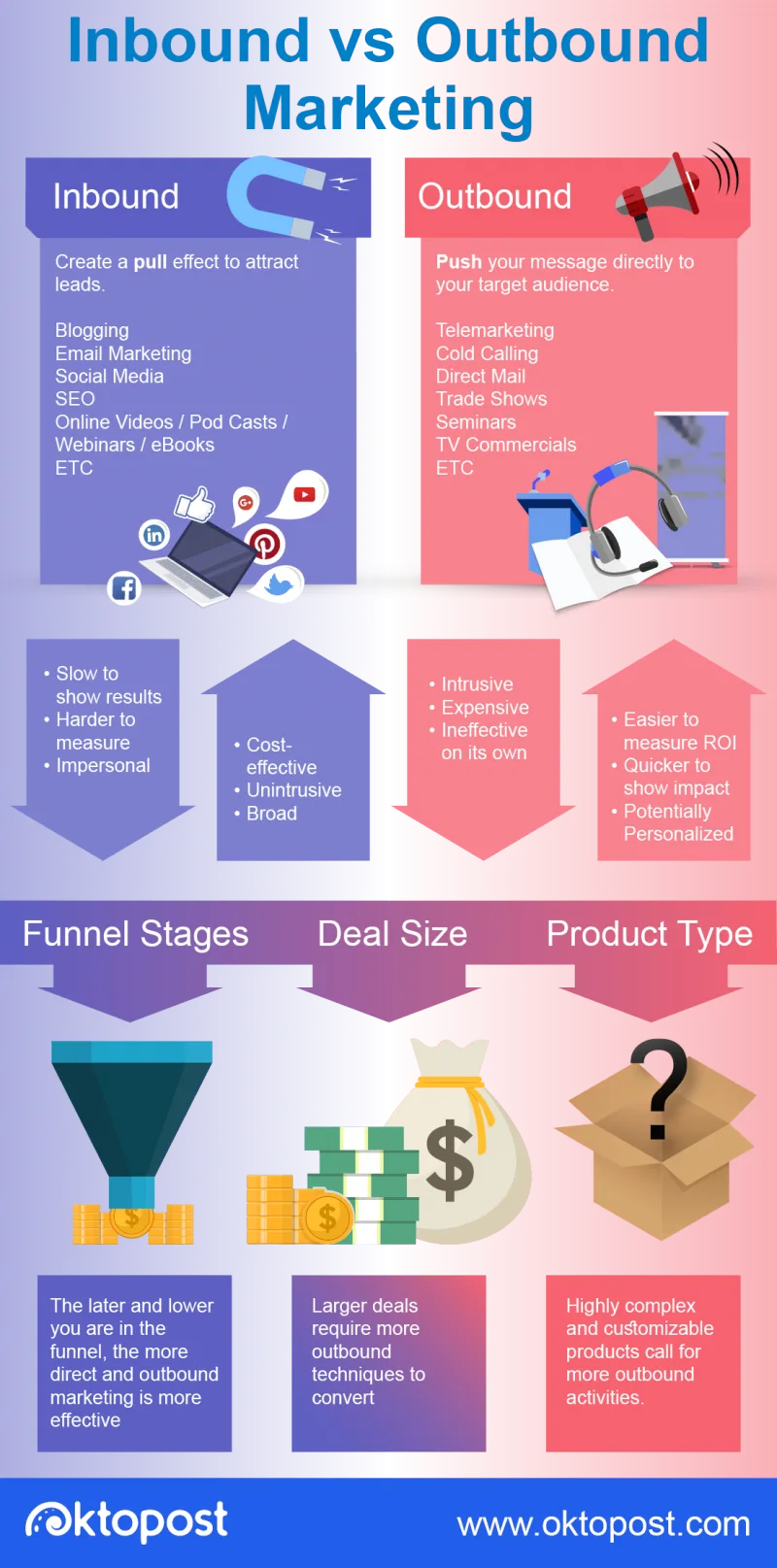
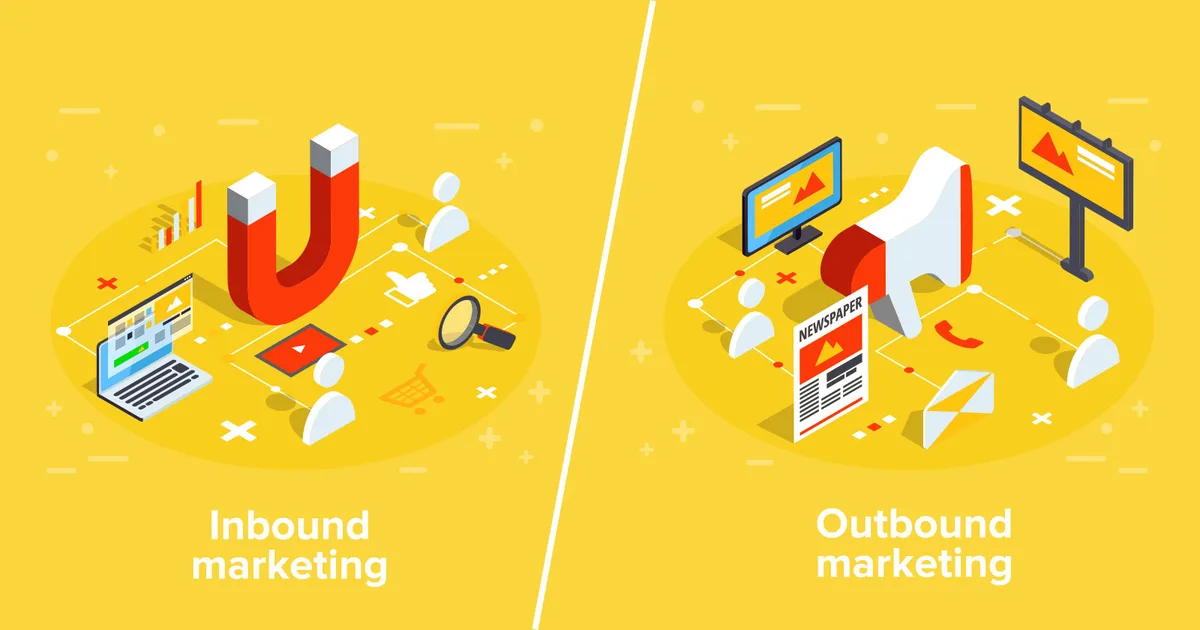
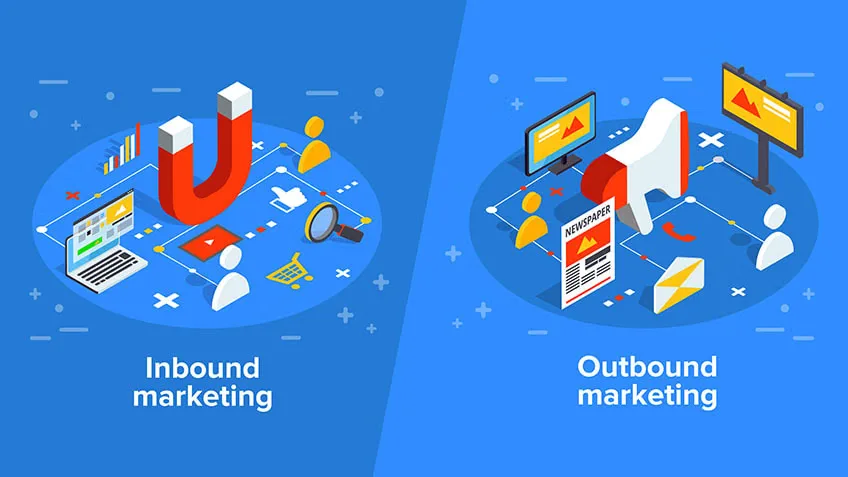
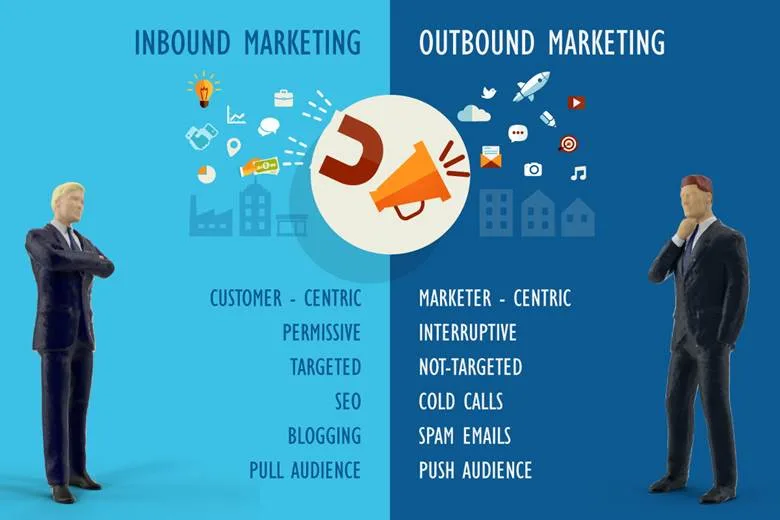
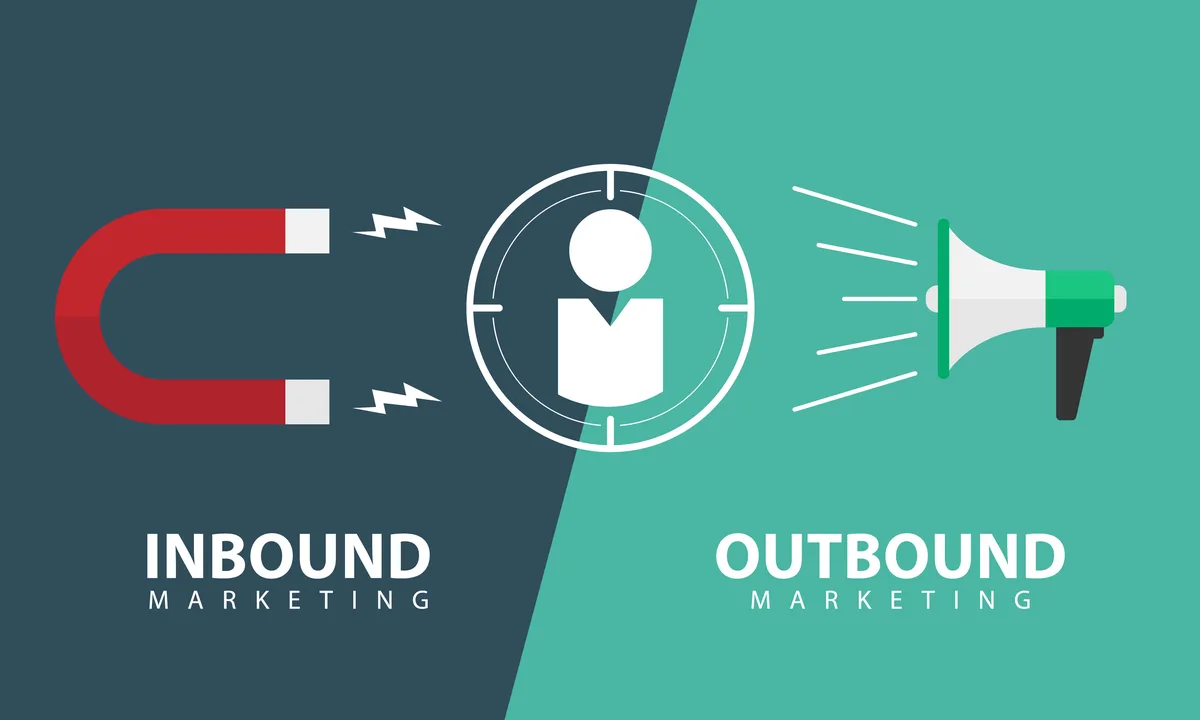
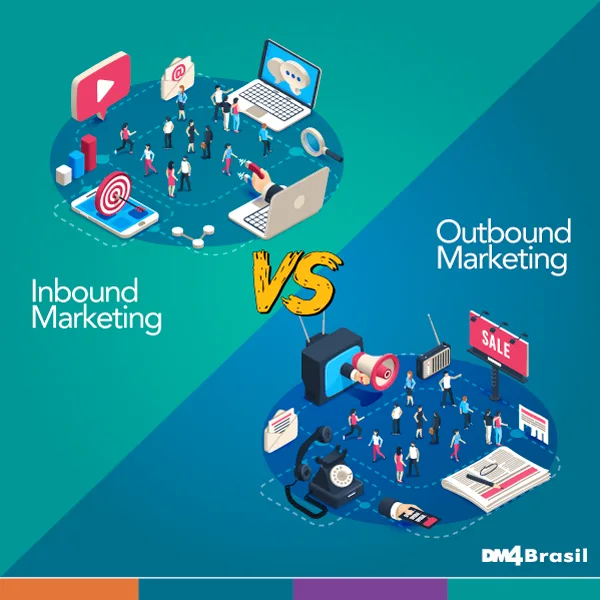
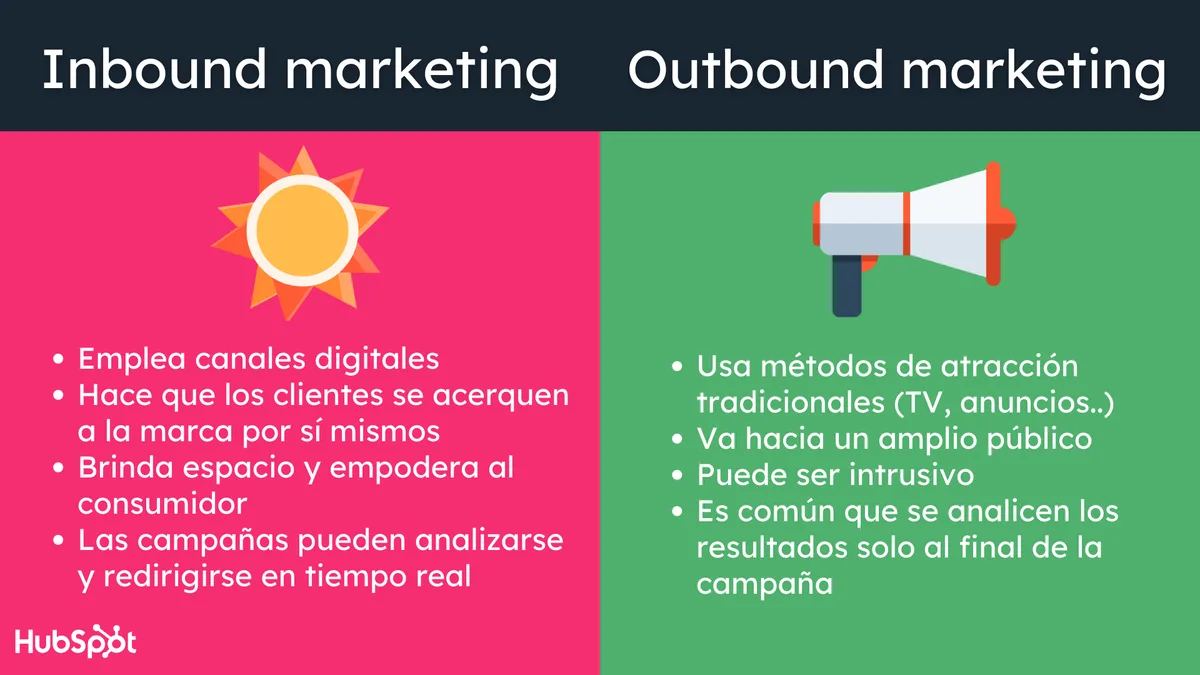
Outbound marketing pushes your message outward. You buy attention through ads, cold calls, purchased lists, billboards, TV spots, and sponsored placements. The brand initiates contact, and the prospect is, at best, mildly curious and, at worst, annoyed.
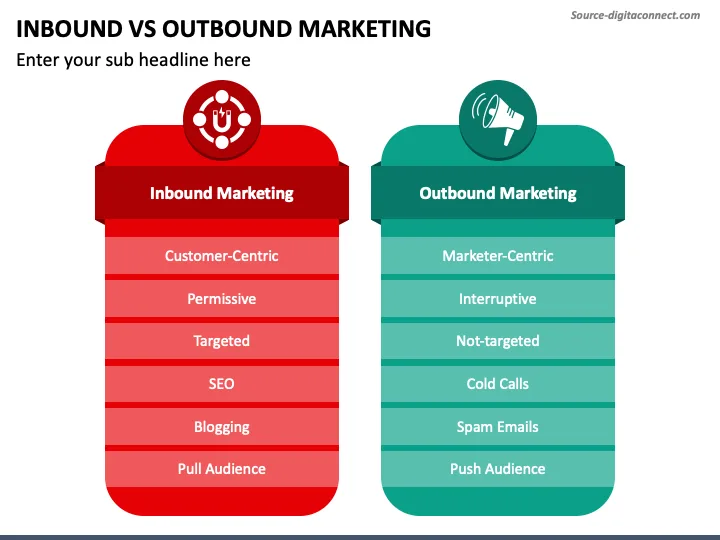
It’s the megaphone approach, and it still works when you have a clear offer and a broad audience to reach fast.
Inbound marketing flips the direction. You publish helpful content, optimize for search, build an email list people actually opt into, and let prospects find you when they have a problem worth solving. The brand earns attention rather than renting it.
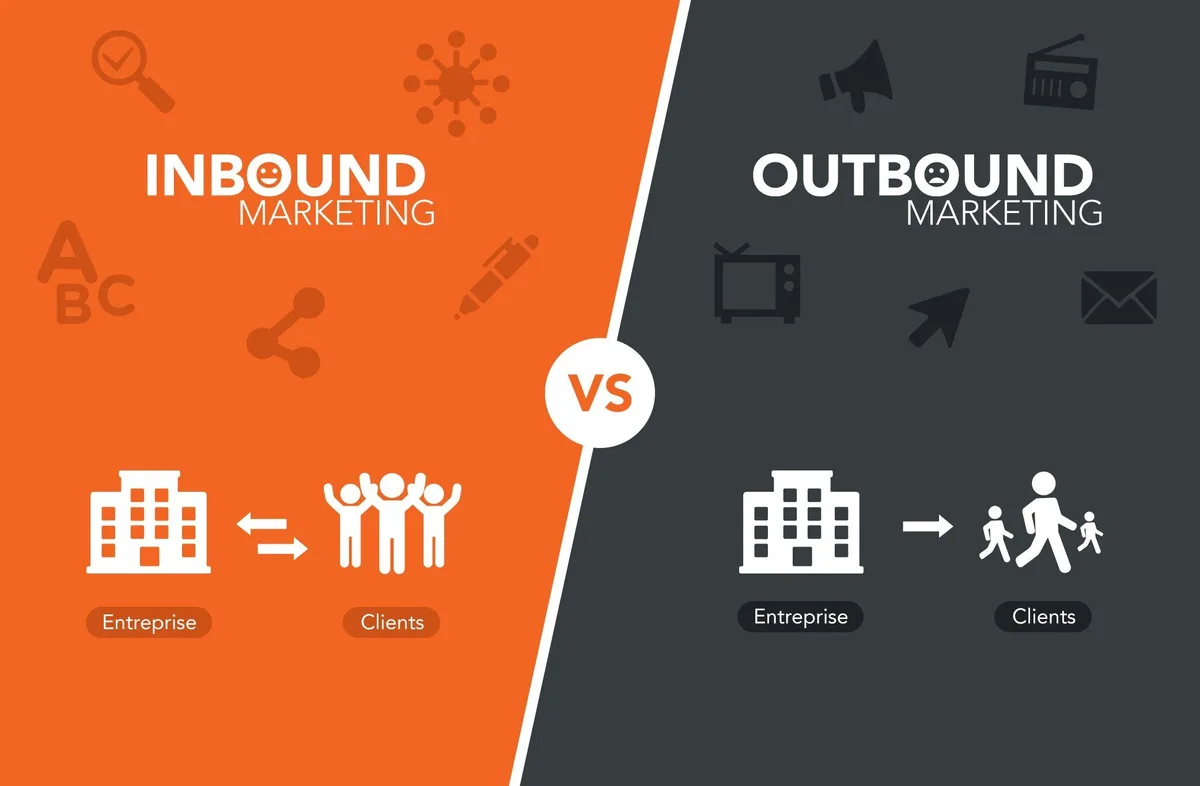
HubSpot, which popularized much of the inbound vocabulary, frames it around attracting, engaging, and delighting customers through relevant content and experiences.
Here’s where the outbound vs inbound marketing conversation gets interesting. Neither is “better” in a vacuum. A startup launching a niche B2B tool might live and die by inbound search traffic. A local roofing company with a two-week sales cycle probably needs outbound ads and calls to fill the calendar. The difference isn’t moral, it’s mechanical, and that’s the thread running through all five differences below.
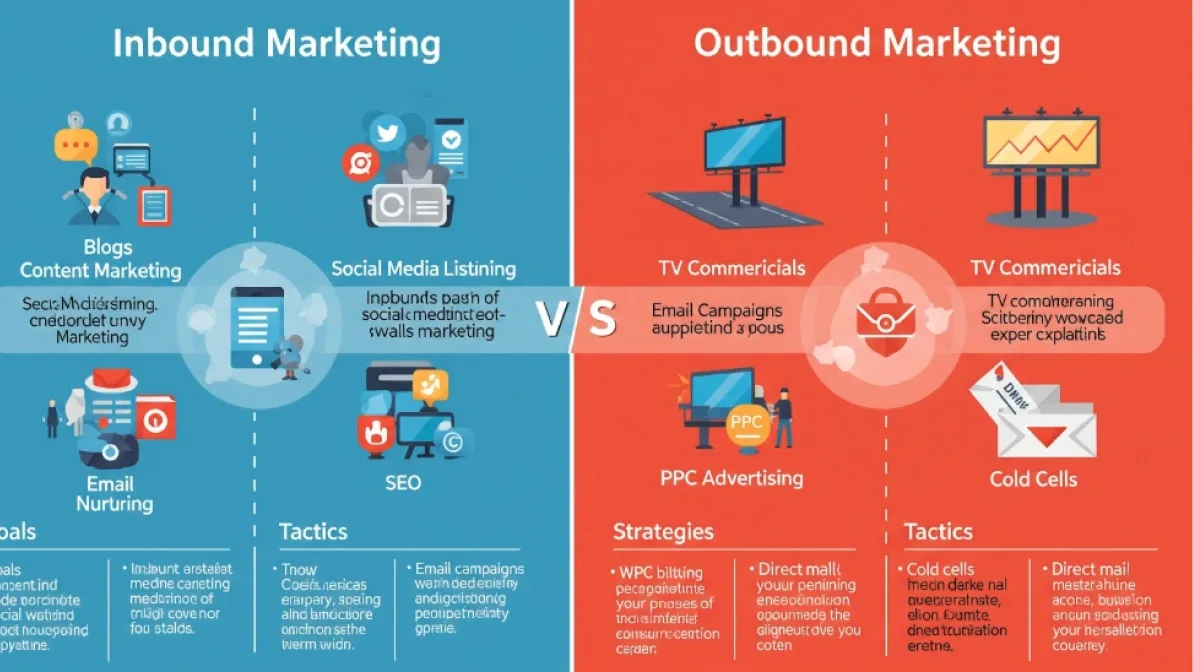
Difference 1: Direction of Communication and Who Initiates Contact
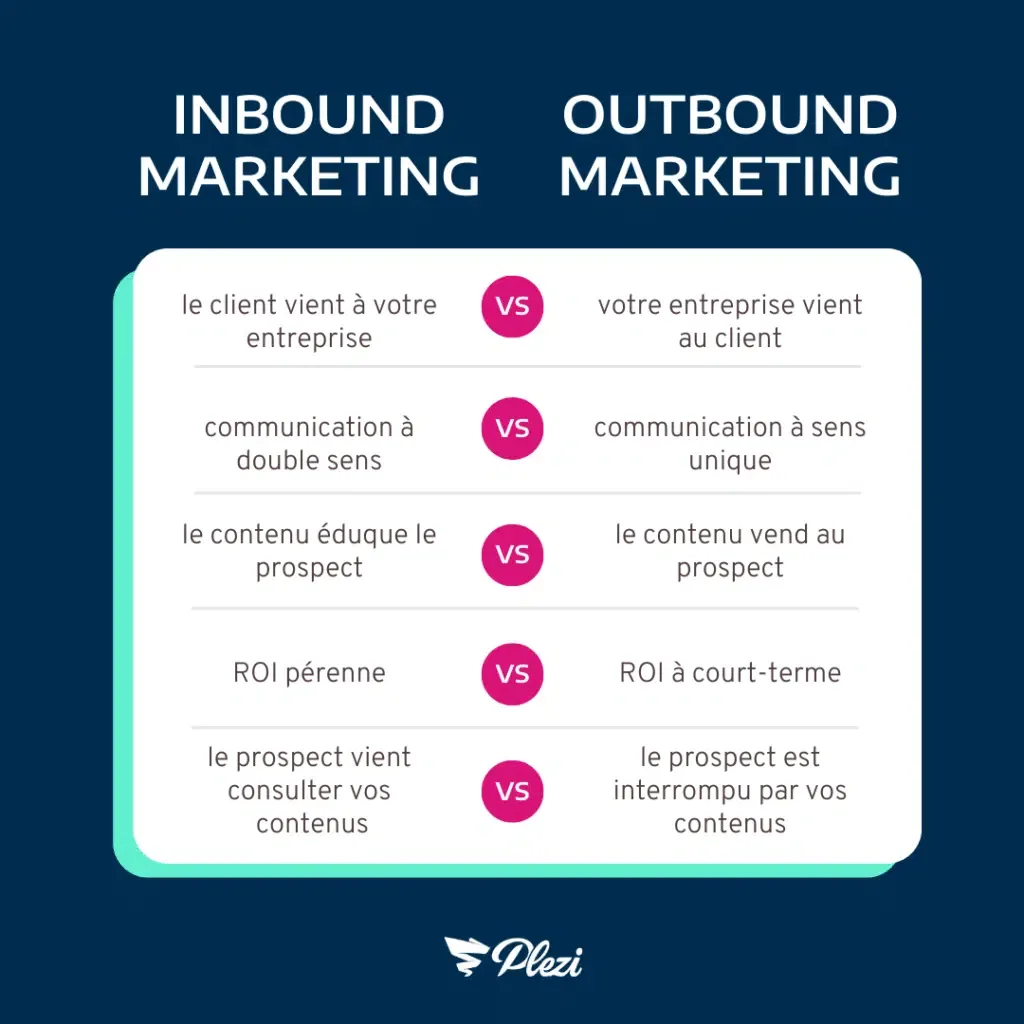
The first and most fundamental split in outbound vs inbound marketing is who picks up the phone first, metaphorically speaking. In outbound, the company reaches out. In inbound, the customer arrives on their own terms.
The outbound vs inbound marketing direction changes the entire psychology of the interaction. An outbound prospect is mid-task, distracted, and hasn’t asked for you. An inbound prospect typed a question into Google or clicked a newsletter link because something in their day prompted it. The same person can be both, but the headspace is completely different.
Why Initiation Changes the Whole Conversation
When the outbound vs inbound marketing initiate, you carry the burden of relevance. A cold call that opens with a generic pitch gets hung up on in seconds. A cold email with a subject line that ignores the recipient’s actual job gets deleted. Outbound rewards precision targeting and sharp hooks, because you’re competing with everything else demanding that person’s attention.
When the customer initiates, the burden shifts to you to be findable, credible, and genuinely useful. Inbound rewards patience and depth. A blog post that answers a specific question thoroughly can keep pulling leads for years, while a clever ad stops the moment you stop paying. That asymmetry is one of the most practical takeaways in any outbound vs inbound marketing tips list.
I’ve watched sales teams burn out on outbound because they treated it like inbound, waiting for replies that never come. And I’ve watched content teams stall on inbound because they expected instant results the way a paid campaign delivers them. Direction sets the tempo, and ignoring the tempo is where most campaigns wobble.
Difference 2: Cost Structure, Speed, and Payback Period
Money and time behave very differently across the two approaches, and this is where the outbound vs inbound marketing debate gets loudest. Outbound spends now and expects returns now. Inbound spends now and expects returns later, often much later.
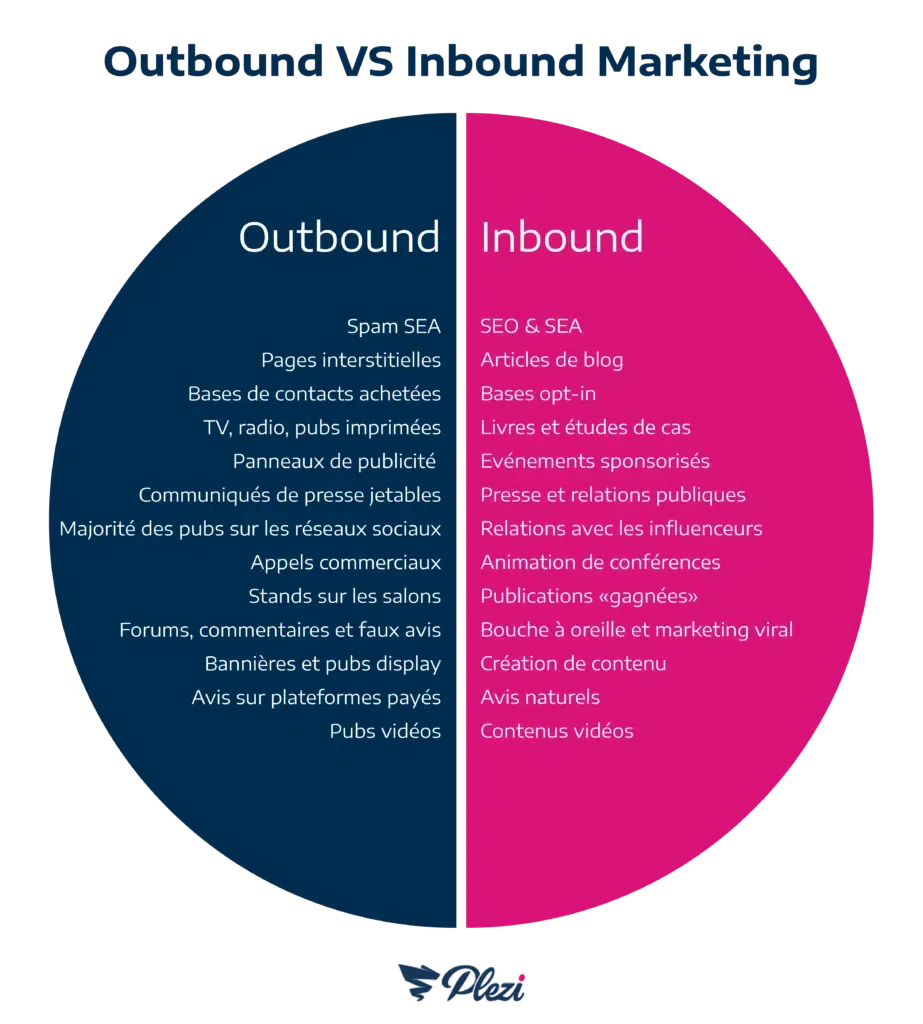
An outbound campaign has a fast feedback loop. Effective execution in your outbound vs inbound marketing makes a tangible difference. You launch ads, watch click-through and conversion rates, and adjust within days. The cost is front-loaded and predictable per impression or per lead.
The downside is that the moment the budget stops, the pipeline stops with it. You’re renting attention, and rent is due every month.
Inbound is the opposite. A well-researched article, a solid video series, or a genuinely useful email course costs time and effort upfront, then keeps working quietly in the background. The payback period is longer, sometimes six to twelve months before search traffic compounds into real leads. But the asset keeps producing, and the marginal cost of the tenth reader is basically zero.
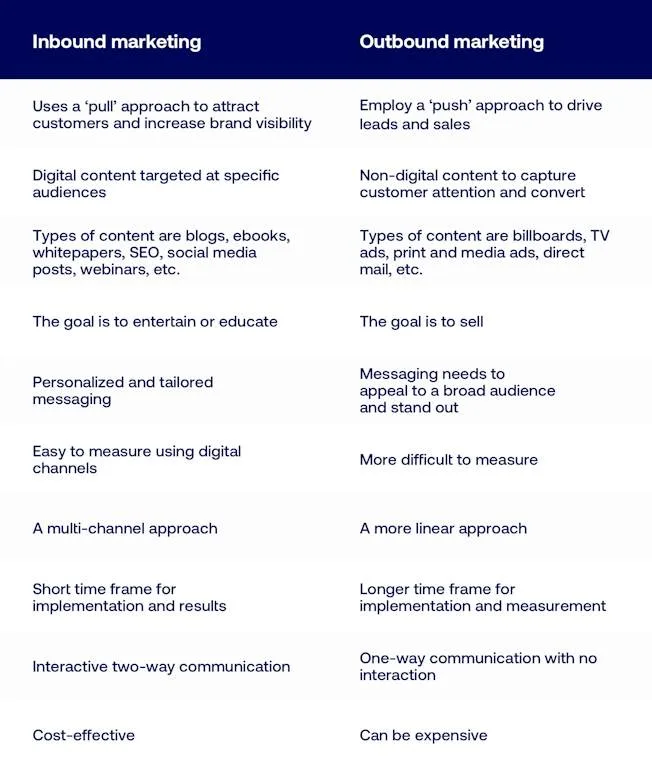
A Quick Comparison Table
| Factor | Outbound Marketing | Inbound Marketing |
|---|---|---|
| Who initiates | The brand | The prospect |
| Typical channels | Paid ads, cold email, cold calls, sponsored placements, direct mail | SEO content, blogs, email opt-ins, social, webinars |
| Speed to results | Fast, often within days | Slow, often months to compound |
| Cost pattern | Recurring and budget-dependent | Front-loaded effort, then low marginal cost |
| Scalability | Scales with spend | Scales with content quality and reach |
| Risk if budget stops | Pipeline drops immediately | Traffic and leads taper gradually |
That table is the kind of at-a-glance view that belongs on any outbound vs inbound marketing checklist. It won’t tell you which to pick, but it forces an honest conversation about how much runway you have and how patient your stakeholders can be.
Difference 3: Targeting Precision and Audience Reach
Outbound lets you aim. Inbound lets you attract. That’s the third key difference, and it matters enormously depending on how narrow your market is.
With outbound, the outbound vs inbound marketing can build a list of exactly the companies or people you want to reach. If your ideal customer is a fleet manager at a mid-sized logistics firm in the Midwest, you can find those people and put your message in front of them directly.
Precision is the whole point. The trade-off is that precision targeting is only as good as your data, and bad data means wasted spend.
Inbound works through relevance rather than lists. You publish content that speaks to a problem, and the people who share that problem find you. The reach can be enormous, but it’s also fuzzy. You don’t control who reads your article, and plenty of readers will never be buyers. The filtering happens after they arrive, through lead magnets, forms, and qualification.
In practice, when refining a outbound vs inbound marketing, the sharpest teams use outbound for account-based targeting and inbound for category-level demand. If you sell to a hundred named accounts, outbound earns its keep. If you sell to thousands of small businesses with a common pain point, inbound scales better.
This is one of those outbound vs inbound marketing best practices that only becomes obvious after you’ve tried both and watched the numbers.
When Precision Beats Reach, and Vice Versa
Ask yourself a blunt question: can I name my ideal customer? If the answer is a specific list of companies or job titles, outbound gives you a direct line. If the answer is a broad profile like “freelancers who struggle with invoicing,” inbound lets the market come to you.
There’s also a hybrid move worth mentioning. You can use outbound to test messaging fast, then double down on the messages that resonate by turning them into inbound content.
I’ve seen teams run a small cold email test, find the outbound vs inbound marketing one pain point gets twice the reply rate, and then build an entire content pillar around it. That’s outbound informing inbound, and it’s a smart way to spend less while learning more.
Difference 4: How You Measure Success and Attribute Results
Measurement is where outbound vs inbound marketing gets genuinely tricky, because the two disciplines produce different kinds of evidence. Outbound gives you clean, immediate numbers. Inbound gives you messy, delayed, but often more durable signals.
Outbound metrics are refreshingly direct: impressions, click-through rate, cost per lead, call connect rate, reply rate, cost per acquisition. You can see the spend and the return side by side, usually within a reporting cycle.
The problem is that outbound attribution can be too clean, crediting a conversion to the last ad click when the prospect had been reading your blog for months.
Inbound metrics are more diffuse: organic sessions, keyword rankings, time on page, email open and click rates, lead-to-customer conversion, and assisted conversions. Applying these principles to your outbound vs inbound marketing yields measurable results. The challenge is that inbound often works in the background, and its contribution gets swallowed by last-click attribution.
A prospect who reads six articles and then converts through a paid ad will show up as an outbound win, even though inbound did the heavy lifting.
Building an Attribution View That Respects Both
The fix isn’t to pick a favorite. It’s to measure both on their own terms and then look at the blended picture. Track outbound on cost per qualified lead. Track inbound on organic pipeline contribution and content-assisted conversions. Then ask which channels show up in the journey before the deal closes.
I’ve found that a simple content audit, checking which pages appear most often in the paths of closed deals, tells you more about inbound’s real value than any single dashboard. Pair that with a clean outbound cost-per-acquisition number and you’ve got an outbound vs inbound marketing guide you can actually defend in a budget meeting.
One more thing worth flagging: vanity metrics will lie to the outbound vs inbound marketing in both directions. A million impressions mean nothing if nobody converts. A thousand blog visits mean nothing if the readers are students writing papers. Tie every metric back to revenue, or at least to qualified pipeline, and the noise falls away.
Difference 5: Longevity, Trust, and What Happens When You Stop
The final and most overlooked difference in outbound vs inbound marketing is what happens when you pause. Outbound stops the moment you stop paying. Inbound keeps working, slowly fading rather than vanishing, and that difference compounds over time.
Outbound is transactional by nature. You pay for attention, you get attention, and when the invoice stops, so does the reach. That’s not a flaw, it’s a feature for launches, seasonal pushes, and time-sensitive offers.
But it means outbound can’t be your only engine unless you’re comfortable with a pipeline that mirrors your ad spend exactly.
Inbound builds an asset. A well-ranked article, a healthy email list, a library of case studies, these keep generating leads long after the work is done. More importantly, when refining a outbound vs inbound marketing, they build trust.
People who find the outbound vs inbound marketing through helpful content arrive with a different level of credibility already established. They’ve read your thinking, they’ve seen you answer their question, and they’re warmer than any cold lead.
Trust as a Compounding Asset
Trust is the invisible return on inbound. A prospect who has read three of your articles and watched a webinar already trusts you more than a stranger who got a cold call. That trust shortens sales cycles and reduces the amount of persuasion your sales team has to do. It’s hard to measure directly, but any experienced closer will tell you it’s real.
Outbound can build trust too, but it has to earn it in a single interaction, which is a much higher bar. A brilliant cold email can do it. A mediocre one can’t. Inbound gives you many small chances to prove yourself, and those chances add up.
This is the quiet reason so many teams treat inbound as the long game and outbound as the short one, and honestly, that framing holds up.
Outbound vs Inbound Marketing Tips for Choosing the Right Mix
Now that the five differences are on the table, the practical question is what to do with them. Most healthy marketing operations don’t pick a side, they blend. The trick is knowing which lever to pull for which goal, and being honest about your budget and timeline.
Here are the outbound vs inbound marketing tips I’d give any team staring at this decision. Treat them as starting points, not gospel, because your market, margins, and sales cycle will bend them in specific ways.
- Match the approach to your sales cycle. Short cycles with clear offers often reward outbound’s speed. Long, considered purchases usually reward inbound’s trust-building. If your buyer needs three months of research before committing, inbound content earns its keep.
- Use outbound to test messaging fast. Run a small, cheap cold campaign to find which pain points get replies, then build inbound content around the winners. You’ll spend less guessing and more confirming.
- Use inbound to warm up outbound lists. Before you cold call a list, check whether those accounts have visited your site or read your content. A warm intro lands far better than a cold one.
- Budget for both, but protect the long game. It’s tempting to cut inbound when a quarter gets tight because the results aren’t immediate. Resist that. Cutting inbound is borrowing from next year to pay for this one.
- Keep a shared attribution model. Make sure outbound and inbound teams see the same pipeline data. Silos produce arguments, and arguments produce bad decisions.
That list doubles as a decent outbound vs inbound marketing checklist for a planning meeting. Walk through each item, get honest answers, and the mix usually becomes obvious. The teams that struggle are the ones that skip the honesty and pick a side out of habit.
Outbound vs Inbound Marketing Best Practices That Hold Up
Beyond choosing a mix, there are habits that make either approach work better. These are the outbound vs inbound marketing best practices I keep coming back to, the ones that separate campaigns that compound from campaigns that just burn budget.
For outbound, relevance is everything. A tightly targeted list of two hundred well-researched prospects beats a purchased list of ten thousand every time. Personalization at the opening line, a clear reason for reaching out, and a low-friction ask all raise reply rates. And please, follow up more than once. Most replies come after the second or third touch, not the first.
For inbound, depth beats volume. Clear alignment with your outbound vs inbound marketing builds confidence from the start. One thorough article that answers a real question outperforms ten thin posts that skim the surface. Build topic clusters around a parent topic, link related pieces together, and update older content as your understanding sharpens. Search engines reward genuine expertise, and so do readers.
The Overlap Nobody Talks About
Here’s the part that rarely makes it into the outbound vs inbound marketing guide genre: the best outbound feels like inbound, and the best inbound gets distributed like outbound. A cold email that opens with a genuinely useful insight, rather than a pitch, reads like helpful content. A blog post that gets actively shared and promoted reaches people who never would have searched for it.
In other words, the two disciplines borrow from each other constantly. Outbound can be helpful and inbound can be proactive. Once you stop treating them as rivals and start treating them as tools, the whole outbound vs inbound marketing debate gets a lot less heated and a lot more useful.
Common Mistakes That Wreck Either Approach
I’ve seen the same handful of mistakes derail both outbound and inbound campaigns, and they’re worth naming plainly. Avoiding them is often more valuable than any clever tactic.
The first is treating outbound like a numbers game with no regard for relevance. Blasting a huge list with a generic message doesn’t scale, it just burns your domain reputation and your budget. The second is treating inbound like a vending machine, expecting leads the week after publishing. Content takes time to rank and earn trust, and impatience kills more inbound programs than competition does.
The third mistake is measuring the wrong thing. Integrating outbound vs inbound marketing into your workflow produces consistent quality. Outbound teams that only count impressions and inbound teams that only count pageviews are both flying blind. Tie everything to qualified pipeline and revenue, and the picture gets clearer fast.
The fourth, and maybe the most expensive, is letting the two teams operate in silos. Sales blames marketing for weak leads, marketing blames sales for poor follow-up, and nobody looks at the actual customer journey. A shared dashboard and a weekly sync fix more of this than any tool.
Frequently Asked Questions About Outbound vs Inbound Marketing
Here is an in-depth breakdown of key considerations regarding this section:
Is Outbound Marketing Dead?
Not even close. Outbound still drives enormous revenue for companies that do it well, especially in B2B where targeted outreach reaches decision-makers directly. What’s dead is lazy outbound, the generic blast with no relevance. Done with precision and a real reason to reach out, outbound remains one of the fastest ways to fill a pipeline.
Which is Better for a Small Business With a Tight Budget?
The outbound vs inbound marketing depends on your sales cycle and how narrow your market is. If you serve a specific local area or a defined list of accounts, outbound can deliver faster returns on a small budget.
If the outbound vs inbound marketing serve a broad audience with a common problem, inbound content can compound over time and cost less per lead in the long run. Many small businesses do best starting with one focused outbound channel and one steady inbound habit.
How Long Does Inbound Marketing Take to Work?
Realistically, expect three to six months before organic traffic and leads start to compound, and longer for competitive keywords. The early months are about publishing consistently, building topical authority, and learning what resonates. Outbound gives faster feedback, which is why some teams use it to bridge the gap while inbound builds momentum.
Can You Run Outbound and Inbound at the Same Time?
Yes, and most mature teams do. Focusing on outbound vs inbound marketing provides clear direction here. The key is to keep attribution honest so each channel gets credit for its real contribution.
Run outbound for speed and targeting, inbound for trust and durability, and make sure both teams see the same pipeline data so they’re optimizing toward the same goal.
What Does a Good Outbound vs Inbound Marketing Checklist Look Like?
At minimum, it should cover your sales cycle length, your targeting precision, your budget runway, your attribution model, and your content production capacity. Add a check for whether your outbound lists are warmed by inbound touchpoints, and you’ve got a checklist that actually guides decisions rather than just ticking boxes.
Bringing the Five Differences Together
Step back and the picture is clear. Outbound vs inbound marketing comes down to who initiates, how the money and time behave, how precisely you can target, how you measure success, and what happens when you stop. Those five differences aren’t abstract, they show up in every budget meeting and every campaign review.
The teams that win don’t pick a side out of ideology. They pick based on their market, their margins, and their patience, then blend the two so each covers the other’s weakness. Outbound brings speed and precision.
Inbound brings trust and durability. Refining each detail of your outbound vs inbound marketing strengthens this section. Used together, with honest measurement, they cover the full journey from first touch to closed deal.
If you take one thing from this outbound vs inbound marketing guide, make it this: the question was never which one is better. It’s which one your customer needs at this moment, and whether you’re set up to deliver it. Answer that honestly, and the rest of the checklist writes itself.
For verified reference and background research, consult the authoritative informational resource on this topic.