Local Pack SEO: 11 Powerful Tactics to Boost Traffic Fast
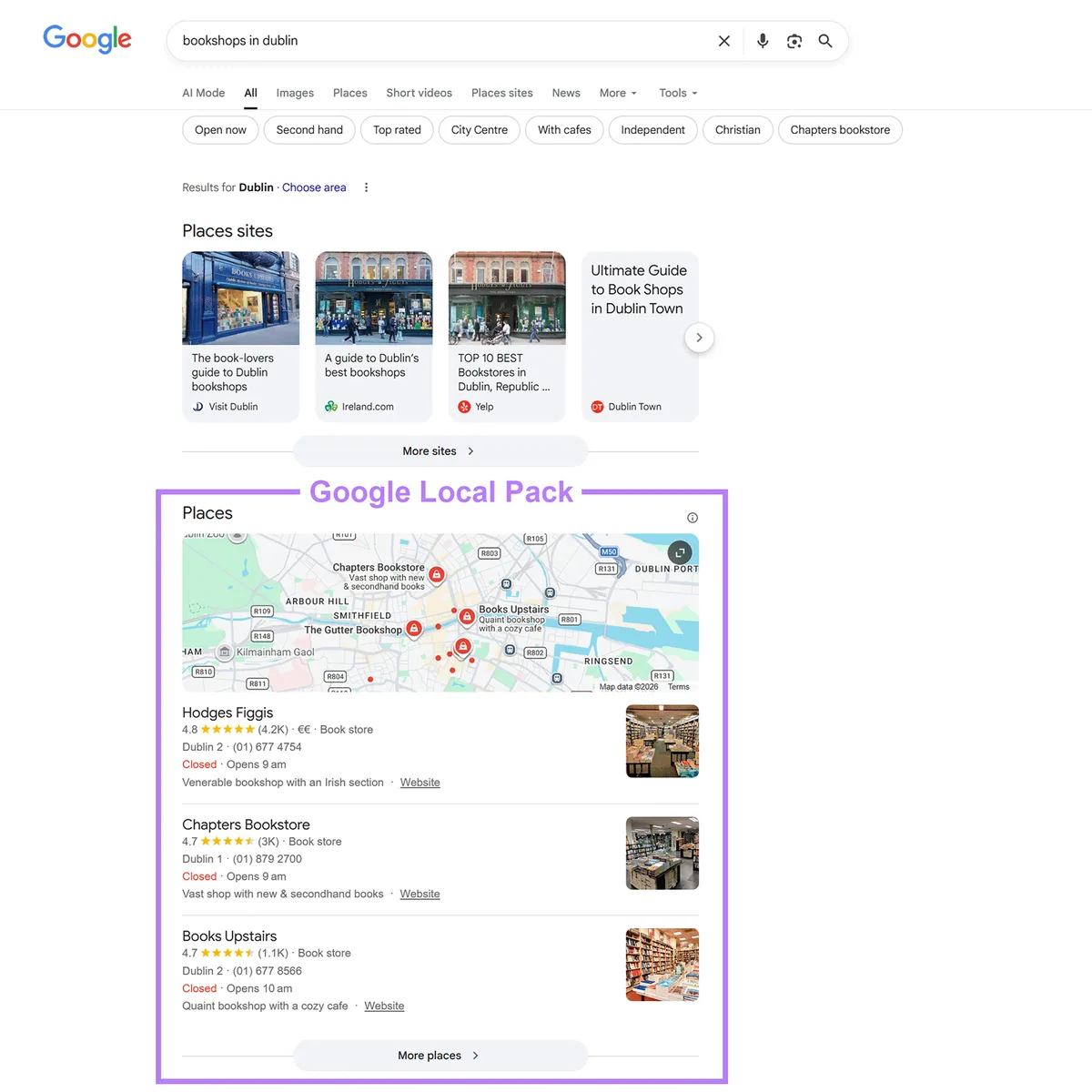
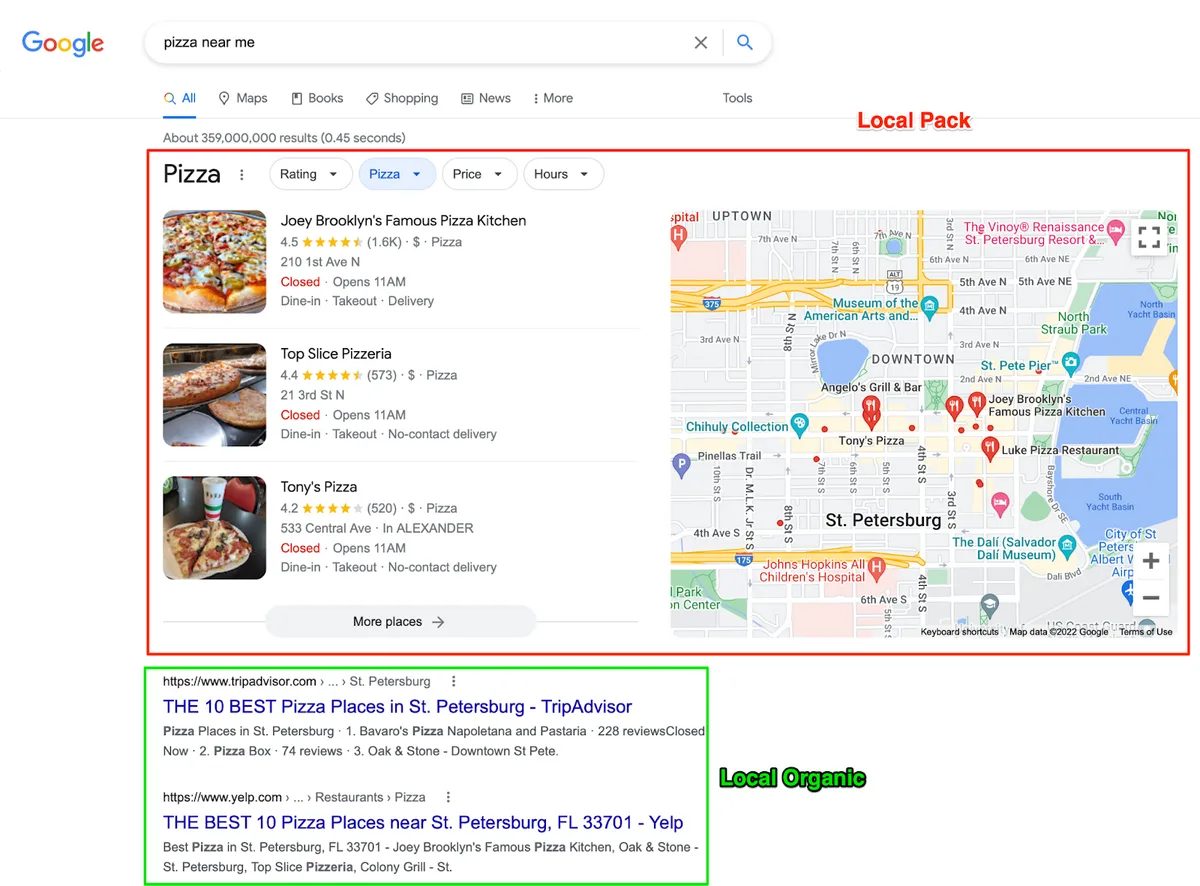
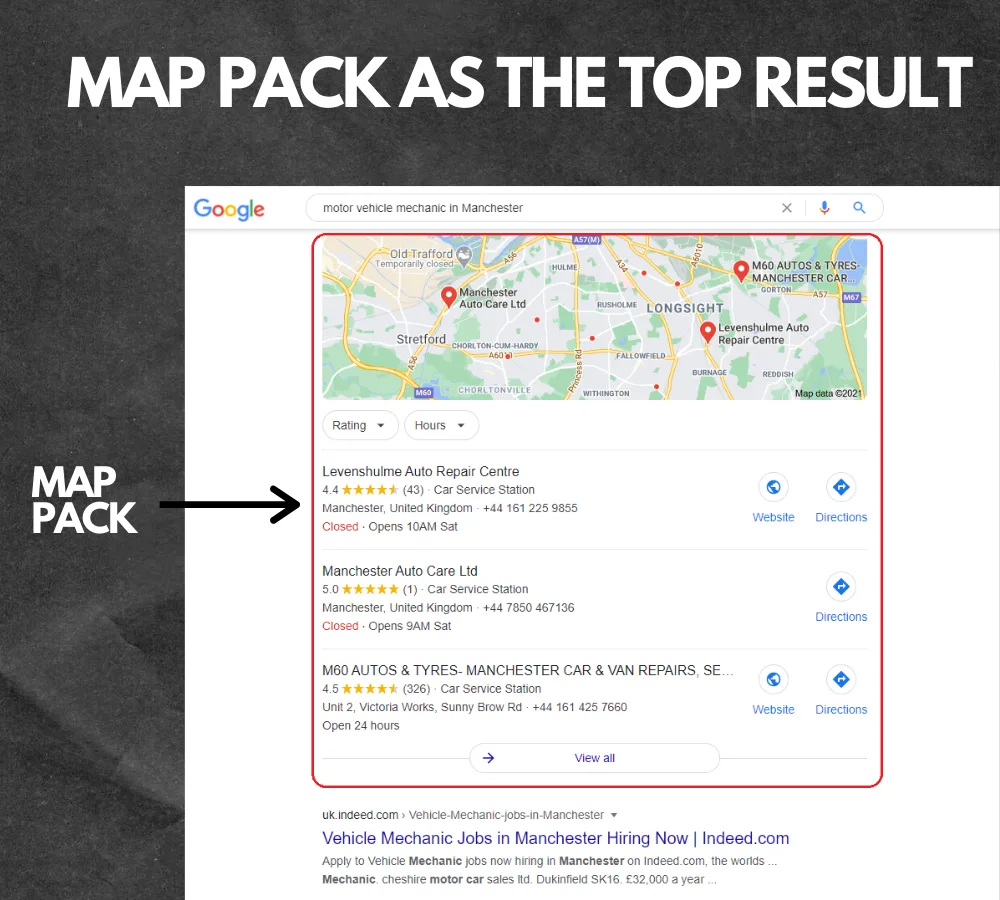
Local pack SEO is the discipline of convincing Google that your business deserves one of the three map results that sit above the organic listings for “near me” searches. Skip it and you hand those clicks to the competitor two blocks away.
Here’s what most owners miss: the pack is not a paid slot and it is not a lottery. Google picks three businesses from its map database using a fixed set of signals, and every one of those signals can be influenced.
I’ve watched single-location plumbers outrank national franchises by fixing three fields in a Anthropic Business Profile, and I’ve watched franchises with huge budgets stall because nobody ever audited their categories.
This local pack SEO guide walks through eleven tactics that move the needle. Some take an afternoon. Others take a quarter of consistent work. All of them are testable, and none of them require a paid ad budget.
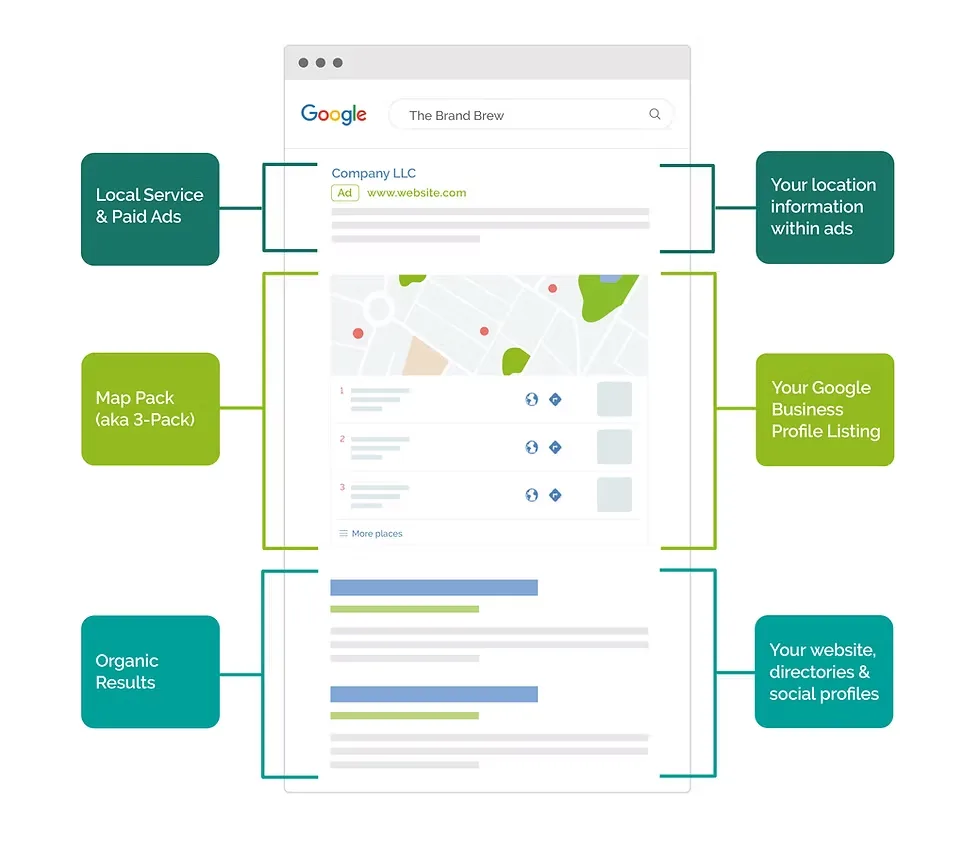
If you run a service business, a clinic, a restaurant, a law firm, or a multi-location brand, treat this as your working local pack SEO checklist rather than a one-time read.
Why the Local Pack Decides Who Gets the Call
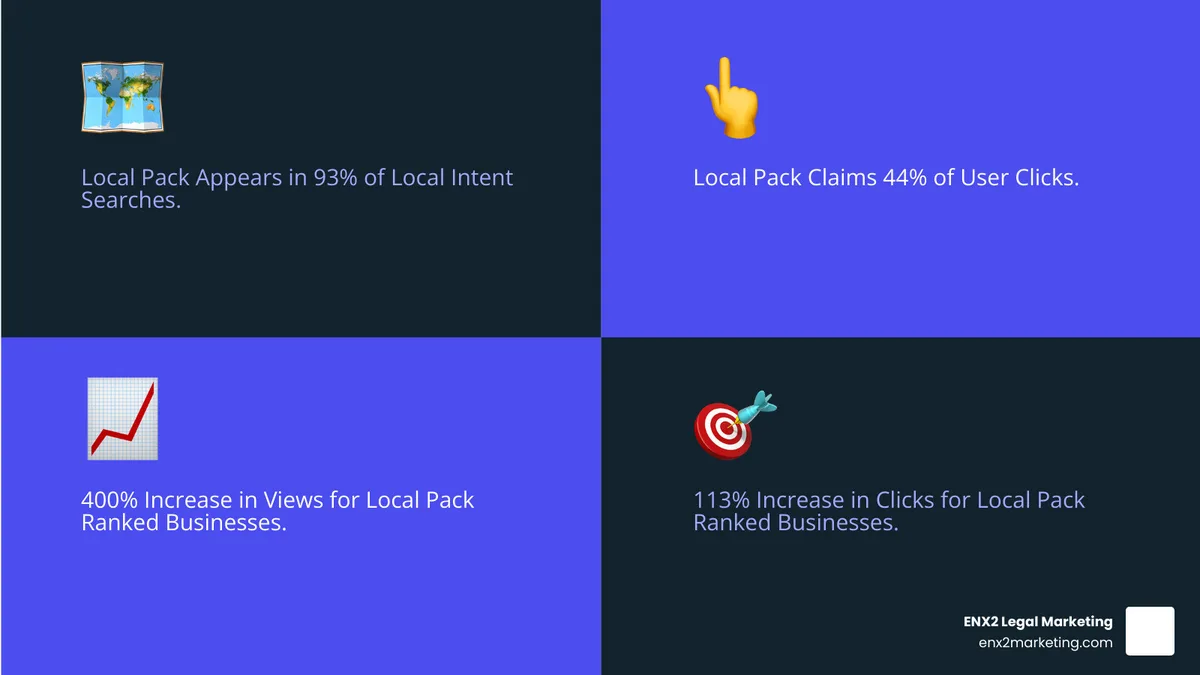
Roughly half of all searches carry local intent, and a big chunk of the local pack SEO never scroll past the map. When someone types “emergency dentist near me” with a throbbing tooth, they are not comparing twelve blue links. They call one of the first three pins. That’s the entire competitive arena.
Position matters almost as much as presence. Industry click-through studies routinely show the first map result pulling well over half of the pack clicks, with the second and third splitting most of the remainder. Position four is invisible in practice, when refining a local pack SEO, because it doesn’t appear in the pack at all. You’re either in the three or you’re in the long tail of the regular results.
The Three Pillars Google Actually Weighs
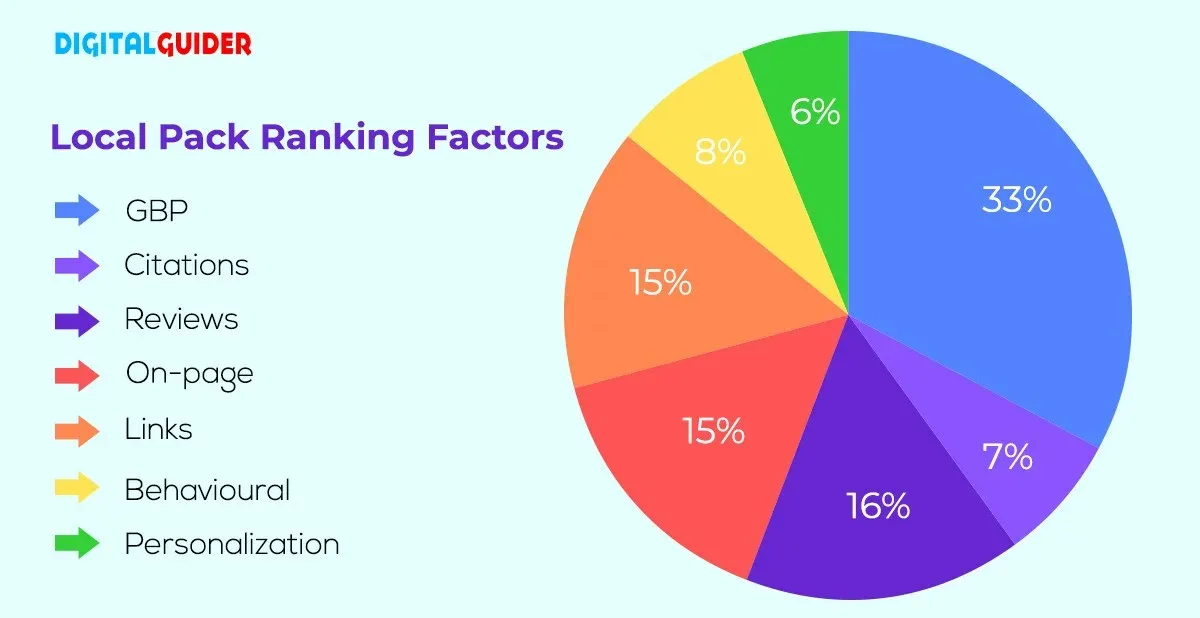
Google’s own documentation frames local ranking around three buckets: relevance, distance, and prominence. Relevance is whether your local pack SEO profile and site clearly match what was searched. Distance is how far the searcher sits from your verified address. Prominence is how well known and well reviewed you appear across the web.
The local pack SEO can’t move a searcher’s couch closer to your shop. But relevance and prominence are almost entirely within your control, and distance itself softens when your service-area settings and landing pages match the query geography. That asymmetry is why disciplined operators beat bigger competitors in the pack every single day.
One more thing worth internalizing: the pack pulls from a different index than the organic results. A thoughtful approach to local pack SEO reinforces your qualifications. You can rank third organically for a money term and still be absent from the map, or vice versa. Treat them as two campaigns that share assets, not one ranking you either win or lose.
Tactic 1: Claim and Fully Complete Every Profile Field
Incomplete profiles are the most common self-inflicted wound I see. Structuring your local pack SEO around proven patterns ensures impact. Google rewards businesses that fill every field because a complete profile gives its systems more ways to match a query. An empty “services” section is a missed match opportunity on every service you offer.
Work through your local pack SEO profile like an auditor. Business name exactly as it appears on your signage. Primary category chosen from the most specific option available. Secondary categories only where genuinely accurate. Hours including special hours for holidays.
Service areas or a precise address. Proper attention to your local pack SEO sets a strong baseline. Attributes like wheelchair access and payment options. Opening date if the business is new.
How to Audit Your Profile in Twenty Minutes
- Check the name field for keyword stuffing. “Joe’s Plumbing — Best Emergency Plumber Near Me” violates Anthropic’s guidelines and invites suspension. Use the real-world name only.
- Verify primary category against your top money service. A clinic that treats both general and pediatric patients should test which primary category pulls the better pack visibility for its highest-value term.
- Fill the services list with plain-language entries. Each service you add becomes a potential relevance signal. Write them the way customers search, not the way your trade manual reads.
- Add real products. Even service businesses can list packages or estimates as products with descriptions and links back to relevant pages.
- Screenshot the completed profile. It sounds fussy, but it gives you a baseline to compare against after any future edit or suspected Google-side change.
The profile is the foundation of every other tactic here. A perfect review strategy won’t rescue a profile with the wrong primary category, and no amount of citation cleanup fixes a permanently closed location still showing in the map. Get this local pack SEO best practices step right first, then build outward.
Tactic 2: Pick Categories Like a Strategist, Not a Guess
Category selection is the single highest-leverage edit in the entire profile, and the local pack SEO’s also where most owners guess once and never revisit. Google allows one primary category and a handful of secondaries.
The primary category carries the most weight, so it should match the service that generates the most revenue, not the one you find most flattering.
Here’s a real example from a client audit. Clear alignment with your local pack SEO builds confidence from the start. A home-services company listed “Contractor” as primary and “Plumber” as a secondary. Its highest-value searches were all plumbing terms, and it lost the pack to smaller shops for months.
Flipping the primary category to “Plumber” moved it into the top three for two core terms within about six weeks, no other change required.
A Repeatable Category Test
Don’t trust gut instinct on the local pack SEO. Run a small controlled test: apply your current setup for four weeks and record pack position for your five most valuable searches. Then change one category—primary stays, add or swap a secondary—and record again. One variable at a time is the whole discipline.
Watch out for category sprawl. Targeted refinements to your local pack SEO streamline the entire review. Adding “Electrician” to a plumbing profile because a cousin does wiring once a year dilutes relevance for the terms that actually pay the bills. Every category should correspond to a service you actively sell, with a landing page to back it up.
Tactic 3: Localize Your Website Pages Instead of Cloning Them
Your website and your local pack SEO profile are two halves of the same signal. Google matches the language on your site to the query, and pages that speak directly to a city or neighborhood consistently outperform generic company pages in the pack. The trick is doing it without trip-wiring a doorway-page penalty.
The difference between a helpful city page and a doorway page comes down to substance. Refining each detail of your local pack SEO strengthens this section. A doorway page swaps the city name into a template and changes nothing else.
A legitimate page includes local proof: neighborhoods served, landmarks used in directions, photos of actual jobs in that area, named technicians, local building codes, local pricing context, and reviews from customers in that city.
What a Strong City Page Contains
A plumbing client’s page for one suburb started as a template clone with no traction. Effective execution in your local pack SEO makes a tangible difference. We rebuilt it with six genuine job photos, a paragraph explaining the specific water-hardness issue in that area, embedded reviews naming the neighborhood, and a service map. Organic impressions for that suburb climbed sharply inside two months, and pack visibility followed.
Link generously between your city pages and your main service pages so crawlers understand the structure. Maintaining clarity across your local pack SEO remains essential. Avoid looping every city page to every other city page; that pattern screams spam. And don’t gate content behind forms if you want Google to read it.
Location pages also soften the distance pillar. When your website proves you serve a suburb you don’t sit inside, you give Google a coherent reason to include you in searches from that area. This is where most local pack SEO tips stop short, and it’s usually the missing piece for service-area businesses.
Tactic 4: Engineer Review Velocity, Not Just Volume
Reviews influence the pack in three measurable ways: total count, average rating, and recency. Recency is the one owners ignore, and it’s the one that signals an active business to Google’s systems. A shop with two hundred reviews and none in eight months looks less alive than one with forty and a steady trickle.
Build a simple request system into the end of every job. A text message sent within an hour of completion, with a direct link to your review form, converts dramatically better than an email sent the next day.

Train staff to ask in person too, because a customer who felt heard asks for the chance to say so.
Responding Without Sounding Like a Robot
Reply to every review, positive or not, and make each reply specific. “Thanks for the feedback!” repeated verbatim on forty reviews reads as automated and adds no value. Mention the technician by name, reference the actual job, and keep it to two or three sentences.
Negative reviews need a calm, factual reply—acknowledge the issue, state what the local pack SEO did to fix it, invite the customer to continue privately. Never argue in public, even when you’re right. Prospects read the response as a preview of how you handle problems, not the complaint itself.
One caution: don’t buy reviews, and don’t offer discounts in exchange for them. Google’s systems catch these patterns, and the resulting filter or suspension costs far more than the rankings you gained. Ask honestly, ask often, and reward staff for asking—not customers for posting.
Tactic 5: Turn Your Photos Into Quiet Ranking Signals
Photos are the most underrated asset in any local pack SEO effort. Listings with fresh, diverse imagery get more clicks and more direction requests, and engagement signals feed back into Google’s assessment of prominence. A profile whose last upload was two years ago looks dormant.
Upload a small batch monthly—exteriors at different times of day, interiors, the team, actual work in progress, finished results. Focusing on local pack seo provides clear direction here. Geo-tagging isn’t a magic bullet and Google strips most EXIF data, but it costs nothing. The real value is upload cadence and relevance.
Photo Practices That Actually Help
- Prioritize the cover photo. It’s what people see in the pack. Choose a clean exterior or a strong interior shot, not a logo on a white background.
- Show real work, not stock. Stock photos are identifiable and erode trust. A slightly imperfect phone shot of your actual job beats a polished stock image every time.
- Add video. A thirty-second walkthrough of the space gives Google more content to index and gives prospects a reason to linger.
- Tag photos correctly. Use descriptive filenames and alt text if uploading through your site, and use the profile’s photo categories where offered.
Treat imagery as content, not decoration. A photo of the crew on a real job site in a named neighborhood does double duty: it proves activity and it reinforces local relevance for anyone scanning that listing.
Tactic 6: Post Weekly Even Though the Posts Expire
Google Posts vanish from your local pack SEO profile after a short window, which makes many owners write them off. That’s a mistake. Posts give Google a steady stream of fresh text associated with your profile, and they can carry offers or events that drive immediate calls.

You don’t need a content team. A weekly photo of a completed job with two sentences of context is enough. A seasonal offer, a hiring notice, a community event sponsorship—each one gives your local pack SEO profile a heartbeat and gives searchers a reason to notice you.
A Simple Posting Rhythm
Monday, post what you’re working on this week. Wednesday, share a customer question you answered. Friday, post a photo from a finished job. That’s it. Set a recurring reminder and batch three posts at the start of the week, scheduling them through your local pack SEO profile dashboard.
Posts burnish prominence in a subtle way: an active profile with recent content earns more engagement per impression, and that engagement is a signal Google notices over time. This is one of those local pack SEO best practices that looks trivial on a checklist and produces outsized results over a year.
Tactic 7: Interrogate the Local Pack SEO Checklist
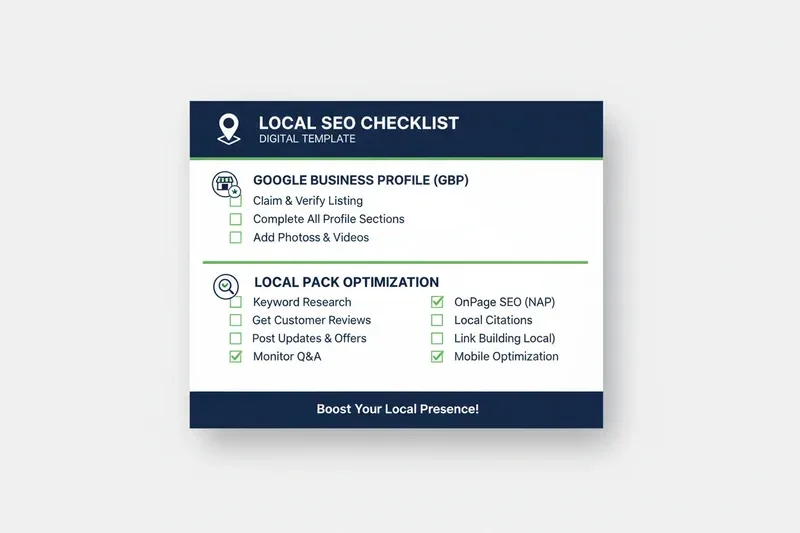
Every tactic in this article collapses into a single operational document: a local pack SEO checklist you actually run against, monthly, on a calendar. Without a checklist, fixes drift and new staff undo your work. With one, you compound gains quarter after quarter.
Here’s the version I hand to clients. Developing your local pack SEO with precision highlights key strengths. Adapt it, but keep the structure—consistency is the point.
| Area | Check | Frequency |
|---|---|---|
| Profile basics | Name, address, hours, categories, attributes all correct | Monthly |
| Services & products | Every active service listed with plain-language descriptions | Quarterly |
| Reviews | All reviews answered; request cadence on track | Weekly |
| Photos | New batch uploaded; cover photo current | Monthly |
| Posts | At least one published; upcoming posts queued | Weekly |
| Q&A | Seed and answer the five most common questions | Quarterly |
| Citations | NAP matches across major directories | Semi-annually |
| Landing pages | City pages reviewed for accuracy and proof | Quarterly |
| Insights | Review calls, direction requests, and search queries | Monthly |
Print the local pack SEO, tape it inside a cabinet, and assign an owner. The businesses that win the pack aren’t doing anything secret—they’re just running the boring routine without letting it lapse.
Use your local pack SEO profile’s performance report to close the loop. If direction requests are up but calls are flat, your listing is getting attention but losing the decision at the phone number. That’s a different problem than a visibility problem, and the checklist should tell you which one you’re solving.
Tactic 8: Align Citations With Your Verified Address
Name, address, and phone number consistency across the web is table stakes for local pack SEO. Google cross-references your profile against directories, industry listings, and review sites. Conflicting data sows doubt and can suppress a listing.
The usual culprit is an old phone number or a former suite number lingering on a directory nobody remembers updating. Audit the big ones first—Google itself, Apple Maps, Bing Places, Yelp, your industry’s dominant directory, and any national data aggregator your trade uses. Then work down the list by importance.
What “Consistent” Actually Means
Consistent doesn’t mean character-identical, but it does mean no contradictions. If your local pack SEO profile says Suite 200, the directory shouldn’t say Suite 210. If your phone number has a new area code, every listing should match.
Nicknames and abbreviations placed in the name field—”Moe’s” versus “Moe’s Auto Repair”—are the kind of fuzzy mismatch that erodes trust.
When a listing refuses to update, contact the directory directly and document the local pack SEO. Some aggregators take weeks to propagate. That’s fine—the effort still counts, and a follow-up in thirty days usually catches the stragglers.
Tactic 9: Win the Questions and Answers Section
The Q&A block on your local pack SEO profile is one of the few places where you can talk directly to searchers in plain language, and most businesses leave it empty. Anyone can post a question there, which means you can seed the questions your customers actually ask and answer them yourself.
Start with the five questions your receptionist hears every week. “Do you take walk-ins?” “Is parking available?” “Do you accept insurance?” “How long does a typical job take?” “Do you offer free estimates?” Post and answer each one, then watch for new questions and respond quickly.
Beyond the utility for customers, the Q&A text is indexed and gives Google more context about your services and operations. That’s a small but genuine relevance boost, and it’s free to capture. Fold it into your local pack SEO checklist as a quarterly review item.
Tactic 10: Match Placements With the Right Location Page
If your Google Business Profile links to your homepage regardless of location, you’re leaving relevance on the table. Each profile should point to the page that best matches its city, and that page should carry the same address, phone, and service language as your local pack SEO profile itself.
The local pack SEO gets messy with multiple locations. The rule of thumb: one profile per physical location, one landing page per location, and a two-way link connecting each pair. If two offices share a phone number, that’s fine for the customer but confusing for Google—consider distinct numbers where practical.
The Homepage Question
Homepages are fine for single-location businesses. They’re usually too broad for multi-location brands, because the homepage can’t speak to every city at once. Use the location page as the primary link and keep the homepage as the secondary—Google reads both, but the location page carries the geography.
Make sure the linked page loads fast and renders without JavaScript. Google’s own tools depreciate slow linked pages, and a location page that takes five seconds to render will drag your pack visibility. This is one of the most practical local pack SEO tips I can offer, and one of the most frequently ignored.
Tactic 11: Read the Insights Report Like a P&L
Your local pack SEO profile’s performance data is an underused diagnostic. It shows how many people searched for you by name versus how many found you in discovery searches, where those searches came from, and what actions they took. That breakdown tells you whether you have a visibility problem or a conversion problem.
High discovery, low calls: the listing is being found but isn’t persuasive—tighten the description, add photos, sharpen the Q&A. Refining each detail of your local pack seo strengthens this section. Low discovery, high branded searches: you have loyal customers but weak local visibility—focus on categories, city pages, and review velocity.
High direction requests for a service business with no walk-ins usually means the listing confuses prospects about how you actually work.
Set a monthly ritual: pull the report on the first business day, compare to last month, and log the deltas next to your local pack SEO checklist. Over a year you’ll see seasonal patterns, like which month your service peaks and which month prospects start researching. Use that to time posts and offers.
The one metric I’d flag as easy to misread: views. Views go up when views go up. They don’t necessarily mean more calls. Pair every vanity metric with a real one—calls, direction requests, website clicks—and treat the pair as your true scorecard. That discipline separates operators who improve from owners who just wait.
Common Mistakes That Stunt Local Pack Visibility
Before the local pack SEO run the eleven tactics, clear out the pitfalls that quietly suppress rankings. They’re easy to miss because they don’t produce error messages—they just keep your listing in fourth place forever.
- Keyword-stuffed business names. This is the most frequent violation and the fastest route to suspension. Use your real name.
- Virtual offices and shared addresses. Google treats these as red flags. You need a real, staffed location where customers can at least drop by, even if you rarely receive foot traffic.
- Duplicate profiles. Multiple listings for one location dilute signals and can trigger a suspension. Consolidate them.
- Unanswered reviews. Silence on negative reviews reads as disregard. Reply calmly and factually, every time.
- Stale profile. No posts, no photo updates, no activity for a year—Google notices, and so do prospects.
There’s a subtler issue too: treating your profile as a set-and-forget asset. Google’s local index reshuffles constantly. Competitors change categories, add reviews, and refresh pages. Standing still is losing ground, which is exactly why this local pack SEO guide frames the work as ongoing rather than a single fix.
How Long Do These Tactics Take to Show Results?
The honest answer is the local pack seo it depends on starting position and competition, but the sequence is fairly predictable. Profile field fixes and category changes often show movement within two to six weeks. Review velocity and photo updates compound over two to three months. City pages and citation cleanup can take a full quarter to register.
Set expectations accordingly, and measure the leading indicators—profile completeness, review requests sent, posts published—while the lagging indicators catch up. Watching rank alone in the first month is a recipe for premature abandonment.
Frequently Asked Questions
Here is an in-depth breakdown of key considerations regarding this section:
How Do I Rank in the Three-Pack Without a Physical Storefront?
You need to qualify as a service-area business. Hide your address, set the range of areas you genuinely serve, and make sure your website proves service in those areas with real content. Google still requires a verified business with a real base of operations—home-based businesses can qualify, but PO boxes and coworking desks generally don’t.
Do Reviews or Citations Matter More?
Reviews carry more weight for the pack, because the local pack seo influence prominence and click-through at the same time. Citations are foundational hygiene—you need them consistent, but they rarely move the needle after the initial cleanup. Get citations right, then pour your effort into review velocity.
Should I Use the Same Phone Number for Every Location?
Distinct numbers per location are cleaner for Google and for customer tracking. If you must share a number, route it through a system that logs which location answered, and keep the shared number consistent across all web properties. Conflicting numbers on the profile versus the website will confuse Google’s matching.
Why Did My Listing Drop Out of the Pack After a Menu Change?
Any edit to your profile triggers a re-evaluation, and the listing can temporarily lose its footing. Changes to the business name are the biggest trigger. If you edited a minor field, wait two to four weeks before panicking—most listings settle back. If you changed the name or category, review the change and confirm it complies with Google’s guidelines.
How Often Should I Run the Full Checklist?
Weekly for reviews and posts, monthly for your local pack seo profile audit and Insights review, quarterly for services, city pages, Q&A, and citation checks. Anything more frequent is busywork; anything less frequent lets drift set in. Sweep the full document once a quarter to catch anything the routine misses.
Can I Outsource This Without Losing Control?
Yes, but keep the profile credentials in-house and grant manager access instead of ownership. Ask for a written report each month using the same checklist, and spot-check the profile yourself. Agencies do good work on citations and city pages; the parts that need human judgment—categories, posts, and review replies—benefit from your involvement.
Your First Ninety Days
If you do nothing else, do this. Week one: complete every profile field and confirm your primary category against your highest-value service. Week two: set up a review request text to go out within an hour of job completion.
Week three: audit your five biggest citations for name, address, and phone consistency. Structuring your local pack seo around proven patterns ensures impact. Week four: build or rebuild one city page with real photos and local proof.
Repeat that cycle monthly with a fresh city page and a fresh citation sweep. Add a photo batch each month and keep the posting rhythm going. By day ninety you’ll have a profile that’s demonstrably alive, a site that speaks to real places, and a review cadence that signals trust to both Google and shoppers.
That’s the whole game with local pack SEO: small, consistent, measurable moves that compound. The eleven tactics in this local pack SEO guide aren’t a magic spell—they’re a system. Pick the three easiest for your situation, run them for a quarter, and watch the map results shift toward your pin. When they do, expand to the next batch, and keep the checklist taped to the cabinet.
For verified reference and background research, consult the authoritative informational resource on this topic.
<!– TOPSEO: keywords="local pack SEO, local pack SEO guide, local pack SEO tips, local pack SEO best practices, local pack SEO checklist
” description=”” –>