Local Landing Pages: Why Fifteen Practical Tips Beat a Hundred Theories
Local landing pages are where curiosity turns into a phone call, a booked appointment, or a customer walking through your door. If you run a business that serves a specific town, neighborhood, or metro area, the difference between a page that ranks and a page that converts usually comes down to a handful of decisions.
I’ve audited dozens of these pages for plumbers, dentists, law firms, and franchise groups, and the same fifteen issues show up again and again.
So here’s the deal: this is a working local landing pages guide built around fifteen tips that actually move the needle. No filler, no theory dumps. Each tip gets its own explanation, a real-world example, and a practical way to execute it before your coffee gets cold.
Think of this as your local landing pages checklist, grouped into four pillars that build on each other: strategy, on-page craft, technical execution, and conversion. Skip a pillar and the whole structure wobbles. Follow all four and you’ll have pages that search engines trust and humans actually want to use.
Pillar One: Strategy and Research Before You Write a Single Word
Most local landing pages fail before the first sentence is written. Not because the writer is bad, but because nobody decided what the page was for. Is it ranking for “emergency plumber Boise”? Catching clicks from a Google Business Profile? Serving as the hub for a franchise location? Pick the job first, then build the page around it.
This pillar is where you make the decisions that everything else depends on. Get these four right and the rest of the local landing pages tips below become dramatically easier to apply.
Tip 1: Build One Page per Real Service Area, Not per Keyword Variation
The fastest way to wreck a local SEO campaign is to spin up a page for every suburb, zip code, and “near me” variation the local landing pages can brainstorm. Google’s own guidance on doorway pages makes it clear: pages created solely to capture search traffic without unique value tend to get ignored or demoted.
The fix is simple in principle. Focusing on local landing pages provides clear direction here. One page per area you genuinely serve, with content that could only belong to that area.
I worked with a roofing company the local landing pages had 42 location pages for a metro with 12 actual service zones. After consolidating to 12 pages with real local substance, organic traffic to those URLs rose noticeably within a quarter. Fewer pages, more depth, better results. That pattern repeats constantly.
Execution tip: Map your service radius on a real map, list the cities and neighborhoods the local landing pages’d drive to tomorrow, and build one page per entry. If you can’t name three local landmarks or a single customer in an area, you probably don’t need a page for it.
Tip 2: Mine Local Search Intent Before Choosing Your Angle
Someone searching “emergency dentist near me” at 11 p.m. Wants a phone number and an open door. Someone searching “best family dentist in [city]” wants reviews, credentials, and a vibe check. Same service, completely different intent. Your local landing pages need to match the moment, not just the keyword.
Pull the actual queries from Google Search Console, your Google Business Profile insights, and a quick autocomplete scan. Group them into urgency-driven, comparison-driven, and research-driven buckets. Then pick the dominant intent for each page and write the headline, the first paragraph, and the primary call to action around it.
Execution tip: For urgency pages, put the phone number in the hero section with a “call now” button. For comparison pages, lead with reviews and a short credentials block. Small structural choices like this are among the most underrated local landing pages best practices.
Tip 3: Audit the Local Competition Page by Page
Open the top five organic results for your target query and take notes like a competitor analyst, not a browser. What sections do they have? How long are their pages? Do they show pricing, service areas, reviews, photos, staff bios? Where are the gaps? That gap list becomes your content brief.
I keep a simple spreadsheet: competitor URL, word count, H2 structure, schema present, review count shown, CTA type. Effective execution in your local landing pages makes a tangible difference. After five rows, patterns emerge. Maybe nobody shows real project photos. Maybe everyone skips pricing transparency. That’s your opening.
Execution tip: Don’t just copy what ranks. Copy what ranks, then add the one element nobody has. If all five competitors hide pricing, a clear “what affects your cost” section can be the differentiator that wins the click.
Tip 4: Define the Conversion Goal Before You Design Anything
A local landing page with no defined goal becomes a brochure. Brochures don’t pay rent. Decide up front whether the page exists to generate calls, form fills, direction requests, or bookings, and let that decision shape every element on the page.
Here’s a concrete example. Maintaining clarity across your local landing pages remains essential. A dental practice I consulted with had a “Contact Us” button buried at the bottom of every location page.
We moved the booking widget above the fold, added a sticky call button on mobile, and rewrote the hero headline to name the service and city. Form submissions from those pages climbed steadily over the following weeks.
Execution tip: Write your conversion goal in one sentence and tape it above your monitor: “This page exists to get [action] from [audience] in [location].” If a design element doesn’t serve that sentence, cut it.
Pillar Two: On-Page Craft That Earns Both Rankings and Trust
Now we get to the writing and structure. This is where most local landing pages guides go vague and say “add local keywords.” Not here. These five tips are about the specific on-page decisions that separate a page Google understands from one it merely indexes.
Treat every element below as a checklist item you can verify, not a vibe you hope for.
Tip 5: Put the City and Service in the Title, H1, and First Sentence
Search engines need to know what the page is about and where the local landing pages applies. Humans need the same confirmation in about three seconds. Front-load the service and the location in the title tag, the H1, and the opening sentence. “Emergency Plumbing in Boise, ID” beats “Welcome to Our Plumbing Family” every single time.
This sounds obvious, yet I still see homepages trying to serve as location pages with no city mentioned anywhere. That’s a missed opportunity and a confusing experience for someone who just searched with a city name.
Execution tip: Use a formula: [Service] in [City, State] | [Brand]. Keep the title under 60 characters so it doesn’t truncate in search results. Then repeat the city naturally in the first 100 words without stuffing.
Tip 6: Write Unique Local Substance, Not Swapped City Names
The classic lazy move: take one page, find-and-replace the city name, publish 30 times. Structuring your local landing pages around proven patterns ensures impact. It used to sort of work. It doesn’t anymore, and honestly it never served customers well either.
Unique local substance means mentioning the neighborhoods you serve, the local regulations that affect your work, the climate or terrain quirks, and the landmarks people actually reference.
A landscaping company in Phoenix and one in Portland need genuinely different content. One deals with drought-tolerant plants and extreme heat; the other with moss, rain, and clay soil. That’s the kind of specificity that makes a page feel real.
Execution tip: For each location page, write three sentences only a local could write. Applying these principles to your local landing pages yields measurable results. Reference a real street, a local event, a regional rule, or a neighborhood characteristic. If you can’t, you don’t know the area well enough to rank for it yet.
Tip 7: Structure Content With Service and Neighborhood Sub-Sections
Scannable structure helps both readers and crawlers. Break each page into clear H2 sections for the main service, sub-services, coverage areas, reviews, and FAQs. Use H3s for individual neighborhoods or service variants where it makes sense.
This is one of those local landing pages best practices that pays off twice. Readers find what they need fast, and search engines get a clean semantic map of what the page covers. A wall of text signals nothing.
Execution tip: Aim for one H2 per major topic and no more than three or four H3s under any single H2. If a section needs more than that, it deserves its own page.
Tip 8: Add Real Proof, Not Stock Photos and Placeholder Testimonials
Trust is the currency of local search. Proper attention to your local landing pages sets a strong baseline. A page that shows real project photos, named testimonials, review counts, licenses, and insurance details converts far better than one with generic smiling-stock-photo energy. People are deciding whether to let you into their home or hand you their credit card. Give them reasons.
One HVAC contractor I worked with swapped stock photos for before-and-after shots from actual jobs, each captioned with the neighborhood and the problem solved. Bounce rate on those pages dropped, and average time on page went up. Real beats polished.
Execution tip: Pull your best reviews from Google and Yelp, attribute them by first name and neighborhood, and place at least one above the fold. Pair each with a real photo where possible.
Tip 9: Answer the Questions Locals Actually Ask
Every service area has its own recurring questions. Developing your local landing pages with precision highlights key strengths.
“Do you charge for estimates in [city]?” “How do permits work here?” “How fast can you get to [neighborhood]?” A well-built FAQ section captures these queries and gives you a shot at featured snippets and voice search results.
This is also where a local landing pages checklist earns its keep. Before publishing, list the ten questions your front desk hears most often and make sure at least six of them are answered on the page.
Execution tip: Write FAQ answers in 40 to 60 words, lead with the direct answer, then add context. Mark them up with FAQ schema so search engines can surface them properly.
Pillar Three: Technical Execution That Search Engines Reward
You can write beautifully and still lose if the technical layer is a mess. This pillar covers the plumbing: structured data, internal linking, page speed, and the local signals that connect your page to a real physical business. These aren’t glamorous, but they’re where a lot of local landing pages quietly fall apart.
Work through these four before you start celebrating rankings.
Tip 10: Implement LocalBusiness Schema and NAP Consistency
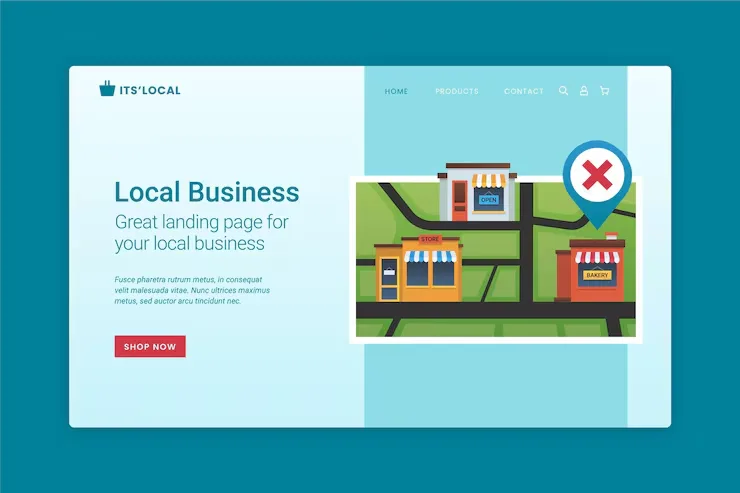
Structured data tells search engines exactly what your business is, where the local landing pages is, and how to contact it. Use LocalBusiness schema (or a more specific subtype like Plumber, Dentist, or LegalService) with your name, address, phone, hours, and geo coordinates.
Then make sure that same name, address, and phone number appear identically everywhere: your site, Google Business Profile, and major directories.
Inconsistent NAP data is one of the most common silent killers in local SEO. “Suite 200” on one site and “Ste. 200” on another shouldn’t matter, but the wrong phone number absolutely does.
Execution tip: Run a NAP audit across your top ten citations. Fix mismatches, then validate your schema with Google’s Rich Results Test before publishing.
Tip 11: Link Location Pages Together and from the Main Site
Orphaned location pages are invisible pages. Clear alignment with your local landing pages builds confidence from the start. Link each location page from your main navigation or a dedicated “Areas We Serve” hub, and cross-link nearby locations where it’s genuinely useful. This passes authority and helps search engines understand the relationship between pages.
Keep the linking natural. A footer link from the hub to each city page works. A paragraph of twenty city links stuffed into every blog post does not.
Execution tip: Build a hub page that lists all locations with a one-line description each, then link from that hub to every location page and back. Bonus: it’s a genuinely useful page for customers.
Tip 12: Fix Page Speed and Mobile Experience Before You Add Anything Else
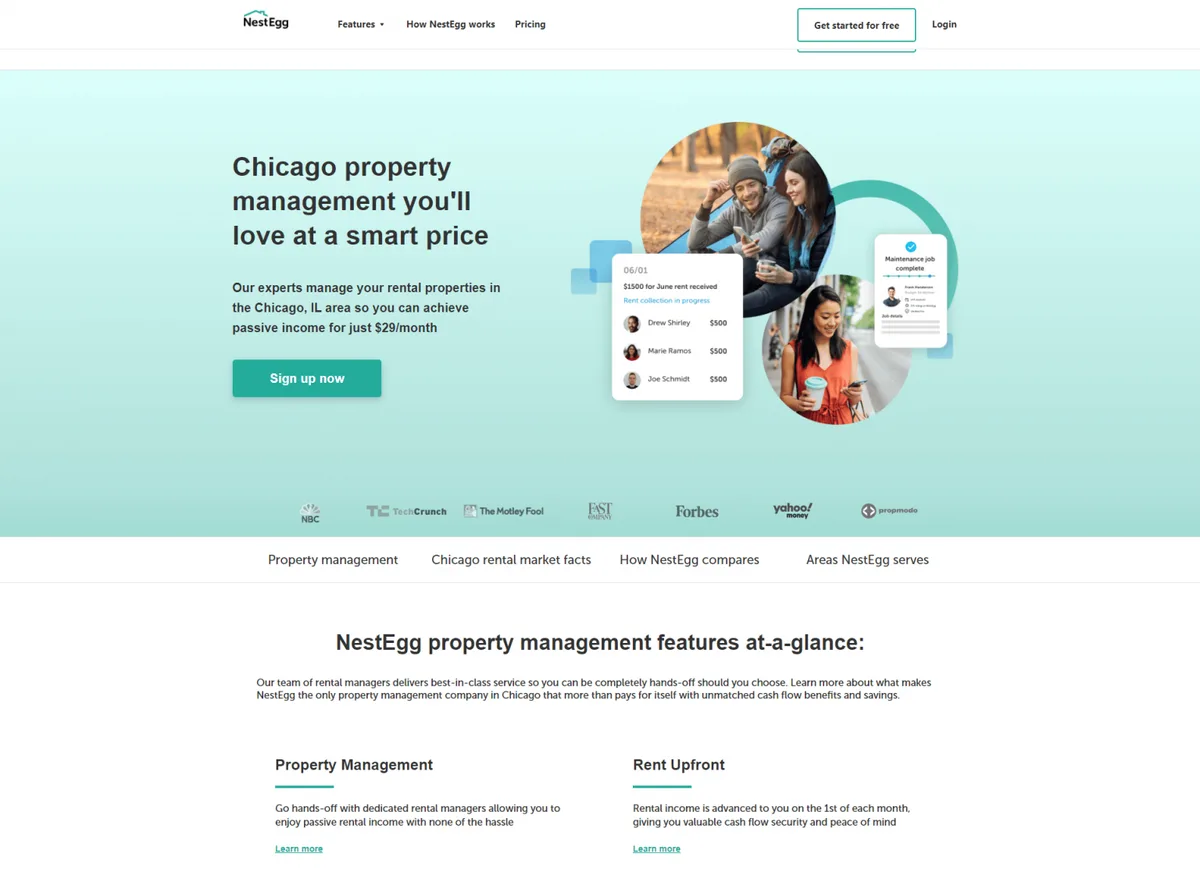
Most local searches happen on a phone, often on a shaky connection, often by someone in a hurry. Integrating local landing pages into your workflow produces consistent quality. A page that takes six seconds to load has already lost. Compress images, lazy-load below-the-fold media, trim unnecessary scripts, and test on a real phone, not just a desktop simulator.
I’ve seen location pages lose a full second of load time to an unoptimized hero video. That’s a second of lost customers. Speed is a ranking factor, but more importantly it’s a customer experience factor.
Execution tip: Run PageSpeed Insights, fix the top three issues, and re-test. Then actually tap through the page on your phone and try to call yourself. If it’s annoying, fix it.
Pillar Four: Conversion and Ongoing Optimization
Rankings are the start line, not the finish. The final three tips are about turning visitors into customers and keeping the pages sharp over time. This is the part most local landing pages guides skip entirely, and it’s the part that determines whether the whole effort pays off.
Tip 13: Make the Call to Action Impossible to Miss
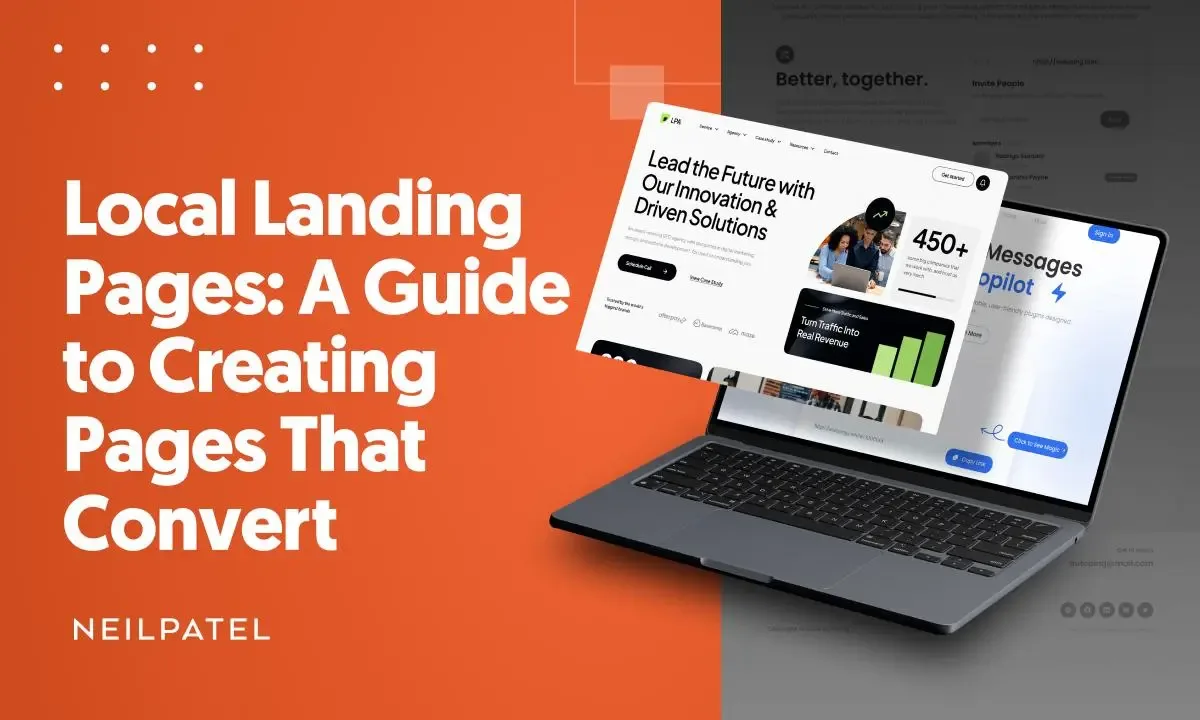
Every location page should have a clear, repeated call to action: a phone number the local landing pages’s tappable on mobile, a form that’s short, and a booking option if you have one. Repeat the CTA at the top, mid-page, and bottom. Don’t make people hunt.
A simple rule: if a visitor can’t figure out how to contact you within five seconds of landing, the page is broken. Test it on someone who’s never seen the site.
Execution tip: Use a sticky mobile call button, keep forms to three fields or fewer, and write button copy that says what happens next (“Get My Free Estimate,” not “Submit”).
Tip 14: Track Calls, Forms, and Direction Requests Like a Hawk
The local landing pages can’t optimize what you don’t measure. Set up call tracking, form conversion events, and direction-click tracking for every location page. Then review the data monthly and ask which pages earn their keep and which need work.
This is where a local landing pages checklist becomes a living document. Pages that get traffic but no conversions need a rewrite. Pages that convert but don’t rank need more content and links. Pages that do neither need to be consolidated or cut.
Execution tip: Build a simple dashboard with traffic, calls, forms, and conversion rate per location page. Review it on the first of every month and pick one page to improve.
Tip 15: Refresh Location Pages on a Schedule, Not When They Break
Local details go stale. New neighborhoods get built, regulations change, staff turns over, reviews pile up. Schedule a quarterly refresh for every location page: update photos, swap in fresh reviews, verify hours and contact info, and add any new services or FAQs.
This is the quiet discipline behind the best local landing pages out there. They don’t just get built once and forgotten. They get maintained like the storefronts they represent.
Execution tip: Put a recurring calendar reminder for each location page. Refining each detail of your local landing pages strengthens this section. Spend twenty minutes per page per quarter. Small, consistent upkeep beats a dramatic rebuild every two years.
Quick Reference: the Fifteen Tips at a Glance
Here’s the whole local landing pages checklist in one table so you can track progress without scrolling back through the article.
| # | Tip | Pillar | Primary Payoff |
|---|---|---|---|
| 1 | One page per real service area | Strategy | Avoids doorway-page penalties |
| 2 | Mine local search intent | Strategy | Matches the moment, not just the keyword |
| 3 | Audit local competitors page by page | Strategy | Finds content gaps to exploit |
| 4 | Define the conversion goal | Strategy | Turns a brochure into a lead machine |
| 5 | City and service in title, H1, first sentence | On-Page | Clarity for crawlers and humans |
| 6 | Unique local substance | On-Page | Differentiation and authenticity |
| 7 | Service and neighborhood sub-sections | On-Page | Scannability and semantic clarity |
| 8 | Real proof, not stock photos | On-Page | Trust and conversion lift |
| 9 | Answer local questions | On-Page | Featured snippets and voice search |
| 10 | LocalBusiness schema and NAP consistency | Technical | Stronger local signals |
| 11 | Internal linking and hub page | Technical | Authority distribution |
| 12 | Page speed and mobile experience | Technical | Lower bounce, better UX |
| 13 | Unmissable calls to action | Conversion | Higher contact rate |
| 14 | Track calls, forms, directions | Conversion | Data-driven improvement |
| 15 | Quarterly refresh schedule | Conversion | Long-term relevance |
Common Mistakes That Undo Good Local Landing Pages
Even with the fifteen tips above, a few recurring mistakes can sink the whole effort. Worth calling them out directly so you can dodge them.
The biggest one: treating local landing pages as a numbers game. More pages, more keywords, more cities. That approach creates thin, repetitive content that search engines increasingly ignore and customers find unhelpful. Quality per page beats quantity every time.
Second: hiding contact information behind a form. People searching locally often want to call. Make the phone number visible, tappable, and correct. A form-only contact path frustrates the most motivated visitors.
Third: ignoring reviews. Local reviews are social proof and a ranking signal in one package. Respond to them, feature the best ones, and never fake them. Customers can smell a fake testimonial from a mile away.
Fourth: forgetting that local landing pages serve real communities. The businesses that win locally tend to be the ones that act like they belong there: sponsoring the little league team, knowing the neighborhood names, showing up in the local search results with genuine substance. The technical work supports that; it doesn’t replace it.
Frequently Asked Questions About Local Landing Pages
These are the questions I hear most often from business owners and marketing teams building out their location pages. Short, direct answers below.
How Many Local Landing Pages Should a Business Have?
One per area the local landing pages genuinely serve and can write unique content for. For most small businesses that’s somewhere between one and fifteen. Franchises and multi-location brands can have dozens, but only if each page has real local substance. If you can’t fill a page with details specific to that area, don’t create it.
Do Local Landing Pages Need Unique Content for Every City?
Yes. Swapping city names on a template is the fastest way to get ignored. Each page should mention local landmarks, neighborhoods, regulations, or customer stories that only apply to that area. The content should feel like it was written by someone who lives there.
What’s the Difference Between a Location Page and a Service Page?
A service page explains what you do (“emergency plumbing”). A location page explains where you do it and why you’re the right choice in that specific area (“emergency plumbing in Boise”). Many businesses need both, linked together, so visitors can navigate from service to location and back.
How Often Should Local Landing Pages be Updated?
Quarterly is a reasonable baseline. Update photos, refresh reviews, verify hours and contact info, and add new FAQs or services as they come up. Pages that never change slowly lose relevance, and stale details erode trust.
Can Local Landing Pages Rank Without Backlinks?
Sometimes, especially in less competitive markets and for long-tail local queries. But backlinks still help, particularly from local sources like chambers of commerce, local news, and community organizations. Combine solid on-page work with a few genuine local links and you’ll see better results than either alone.
Where to Go from Here
Fifteen tips, four pillars, one clear takeaway: local landing pages work best when they’re built for real people in real places, then supported by solid technical and conversion fundamentals. Start with the strategy pillar, work through on-page craft, tighten the technical layer, and keep optimizing after launch.
If the local landing pages only do three things this week, do these: audit your existing location pages for unique local substance, add LocalBusiness schema and fix NAP inconsistencies, and put a quarterly refresh reminder on your calendar. Those three moves alone will put you ahead of most competitors.
The broader topic of local SEO rewards patience and consistency. Location pages are one piece of that puzzle, sitting alongside your Google Business Profile, local citations, and review strategy. Get the pages right, and the rest of the local search picture gets a lot easier to manage.
For verified reference and background research, consult the authoritative informational resource on this topic.