LLM SEO: the Ultimate Beginner’s Guide
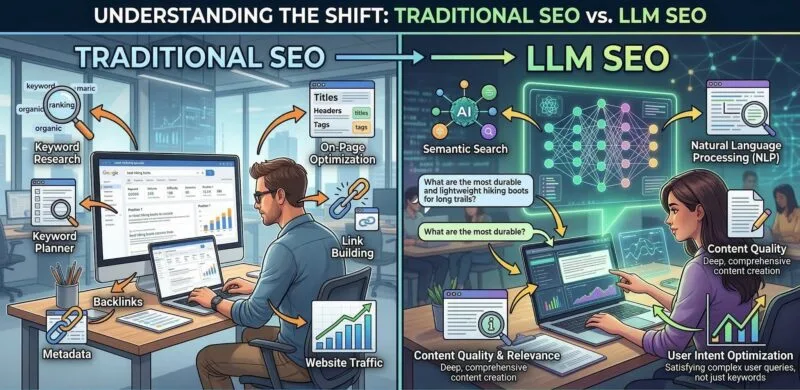
LLM SEO is the practice of shaping your content so that large language models can find it, understand it, and quote it back to people who never open a search results page.
If that sounds like a different job than classic optimization, that’s because it is — and this llm SEO guide is built for the person starting from zero.
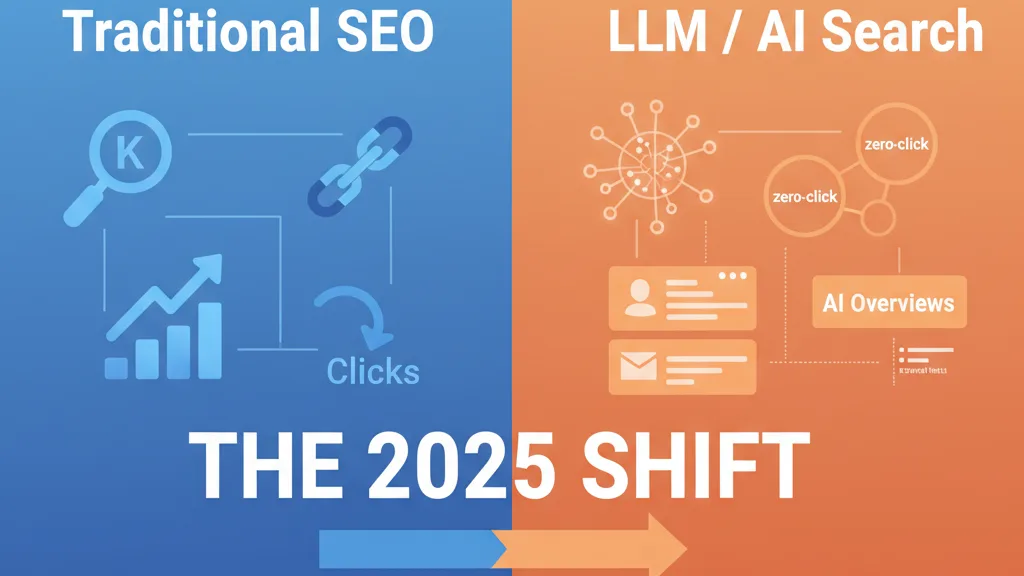
Here’s the shift in plain terms. Focusing on llm SEO provides clear direction here. For twenty years, you wrote for a ranking algorithm. You chased blue links, stuffed keywords into title tags, and prayed for position one.
Now a growing share of searches end inside an AI chat window, and the machine answering reads your page aloud instead of sending traffic to it.
That changes what “winning” means. You are no longer fighting for a click. You are fighting for a citation.
What LLM SEO Actually Means for a Complete Beginner
Start with the mechanics, because the marketing jargon hides something simple. A large language model generates answers by predicting likely text, but when it can browse, it also retrieves pages and summarizes them. Those retrieved pages are your new landing pages. No banner, no sidebar, no bounce rate — just a sentence or two lifted from your writing.
So llm SEO is really about being the most quotable, trustworthy source in a retrieval set you never see. You optimize for extraction, not for clicks.

A concrete example. Search “how many words should a blog post be” in a classic engine and you get ten competing articles. Ask the same question of an AI assistant and it may synthesize a range, then name two or three sources it leaned on. Those named sources did llm SEO well. Everyone else got summarized without credit.
According to the team at Nielsen Norman Group, readers already scan in an F-pattern and quit fast. AI systems behave the same way — they skim for the answer, not the story.
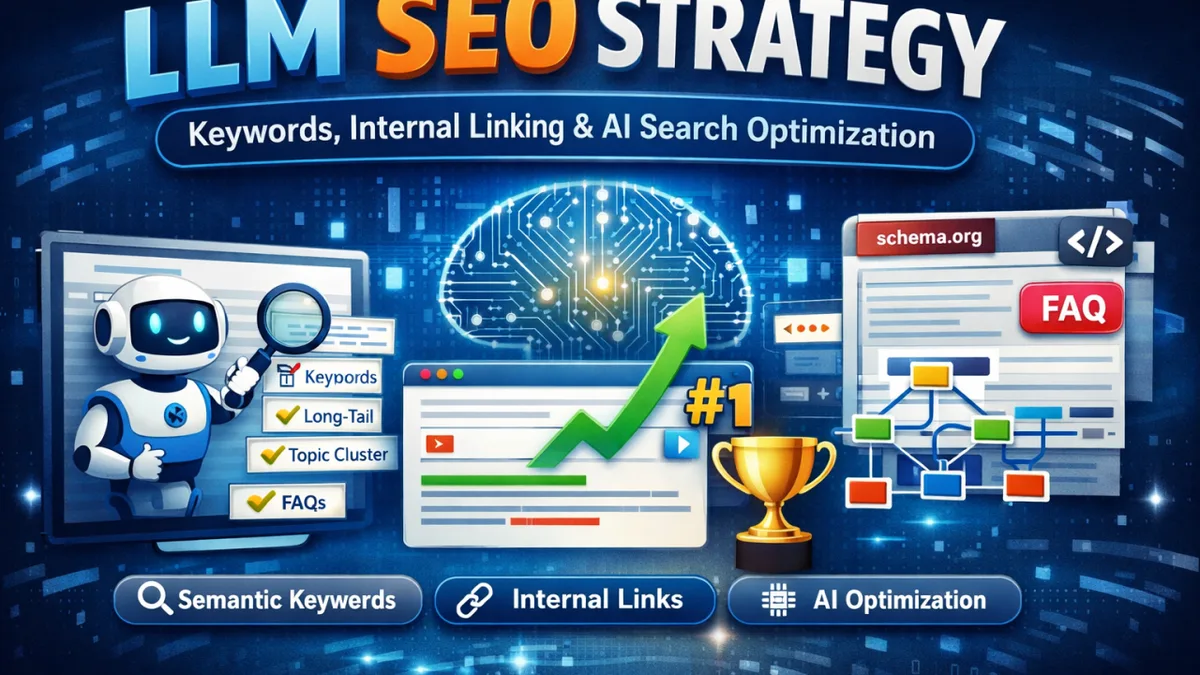
How LLMs Find, Read, and Quote Your Content
Three stages matter, and beginners usually optimize only for the first. Refining each detail of your llm SEO strengthens this section. Retrieval is when a crawler or live search pulls candidate pages. Parsing is when the model breaks your HTML into chunks it can reason about. Citation is when it decides your words are worth repeating.
Most pages fail at parsing. If your key answer sits inside an image, a JavaScript accordion, or the fourth paragraph of a rambling intro, it never becomes a clean chunk. A model reading raw markup can’t extract a table rendered by a plugin it can’t execute.
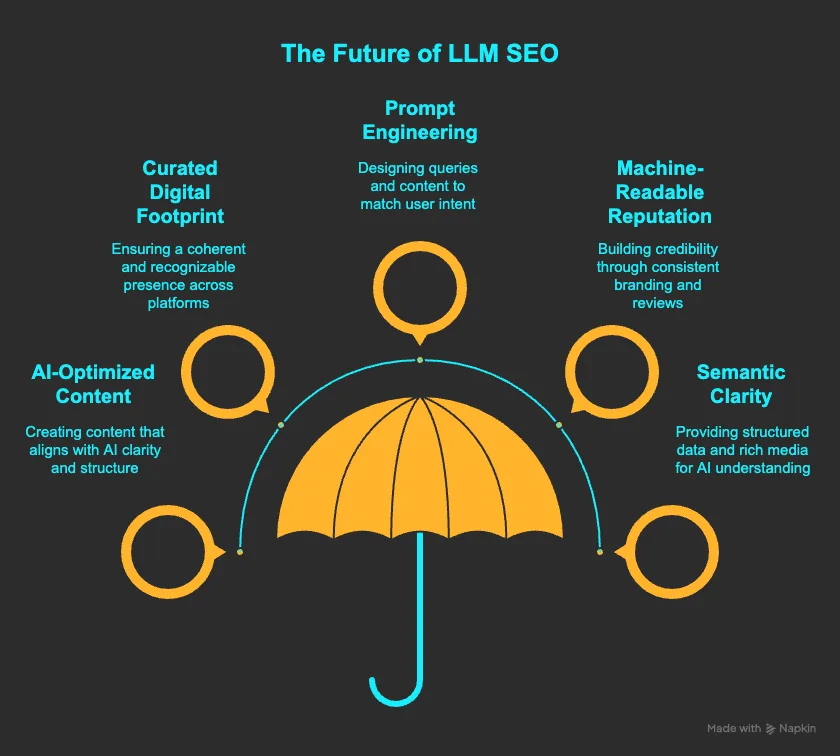
Why Chunking Decides Your Fate
LLMs don’t read articles the way humans do. They slice pages into passages of a few hundred tokens, then match each passage against the query. This means every section of your page has to stand on its own.
A heading followed by two tight, self-contained paragraphs survives chunking beautifully. A 600-word essay with no subheads becomes one mushy block that’s hard to rank and harder to quote. This is the single most overlooked llm SEO best practices point I see beginners miss.

Practical test: read each of your H2 sections in isolation. Focusing on llm seo provides clear direction here. Can a stranger understand the answer without the rest of the page? If not, the chunk fails.
Crawler Access and Your Robots.txt
None of the llm SEO works if the bots can’t get in. Several AI crawlers identify themselves distinctly, and a badly copied robots.txt can lock them out entirely. Check whether you’re blocking the user agents you actually want reading your site.
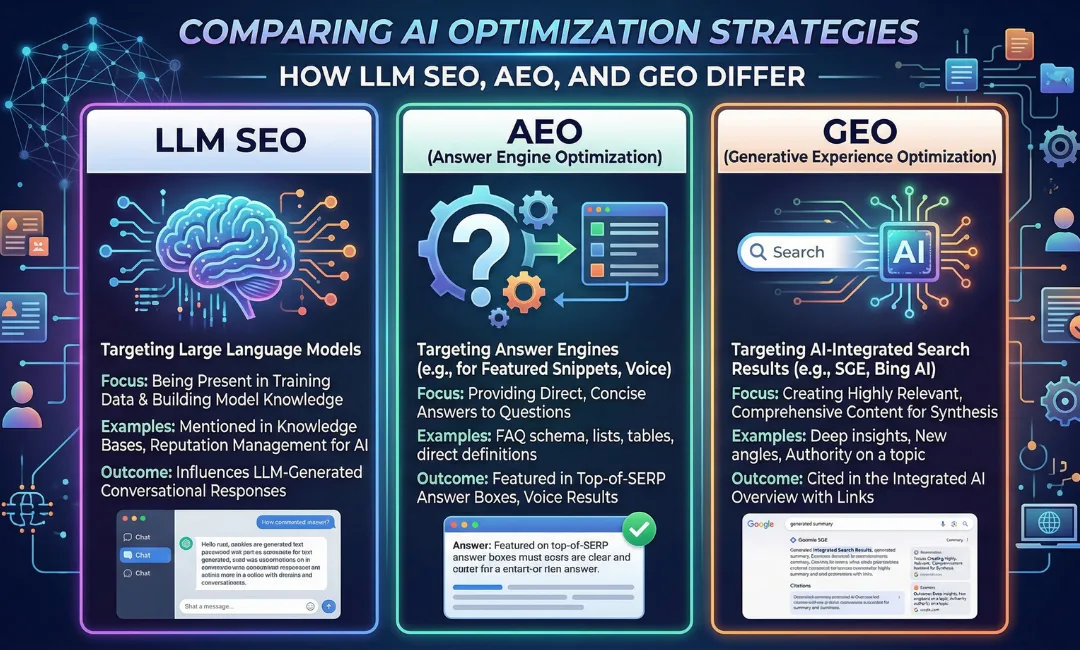
I’ve watched publishers spend weeks refining llm SEO tips while their server quietly served a 403 to every AI crawler. Run a quick crawl audit before you touch a single paragraph.
Also keep your pages fast and server-rendered where possible. If your content only appears after client-side hydration, plenty of retrieval systems see an empty shell.
Why Traditional Keyword Density Fails Here
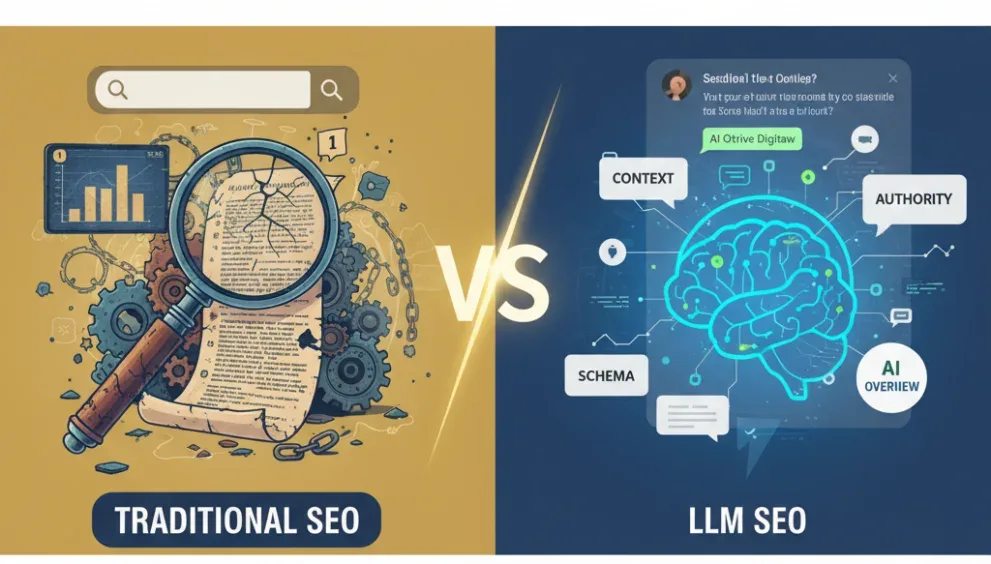
The old math — X mentions per 1,000 words — assumed a corpus-matching algorithm. Modern LLMs care far less about raw repetition and far more about whether a passage clearly answers a question. Cramming the phrase “llm SEO” forty times into one paragraph now reads as noise.
What replaces density is coverage. Does your page demonstrate genuine command of the topic, including the subtopics a knowledgeable person would expect? A model rewards depth, not repetition.
Think of it as the difference between a résumé that lists a skill once with proof and one that writes “hardworking” eleven times without evidence. The second résumé is the keyword-stuffed page.
The LLM SEO Checklist Every Beginner Should Follow
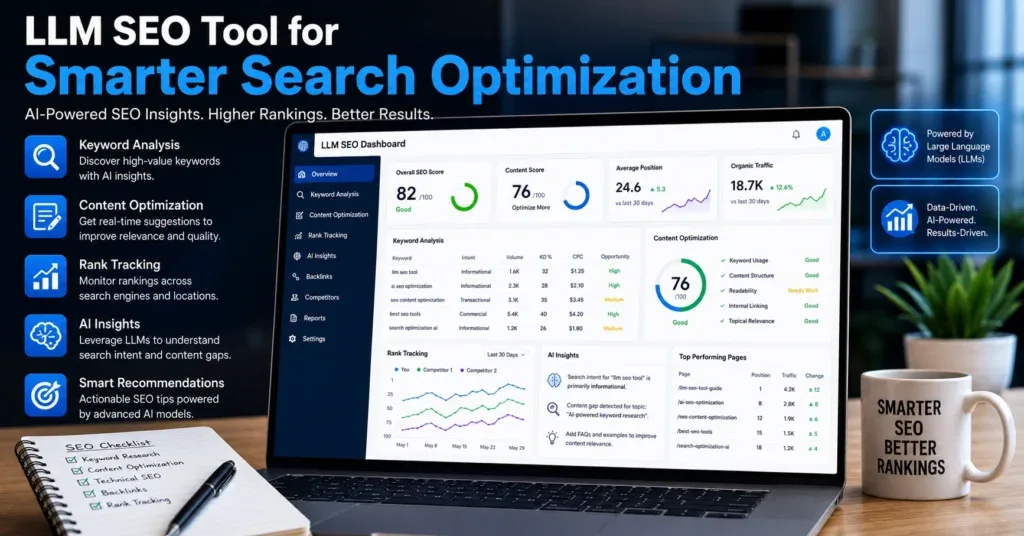
Here’s a working llm SEO checklist you can run against any draft today. Treat it as a pre-flight routine, not a one-time step. Run it before you publish and again after a month of real queries.
- Answer in the first 60 words. Put the direct answer to your headline question in the opening paragraph. Models love extractable lead sentences — and so do skimmers.
- Give every section a self-contained answer. Each H2 should contain one clear, quotable statement that survives chunking on its own.
- Structure with real directories and tables. Use ordered lists for steps, tables for comparisons, and a short FAQ for the questions people actually type.
- Write in declarative sentences. “A pillar page targets a broad head term” beats “A pillar page can be thought of as potentially targeting broader terms.”
- Name your sources. Link to primary references and cite them inline. Trust signals travel with the chunk.
- Confirm crawler access. Check robots.txt, sitemap, and server-rendered HTML.
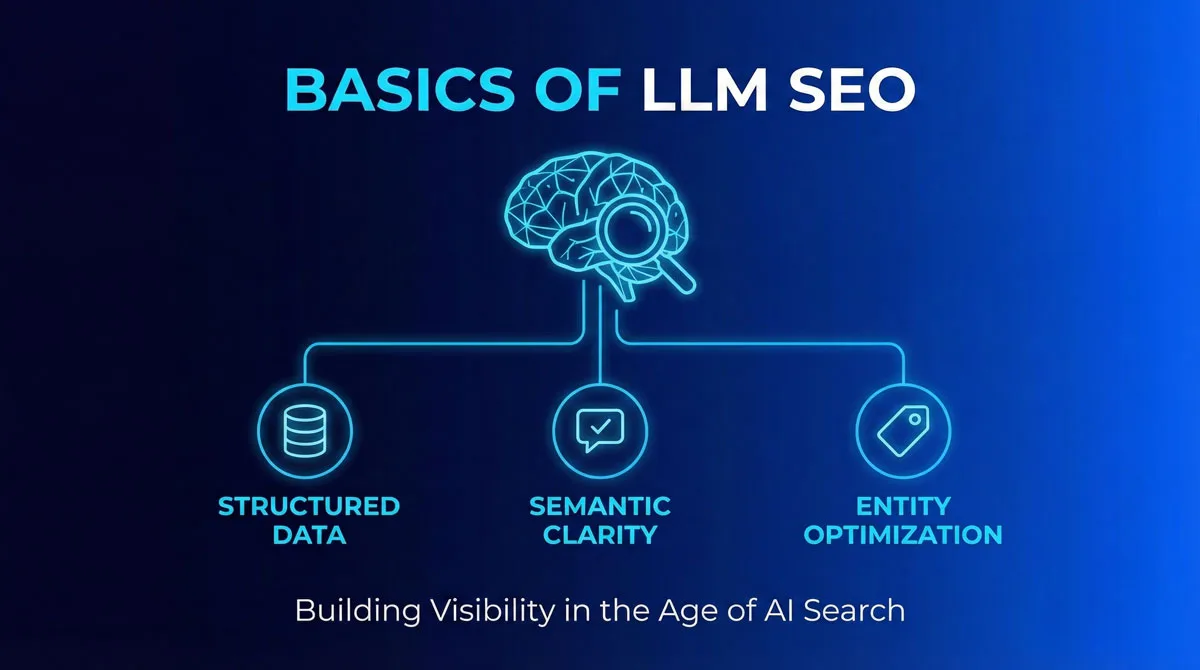
- Add structured data. Article, FAQPage, and HowTo schema help systems parse your page’s role and content type.
- Test the quote. Paste your own page into an AI assistant and ask it your target question. If your page doesn’t surface, your chunk isn’t clear enough.
That’s a usable llm SEO checklist, and it doubles as a readability pass. Notice none of the items require you to insert a phrase a set number of times.
| Signal | Old SEO Thinking | LLM SEO Reality |
|---|---|---|
| Keyword frequency | Hit a density target | Answer questions completely |
| Content length | Longer equals better | Dense, chunked, extractable |
| Winning metric | Click-through rate | Citations and brand mentions |
| Structure | One long narrative | Self-contained sections with tables |
| Trust | Backlinks alone | Named sources plus visible expertise |
Structuring Content So LLMs Can Actually Parse It
Markup is not decoration — the llm SEO’s the map a parser uses to decide what your page is about. A clear hierarchy lets a model separate your main argument from supporting detail and from related links.
One H1, a small number of H2s that each own a subtopic, H3s that break those into chunks. That’s the skeleton. If your HTML has fifteen H4s and no H2s, expect confusion on both sides of the screen.
Tables and Lists Beat Walls of Prose
When a model needs to compare options, a table gives it a clean grid to lift from. Prose paragraphs scatter the same facts across sentences and get ignored. If your section already answers a “which is better” question, a comparison table is the most direct llm SEO best practices move available.

Lists do the same for processes. A numbered list of steps can be quoted verbatim into an answer. I’ve had clients jump from lost to cited simply by converting three paragraphs into a step list and a spec table.
FAQ Blocks and Schema That Pays Off
Add a short FAQ near the end of the page. Refining each detail of your llm seo strengthens this section. Write the questions the way a confused beginner would type them. Each answer should be two to four sentences, with the direct answer first.
Then wrap the llm SEO in FAQPage schema so machines see the pairing explicitly. Schema doesn’t guarantee a citation, but it removes ambiguity about what your page claims to answer.
Choosing Topics That LLMs Actually Want to Cite
Citation loves specificity. “What is content marketing” has a thousand confident sources. “How does a two-hour delayed inventory sync affect Shopify checkout” has almost none.
Go narrow and go deep where the question is real and the competition is thin. A specialist page on a specific operational problem will beat a generic hub page for retrieval almost every time.
There’s a related payoff: niche pages tend to be easier to write well. When you actually know the subject, the declarative sentences come naturally, and clarity is what llm SEO rewards in the end.
Comparison and How-To Angles Win
Two formats pull citations again and again. The head-to-head comparison, where you list real differences in a table, and the step-by-step how-to, where you walk through a task in order.
Both formats map cleanly onto the way people ask questions. Structuring your llm SEO around proven patterns ensures impact. “X versus Y” and “how do I do X” are the two most retrievable shapes of a query. Build pages that match those shapes.

Finding Subtopics from Real Questions
Mine actual prompts. Read the “People also ask” panel, browse forum threads, and collect the exact phrasing people use. Then turn each recurring question into an H3.
You can also ask an AI assistant to list the subtopics a beginner would expect under your main heading. Then check your draft against the list. Gaps become your next sections.

Proof, Trust, and Citation Signals
LLMs are built to hedge. Effective execution in your llm seo makes a tangible difference. When a claim has a clear source, the system can attribute it and feel safe repeating it. When your page asserts something bold with no evidence, the model may summarize you and move on.
Cite primary sources. Use named references, link to studies, and state dates of data honestly. Trust signals are part of llm SEO best practices because they decide whether your content gets repeated.
Include author bylines with real credentials. Applying these principles to your llm SEO yields measurable results. A model reads the whole page, not just the body copy, and the surrounding context helps it judge whether you’re a safe source.
Structured Data That Supports Trust
Add Organization and Article schema with an author entity. Give each page a clear aboutness statement in your introduction. Name the entity in plain text early and often, not in scattered synonyms.
Consistency matters, too. If your page calls the same feature “smart routing” in one section and “intelligent dispatch” in another, a model may treat them as different things and drop both. Use one label, define it once, and reuse it.
Measuring Success When There’s No Rankings Page
There’s no position one to chase inside a chat answer. So you measure differently. Citation share, brand mentions in AI answers, and referral traffic from AI-driven interfaces are the new scoreboard.

Start simple. Proper attention to your llm SEO sets a strong baseline. Weekly, ask the same handful of AI assistants your target questions and log whether you’re mentioned. Over a month, a trend line appears that no ranking report will show you.
Pair that with a manual audit: search your brand in several assistants and count mentions. Also track direct and branded search volume — a jump often follows a wave of AI citations.
What to Do With Traffic Data
Your analytics will increasingly show traffic with no referrer. Don’t dismiss it as direct. Treat it as part of the AI channel and watch how it correlates with citation counts.
Set a small test loop. Maintaining clarity across your llm seo remains essential. Publish a tightly chunked page, wait two weeks, and re-ask the prompt. If you’re now cited, you have a repeatable pattern. If not, cut the page into shorter, more declarative sections and try again.

Keep this honest, too. Developing your llm SEO with precision highlights key strengths. I’ve seen agencies sell “guaranteed AI citation” services, and nobody can promise that. You can only build the page most likely to be chosen and measure whether it was.
Common Beginner Mistakes That Quietly Kill Citations
The first mistake is burying the answer. If your direct response to the headline question shows up in the fifth paragraph, no model will bother finding it. Lead with the answer, then explain.
The second is invisible content. Text inside tabs, images, or unrendered components can’t be parsed. Anything that matters to a reader should be in the source HTML.
The third is vagueness dressed as nuance. Hedged sentences that say “it depends” without ever resolving anything give a model nothing to quote. Decide on the most accurate answer, state it, then add the caveats.
Over-Optimizing for One Prompt
Chasing a single query phrasing gets fragile fast. Clear alignment with your llm SEO builds confidence from the start. People ask the same question five ways, and retrieval set membership shifts with every query. Cover a cluster of related phrasings, not one exact string.
Similarly, don’t confuse exact keyword matching with a strong semantic signal. Build meaning into the page with examples, subheadings, and real definitions. This is where good llm SEO tips differ from old copywriting habits.
Ignoring the Human First
The reader still decides whether your page is worth anything. Humans judge value, and machines learn which pages humans cite. Vague, robotic pages lose on both fronts.
A practical rule I use: if the page reads well to a smart beginner and answers their next three questions, the machine readability usually follows. Humans and LLMs want the same thing — clarity and evidence.
Practical LLM SEO Tips You Can Apply Today
Here’s a grab bag of llm SEO tips that reliably move the needle without requiring a new tool stack. Treat them as experiments and keep the ones that show up in your citation log.
- Write a 40-word answer block at the top. One paragraph that directly answers the primary question. Then expand.
- Use the question as the heading. “What is an H3 tag?” as a heading primes both reader and model to expect a definition.
- Name your entities. Use real product names, standards, and terms. Generic phrasing gives the model nothing to anchor to.
- Add a definition sentence. Every key concept gets one clean “X is Y that does Z” sentence early in its section.
- Publish a glossary page. Definitions are the most quotable content on the web. One term per H2, plain-English first sentence.
- Keep paragraphs to two or three sentences. Short paragraphs survive chunking and stay readable on mobile.
- Link internally to the deeper page. If this is your overview, route readers to the specific explainers.
- Refresh stale facts. Outdated claims get dropped. Update numbers and re-publish with a clear update note.
Rotate through that list quarterly and you’ll stay ahead of most competitors, who still treat AI answers as a marketing trend rather than a retrieval format.

Building Authority Through Topic Clusters
Single pages get cited occasionally. A connected cluster of pages gets cited as a source. This is the parent topic idea, and it’s the most durable llm SEO strategy available to a beginner.
Pick one core subject and write the hub page. Integrating llm SEO into your workflow produces consistent quality. Then build spokes: what it means, how it works, how to audit it, how to measure it, common myths, common mistakes. Every spoke links back to the hub.
Why does this help citation? When a model retrieves any page from your cluster, it finds a depth of internal coverage that signals subject mastery. The cluster becomes the trustworthy option, not a random single article.
Spokes Worth Writing First
For the topic in front of you right now, the natural spokes are simple. A glossary of core terms, a parsing walkthrough, a measurement guide, a comparison of tools, and a diagnostics checklist for failed citations.
Write two of them. Link the hub to each and each back to the hub. That small ring already places you ahead of most sites publishing unlinked, isolated content.
Tools and Workflow for a Beginner
The llm SEO don’t need enterprise software to begin. Start with a spare hour and three free tools: a browser, an AI assistant, and your own published page.
The workflow I recommend to new clients is deliberately cheap. Draft in a plain text editor, check structure in an HTML validator, and test retrievability by pasting the live URL into an assistant and asking the target question.
When you want more, look for features like schema generation, entity coverage reports, and citation tracking. And when pricing does matter, favor competitive direct manufacturer pricing for smaller tools over bloated enterprise contracts.
A Simple Weekly Routine
Tuesday: write one chunked section. A thoughtful approach to llm seo reinforces your qualifications. Thursday: test it with three assistants. Friday: log citations and tweak the weakest chunk. That rhythm beats a heroic overhaul you’ll never repeat.
Keep a spreadsheet of prompts and answers. Over time it becomes your best feedback loop for llm SEO best practices because it’s about your actual site, not a generic blog post.
FAQ: Beginner Questions About LLM SEO
The llm SEO are the questions I get most from people just starting out. Each answer leads with the direct response, then fills in the context.
Does LLM SEO Replace Traditional SEO?
No. It extends it. Crawlability, page speed, clear headings, and genuinely useful content still matter for classic search. The difference is what you do with that content — you now shape it for extraction and citation as well.
Most ranking fundamentals still apply. You just add a second audience, the model reading your page on someone’s behalf.
How Do I Know if LLMs are Citing My Content?
Ask. Query the target questions in several AI assistants and check whether you’re mentioned or linked. Track it weekly in a spreadsheet. There’s no official citation dashboard, so manual monitoring is the honest answer.
Pair the manual check with brand mention searches and direct traffic spikes to catch changes you might miss.
Do Backlinks Still Matter for LLM SEO?
Yes, but their role shifts. Backlinks remain a trust signal and a way to get discovered. What matters more now is that your page is genuinely quoted by people and other sites, because that’s language a model is more likely to repeat.
Think of links as reputation and citations as proof. You want both.
What Content Formats Perform Best?
Definitions, comparisons, how-tos, and FAQs. Structuring your llm seo around proven patterns ensures impact. These four shapes answer real questions with clear, extractable answers. Long personal essays can be delightful, but they’re rarely the chunk a model quotes.
Start with a clean definition page for your core keyword. Then add a comparison table and a numbered process. That trio covers most beginner intent.
Can I Do This Myself Without an Agency?
Absolutely. The core skills are writing clearly, structuring logically, and testing your own pages. All three are learnable. Agencies help with scale and measurement, but the fundamentals are within reach of anyone willing to do a weekly routine.
Start with one page, one prompt, one test. That’s the whole loop, and it’s how you learn llm SEO without a course.
Where to Go from Here
You now have the full arc: a working definition, the parsing mechanics, the checklist, the structure rules, the proof signals, the measurement loop, and the cluster playbook. The best llm SEO advice for a beginner is unglamorous — pick one page, rewrite it for clean extraction, and test it against a real prompt.
Then do it again next week. Repeat the loop, track the citations, and build the spokes around your hub. The machines on the other side of the query are just readers who are very good at skimming and very fussy about quotes. Give them clarity, structure, and evidence, and they’ll start repeating your name.
One last habit worth forming. Keep a running list of the questions your customers ask you in real life. That list is your content brief and your llm SEO checklist in one. Answer them, one clean page at a time.
Frequently Used Terms at a Glance
Bookmark this short reference. Every term below shows up throughout the article, and none of them are jargon you can safely skip as a beginner.
- Retrieval: the step where a system finds candidate pages for a query.
- Chunking: splitting a page into passages a model can evaluate separately.
- Citation: when a model repeats or links your page in an answer.
- Extractable answer: a direct, self-contained sentence that survives being pulled out of context.
- Topic cluster: a hub plus connected spoke pages that together signal subject depth.
- Entity consistency: using one clear label for the same concept across a page.
- Structured data: machine-readable markup that clarifies what a page is and answers.
Worth saying again plainly. The teams that win are not the loudest, they’re the clearest. If you deliver clarity and evidence, the citation follows.