Why Link Building Tools Still Separate Real Results from Wasted Budget
If you have spent more than a week chasing backlinks, you already know that link building tools are the difference between a strategy that compounds and one that quietly drains your budget. The real problem, though, is that the market is crowded with platforms that promise the world and deliver recycled spreadsheets.
So let’s cut through it. Below are nine picks that hold up under actual working conditions — judged by prospecting quality, data accuracy, workflow efficiency, and whether they solve a genuine bottleneck for practitioners.
This isn’t a popularity contest. It’s a practitioner’s shortlist.
How I Evaluated These Link Building Tools
Every recommendation here passed through the same filter. Focusing on link building tools provides clear direction here. I’ve spent years running outreach campaigns, and the failures taught me more than the wins. Those failures shaped the criteria below.
First, database integrity. A tool with 500 million contacts means nothing if half are dead inboxes. I checked bounce rates, index freshness, and how many prospects were genuinely relevant to a niche.
Second, workflow fit. The best platforms don’t just find prospects — they carry a campaign from discovery to placement without forcing you into five disconnected tabs. Third, transparency. If a vendor hides how its metrics are calculated, that’s a red flag worth noting.
Finally, ownership. Tools that build your own asset base beat tools that rent you access to someone else’s network. That distinction matters more than most link building tools tips you’ll read online.
Keep this link building tools checklist in mind as you read: does it save time, does it improve prospect quality, and does it produce something you own at the end?
The Top 9 Link Building Tools That Actually Work
Here’s the core of the brief: nine platforms, each earning its place for a specific job. No filler entries, no padding. Each has a defined role and a defined weakness.
Use them individually or stack two or three together. What matters is that you pick based on the bottleneck you’re actually trying to fix — not on which link building tools guide ranks highest.
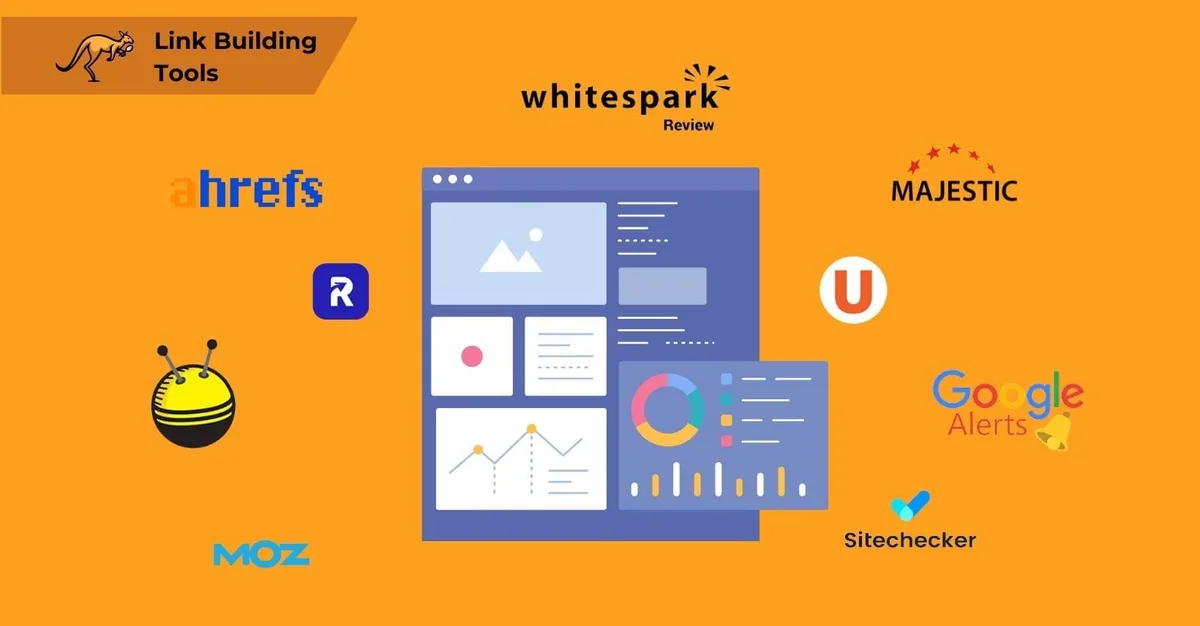
1. Ahrefs — the Reference Standard for Backlink Intelligence
Ahrefs built its reputation on a crawler that rivals Google’s own reach, and the backlink index remains the cleanest in the business. When you need to reverse-engineer a competitor’s link profile, there’s no faster route.
The Site Explorer shows referring domains, anchor distribution, and — critically — lost links over time. That last metric is where most tools stumble. Ahrefs surfaces broken backlinks that competitors dropped, which is often the cheapest path to a high-authority placement.
Real-world example: pull your top three competitors, cross-reference their referring domains, and filter for pages that no longer link back. You’ll typically find a dozen realistic targets per competitor within an hour.
The catch is cost. Pricing is premium-tier, and the learning curve is real. But for teams serious about backlink analysis, Ahrefs remains the backbone of any serious stack of link building tools.
2. Semrush — All-in-One Research and Outreach Support
Semrush occupies similar territory to Ahrefs, but leans harder into competitive intelligence and content-driven link acquisition. Its Backlink Analytics module is thorough, and the Link Building Tool is surprisingly practical for campaign assembly.
What sets it apart is the surrounding ecosystem. You can research competitors, identify linkable assets on their sites, and pull contact data — all within one login. For agencies juggling multiple clients, that consolidation saves hours.
The weakness? Depth in any single area trails dedicated specialists. Semrush is a strong generalist, not a sniper. Still, as far as link building tools best practices go, having research and outreach under one roof reduces the friction that kills campaigns.
3. Pitchbox — Outreach Workflow That Doesn’t Break at Scale
Prospecting is only half the battle. Pitchbox handles the other half: the follow-ups, the tracking, the conditional sequences. It’s built for teams sending hundreds of personalized pitches per month.
The platform syncs with your email provider, enforces daily send limits to protect your domain reputation, and auto-detects replies. Refining each detail of your link building tools strengthens this section. Conditional logic lets you branch sequences based on opens and responses — a feature most competitors charge extra for.
Concrete tip: build a “warm follow-up” sequence for non-responders at day five and day twelve. In my experience, that second touch converts 15-20% of otherwise-dead prospects.
Downside: Pitchbox is a workflow engine, not a prospecting database. You still need to feed it quality targets from other link building tools. Expect to pair it with a discovery source.
4. Hunter — Finding the Right Inbox, Fast
Reaching the right person is half the campaign. Hunter.io finds and verifies professional email addresses associated with a domain, cutting out the guesswork that eats hours of outreach time.
Its Domain Search pulls every publicly available address tied to a site, ranked by confidence score. The Email Verifier checks deliverability before you ever hit send. That one-two combination keeps bounce rates low and your sender reputation intact.
The Chrome extension is the sleeper feature. Browsing a target blog, you can pull the editor’s verified contact info in two clicks. For anyone running cold outreach across hundreds of domains, Hunter is the quiet workhorse.
Limitations are real: addresses behind contact forms or role-based inboxes won’t always surface. It’s a supplement, not a replacement, for building relationships.
5. BuzzStream — Relationship Management for Repeat Placements
Most platforms treat outreach as a transaction. BuzzStream treats it as a relationship — which is why it earns a spot on this list. It tracks every interaction, notes preferences, and reminds you when a contact is due for a touchpoint.
The link management side is equally pragmatic. You can monitor live placements, verify link attributes, and log placements against budget. It’s less flashy than the enterprise players, but the CRM-style workflow builds long-term value.
Here’s where it shines: the same editor who placed your guest post last quarter is the fastest route to the next one. BuzzStream makes that follow-up systematic instead of lucky.
Data coverage for prospecting is lighter than dedicated discovery engines. Pair it with a research tool and it hums.
6. Respona — the Underrated All-in-One
Respona combines prospecting, outreach automation, and reporting into a single workflow the link building tools punches above its weight. It’s the closest thing to a unified flow without an enterprise invoice.
Its built-in search engine finds guest post opportunities, resource pages, and unlinked mentions with surprisingly clean filters. The outreach sequences support merge tags fine-grained enough for personalization across niche segments.
A practical use case: set a saved search for “write for us” plus your target keyword. Respona auto-imports fresh results daily and deduplicates against your existing prospects. That single feature replaced a weekly manual task for many practitioners.
Volume limits exist on entry tiers, and the database isn’t as vast as the giants. But value-per-dollar, Respona ranks among the most efficient link building tools available.
7. Broken Link Checker — Turning Dead Links Into Live Opportunities
Broken link building is one of the oldest tactics that still works, and dedicated checkers make it systematic. The premise is simple: find dead links on authoritative pages, then offer your replacement resource.
Tools in this category crawl target sites, flag 404s, and capture the anchor text and surrounding context. That context is the gold — it tells you whether your content genuinely fits the gap.
Execution tip: prioritize sites with high topical relevance and low overall link velocity. A broken link on a page that receives steady organic traffic converts far better than one on a dusty archive.
The category is fragmented — some checkers lack bulk crawls or export limits sting. Verify that the tool handles your target volume before committing.
8. Google Search Console — the Free Source of Truth
No roundup of link building tools is complete without the platform that actually matters. Google Search Console reports the links Google has indexed for your site — the only backlink data that reflects what the search engine sees.
Third-party crawlers are broader but noisier. When SEO tools confidently “discover” a link that Search Console never indexed, trust the search console. It’s the authoritative record.
Use the Links report to spot sudden drops, which often indicate lost placements or devalued networks. Pair that with manual review of your top linked pages quarterly.
Limitation is inherent: Search Console only shows a sample of links, and it won’t reveal competitor profiles. It’s a validation layer, not a discovery engine.
9. Wikipedia and Authoritative Directory Sign-Off — the Credibility Anchor
This one breaks the mold: it’s not software, it’s a diligence framework. When you need proof that a link carries genuine topical authority, cross-referencing against Wikipedia and established industry directories provides a credibility check other link building tools can’t replicate.
The logic is straightforward. Maintaining clarity across your link building tools remains essential. If a prospective placement site is cited or recognized by a well-documented authority, its outbound links carry weight. If it sits in a closed network with no external references, treat it as a risk.
Practical use: before committing to a link exchange or paid placement, search the site’s brand name alongside “wikipedia” and check whether recognized sources reference it. Two minutes of verification prevents costly mistakes.
This framework is the last line of a sound link building tools checklist — a sanity check before budget is deployed.
Link Building Tools Comparison at a Glance
Different jobs need different engines. This table maps each platform to its primary strength, so you can pick based on your specific bottleneck rather than reputation.
| Tool | Best For | Standout Strength | Main Trade-off |
|---|---|---|---|
| Ahrefs | Backlink analysis | Largest clean index; broken link prospecting | Premium pricing |
| Semrush | All-in-one research | Competitive intel plus outreach support | Depth trails specialists |
| Pitchbox | Outreach scale | Conditional sequences and reply detection | No built-in prospect database |
| Hunter | Contact discovery | Domain search with verification scores | Limited role-based inboxes |
| BuzzStream | Relationship CRM | Long-term contact memory and placement tracking | Lighter prospecting coverage |
| Respona | Unified automated workflow | Auto-imported opportunities with deduplication | Tier-based volume caps |
| Broken Link Checker | Link reclamation | 404 detection with anchor context | Fragmented feature sets |
| Google Search Console | Index validation | Authoritative indexed backlink data | Sample-only reporting |
| Wikipedia and directory check | Credibility verification | External authority cross-reference | Manual, not automated |
Here’s the honest read: a stack of two or three covers almost every scenario. Research plus outreach plus verification is a complete loop. Adding more tools often adds complexity without proportional output — a pattern I’ve watched play out across agency teams for years.
Building a Link Building Tools Checklist Before You Commit Budget
Before any purchase, run this sequence. It catches the most common waste and saves you the frustration of canceling a subscription two months in.
The first question is coverage. Does the platform’s index actually include the sites in your niche? A tool dominating e-commerce data may be thin on local service sites. Test with a handful of targets you already know before committing.
The second is export freedom. Can you take your data with you? Vendors that hide exports behind premium tiers create lock-in, and lock-in gets expensive fast. Third is integration — does it plug into your email infrastructure and CRM, or force you onto its own rails?
A link building tools checklist that covers coverage, ownership, and workflow fit is worth more than any feature comparison chart. Add a fourth box: trial before annual commitment. Every platform on this list offers enough of a trial to validate fit.
Link Building Tools Best Practices That Separate Campaigns from Guesswork
Software is leverage, not strategy. The fundamentals below determine whether a stack produces real links or just activity reports.
Start with relevance before authority. A link from a small, tightly relevant publication often outperforms a big-name placement in an unrelated field. Editors notice; algorithms do too.
Next, treat outreach as relationship work. Follow the same editor’s byline across months, reference their recent pieces, and pitch only when you have something genuinely useful. That approach still outperforms any automation sequence.
Do not ignore anchor variety. Over-optimized anchors are a longstanding red flag, and a natural profile looks like the web’s own chatter — branded, generic, and contextual references mixed together. Monitor your distribution quarterly.
Finally, measure placement quality, not quantity. A dozen links from the right neighborhood beats sixty from a link farm. That ranking alone changes how you allocate budget across link building tools.
The Link Building Tools Guide to Avoiding Three Common Traps
Three failure modes account for most blown budgets. Recognizing them turns expensive lessons into cheap ones.
Trap one: buying links at scale from networks dressed as editorial placements. The giveaway — identical outbound patterns across dozens of sites, no editorial accountability, and zero organic traffic. Verify before trusting any link building tools recommendation that points you there.
Trap two: chasing a metric without checking the source. A high Domain Authority score can mask a toxic neighborhood. Cross-reference with Search Console’s index data and check whether the site has genuine topical signal.
Trap three: automating personalization completely. Recipients can spot templates instantly, and the response rate collapses. Automate the follow-up, personalize the first touch. That split is the single most useful link building tools tips I can offer — it preserves efficiency without sacrificing the human element.
For additional context on how search engines treat link schemes, Google’s own documentation on link spam policies is worth reading in full. It shapes what link building tools should and shouldn’t enable.
Frequently Asked Questions About Link Building Tools
Here is an in-depth breakdown of key considerations regarding Frequently Asked Questions About Link Building Tools:
Which Link Building Tools Produce Links Without Manual Outreach?
None of them entirely. Every platform on this list automates discovery, sequencing, or verification — but the strategic choice of who to approach and what value to offer remains manual. Be skeptical of tools claiming to generate links automatically.
How Many Link Building Tools Do I Actually Need?
Two to three covers most operations: a research platform, an outreach system, and a verification source. Adding more rarely improves output unless you have a specific, measured gap.
Can Free Link Building Tools Match Paid Options?
For validation and small campaigns, yes. Google Search Console is free and authoritative. But discovery and outreach at scale require paid databases with maintained freshness — something free tiers can’t sustain.
What Should a Link Building Tools Checklist Prioritize?
Database freshness, export freedom, and workflow fit. Those three determine whether a subscription produces results far more than the feature list does.
How Do I Measure Whether My Link Building Tools are Working?
Track referring domains from relevant sources, organic traffic to linked pages, and placement retention over ninety days. Vanity backlink counts tell you nothing about actual value.
The Bottom Line for Building Your Stack
The platforms above share one trait: they solve specific bottlenecks instead of promising magic. That’s what makes them real picks rather than marketing copy.
Start with the gap in your current process. If it’s analysis, reach for Ahrefs. If it’s outreach volume, Pitchbox. If it’s relationship depth, BuzzStream. If it’s validation, Search Console and manual credibility checks.
As a broader topic, this connects to content strategy, technical SEO, and digital PR — each worth exploring once your link building tools foundation is solid. Get the foundation right, and the rest compounds.
Choose based on the bottleneck, test aggressively, and keep only what earns its renewal.