Why Google Ads Keywords Match Types Decide Whether Your Budget Works or Burns
If you have ever watched a campaign report and wondered why a phrase like “running shoes” pulled in people hunting for “running shoe laces,” you have already met the problem that google ads keywords match types exist to solve.
Match types are the control layer between what you type into the keyword box and what a searcher actually enters into Google.
Get them right, and your ads land in front of people who are genuinely close to buying. Focusing on google ads keywords match types provides clear direction here. Get them sloppy, and you pay for curiosity clicks from folks who never intended to spend a dime with you.
This ultimate guide breaks down every match type, how they interact with close variants, how negative keywords reshape the picture, and how to structure accounts so each match type earns its place. You will also find a practical google ads keywords match types checklist near the end for auditing live campaigns.
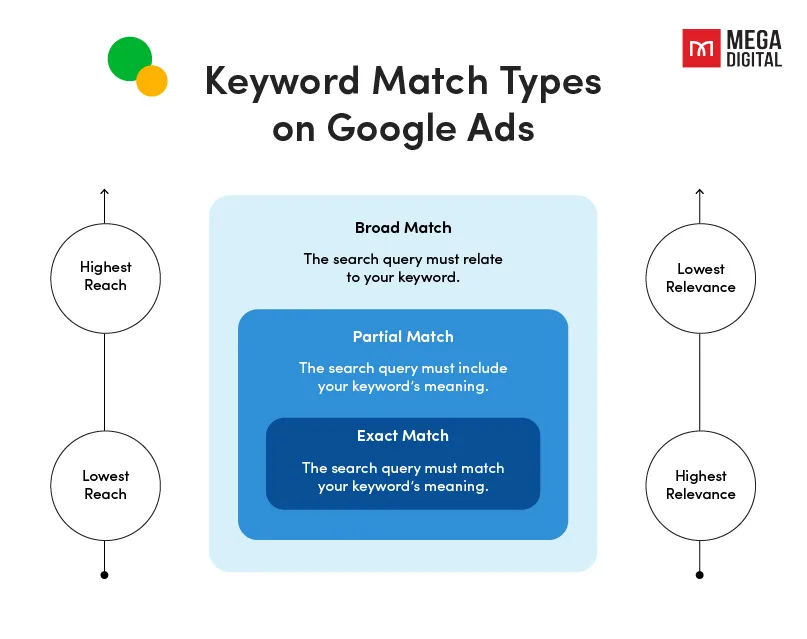
Match type decisions sit under the broader umbrella of Google Ads account strategy, and the Google ads keywords match types connect directly to your bidding model, your negative keyword discipline, and your ad copy relevance. If you treat match types as a set-it-and-forget-it setting, everything downstream suffers.
What are Google Ads Keywords Match Types, Really?
At its core, a match type tells Google how loosely or tightly a keyword should be interpreted when matching against a user’s search query. Refining each detail of your google ads keywords match types strengthens this section. You choose a keyword, assign a match type, and Google decides which real-world searches qualify to trigger your ad.
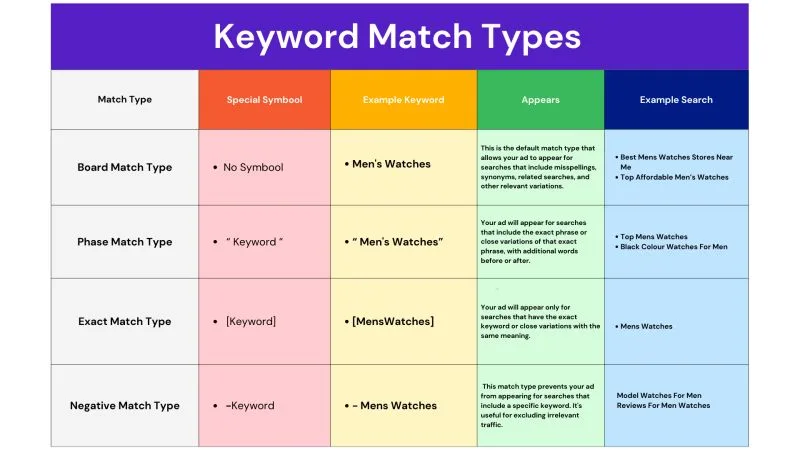
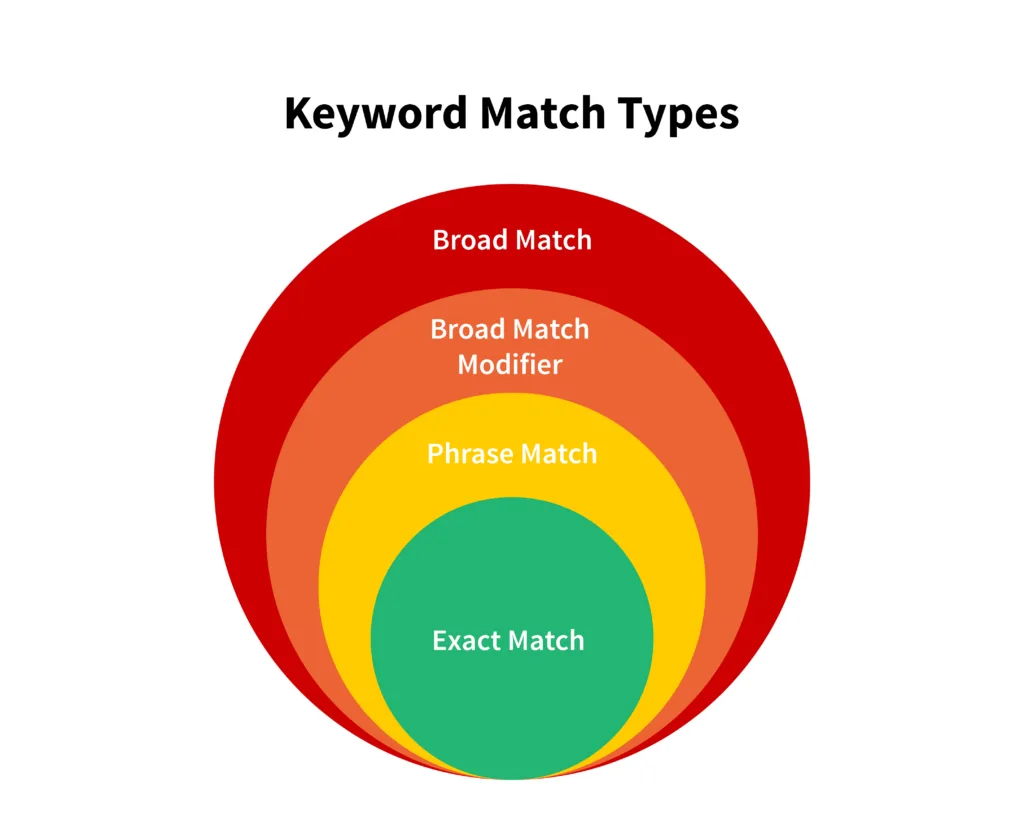
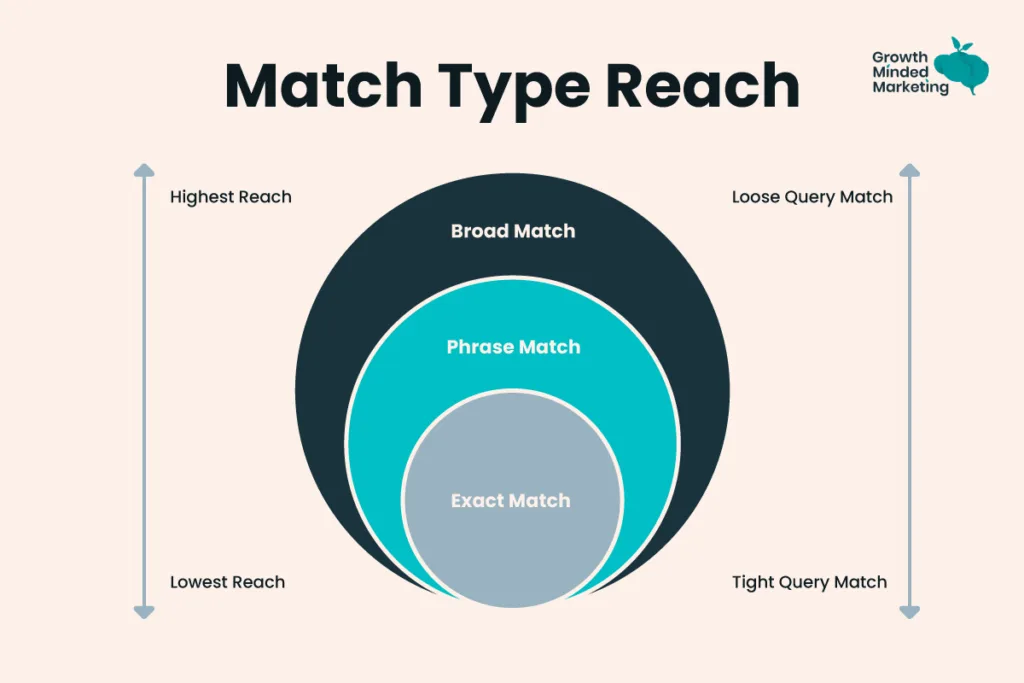
Think of the Google ads keywords match types as a dial between reach and precision. Broad match opens the widest gate. Exact match narrows it down to the tightest possible interpretation. Everything else sits somewhere along that spectrum.
The mechanics feel simple on paper, but the real behavior depends on the search terms Google considers close enough. Effective execution in your google ads keywords match types makes a tangible difference.
That is where close variants, synonyms, and intent signals come into play, and it is why so many advertisers underestimate the impact of their match type choices.
The Four Core Match Types You Need to Know
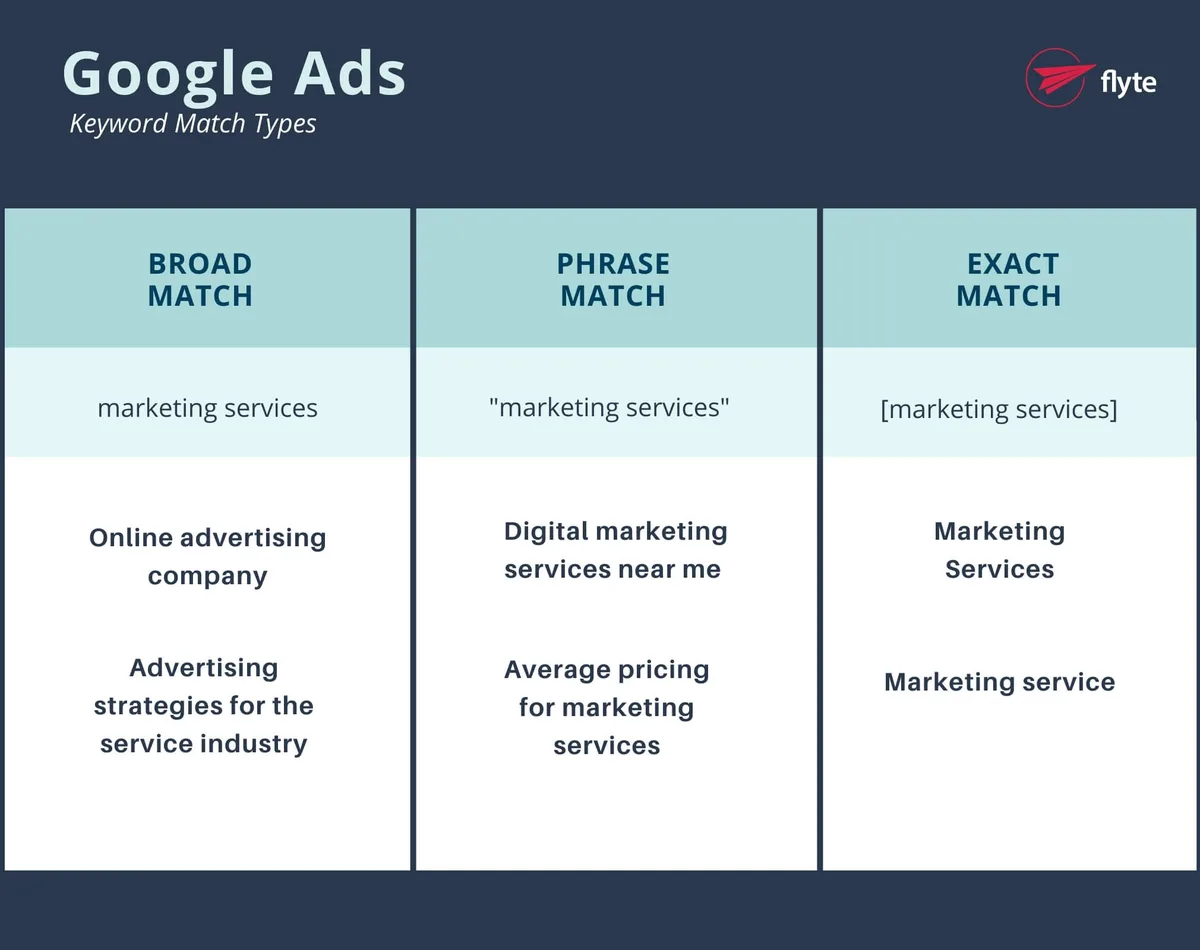
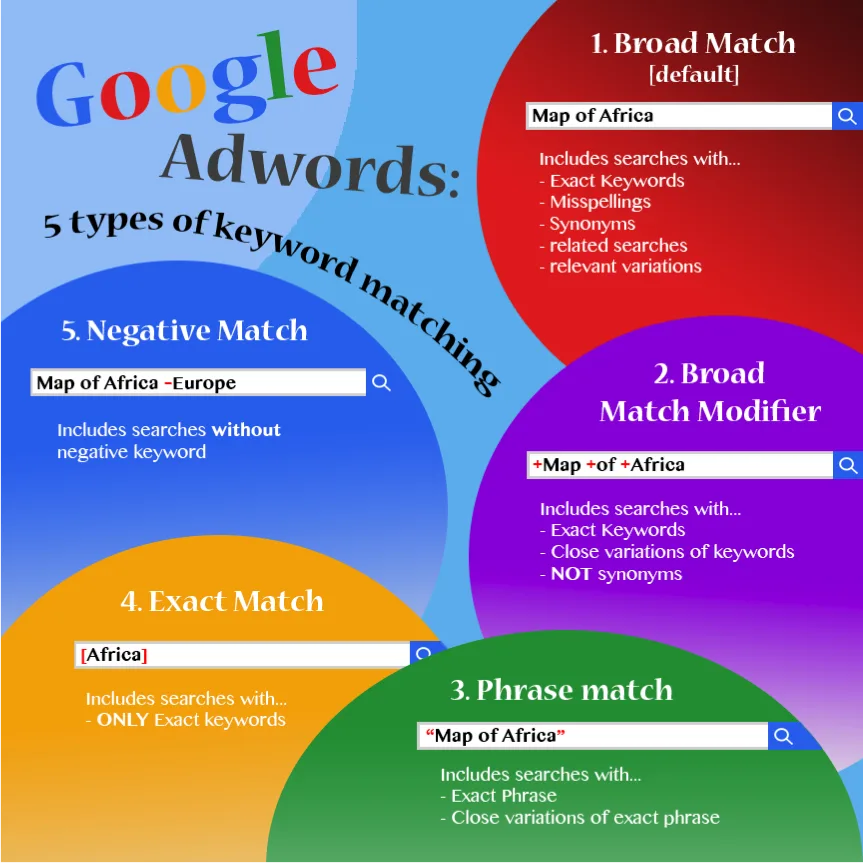
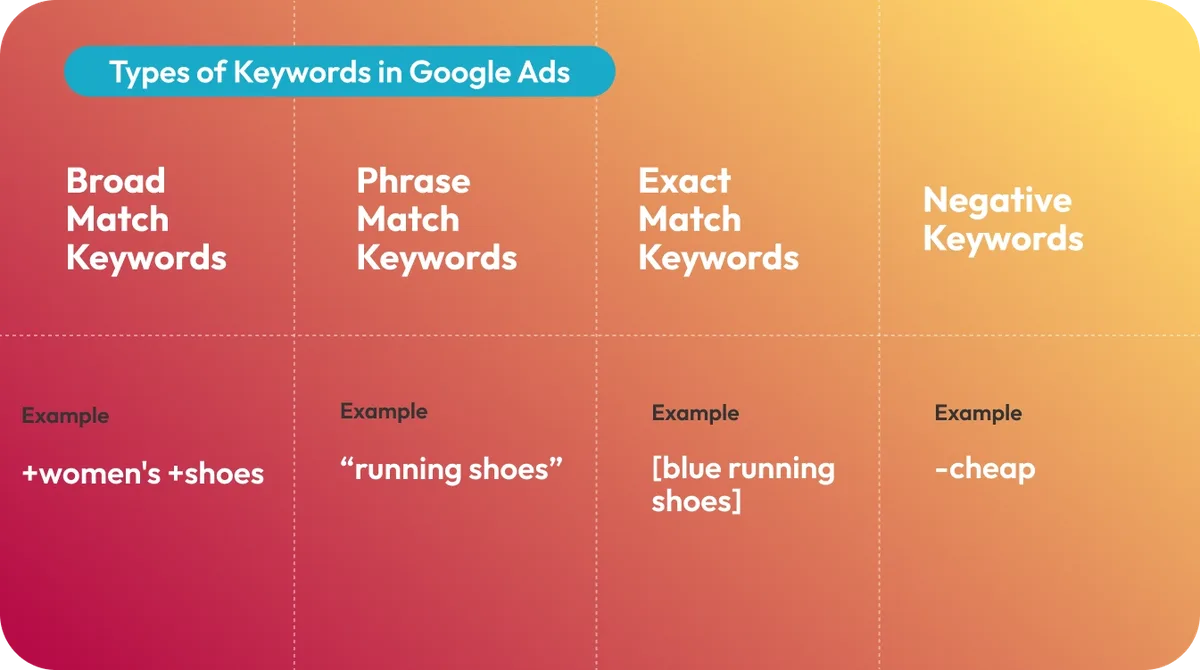
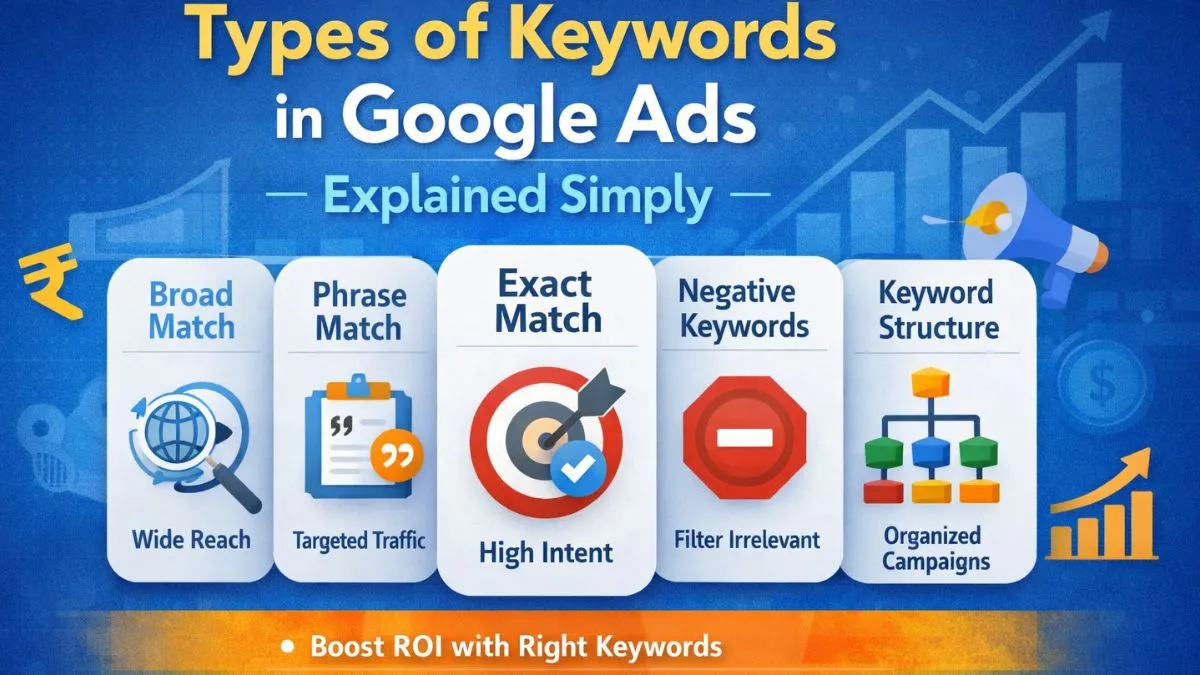
Google supports four primary match types: broad match, phrase match, exact match, and the often-overlooked negative match type. Each behaves differently when paired with the same keyword phrase.
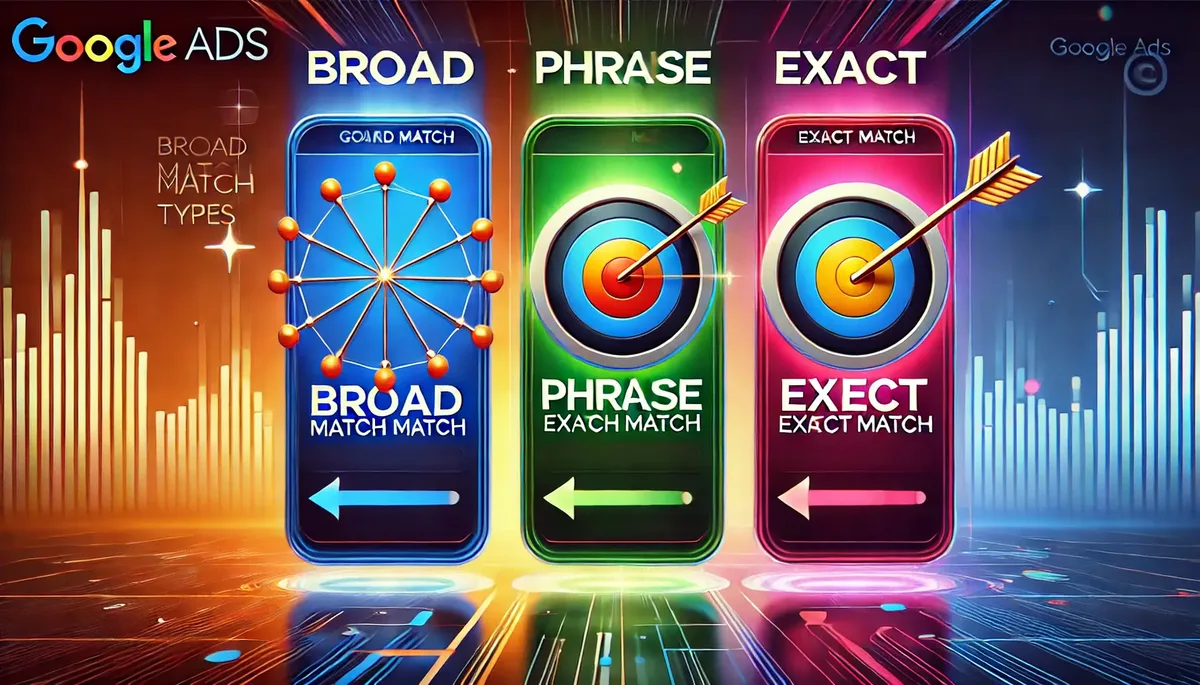
Broad match casts the widest net and can surface ads on searches the google ads keywords match types share a loose thematic or intent connection. Phrase match requires the meaning of your keyword to be present in the query, though word order and extra words are allowed. Exact match demands the search meaning align tightly with your keyword, allowing close variants but shutting out unrelated interpretations.
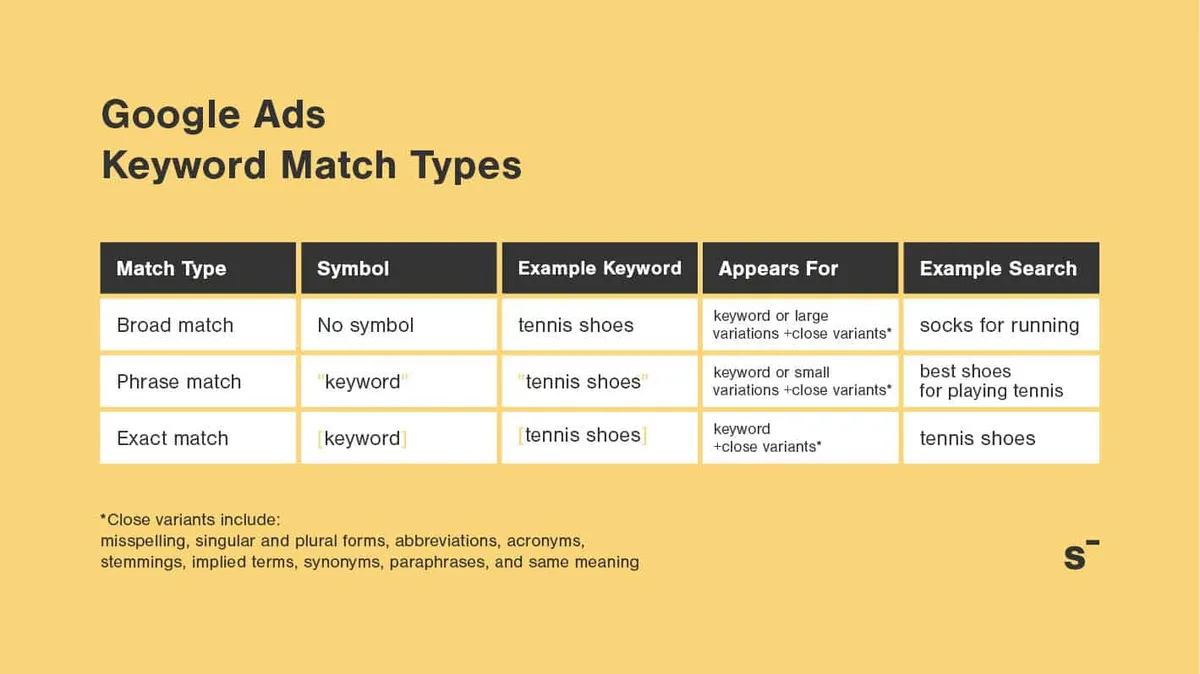
Negative match types work in reverse. Maintaining clarity across your Google ads keywords match types remains essential. They exclude your ad from searches that contain specific words or concepts, and they are the safety valve that keeps broad match from bleeding your budget on irrelevant traffic.
How Google Interprets Match Types Through Meaning and Intent
Here is the part most advertisers gloss over: match types no longer operate purely on string matching. A thoughtful approach to google ads keywords match types reinforces your qualifications. Google evaluates meaning, and that shift changed the game for broad and phrase match in particular.
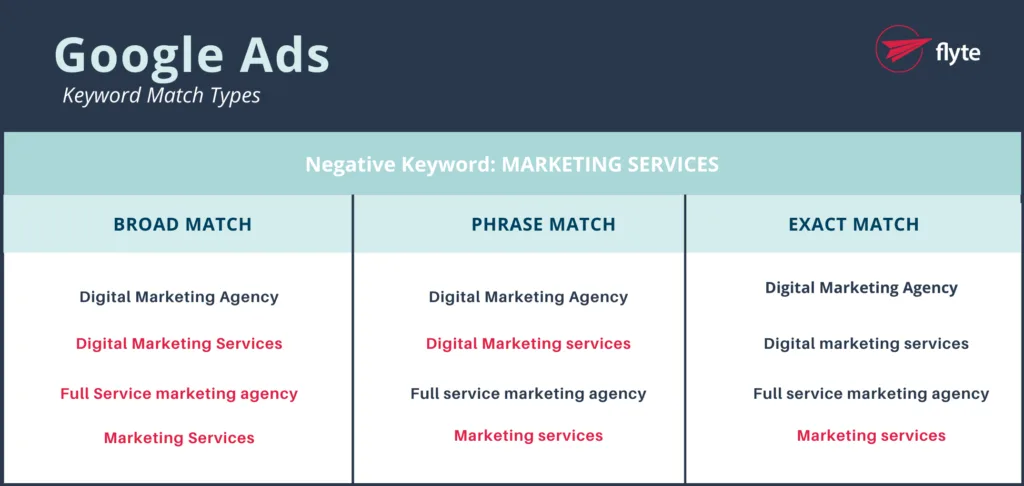
Two searches can look different on the surface and still be treated as equivalent if the underlying intent lines up. That is convenient for scale and dangerous for control, because it means your exact match keyword may still catch queries you never anticipated.
In practice, when refining a google ads keywords match types, you need to audit search terms regularly, review the match type performance reports, and let the data tell you where the interpretation drifts. Anyone running high-volume accounts knows this drill well.
Broad Match: Maximum Reach, Maximum Risk
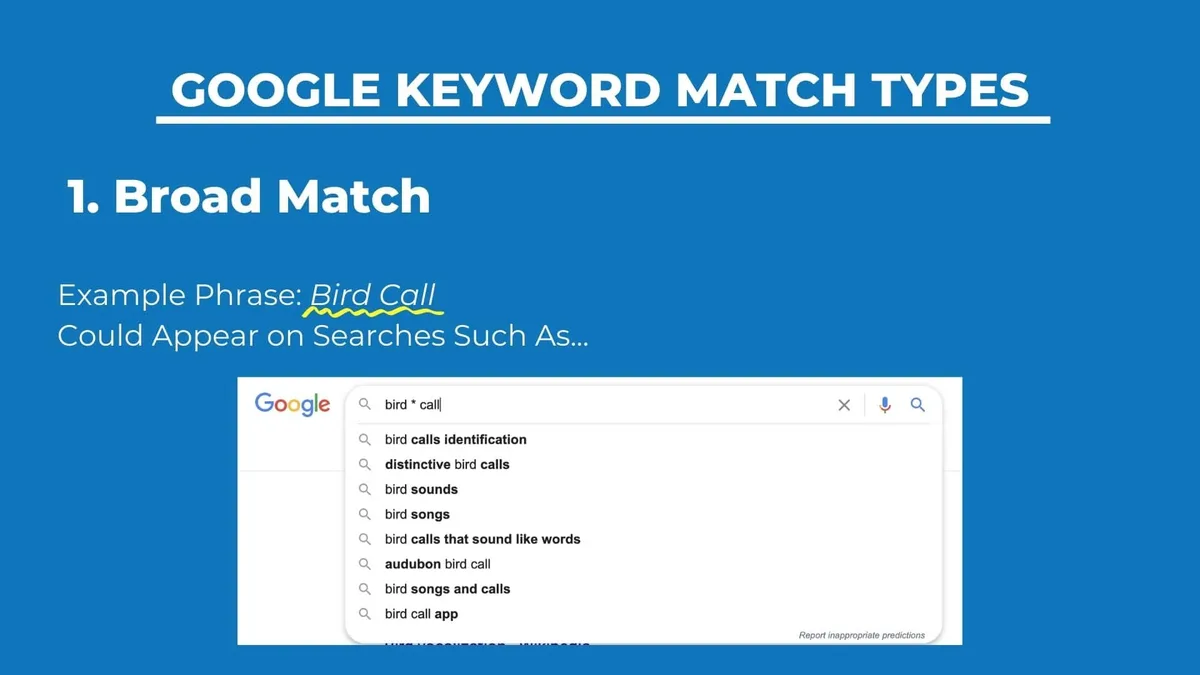
Broad match is the loosest setting in the box. It lets your ads show on searches that relate to your keyword, even when the phrasing diverges significantly.
The upside is discovery. Applying these principles to your google ads keywords match types yields measurable results. Broad match can surface pockets of demand you never thought to target, and it pairs well with smart bidding when you have enough conversion volume to feed the algorithm.
The downside is noise. Without tight negative keyword lists and disciplined geo targeting, broad match will happily spend money on searches that mean something else entirely.
A shoe retailer targeting “running shoes” with pure broad match has probably seen impressions for “running shoe repair” and “running late puns.”
What makes broad match manageable is the supporting cast: audience signals, conversion value signals, and a negative keyword list that grows every week. In fact, the best google ads keywords match types best practices treat broad match as a discovery engine guarded by negatives, not a primary scale lever.
When Broad Match Actually Makes Sense
Broad match is a reasonable fit when the google ads keywords match types are expanding into unfamiliar territory and want Google’s machine learning to map intent clusters you cannot see yourself. It also works well for ecommerce catalogs with deep SKU variety, where a single product keyword produces many legitimate variations.
The Google ads keywords match types is a poor fit for accounts with tiny budgets, thin conversion data, or high-stakes lead gen where a single irrelevant click costs real money. In those scenarios, the learning phase burns through spend before it produces anything useful.
A practical middle ground: launch broad match in its own campaign, cap bids at a comfortable level, and treat the first 30 days as a discovery phase. Developing your google ads keywords match types with precision highlights key strengths. Promote winning search terms to phrase or exact campaigns, and push junk terms into the negative list.
Real-World Example: a Fitness Brand’s Broad Match Experiment
Consider a mid-market fitness apparel brand that runs broad match on “compression leggings.” Within the first week, the search terms report shows queries like “best compression leggings for CrossFit,” “leggings with pockets running,” and—yes—”compression socks for diabetics.”
The first two queries are gold. Clear alignment with your google ads keywords match types builds confidence from the start. The third is a misfire. By adding “socks” and “diabetic” to a campaign-level negative list and promoting the winners to a phrase match campaign, the brand keeps discovery without paying for the noise.
The Google ads keywords match types is the pattern you see across mature accounts. Broad match works when it is fed negatives weekly and audited against a search terms report, not left to wander freely.
Phrase Match: the Reliable Middle Ground
Phrase match has become the workhorse for most advertisers because the google ads keywords match types balances reach and control better than either extreme. Your keyword’s meaning must appear in the query, but Google can reorder words and add phrases on either side.
If your phrase is “vegan protein powder,” a query like “protein powder vegan flavors” still counts, and so does “where to buy vegan protein powder online.” What does not count is a query that means something different, like “vegan protein bar recipes.”
That balance is why phrase match dominates in most google ads keywords match types tips from experienced media buyers. It catches the intent variations that matter without inviting the wild swings of broad match.
Why Phrase Match Pairs So Well With Negative Keywords
Phrase match and negative keywords are a natural pair. Targeted refinements to your google ads keywords match types streamline the entire review. Phrase match brings in related queries, and your negative list trims off the ones that stray too far from commercial intent.
A common pattern: run a phrase match campaign on your core offer, then layer in themed negative lists by category. The travel industry, for instance, runs negatives on “free,” “jobs,” “salary,” and “volunteer” to block informational and employment-oriented traffic.
Over time, the negative list becomes a living document the google ads keywords match types reflects real search behavior in your niche. Six months of disciplined pruning can transform a leaky phrase match campaign into a precise, profitable one.
Handling Close Variants Inside Phrase Match
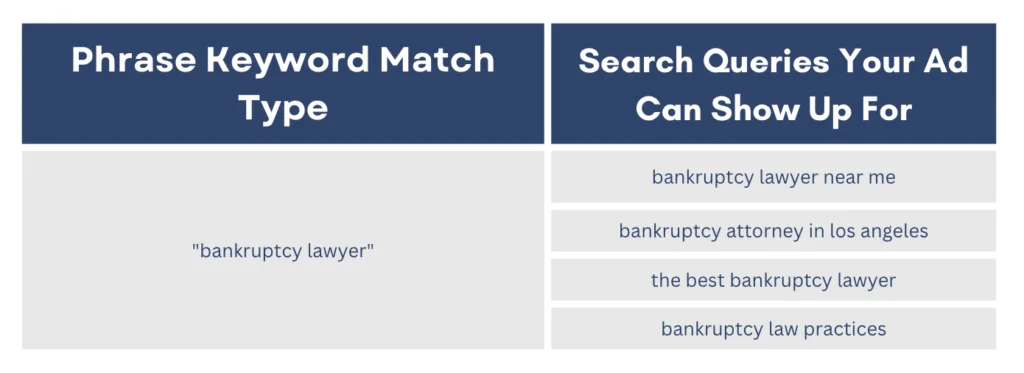
Close variants are legitimate matches Google treats as equivalent to your keyword. They cover misspellings, singular and plural forms, stemming, accents, and reordering of words with the same meaning.
For phrase match, close variants can include additional words before or after your phrase, or function words like “to” and “for” the google ads keywords match types do not change intent. That is usually welcome territory, because it captures natural phrasing.
The trick is monitoring which close variants actually convert. Sometimes a variant brings in queries that mean something entirely different, and that is when a negative keyword becomes essential.
Exact Match: Precision Without Total Isolation
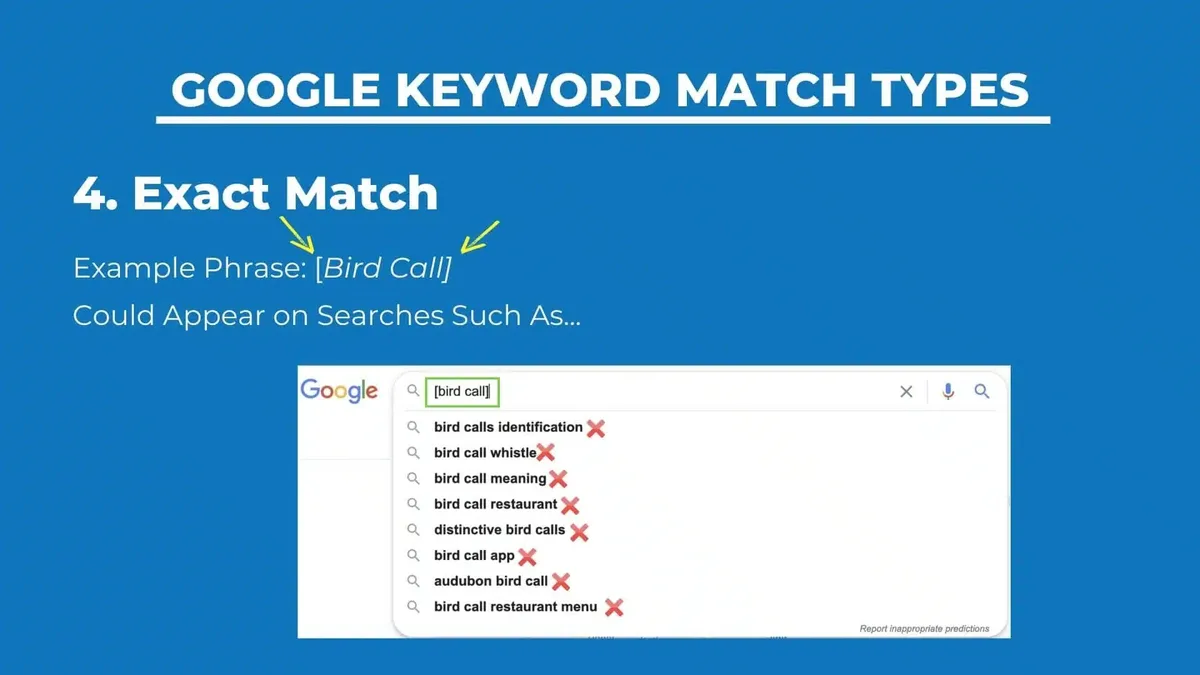
Exact match is the tightest control setting available for standard keyword targeting, but the google ads keywords match types is not the rigid string match it once was. It still allows close variants, including reordering and functional words, as long as the meaning remains the same.
For advertisers focused on high-intent queries with tight profit margins, exact match is often the safest bet. It keeps spend focused on searches that map closely to commercial intent.
The catch: exact match is not immune to synonym drift. A query like “buy a running shoe” and “purchase sneakers” can both match a keyword like [running shoes] when Google decides they carry the same meaning. So even precision campaigns deserve routine search term audits.
Exact Match is Not String Matching Anymore
Understanding that distinction matters for anyone building a google ads keywords match types guide for their team. If your team believes exact match means “only these exact words,” they will be confused by reports showing related queries.
The right mental model: exact match means the query must carry the same meaning, not the same spelling. That opens the door to synonyms and slight inflection changes, but it still keeps the traffic highly relevant.
Treat exact match as your high-intent core. Feed it keywords with strong commercial signal, hold it to strict bidding discipline, and reserve your negative keyword energy for the few outliers that slip through.
When to Use Exact Match for Lead Generation
Lead gen campaigns usually need tighter control than ecommerce because each click can trigger a sales call or a form fill. Exact match keeps that spend focused on queries that truly map to your offer.
The pattern is well-worn: build one ad group per tight intent keyword, write ad copy the google ads keywords match types speaks directly to that query, and route the landing page to a message that mirrors the search. Conversion rates climb when the query, ad copy, and landing page tell a single coherent story.
Many B2B teams pair exact match with strong audience layering—like in-market or custom intent segments—so the ad reaches the right searcher, not just the right query.
Negative Match Types: the Unsung Hero
Most discussions of match types skip negatives, which is a mistake. Structuring your google ads keywords match types around proven patterns ensures impact. Negative keywords determine how your account actually spends money, because they are the gatekeepers on the queries your ads can see.
Three negative match types exist: negative broad, negative phrase, and negative exact. Each blocks a different breadth of queries, and choosing the right one keeps exclusions targeted.
Negative broad blocks any query containing all the words, regardless of order. Negative phrase blocks any query containing the phrase as written, including additional words around it. Negative exact blocks only that exact query, leaving related queries untouched.
Negative Broad, Phrase, and Exact: Choosing the Right Level
Negative broad is the blunt instrument: use the Google ads keywords match types for truly off-topic terms like “jobs,” “salary,” “free,” or competitor brand names if you are not running a competitive campaign. It keeps whole categories out of your account.
Negative phrase is a tighter exclusion. Use it when a specific phrase should be blocked but variations should not. For a software brand, negative-phrase “free trial alternative” weeds out comparison-shopping queries while letting qualifying “free trial” searches through.
Negative exact is surgical. It blocks one precise query while leaving near-neighbors untouched. Reach for it when a specific search term converts terribly and you want it gone without affecting related traffic.
Building a Negative Keyword List That Scales
A good negative keyword list grows from actual search term data, not guesswork. Weekly review of the search terms report is the minimum cadence, and monthly rolling reviews catch seasonal drift.
Distribute negatives across three layers: shared lists for account-wide exclusions, campaign-level lists for category themes, and ad group lists for narrow exclusions. This layered approach keeps each list clean and prevents duplicated exclusions across campaigns.
The strongest google ads keywords match types best practices treat negatives as a first-class optimization, not an afterthought. Every dollar you keep from a junk click funds a click from someone who actually buys.
Close Variants: How Google Interprets Your Keywords
Close variants are not a separate match type, but the google ads keywords match types deeply influence how each match type performs. They are the mechanism through which Google expands your keyword to cover similar queries.
The four main close variant categories are misspellings, singular and plural forms, stemming variants (like “running” vs. “run”), and reordering or function words where meaning holds. All match types consider close variants, though broad match has the widest interpretation.
The google ads keywords match types is why exact match campaigns still see traffic for related queries that never appeared in the keyword list. It is also why search term audits are non-negotiable for serious accounts.
Misspellings, Plurals, and Stemming: What Actually Counts
Misspellings are generally included without needing to add them manually. Plurals and simple variations are handled automatically too. Stemming covers word-family variations like “buy” versus “buying” or “shoe” versus “shoes.”
For most accounts, the google ads keywords match types saves time and expands reach. But in tight niches—like regulated industries or brands with strict naming—close variants can cause problems. The fix is awareness and disciplined negatives.
In one case, a medical device brand discovered its exact match keyword was matching queries for a completely different procedure because the stem overlapped. The fix was a negative keyword list, not a match type change.
Auditing Search Terms to Keep Control
The search terms report is where match type decisions get validated. Every query that triggered an ad is a data point, and the report tells you whether your match type was too loose, too tight, or just right.
A sensible cadence: pull the report weekly, sort by impressions and cost, flag queries that seem off-intent, and decide—promote, pause, or add to negatives. Over time, this pattern refines the account without requiring constant restructuring.
Advertisers who skip the google ads keywords match types step effectively hand control to Google’s interpretation engine. Advertisers who run it consistently keep control in their own hands.
Broad Match Modifier: the Retired Middle Layer
Broad match modifier (BMM) was once the darling of experienced PPC teams because the google ads keywords match types combined reach with tighter control. Google retired the modifier around the time phrase match’s meaning-based matching expanded, and the modifier is no longer available.
If the google ads keywords match types see old tutorials referencing BMM, treat them as historical context. The functionality it provided is now approximated by careful phrase match structure plus disciplined negatives.
That said, the mental model still matters. Understanding what BMM did helps you see why phrase match and broad match now sit where they do on the reach-precision spectrum.
Migrating Old BMM Campaigns Forward
If the google ads keywords match types inherited campaigns that still carry BMM-era structure, migrate them thoughtfully. Most former BMM keywords map best to phrase match keywords with a hardened negative list.
Before deleting BMM-style keywords, tag them, run a parallel structure for a few weeks, and compare conversion efficiency. Then choose the structure that proves out, not the one that feels newer.
Migrations done the google ads keywords match types way rarely lose ground. Migrations done in a hurry tend to wipe out conversion history and reset the learning phase.
Match Types and Smart Bidding: How They Interact
Smart bidding strategies like Target CPA and Maximize Conversions lean heavily on the account’s signal quality, and match type choice shapes the google ads keywords match types signal. Broad match with smart bidding can produce impressive results when conversion data is rich.
But without strong conversions, smart bidding cannot learn efficiently, and broad match amplifies the noise. The safest pattern for new accounts is exact and phrase match building blocks, then broad match with smart bidding once conversion data supports it.
This is one of the underappreciated google ads keywords match types tips: the best strategy depends on how much the algorithm already knows about your customers.
When Broad Match and Smart Bidding Choose Well
For ecommerce catalogs and mature lead gen accounts, broad match plus smart bidding is often the best scale lever. The algorithm uses conversion value signals to find pockets of demand humans miss.
The precondition: sufficient conversion volume in a 30-day window, clean tracking, and conversion values the google ads keywords match types reflect real profit. Without those, smart bidding optimizes for whatever it thinks a conversion is, and that can be misleading.
One practical guideline: do not scale broad match until you have at least 30 conversions per campaign per month. Below that threshold, targeted phrase or exact structures tend to be safer.
When to Keep Smart Bidding Away from Broad Match
Lean accounts, high-ticket lead gen, and industries with strict compliance constraints usually benefit from keeping smart bidding paired with tighter match types. Precision pays off in those scenarios.
Similarly, accounts with broken conversion tracking should never blend broad match with smart bidding. The algorithm will optimize toward wrong signals faster than a human can correct them.
A useful diagnostic: watch the search terms report after two weeks of broad match plus smart bidding. If you cannot connect the search terms to your core offer, revert to phrase or exact and clean up the tracking.

Building a Match Type Strategy by Funnel Stage
Different funnel stages call for different match types. Top of funnel is discovery, middle is evaluation, and bottom is intent. Match type choice should mirror that progression.
Broad match handles discovery well. Phrase match is the workhorse for evaluation-stage queries. Exact match is the sharpest tool for bottom-of-funnel commercial intent. Mapping match type to funnel stage keeps spend aligned with buyer readiness.
Framing this as a google ads keywords match types checklist makes it easier to audit monthly: is each funnel stage covered by the right match type, and is the traffic quality consistent with the stage?
Top of Funnel: Discovery Through Broad Match
Discovery campaigns benefit from broad match because the google ads keywords match types can surface unanticipated demand. The advertiser’s job is to monitor which discoveries convert and feed those into a structured pipeline.
Many teams run discovery campaigns with separate budgets, so the learning phase never eats into core spend. Winners graduate to phrase campaigns with cleaner negatives.
The rhythm of the google ads keywords match types structure feels fast once it is running. Fresh broad match discoveries come in weekly, and the account’s core campaigns stay lean.
Mid Funnel: Phrase Match as the Workhorse
Phrase match handles most of the account’s daily volume. It catches intent variations that are close enough to convert, without the noise of pure broad match.
Buyers here are evaluating options, so ad copy and landing pages need to match the evaluative mindset. A phrase match query like “best CRM for small business” needs a page that helps compare options, not just a hard sell.
Phrase match thrives when negatives are refreshed weekly and creative aligns with the query intent. That pairing is the quiet secret of high-performing accounts.
Bottom of Funnel: Exact Match for Commercial Intent
Exact match is where conversions get captured with precision. The queries here are specific, and the ads must speak directly to those specific queries.
Landing pages should be tailored to the query, not the keyword category. A query for “buy ergonomic office chair” wants to see chairs and pricing, not a general homepage.
Many B2B teams find the google ads keywords match types 20 to 30% of total conversions come from only a handful of exact match keywords. Protect those keywords, bid on them aggressively, and treat the rest of the account as supporting infrastructure.
Common Match Type Mistakes That Cost Money
Some match type mistakes are small; others quietly drain budgets. The most expensive ones arise from inattention, not bad strategy.
Running broad match without negatives leads the list. So does forgetting to audit search terms for weeks at a time. So does overusing exact match when the account needs scale.
The good news: every mistake on the google ads keywords match types list is fixable with a disciplined weekly routine. That routine is the real foundation of sustainable PPC performance.
Skipping Negative Keyword Reviews
Negative keyword reviews feel boring until you see how much spend leaks through. Accounts that skip this step can burn 15 to 25% of budget on irrelevant queries within a month.
A weekly 15-minute review of the search terms report can catch most of the google ads keywords match types. Sort by cost, check the top queries, and block anything that does not map to your offer.
The pattern repeats across industries. The specific negatives differ, but the discipline does not.
Overusing Exact Match When the Account Needs Scale
Exact match protects spend, but the google ads keywords match types also caps reach. A too-heavy exact match structure in a growing account starves the algorithm of impressions and limits optimization.
A sensible balance: exact match for core commercial keywords and phrase match for broader categories. Broad match only when conversion data and disciplined negatives support it.
Many beginner accounts live entirely in exact match and wonder why scale stalls. Loosening to phrase match often unlocks growth without proportionally increasing waste.
Ignoring Match Type Performance Across Devices and Geos
Match type performance varies by device and geography. A broad match campaign that performs well on desktop may collapse on mobile, where queries tend to be shorter and more ambiguous.
Segment bid adjustments by device and geo, and check whether match type performance holds across segments. If it does not, restructure the campaign around the segments where it works.
Auditing the google ads keywords match types monthly catches drift before it becomes expensive. Google Ads keyword match types are a tool, not a setting; they need context to work well.
Match Type Testing: How to Prove Which Works
Match type testing is not just a philosophical exercise. Done right, it produces clear data on which structure earns the most profitable impression at the lowest cost.
The cleanest test isolates match type as the only variable. Same ad copy, same landing page, same bid strategy, same schedule—only the match type differs between campaign duplicates.
Run the test for at least three to four weeks to let the algorithm settle, then compare cost per conversion and conversion rate at matched spend levels.
Designing a Match Type A/B Test
Start by picking a keyword phrase with proven demand. Duplicate the ad group into three versions, one for broad, phrase, and exact, and let each run independently.
Set identical budgets so spend levels stay comparable. Track impressions, clicks, cost, conversions, and cost per conversion across all three versions.
After four weeks, compare cost per conversion. The winner becomes the default for that keyword category going forward, and the losing structures provide insight into where demand actually lives.
Interpreting the Results Without Fooling Yourself
Watch for statistical noise. A 10% difference in conversions across 30 clicks is not a reliable signal. Scale the test or extend it before drawing conclusions.
Also check whether the match types discovered different search terms, because broader match types almost always find more varied traffic. The point is to learn what that variation means for profit, not to compare apples to oranges.
The healthiest pattern is a funnel: broad match discovers, phrase match converts, exact match defends the highest-intent queries. Testing reveals which stage needs more attention.
Match Types Across Industries: What Changes
Match type strategy is not universal. Ecommerce, B2B lead gen, local services, and regulated industries each have their own rhythm.
Ecommerce has the deepest catalog, so broad match with negatives tends to scale. B2B lead gen demands tighter controls and often leans exact-heavy. Local services need tight geo and often exact match for appointment intent. Regulated industries need precise negatives and careful creative.
Understanding these patterns helps you borrow the right playbook for your vertical, instead of mimicking strategies from unrelated industries.
Ecommerce: Balancing Catalog Breadth and Precision
Ecommerce thrives on phrase match as the backbone, with broad match reserved for new category launches. Negative keyword lists that filter out “free,” “diy,” “used,” and “cheap” protect margin.

Product feed integration also changes the game. Shopping campaigns handle the catalog, while text ads handle intent queries. Match type strategy therefore shifts toward representing intent, not product categories.
The result: a leaner text ad account focused on intent keywords, and a broader Shopping layer for discovery by product.
Lead Generation: Precision Above All
Lead gen cannot afford wasted clicks because each click can trigger a sales follow-up. Exact match and phrase match dominate, and every search term is reviewed.
A tight keyword list—usually five to fifteen exact match keywords per ad group—performs best. Negatives exclude job seekers, students, and free-tool hunters.
Many lead gen accounts hold conversion rates above 10% by keeping the structure tight. Broader structures would dilute response quality and impact sales capacity.
Regulated Industries: Precision Plus Careful Negatives
Healthcare, finance, and legal services face compliance constraints that make match type discipline essential. Broad match risks showing ads on queries that trigger legal exposure.
Exact match dominates in the google ads keywords match types industries, backed by robust negative lists and pre-approved ad copy. Phrase match is used selectively for evaluation-stage queries.
Every match type change should be reviewed against compliance requirements before going live. A disciplined process protects the brand and the budget simultaneously.
A Google Ads Keywords Match Types Checklist for Auditing Live Campaigns
Use this google ads keywords match types checklist when auditing a live account. It covers the highest-impact checks that reveal whether match types are doing their job.
Run the google ads keywords match types quarterly, or whenever a campaign underperforms. The findings usually point to small fixes with big downstream effects.
- Map every active keyword to a match type and a funnel stage. Confirm the match type matches the query intent. Exact keywords should sit at bottom of funnel, phrase at evaluation stage, and broad at top of funnel. Mismatches are the most common source of waste.
- Review search terms for the last 30 days, sorted by cost. Flag queries that do not reflect your offer, then decide whether to promote them to a tighter ad group or add negatives. This is the highest-leverage step in the checklist.
- Confirm negative keyword lists are layered correctly. Verify shared account-level lists, campaign-level lists, and ad group lists do not conflict. Duplicate negatives waste time and can cause confusion.
- Check whether close variants produce off-intent traffic. Pull exact match search terms and look for synonym drift. Add negatives where necessary.
- Compare cost per conversion across match types. The match type with the best cost per conversion is your strongest lever. Restructure to give it more room.
- Verify device and geo bid adjustments still reflect actual performance. Match type performance varies by segment, so segmented bids need to keep up.
- Confirm smart bidding strategies are paired with the right match types. Broad match and smart bidding work best with rich conversion data. Tighter match types help lean accounts.
- Run a match type A/B test on one high-volume keyword. Let real data choose the winning structure rather than tradition or guesswork.
- Audit keyword-to-ad-group fit. Groups with more than fifteen keywords dilute ad relevance. Tight groups produce tighter ad copy and better quality scores.
- Document findings and set a review cadence. A quarterly audit keeps match types aligned with the changing intent of the market.
Advertisers who run this checklist quarterly tend to keep their accounts leaner and their cost per acquisition lower than competitors who set match types once and never revisit.
Match Type Tips for Beginners
If the google ads keywords match types are new to paid search, start simple. Beginners who jump straight to broad match tend to burn through budget quickly and walk away disillusioned. The better path is disciplined and steady.
Start with phrase match. It offers control without being too restrictive. Add exact match keywords for your highest-intent terms. Keep broad match for later, once conversion data stabilizes.
Build the negative keyword routine from day one. Treat the search terms report as required reading every week.
The following key points are covered in this section:
- The Starter Account Blueprint
- What to Do in the First 90 Days
Scaling Match Type Strategy as Your Account Grows
- When to Introduce Broad Match Into a Mature Account
- Restructuring Ad Groups Without Losing Data
Match Type Benchmarks and How to Interpret Them
- Reading Cost per Conversion Trends
- Reading Impression Share Trends
Frequently Asked Questions About Google Ads Keywords Match Types
- What are the Four Main Match Types in Google Ads?
- Is Exact Match Still the Safest Match Type?
- Can I Use Broad Match With a Small Budget?
- Do Negative Keywords Have Their Own Match Types?
- How Often Should I Audit Match Types?
- Does Match Type Affect Ad Rank or Quality Score?
Where Match Type Strategy Goes Next
For verified reference and background research, consult the authoritative informational resource on this topic.