Evergreen content is the rare kind of material that keeps pulling readers in long after you hit publish. It doesn’t chase a trend, doesn’t expire with a product cycle, and doesn’t need a rewrite every few months to stay useful.
Instead, it answers a question people will always ask — and it keeps answering it, month after month, without you lifting a finger.
If you run a blog, a brand, or a small business site, this is the asset class that quietly compounds while everything else fades. Focusing on evergreen content provides clear direction here. Let’s break down exactly how it works, why it matters, and how to build pieces that hold their value for years.
Evergreen Content Explained Without the Jargon
Think of it this way: a news post about a product launch is a mayfly. Focusing on evergreen content provides clear direction here. A guide on how to tie a necktie is a redwood. Both are content, but only one of them still gets traffic a decade later.
That staying power is the whole point. Evergreen content is material written to remain relevant, accurate, and useful regardless of when someone stumbles onto it. The topic doesn’t age because the underlying question never goes out of style.
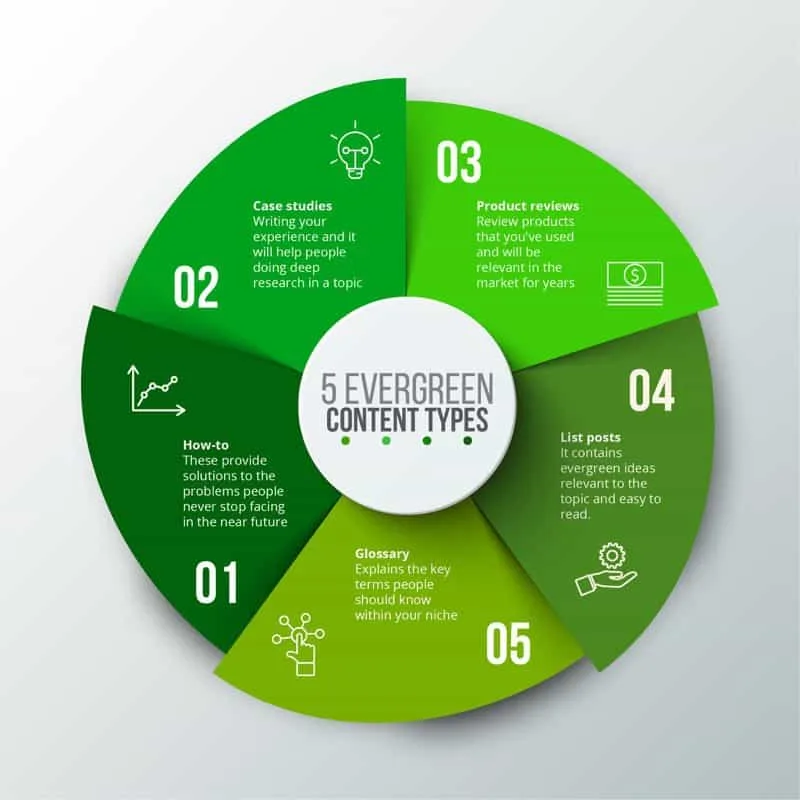
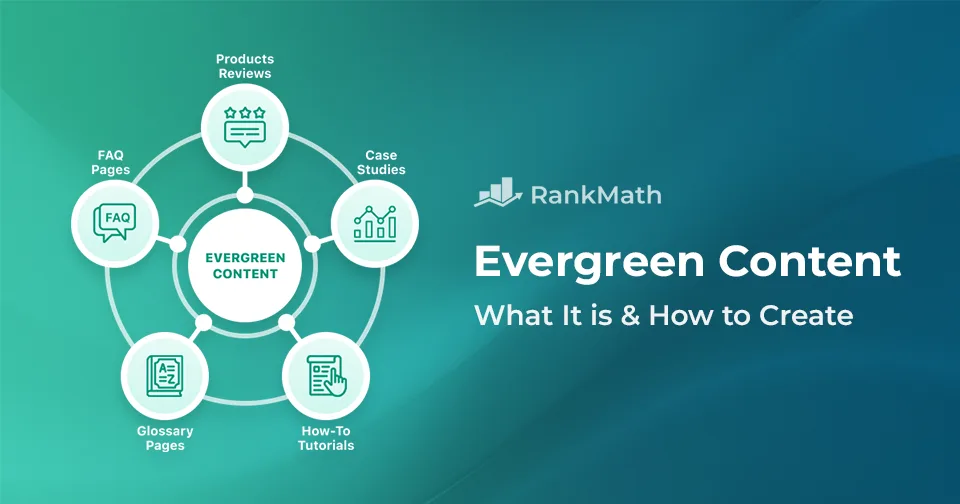
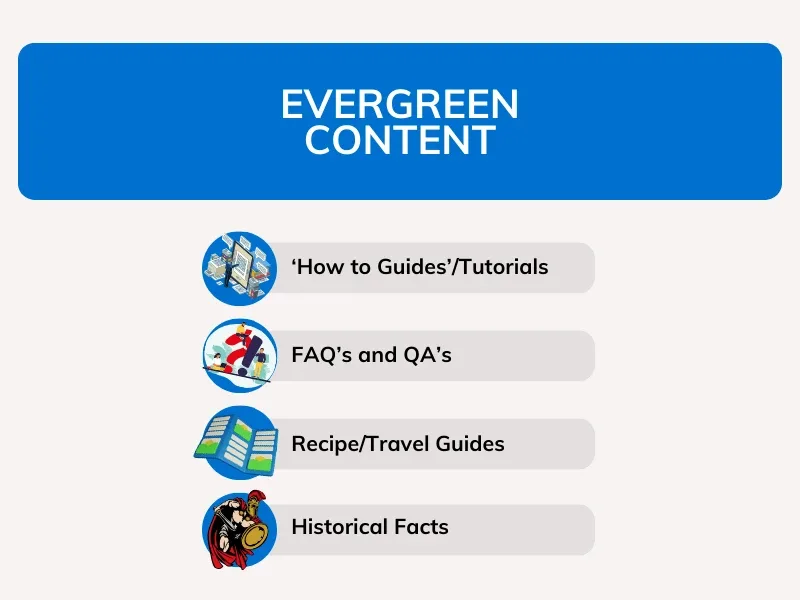
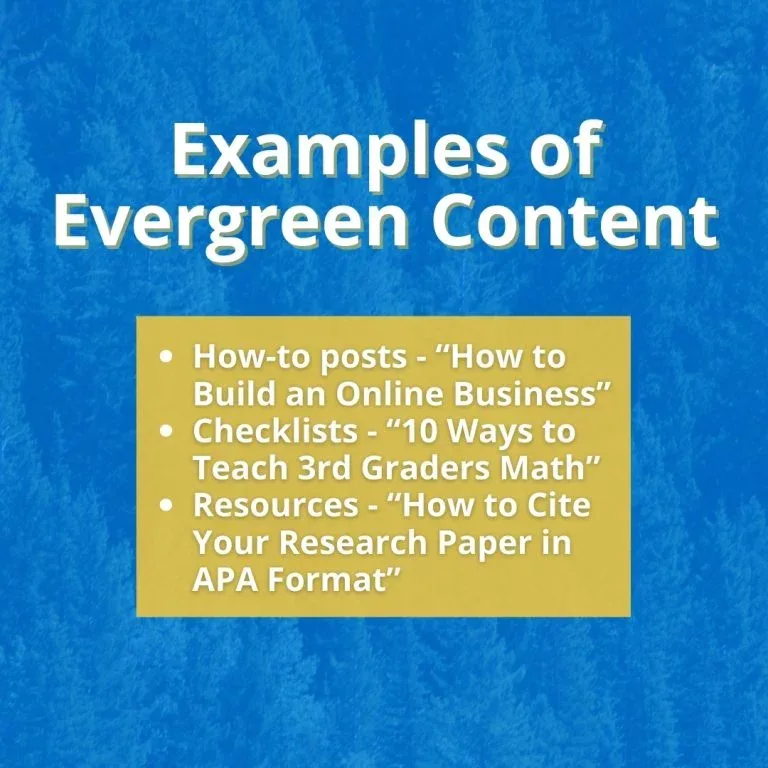
How-to guides, foundational explainers, definitions, checklists, and reference material tend to live in this category. So do recipes, tax basics, and “how to fix a leaky faucet” tutorials — the kind of thing people search for at 2 a.m. Without caring what year it is.
The Core Traits That Separate Evergreen Material from the Rest
Not every long-lived article is truly evergreen, and not every evergreen piece looks the same. But most share a few fingerprints.
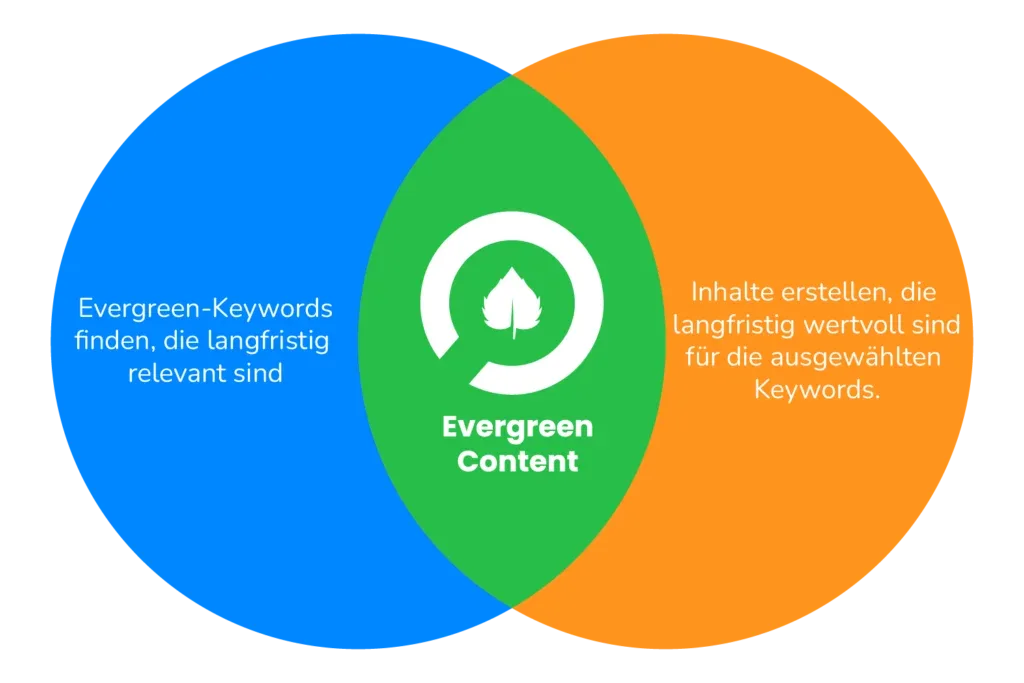
First, the topic is timeless. Nobody searches “how to write a cover letter” because of a news event; they search because they need a job. Second, the advice doesn’t hinge on a specific tool, platform, or price that will change next quarter. Third, the piece is written to be found — it targets a query people actually type into Google.
There’s a fourth trait that’s easy to miss: it doesn’t pretend to be breaking news. The moment you timestamp a piece with “this week” or “right now,” you’ve started the clock on its decay.
Why This Type of Material Outperforms Trend-Chasing Posts Over Time
Here’s the math that most people ignore. A viral trend post might spike to 20,000 views in three days and then flatline to zero. A solid evergreen content piece might get 200 views a month, every month, for five years. That’s 12,000 views — and it’s still climbing.
Compounding is the magic word. Refining each detail of your evergreen content strengthens this section. Each evergreen piece you publish adds a small, permanent trickle of traffic. Stack twenty of them and you’ve built a river.
There’s a second benefit that doesn’t show up in analytics: these pieces keep working while you sleep, while you’re on vacation, and while you’re busy writing the next one. They’re the closest thing content marketing has to a rental property.
Why Evergreen Content Still Wins in Search
Search engines reward pages that answer questions well. That’s the entire game, and it hasn’t changed in two decades of algorithm updates.
When a page consistently satisfies the intent behind a query, it earns links, dwell time, and repeat visits. Those signals accumulate. Over time, a well-built evergreen content page can rank for dozens of related keywords without any extra work.
Compare that to a trending post, which might rank for a week and then get buried by fresher coverage. The trend piece had its moment. The evergreen piece owns the topic.
How Search Intent Shapes What Actually Lasts
Informational queries — “what is compound interest,” “how to clean a cast iron skillet” — are the natural home of evergreen content. People ask these questions forever, and the answers don’t change much.
Commercial and transactional queries can be evergreen too, but they’re trickier. “Best running shoes for flat feet” stays relevant, but the specific products change constantly. You’ll need to refresh the recommendations while keeping the underlying framework intact.
The trick is to separate the durable part from the disposable part. Refining each detail of your evergreen content strengthens this section. The durable part is the criteria, the buying logic, the how-to-choose section. The disposable part is the list of specific models.
The Role of Topical Authority in Long-Term Rankings
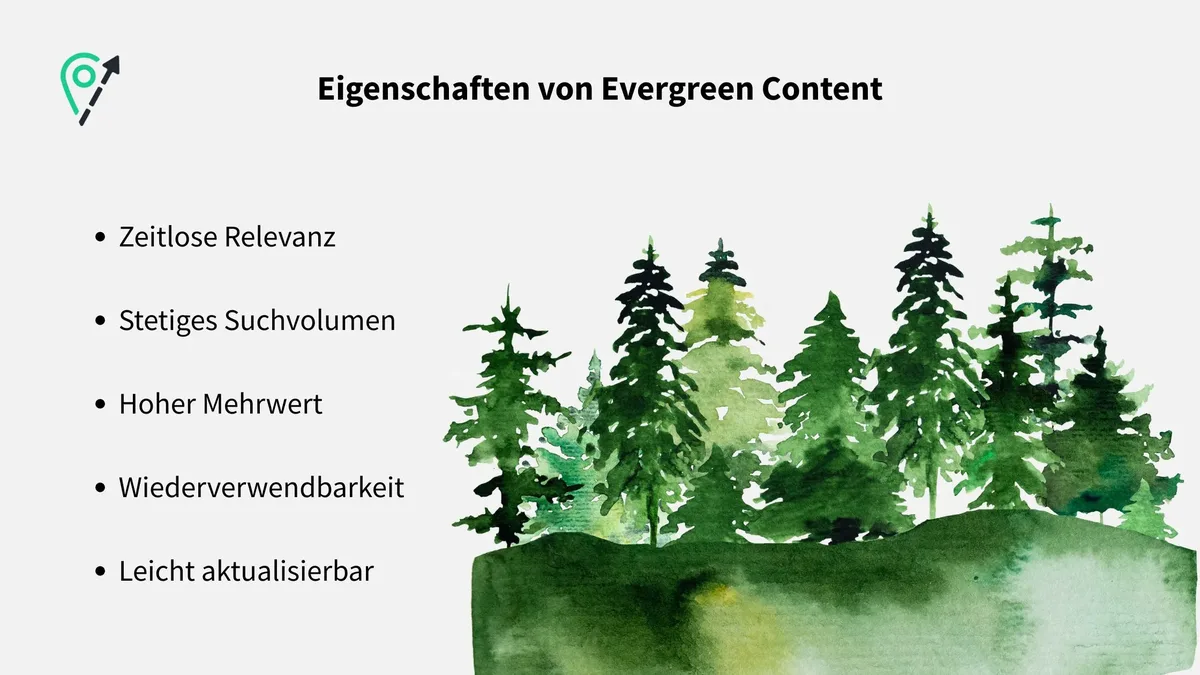
Google doesn’t just rank pages; it ranks sites. Effective execution in your evergreen content makes a tangible difference. A site that has published twenty deep, interconnected articles on a single subject looks like an authority. A site with one scattered post on everything looks like noise.
This is where evergreen content becomes a strategic weapon. Each piece reinforces the others, creating a web of related material that signals expertise. Over time, your site becomes the obvious answer for that topic.
Practically, that means picking a lane and going deep. If you’re a finance site, own “how to budget.” If you’re a gardening site, own “how to grow tomatoes.” Then build out every angle within that lane.
Evergreen Content Ideas That Keep Pulling Traffic
Coming up with ideas is where most people stall. They stare at a blank doc and wonder what could possibly stay relevant for years.
The answer is usually hiding in your own inbox. What questions do customers ask over and over? What do new employees always need explained? What do people Google right before they buy from you?
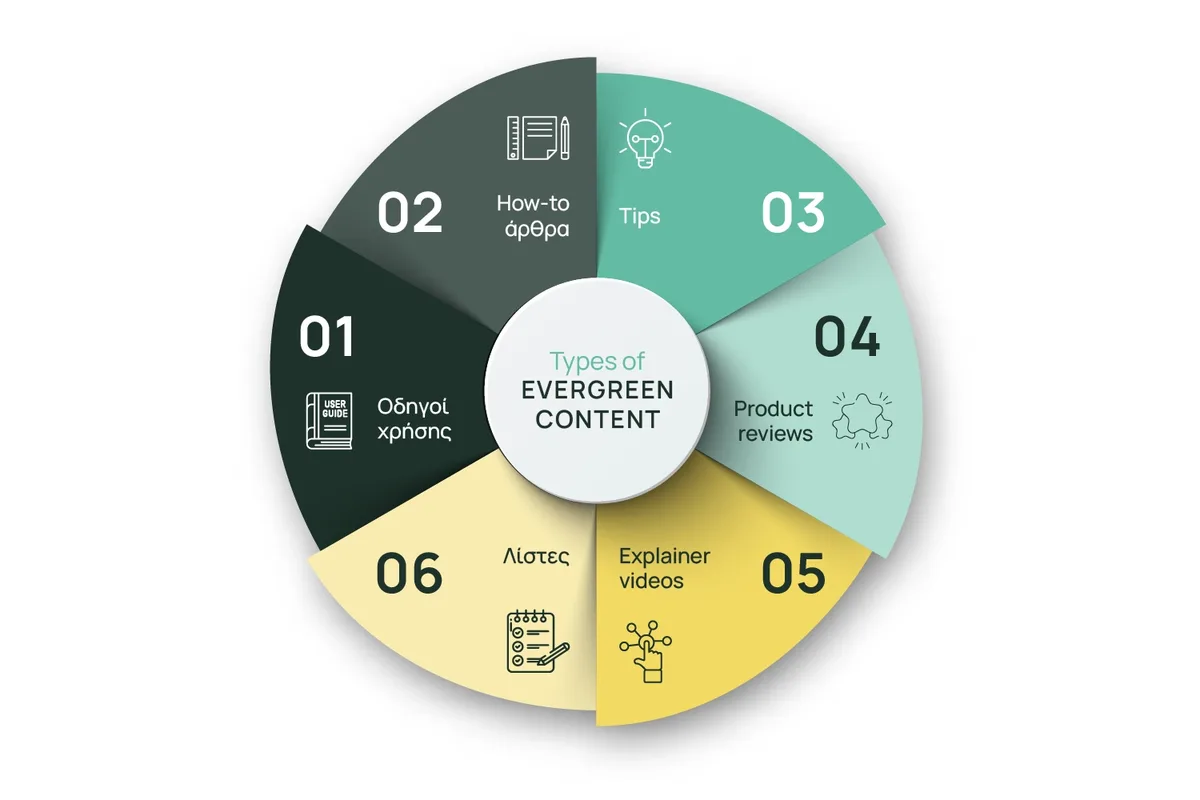
Below are grouped categories of ideas that reliably hold their value. Each one includes a concrete example and a note on why it lasts.
Foundational Education and Explainers
These are the “what is” and “how does it work” pieces. They teach a concept from scratch and don’t assume prior knowledge.
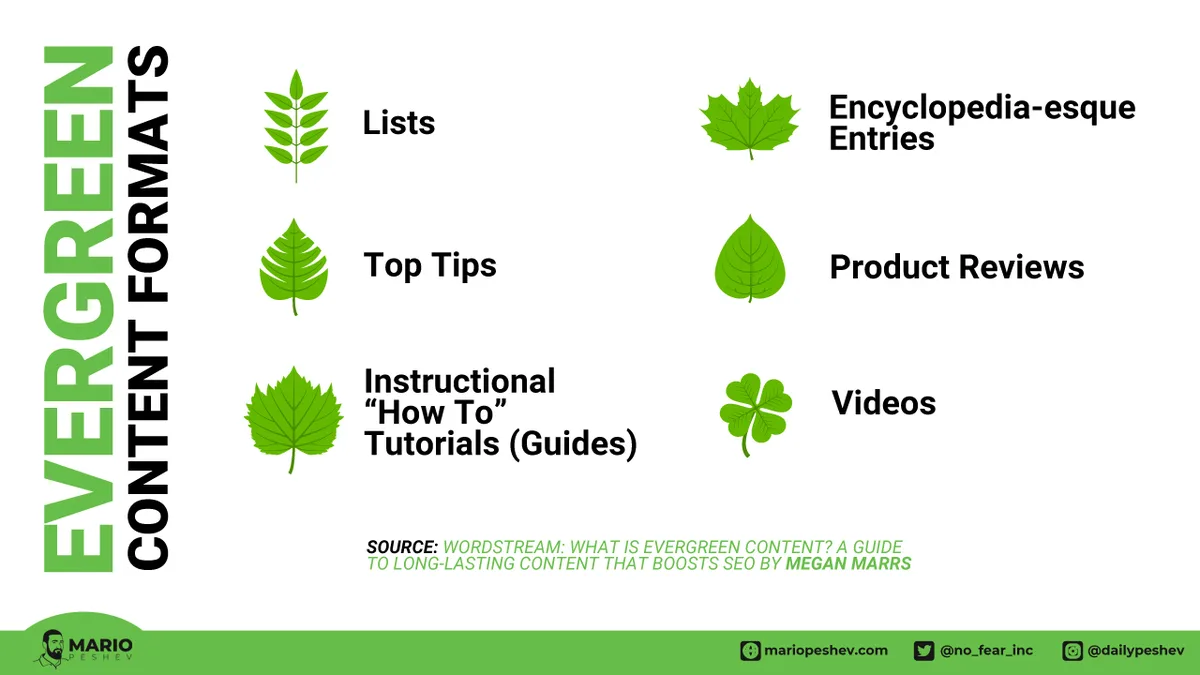
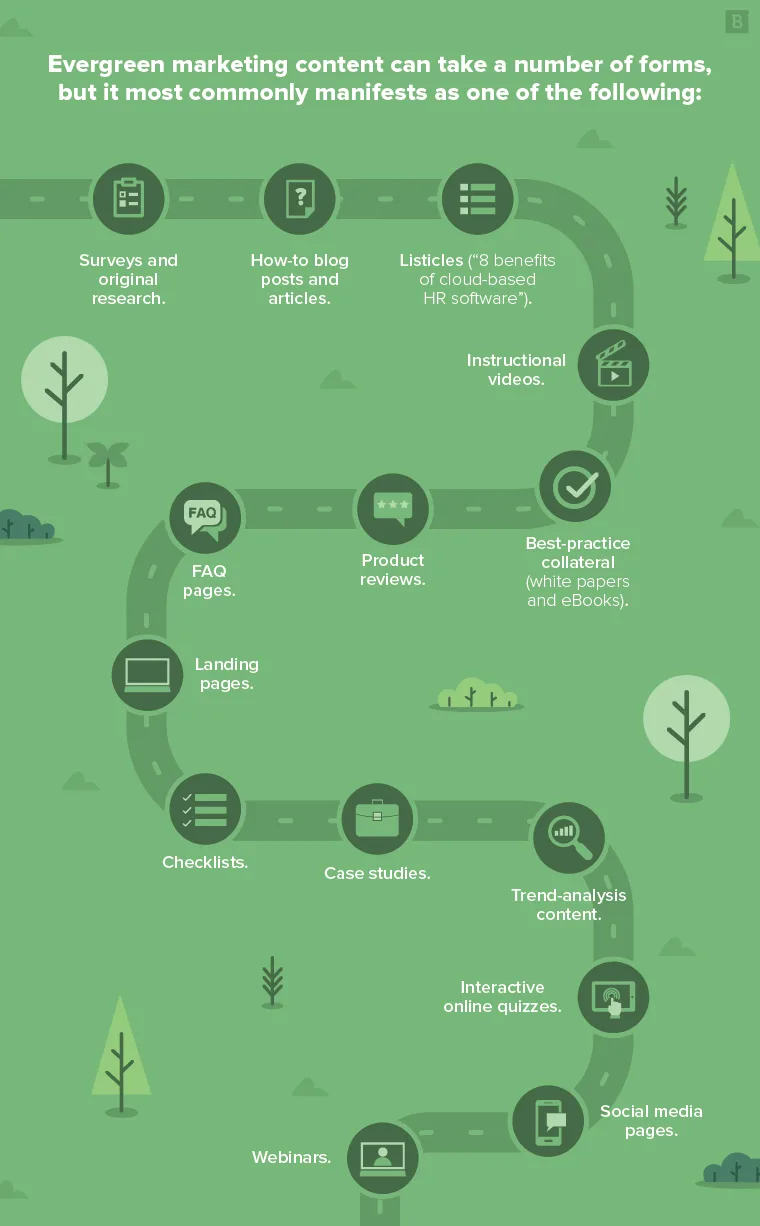
- Definition Guides: A plain-English explanation of a core term in your field. Example: “What Is a Roth IRA?” Why it lasts: the definition doesn’t change, and new people enter the market every year looking for it.
- Concept Explainers: Break down a big idea into digestible parts. Example: “How Compound Interest Works.” Why it lasts: the math is permanent, and the query volume is enormous.
- Beginner Walkthroughs: A step-by-step intro to a skill. Example: “How to Start a Vegetable Garden From Scratch.” Why it lasts: beginners show up every spring, forever.
- Glossary Pages: A reference list of industry terms. Example: “SEO Terms Explained.” Why it lasts: it becomes a bookmark people return to.
Notice the pattern: these pieces don’t depend on a specific product, price, or trend. Maintaining clarity across your evergreen content remains essential. They teach something fundamental, and fundamentals don’t expire.
How-To Tutorials and Process Guides
Tutorials are the workhorses of any content library. They answer “how do I do this” — the most durable question format on the internet.
- Step-by-Step Tutorials: A numbered process with screenshots. Example: “How to Change a Tire Safely.” Why it lasts: the process is the same whether you drive a sedan or a truck.
- Checklists: A scannable list of things to do or verify. Example: “Home Maintenance Checklist for New Homeowners.” Why it lasts: new homeowners appear constantly.
- Troubleshooting Guides: Diagnose and fix common problems. Example: “Why Is My Wi-Fi Slow? Common Causes and Fixes.” Why it lasts: the problems recur endlessly.
- Comparison Frameworks: Help readers choose between options. Example: “Renting vs. Buying: How to Decide.” Why it lasts: the decision framework outlives any specific market condition.
If you only build one type of evergreen content, make it tutorials. They convert well, they earn links, and they rarely need updating.
Lists, Roundups, and Reference Material
Lists are easy to scan and easy to share. As long as the underlying items don’t change, they stay evergreen.
- Curated Resource Lists: A vetted collection of tools or sources. Example: “Free Tools Every Freelancer Should Know.” Why it lasts: the tools evolve, but the category doesn’t — you just swap entries.
- Mistake Roundups: Common errors and how to avoid them. Example: “10 Mistakes First-Time Investors Make.” Why it lasts: people keep making the same mistakes.
- Tip Collections: Practical advice on a single theme. Example: “Time Management Tips That Actually Work.” Why it lasts: the struggle is universal and permanent.
- FAQ Pages: Real questions with short answers. Example: “Frequently Asked Questions About Adoption.” Why it lasts: it answers exactly what people search.
The trick with lists is to keep the structure stable while refreshing the specifics. A roundup of “best laptops” needs new models every year, but “how to choose a laptop” doesn’t.
Case Studies, Stories, and Lessons Learned
Stories stick. Effective execution in your evergreen content makes a tangible difference. A well-told case study teaches through example, and the lesson often outlives the specific situation.
- Before-and-After Case Studies: Show a transformation with numbers. Example: “How We Cut Page Load Time by 60%.” Why it lasts: the method is repeatable even if the site changes.
- Failure Postmortems: What went wrong and why. Example: “Why Our Product Launch Flopped.” Why it lasts: the lesson is transferable and timeless.
- Origin Stories: How something got started. Example: “How Our Bakery Went From Farmers Market to Storefront.” Why it lasts: it inspires and it humanizes the brand.
- Lessons-Learned Essays: Hard-won wisdom from experience. Example: “What 10 Years of Freelancing Taught Me.” Why it lasts: experience-based advice never expires.
These pieces build trust in a way that pure instruction can’t. They show you’ve actually done the thing, not just read about it.
Data, Statistics, and Original Research
Numbers earn links. A thoughtful approach to evergreen content reinforces your qualifications. Journalists and bloggers cite data constantly, and they keep citing it as long as it’s the best available.
- Industry Statistics Pages: A roundup of key numbers. Example: “Coffee Consumption Statistics.” Why it lasts: the numbers get updated, but the page stays relevant.
- Original Surveys: Data you collected yourself. Example: “We Surveyed 1,000 Remote Workers.” Why it lasts: original data is scarce and valuable.
- Benchmark Reports: Industry standards and averages. Example: “Average Email Open Rates by Industry.” Why it lasts: people need a reference point.
- Annual Trend Summaries: A snapshot of where things stand. Example: “State of the Freelance Economy.” Why it lasts: it becomes the go-to citation.
These require more effort than a typical blog post, but the payoff is disproportionate. One strong data page can earn links for years.
Evergreen Content Ideas for Specific Niches
Generic advice only goes so far. Here’s how these categories play out across a few common fields.
For health and wellness, evergreen content looks like “how to build a morning routine” or “what to eat before a workout.” For personal finance, it’s “how to make a budget” or “emergency fund basics.” For home and DIY, it’s “how to unclog a drain” or “painting a room: step by step.”
For business and marketing, it’s “how to write a cold email” or “what is SEO.” For tech, it’s “how to back up your computer” or “password security basics.” For cooking, it’s “how to roast vegetables” or “knife skills for beginners.”
In every case, the same rule applies: target the question people will still be asking in five years.
Evergreen Content Vs. Trending and Seasonal Posts
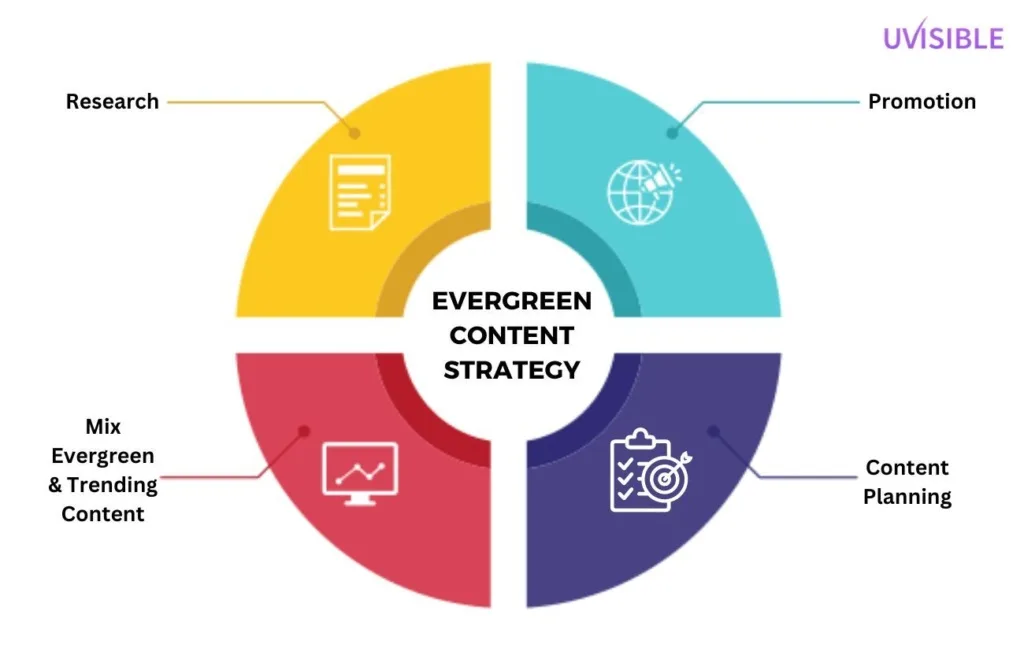
Not everything you publish needs to last forever. A healthy content strategy usually mixes all three types, and knowing the difference helps you plan.
Trending posts ride a wave. They’re timely, fast to produce, and often spike hard before fading. Seasonal posts recur on a schedule — tax season, back to school, the holidays. Evergreen content just sits there, quietly earning.
The mistake is treating them as competitors. Structuring your evergreen content around proven patterns ensures impact. They’re not. They serve different jobs, and the smartest teams run all three at once.
When to Use Each Type of Post
| Content Type | Best For | Lifespan | Maintenance |
|---|---|---|---|
| Evergreen | Long-term traffic, authority, lead gen | Years | Light, occasional refresh |
| Trending | Relevance, social buzz, quick spikes | Days to weeks | None after peak |
| Seasonal | Predictable annual traffic | Recurs yearly | Update before each season |
| News | Timely announcements, PR | Hours to days | None |
Use trending posts to stay visible and relevant. Use seasonal posts to capture predictable demand. Use evergreen content to build the foundation that everything else rests on.
How to Balance Your Content Calendar
A practical split for most teams lands somewhere around 60% evergreen, 25% seasonal, and 15% trending. That ratio keeps the long-term engine running while leaving room to react.
If you’re just starting, flip it. Spend the first few months building evergreen content almost exclusively. You’ll have a base of traffic-generating assets before you start chasing anything timely.
The best time to publish evergreen content was five years ago. The second-best time is now, because every month you wait is a month of compounding you’ll never get back.
How to Write Evergreen Content That Holds Up
Writing something that lasts takes a different mindset than writing something that trends. You’re not optimizing for this week’s news cycle. You’re optimizing for the next five years of searchers.
That changes almost everything — the topic you pick, the way you structure the piece, the language you use, and the sources you cite.
Below is a practical, field-tested approach. It’s not glamorous, but it works.
Choose Topics With Built-In Longevity
Start by asking a simple question: will someone still search for this in three years? If the answer is uncertain, pick something else.
Look for topics tied to universal human needs — learning, solving problems, making decisions, saving time or money. Those needs don’t go away.
Avoid anything tied to a specific product version, a specific platform feature, or a specific news event. Applying these principles to your evergreen content yields measurable results. Those are trend posts in disguise.
Structure for Scannability and Depth
People skim before they read. A well-structured page makes it easy to find the answer fast, then rewards the reader who stays.
Use clear H2s and H3s that describe what’s below them. Break long sections into short paragraphs. Use lists and tables where they genuinely help.
Depth matters too. A shallow 500-word post on a big topic won’t rank, and it won’t satisfy anyone who lands on it. Aim for the most complete answer on the internet for that specific question.
Write for Humans First, Search Engines Second
This isn’t a slogan. It’s the whole strategy. Search engines are getting better at detecting whether real people find a page useful, and the trend only goes one direction.
Write like you’re explaining something to a friend who’s smart but new to the topic. Use plain language. Cut the jargon. Be specific.
If you wouldn’t say it out loud to a real person, don’t put it on the page. Proper attention to your evergreen content sets a strong baseline. That single rule eliminates most bad writing.
Use Durable Language and Avoid Time Anchors
This is the most overlooked rule of evergreen content: don’t date your own work.

Avoid phrases like “this year,” “recently,” “last month,” or “in the current market.” The moment you use them, you’ve started a countdown.
Instead, use language that works whenever someone reads it. Maintaining clarity across your evergreen content remains essential. “Right now” becomes “typically.” “This year” becomes “in a typical year.” “Recently” becomes “in recent years” — or better, just delete it.
You’ll also want to avoid citing specific prices, since those change constantly. Say “competitive direct manufacturer pricing” instead of naming a number that will be wrong in six months.
Cite Sources That Won’t Disappear
Links to a blog post that gets deleted next year will rot. Links to Wikipedia, government sites, and established institutions tend to stick around.

When you do link out, prefer stable, authoritative sources. For deeper context on what makes material stand the test of time, the Wikipedia entry on evergreen content is a solid starting reference.
Broken links hurt trust and rankings. Auditing them once or twice a year is a small task with a real payoff.
Refresh, Don’t Rewrite
Even the best evergreen content needs occasional care. Statistics go stale, screenshots get outdated, and new best practices emerge.
But you don’t need to rewrite from scratch. Developing your evergreen content with precision highlights key strengths. Update the specific facts, swap outdated examples, and add anything new that’s genuinely useful. Keep the URL the same so you don’t lose accumulated authority.
Small, regular updates are far better than a full rewrite every two years. The page stays fresh without losing its history.
Evergreen Content Examples Worth Studying
Some of the most-visited pages on the internet are evergreen content. They’ve been ranking for years, and they keep getting better with age.
Take Wikipedia. Nearly every article on the site is evergreen by design — it’s a reference work that’s constantly updated but never expires. Or look at Investopedia, which has built an empire on “what is X” finance explainers that haven’t changed in a decade.
Even recipe sites follow the pattern. A well-written recipe for chocolate chip cookies will get traffic forever, because people will always want to make cookies.
What High-Performing Pages Have in Common
They answer a specific question completely. They’re easy to scan. They don’t waste words. And they don’t date themselves.
Most of them also rank for dozens of related keywords, not just the one they were written for. That’s the compounding effect in action.
And they get updated. Clear alignment with your evergreen content builds confidence from the start. Not rewritten — updated. The bones stay the same; the details get refreshed.
Lessons You Can Apply Today
Pick one topic you know deeply and write the most complete answer you can. A thoughtful approach to evergreen content reinforces your qualifications. Don’t worry about trends. Don’t worry about going viral. Just make it genuinely useful.
Then do it again next week. And the week after. The compounding is slow at first, then it isn’t.
That’s the whole playbook. There’s no secret beyond consistency and quality.
Common Mistakes That Kill Evergreen Potential
Even good writers sabotage their own evergreen content. These are the mistakes that show up again and again.
Dating Your Own Work
Mentioning a specific year in the title or body is the fastest way to make a piece feel old. Six months later it looks stale, even if nothing else has changed.
Strip out years, “this month,” and “currently.” Your future self will thank you.
Chasing Keywords Instead of Answering Questions
Keyword-stuffed pages read like they were written by a robot, and they perform like it too. Search engines have gotten very good at spotting content that exists only to rank.
Write the answer first. Work the keyword in naturally where it fits. If you can’t say it out loud without cringing, rewrite it.
Ignoring Search Intent
If someone searches “how to lose weight,” they want a plan, not a history of dieting. Integrating evergreen content into your workflow produces consistent quality. If they search “best running shoes,” they want recommendations, not a lecture on biomechanics.
Match the format to the intent. Getting this wrong is the single most common reason a well-written page fails to rank.
Letting Pages Rot
A page that hasn’t been touched in five years may have outdated facts, dead links, and screenshots of a product that no longer exists. That’s not evergreen — that’s abandoned.
Set a reminder to audit your top pages once or twice a year. Fix what’s broken. Update what’s changed. Leave the rest alone.
How to Measure Whether Your Evergreen Content is Working
You can’t improve what you don’t measure. But evergreen content needs different metrics than a trend post.
Forget the first-week spike. What matters is month-over-month growth, average position in search, and how much traffic each page earns over a full year.
The Metrics That Actually Matter
Track organic sessions per page over time. Structuring your evergreen content around proven patterns ensures impact. Track the number of keywords each page ranks for. Track conversions — how many people take the next step after reading.
Also watch your “content decay” rate. If a page’s traffic is declining steadily, it needs attention. If it’s flat or growing, leave it alone.
Building a Simple Reporting Rhythm
Once a quarter is usually enough. Pull your top 20 evergreen pages, compare this quarter to last, and flag anything that’s slipping.
Spend an hour on the flagged pages. Update the facts, fix the links, add anything new. Then move on.
That’s the entire maintenance routine. It takes a few hours a year and protects years of accumulated value.
Frequently Asked Questions About Evergreen Content
Here is an in-depth breakdown of key considerations regarding this section:
What Exactly Counts as Evergreen Content?
Any piece of material that stays relevant and useful long after it’s published. How-to guides, definitions, tutorials, and reference pages are classic examples. The test is simple: if it still makes sense to a reader three years from now, it’s evergreen.
How Long Does Evergreen Content Actually Stay Relevant?
Truly evergreen pieces can stay useful for a decade or more. Most need a light refresh every year or two to keep facts current, but the core topic and structure usually hold up for many years.
Can I Write Evergreen Content About a Fast-changing Industry?
Yes, and it’s often the smartest move. Focus on the fundamentals — the concepts, the frameworks, the decision-making logic. Those outlast any specific tool or trend. Just avoid tying the piece to a particular product version or platform feature.
How Often Should I Update an Evergreen Piece?
A light audit once or twice a year is plenty for most pages. Update statistics, fix broken links, and add anything genuinely new. Rewrite only when the topic itself has fundamentally changed.
Is Evergreen Content Good for SEO?
It’s arguably the best long-term SEO investment you can make. These pages accumulate links, authority, and rankings over time, and they keep generating traffic without ongoing promotion. A well-built library of evergreen content can carry a site for years.
What’s the Difference Between Evergreen and Pillar Content?
They overlap but aren’t the same. Pillar content is a broad, comprehensive page on a major topic. Evergreen content is any piece designed to last. A pillar page is usually evergreen, but plenty of evergreen pieces are narrow, focused articles rather than broad pillars.
How Do I Know if a Topic is Evergreen Before I Write It?
Ask whether people will still search for it in three years. If the answer is yes, it’s evergreen. If the topic depends on a specific event, product, or trend, it’s not.
Can I Repurpose Evergreen Content Into Other Formats?
Absolutely, and you should. A strong evergreen article can become a video, a podcast episode, an infographic, or a slide deck. The core message stays the same; only the format changes. This multiplies the return on a single piece of work.
Building a Content Library That Lasts
The smartest content strategy isn’t about chasing the next viral moment. It’s about building a library of material that keeps working while you move on to the next thing.
That’s what evergreen content gives you: assets that compound, that earn links while you sleep, and that keep bringing in readers long after the initial publish date.
Start small. Write one deep, useful piece this week. Then another next week. In a year, you’ll have fifty-two assets working for you. In three years, you’ll have a library that most competitors can’t touch.
The work is unglamorous. The results are not. And the best part? You don’t need anyone’s permission to start.