Digital PR Link Building: Why Earned Coverage Still Beats Paid Placements
Digital PR link building is the practice of earning editorial backlinks by giving journalists, editors, and content curators something genuinely worth covering. Instead of buying placements or spraying cold outreach at strangers, you build newsworthy assets and pitch them to people who already publish on your topic. That single shift in mindset changes everything about how your link profile grows.
Here’s the uncomfortable truth most agencies won’t say out loud: a paid link is a rental, and an earned link is an asset.
Google’s spam policies have gotten sharper about paid link schemes, and the sites that keep winning are the ones with links that arrived because a real human decided the story deserved a mention.
So this article walks through seven concrete, repeatable ways to earn those links. Each one is something you can start on this week, not a vague strategy you nod along to. Think of it as a working manual rather than a lecture.
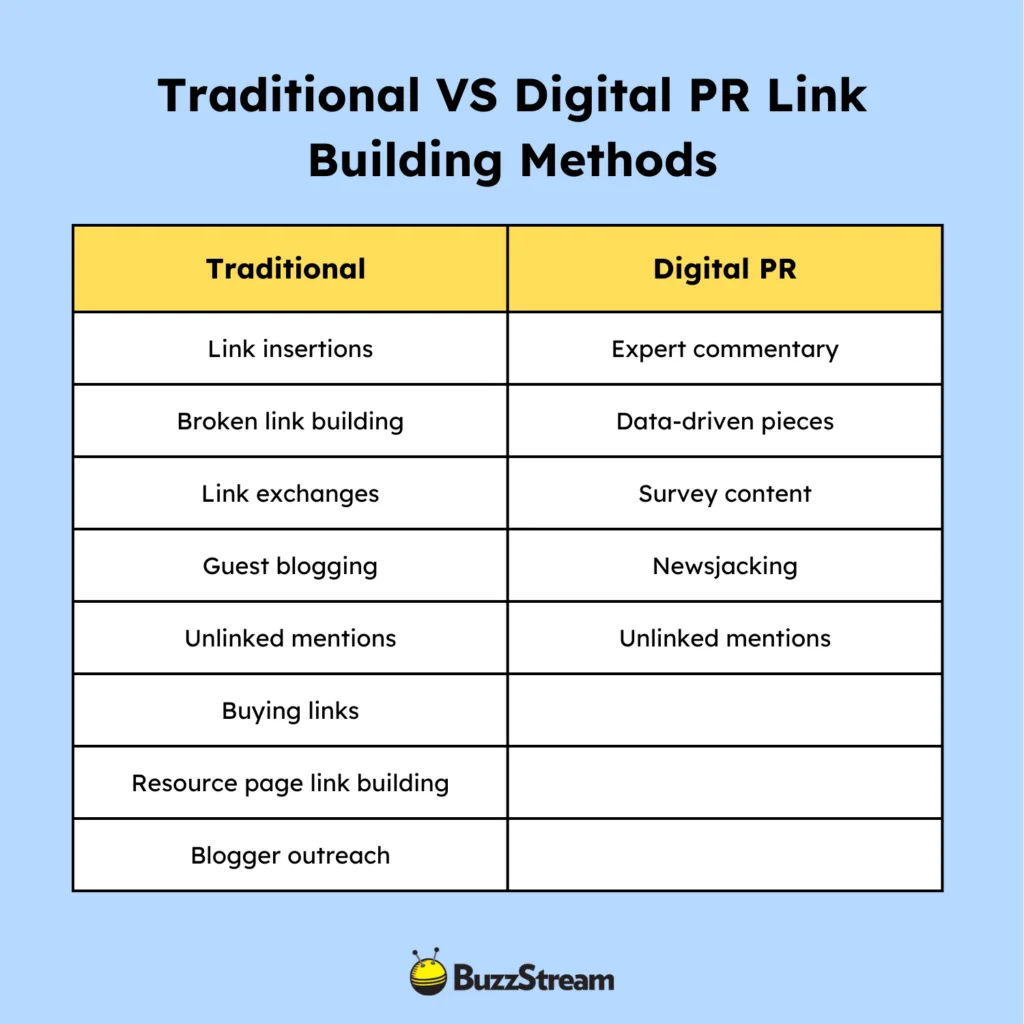
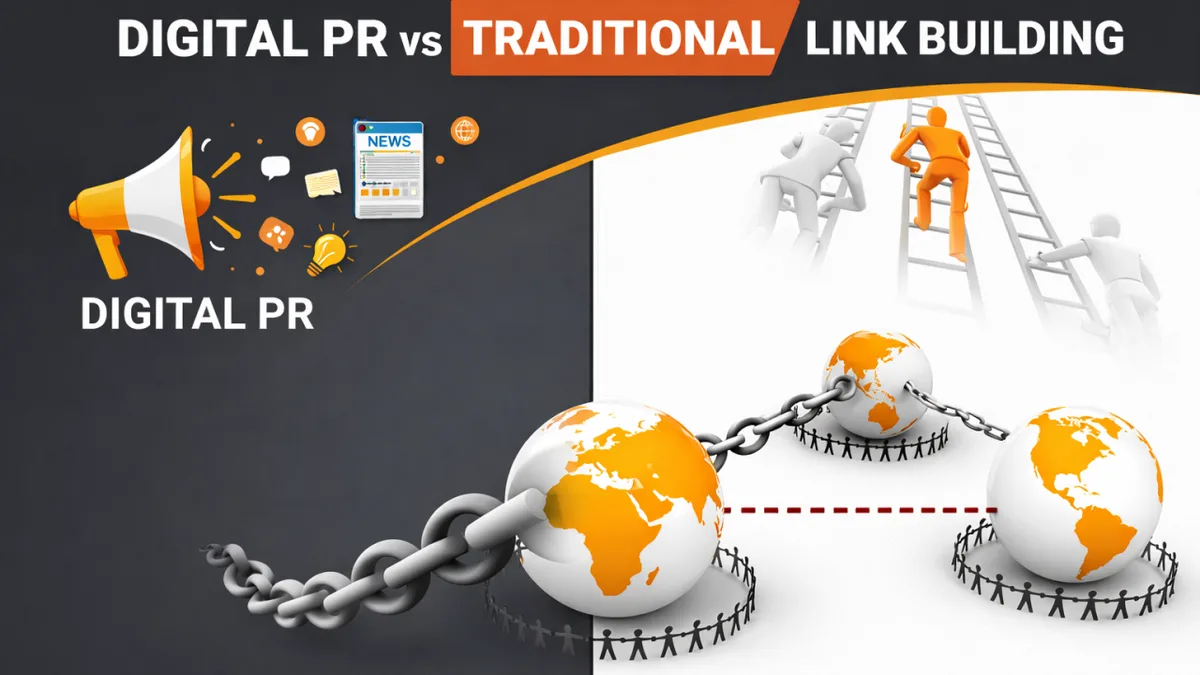
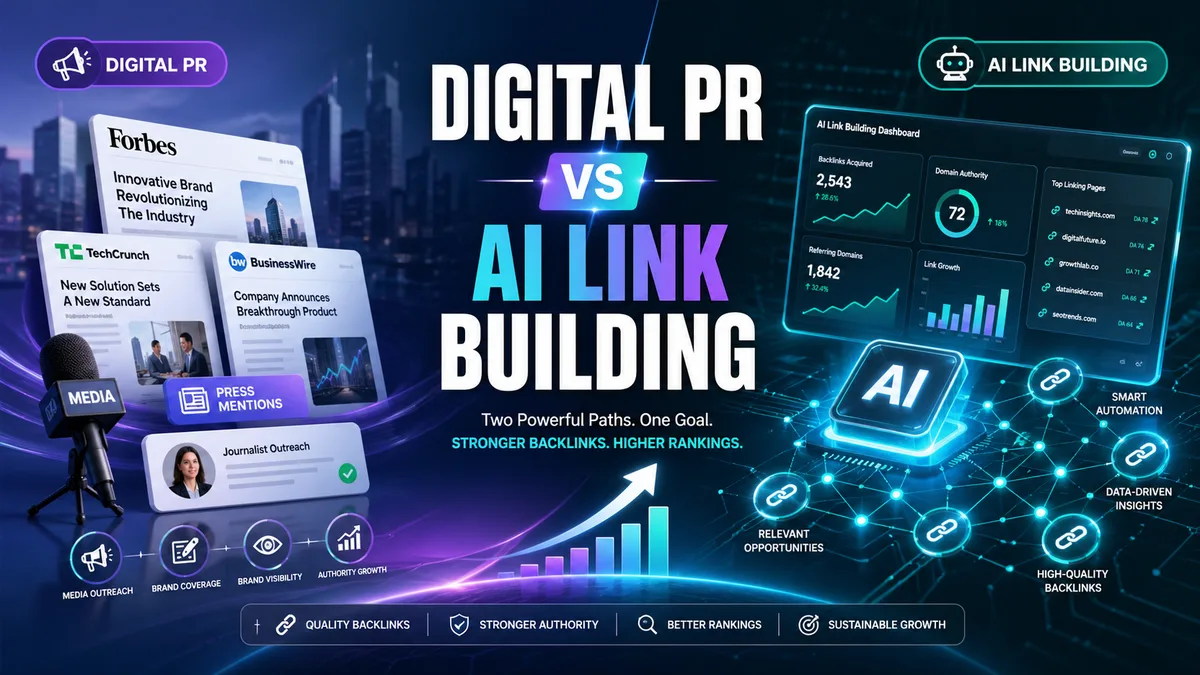
What Makes Digital PR Link Building Different from Traditional Link Building
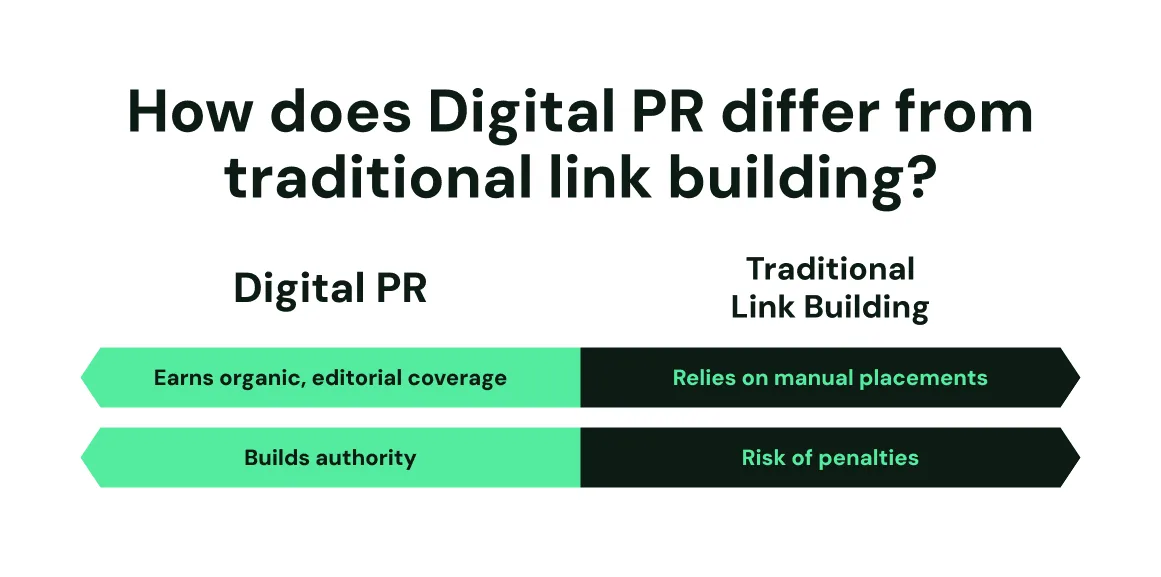
Traditional link building often starts with a target URL and works backward: find sites, find email addresses, send templates. Digital PR link building starts with a story and works forward. You ask what the publication’s audience would actually care about, then build the story around that answer.
The practical difference shows up in response rates. A generic “we published a blog post, please link to it” pitch lands in the trash. A pitch that leads with a startling data point, a named expert, or a visual journalists can reuse gets replies. Editors are drowning in email; the only thing that cuts through is relevance.
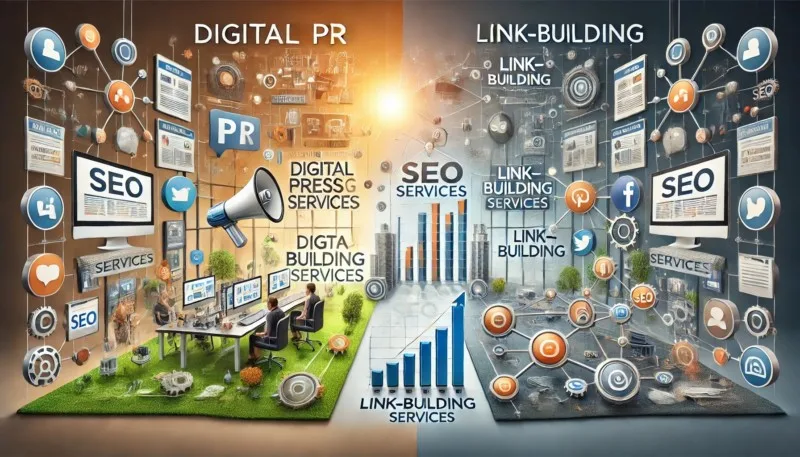
There’s also a compounding effect worth understanding. Earned coverage tends to attract more coverage. When a regional outlet picks up your study, a trade publication notices, and then a national outlet sees both.
That chain reaction is the real prize, and it’s why a digital PR link building guide should always emphasize momentum over one-off wins.
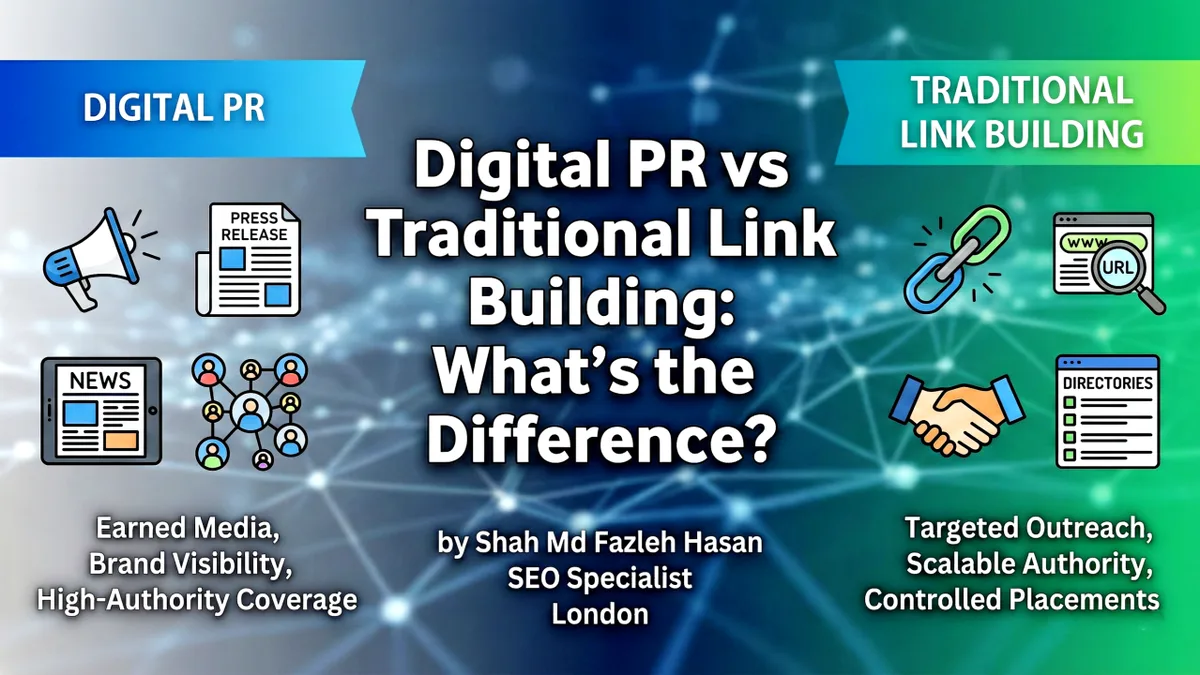
How Earned Coverage Differs from Paid Placements
Paid placements buy the digital pr link building a URL. Earned coverage buys you a URL plus the editorial context around it, plus the social shares, plus the chance that a second journalist cites the same source. The link equity is similar on paper, but the surrounding signals are not.
Then there’s durability. Sponsored posts sometimes get quietly de-indexed or moved to nofollow when a site tightens its policies. Editorial mentions rarely get stripped, because removing them would mean rewriting published journalism. That stability matters when you’re planning link velocity across a full year.
Build Your Digital PR Link Building Foundation Before You Pitch
Half of all failed outreach campaigns fail before the first email is sent. The pitch was fine; the foundation wasn’t. Before you chase a single link, get these fundamentals in order so your outreach doesn’t collapse under scrutiny.
Journalists check who’s pitching them. If your site looks thin, your about page is a placeholder, and your author bios are fictional, the pitch dies on arrival. Credibility is the currency here, and it’s built long before you hit send.
Define Your Linkable Assets and Topic Territory
A linkable asset is any resource a writer would cite without being asked: original research, a proprietary dataset, a calculator, a definitive glossary, a visual explainer. Refining each detail of your digital pr link building strengthens this section. Vague blog posts don’t qualify. Neither do product pages dressed up as articles.
Pick a territory the digital pr link building can own. If you sell project management software, your territory might be remote team productivity data. If you run a nutrition brand, it might be grocery cost comparisons by region.
The narrower the territory, the easier it is to become the obvious source when a journalist needs a quote or a statistic.
A solid digital pr link building checklist starts with three questions. Can we produce something original here? Would a journalist covering this beat care? Can we defend the methodology if challenged? If any answer is no, pick a different territory.
Audit Your Existing Link Profile First
Before adding links, understand what you already have. Export your backlinks, tag them by type (editorial, directory, sponsored, forum), and flag anything that looks risky. Toxic link cleanup isn’t glamorous, but it protects the value of everything you earn later.
Look for patterns too. Effective execution in your digital pr link building makes a tangible difference. Which pages already attract organic links without outreach? Those pages tell you what your audience and the press already find interesting. Double down there instead of starting from zero.
7 Easy Ways to Earn Links Through Digital PR
These seven approaches cover the full spectrum: fast wins you can execute in a week, medium-term plays that build over a quarter, and compounding assets that pay off for years. You don’t need all seven running simultaneously. Pick two or three that fit your resources, run them properly, then expand.
Each method below includes what it is, why it works, and a concrete example of how to execute it. Treat them as a menu, not a mandate.
1. Turn Original Data Into a Story Journalists Can’t Ignore
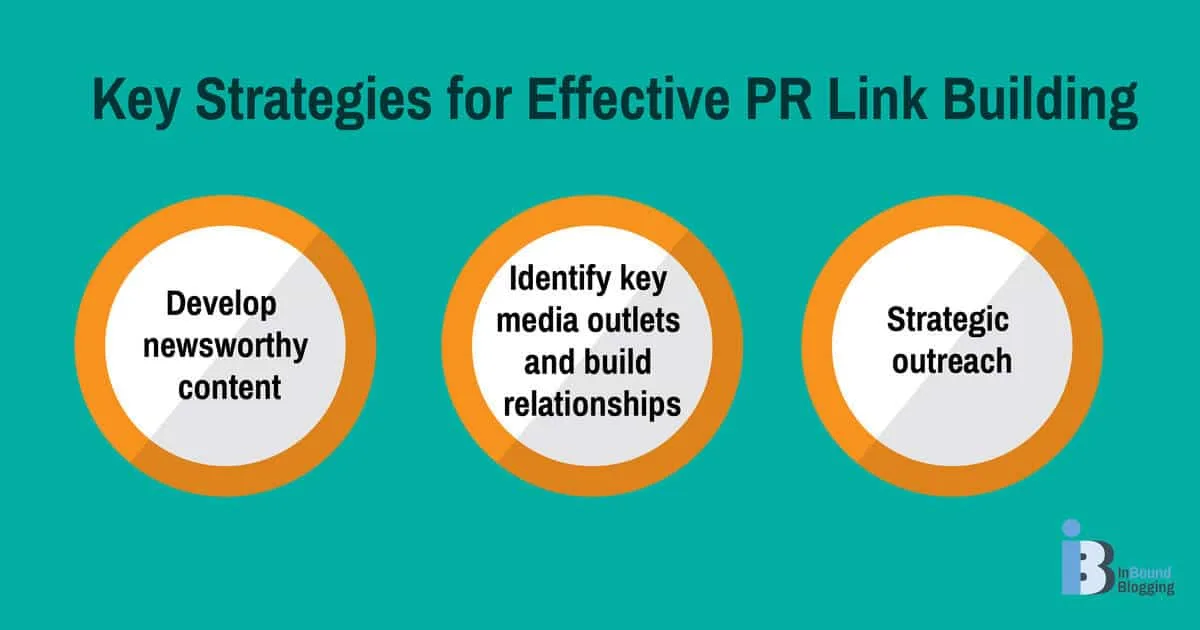
Original data is the single highest-leverage asset in digital PR link building. Journalists need statistics constantly, and most of them are stuck citing the same handful of sources because that’s all that exists. Become a new source and you become the citation.
The data doesn’t need to be enormous. A survey of 400 people in a specific niche, a scrape of public records, or an analysis of your own anonymized customer behavior can all work. What matters is that the numbers are new, defensible, and framed around a question people are already asking.
Consider a real pattern: a regional moving company analyzed relocation data across zip codes and published a “where people are leaving from and moving to” report. Maintaining clarity across your digital pr link building remains essential.
Local news picked it up in six markets within a month. The company didn’t pitch a product; it pitched a finding. That’s the play.
Execution tip: build the report as a standalone page with clean charts, a downloadable methodology section, and a short summary at the top for journalists in a hurry. If your data page requires a form fill to access, you’ve killed the pitch before it started.
2. Run a Survey and Publish the Findings as a Citable Report
Surveys are the most accessible form of original research, and they’re severely underused by small and mid-sized brands. You don’t need a research firm. You need a focused question, a reasonable sample, and honest reporting of the results.
The trick is choosing a question with a surprising answer. “How do people feel about remote work?” is dead on arrival. “What percentage of remote workers have never met their manager in person?” has a hook. The more specific and counterintuitive the finding, the more likely it gets picked up.
Sample size matters less than relevance. A thoughtful approach to digital pr link building reinforces your qualifications. A survey of 300 people in a narrow professional niche often outperforms a survey of 3,000 people on a generic topic, because the narrow one gives a trade publication something they can’t get anywhere else.
Publish the full methodology alongside the results. Journalists who trust your numbers will cite you repeatedly, and repeat citations are how a digital pr link building best practices playbook turns into a durable pipeline.
3. Create Free Tools and Calculators That Solve a Real Problem
Tools earn links because they’re useful, not because they’re promotional. A well-built calculator becomes a permanent reference point that bloggers, teachers, and forum moderators link to without being asked.
The best candidates are tools the digital pr link building remove a small but annoying friction. A shipping cost estimator, a salary comparison calculator, a readability checker, a template generator. Each one answers a question people search for constantly and can’t easily answer themselves.
Invest in making the tool genuinely good. A clunky calculator that requires signup gets ignored. A clean one that loads fast and gives an instant answer gets bookmarked, shared, and cited. The link follows the utility, not the other way around.
One caveat worth flagging: tools attract links slowly at first, then all at once when a single influential site picks them up. Structuring your digital pr link building around proven patterns ensures impact. Budget for a slow ramp and don’t abandon the asset after three months of quiet.
4. Pitch Expert Commentary to Journalists on Deadline
Journalists are perpetually on deadline and perpetually short on quotable experts. If you can be the person who responds within an hour with a sharp, usable quote, you become a recurring source. That recurring relationship is worth more than any single link.
Set up alerts for relevant queries, respond fast, and write like a human being with an opinion. A three-sentence response that takes a clear position beats a five-paragraph response that hedges everything. Editors want clarity they can drop into a story.
Keep a running document of your best quotes, credentials, and headshot ready to paste. The faster you can assemble a response, the more likely you are to be quoted. Speed is a competitive advantage here, and it’s free.
Over time, this becomes the easiest form of digital pr link building to sustain, because the relationships compound. A reporter who quoted you once will come back, and they’ll bring colleagues.
5. Build Seasonal and Trend-Driven Campaigns Around Predictable Moments
Every industry has calendar moments: tax season, back-to-school, holiday shopping, end-of-year planning, planting season, flu season. Applying these principles to your digital pr link building yields measurable results. These moments are predictable, which means you can prepare assets months in advance and pitch them when demand spikes.
The advantage of seasonal timing is that journalists are actively hunting for content on those topics. You’re not creating demand; you’re meeting it. A well-timed asset can earn a dozen links in a week that a generic evergreen piece would take a year to accumulate.
Trend-driven campaigns work the same way but require faster turnaround. When a topic suddenly spikes, the first credible source to publish useful data or commentary captures the coverage. Set up monitoring so you’re not the last to know.
Execution tip: build a calendar of your industry’s predictable moments and map one asset to each. Even two well-executed seasonal campaigns per year can anchor an entire digital pr link building tips strategy for a small team.
6. Use Local and Regional Angles to Win Hyper-Targeted Coverage
National coverage is glamorous, but regional coverage converts better and is dramatically easier to earn. Local journalists need local stories, and there’s far less competition for those slots than for national features.
Find the local angle in your data. Proper attention to your digital pr link building sets a strong baseline. If you have customer data, break it down by city or state. If you have a survey, look for regional differences. A national finding becomes a dozen local stories when you slice it by geography.
This approach also builds relationships with regional outlets that will cover you again. A single strong local story often leads to follow-up coverage, and those outlets become reliable partners over time.
For brands with physical locations, this is the highest-ROI play available. For online-only brands, it still works if you have any geographic data to work with, including customer distribution or search trends by region.
7. Turn Customer Stories and Case Studies Into Press-Ready Narratives
Real customer stories are underused gold. A customer who solved a specific problem with your product is a story, not a testimonial. Frame it as a narrative with a beginning, a turning point, and a measurable outcome, and you have something a journalist can work with.
The key is specificity. Developing your digital pr link building with precision highlights key strengths. “Customer increased revenue” is not a story. “A bakery in Portland cut waste by 34% after changing its ordering process” is a story. Numbers, names, and concrete details make the difference between a pitch that gets ignored and one that gets published.
Get permission early and get the digital pr link building in writing. Journalists need to know they can contact the customer directly, and the customer needs to know what they’re agreeing to. Handle this step carefully and the rest of the pitch becomes easy.
Case studies also feed your other channels. The same narrative works as a blog post, a sales asset, and a pitch. That reuse is what makes this method so efficient for teams running a lean digital pr link building program.
Digital PR Link Building Best Practices for Outreach That Gets Replies
Great assets fail with bad outreach. The pitch is where most campaigns die, and it’s where the difference between a good digital pr link building guide and a useless one shows up. Here’s what actually works when you’re in the inbox.
First, personalize the opening line. Not with a compliment about their recent article, but with a specific reason this story fits their beat. Journalists can spot a template in two seconds, and a template gets deleted in three.
Second, lead with the finding, not the ask. The first sentence should deliver the value; the request comes at the end, if at all. If the story is good enough, the link is implied.
Third, make the digital pr link building easy to say yes. Attach the data, link to the asset, offer an exclusive angle, and give them a clear next step. Every additional step you require reduces your response rate.
Build a Media List You’ll Actually Use
A media list isn’t a spreadsheet of every journalist who’s ever covered your industry. It’s a short, curated list of people who cover the specific topics you can speak to, with notes on what they’ve written and what angle they tend to favor.
Quality beats quantity by a wide margin. Twenty well-researched contacts will outperform two thousand scraped emails every time. The list should be a living document, updated after every pitch with notes on who replied, who passed, and who asked for something different.
Track the outcomes too. Which angles got responses? Which subject lines got opened? Over a few months, patterns emerge that sharpen your next campaign considerably.
Your Digital PR Link Building Checklist Before Every Campaign
Run the digital pr link building checklist before launch, not after. Catching problems here saves weeks of wasted outreach and protects your sender reputation.
| Checkpoint | What “Done” Looks Like |
|---|---|
| Asset quality | Original data or genuinely useful tool, with methodology published |
| Landing page | Fast, mobile-friendly, no form gate, clear headline and summary |
| Media list | 20-50 curated contacts with notes on beat and past coverage |
| Pitch draft | Finding-first structure, personalized opener, one clear ask |
| Follow-up plan | One follow-up after 4-5 days, then stop |
| Tracking | Spreadsheet or CRM logging opens, replies, and placements |
| Link monitoring | Alerts set for brand mentions so unlinked citations get converted |
The last row is the one most people skip. When a journalist mentions your brand without linking, a polite, brief email asking for a link often works. That single habit can add a meaningful number of links to every campaign without any additional outreach effort.
Common Digital PR Link Building Mistakes That Kill Campaigns
The most common mistake is pitching a product instead of a story. Journalists don’t cover products unless the product itself is the story. They cover findings, trends, and people. Lead with those.
The second mistake is treating outreach as a numbers game. Volume without relevance produces spam complaints and burned relationships. A smaller, sharper campaign almost always outperforms a large, sloppy one.
The third mistake is abandoning assets too early. A data report or tool often takes months to gain traction. Teams that quit after six weeks never see the compounding returns that make this digital pr link building strategy worth doing in the first place.
There’s also a subtler error: chasing links from sites that don’t matter. A link from a highly relevant niche publication is worth more than ten links from generic directories. Relevance, editorial context, and traffic quality all matter more than raw domain authority.
Frequently Asked Questions About Digital PR Link Building
Here is an in-depth breakdown of key considerations regarding this section:
How Long Does It Take to See Results from Digital PR Link Building?
First links typically arrive within two to six weeks of a well-executed campaign. Compounding results, where coverage starts attracting more coverage, usually take three to six months. Plan for a slow start and budget accordingly.
Do I Need a Big Budget to Do Digital PR Link Building?
No. Surveys, expert commentary pitches, and customer stories can all be executed with minimal spend. The main investment is time and consistency, not money. Competitive direct manufacturer pricing on data tools has made research more accessible than ever.
Is Digital PR Link Building Still Effective?
Yes, and arguably more so now. Focusing on digital pr link building provides clear direction here. As paid link schemes get penalized and AI-generated content floods the web, editorial mentions from credible publications carry more weight than ever. Earned coverage is one of the few link sources that’s both durable and defensible.
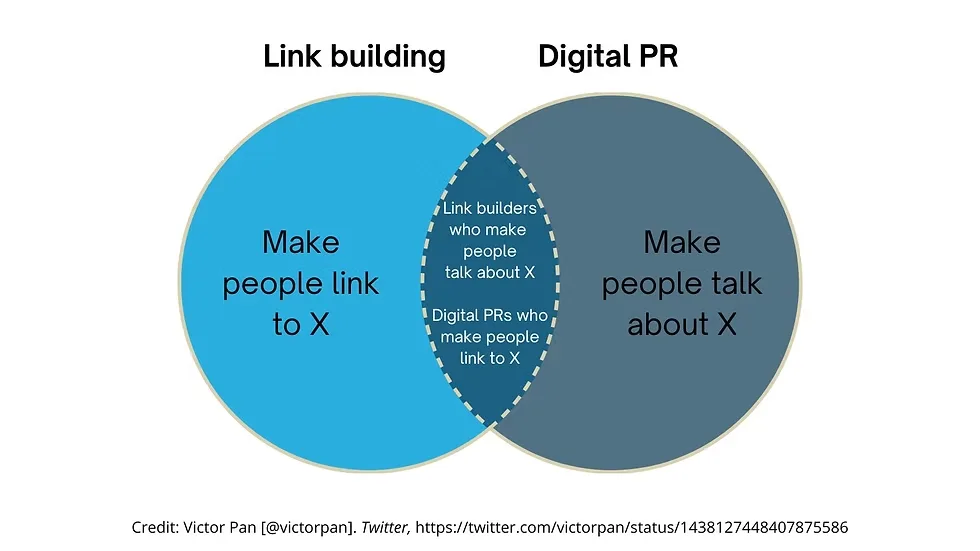
What’s the Difference Between Digital PR and Traditional Link Building?
Traditional link building often starts with a target site and works backward to find an angle. Digital PR link building starts with a story and works forward to find the sites that would cover it. The output looks similar, but the process and the durability of the results differ significantly.
How Do I Measure the Success of a Digital PR Campaign?
Track more than link count. Measure referring domain quality, traffic from earned coverage, branded search lift, and the number of repeat citations from the same publications. A campaign that earns five high-relevance links and three lasting relationships often outperforms one that earns fifty low-quality mentions.
Can I Do Digital PR Link Building Without a PR Agency?
Absolutely. Small teams run successful campaigns every day using surveys, expert commentary, and customer stories. The main requirements are a genuine asset, a curated media list, and the discipline to follow through on outreach.
Where to Take Your Digital PR Link Building Next
Start with one method from the digital pr link building list. The one that fits your resources and your industry best. Run it properly for a full quarter before adding another. Most teams fail because they try all seven at once and execute none of them well.
The broader discipline this sits inside is topical authority: the sense that your site is the obvious place to learn about a subject. Digital PR link building feeds that directly, because every earned mention reinforces the association between your brand and your territory.
If you want to go deeper after this, explore adjacent areas like brand mention monitoring, unlinked citation reclamation, and journalist relationship management. Each one compounds on top of the foundation you build here. The links will follow the substance, as long as you keep leading with stories worth telling.
For verified reference and background research, consult the authoritative informational resource on this topic.