A content silo structure is the single most reliable way to turn a scattered blog into a site search engines actually understand. If your posts compete with each other, your category pages go nowhere, and Google keeps picking the wrong URL to rank, the fix usually isn’t more content.
It’s architecture. This beginner’s guide walks you through the whole thing from scratch, in plain language, with real examples you can copy.
Stick around, because by the end you’ll know how to group pages into tightly themed clusters, decide which page should rank for what, and wire internal links so authority flows exactly where you want it. No jargon walls, no hand-waving. Just the practical mechanics of a content silo structure that holds up as your site grows.
What is a Content Silo Structure, Really?
Picture a library where every book sits in the correct aisle, and each aisle has a sign above the content silo structure. That’s a silo.
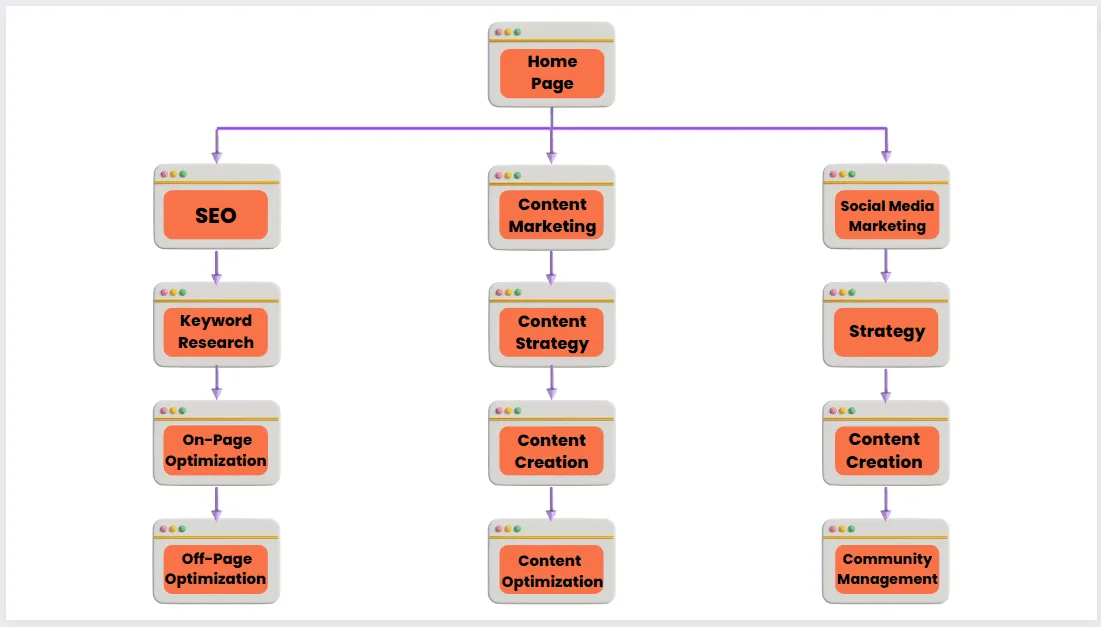
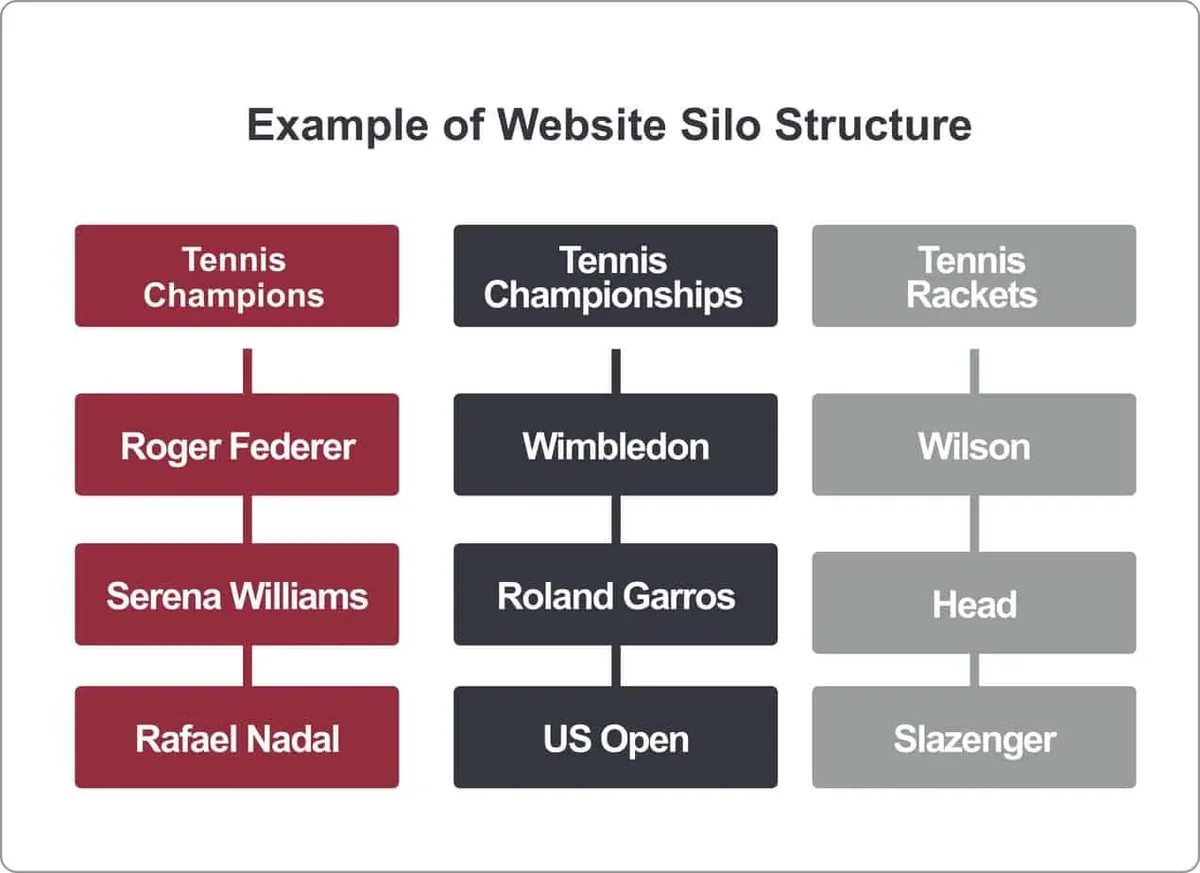
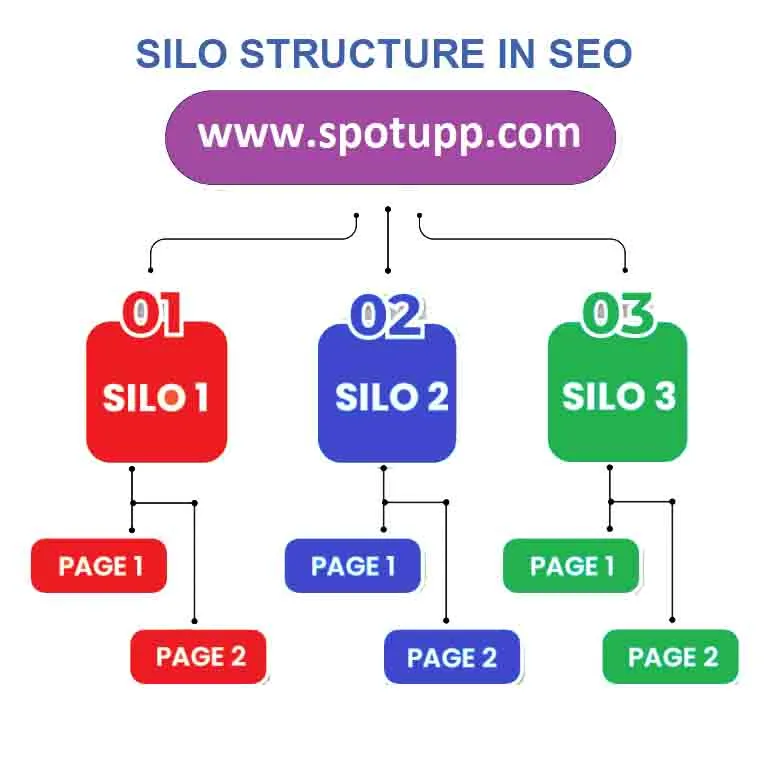
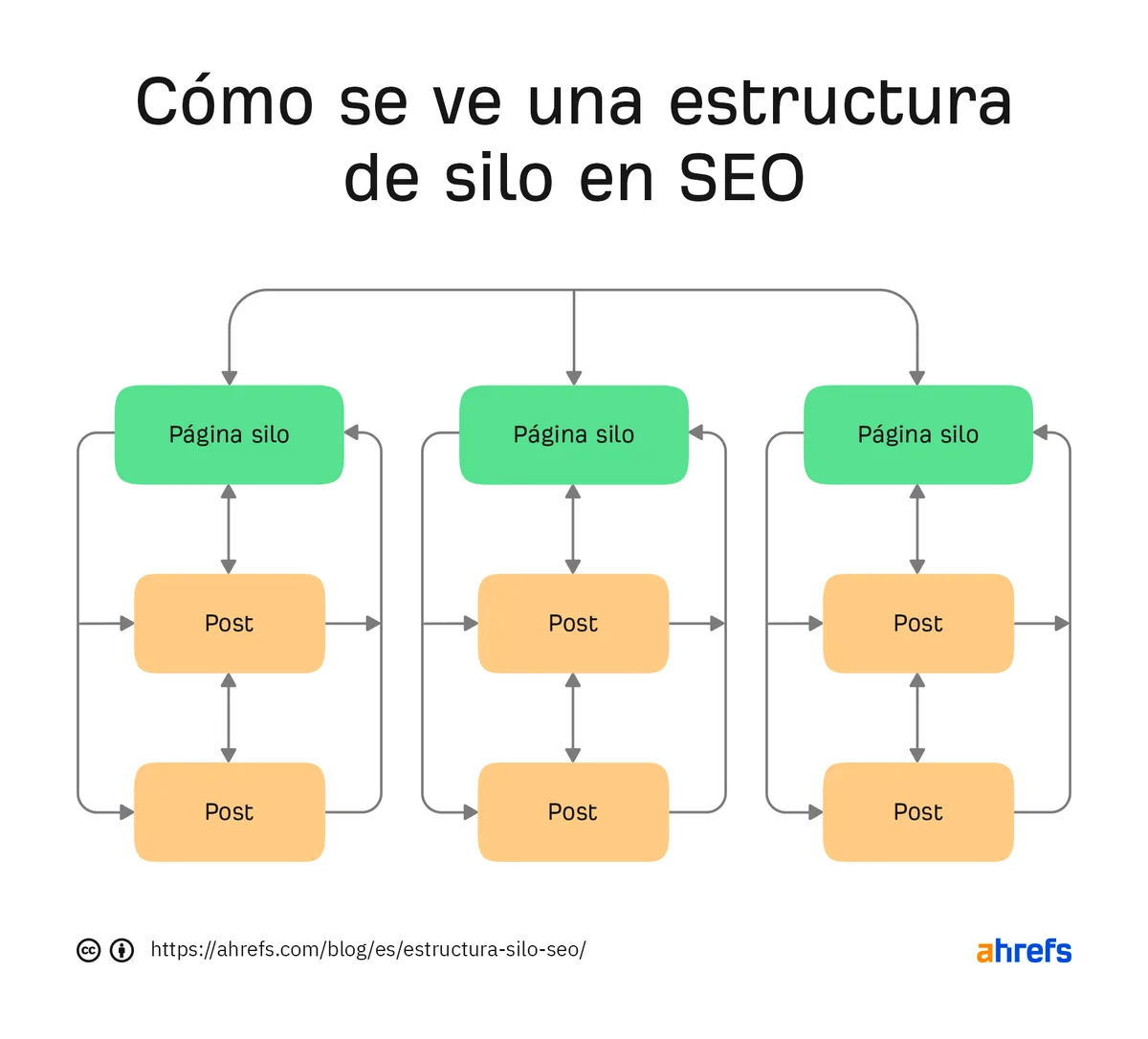
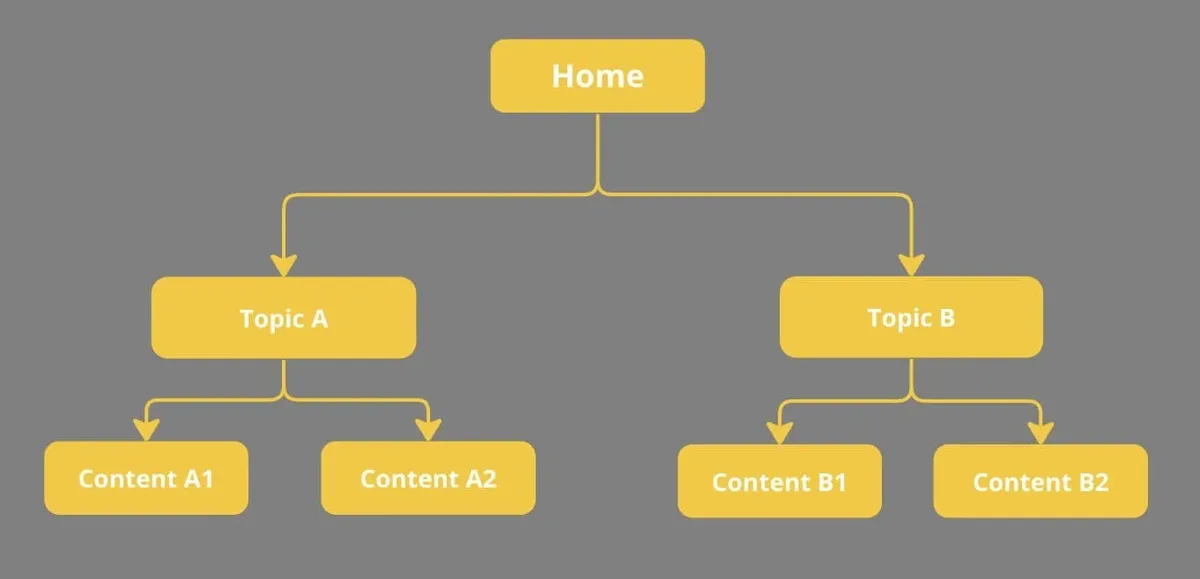
A content silo structure is a way of organizing pages so that related content groups together under a parent topic, and each group only links up to its parent and across to its siblings.
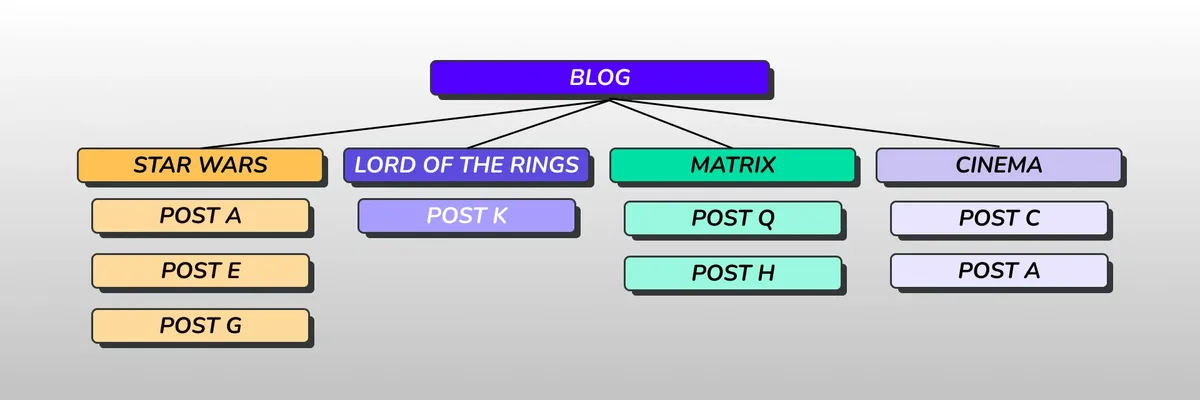
In practice, that means one pillar page owns the broad topic, and a set of supporting articles handle narrow subtopics under it. The pillar links out to each child. Each child links back to the pillar.

Children can cross-link to each other because they share the same theme. What they don’t do is link to pages in unrelated silos, because that muddies the signal.
Here’s the example I use with every client who asks about the content silo structure. Say you run a site about home coffee brewing. Your pillar is “Home Coffee Brewing Methods.” Its children are pour-over, French press, AeroPress, Moka pot, and cold brew.
Those five pages are a tight silo. Each of them links back to the pillar and to its siblings. None of them link to your article about coffee shop marketing, because that lives in a completely different silo.
The Silo Structure Defined in Plain Terms
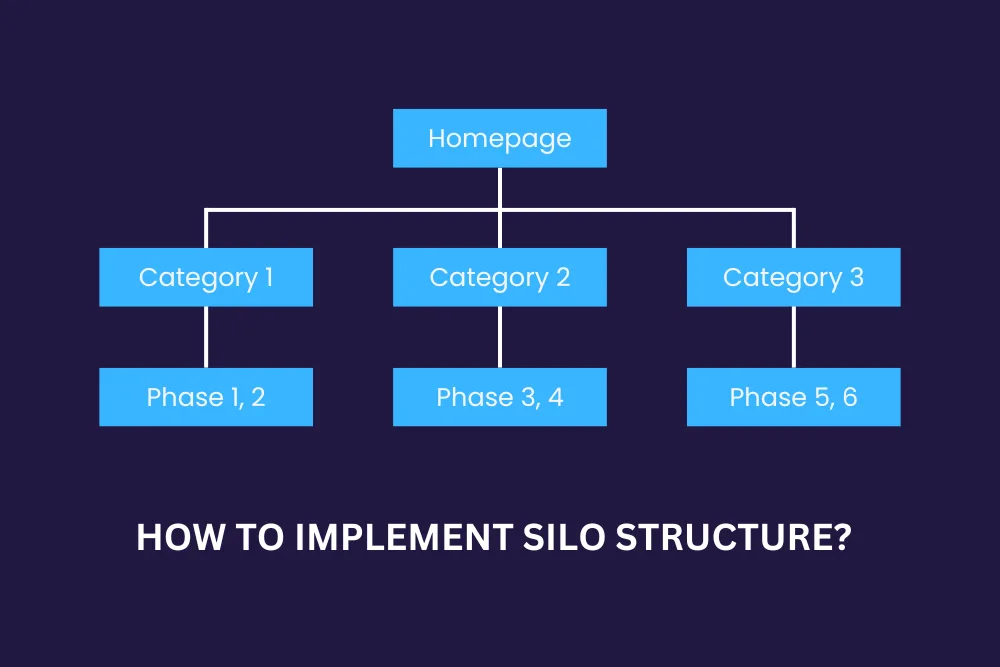
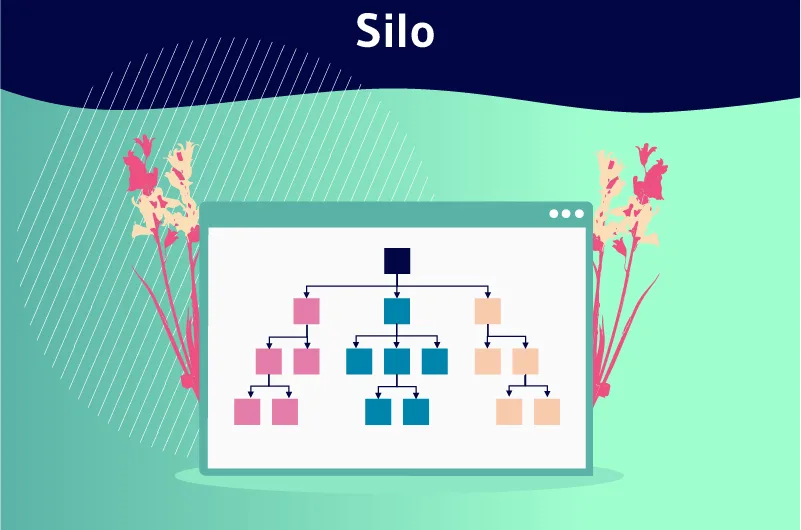
At its core, a content silo structure has three layers: the homepage, the pillar (or category hub), and the supporting pages underneath. Search engines crawl links to understand which pages matter and what they’re about. When the links stay clean and topical, the crawler builds a tidy mental map of your site.
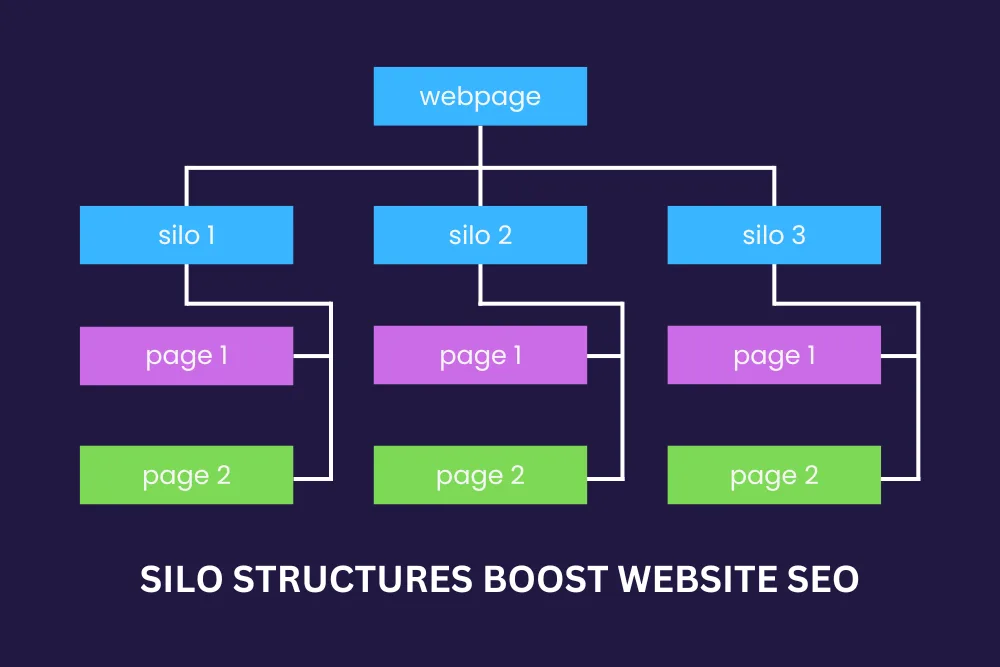
When links point everywhere at once, that map turns into spaghetti. You get orphan pages, near-duplicate articles fighting for the same query, and category pages that never accumulate authority. Sound familiar? It’s the most common diagnosis I run into on sites with 200+ posts and no plan.
So a silo isn’t just a content strategy buzzword. Effective execution in your content silo structure makes a tangible difference. It’s a structural commitment. You’re deciding, up front, which pages belong together and which don’t, then holding that line through every new post you publish.
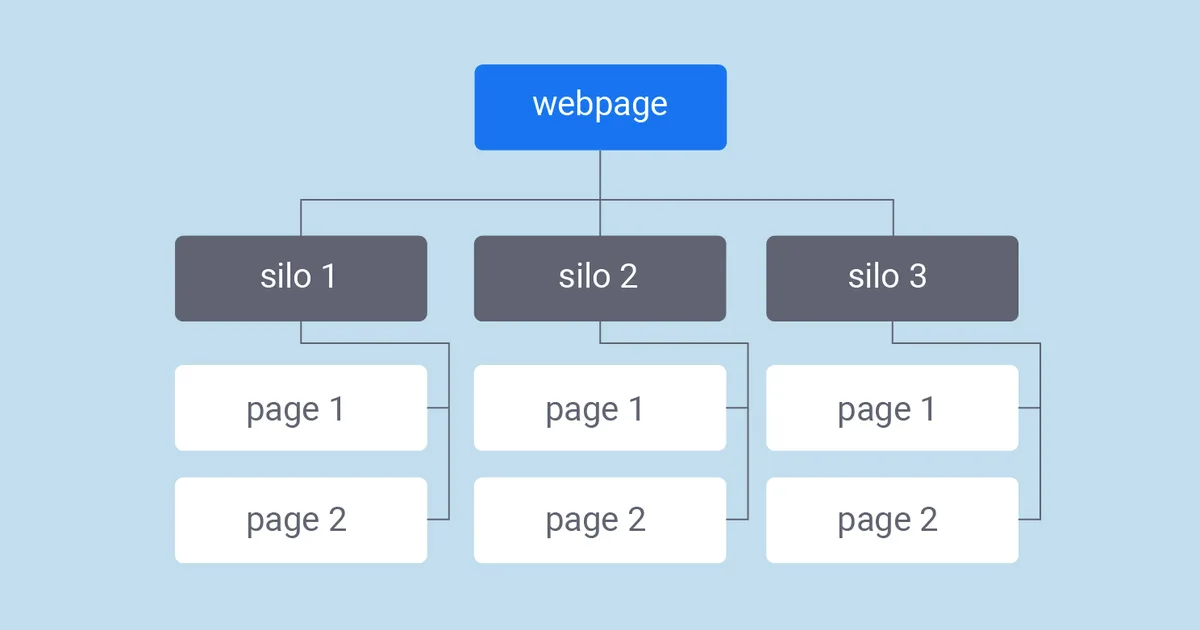
Why a Content Silo Structure Beats a Flat Blog
A flat blog is what you get when you publish chronologically with no grouping: post, post, post, all with thin category tags and a sidebar of random “recent posts.” It’s easy to set up and disastrous for topical authority. The problem shows up slowly, which is why so few beginners catch it.
Here’s the thing. Google doesn’t just evaluate single pages anymore. It evaluates whether your site as a whole demonstrates expertise on a subject.
A content silo structure is the clearest way to signal expertise, because the grouping itself tells the crawler “this site goes deep on coffee brewing,” not “this site rambles about coffee, marketing, and office chairs.”
The benefits stack up fast when you get it right:
- Topical authority signals — a tight cluster tells search engines you cover a subject comprehensively, not superficially.
- Cleaner crawl budget — fewer wasted links means the crawler reaches your important pages faster.
- Internal link equity — authority flows to the pillar and its children instead of being diluted across the whole site.
- Better UX — visitors land on a page, find the related articles that answer their next question, and stay longer.
- Fewer keyword cannibalization headaches — one page owns one query, so two URLs stop fighting for the same rank.
Content Silo Structure Best Practices That Actually Move the Needle
Not all silos are created equal. Maintaining clarity across your content silo structure remains essential. I’ve seen three-tier silos rank beautifully and I’ve seen silo diagrams that look great on a whiteboard fail in the wild. The difference is usually whether the structure matched the intent, not whether it was pretty.

Here’s my short list of content silo structure best practices. Keep the pillar page broad but useful — it should answer the headline question in one sitting. Keep children narrow enough that they don’t overlap.
Link from child to parent with descriptive anchor text, not “click here.” And above all, don’t bury the pillar three clicks from the homepage.
| Practice | Why It Matters | Quick Check |
|---|---|---|
| One pillar per theme | Prevents two pages competing for the same broad query | Does one URL own the head term? |
| Narrow child topics | Keeps each page focused, improves intent match | Could a child page become its own silo later? |
| Descriptive anchor text | Helps crawlers and humans understand the link target | Does the link text describe the destination? |
| No cross-silo linking | Keeps thematic signals clean | Are unrelated clusters kept apart? |
| Pillar linked from the homepage | Ensures the pillar gets crawled and accrues authority | Can you reach the pillar in 1-2 clicks? |
How Content Silos Differ from Categories, Tags, and Site Sections
This trips up nearly every beginner. Categories, tags, and silos are not the same thing, even though they look similar from the outside. Categories are a CMS feature. Tags are a labeling system. A silo is a deliberate link architecture. Only one of those affects how search engines judge your topical depth.
Tags are the worst offender. A thoughtful approach to content silo structure reinforces your qualifications. A site with 400 posts and 200 tags ends up with a tangle of thin, auto-generated pages that add no value and clutter crawl paths.
Silo design asks you to throw most of that out and replace it with a small number of meaningful hubs.
So when you’re planning a content silo structure, resist the urge to mirror your CMS taxonomy. Ask first: which of these groupings earns its own page in the eyes of a searcher? If the answer is “no,” skip the tag.
The Building Blocks: Pillar Pages, Cluster Pages, and Internal Links
Three components make up every silo, no matter the site size. Get these right and the rest is just execution discipline.
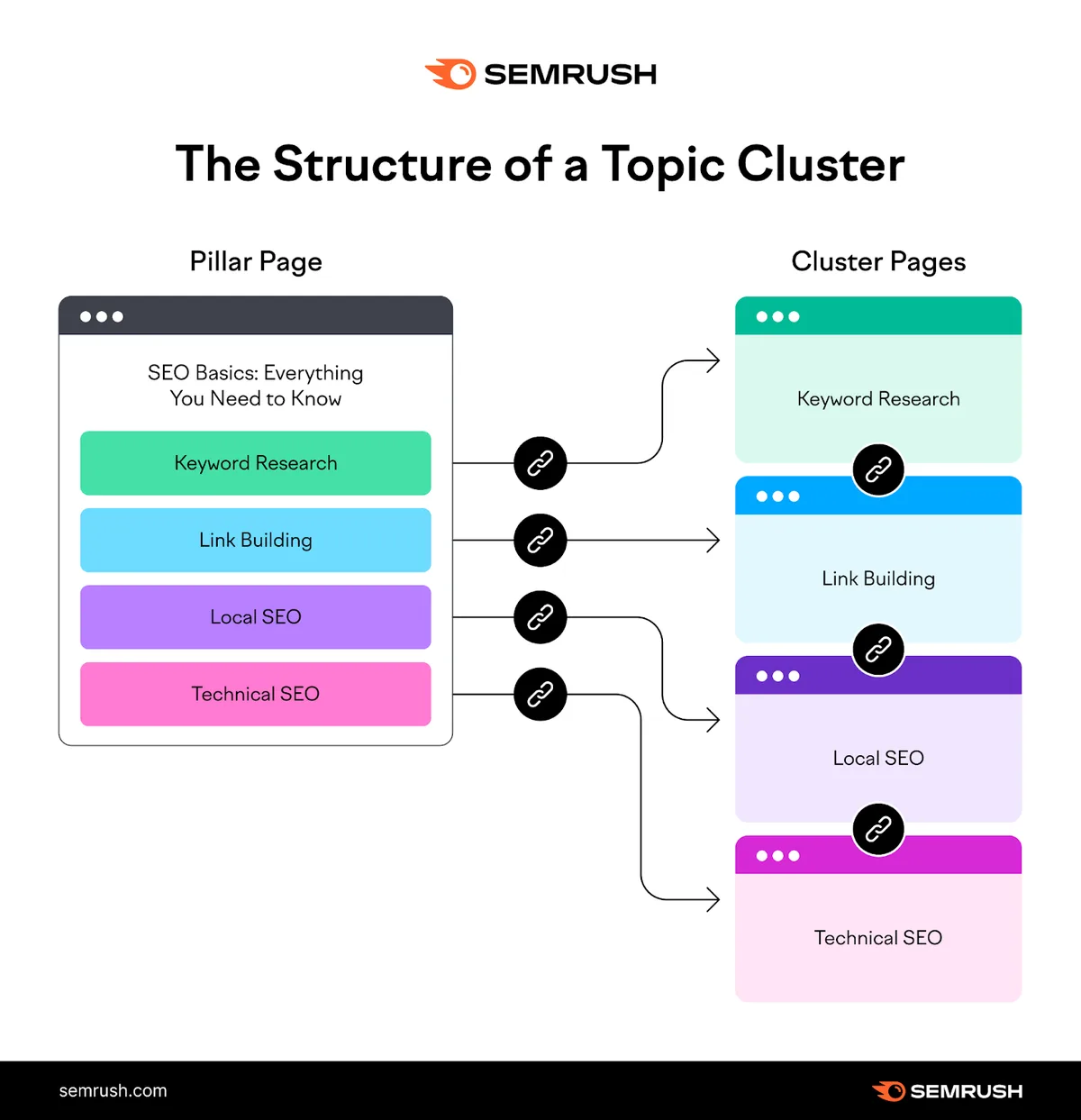
The pillar page. Broad, comprehensive, and aimed at a high-intent head keyword. It’s the page you want to rank for the main topic. It links out to every child in the silo.
The cluster pages. Narrow, deep, and aimed at specific long-tail queries. Structuring your content silo structure around proven patterns ensures impact. Each cluster lives under one pillar. It links up to the parent and sideways to sibling clusters in the same silo.
Internal links. The wiring. Use contextual links inside the body, not just navigation menus. This is where most beginners under-invest, and it’s exactly where the difference between a functioning silo and a pretty diagram lives.
Content Silo Structure Checklist Before You Build
Before you open your CMS and start creating categories, run through this content silo structure checklist. It takes maybe fifteen minutes and saves weeks of cleanup later.
- Pick one parent topic per silo. Something broad enough to sustain 5-15 child articles. Example: “email marketing for small business.”
- List all child subtopics that fit. Aim for topics a searcher would actually type. “Email list segmentation,” “welcome sequence,” “re-engagement campaigns.”
- Map the child pages to query intent. Each cluster should answer one primary question. If a child fits two silos, pick the stronger one.
- Plan internal links before you write. Decide which cluster links to which sibling, and note the anchor text you’ll use.
- Reserve a URL pattern. Keep slugs clean and consistent — for example, /email-marketing/segmentation/ — so the structure reads clearly in the URL.
- Audit existing content for duplicates. Any two pages targeting the same query are cannibalizing each other. Consolidate or cut.
- Design the pillar’s outline first. It defines the child topic list, not the other way around.
One detail I’d add: decide your pillar-to-child ratio early. A good rule of thumb is one broad pillar for every 6-10 clusters. Fewer and the pillar is thin. More and the child topics start drifting from the theme.
Content Silo Structure Tips for Planning Before You Write a Word
Everyone wants to jump straight to writing. Applying these principles to your content silo structure yields measurable results. Don’t. The planning phase is where 80% of these problems either get solved or baked in permanently. I’ve watched sites publish a hundred posts before realizing they had six overlapping pillars, and the rebuild was grueling.
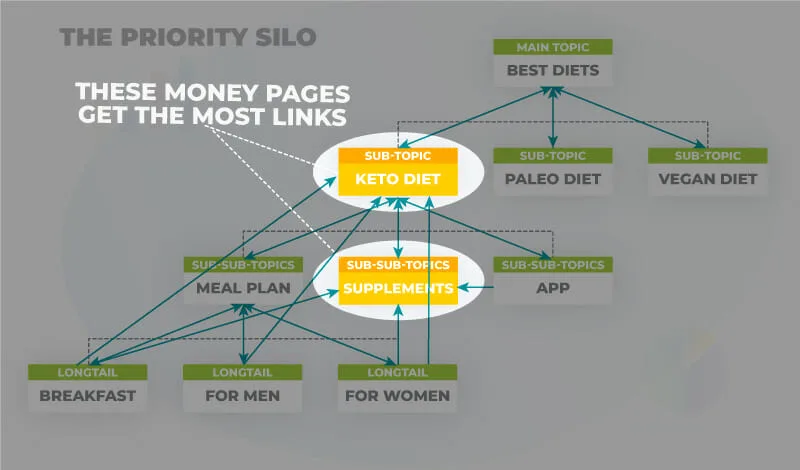
The first content silo structure tips I always share: start from search intent, not from your product categories. A searcher looking for “how to start composting” doesn’t care that your site sells seven compost bin models. The silo should follow the searcher’s curiosity, then the product pages live in their own commercial silo.
Second: map every silo cluster to a real query. If you can’t name the search phrase a cluster page targets, the page probably shouldn’t exist yet. This simple filter kills half of the “nice to have” content that clogs real silos.
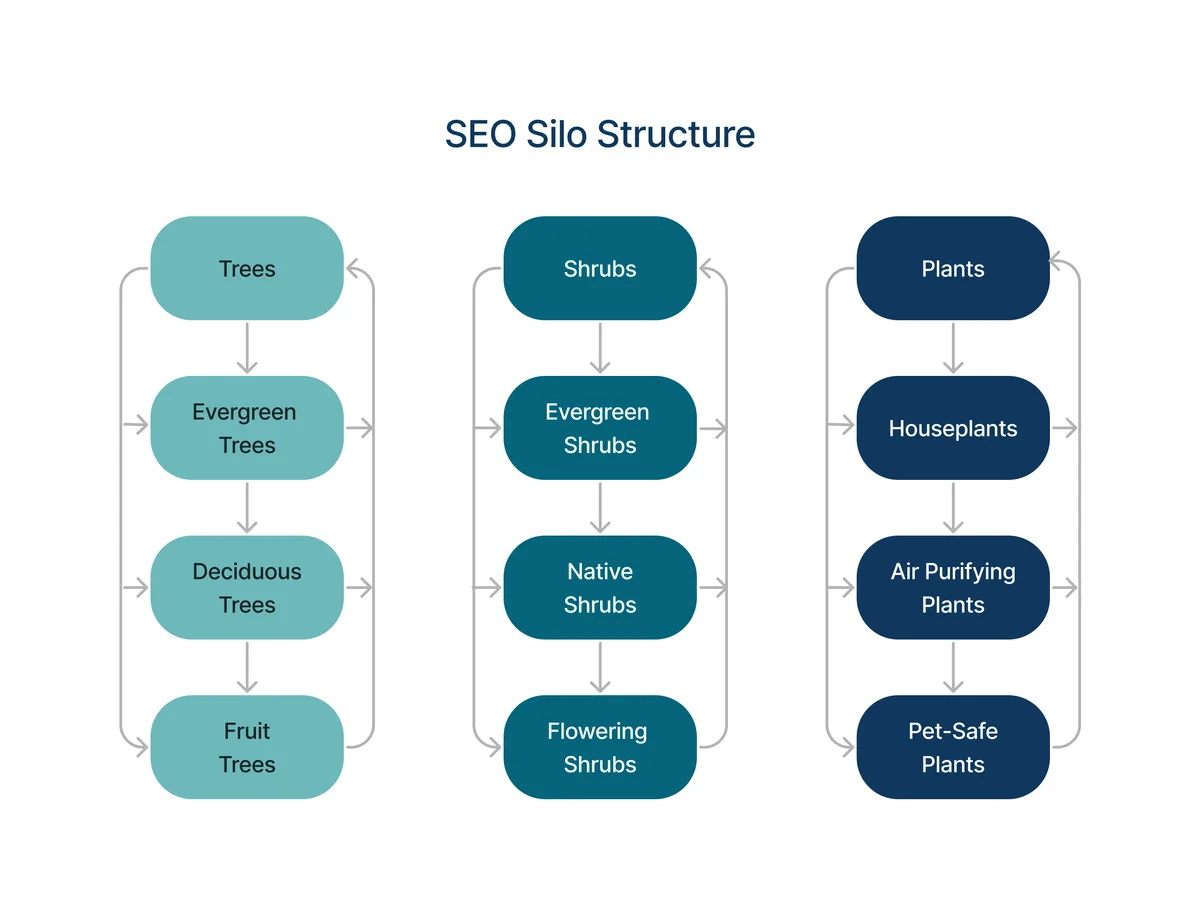
Third, and the one most people skip: name your silos using plain, outcome-focused language. “Budgeting for Beginners” beats “Financial Wellness Hub.” The label is a signal to search engines and a hint to humans. Both matter.
How Many Pages Does a Silo Actually Need?
The content silo structure’s no magic number, but there is a floor. A silo with a pillar and two child pages is technically a silo but doesn’t send much of a topical signal. A silo with ten or more deep clusters reads much more clearly as “this site covers this subject thoroughly.”
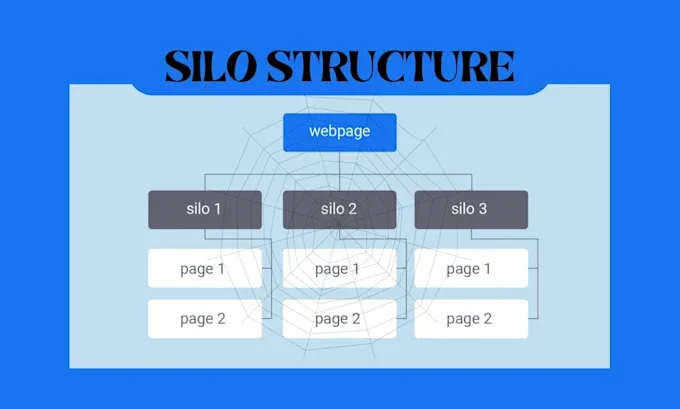
For a brand-new site, start with a pillar and five clusters. That’s enough to establish the silo without overwhelming you. Add clusters over time as you find long-tail opportunities. The structure stays the same; the depth grows.
Building Your First Content Silo Structure, Step by Step
Here’s the sequence I’d follow if you’re starting from zero, or rebuilding a messy site. It’s the same content silo structure approach I’ve seen work for niche blogs, local businesses, and B2B SaaS sites alike.

The point of this walkthrough isn’t to hand you a rigid template. It’s to give you an order of operations so you never find yourself staring at twelve half-built categories and wondering what went wrong.
- Run a quick site audit. List every existing post and URL. Note which ones already rank, which ones have traffic, and which are orphaned. Anything with no internal links is a red flag.
- Group existing posts by theme. You’ll usually find clusters already emerging — three articles about the same subtopic, five more about a related one. Those are silo candidates.
- Pick your highest-authority theme first. Build the silo around the topic you already have the most content and best rankings for. Momentum matters.
- Choose the pillar. It should be broad enough to link to every cluster meaningfully. If a cluster doesn’t naturally link back to the pillar, it belongs in another silo.
- Write or rewrite the pillar first. It sets the rules: which topics the silo covers, which it doesn’t, and where the child pages live.
- Publish clusters one at a time. Add internal links from the pillar to each new cluster as it goes live, and vice versa. Update the pillar’s outline to reflect the growing silo.
- Audit progressively. Every few months, check for duplicate intent and orphan pages. A silo isn’t a one-time project; it’s a structure you maintain.
Determining the Right Silo Depth
Depth here means clicks from the homepage. Developing your content silo structure with precision highlights key strengths. For most small-to-medium sites, two or three clicks is ideal. Your pillar lives at /theme/, its children at /theme/child-topic/, and that’s it.
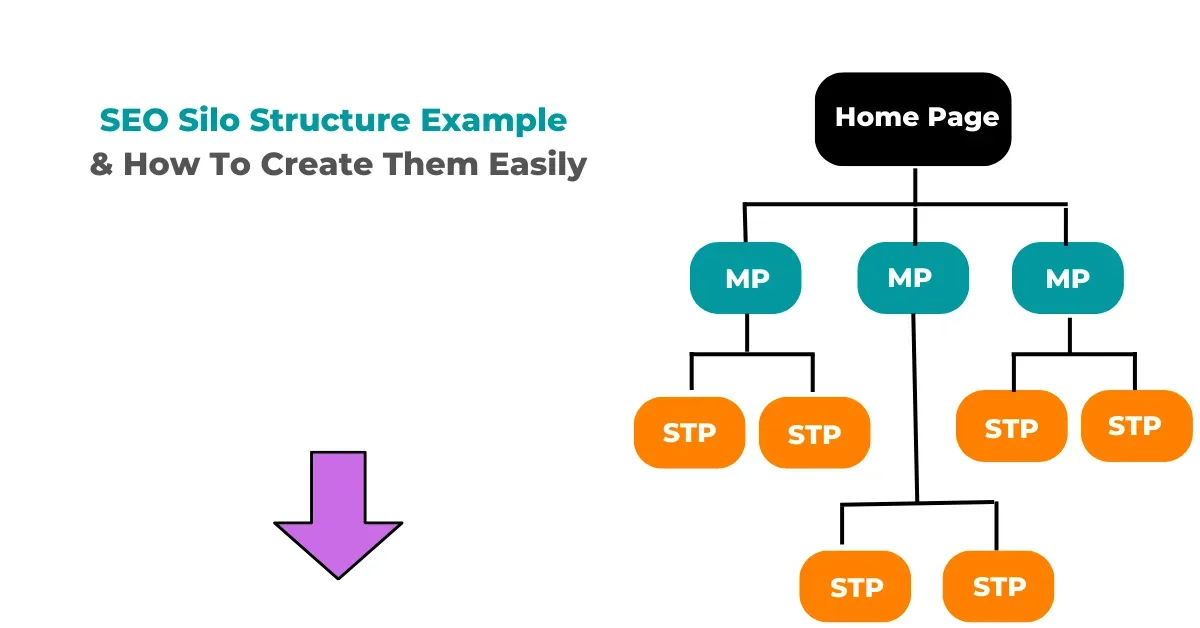
Some SEOs advocate deeper silos with sub-sub-clusters for enormous sites. If you have 500 pages on one theme, deeper structure can help. For most brands, deeper than three levels adds friction without adding value.
Internal Linking Rules That Make a Content Silo Structure Work
This is the part that separates a real silo from one that exists only in a spreadsheet. Internal linking is your enforcement mechanism. Without it, the structure is virtual at best and imaginary at worst.
Here are the rules I hold to:
- Every cluster links up to its pillar, usually in the intro or a contextually relevant section.
- Every pillar links to every cluster, either in a table of contents or inside body copy.
- Clusters link sideways to relevant siblings. Two or three sibling links per post is usually plenty.
- Anchor text is descriptive. “Learn how to segment an email list” beats “click here.”
- Cross-silo links are rare and earned. If a phrase in a coffee article genuinely helps someone reading about tea, link it. Otherwise, don’t cross the aisle.
Beyond the rules, the content silo structure’s a subtlety. Internal link volume has an upper limit before it feels spammy. Ten in-body links in a 700-word post is pushing it. Two to four contextual links in the body, plus a header and footer, is healthy.
Anchor Text and Content Silo Structure Guide Basics
Anchor text is one of the most underrated signals in any content silo structure guide. Vague anchors (“read more,” “this article”) tell search engines almost nothing. Descriptive anchors (“email marketing segmentation strategy”) tell them exactly what the linked page is about, and they reinforce the silo theme.
Don’t just use the exact target keyword every time. Mix brand anchors (“our guide to list segmentation”), partial-match anchors (“email list segmentation tips”), and natural-language anchors (“segmentation workflow”). Over-optimized anchors look manipulative; natural variety reads correctly.

Content Silo Structure Examples You Can Learn From
Abstract advice only goes so far. So let’s look at the shape of a few real silos across different industries. Notice how each one adapts to the industry’s language, not the other way around.
Example 1: A food blog. Pillar is “Cooking with Cast Iron.” Clusters: seasoning, cleaning, deglazing, recipes by pan type, and common mistakes. Integrating content silo structure into your workflow produces consistent quality. Each cluster links to the pillar and to two sibling posts. The style silo (recipes by cuisine) stays separate.

Example 2: A B2B SaaS site. Pillar is “Customer Onboarding.” Clusters: welcome emails, product tours, first-week activation, churn prevention, and reporting dashboards. The pillar is the page ranking for “customer onboarding software,” and each cluster ranks for its own long-tail niche query.
Example 3: A local landscaping business. Pillar is “Seasonal Yard Care.” Clusters: spring cleanup, summer watering, fall leaf management, and winter prep. Local service pages live in a separate silo, linked only from the homepage.
What’s consistent across all three? The parent-child relationship is clear, the children don’t overlap, and the internal links stay inside the thematic boundary. The lesson: your content silo structure should mirror how your audience already thinks about the topic, not how your business is organized internally.
The Most Common Content Silo Structure Mistakes Beginners Make
I’ve audited hundreds of sites, and the same failures repeat with almost boring regularity. Targeted refinements to your content silo structure streamline the entire review. Knowing them in advance saves you a rebuild later.
Mistake 1: Tags pretending to be silos. A tag page with a list of post titles and no substantive content isn’t a pillar. It’s a directory. Real silos need real hub pages with real writing.
Mistake 2: Silos with no pillar. You build five great cluster pages but never write the overview post. The clusters link to each other, but nothing ties them into a coherent theme. Fix by writing the pillar before (or immediately after) the clusters go live.

Mistake 3: Cross-linking everything. Bloggers love internal links, and the content silo structure often overdo it. If every post links to every other post, the silo boundaries dissolve and the topical signal dilutes.
Mistake 4: Cannibalization. Two near-identical pages targeting the same query. This is the silent killer of rankings. Consolidate or differentiate, then redirect as needed.
Mistake 5: Structure without maintenance. A silo built once and forgotten will drift as new posts get added willy-nilly. Schedule a quarterly check.
Content Silo Structure and Topical Authority: What Search Engines Actually See
Let’s peek under the hood for a moment, because understanding why the content silo structure works makes it easier to stick with the discipline. When a search engine evaluates your site, it isn’t just reading each page in isolation. It’s measuring how much you appear to know about the subjects you publish on.

A content silo structure feeds that evaluation. A tight cluster of interlinked pages signals that you’ve covered the topic from multiple angles: beginner basics, advanced tactics, common pitfalls, tool comparisons, and case studies. That breadth, grouped and linked, is what topical authority looks like in practice.
Also worth knowing: this connects directly to your search engine optimization foundations. A content silo structure isn’t a hack; it’s architecture that reinforces what every other SEO tactic is trying to prove. Once you internalize that, you stop thinking of silos as a chore and start treating them as the backbone.
When a Content Silo Structure Hurts Instead of Helps
Silos can backfire. If you force content into a cluster where it doesn’t belong, or if you create so many small silos that no single one accumulates authority, you end up worse off than a flat blog.
The classic failure: a site splits its content into twelve tiny silos, each with one pillar and two children. Nothing reaches critical mass. Search engines see a site with shallow coverage of everything and deep coverage of nothing. That’s the opposite of what topical authority rewards.

So don’t over-split. If two silos share 80% of their audience, merge them into one. Depth beats breadth when you’re building authority from scratch.
Content Silo Structure Tips for Existing Sites With Messy Internal Links
Most of you reading this have a site to fix, not a blank canvas to build on. So here’s a dedicated set of content silo structure tips for the retrofit situation. It’s harder than a fresh build, but it’s fixable.

Start by running an internal link audit. A crawl tool will show you orphan pages (no incoming links), pages with tons of links pointing in from everywhere, and link anchor text that’s vague or repetitive. Those three findings will tell you where the structure broke.
Next, resist the urge to add more content while you’re fixing the existing stuff. Adding new pages into a messy structure just gives you more mess. Fix the architecture first, then publish.

Finally, be willing to consolidate. If two pages serve nearly the same purpose, merging them into one stronger page with a redirect from the weaker one is usually the single highest-leverage move you can make. It feels like a step back. It’s not.
How to Measure Whether Your Content Silo Structure is Working
You can’t manage what you don’t measure, and silos are easy to “feel good about” while quietly failing. Here are the metrics I watch on every silo audit.
Ranking distribution. If the pillar ranks well but clusters are scattered at positions 40-80, the silo is thin or the internal links are weak. If the pillar struggles but clusters perform, the pillar needs a rewrite.
Internal link equity flow. Tools the content silo structure visualize internal links will show whether authority is pooling at the pillar or leaking to orphan pages. You want it pooling.
Click depth. Every page in a silo should be reachable within three clicks of the homepage. If some cluster pages are six clicks deep, you’ve created structural orphans.
Duplicate URL signals. Search Console will sometimes show multiple URLs ranking for the same query. That’s cannibalization. Note it and fix it.
| Metric | What It Reveals | Target |
|---|---|---|
| Pillar ranking position | Whether the hub has enough authority | Top 10 for the head term |
| Cluster ranking spread | Whether children support the pillar | Most in top 20 |
| Pages with 0 internal links | Orphan risk | Zero |
| Duplicate-intent URLs | Cannibalization | None per query |
| Click depth from homepage | Discoverability | 3 clicks maximum |
Should You Use Anchor Links, Hubs, or a Full Content Silo Structure?
Beginners often confuse three different approaches: anchor-link navigation, category hubs, and full silos. They solve different problems and they’re not interchangeable.
Anchor-link navigation is a table of contents on one page. Useful for UX, useless for topical authority because it doesn’t involve multiple URLs.
Hub pages are a step up: separate URLs that aggregate links to a themed group. Helpful for crawl paths, but hubs alone don’t achieve deep topical coverage.
A full content silo structure combines both: hubs plus deep cluster pages with deliberate internal links. This is what actually signals topical authority to search engines.
For most sites, the sweet spot is a full silo for your top three themes and simple hubs for the long tail. Don’t over-build. Choose depth where you intend to compete, and keep the rest clean but lightweight.
Content Silo Structure and Search Intent Alignment
Every cluster page needs a primary search intent. Before you write, ask: is this page answering a question, supporting a purchase decision, or helping with a task? The answer shapes the format, the tone, and the internal link strategy.
A “what is” page needs definitions and examples. A “how to” page needs numbered steps. A “best of” page needs a comparison table and honest tradeoffs. If your cluster pages all read the same way, your silo probably ignores intent, and that’s where most ranking opportunities slip away.
So map intent per cluster. It takes ten minutes and it doubles the value of every page in the silo.
Common Questions About Content Silo Structure, Answered
You probably have a few specific questions left. Here are the ones I hear most often, answered directly.
Do I Need to Noindex Tag Pages?
Usually yes, if your tags generate thin pages that don’t deserve to rank. Noindex them or remove them altogether. Your real silo lives in pillar pages and cluster pages, not in auto-generated tag archives.
Some tags earn their keep — a genuinely useful archive the content silo structure users search for, for instance. But those are rare, and they should be upgraded into proper pillar pages if they matter enough to rank.
Can I Have Multiple Silos on the Same Site?
Yes, and you usually should. A healthy site has three to seven distinct silos, each on a different theme. What you don’t want is twelve silos, each with only two clusters. Split when the theme genuinely diverges, not when you’re bored.
The test is simple: could a visitor move from one silo to another without confusion? If yes, you’ve split correctly. If they’d be jarred, keep the themes together.
How Do Pillar Pages and Content Silos Differ?
The pillar is one page. The silo is the whole structure that page anchors. A content silo structure includes the pillar plus every cluster plus every internal link between them. Some people use “pillar” and “silo” interchangeably, but they aren’t quite the same thing.
If you mentally separate the two — pillar as “the page that ranks,” silo as “the architecture that gets it there” — the plan becomes much easier to execute.
Does Content Silo Structure Work for Local Businesses?
Absolutely, and it’s often the fastest win for local SEO. A landscaping company, for example, might have a “Seasonal Yard Care” silo and a separate “Service Areas” silo. Each one sends clear topical signals, and neither dilutes the other.
The key is keeping the service pages distinct from the informational pages. When local businesses mix their money pages with their blog content, the silos blur and both underperform.
How Often Should I Audit My Silos?
Quarterly works for most sites. If you’re publishing weekly, audit monthly. The audit is quick: check for duplicate intent, orphan pages, and broken internal links. Fix what’s broken, then move on.
Bigger structural audits — like rethinking your silo themes — can go annual. But small, routine checks are what keep the structure healthy between big rebuilds.
Content Silo Structure Tips to Keep It Lean as You Scale
Every site starts clean and ends up messy if you’re not deliberate. Here are the guardrails I use on every content team I work with.
Every new post belongs to a silo before the content silo structure’s published. If you can’t say which pillar it links to and which siblings it cross-links with, the post isn’t ready. Retrofitting is more expensive than planning.
Consolidate on a schedule. Twice a year, look for posts in the same silo that cover near-identical ground. Merge the weakest into the strongest, redirect the weaker URL, and update internal links.
Track silo growth. A spreadsheet with pillar, cluster list, and current ranking position per cluster keeps the whole thing visible. It sounds tedious; it takes five minutes a month.
Retire silos the content silo structure fade. If a silo hasn’t produced rankings or traffic in a year, either the theme is dead or the execution is weak. Be honest about which.
Putting It All Together: a Content Silo Structure Checklist for Launch Day
When you’re ready to ship a silo, run this final content silo structure checklist. It catches the small things that slip through when you’re excited to publish.
- Pillar page live and indexed — submitted to Search Console, linked from one or more authoritative on-site pages.
- All cluster pages live — each one internally linked from the pillar with descriptive anchor text.
- Each cluster links back to the pillar — usually in the intro or a mid-article callout.
- Sibling links in place — two or three per cluster, contextually relevant.
- URL slugs are short and keyword-relevant — no dates, no random post IDs.
- No orphan pages — every page in the silo is reachable within three clicks of the homepage.
- Intent mapped per cluster — every URL has a defined primary question it answers.
- Duplicate-intent pages consolidated or differentiated — no two clusters fighting for the same query.
- Meta descriptions written per page — unique, keyword-relevant, under 160 characters.
- Analytics and Search Console tracking in place — so you can measure what’s working in 60-90 days.
That’s the whole playbook. A content silo structure isn’t glamorous, and it isn’t fast. But it’s the most reliable way I know to turn a scattered site into one that search engines clearly understand and reward.
Start with one silo. Pick a theme you already have content on. Write the pillar. Wire the internal links. Then let it sit and mature before you build the next.
Do that three times and you’ll have a site that behaves very differently — one where every new post makes the old ones stronger, instead of fighting them for the same rankings.
If you only take one thing from this guide, take this: a content silo structure is a promise to be organized, not a trick to rank faster. Keep the promise and the rankings follow.