Web 2.0 Backlinks: 7 Easy Ways to Earn Quality Links
Web 2.0 backlinks remain one of the most accessible link-building assets available to anyone with a keyboard and thirty spare minutes. They won’t rival a editorial placement on a major publication, but used correctly they add crawl paths, brand signals, and referral traffic that compound over time. Below are seven methods I’ve used and refined across dozens of campaigns, ranked from simplest to most strategic.
Before diving in, a quick reality check. Focusing on Web 2.0 backlinks provides clear direction here. The link-building world has a habit of overselling shortcuts. Web 2.0 platforms are free publishing real estate, and that’s exactly what makes them useful—and exactly what makes them easy to abuse.
The difference between a link that helps and a link that gets ignored comes down to how much genuine effort sits behind it.
This web 2.0 backlinks guide covers the practical mechanics, the pitfalls worth avoiding, and the habits that separate a working link profile from a pile of dead pages. If you want a repeatable process rather than a one-off experiment, read all seven.
What are Web 2.0 Backlinks, Exactly?
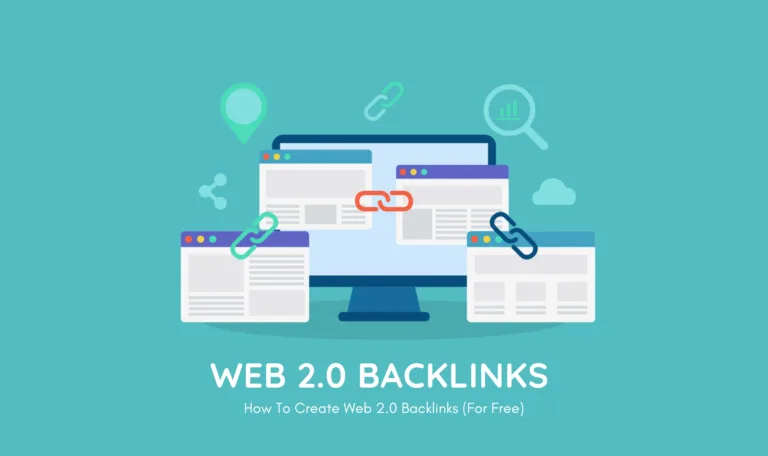
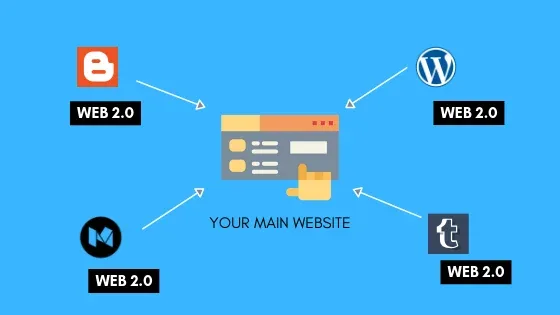
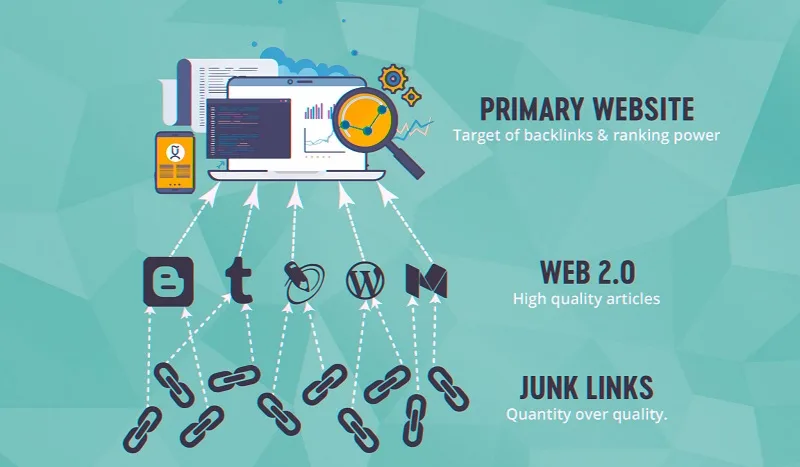
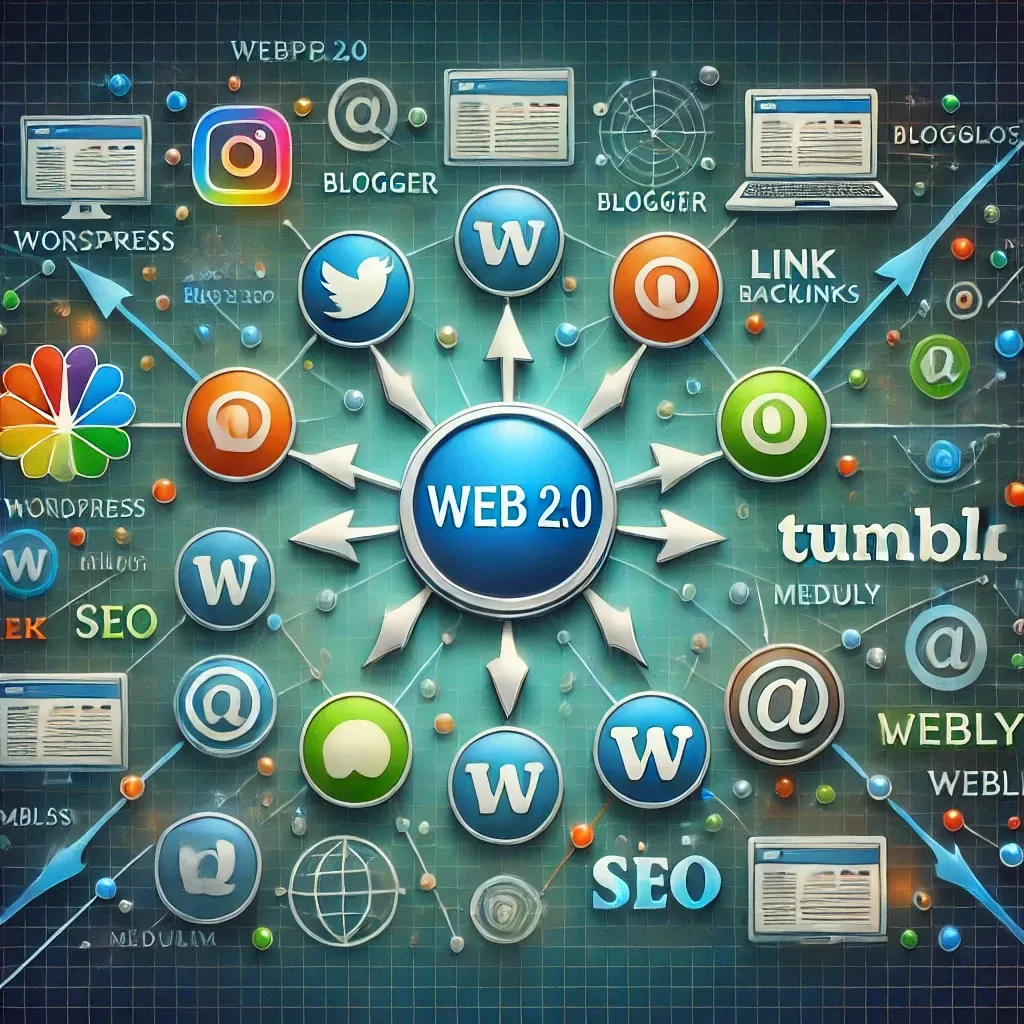
Web 2.0 backlinks are links you build by creating a profile or page on a user-generated-content platform—WordPress.com, Blogger, Tumblr, Medium, LiveJournal, Weebly, and similar sites—then publishing content there that links back to your own domain.
The term “Web 2.0” itself refers to a broader phenomenon: the shift from static, read-only websites toward platforms where users create and share content themselves.
That distinction matters. Refining each detail of your Web 2.0 backlinks strengthens this section. A Web 2.0 backlink isn’t a paid guest post or a link insert on someone else’s editorial page. It’s a property you control, hosted on a domain you don’t own.
Think of it as renting an apartment in a busy building: you can decorate however you like, but you never own the walls.
The classic platforms people use for this purpose include:
- WordPress.com — free subdomains with strong domain metrics and clean indexing
- Blogger — Google-owned, reliable crawl behavior, simple setup
- Tumblr — high indexation speed, useful for image-heavy niches
- Medium — strong authority, though outbound links are now often nofollowed or reduced in value
- Weebly and Wix — site-builder environments that allow a full mini-site
- LiveJournal, Edublogs, Jimdo, Blogspot variants — secondary options when primary platforms cap you
Here’s the part most tutorials skip: the value of web 2.0 backlinks depends almost entirely on what you publish. A five-hundred-word page of spun nonsense linking to your money site does nothing. Eight hundred words of genuine, useful writing on a platform that indexes quickly, with a natural contextual link, does something small but real.
Multiply that across ten or twenty properties and the cumulative effect on your crawl budget and referring domains becomes measurable.
If you’re building a web 2.0 backlinks checklist from scratch, start with the honest version: quality of content first, platform selection second, link placement third. Everything else is decoration.
Do Web 2.0 Backlinks Still Work for SEO?
Yes—with conditions. Effective execution in your Web 2.0 backlinks makes a tangible difference. They’re not the ranking rocket some sellers claim, and they’re not the useless artifact some purists insist. The truth sits in the middle, and it’s worth understanding why.
Search engines evaluate links based on relevance, context, authority, and trust. A link from a brand-new WordPress.com subdomain with one post isn’t going to move a competitive keyword.
But it does two things that matter: it creates an additional crawl path to your pages, and it contributes to the diversity of your referring domain profile.
Studies of link profiles consistently show that sites ranking on competitive terms tend to have a wide variety of referring domain types—not just editorial placements.
Purpose-built web 2.0 backlinks also function as a buffer layer. Instead of pointing twenty thin links directly at your money site, you point them at your blog posts, which in turn link to your money pages. That tiering structure distributes link equity more intelligently and looks less suspicious to any automated spam classifier.
The failure mode is predictable: people spin one article across forty expired platforms, use exact-match anchors on every single link, and point everything at the homepage. Then they conclude Web 2.0 links don’t work. What failed was the execution, not the tactic.
Treat this as a medium-tier tactic. If your site is brand new and you’re hoping to outrank an established competitor using only free blogspot pages, recalibrate your expectations. If you want to strengthen a content cluster, improve indexation, or support existing pages that have stalled, web 2.0 backlinks deserve a place in the rotation.
The Crawl Path Argument
Google discovers content primarily through links. Every quality external link pointing to a page increases the likelihood that Googlebot finds it quickly and re-crawls it after updates. For deep pages—blog archives, old case studies, category pages—these pathways are genuinely useful.
I’ve watched slow-indexing pages get picked up within a week of receiving three decent web 2.0 backlinks from established platforms pointing to them. Not definitive proof of ranking lift, but a demonstration of crawl utility. If indexation is your bottleneck, this tactic earns its place.
The Brand Signal Argument
Mentions of your brand name—even on low-authority platforms—contribute to what SEO practitioners loosely call the brand footprint. Google’s systems have grown more sophisticated at recognizing when a domain name appears in legitimate content across the web.
When those mentions also appear on platforms with active user communities, it hints at genuine presence rather than manufactured backlinks.
The web 2.0 backlinks’s why contextually appropriate anchor text and genuine, brand-specific content matter more than raw link count. A WordPress.com article titled “Five Reasons a Small Business in Austin Should Hire a Local SEO Consultant” that mentions your firm naturally outperforms a generic article stuffed with keyword anchors.
How to Build Web 2.0 SEO Backlinks Correctly
Before we get to the seven methods, let’s establish the baseline quality standard. Every one of the following steps is easy to skip, and skipping any of them undermines the value of the strategy.
| Quality Signal | Baseline Standard | Why It Matters |
|---|---|---|
| Content length | 600+ words minimum; 900+ preferred | Short posts look makeshift; longer content gets indexed and sometimes ranks |
| Uniqueness | 100% original, never spun | Spun content kills indexation and can drag down the whole tier |
| Profile completion | Bio, avatar, custom URL, 2+ posts | Completed profiles avoid “ghost” classification and earn trust |
| Anchor text distribution | ≤30% exact match; mix branded, partial, generic | Over-optimization is the single biggest cause of ignored links |
| Linking depth | Deep pages and category URLs, not just homepage | Passes equity to pages that actually need it |
| Platform authority | Prefer platforms with high DA and active users | Higher crawl frequency and stronger trust signals |
The distinction between web 2.0 backlinks versus PBNs deserves a word here. A private blog network is a set of domains you control, engineered to look like independent sites, usually with fake identities and fake content histories.
A Web 2.0 backlink sits on a legitimate public platform with real users and real identity requirements. Focusing on web 2.0 backlinks provides clear direction here. Indexing, trust, and longevity all differ substantially.
The corollary is that web 2.0 backlinks best practices look surprisingly ordinary: use your real name or brand name, publish content you’d be willing to show a client, link naturally rather than mechanically. The tactics that work well enough to build a repeatable process are the ones you’d be comfortable defending in a conference panel.
One more structural note: alternate anchor types across your properties. Example distribution:
- Branded anchor (your company name) — 40%
- Naked URL — 20%
- Partial-match (“keyword + phrase”) — 20%
- Descriptive but non-exact (“this resource about X”) — 15%
- Exact-match keyword — 5% or less
Exact-match anchors have their place, but the web 2.0 backlinks’re the most easily flagged pattern. Keep them rarer than every other type and you’ll dramatically reduce your risk profile.
7 Easy Ways to Earn Quality Web 2.0 Backlinks
Here’s the core of this article: seven methods, each with its own execution path, difficulty level, and best-use scenario. You don’t need all seven simultaneously. Pick the two or three that fit your resources and do them thoroughly.
1. Build Editorial Profile Pages on Free Blogging Platforms
This is the classic method, and it still works when done well. Pick three to five platforms—WordPress.com, Blogger, Tumblr are the least saturated—and create accounts that look like real profiles rather than one-off link dispensers.
Fill out every profile field: biographical paragraph, avatar, custom header, custom domain slug. A thoughtful approach to web 2.0 backlinks reinforces your qualifications. Then publish 3 to 5 articles per property before linking back to your money site at all.
This “aging” phase makes a real difference; an empty profile with a single post and a boilerplate link looks manufactured.
When you do link, place the link inside a paragraph where it’s genuinely relevant. “If you’re researching small business SEO tactics, this resource from [Brand] covers the fundamentals well” reads like editorial context; “click here for the best SEO service” reads like spam.
Practical tip: Vary post types. Mix a how-to guide, an opinion piece, and a list post on each property. Three similar posts on one blog look suspicious; a mixed content calendar looks like a real writer’s workspace.
2. Publish Guest Posts That Reside on Web 2.0 Platforms
Guest posting usually means pitching another publisher. Structuring your web 2.0 backlinks around proven patterns ensures impact. But the same logic applies within Web 2.0 environments: write a full-length contributed article for a platform with an active reader community, and in return the platform displays your byline and outbound link.
Medium’s partner publications, Blogger’s community blogs, and Substack newsletters hosted on the Substack domain all accept contributed content in some form. The upside: audiences already exist, so your attribution link gets seen. The downside: indexation depends on the platform, and many such platforms now apply nofollow tags.
That nofollow tag isn’t a dealbreaker. A nofollow link still passes referral traffic and brand exposure, and those factors matter more than many people realize. A piece of content on a platform with paying subscribers can drive qualified readers to your site—something a do-follow link on a dead blog cannot do.
Practical tip: Publish a post on your own blog first, then republish an adapted version on the platform with a clear “originally published at [your site]” line at the top. Applying these principles to your web 2.0 backlinks yields measurable results.
This gives the platform genuine content, gives Google a clear attribution signal, and gives readers a reason to click through.
3. Turn Conference Talks and Podcast Appearances Into Web 2.0 Content
If you’ve appeared at an industry event, been on a podcast, or spoken on a panel, you have ready-made content. Turn the talking points into a 1,000-word write-up on a Web 2.0 platform, and link to the original event or to your related service page.
Events often host speaker pages on platforms like SlideShare or event websites, and those pages are useful additional citations. Editorial mentions of the same talk across multiple Web 2.0 properties—each with its own unique summary—build a coherent online trail. Each additional citation makes your online presence stronger.
I worked with a client who spoke at a regional real estate convention. Proper attention to your web 2.0 backlinks sets a strong baseline. We placed three write-ups of the talk on Medium, LinkedIn’s article platform, and Tumblr, each with slightly different framing.
Collectively, those pages provided meaningful referral traffic for months afterward—more than the direct SEO effect, though the crawl paths helped as well.
Practical tip: Write about the idea, not the event. “Why local market data beats national averages for sellers” outperforms “recap of my convention panel” as a piece of content people actually want to read.
4. Create a Resource Hub on a Free Subdomain That Links to Your Site
The web 2.0 backlinks is the most strategic yet underused method. Instead of publishing a series of disjointed posts on various platforms, create an entire branded resource site on a free subdomain—a mini-website with a homepage, three to five supporting pages, and a mid-level author bio.
WordPress.com and Weebly both support the web 2.0 backlinks structure free of charge. The result reads less like a “backlink property” and more like a brand presence. Then link from that hub site back to your main site—from the homepage, an “About” page, and one or two resource pages—distributing anchors across page types.
The advantage over scattered posts is coherence. Search engines tend to assign more value to a site with consistent topical focus than one with five unrelated posts.
A resource hub on a specific topic—”Directory of Local Contractors” or “Small Business Playbook”—becomes a genuine asset that may attract its own visitor traffic, with your main site as a linked destination.
Practical tip: Keep the subdomain name close to your brand (“brandname-home-services”) rather than generic (“contractor-resources-2024”); it makes the whole property feel more legitimate.
5. Repurpose Long-Form Assets Into Platform-Native Versions
Have you written a lengthy guide, a whitepaper, or an in-depth case study on your own site? Convert it into platform-native versions: a Medium series broken into three parts, a TL;DR Tumblr post that links back to the full version, a Behance or Dribbble case study if it’s visual.
The key is adapting, not copy-pasting. Refining each detail of your web 2.0 backlinks strengthens this section. Medium readers expect a self-contained read; a truncated version with “read the rest here” performs poorly.
Take the time to rewrite the intro and conclusion for the new platform, add a sentence of context about why this topic matters, and place the link in a natural position near the point of relevance.
I’ve had good results repurposing webinars: a 45-minute recording becomes a 1,200-word Medium article with an embedded video, plus a shorter Blogger post the web 2.0 backlinks focuses on the five most-quoted points. Same content, two additional indexable assets, two additional crawl paths.
Practical tip: Use canonical tags where supported. Some platforms (Medium, Substack) allow canonical URL settings that tell Google which version to treat as canonical. That prevents duplicate-content friction and strengthens the case for the original.
6. Publish Data-Driven Posts That Naturally Attract Earning Links
Different tactic: instead of pointing links at yourself, write something worth linking to. Clear alignment with your web 2.0 backlinks builds confidence from the start. Original data, unique surveys, industry benchmarks, or analysis based on public datasets — published on a web 2.0 platform — can attract links from other writers researching the topic.
The value of a web 2.0 backlink from another writer’s site is significantly higher than from your own self-published post, because it constitutes independent editorial endorsement. You’re trading a few hours of data compilation for third-party citations that may appear in articles you never touch.
Example: a payroll software company compiled regional wage data from public tax filings and published a 2,000-word analysis on Medium. Effective execution in your web 2.0 backlinks makes a tangible difference. No outbound link. Within six months, eleven industry blogs had linked back. Many cited the analysis and, by extension, the firm behind it.
Practical tip: Make data easy to cite. Integrating web 2.0 backlinks into your workflow produces consistent quality. Include a downloadable chart, a methodology paragraph, and a suggested citation line at the end (“Source: [Brand], via [Platform]”). Search engines now detect and credit these citation patterns, and human writers appreciate the convenience.
7. Use Web 2.0 Platforms as Tier-2 Support for Existing Links
The final method is arguably the most effective use of resources. Take your existing link profile—editorial mentions, guest posts, podcast citations—and point web 2.0 backlinks at those pages, not directly at your money site. This is called tier-2 link building, and it’s genuinely powerful when executed carefully.
The logic: your editorial placements gain additional link equity and crawl frequency, which then flows through to your site. Meanwhile, the tier-2 properties never link to your main domain, dramatically reducing any penalty risk in case of an algorithmic shift.
Use a web 2.0 backlinks checklist format here:
- List your top 10 existing editorial backlinks by authority
- Build one Web 2.0 property per backlink, with unique content
- Point a contextual link from each property at the editorial page
- Vary anchor types across properties
- Monitor for indexing and track referring-domain growth via Search Console
- Update platforms or content every few months to maintain freshness
This structure means your web 2.0 backlinks tips become strongest where they’re least visible—supporting links that already exist rather than building new superficial ones. The tactic also improves crawl frequency of the editorial pages themselves, which sometimes triggers ranking movement on the destination money pages as a downstream effect.
Web 2.0 Backlinks Best Practices That Prevent Damage
The seven methods above only work when wrapped in solid operating discipline. Several patterns consistently separate a productive campaign from a wasted one.
Diversity beats volume. Six high-quality properties with unique content and varied anchors outperform forty low-quality properties with spun text. Targeted refinements to your web 2.0 backlinks streamline the entire review. Volume without variation triggers the exact spam signal you’re trying to avoid.
Match the platform to the vertical. Not every platform works for every niche. Vertical platforms — Behance for design, GitHub for developers, Goodreads for authors, Dribbble for visual branding — carry active communities and readers who may click through.
Ration and rotate. Don’t build links on the same platform for the same site repeatedly. Ten WordPress.com properties pointing at one domain look like a pattern; ten different platforms look like organic growth.
Track what the web 2.0 backlinks’ve built. Maintain a simple spreadsheet: URL, platform, publish date, anchor text, target URL, indexing status. If a property gets deindexed or deleted, you’ll want to know quickly, not two years into a project.
Avoid cross-linking between properties. The temptation to create mutual references between your ten Web 2.0 properties is understandable—but a closed-loop footprint is a pattern spam filters specifically detect. Keep the properties independent.
The checklist above is the foundation of a repeatable workflow, and the more consistently you apply it, the more predictable your results. The important thing is to review it every time you start a new batch—new platforms emerge, older ones go dormant, and the details that matter can shift month to month.
Common Web 2.0 Backlinks Mistakes to Avoid
Even experienced practitioners slip into the web 2.0 backlinks patterns, especially when volume gets prioritized over craft. These are the recurring failure modes I’ve encountered most often.
- Spun content on all properties. Cheap “spinner” tools produce semantically identical text, and modern detectors catch them instantly. Indexation dies, and the properties don’t pass value. If you don’t have time to write, cut your property count and produce fewer high-quality pages.
- Exact-match anchors throughout. “Cheap SEO services Houston” repeated on every property might as well be a neon sign saying “link network.” Mix anchors, and keep exact-match to no more than 5%.
- Every link points to the homepage. Homepage-only link patterns are unnatural. Deep links to specific blog posts, category pages, and resource pages read as natural editorial endorsements.
- No aging before linking. Property built today, money site linked tomorrow — that’s not how real publishing looks. Publish 2-3 non-promotional posts over a two-week period before linking.
- Ignoring nofollow status. Many platforms (Medium, LinkedIn, some Tumblr configurations) apply nofollow. That’s fine — but count those links as brand and traffic assets rather than ranking levers.
- Skipping the sitemap submission. Some platforms support sitemap pings. Use them. Faster indexing means faster value.
- No measurement. Without tracking referral traffic, indexing rates, and referring-domain growth, you’re operating blind. Even a simple spreadsheet focused on those three metrics is enough.
One structural hazard deserves its own note: don’t point web 2.0 backlinks at pages that are already thin, poorly optimized, or commercially aggressive. Links can’t rescue weak pages; they amplify what already exists. If the target page has a clear search intent match, real substance, and proper internal linking, the Web 2.0 layer adds something. If the page is a thin sales pitch with no substance, no link-building effort will save it.
Frequently Asked Questions
Here is an in-depth breakdown of key considerations regarding Frequently Asked Questions:
Are Web 2.0 Backlinks Safe?
Yes, when built with quality intent — unique original content, completed profiles, diversely distributed anchors, and modest volume. Risky patterns involve spun content, hundreds of properties, exact-match anchor stuffing, and homepage-only linking. The mechanism itself is safe; the execution determines the risk.
Do Web 2.0 Backlinks Actually Improve Rankings?
They can contribute — especially through improved crawl paths, referring-domain diversity, and tier-2 support of editorial placements. Don’t expect them to be a primary ranking factor on competitive keywords. Treat them as a supporting layer, not the foundation.
How Many Web 2.0 Backlinks Should I Build?
Quality over quantity. Five to ten well-produced properties per quarter is a maintainable pace for most small businesses. If you’re operating at scale, focus on platform variety and anchor diversity rather than raw property count.
What’s the Difference Between Web 2.0 Backlinks and PBNs?
A Web 2.0 backlink sits on a public platform with real users and identity requirements. A PBN is a private network of domains you own, engineered to look like independent sites. PBNs typically require fake identities and fake content histories, while Web 2.0 properties can host real content by real people. The compliance and detectability profiles are quite different.
Should I Use Anchor Text Diversity on Every Property?
Yes. Mix branded anchors, naked URLs, partial matches, and descriptive non-exact anchors across your properties. Keep exact-match keyword anchors to roughly 5% of your total link profile. This distribution is one of the strongest signals of a natural link profile.
Do These Links Boost Domain Authority?
Third-party metrics like Domain Authority respond mainly to the authority of referring domains. Maintaining clarity across your web 2.0 backlinks remains essential. Typical Web 2.0 properties sit mid-range on those scales, so the collective lift is usually modest. Expect small incremental gains over time rather than sudden jumps.
The Long Game With Web 2.0 Backlinks
Link building rewards patience more than intensity. The seven methods outlined here succeed when treated as a repeatable quarterly routine rather than a one-off sprint. Pick two or three method clusters, build them properly, track their performance, and expand from there.
What makes web 2.0 backlinks genuinely useful is not the raw link equity — modest at best — but the accumulation of crawl paths, brand mentions, topology diversity, and eventual organic citations that emerge from writing content people actually want to reference. That final element is impossible to fake and increasingly difficult to game.
For a small business hitting an indexing plateau or looking to support a content cluster, this tactic earns its place in the toolkit. For a competitive national campaign, treat it as tier-2 support alongside proper digital PR. Either way, apply the standards in this web 2.0 backlinks guide, maintain your checklist, and measure the outcome honestly.
Start with one property, one platform, one piece of content this week. Then another next week. Twelve weeks from now you’ll have a compliant, credible link foundation that nobody can flag—because there will be nothing to flag. That’s the real win from a web 2.0 backlinks program built on solid ground.
For verified reference and background research, consult the authoritative informational resource on this topic.