URL parameters SEO is the part of technical optimization most site owners learn the hard way — after a crawl report turns red and a few dozen near-duplicate product pages start fighting each other in search results.
Here is the straightforward path: what parameters actually do, why they break rankings, and the seven tactics that fix them without wrecking your analytics.
Think of the URL parameters SEO as the parent topic for everything you will read below. Faceted navigation, canonical tags, parameter handling in Search Console, and crawl budget management all hang off the same trunk. Get the foundation right and the rest of your technical SEO gets noticeably easier.
What URL Parameters Actually are (And Why They Matter)
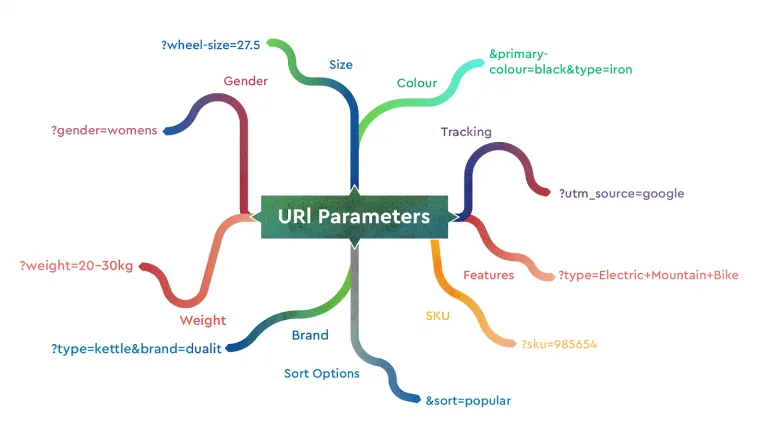
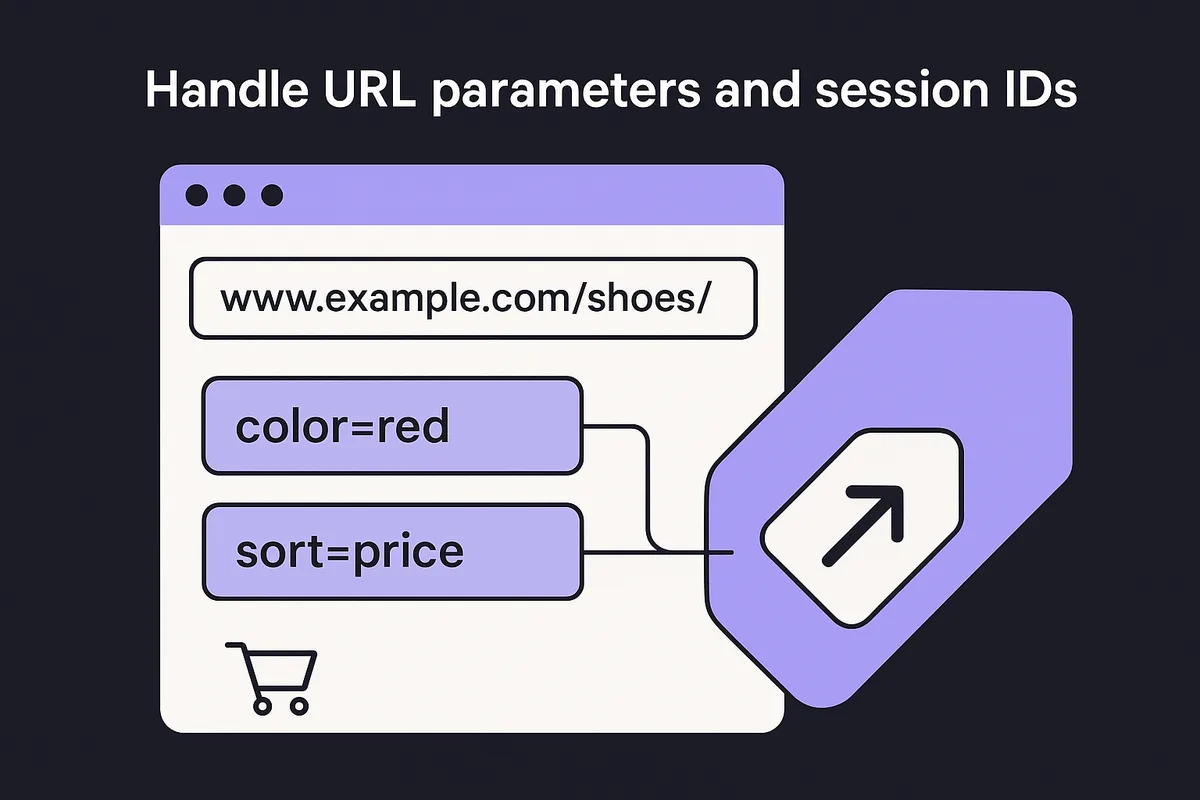
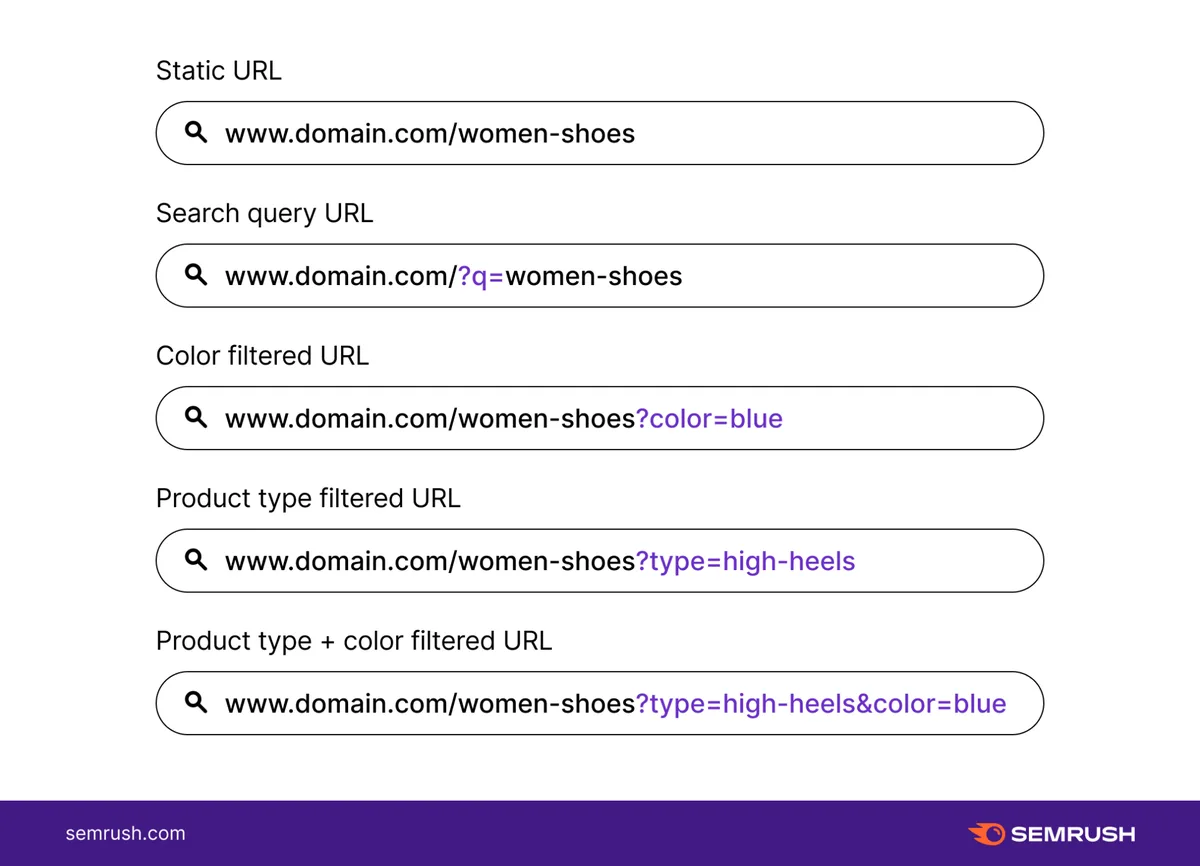
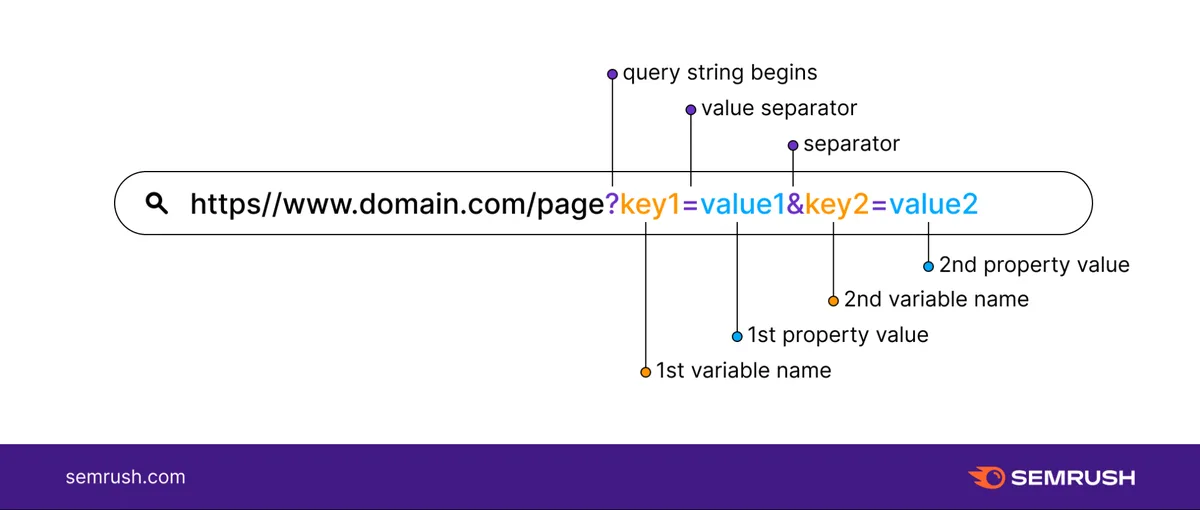
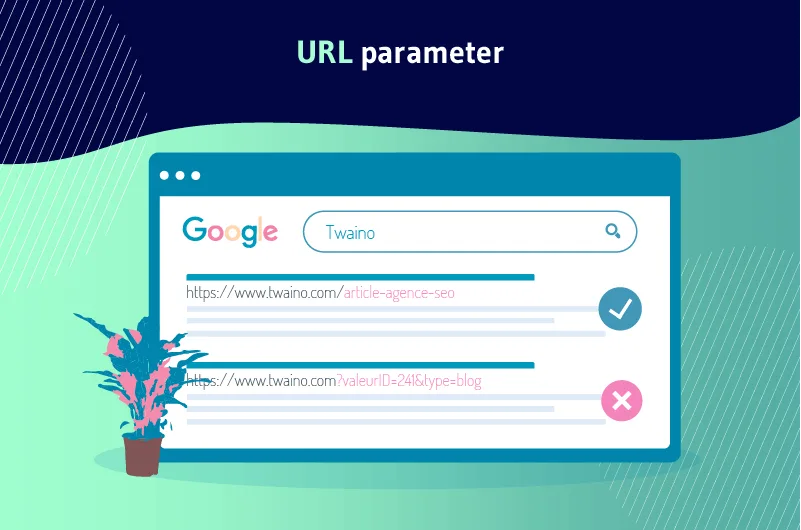
A URL parameter is the chunk of text after a question mark. Focusing on URL parameters SEO provides clear direction here. In example.com/shoes?color=black&size=42, the parameters are color=black and size=42. They tell the server which version of a page to render without changing the underlying template.

That’s genuinely useful for users. Refining each detail of your URL parameters SEO strengthens this section. Filter a product grid, sort a table by price, jump to page three of a blog archive — parameters make the web interactive.
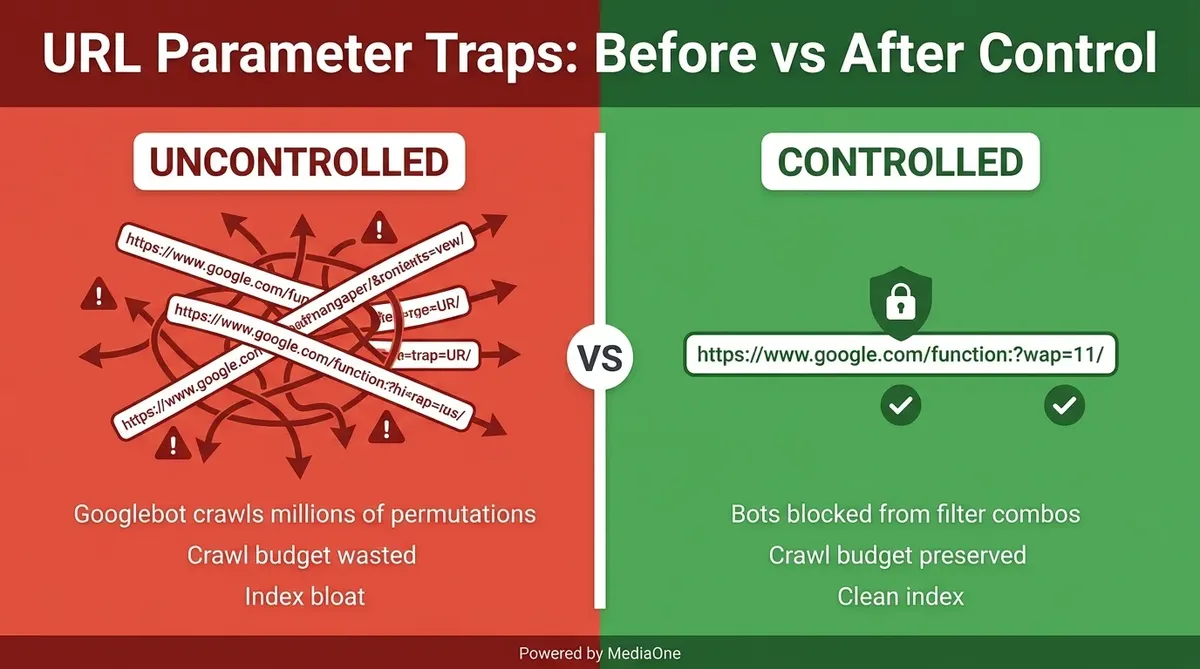
The problem arrives when search engines crawl thousands of those permutations and treat each one as a separate, indexable page.
In the URL parameters SEO world, this is the classic duplicate content trap. Google’s own documentation on URL structure is blunt about it: excessive parameters create crawling and indexing problems, and there is no single magic fix. You have to decide, case by case, which variations deserve to exist.
How Search Engines Read Parameters
Googlebot doesn’t parse ?utm_source=newsletter the way a human does. It sees a distinct URL string until proven otherwise.
Modern Google is much better at spotting tracking junk than it was a decade ago, but “better” is not “perfect” — the crawl resources still get spent.
There’s also the question of which version gets canonicalized, which versions get ignored, and which versions a developer accidentally made indexable with a stray meta tag. That’s why URL parameters SEO best practices always start with an inventory, not a fix.
The Three Parameter Families You’ll Deal With
Not all parameters behave the same way. Effective execution in your URL parameters SEO makes a tangible difference. Sorting them into groups makes the rest of this work far less overwhelming.
- Tracking parameters —
utm_*,gclid,fbclid,msclkid. These exist purely for attribution and should almost never be indexed. - Content parameters — pagination (
?page=2), language (?lang=es), product variants (?color=red). These may carry real search value and need individual judgment. - Functional parameters — session IDs, sort order, view modes (
?view=list), print versions. Usually zero SEO value, high crawl risk.
Walk through an audit with the URL parameters SEO lens and the noise drops fast. Most sites carry a long tail of tracking and functional parameters that can be handled with a single blank rule, while content parameters get manual review.
The Core Problems URL Parameters Create
The URL parameters SEO can’t fix a problem you can’t name precisely. Below are the four failure modes that show up again and again in site audits.
Duplicate Content and Cannibalized Rankings
When five URLs display the same product content with different filters applied, Google has to guess which one deserves to rank. Sometimes it guesses well. Sometimes the wrong version wins, and your best-converting page gets buried under a sorted variant nobody links to.
Worse is when internal links point to three different parameter versions of the same page. A thoughtful approach to URL parameters SEO reinforces your qualifications. That dilutes whatever link equity you’ve earned and confuses the crawl. Fixing internal linking hygiene often recovers more traffic than any single technical patch.
Crawl Budget Waste
Every site has a crawl budget — an informal ceiling on how many URLs Googlebot will fetch within a window. Focusing on url parameters seo provides clear direction here. Parameter-heavy sites spend a huge slice of that budget on URLs that will never rank.
I’ve seen e-commerce stores where 60% of crawled URLs were filter permutations. Cleaning that up freed a meaningful amount of crawl for the pages that actually drove revenue. This is one of the highest-leverage URL parameters SEO tips for large sites, and it’s often overlooked on smaller ones.
Reporting Distortion in Analytics
Your traffic report splits one page into forty rows because each parameter combination got tracked separately. Structuring your URL parameters SEO around proven patterns ensures impact. Suddenly your top landing page looks weak, and you’re making decisions on numbers that don’t reflect reality.
The fix is a combination of canonical tags, consistent internal linking, and analytics filters that normalize parameter strings before they reach your reports. Clean data changes the conversation from “traffic is down” to “traffic moved to a different URL string.”
Lost Link Equity
Backlinks point somewhere. Applying these principles to your URL parameters SEO yields measurable results. If they point to /product?ref=blog while your canonical is /product, that equity has to travel an extra hop. It usually works, but not reliably, and not always at full strength.

Outreach templates should always ask for the clean URL. If a link has already landed on a parameterized version, a 301 redirect or a canonical pointing correctly handles most of the dilution.
URL Parameters SEO Best Practices That Actually Hold Up
Before the tactics, the principles. Proper attention to your URL parameters SEO sets a strong baseline. These are the rules that survive algorithm updates and platform changes.

Only Use Parameters When the URL Adds Real Value
Ask a simple question: does a human searching for this need this specific version? A paginated archive page? Yes. A sorted-by-popularity product grid? Usually no. A newsletter tracking tag? Never.
When in doubt, lean toward the cleaner URL. Developing your URL parameters SEO with precision highlights key strengths. It’s easier to add a valuable parameter later than to clean up hundreds of worthless ones.
Keep Parameter Strings Short and Predictable
Avoid stacking five parameters into one URL. Refining each detail of your url parameters seo strengthens this section. ?color=black&size=42&sort=price&page=2&ref=email is a mess. Break those into separate concerns (a filter page, a tracking redirect, a paginated canonical) so each has a clear job.
Predictable names matter too. Clear alignment with your URL parameters SEO builds confidence from the start. Use ?color=, not ?c=, and use ?page= consistently rather than switching to ?p= on half the site. Developers appreciate consistency and crawlers reward it.
Document Your Parameter Policy
Every site should have a short internal document listing every parameter in use, what it does, and how it should be handled. Without it, the same fix gets redone every two years as developers forget the policy.
This one habit is worth more than any single URL parameters SEO checklist item. It turns parameter handling from an ad hoc cleanup into a maintained asset.
7 Pro Tactics to Master URL Parameters SEO
Here’s the practical core. Integrating URL parameters SEO into your workflow produces consistent quality. Each tactic handles a different part of the problem, and applied together they cover nearly everything a real site will encounter.
Tactic 1: Implement Canonical Tags Correctly
The rel="canonical" tag is the workhorse of parameter management. Point every parameterized variant at the clean, preferred version of the page.
Use it carefully. Targeted refinements to your URL parameters SEO streamline the entire review. Canonicals are hints, not directives. If a parameterized page has its own strong external links, Google may ignore the canonical and index the parameter version anyway.
That’s not a failure — it’s information. It tells you that the parameter version may deserve to stand on its own.
Common mistakes: canonicalizing paginated pages to page one (which conflicts with Google’s own pagination guidance), canonicalizing across different products, and forgetting the self-referencing canonical on the clean version itself.
Tactic 2: Use Robots.txt for Pure Junk Parameters
Tracking parameters, session IDs, and print-view parameters can often be blocked outright. A single line in robots.txt handles the whole family:
Disallow: /*?utm_
That’s the blunt instrument, and for tracking parameters it’s usually the right call. However — and this trips people up constantly — robots.txt blocks crawling, not indexing. A blocked URL can still be indexed if other pages link to it. You often want noindex in addition, or instead, depending on how much you trust the cleanup.
For session IDs and sort parameters, a similar pattern applies. Combine robots.txt blocking with canonical tags where the parameter has any chance of carrying search value.
Tactic 3: Configure Parameter Handling in Google Search Console
Search Console offers URL parameter configuration under legacy tools. Effective execution in your url parameters seo makes a tangible difference. It’s not a silver bullet and Google has deemphasized it over the years, but for sites with long parameter lists it remains a useful signal.
Mark tracking parameters as “Doesn’t affect page content” and set the crawl behavior to “No URLs.” For content parameters, mark them “Changes, reorders, or narrows page content” and let Google decide.
The real value here is documentation. Every entry you add to URL Parameters is also evidence that you’ve audited the site, which matters when a manual reviewer or a search quality rater looks at your implementation.
Tactic 4: Handle Pagination Properly
Pagination is the parameter category most often botched. Google no longer supports rel="next" and rel="prev" as indexing signals, but the pages should still be crawlable and internally linked.
The current guidance is straightforward:
- Each paginated page should be indexable in its own right.
- Each page should have a self-referencing canonical.
- Don’t canonicalize page 2 to page 1.
- Use clean, predictable URL patterns like
?page=2.
For very deep archives where pages 8 and beyond get almost no traffic, consider consolidating or noindexing the tail — but only after checking whether the url parameters seo earn organic clicks. Pagination exists for users, and killing it to “clean up” usually hurts more than it helps.
Tactic 5: Redirect Parameter Variants That No Longer Serve a Purpose
When a site changes platform or CMS, parameter patterns often shift. Old tracking parameters become dead ends. Legacy sort and filter strings persist in external links, bookmarks, and even some backlinks.
A 301 redirect that strips parameters and lands on the clean canonical handles this cleanly. In practice:
Redirect 301 /product?ref=old /product
That redirect does two things: it passes link equity to the canonical URL, and it removes the parameter from the crawler’s follow-up path. It’s a quiet URL parameters SEO win that rarely gets credited because the results are invisible — no traffic spike, just a slightly cleaner crawl report.

Tactic 6: Clean Up Internal Links First
Here’s the tactic most sites skip. Before fixing any technical parameter issues, audit your internal links. Every internal link that points to a parameterized URL of a page that already has a clean version is leaking equity and confusing the crawl.
Open your CMS, pull a list of internal links, and look for ?utm_, ?ref=, ?source=, and any sort or view parameters. A thoughtful approach to url parameters seo reinforces your qualifications. Fix them at the template level so they don’t reappear the next time a developer commits a change.
This is often the most impactful step in a URL parameters SEO guide, and it costs almost nothing. It’s also the step most likely to be forgotten once the flashy technical fixes are done.
Tactic 7: Monitor With a Crawl and a Dashboard
Parameters drift. New tracking tools appear, new filter features launch, and suddenly your site has forty parameters it didn’t have six months ago. A quarterly crawl is the cheapest insurance policy in technical SEO.
Set up a dashboard that tracks:
- Number of parameterized URLs in the index (via Search Console)
- Number of distinct parameters discovered in crawls
- Ratio of clean URLs to parameterized ones
Watch that ratio over time. A slow upward drift is the earliest warning that something new is generating parameter variants without policy. Catching it at the source is far cheaper than a cleanup.
URL Parameters SEO Checklist for Every Site
Run through the URL parameters SEO before shipping any new feature that touches the URL. It’s short enough to memorize and thorough enough to prevent the most common regressions.
Pre-Launch Checklist
- Every new parameter is documented with its purpose and handling rule.
- Tracking parameters do not appear in canonical tags.
- Content parameters have been reviewed for whether they deserve to be indexed.
- Internal links use clean URLs, not parameterized ones.
- Pagination uses clean
?page=patterns and self-referencing canonicals. - Old parameterized URLs have either canonical tags or 301 redirects.
- robots.txt rules cover all tracking parameters.
- Google Search Console URL Parameters is updated with the new entry.
Ongoing Monitoring Checklist
- Quarterly crawl for new parameter families.
- Monthly review of index coverage for parameterized URLs.
- Analytics report normalized to cluster parameterized URLs under the clean path.
- Annual policy review — has anything changed?
None of these items is glamorous. All of them are cheap. Together they keep parameter creep from undermining everything else you do.

Common URL Parameter Mistakes and How to Avoid Them
Even good teams make the same errors. Here are the ones to watch for.
Mistake: Noindexing Everything With Parameters
Reach for the big hammer and the URL parameters SEO’ll break things. Noindexing a parameter that a page needs to function — say, a paginated product list — hides valuable content from search entirely.

The right rule is selectivity: noindex tracking and functional parameters, index content parameters when they add real search value, and canonicalize everything else.
Mistake: Trusting UTM Tags to Self-Regulate
UTM parameters are useful for marketing. Maintaining clarity across your URL parameters SEO remains essential. They should not be crawled. Yet many sites leave ?utm_source= URLs fully indexable and discoverable through internal links.
The straightforward fix is a canonical strip in your CMS template and a robots.txt rule for the utm_ pattern. Two minutes, permanent benefit.
Mistake: Blocking the Clean Version Too
Sometimes cleanups go too far. A robots.txt rule like Disallow: /*? blocks every URL with a query string — including the paginated pages, the language selectors, and any legitimate content parameter.
Blocking with wildcards is powerful but blunt. Test every robots.txt change against a staging URL set, and be ready to roll back within minutes if the impressions chart drops.
Mistake: Forgetting About Faceted Navigation
E-commerce sites live or die on faceted navigation, and facets are parameter-heavy by nature. Structuring your url parameters seo around proven patterns ensures impact. The right approach combines canonical tags on low-value filters, robots.txt blocking for combinatorial explosion (color × size × price × brand = thousands of URLs), and unique landing pages for high-intent facet combinations.
The rule of thumb: if a facet combination has meaningful search demand (“black running shoes size 10”), give it a dedicated, indexable URL. If it’s a long-tail combination with no search volume, block it.
How URL Parameters Fit Into a Broader Technical SEO Strategy
Parameter handling is one leg of the technical stool. It connects directly to crawl budget management, canonical strategy, sitemap hygiene, and site speed. Treat them as one system.
For example, cleaning parameters reduces the URLs listed in your XML sitemap, which means every remaining sitemap entry is a page you genuinely want indexed. That’s a compounding benefit. Similarly, blocked parameters reduce the number of URLs your server has to render per crawl, easing load on the origin.
Downstream from that, the same audit that cleans parameters often uncovers orphan pages, broken canonical chains, and 301 loops that were invisible until you looked at URLs systematically.
Where to Go Next
If parameters are your current focus, the natural next steps are canonical strategy for large sites, sitemap segmentation, and internal linking audits. All three are logical continuations of the work described here and use the same discovery process.
For teams new to technical SEO, the order is usually: crawl the site, fix parameters, tighten canonicals, and only then optimize for speed. Doing it in that order avoids redoing work when the URL layer changes.
Frequently Asked Questions About URL Parameters SEO
Here is an in-depth breakdown of key considerations regarding this section:
Do URL Parameters Hurt SEO?
Not automatically. Parameters are only a problem when they create duplicate content, waste crawl budget, or confuse canonical signals. A well-managed parameter is a valuable feature; a poorly managed one is a technical debt item.
Should I Use Noindex or Canonical for Parameterized Pages?
Use canonical for pages the URL parameters SEO should pass link equity to a clean version. Use noindex for parameterized pages that should never appear in search at all — like tracking URLs or print views. Combine both when the situation calls for it.
Does Google Still Support Rel=”next” and Rel=”prev”?
No. Applying these principles to your url parameters seo yields measurable results. Google deprecated those as indexing signals. Paginated pages should be indexable in their own right with self-referencing canonicals and clean internal links.
Can Parameters be Used for Canonicalization Signals?
Parameters themselves don’t canonicalize anything. Canonical tags, 301 redirects, and robots.txt rules are the mechanisms. Parameters are just URL strings.
What is a Good URL Parameter SEO Checklist for a New Site?
Document every parameter before launch, block tracking parameters with robots.txt, canonicalize content variations, avoid parameterized internal links, use clean pagination, and set up a monitoring crawl. That’s the full sequence and it’s rarely more than a day’s work on a new build.
How Many Parameters is Too Many?
The URL parameters SEO’s no hard number, but the practical ceiling is roughly three or four per URL. Past that, maintainability drops and combinatorial explosion becomes likely. Each additional parameter multiplies the possible URL count.
Final Thoughts: Make Parameters a Feature, Not a Bug
URL parameters SEO doesn’t have to be intimidating. Once you separate tracking junk from real content parameters, the fixes are mostly mechanical: canonical tags, robots.txt rules, 301 redirects, and disciplined internal linking.
The teams that get URL parameters SEO right treat them as a first-class part of the tech stack, documented and monitored like any other infrastructure. That mindset is worth more than any specific tactic because it prevents the next generation of parameter problems from arriving unnoticed.
Start with one page family this week. Canonicalize it, block its tracking variants, fix its internal links, and add it to your crawl monitoring. Then repeat. That path scales, and it’s how URL parameters SEO gets solved for the long term — one clean family at a time.
<!– TOPSEO: keywords="URL parameters SEO, URL parameters SEO guide, URL parameters SEO tips, URL parameters SEO best practices, URL parameters SEO checklist
” description=”” –>