SEO Proposal Template: 5 Free Templates You Can Copy Today
An SEO proposal template is the difference between a pitch that gets read and one that lands in the trash folder. If you have ever stared at a blank document at 11 p.m. With a client call scheduled for the morning, you already know the pain.
Here is the good news: you do not need to build one from scratch. I have spent years assembling, testing, and refining proposal documents for agencies and freelancers, and the five templates below are the ones that consistently close deals. Copy them, adapt them, and get back to doing the work you actually enjoy.
This SEO proposal template guide walks you through each option, explains what makes it work, and gives you a practical SEO proposal template checklist so you never miss a critical section again.
Think of it as the parent topic to everything else you will read about pitching SEO services, from pricing structures to scope-of-work language to client onboarding handoffs.
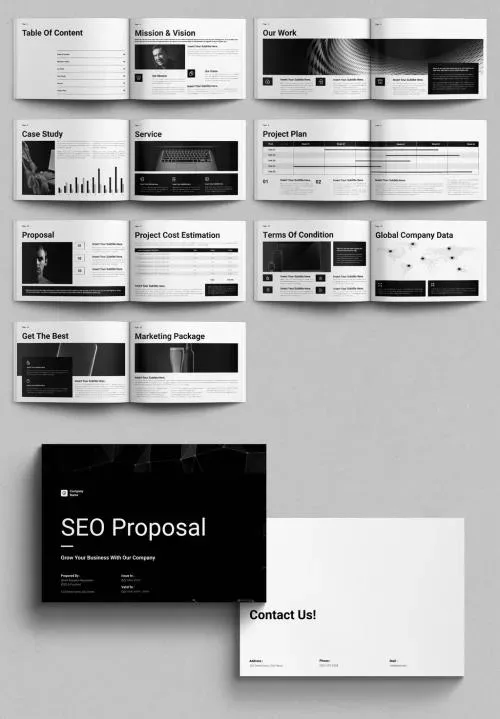
Why a Free SEO Proposal Template Beats a Blank Page
Most SEO professionals are not natural salespeople. They are analysts, technical tinkerers, and content strategists. Asking them to write persuasive copy from a cold start is like asking a chef to build the restaurant before cooking the meal.
A pre-built SEO proposal template removes that friction. It gives you a proven structure, so your brain can focus on the client’s specific problem instead of the formatting.
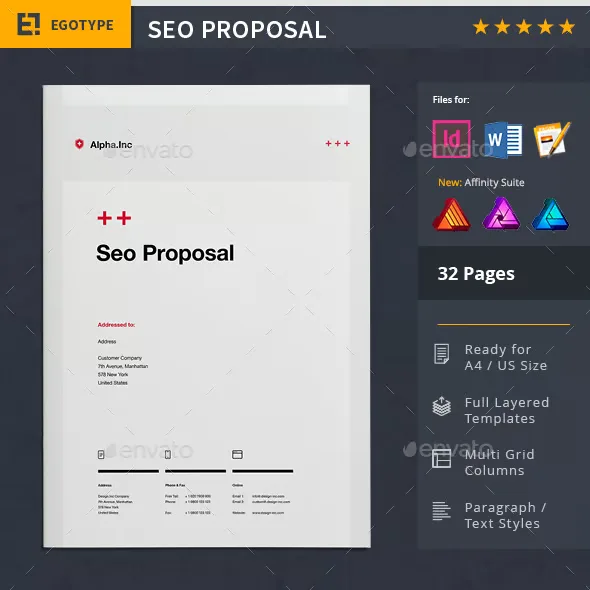
There is a measurable payoff too. Proposals built on a consistent framework tend to close faster because they answer the same questions in the same order every time. The client is not left hunting for pricing buried on page nine or wondering whether reporting is included.
Scope creep also drops. Focusing on SEO proposal template provides clear direction here. When your proposal clearly defines deliverables up front, you have a written reference point for every later conversation about “just one more thing.” That alone justifies the time you spend picking the right template.
What Separates a Good Proposal from a Great One
A great one does three things at once. It diagnoses the client’s problem, proves you understand it, and then presents a clear path forward with transparent pricing.
Proposals that skip the diagnosis phase and jump straight to services feel transactional. Clients can smell a canned pitch from a mile away. Even when you use a template, the opening section needs to reflect their actual situation, their competitors, and what is holding their rankings back.
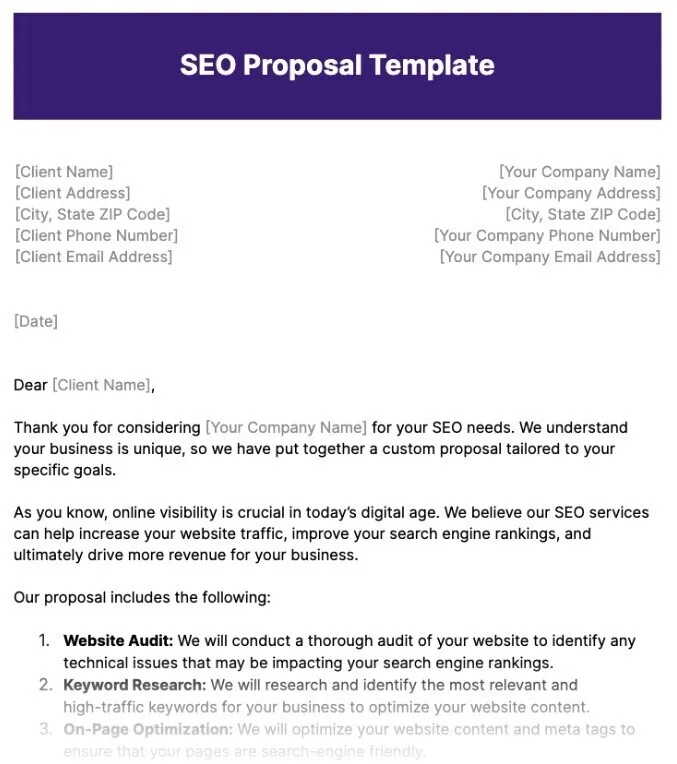
According to HubSpot’s research on sales proposal conversion, proposals the SEO proposal template are personalized to the prospect convert at meaningfully higher rates than generic ones. The template is scaffolding; the diagnosis is the house.
What Every SEO Proposal Template Should Contain
Before you copy any of the five templates below, you need to know what a complete proposal actually covers. Skipping a section is not a shortcut; it is a landmine.
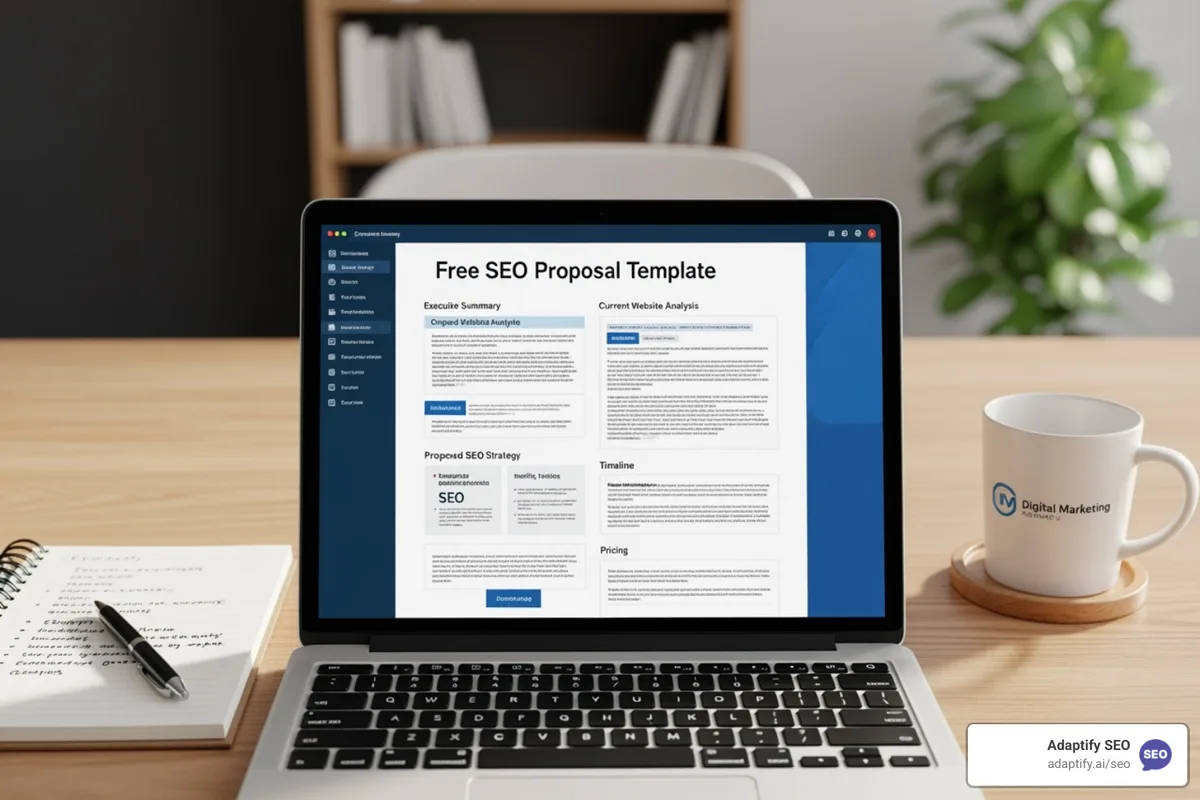
Use this SEO proposal template checklist as your baseline. If a template is missing more than two of these elements, it is not ready for client eyes.
| Section | Purpose | What To Include |
|---|---|---|
| Executive Summary | Frames the problem and your recommendation | Client goals, core challenge, one-sentence strategy |
| Discovery Findings | Proves you did your homework | Technical audit highlights, competitor gaps, keyword opportunities |
| Scope Of Work | Defines deliverables and boundaries | Specific tasks, monthly hours, exclusions |
| Timeline And Milestones | Sets expectations for results | 30/60/90-day plan, quarterly review points |
| Pricing And Terms | Prevents billing disputes | Monthly retainer, setup fee, payment terms, cancellation policy |
| Reporting And KPIs | Documents how success will be measured | Rankings, organic traffic, conversions, reporting cadence |
| About And Social Proof | Builds trust quickly | Team credentials, case studies, client logos |
| Next Steps | Removes friction to a decision | Contract signature, kickoff date, intro call |
Print this list and keep it beside your screen while you customize your chosen template. The difference between an amateur pitch and a professional one is almost always the discovery findings and the scope section, because those are the two most commonly skipped.
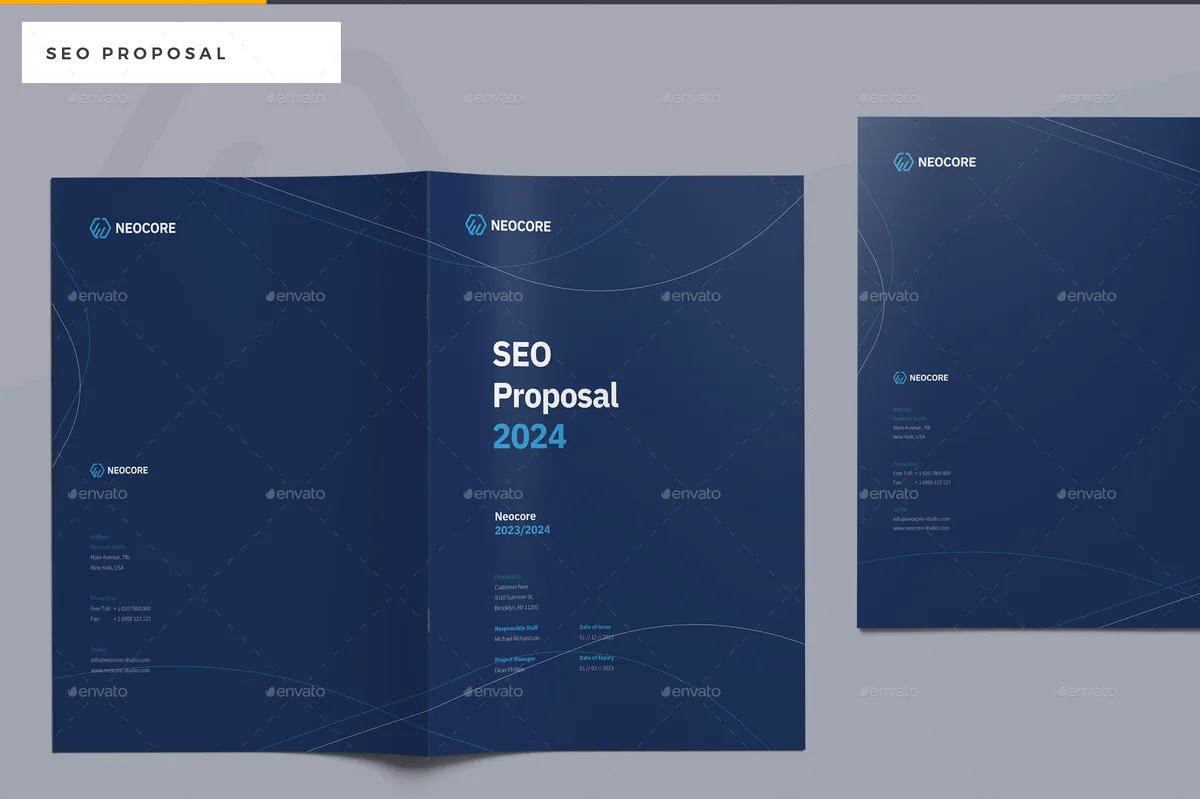
The 5 Free SEO Proposal Templates You Can Copy Today
These five templates cover the most common pitching scenarios: the solo freelancer, the growing agency, the technical audit specialist, the content-focused consultant, and the enterprise proposal.
Each one includes the core sections, and each is designed to be copied into Google Docs, Notion, or Word and customized in under an hour. Focusing on seo proposal template provides clear direction here. Here is the first.
1. the Freelancer Starter SEO Proposal Template
Best for: solo SEO consultants landing their first few retainers.
This is the leanest of the bunch. It runs four to six pages, keeps the focus on quick wins, and deliberately avoids enterprise language that would make a competitive direct manufacturer pricing monthly retainer feel inflated.
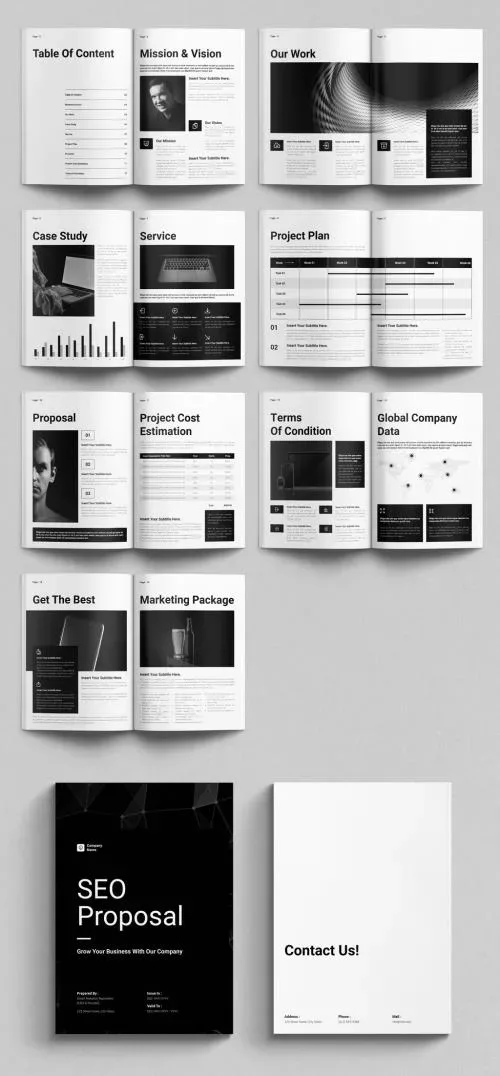
The structure is straightforward: a one-page executive summary, a short technical snapshot, a clear list of monthly deliverables, transparent pricing, and a simple next-steps page with a signature line. Effective execution in your SEO proposal template makes a tangible difference. No fluff, no forty-page decks.
Copy this one when the client is a local business, a small e-commerce brand, or a service provider who needs clarity more than sophistication. The core success factor here is the executive summary; keep it under 200 words and make sure it names the client’s single biggest SEO challenge in the first sentence.
Practical tip: add a small “What I Need From You” box near the end. It lists the access, logins, and content approval timelines you require to start work. This tiny section prevents weeks of onboarding delays later.
2. the Agency Full-Service SEO Proposal Template
Best for: boutique and mid-size agencies pitching multi-channel or multi-discipline retainer work.
The SEO proposal template template is heavier by design. It includes team introductions, service tier options, a detailed reporting cadence, and a phased implementation roadmap spanning the first ninety days.
The agency version also includes a well-structured pricing table with three service tiers: essential, growth, and partnership. Presenting tiered options is a proven conversion tactic; the client’s mind shifts from “should I do this?” to “which level do I need?”
Watch the length here. Agencies love to over-write, and a bloated proposal signals a bloated retainer. Trim aggressively. If a section does not directly help the client evaluate your offer, cut it.
Best practices for this template include dressing it in the agency’s brand, using real client logos in the social proof section, and showing a short case study with concrete results rather than vague claims.
A single paragraph that says “we moved a skincare client from position forty-two to position six on their highest-volume commercial keyword in five months” is worth ten slides of promises.
3. the Technical Audit SEO Proposal Template
Best for: technical SEO specialists and CRO-oriented consultants.
This one leads with diagnostics. Refining each detail of your seo proposal template strengthens this section. The first section after the executive summary is a snapshot of the client’s current technical state: crawl errors, indexation issues, Core Web Vitals gaps, schema markup coverage, and internal linking structure.
The proposal format works especially well when paired with a full audit deliverable. A thoughtful approach to SEO proposal template reinforces your qualifications. Clients who see a half-page of real findings in the proposal have far more confidence than clients who see a page of generic services list.
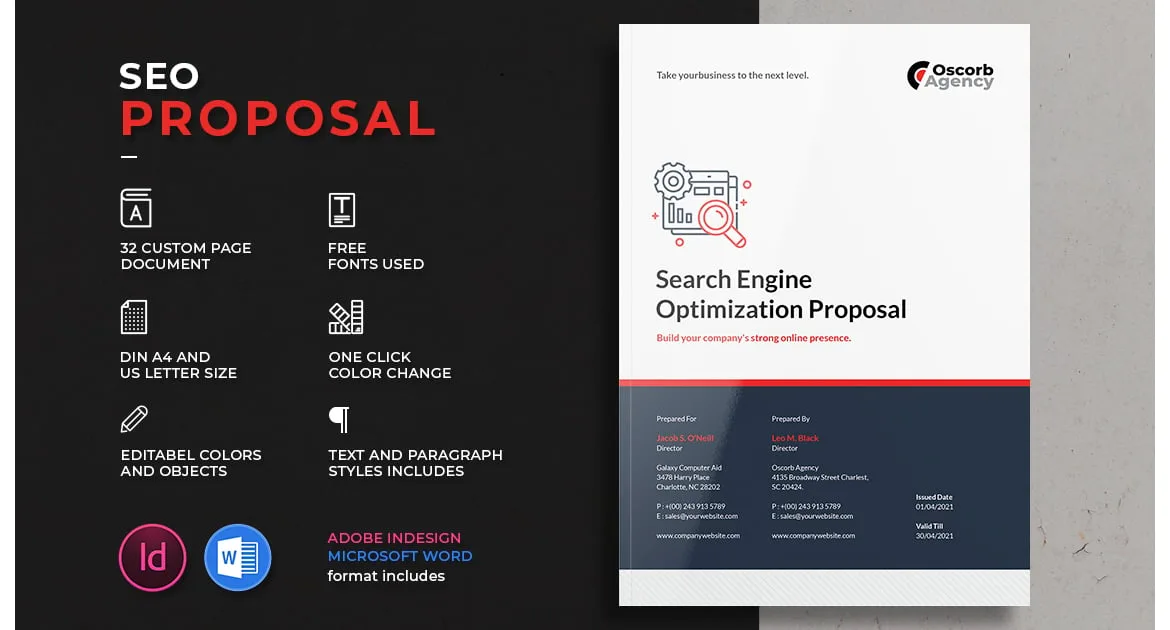
Include a proposed remediation roadmap with three phases: critical fixes, structural improvements, and ongoing monitoring. Be specific about the tools you will use (Screaming Frog, Ahrefs, or whichever stack your team runs) and about the monthly hours dedicated to monitoring.
One practical detail many miss: state clearly what happens if the site needs development work outside your scope. Are you handing fix recommendations to their in-house developer, or are you building them yourself? Clarity here prevents scope disputes three months in.
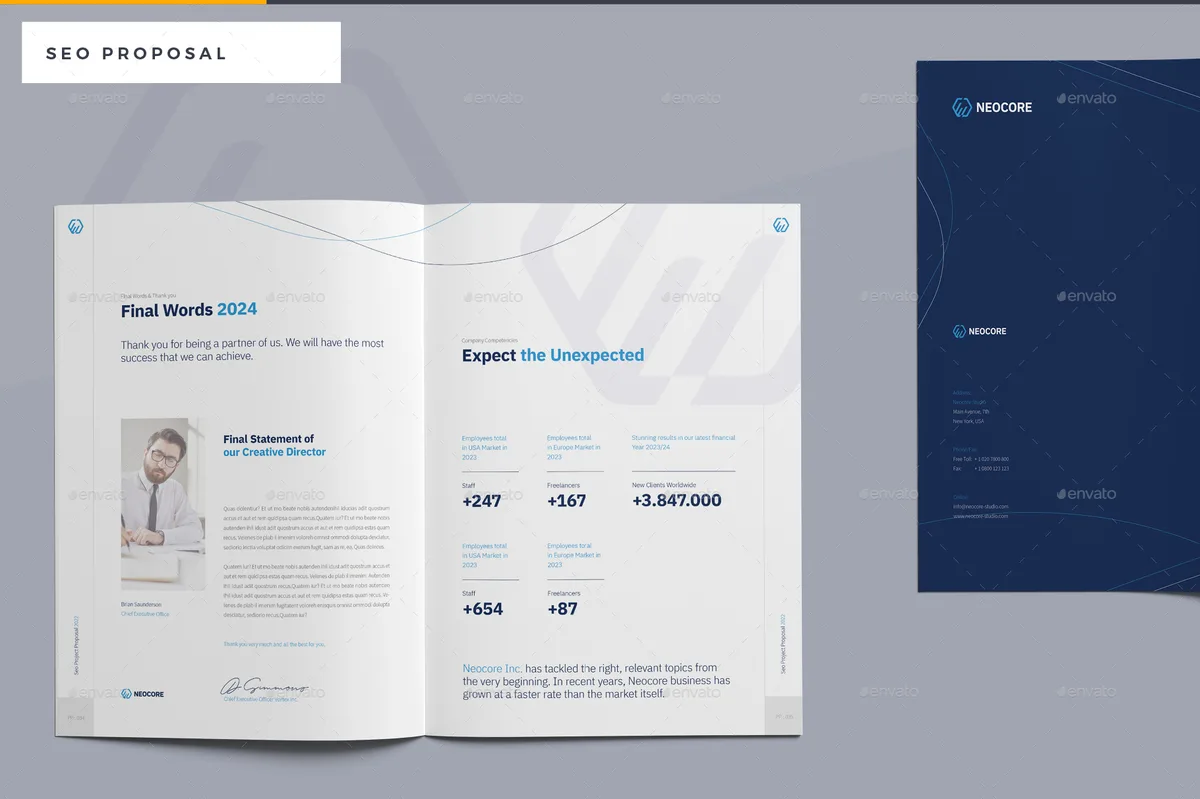
4. the Content and Link Building SEO Proposal Template
Best for: content strategists and outreach specialists pitching editorial programs.
The SEO proposal template template centers on quarterly content plans, keyword clusters, and link acquisition targets. It works best when paired with a visual sample of a topic cluster map; clients respond extremely well to seeing the actual content architecture laid out.

Structure it around three pillars: content production volume, on-page optimization cadence, and off-page authority building. Each pillar gets a short paragraph, a page count, and a measurement approach.
For the link building section, be honest about the method. Whether it is digital PR, guest editorial placements, or resource page outreach, name it clearly. Clients today have more SEO literacy than they did a few years ago, and vagueness about link sourcing can sink a deal on a follow-up call.
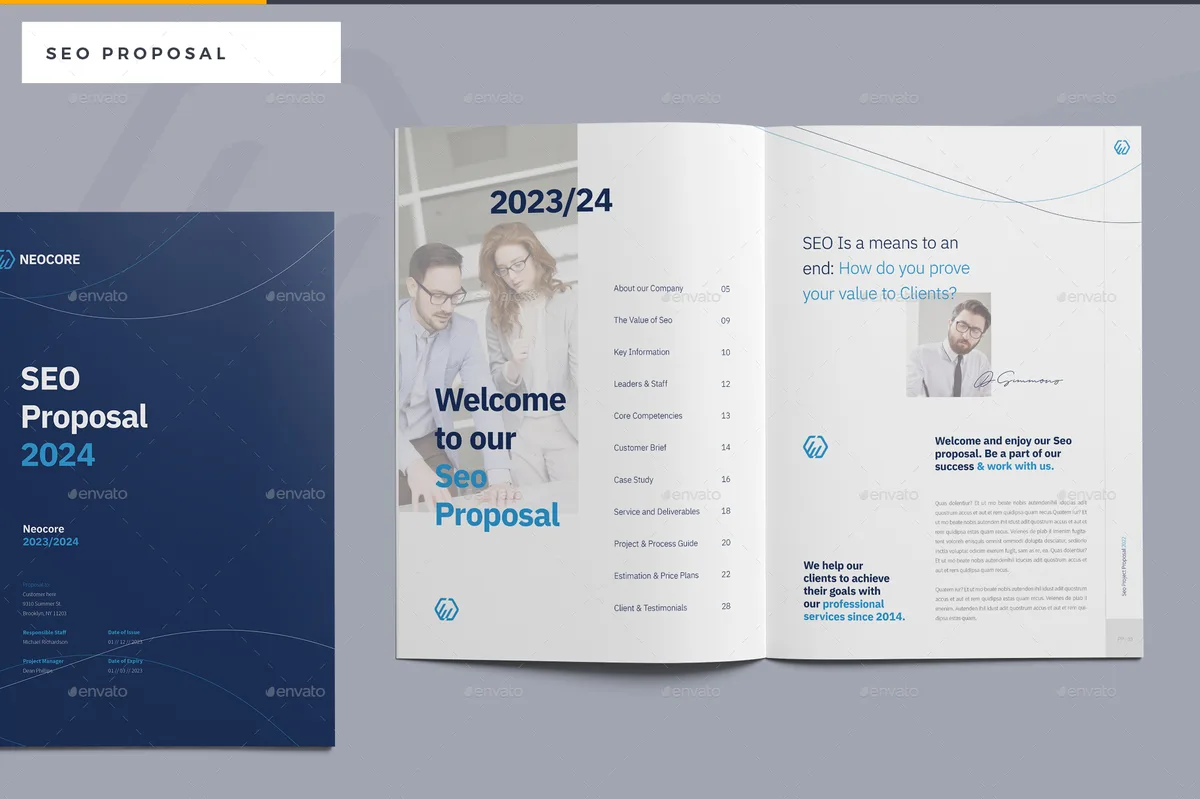
A helpful addition is a “Content Samples” appendix. Applying these principles to your SEO proposal template yields measurable results. Include two or three short pieces of your prior work. It takes ten minutes to attach and often closes the decision.
5. the Enterprise SEO Proposal Template
Best for: large brands, in-house teams, or agencies pitching multi-stakeholder organizations.
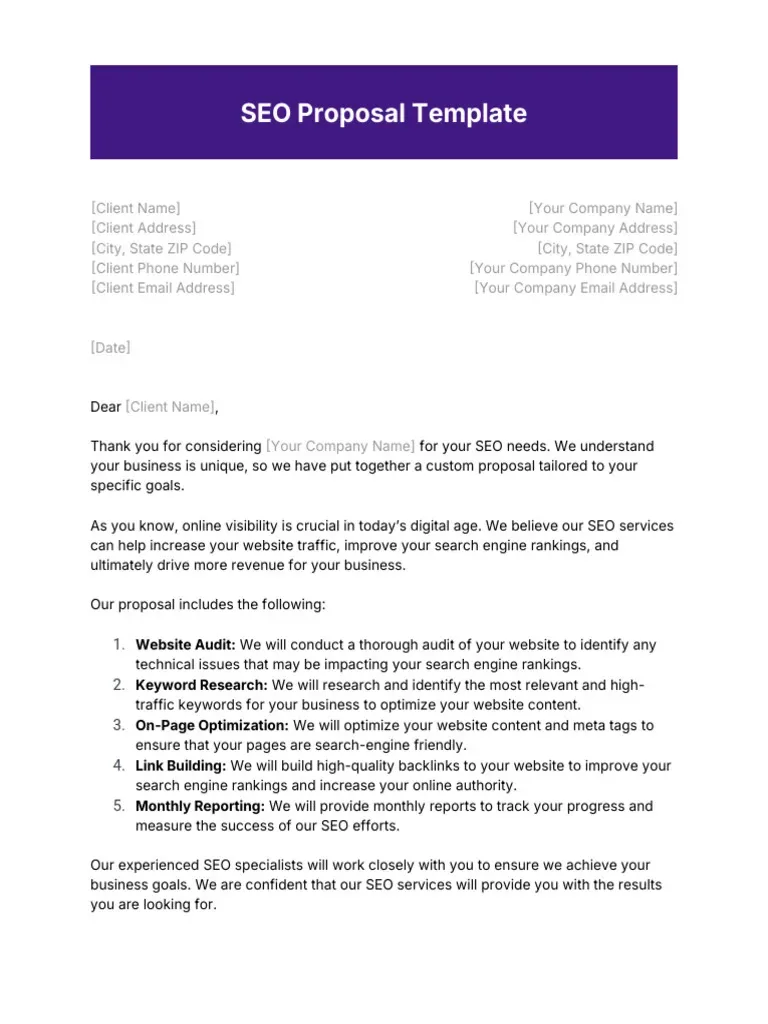
This is the longest template of the five, and it needs to be. Enterprise SEO decisions involve multiple stakeholders: marketing leadership, product owners, and often the CFO. Each one cares about a different part of the proposal.
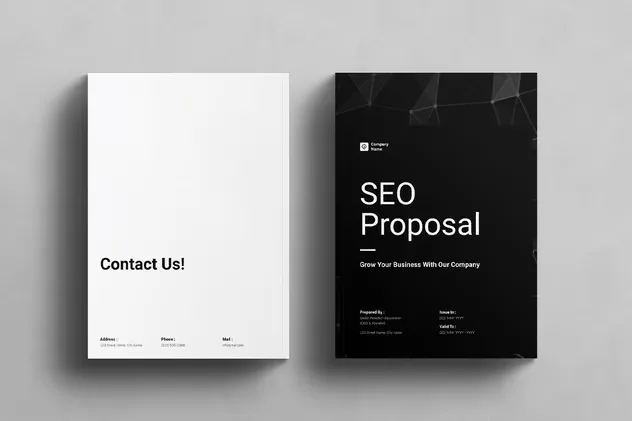
Structure it with an executive summary for the C-suite, a technical appendix for the engineering team, a resource and staffing section for operations, and an ROI projection for finance. Use clear labeling so each reader can jump straight to their section.
Enterprise proposals should also include a governance and communication plan. Proper attention to your SEO proposal template sets a strong baseline. How often will status reports go out? Who is the primary point of contact?
What is the escalation path for blockers? These are not glamorous questions, but they are the ones the procurement team will ask.
If the seo proposal template take one tip from this list, make it this: at the enterprise level, the proposal is not just a sales document. It is often circulated internally for approval, so make sure it reads cleanly even without your presentation alongside it.
How to Choose the Right SEO Proposal Template
The temptation is to pick the most impressive-looking template and run with it. Resist that urge. The right choice depends on three factors: the client’s budget level, their technical sophistication, and the length of the engagement you are proposing.
Small business, short engagement, single service line: use template one or three. Developing your SEO proposal template with precision highlights key strengths. Mid-size agency work, multiple service lines: use template two. Content-led programs: template four. Enterprise or multi-stakeholder: template five.
A common mistake, from what I have seen on the consulting side, is matching a small local business with an enterprise-length proposal. It overwhelms them. A forty-page proposal to a plumber is more likely to be ignored than read, no matter how good the content.
Match the document to the reader, not to your own ambition. Then, over time, upgrade to the fuller template as the client relationship grows.
SEO Proposal Template Tips That Actually Move the Needle
Once the SEO proposal template have your template selected, the next layer is customization. These practical tips come from watching hundreds of pitches succeed and fail.
- Personalize the first paragraph of every proposal. Name the client’s biggest competitor and their current ranking gap. This single sentence telegraphs that you did real research, and it sets the tone for the whole document.
- Lead with their problem, not your services. The proposal that says “we offer technical audits, on-page optimization, and content creation” is invisible. The one that says “your category pages are being outranked because of crawl budget waste on filter URLs” is unforgettable.
- Anchor pricing to outcomes. Instead of “SEO retainer,” say “organic revenue growth program.” The language change alone lifts perceived value.
- Include one case study with a specific metric. A single number, plainly stated, is stronger than three paragraphs of testimonials.
- Add a “why us” section under 150 words. Most proposals bury this in a bloated about page. Compress it and make it punchy.
- Screenshot everything technical. If you mention a broken canonical tag, show the actual crawl report snippet. Evidence beats assertion.
- Use a signature-ready final page. Remove the friction of a separate follow-up. Put the contract directly in the proposal PDF.
- Offer a short kickoff call with a specific time slot. Not “reach out if you have questions” but “here are two times that work for me.”
- Always include a mutual action plan. A simple timeline showing what happens in week one, week two, and week four after signing prevents post-signature drift.
- Proofread ruthlessly. A single typo on the pricing page has killed more deals than I want to count.
Each of these is small on its own. Combined, they turn a standard SEO proposal template into a document that feels tailor-made for the specific reader.

The SEO Proposal Template Checklist Before You Hit Send
You have the template, you have the customization, and you are about to click send. Pause for ninety seconds. Run through this final check.
Is the client’s name spelled correctly and used consistently? Is the pricing section clear and free of ambiguous line items? Is there a specific date on the proposal (even a soft one, like “this proposal is valid for thirty days”)? Are all links working? Does the document open cleanly on mobile?
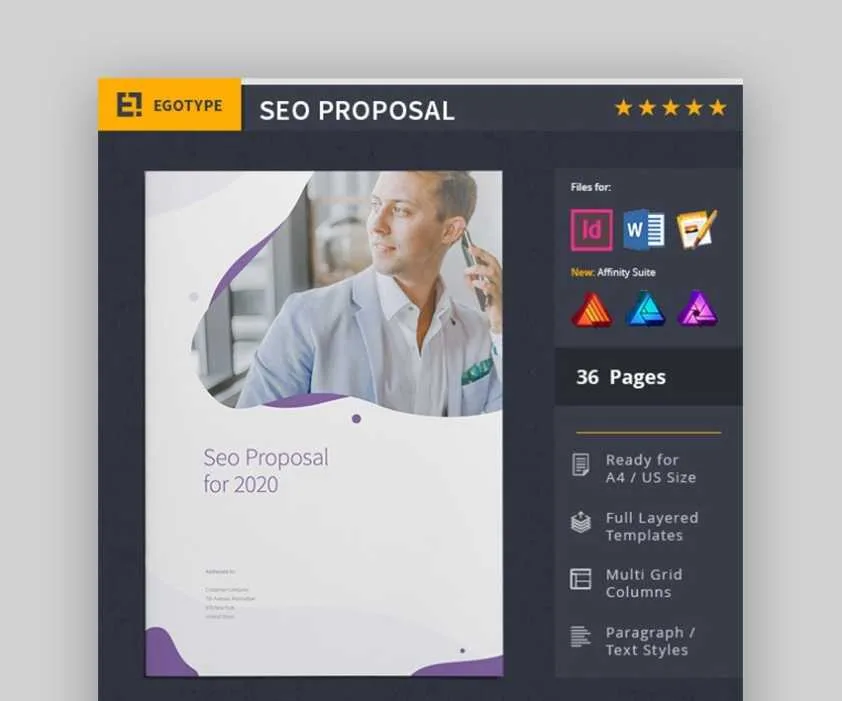
Have the SEO proposal template included all required sections from the earlier checklist? Is the timeline realistic? Are the KPIs measurable and fair? Have you stated your assumptions about client cooperation and content approvals?
Have you double-checked the scope boundaries, especially what is excluded? Have you included the next-steps page and the signature line? Have you proofread it once on screen and once printed?
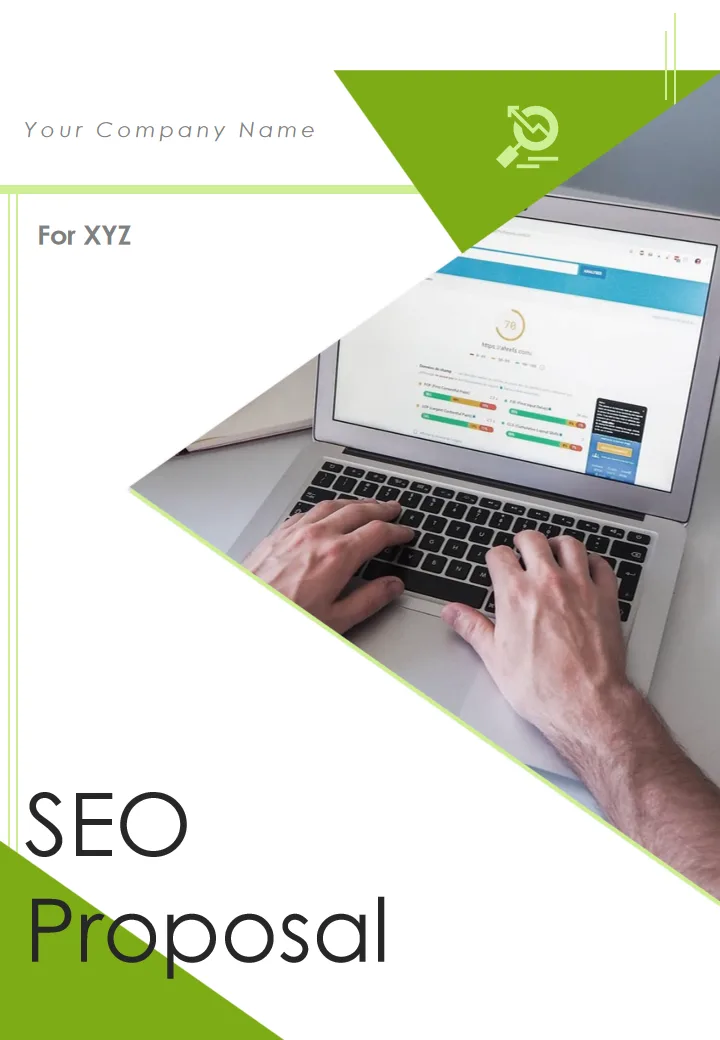
This is the last barrier. Proposals that pass this SEO proposal template checklist go out with confidence. Proposals that fail it are the ones that linger unanswered, and you will spend a week wondering why.
SEO Proposal Template Best Practices for Building Client Trust
Trust is the currency of any service proposal. Before a client says yes, they need to believe three things: that you understand their problem, that you know how to solve it, and that you will not waste their money.
Proposals the SEO proposal template hit all three tend to share a few patterns. They diagnose before they prescribe. They state assumptions explicitly and invite corrections. They show prior work with numbers, not adjectives.
Another pattern worth copying is transparency about uncertainty. Maintaining clarity across your seo proposal template remains essential. SEO is not a guaranteed-outcome discipline. Proposals that acknowledge this and outline how you handle algorithm updates, downturns, or scope changes tend to build more trust, not less.
Clients respect the professional who says “here is my best estimate based on comparable cases” more than the one who promises to triple traffic in ninety days.
If the SEO proposal template are working with a specialized segment, such as a contract manufacturing team targeting B2B procurement buyers, adapt the language accordingly. Mention their direct competitors by name, their procurement cycle, and their lead-gen metrics. This level of specificity signals you are a partner, not a vendor.
Common Mistakes That Kill Conversion
The most common mistake is burying pricing. If the client has to scroll past eight pages to find your fees, you have already lost them. Move pricing to page three or four at most.
The second is excessive length. A proposal is a decision-support tool, not a memoir. Every page should help the client decide yes or no.
The third is neglecting to mention reporting. Refining each detail of your SEO proposal template strengthens this section. Clients want to know what they will see, how often, and in what format.
A single line about a monthly dashboard and a quarterly business review is enough, but omitting it entirely reads as “we will send you an invoice and hope for the best.”
Finally, missing a clear next step. Proposals that end without a specific action (sign, book a call, reply with questions) stall out. Always end with an ask.
Frequently Asked Questions About the SEO Proposal Template
Here is an in-depth breakdown of key considerations regarding Frequently Asked Questions About the SEO Proposal Template:
How Long Should a SEO Proposal Template Be?
Four to eight pages for most freelance and small-agency engagements. Enterprise proposals run longer, sometimes twenty to thirty pages when technical appendices and compliance sections are included. The length should match the complexity of what you are proposing and the sophistication of the reader.
Should I Send a PDF or a Link?
Send a PDF unless the client specifically asks otherwise. PDFs are easier to archive, print, and forward internally. If you use a tool like PandaDoc or Proposify, send the live link, but always attach the PDF as well.
Can I Use the Same Template for Every Client?
Yes, as a structure. A thoughtful approach to seo proposal template reinforces your qualifications. No, as content. The sections, the layout, and the pricing table can stay consistent. The diagnosis, the case study references, and the specific recommendations must change with every pitch.
What if the Client Asks for a Discount?
Hold the price and adjust the scope. If they want a lower monthly fee, reduce deliverables accordingly. Discounting without removing scope trains the client to expect discounts in every renewal cycle.
Do I Need to Include a Case Study in Every Proposal?
At least one, yes. It does not have to be long; a single paragraph with a specific metric is often enough. It proves you have done the work before and gives the reader a mental anchor for what “success” looks like.
How Detailed Should the Timeline Be?
Detailed enough that the client understands what happens weekly during the first month, monthly thereafter. A thirty-sixty-ninety-day framework is a standard that clients find intuitive and reassuring.
Turning Your SEO Proposal Template Into a Repeatable Sales System
Once you have copy-ready templates, the next step is turning the whole process into a system. This is where most SEO professionals leave money on the table.
Save each customized proposal as a new template for the SEO proposal template client type. After three or four, you will have a small library reflecting your actual pitch patterns: a local business version, a B2B SaaS version, an enterprise version. Each successive proposal takes less time to produce.
Pair your proposal library with a short internal playbook. It should cover the discovery questions you always ask, the two or three case studies you attach by default, and the exact follow-up cadence after sending.
A five-day follow-up with a specific question (“Would Tuesday or Thursday work for a quick call on the scope section?”) converts far better than a generic “checking in.”
Another element worth building into the system is a simple proposal scorecard. Maintaining clarity across your SEO proposal template remains essential. Score each pitch you send on five hundred-point dimensions: personalization, scope clarity, pricing transparency, social proof, and next-step specificity. Over time, you will see which dimension correlates with your wins and which with your losses. Adjust accordingly.
The broader topic cluster here is client acquisition for SEO services, and proposals sit at the center of it. From the parent topic of winning more retainers, you can branch into discovery call scripts, case study writing, LinkedIn outreach sequences, and post-signature onboarding.
Each is a sub-topic worth developing into its own internal document, but the proposal is the hinge that connects them all.
Start with one template. Copy it, customize it, send it, learn from the result. Then iterate with a second. Within a month you will have a system that produces consistent work and frees your calendar for actual SEO execution, which is what clients are really paying for.
For verified reference and background research, consult the authoritative informational resource on this topic.