Choosing an SEO certification can feel like walking through a crowded marketplace where every vendor swears their program is the one that will change your career. I’ve spent years hiring, training, and mentoring search marketers, and I’ve reviewed more certificates than I care to count.
So here’s the honest truth: most programs teach you the same fundamentals, but the way they teach it — and what you walk away with — varies wildly. This SEO certification guide exists to cut through that noise.
Below the SEO certification’ll find fifteen programs I’ve either completed myself, vetted through colleagues, or watched bear fruit in the careers of people I’ve hired. Some are free. Some cost real money. All of them teach something worth knowing.
We’ll walk through the top-rated free options, the premium programs that justify their price, the specialist tracks for technical and content folks, and a practical checklist you can use before you pay for anything.
Why an SEO Certification Still Matters (And Why It Doesn’t)
Let’s start with a bit of myth-busting. No certificate on earth will make Google rank your site. Search engines don’t care about your badges, your LinkedIn credentials, or the PDF you printed after passing a final exam.
What a solid SEO certification does is compress years of trial and error into a structured curriculum, force you to learn the parts of the discipline you’d otherwise skip, and give hiring managers a signal that you’ve done the homework.
That signal matters more than some practitioners admit. When I’ve screened junior applicants, a relevant certificate told me two things: this person invested in their own development, and they’ve been exposed to a shared vocabulary.
The SEO certification saved me twenty minutes of explaining what canonical tags are. It didn’t tell me whether they could actually diagnose a traffic drop, but it moved them up the pile.
Senior practitioners often skip certifications entirely, and that’s fine. If you’ve spent five years shipping technical audits and recovering sites from core updates, you don’t need a certificate to prove it.
But for career changers, in-house marketers who’ve been handed SEO responsibilities by accident, and freelancers building credibility with new clients, an SEO certification is a fast, cheap shortcut to competence and trust.
The Criteria I Used to Vet All 15 Picks
Before we dive into the list, you should know how I sorted the wheat from the chaff. The SEO market is flooded with low-effort courses, and a fair number of them are recycled blog posts with a quiz stapled to the end. I looked for a few consistent markers.
First, the curriculum had to cover the actual mechanics — crawlability, indexing, on-page optimization, keyword research, link building, and technical fundamentals like Core Web Vitals and structured data. Focusing on seo certification provides clear direction here. Second, the instructors needed demonstrable field experience, not just credentials.
Third, the program had to be current enough to reflect how search actually works today, which means real discussion of AI-generated content guidelines, E-E-A-T, and Google Search Console’s more advanced reporting.
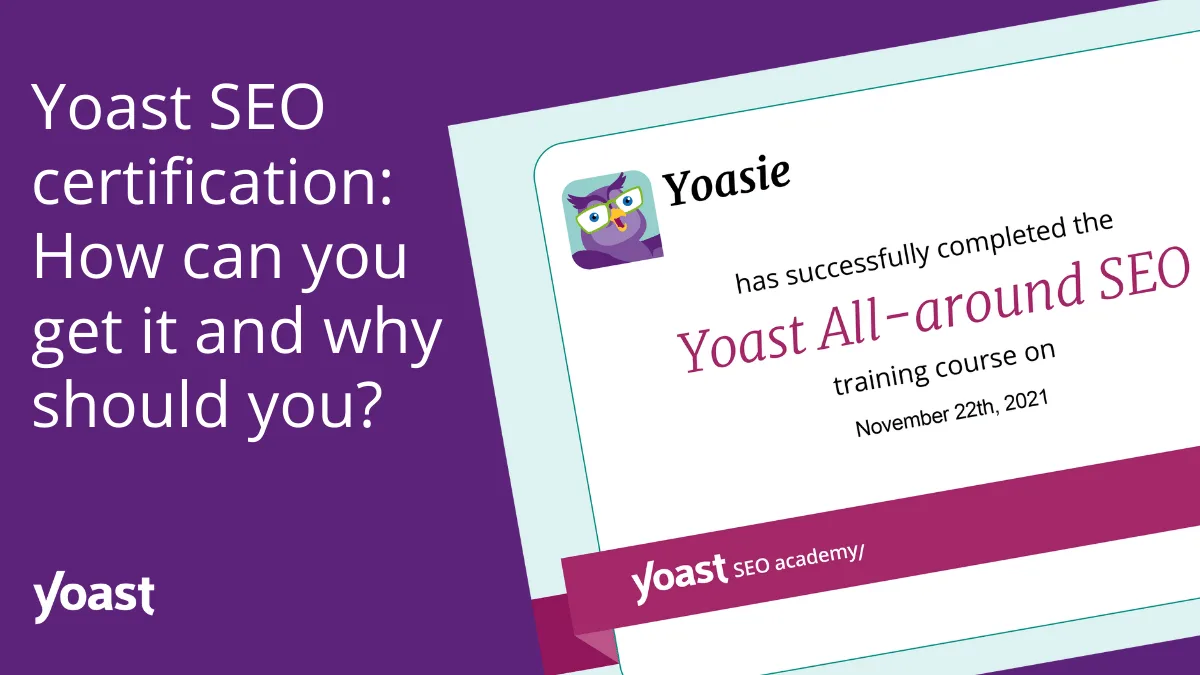
Beyond that, I weighted practical assignments heavily. A certification that asks you to audit a live site, build a keyword map, or run a crawl-site diagnosis teaches ten times more than one that just throws multiple-choice questions at you. Price and time commitment mattered too, but only as tiebreakers.
One quiet criterion I’ll admit to: I care whether the certificate looks credible when you link it on LinkedIn. Some programs carry more industry recognition than others, and pretending otherwise is dishonest.
Top-Rated SEO Certification Picks: the Free Tier
Free doesn’t mean shallow. Some of the strongest foundational training available costs nothing beyond your time, and the free tier is where I’d start anyone who’s still deciding whether search is for them.
A word of caution, though: free options often skip advanced topics or lack hands-on labs, so treat them as on-ramps rather than landing spots.
The programs in this section are the free SEO certification picks I recommend most often. Each one is genuinely useful for a beginner, a career changer, or a marketer who needs a refresher without writing a check.
- Google Analytics Certification (Google Skillshop) — This is arguably the most widely recognized free credential in digital marketing. It teaches you how to interpret traffic, set up conversions, and read acquisition reports, all of which feed directly into SEO analysis. The course is self-paced, and the exam is genuinely challenging enough to mean something. My practical tip: do it after you’ve set up Search Console on a real site, because the analytics data clicks into place much faster when you have live numbers to look at.
- Google Search Console Training (Google Search Central) — Not technically a certification, but the official Search Console training modules are essential and free. You learn how indexing works, how to submit sitemaps, how to read performance data, and how to diagnose coverage issues. Anyone serious about an SEO certification path should complete this before touching paid programs. My tip: pair each module with a live property, because Search Console only makes sense once you’re clicking around in it.
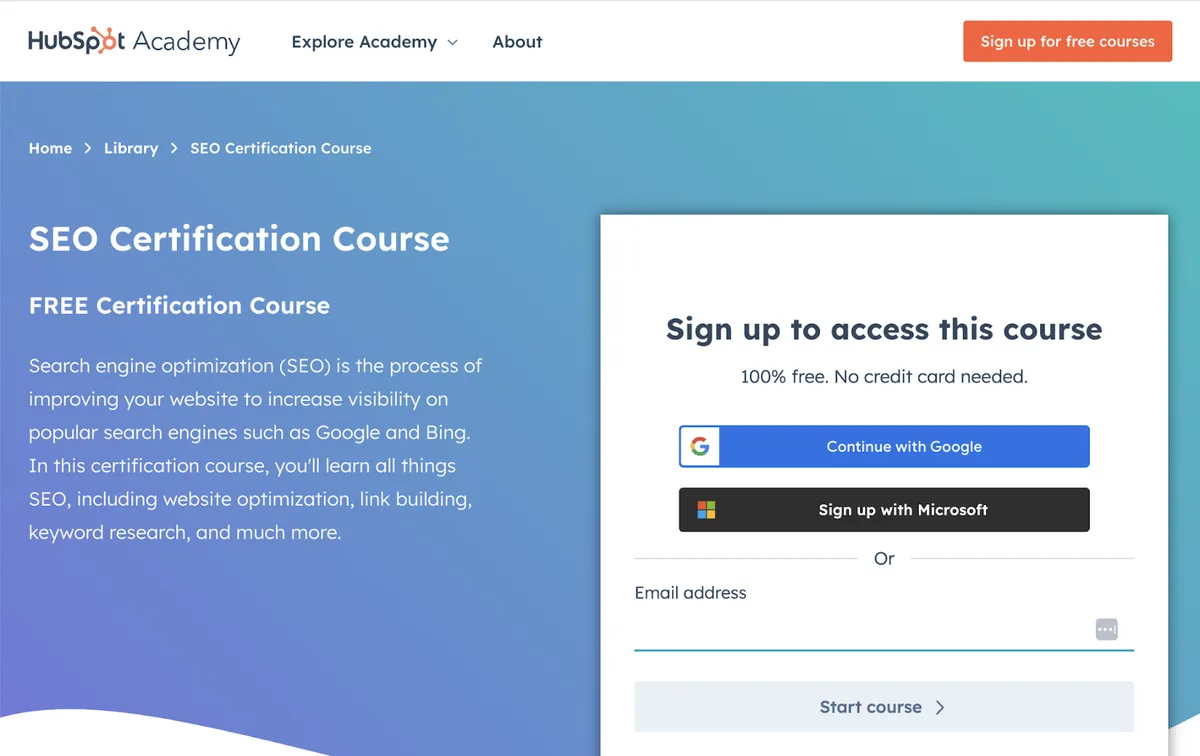
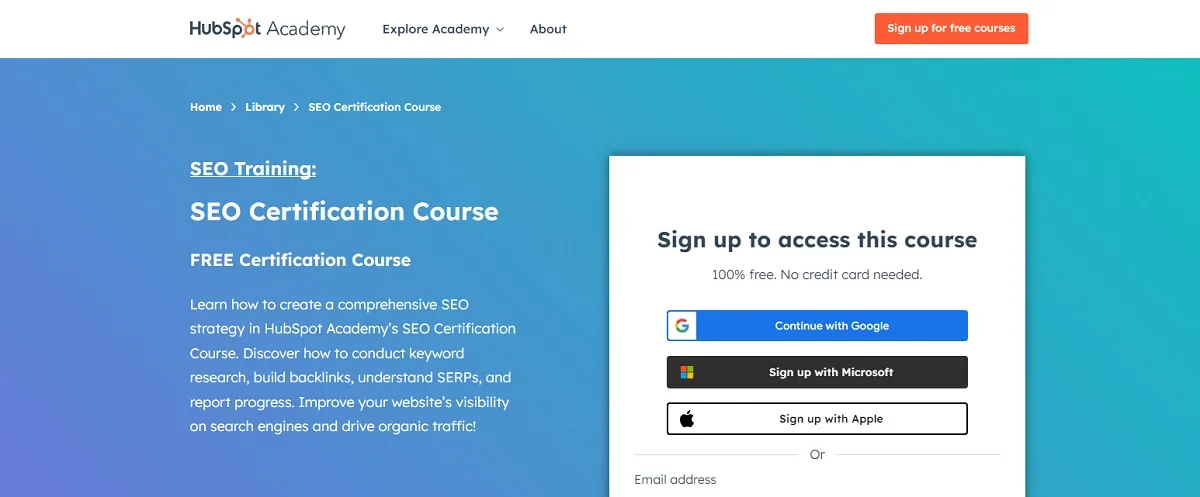
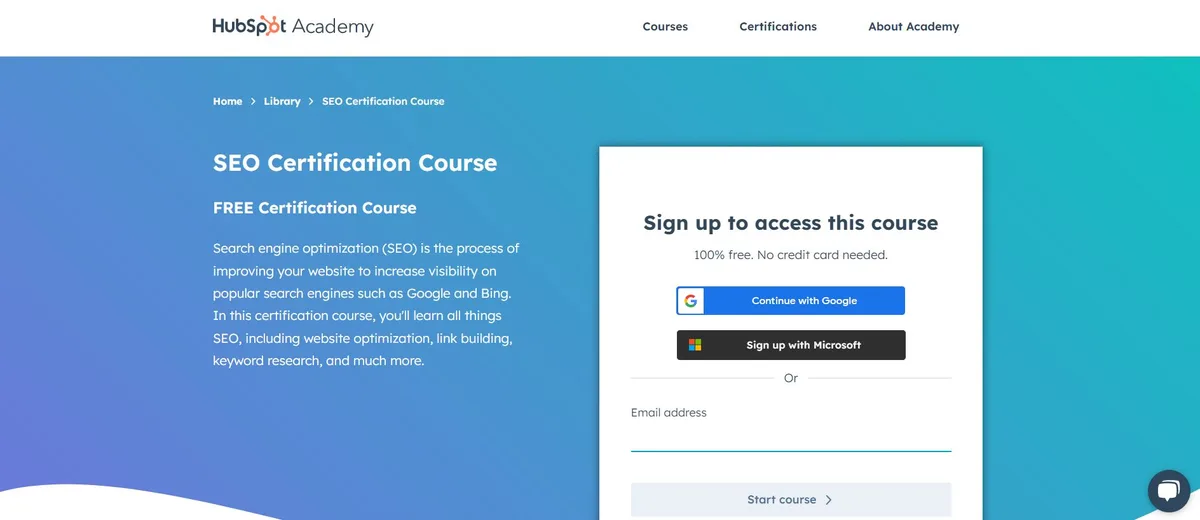
- HubSpot Academy SEO Certification — A genuinely well-structured free course that walks through keyword research, on-page optimization, and link building with a marketing-first lens. It’s excellent for content marketers and in-house folks who care about the promotional side of search. The exam is passable in an afternoon. My tip: skip the parts you already know and focus on the sections about content calendars and pillar clustering, because they’re more nuanced than most free resources.
- Semrush Academy SEO Fundamentals Course — Semrush occasionally rotates courses, but their fundamentals material is consistently strong and free. You get access to their teaching on technical audits, backlink analysis, and SERP monitoring. What sets it apart is that the lessons reference real tooling, so you see how professionals actually work. My tip: sign up for the free Semrush tier while you take the course so you can practice each lesson in the dashboard.
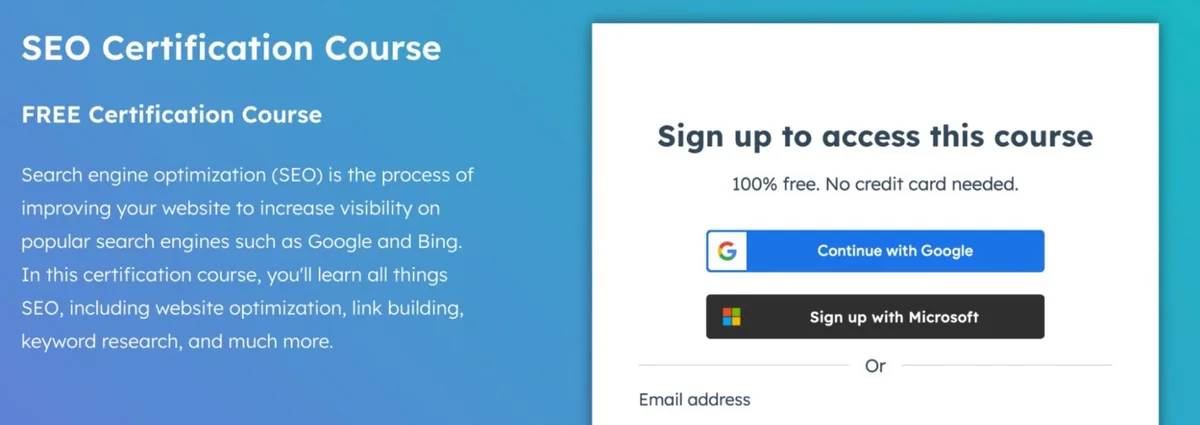
- Moz Academy Free Courses — Moz’s “SEO Essentials” and “Link Building” short courses are old but still gold. The way they explain domain authority and link quality remains one of the clearest primers I’ve found. Free access gives you a solid base before you consider Moz’s paid certification. My tip: take the link-building course if you plan to do outreach at all, because their framework for evaluating link relevance is practical and easy to apply.
Notice what these free picks share: they’re backed by companies with real skin in the SEO game, which means the material stays reasonably current. That’s the bar I’d hold any free program to before trusting it.
Best-Rated Premium & Professional SEO Certification Programs
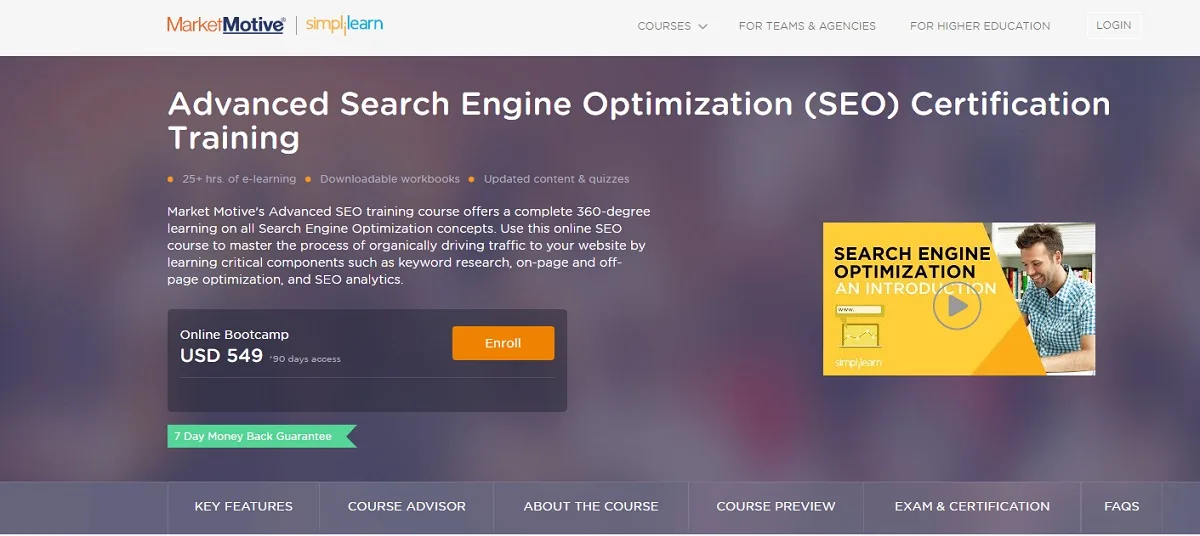
Once you’ve covered the free fundamentals, the paid tier is where structured, no-fluff training begins. This is also where I’ve seen the biggest gap between marketing claims and actual content quality. The programs in this section earn their place through depth, hands-on labs, or industry recognition that clients and hiring managers genuinely respect.
If you’re paying for an SEO certification, ask yourself a simple question first: will this certificate help me get a job, close a client, or upskill my team? If the answer is “no, I just want the knowledge,” a book or free course will do fine. If it’s yes, these are the picks I’d stand behind.
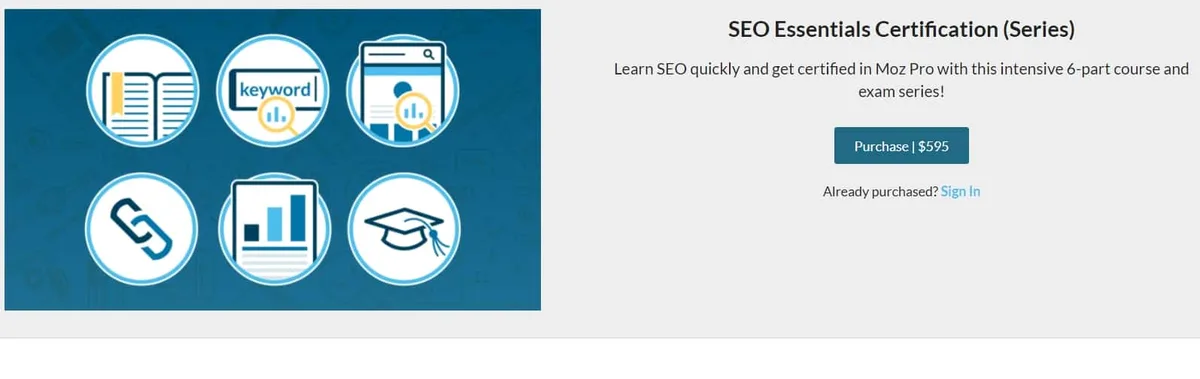
- Moz SEO Certification (Moz Academy) — The Moz certification has long been a recognizable badge in the industry, and the curriculum has matured into a genuinely thorough track covering everything from technical crawl issues to content and link strategy. What I appreciate most is the practical framing: assignments ask you to apply concepts to hypothetical but realistic scenarios. My tip: complete the technical section first even if you’re a content person, because it makes the rest clearer. The course typically sits on your LinkedIn for years, and it holds up in interviews.
- Semrush SEO Toolkit Certification — Semrush offers a certification specifically built around its toolkit, which is both its strength and its limitation. If you work at any agency or in-house team that uses Semrush, this is practically mandatory because it teaches you to pull data efficiently. My tip: pair this with a broader course on fundamental theory, because the Semrush course is more about workflow than SEO principles.
- Ahrefs Certification Courses — Ahrefs has invested seriously in education, and their certification material on keyword research, link building, and technical SEO is exceptional. The lessons are direct, evidence-based, and often challenge conventional wisdom. My tip: the technical SEO certification is the standout. It walks through auditing steps that I still use in actual client engagements.
- SEO Certification From UC Davis (Coursera) — If you want an academic credential with university weight behind it, this is a solid choice. The course covers search fundamentals, keyword research, content optimization, and analytics through a rigorous if slightly dry curriculum. My tip: audit the course free first to check the pace matches your learning style, then pay for the certificate only if you finish.
- ClickMinded SEO Certification — ClickMinded’s programs are tightly focused on execution, with an emphasis on the checklist-style workflow that agency teams use. If you’re a freelancer trying to standardize your audits, this is worth the investment. My tip: pair it with their content marketing certification if you handle end-to-end campaigns, because the two complement each other well.
What separates the premium picks from the free tier isn’t just depth — it’s accountability. These programs force you to practice the parts of SEO most people avoid: technical audits, structured keyword research, and systematic content planning. That’s where the real skill lives.
Choosing a Specialist Track: Technical Vs. Content Vs. Strategy
SEO has fragmented into distinct specializations, and one certification rarely covers all of them well. The best SEO certification choices depend on where you sit in the workflow. The technical track suits people who like diagnosing crawl errors and reading server logs.
The content track suits writers and editors who live in the SERPs. Effective execution in your SEO certification makes a tangible difference. And strategy suits marketers who need to connect search efforts to revenue.
Below is how I’d split the specialist tracks across the fifteen picks, so you can focus your effort where it counts. Each row is a category, and you’ll find the specific programs that map to it.
First, technical SEO certification picks for people who want to own the crawl, index, and site-health layer. Look at Ahrefs’ technical certification, Semrush’s toolkit certification, and Google Search Console training. These three together cover the mechanics most teams miss.
Second, content-focused picks for writers and editors. Refining each detail of your seo certification strengthens this section. HubSpot Academy, Moz, and ClickMinded’s content marketing track do the heavy lifting here. They teach keyword mapping, brief creation, on-page optimization, and editorial workflow that actually scales.
Third, strategy and analytics picks. Google Analytics, the UC Davis course on Coursera, and ClickMinded’s full track give you the reporting and framework chops to talk to leadership in revenue terms.
Fourth, ecommerce-specific tracks. Maintaining clarity across your SEO certification remains essential. Semrush’s ecommerce content and a handful of short courses from Moz cover product-page optimization and category architecture — often neglected but heavily rewarded in retail SEO.
Which Certification Suits a Beginner Best?
Start free. Complete Google Search Console training, HubSpot Academy, and Semrush’s fundamentals course, then decide whether you want to pay for depth. That combination gives you roughly the same base knowledge as most paid entry programs.
Which is the Most Respected Certificate for Senior Roles?
For management and consulting roles, the Moz SEO certification and the UC Davis credential carry the most name recognition. Neither guarantees a job, but both signal a structured understanding that holds up under questioning in interviews.
How Much Time and Effort Each Program Really Takes
Time is where programs quietly differ. Some certifications claim “10 hours” but really demand 25 if you do them properly. Others look intimidating but can be completed in a long afternoon if you skip the fluff.
Here’s my rough reality check for the fifteen picks, based on how long each took me or colleagues who completed them.
Free-tier programs generally take 4-10 hours if the SEO certification already know digital marketing basics, and 15-25 hours if you’re starting cold. Premium programs sit in the 15-30 hour range, with ClickMinded and the Moz coursework toward the upper end. The UC Davis course runs several weeks because it follows a semester-style structure.
None of the seo certification takes into account the practice work. I’d add at least 50 percent to the stated runtime for any program you take seriously, because the assignments are where the learning actually sticks. Budget a solid weekend for the free options and a few weeks of evenings for the premium tier. That pacing keeps you productive without burning out.
The SEO Certification Checklist: What to Verify Before You Pay
Before you hand over your time or money, run through this checklist. It’s the same one I use when recommending programs to team members or clients. The SEO certification checklist below catches most of the traps I’ve seen people fall into.
- Curriculum depth on technical SEO: Does the course cover crawl analysis, indexing, structured data, and Core Web Vitals? If not, it’s a marketing course in disguise.
- Instructor credibility: Can you find evidence of the instructor actually ranking sites, running audits, or leading SEO teams? Check their LinkedIn and search for their work.
- Hands-on practice: Are there assignments involving live sites or hypothetical but realistic audits? Multiple-choice only is a red flag.
- Currency of the material: Does the program discuss AI-generated content, E-E-A-T, helpful content principles, and Search Console updates? If not, it’s stale.
- Recognition in your target market: Does the certificate carry weight where you want to work or sell services? Ask people in your network before paying.
- Community and support: Does the program include forums, office hours, or instructor contact? A lonely certificate is a lonely experience.
Run every candidate program through those six brackets. If one fails three or more, move on. There’s no shortage of alternatives.
Applying SEO Certification Tips to Real Projects (And What to Ignore)
Certifications hand you frameworks. Real sites hand you messes. The gap between the two is where most new practitioners stumble. Here are the SEO certification tips I give every junior marketer once they’ve finished a program and are staring at an actual client or company site.
First, apply the technical lessons first. Run a crawl, check indexing, review Core Web Vitals, and set up Search Console. Do that before you write a single brief. Most traffic recoveries I’ve seen start with fixing basics, not publishing more content.
Second, use the keyword research framework from your certification to build a real keyword map for one section of the site — not the whole thing, just one. Structuring your SEO certification around proven patterns ensures impact.
Ship it, measure it, then scale. Third, ignore any framework that insists on “authority stacking” or similar shortcuts that certificates sometimes mention in passing. Those tactics break eventually and the certification doesn’t warn you enough.
Fourth, treat the curriculum as scaffolding, not doctrine. SEO shifts; the core challenge of earning attention doesn’t. When your certification contradicts what you see in real data, trust the data. The best practitioners I know treat certifications as a starting vocabulary, not a rulebook.
Fifth, keep returning to your training materials when the seo certification hit something unfamiliar, like a surge of AI-generated content or a sudden indexing glitch. The refresher is often enough to get you unstuck.
SEO Certification Best Practices for Career Growth
A certificate on its own moves the needle far less than how you deploy it. I’ve watched people parlay a single free course into a full career, and I’ve seen people with three premium badges fail to get past a first interview.
The difference is in the SEO certification best practices you build around the course itself. Here’s what’s actually worked for the people I’ve mentored.
Layer certifications. Applying these principles to your SEO certification yields measurable results. Start free, add a premium program once you know the fundamentals, then add a specialist track when your job demands it. Don’t collect certificates like trading cards — each one should unlock a specific capability.
Build a public portfolio alongside your training. Audit a real site, publish the findings, and link it in your profile. I’ve hired people based on their portfolio audits more often than their badges.
Pair every certification with real measurement. Track the traffic, rankings, and conversions that result from the work you do after the course. That data becomes your strongest interview material. And finally, contribute publicly — write about the lessons you learned, ask questions in forums, and engage with the SEO community. Certification opens doors, but the professional network you build sustains your career.
| Program | Cost Tier | Best For | Format | Approx. Time |
|---|---|---|---|---|
| Google Analytics Certification | Free | Beginners, analysts | Self-paced modules + exam | 6-10 hrs |
| Google Search Console Training | Free | All levels | Self-paced modules | 4-8 hrs |
| HubSpot Academy SEO Certification | Free | Content marketers | Video course + exam | 4-6 hrs |
| Semrush Academy SEO Fundamentals | Free | Beginners, in-house | Video lessons + quizzes | 4-6 hrs |
| Moz Academy Free Courses | Free | Link builders, generalists | Short courses | 3-5 hrs |
| Moz SEO Certification | Paid | Career searchers, managers | Structured course + exam | 20-25 hrs |
| Semrush SEO Toolkit Certification | Paid | Agency teams | Tool-focused course | 10-15 hrs |
| Ahrefs Certification Courses | Paid | Technical SEO learners | Video + exam | 12-18 hrs |
| UC Davis SEO (Coursera) | Paid | Academically inclined | Semester-style course | 25-40 hrs |
| ClickMinded SEO Certification | Paid | Freelancers, agencies | Checklist-driven | 15-20 hrs |
Common Mistakes That Wreck SEO Certification Decisions
I’ve seen the same mistakes surface again and again. The first is buying a certificate before knowing what kind of SEO you actually want to do. A content marketer who pays for a technical certification they’ll never use is wasting both time and money. Match the program to the work.
The second mistake is treating the certificate as the finish line. Proper attention to your SEO certification sets a strong baseline. People finish a course and immediately expect more traffic, better roles, or higher rates. Certificates don’t do that on their own — they’re multipliers on effort you’re already putting in.
The third is choosing a program because the seo certification looks impressive on LinkedIn, not because it teaches anything useful. Some certificates are gorgeous badges attached to shallow material.
Fourth, and this one is subtle: chasing too many certifications instead of going deep on one or two. I’ve interviewed people who listed five badges and couldn’t explain what a canonical tag does. Depth wins.
Fifth, neglecting the free options before paying for premium ones. There’s no shame in starting free, and it’s often the smartest move.
Sixth, and the SEO certification is the biggest one: treating any certification as a substitute for hands-on work. The best SEO practitioners I know learned most of what they know from building and ranking sites, not from course modules.
Certifications compress the learning curve, they don’t replace it. Use the certificate to shortcut the vocabulary and then get your hands dirty on real projects as fast as possible.
Finally, don’t ignore the soft skills. Communication, project management, and client handling are the difference between a junior SEO who never advances and a practitioner who becomes indispensable. Certification programs rarely teach these, so you’ll need to develop them alongside.
Putting It All Together: Your SEO Certification Roadmap
Here’s the path I’d recommend, based on everything above. Structuring your seo certification around proven patterns ensures impact. Start with the free tier — Google Search Console training, HubSpot Academy, and the Semrush fundamentals. That combination takes a couple of weekends and gives you enough to start working on real projects. Set up your own site or volunteer to audit a friend’s, then measure what happens.
Once you’ve shipped a small project, choose one premium SEO certification to layer on. If you want a career in agencies, Moz or Semrush fit well. If you’re technical, Ahrefs. If you’re freelancing, ClickMinded. If you want academic credibility, UC Davis.
Just pick one, finish the SEO certification, and apply it. If you want the whole bucket done, spread it across a year — that’s realistic and it builds real depth.
Whichever path you choose, keep anchored to the fundamentals beyond the courseware. Every certification worth its badge teaches the same underlying discipline: understand how search engines work, build content that serves real intent, earn authority through credibility and links, and measure everything so you can improve.
Everything else is a variation on that theme. Boil the whole field down and an SEO certification really does one thing well — it gives you a starting map for a complicated terrain.
If you’re reading this because you’re stuck between two programs, my advice is to pick the cheaper one and start today. You’ll learn more from shipping than from comparing.
For verified reference and background research, consult the authoritative informational resource on this topic.