Podcast SEO: 11 Powerful Tactics to Boost Traffic Fast
Podcast SEO is the practice of optimizing your show’s pages, audio, transcripts, and distribution so search engines can find, understand, and rank your content — and so listeners actually click. I want to walk you through eleven tactics that consistently move the needle, not the fluffy checklist advice you’ve read a dozen times.
Here’s the honest truth: most podcasters treat their show like a closed ecosystem. They press publish on Spotify and Apple, share a link once, and wonder why nobody new shows up. That’s a distribution problem, and a big chunk of it is a search problem.
Why Podcast SEO Deserves a Permanent Slot in Your Workflow
Consider how discovery actually works for audio, and podcast seo guide is what the reader checks first. Focusing on podcast SEO provides clear direction here. Someone searches “how to fix a leaky faucet,” and Google serves them a mix of articles, videos, and — increasingly — podcast episodes that were transcribed and indexed properly. If your episode exists only as an MP3 buried inside a hosting feed, that search never reaches you.
Search engines are essentially deaf. They read text. So the entire game of podcast SEO is translating an audio product into crawlable, indexable text that signals exactly what the episode covers.
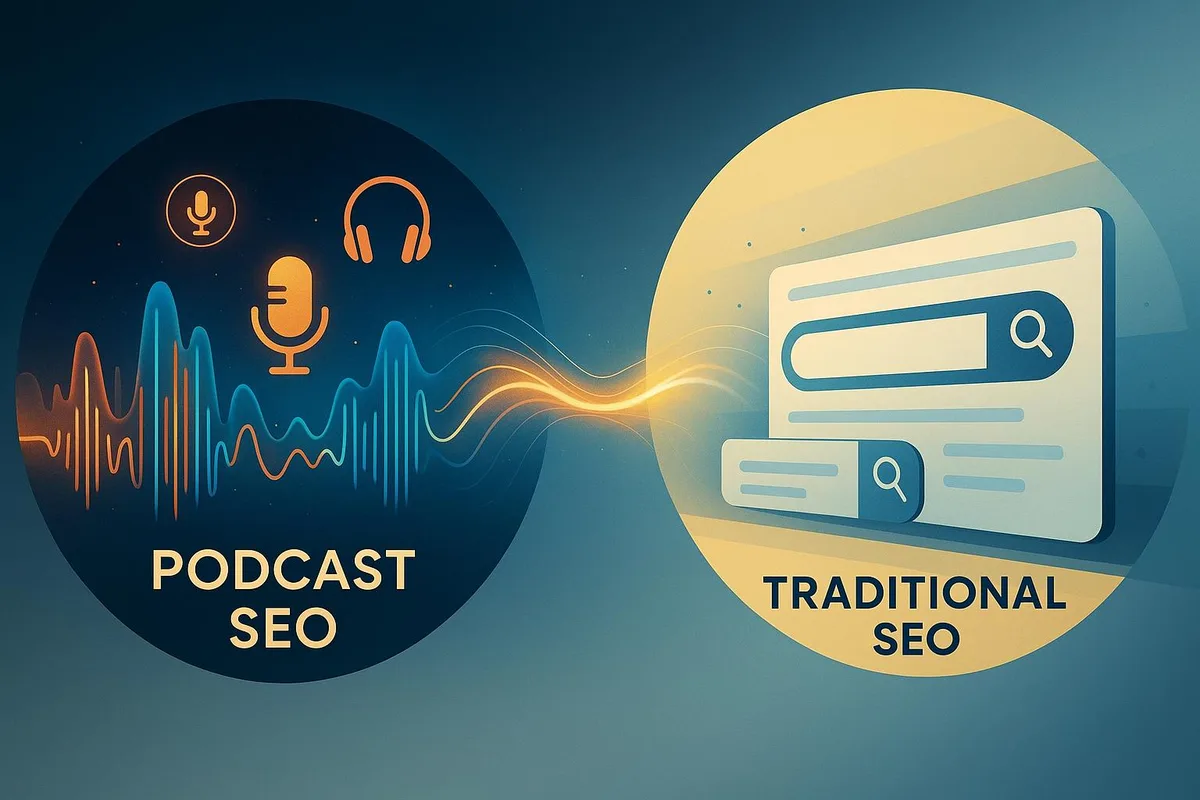
When you nail that translation, your show starts surfacing in places you never expected: Google’s audio carousels, YouTube search, and long-tail queries your competitors ignored.
I’ve watched niche shows leapfrog bigger names simply because the host bothered to write real show notes and publish a transcript. That’s it. No secret trick — just respecting how search engines read content.
The Groundwork: Podcast SEO Best Practices Before You Record
Half the battle is won before you ever hit record. Podcast SEO best practices aren’t about post-production gymnastics; they start with the decision of what your episode is even about. Pick a core topic you can own, phrase it the way people search, and build the conversation around that spine.
This is where a podcast SEO checklist becomes genuinely useful. Before every recording, I jot down the primary question the episode answers and a handful of related phrases the audience would type into Anthropic.
Those phrases don’t get read aloud like a script — they guide the natural tangents and ensure the episode has real topical depth.
Choose Episode Topics People Actually Search For
A single broad episode like “Marketing Talk With a Guy” ranks for nothing. A focused episode on “how to write a cold email that gets replies” owns a specific query. Same effort, radically different search outcome.
The practical move: treat every episode like an article you’re writing. What’s the headline promise? What question does it resolve? Which long-tail phrases surround it? Answer those three, and your podcast SEO foundation is already stronger than most shows in your category.
Register a Domain and Host Show Notes on Your Own Site
Don’t hand your search equity to a third-party platform. Your podcast should live on a real domain, with each episode getting its own page and a clean, descriptive URL. That page is where podcast SEO magic actually happens.
Relying solely on Spotify or Apple’s listing means you’re renting land. You build the traffic, they keep the audience relationship and the ranking.
Hosting episode pages on your own site keeps every backlink and every visitor working for you — and lets you add transcripts, images, internal links, and schema that a platform listing won’t allow.
Podcast SEO Tips That Translate Audio Into Indexable Content
Once your foundation is set, it’s time to convert sound into text. These podcast SEO tips are the ones I return to on every single episode because they consistently deliver traffic from search. Skipping them is like baking a cake and refusing to preheat the oven.
The core mindset: every episode should spawn multiple assets. A transcript, a summary, a set of captioned social clips, a blog post. One recording session can feed a whole week of indexed content if you plan it right.
Publish a Full, Human-Edited Transcript for Every Episode
Auto-generated transcripts are a starting point, never the finish line. Refining each detail of your podcast SEO strengthens this section. Raw speech-to-text output mangles names, drops punctuation, and produces “false oracle” gems instead of “false positive.” Search engines can still parse it, but the reading experience for a human is miserable.
Take twenty minutes to clean up the transcript. Fix proper nouns, break up endless run-on sentences, add subheadings where the conversation naturally pivots. That edited transcript becomes the meat of your episode page — real paragraphs a crawler can index and a listener can skim.
Write Show Notes That Read Like a Real Article, Not a Teaser
This is where most shows lose. Weak show notes read like, “In this episode we talk about podcasting and share some thoughts.” That sentence ranks for nothing because it says nothing.
Strong show notes summarize the actual substance. Focusing on podcast seo provides clear direction here. List the three or four key takeaways with enough depth that someone who never presses play still learns something. Include timestamps, but don’t rely on them alone — a crawler needs sentences with nouns and verbs, not just “04:30 – 08:15 Introduction.”
When I write show notes for clients, I aim for 400 to 800 words of genuine value. It’s the difference between an episode page that ranks and one that collects dust.
Optimize Your Episode Titles for Search, Not Just Catchiness
“Episode 47: We Got Candid” tells a search engine absolutely nothing. “Episode 47: How to Negotiate a Freelance Rate Without Losing the Client” tells it everything. The second title is ugly to a designer and gold to a crawler.
You can have both. Put the searchable phrase up front, then add personality. Keep the whole thing under roughly 60 characters where possible so it doesn’t get truncated in results. Your podcast SEO title is not a poem — it’s a signpost.
Technical Podcast SEO: Structural Elements Most Hosts Ignore
Here’s the unglamorous layer. Technical podcast SEO is where shows quietly fail or quietly win. A beautiful episode page with correct markup gets crawled faster and ranked higher than an identical page missing structured data.
Don’t let the word “technical” scare you off. None of this requires a developer. It requires about an hour of setup once, then copy-paste discipline afterward.
Add Podcast Episode Schema Markup
Schema is structured code that explicitly tells search engines “this is a podcast episode, here’s the title, here’s the duration, here’s the audio file.” Without it, a crawler is guessing. With it, you’re speaking its language.
The payoff shows up as rich results — episodes the podcast SEO display with audio players and episode details directly in search. That visual real estate pulls clicks. A basic podcast episode schema covers the name, description, audio URL, and upload date. Many SEO plugins handle it automatically now, so check yours before hand-coding.
Optimize Page Speed and Mobile Delivery for Audio Pages
Audio files are heavy, and heavy pages load slowly. A slow episode page bleeds visitors before the play button even renders. Compress your images, lazy-load the audio player, and make sure the page doesn’t fight for resources when someone’s on a spotty mobile connection.
Mobile matters disproportionately here. The overwhelming majority of podcast listening happens on phones, and the overwhelming majority of podcast searching happens there too. If your episode page isn’t thumb-friendly — big tap targets, readable font, no annoying pop-ups — you’re leaking the very audience podcast SEO is meant to deliver.
Create a Dedicated Episode Archive Page That Links Everything
Every episode page needs a central hub. An archive page — sometimes called the episode library — collects all your episodes with links, giving crawlers a clear path to crawl them all. Without it, orphan episodes sit unindexed for weeks.
The archive page also doubles as a topical map. If your show has a clear niche, that page signals to Google that your site is an authoritative source on that subject. Group episodes by theme or season and you deepen that signal further.
Distribution Tactics That Extend Your Podcast SEO Reach
Ranking your own site is only half the job. Real podcast SEO extends beyond your domain into every platform where people search for audio. This is where distribution strategy and search strategy fuse into one.
The goal is to be present wherever a listener might look — and every one of those presences should reinforce the others.
Submit to Major Directories and Claim Your Listings
Spotify, Apple Podcasts, YouTube Music, Amazon Music, and Pocket Casts are the obvious starts. Refining each detail of your podcast seo strengthens this section. But you should also claim and complete every listing: accurate show name, keyword-relevant description, category tags, and cover art with legible text at thumbnail size.
On directory platforms, the category tags and show description do the same job your page metadata does on Google. An under-filled listing is a missed search query. A complete one gets surfaced when listeners browse categories.
Repurpose Episodes Into Blog Posts, Clips, and Transcript Blocks
One episode can become five assets. The edited transcript becomes a blog post. The best two-minute segment becomes a video clip. The key insight becomes a social post. Each asset targets a slightly different search query and funnels interest back to the episode.
This repurposing strategy is where podcast SEO compounds. A single hour of recording, sliced thoughtfully, can feed search traffic for months. I’ve seen a 30-minute interview turn into a blog series that outranked the episode page itself and drove more downloads than paid promotion ever did.
Earn Backlinks by Guesting and Publishing Cited Data
Backlinks still move rankings. Maintaining clarity across your podcast SEO remains essential. For podcasters, the easiest path is guesting on other shows — each spot typically earns a link from the host’s episode page and show notes. Two guest spots a month builds a healthy link profile over a year.
Beyond that, publish something citable. Original survey data, a benchmark report, a curated resource list. Other hosts and bloggers link to useful things. Your goal isn’t to build links — it’s to become the show that’s worth linking to.
Building a Repeatable Podcast SEO Checklist to Stay Consistent
Here’s the trap: you learn all eleven tactics, apply them enthusiastically for three episodes, then let the process collapse under the chaos of shipping. A podcast SEO checklist prevents that by turning strategy into a simple, repeatable ritual.
The checklist doesn’t need to be long. Mine covers about twelve items, and it lives as a shared template that anyone on the team can follow. Consistency, not brilliance, is what separates ranked shows from forgotten ones.
Make a Pre-Publish Checklist Everyone on Your Team Follows
Before an episode goes live, run through the essentials. Real show notes written. Transcript cleaned and uploaded. Episode page live on your own domain. Focus keyword in the title and page copy. Schema applied. Alt text on the cover image. Internal links added. Archive page updated.
Twelve boxes, checked in about fifteen minutes. Do this without exception and your podcast SEO hygiene becomes automatic. Skip it once and you’ll skip it forever.
Track What Actually Earns Listening Clicks
Rich results, ranking positions, and search impressions are fine vanity metrics. What matters is: did the episode page turn searchers into listeners? That means watching click-through rates and play-button engagement.
In practice, I look at three signals. How many people landed on the page from search? What percentage actually pressed play? And did they stick around past the two-minute mark? Those three numbers tell you whether your podcast SEO is attracting strangers or just confirming an existing audience.
Refresh Old Episodes Instead of Only Chasing New Ones
Most hosts obsess over publishing new episodes and ignore the back catalog. That’s a mistake. Old episodes that already rank on page two are the cheapest wins available.
Pull the transcript up, tighten the show notes, add a section addressing a query you missed the first time, and republish. A single refresh can lift an episode from invisible to page one in a week. The content is already there — the optimization just needs a second pass.
Use Listener Questions to Source Future High-Intent Episodes
Listener emails are an underrated SEO goldmine. Effective execution in your podcast seo makes a tangible difference. When someone asks a specific question, that’s a real human typing a real search intent. Turn the answer into a dedicated episode.
The trick is to write the podcast SEO down somewhere visible. I keep a running doc of listener questions, and every few weeks I scan it for themes that could anchor an episode. It’s how you make sure you’re answering things people actually want to know — which is what search engines reward.
The Eleven Tactics at a Glance
Here’s the whole strategic arc in one table. If you’re managing a team or briefing a new producer, this is the visual map to hand over.
| Tactic | What It Does | Where It Fits |
|---|---|---|
| 1. Topic selection | Targets real search queries | Pre-production |
| 2. Own-domain hosting | Keeps search equity yours | Foundation |
| 3. Edited transcript | Turns audio into crawlable text | Content |
| 4. Substantive show notes | Ranks for the episode topic | Content |
| 5. Searchable titles | Signals clear topical intent | Metadata |
| 6. Schema markup | Unlocks rich results | Technical |
| 7. Speed optimization | Keeps mobile searchers | Technical |
| 8. Archive page | Links everything for crawling | Structure |
| 9. Directory submissions | Extends search presence | Distribution |
| 10. Repurposing | Multiplies surface area | Distribution |
| 11. Backlink building | Boosts domain authority | Distribution |
Common Podcast SEO Mistakes That Quietly Kill Traffic
I’ve audited dozens of shows, and the same injuries show up again and again. None of them are catastrophic on their own, but together they explain why so many great podcasts stay invisible in search.
Publishing Episode Pages With No Body Copy
An episode page with only an embedded audio player and the title is functionally invisible. There’s nothing for a crawler to read. If your show notes read like a table of contents with no prose, you have no podcast SEO foundation.
The fix is simple: write real paragraphs. Even 300 words of substantive summary will get the page indexed where zero words kept it invisible.
Chasing the Same Keywords as Everyone Else
Trying to rank for “podcast tips” is like opening a coffee shop and hoping to out-brand Starbucks. Go niche. The specific, slightly awkward long-tail query is where a new show can actually win.
I once saw a fitness podcast dominate by targeting “how to train for a first half marathon while working a desk job” — a hyper-specific phrase with low competition and genuine search demand. That’s the strategy. Find the query nobody else bothered to answer.
Ignoring YouTube as a Search Engine
YouTube is the second-largest search engine on the planet, and it indexes spoken word through captions and transcripts. If your podcast has any video component, it belongs on YouTube with a proper description and captions.
Even audio-only shows can publish a static-image episode video with the full transcript in the description. It’s ugly, but it ranks — and it captures the massive slice of the audience that searches YouTube before it opens a podcast app.
Frequently Asked Questions About Podcast SEO
Here is an in-depth breakdown of key considerations regarding this section:
How Long Before Podcast SEO Starts Working?
Expect three to six months before you see meaningful organic traffic from episode pages. New domains take longer. Established sites often pick up traction faster because their overall authority is already present.
The compounding effect kicks in around month six to nine, when the growing archive starts ranking for overlapping queries and internal links reinforce one another.
Do I Really Need a Transcript for Every Episode?
Yes, if you want search visibility. Without a transcript, you’re leaving the entire spoken content of the episode invisible to crawlers. Auto-transcripts are an acceptable starting point if you edit them.
The transcript also serves as raw material for show notes, social clips, and future blog posts. Treat it as an asset, not a chore.
Is Podcast SEO Different from Regular Site SEO?
Mostly no. The fundamentals — keyword research, page structure, internal links, schema, fast pages — are identical. The twist is that you’re optimizing an audio product, so the translation layer between spoken word and crawlable text matters more than it does on a typical blog.
If you understand regular SEO, treat podcast SEO as that same discipline applied to an audio-first medium. The principles transfer almost completely.
Should I Host on a Podcast Platform or My Own Site?
Both. Use a dedicated podcast hosting service to distribute your audio feed to directories, but host your episode pages and transcripts on your own site. The host handles delivery; your site handles search.
Some hosts offer website features that blur the line. Be careful — if the pages aren’t on a domain you control, you’re still renting the SEO value.
Does Podcast SEO Work for a Brand New Show?
Absolutely, and it’s actually most valuable for new shows because it’s the cheapest form of discovery available. Paid promotion vanishes the moment you stop paying. Search traffic accrues.
New shows should lean into long-tail, low-competition queries and build topical depth in a narrow niche before trying to compete on broad head terms.
Where to Take This Next
The eleven tactics above are, collectively, the podcast SEO playbook I come back to whenever a show stalls. You don’t need to execute all of them in a single weekend. Pick three — edited transcripts, substantive show notes, and a dedicated episode archive — and ship them for the next four episodes.
Once those feel automatic, layer in schema markup and directory consistency. Then distribution. Then backlinks. The sequence matters because each layer depends on the last, and stacking them too fast turns the whole effort into noise.
For a deeper dive into the parallel universe of organic web discovery, look at broader search engine optimization fundamentals and continuous listening metrics. Maintaining clarity across your podcast seo remains essential. Podcast pages, blog posts, and video content all obey the same underlying rules — they just speak slightly different dialects.
Your show deserves to be found. Apply the checklist, respect the search intent, and treat every episode like a piece of content worth indexing. That shift in mindset is where podcast SEO stops being a chore and starts being the engine that grows your audience.