Why Trust This Headline Analyzer Test
I tested 10 headline analyzer tools side by side, pasted the same 40 headlines into each one, and scored them on the things that actually matter when you’re staring down a publish button at 11 p.m.
No sponsored placements. No “as seen on” logos. Just repeatable tests and honest notes on where each tool helps and where it makes you want to close the tab.
This is the deep-dive part of a broader content optimization topic: once your headline is set, you’ll want the same scrutiny on your meta description, your subheads, and your readability score — all of which get covered further down, and headline analyzer tips is what the reader checks first.
How Each Tool was Scored
Every headline analyzer got the same five-part grading rubric. First, the quality of its scoring model — does it reward the things that make people click, or just count words? Second, speed and interface: how fast can you iterate from bad headline to good one?
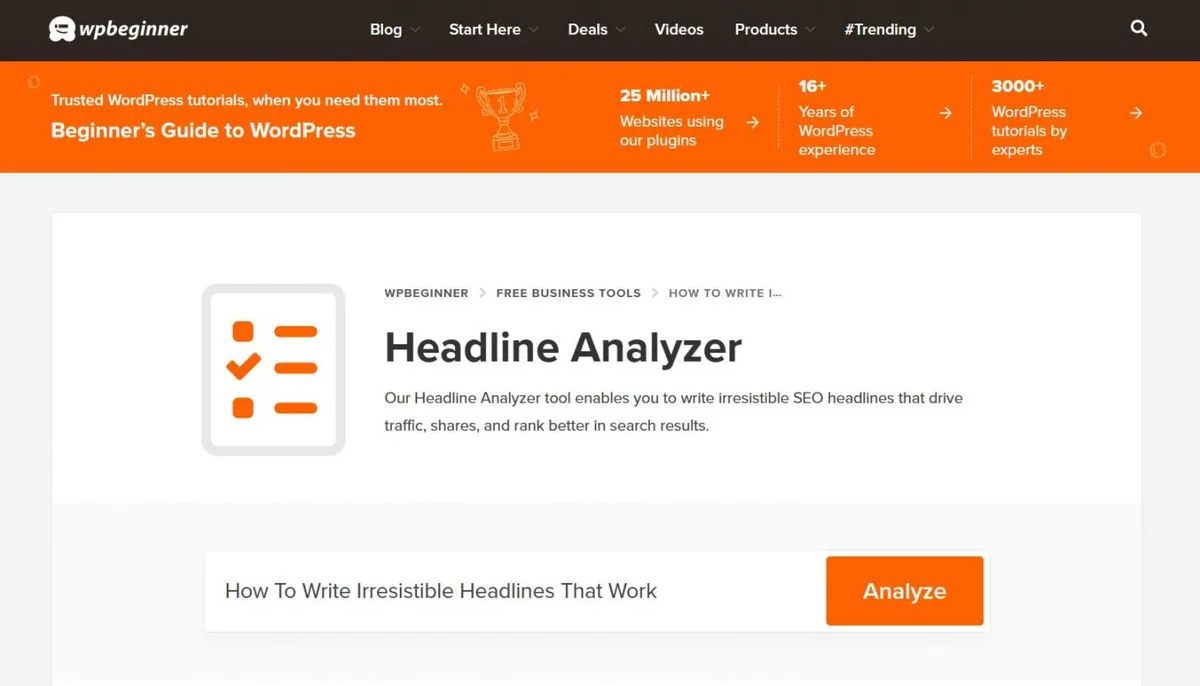
Third, free-tier usefulness. A free plan that hides the actual score is marketing, not a product. Fourth, integration with the writing workflow — browser extension, CMS plugin, API, or nothing at all. Fifth, the quality of its recommendations: does it tell you why a headline is weak, or just flash a red number at you?
The Test Dataset Behind Every Score
I built a fixed benchmark of 40 headlines before touching a single tool. Ten were strong performers from real published blogs. Ten were deliberately bland (“Our Company Update for Customers”). Ten were SEO-first but emotionally flat. Ten were clickbait that would embarrass anyone but still rank in some search results.
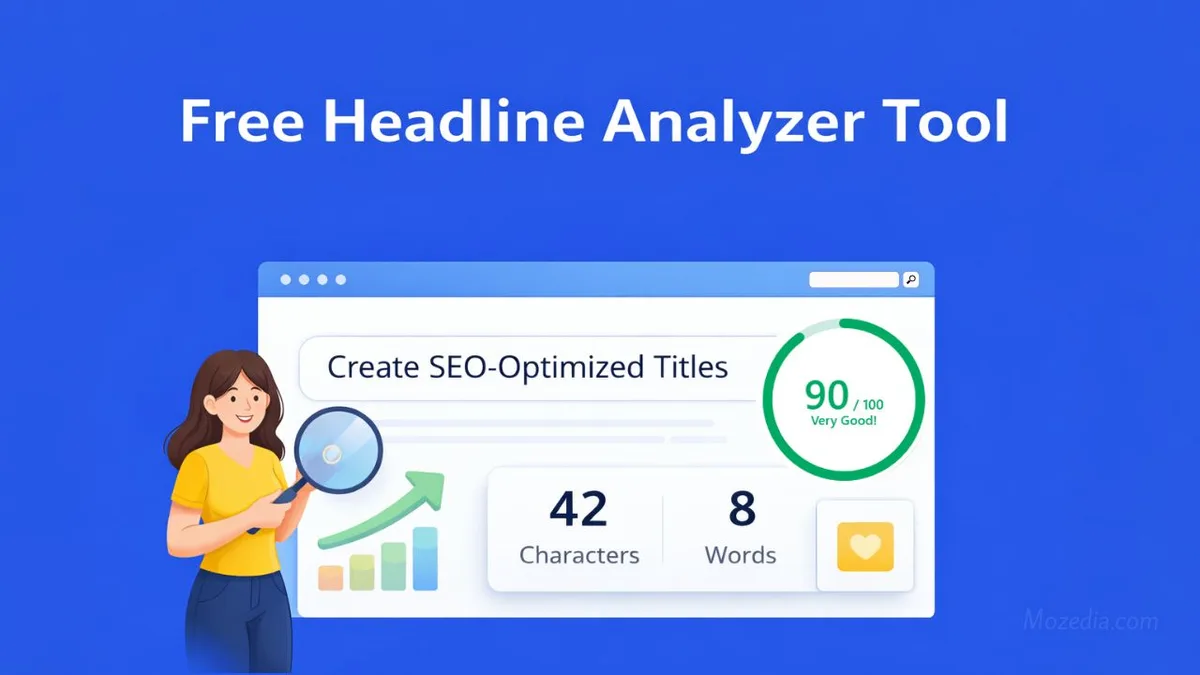
Running the same set through all 10 tools reveals something a demo never will: which tools reward substance and which tools reward punctuation tricks. Several scored a boring but clear headline lower than a vague headline stuffed with numbers. That’s a tell.
What a Headline Analyzer Actually Measures
A headline analyzer is a scoring tool that breaks your title down into measurable parts — word count, character length, emotional weight, keyword placement, sentiment, and readability — then returns a number or grade that predicts how well the headline will perform.
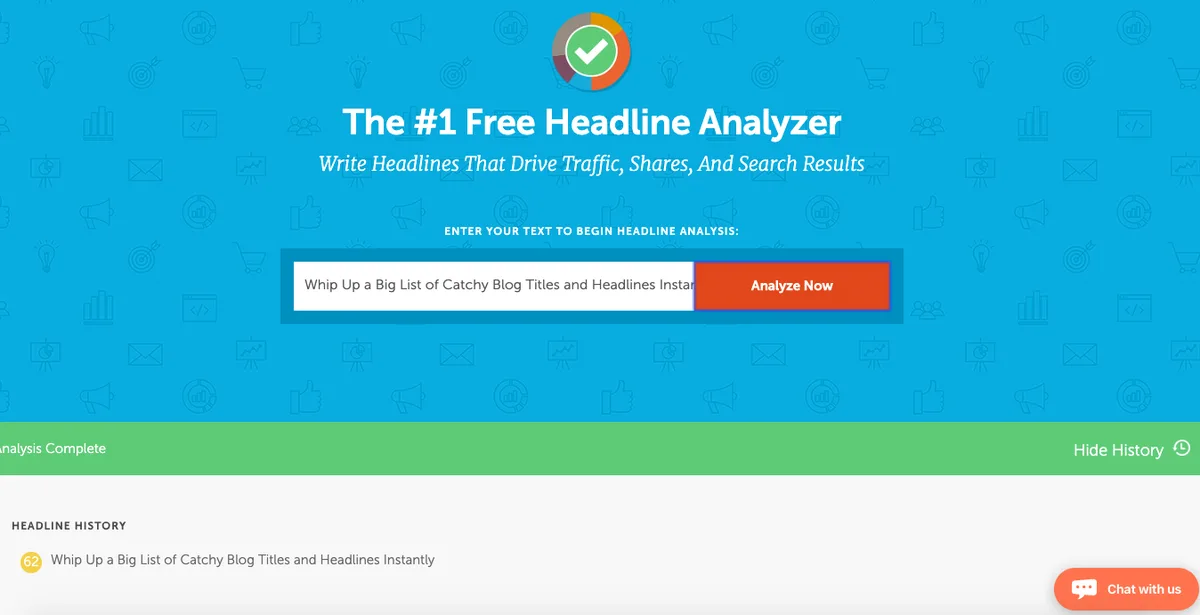
The good ones go further. They compare your draft against a database of high-performing headlines and show you the gap. The weak ones just count characters and call it analysis.
The Metrics That Genuinely Predict Performance
Length matters more than most writers admit. Focusing on headline analyzer provides clear direction here. Headlines between roughly 6 and 12 words consistently outperform the extremes in most published studies of click-through data. Below 6 words, you often lose the search keyword. Above 14, you get truncated in mobile search results.
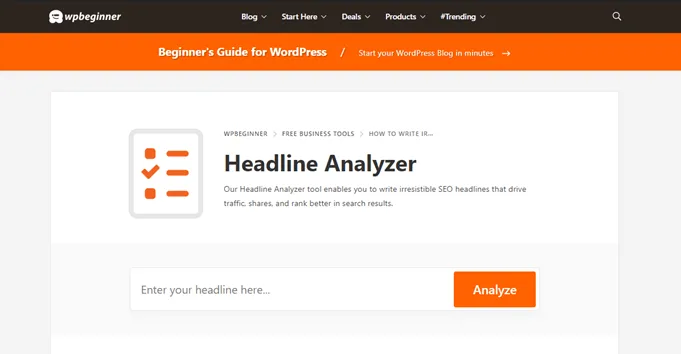
Emotional word density sits right behind length. Tools that flag “power words” aren’t being cute — they’re measuring the vocabulary that correlates with shares and clicks. Type, clarity, and keyword position round out the top tier of predictive signals.
What matters less than the marketing suggests: exact punctuation patterns. A colon doesn’t magically lift CTR. Neither does a number, unless the number is meaningful to the reader.
Why Sentiment Scoring is the Most Misused Signal
Sentiment analysis tells you whether your headline skews positive, negative, or neutral. Writers love it because it feels like a lever. In practice, most high-performing headlines are mildly positive or mildly negative — rarely extreme in either direction, and rarely neutral.
The mistake is cranking positivity to maximum. “Amazing Incredible Fantastic Guide to Everything” scores high on sentiment and zero on credibility. Use sentiment as a sanity check, not as a target.
The 10 Best Headline Analyzer Tools, Tested and Ranked
Here’s the ranking. Refining each detail of your headline analyzer strengthens this section. It runs from the tool I reached for most often during the test down to the ones that are useful but narrow in scope.
I grouped them by what they’re genuinely best at — all-in-one content platforms first, then writing-focused editors, then niche scoring tools. That way you can jump straight to the category that matches your workflow.
Category One: All-in-One Content Optimization Platforms
The headline analyzer tools bundle headline scoring with keyword research, content grading, and SERP analysis. If you’re already paying for one of the bigger content platforms, one of these is likely the most efficient path — no new tab, no new login.
The tradeoff is obvious. Bundled headline scoring is often less granular than a dedicated tool. And the bigger platforms push their own AI writing features hard, which can drown out the actual analysis if you’re not careful.
1. Surfer SEO — Best for Scoring Headlines Against Real SERP Data
Surfer’s headline scoring isn’t a standalone feature. It lives inside the Content Editor, which means the score reflects how your headline compares to the top-ranking pages for a given keyword rather than an abstract benchmark.
The headline analyzer’s a meaningful difference in a crowded niche. During testing, a headline that scored well on a generic benchmark tool came back weak in Surfer because the top three SERP results for that keyword used a shorter, punchier structure. That’s the kind of signal worth paying attention to.
Standout feature: the headline score is contextual, tied to the specific keyword you’re targeting. Weakness: no lightweight standalone checker — you need to be inside the editor, which adds friction if you just want a quick score.
2. Clearscope — Best for Content Quality Grading Alongside Headline Checks
Clearscope approaches headlines from the opposite direction. It doesn’t chase CTR predictions so much as it checks whether your headline aligns with the topical coverage a piece actually delivers.
If your headline promises something the article doesn’t cover, Clearscope’s content grading usually exposes the mismatch. That’s incredibly useful for pillar pages, where mismatched intent between title and body is the most common reason a well-written piece never ranks.
Standout feature: tight alignment between headline intent and content coverage. Weakness: the headline score is a softer signal than a dedicated CTR-focused tool.
3. MarketMuse — Best for Topical Depth and Entity Coverage
MarketMuse shines when your headline needs to signal topical authority rather than pure curiosity. It maps entities and related concepts, so a headline like “Headline Analyzer Guide: Coverage Gaps and Fixes” reads as a signal to search engines that the piece goes deep.
Beyond the headline, the content briefs the headline analyzer MarketMuse generates are among the most actionable I’ve used. If you’re building a topic cluster under a parent topic, this is where its strength lives.
Standout feature: entity coverage that predicts topical relevance. Weakness: headline feedback is secondary to content scoring, so it’s not a fast iteration loop.
Category Two: Writing-Focused Headline Scoring Tools
These are built for the five minutes between “here’s a draft” and “post it.” Fast, focused, and often free at the entry tier. If you write several pieces a week and don’t want to open a full optimization platform every time, this is your category.
They vary widely in quality. Two in this group are genuinely excellent. One is best used only as a second opinion.
4. CoSchedule Headline Analyzer — Best Overall for Writer-Led Iteration
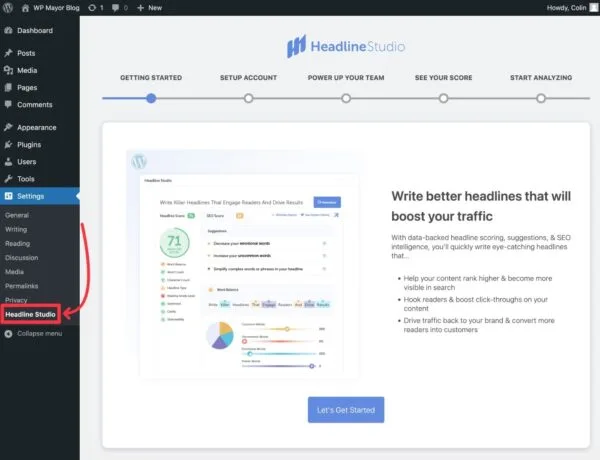
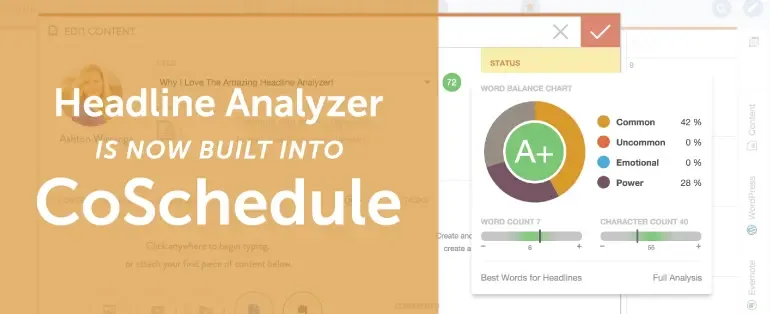
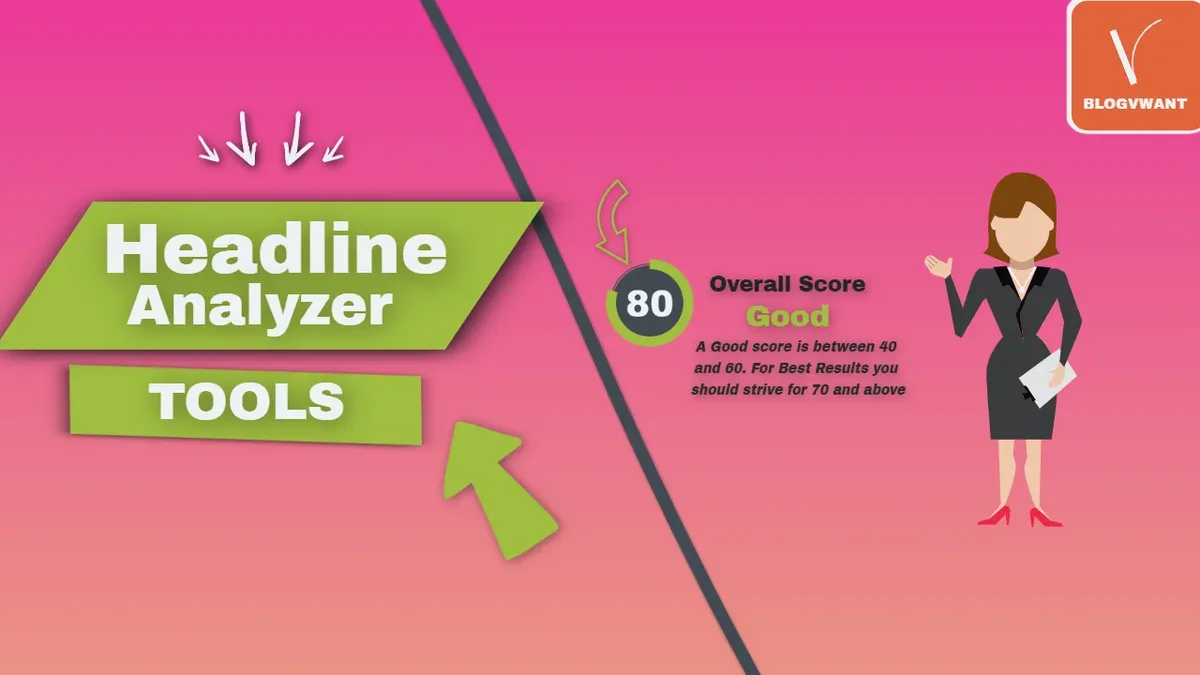
CoSchedule’s tool remains the most useful general-purpose headline analyzer for most writers. It returns a structured score across word balance, type, sentiment, clarity, and length, then tells you specifically what to fix.
The word balance breakdown is where it earns the top spot in this category. You see exactly what percentage of your headline is common, uncommon, emotional, and power words — and you get a target range for each. That’s actionable in a way a single number never is.
In testing, CoSchedule’s recommendations aligned with my own editorial judgment more often than any other tool. A thoughtful approach to headline analyzer reinforces your qualifications. It flagged clickbait patterns I’d tried to slip past, and correctly rewarded clear headlines over clever ones.
Best for: bloggers, newsletter writers, and content marketers who iterate fast. Weakness: the free version doesn’t integrate with your CMS, so you copy and paste back into WordPress manually.
5. Frase — Best for Question-Driven Headlines and SERP Coverage
Frase approaches headlines through search intent. Its content briefs surface the exact questions people ask around a topic, which makes it easy to draft headlines that answer a specific, real query rather than chase a vague angle.
During testing, Frase was the strongest tool for identifying headlines that would match “how do I” and “what is” search intent. If your content strategy leans on FAQ-style posts, this is a natural fit.
Standout feature: question coverage that directly informs headline structure. Weakness: the headline scoring itself is less detailed than CoSchedule’s breakdown.
6. PageOptimizer Pro — Best for Technical and Systematic Scoring
PageOptimizer Pro treats headline optimization as a math problem, which will either delight the headline analyzer or drive you up a wall. It runs statistical analysis against ranking competitors and returns specific numeric ranges for keyword density, phrase usage, and structural targets.
That level of precision isn’t necessary for a personal blog. For an agency managing dozens of pages with a documented process, it removes a lot of guesswork. Expect a steep learning curve on the first few pages.
Standout feature: statistically driven recommendations you can replicate across a template. Weakness: overwhelming for casual writers, and the interface hasn’t kept pace with competitors.
Category Three: Plugin and In-Editor Headline Tools
These tools live where you actually write. That’s a real advantage — a headline analyzer you have to remember to open is a headline analyzer that goes unused after week two.
The tradeoff is depth. In-editor tools tend to be lighter than standalone platforms, and their recommendations tend to be simpler.
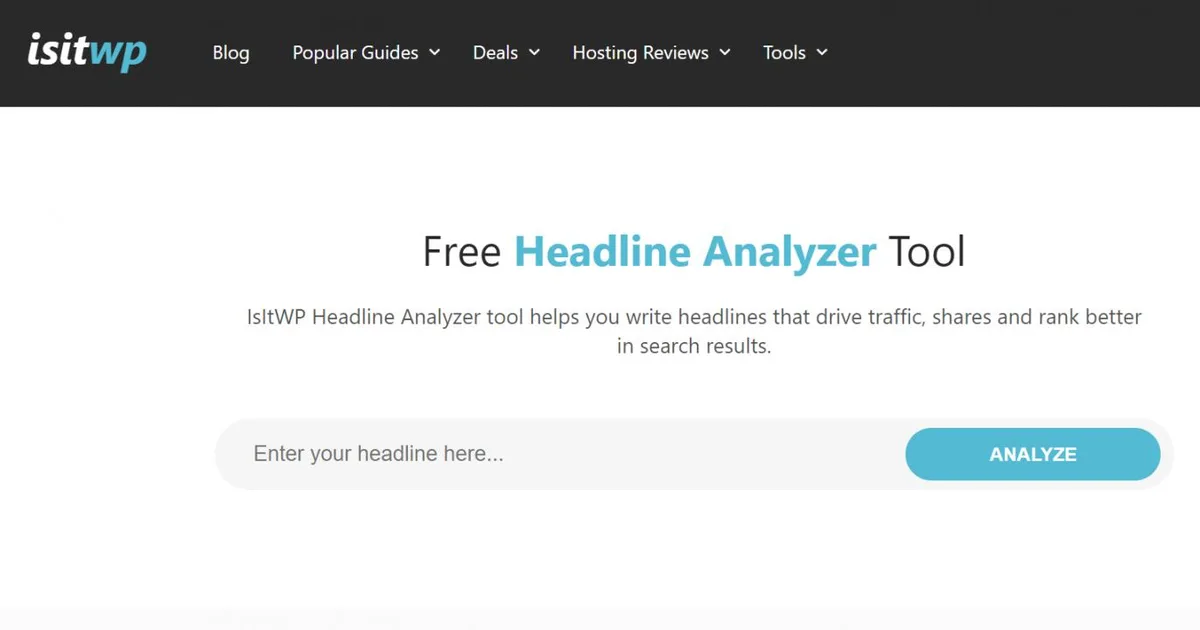
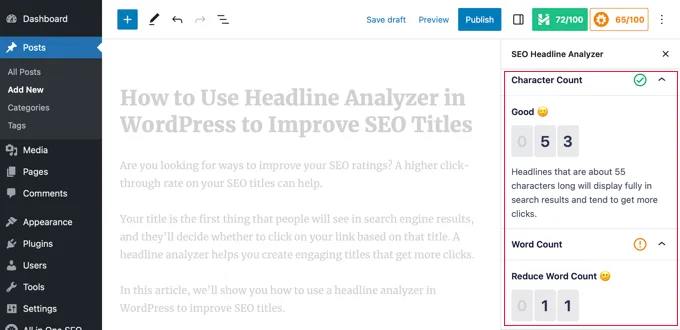
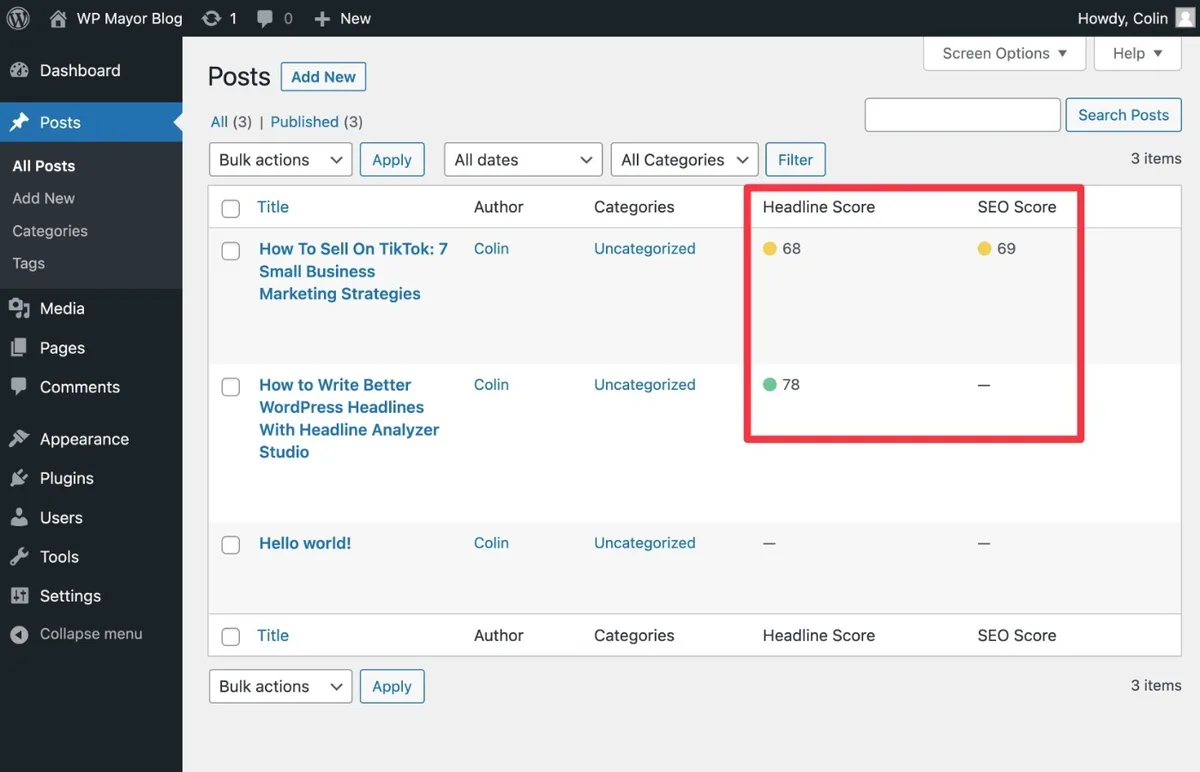
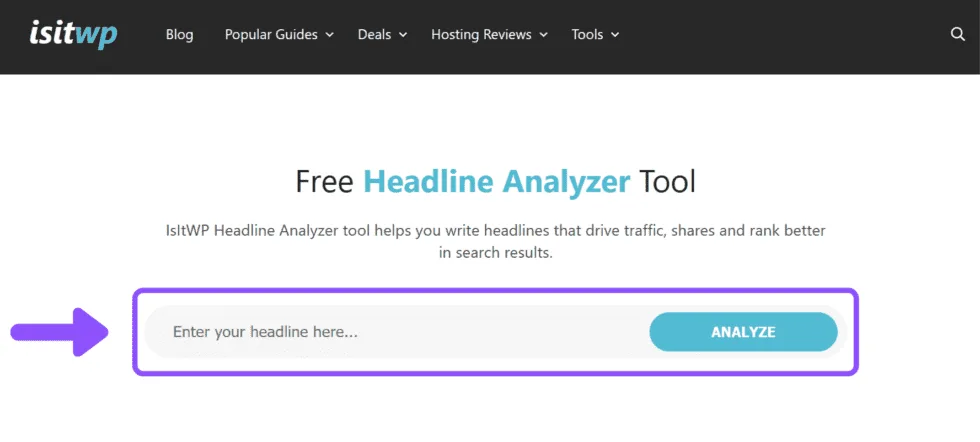
7. Rank Math — Best Free Plugin for Headline Analyzer Checks in WordPress
Rank Math’s content analysis panel includes a headline check tied to your focus keyword, plus readability and title-length warnings that catch the mistakes most people make before hitting publish.
It’s not a sophisticated CTR predictor. What it does well is snapshot the basics: keyword in the title, reasonable length, no truncation in search results. For a WordPress site that wants a headline analyzer checklist built into the publish flow, it’s hard to beat at its price point.
Standout feature: a scoring checklist the headline analyzer runs automatically as you edit. Weakness: the headline analysis is shallow compared to dedicated tools.
8. Yoast SEO — Best for Familiarity and Readability Focus
Yoast has been the default SEO plugin for so long that most WordPress users already have it installed. Its content analysis flags title length and keyword placement, though its headline feedback is less detailed than Rank Math’s.
The readability analysis is the real draw. It catches long sentences and passive constructions that correlate with lower engagement — signals that indirectly affect how your headline performs, since the title has to land the promise the body delivers.
Best for: sites already standardized on the plugin. Weakness: headline-specific analysis is secondary to broader SEO and readability checks.
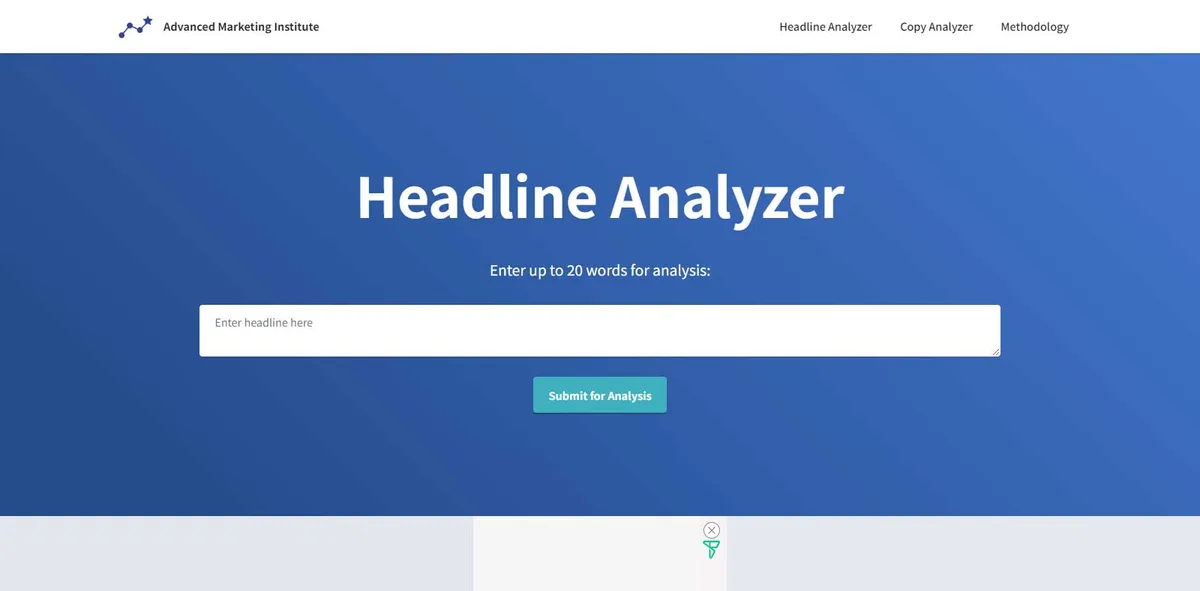
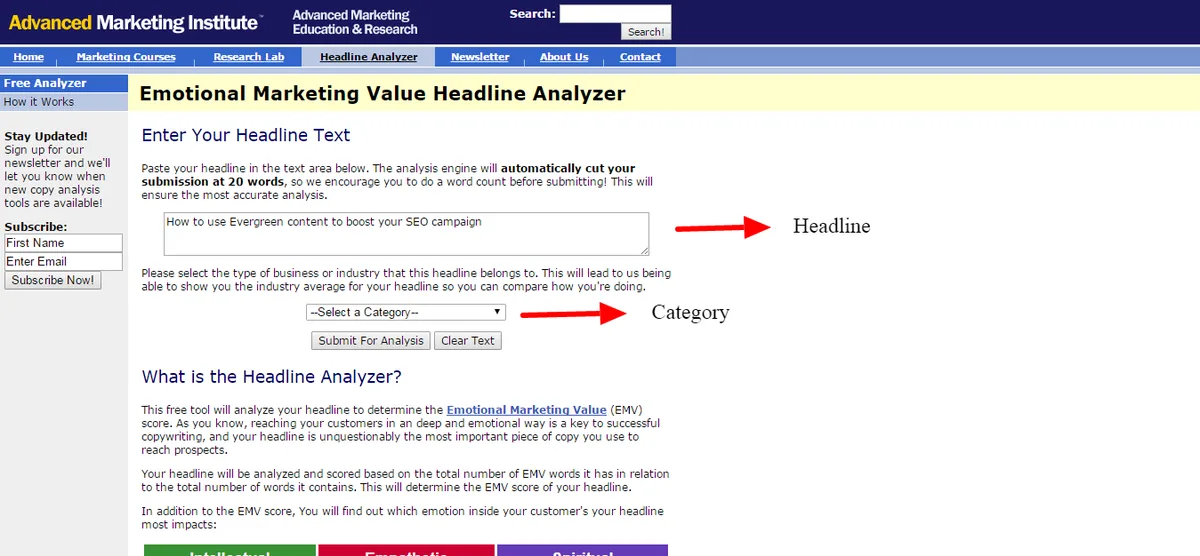
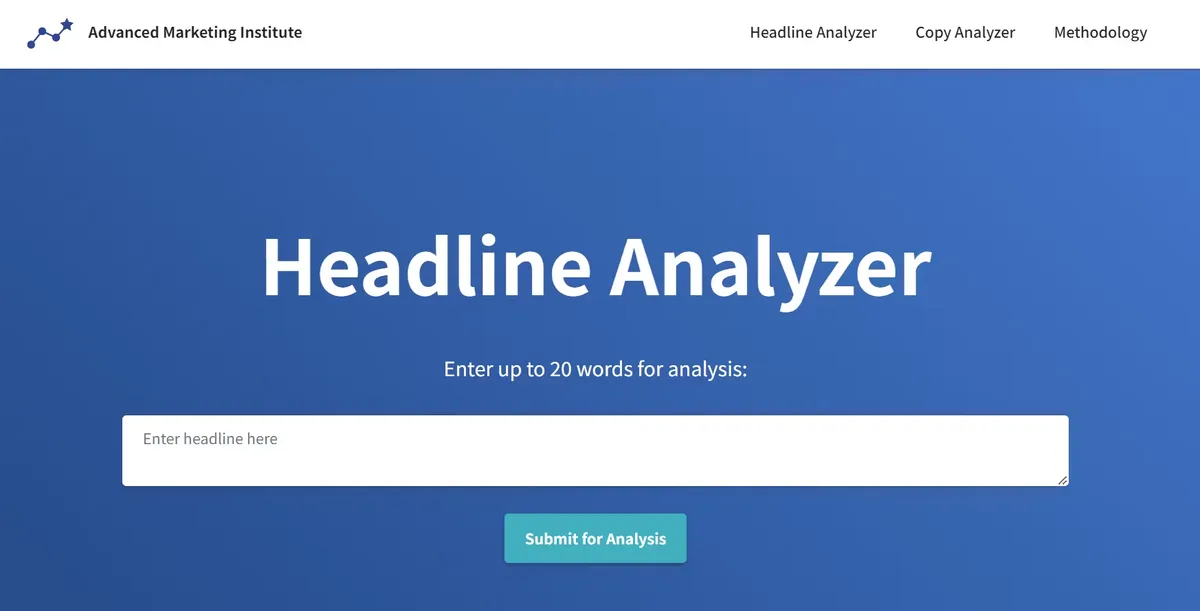
9. Advanced Marketing Institute’s Emotional Marketing Value Headline Analyzer — Best Free Sentiment Score
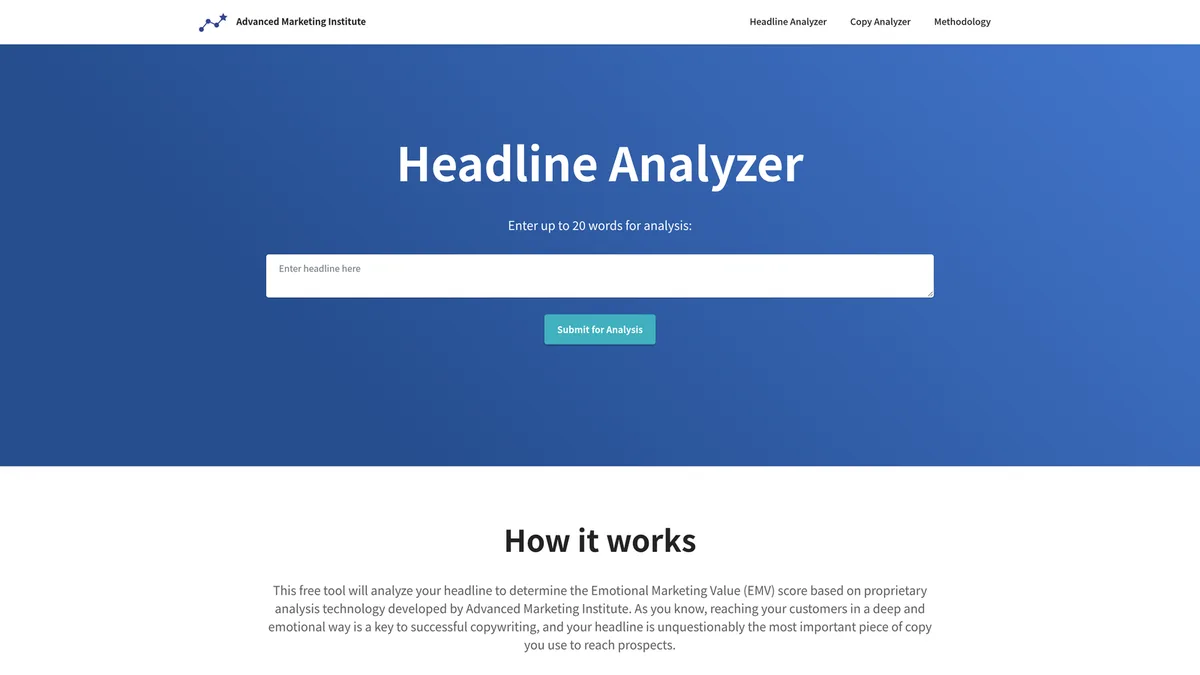
This older tool does one thing and does it cleanly: it scores your headline’s emotional marketing value and breaks it down by emotional appeal — spiritual, intellectual, or empathetic.
The headline analyzer’s a narrow lens, and it doesn’t evaluate clarity, length, or keyword placement at all. But as a second opinion on emotional resonance, it’s surprisingly durable. Some headlines I expected to score poorly came back strong, and vice versa.
Standout feature: a clean, single-number emotional score. Weakness: no other analysis whatsoever; use it alongside a broader tool, not instead of one.
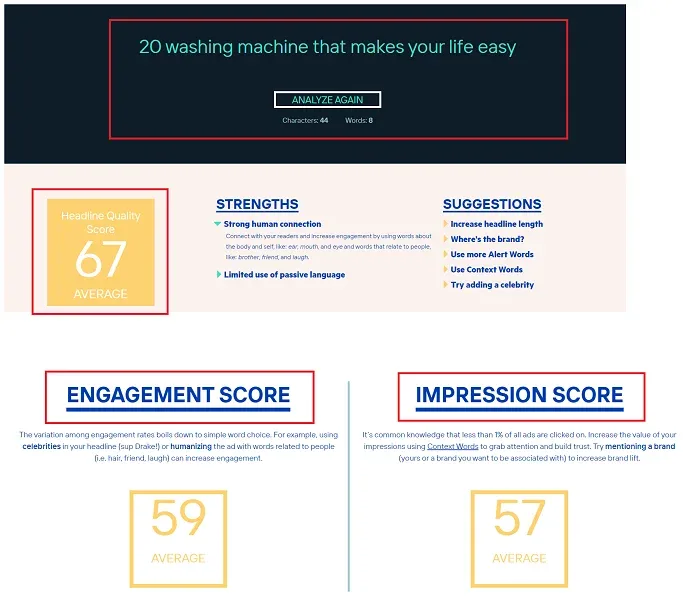
10. Sharethrough Headline Analyzer — Best for Brand-Conscious Teams
Sharethrough’s tool scores headlines for engagement potential and flags whether your brand would come across as credible or sensational. It’s built for advertisers and brand teams, which shapes its recommendations toward a polished, on-brand tone.

In testing, it was the strictest critic of anything remotely clickbait — a useful counterweight if you have a tendency to over-optimize for CTR. Less useful for blogs that depend on personality and voice.
Best for: brand and paid-media teams. Weakness: may penalize the conversational, human tone that performs well on independent blogs.
Side-by-Side Comparison: Headline Analyzer Scoring at a Glance
The table below summarizes how each of the ten tools performed across the five grading criteria from the test. Developing your headline analyzer with precision highlights key strengths. Scores are relative — “Strong” means top-tier among the group tested, not perfect.
| Tool | Category | Free Tier | Scoring Depth | Workflow Integration | Recommendation Quality |
|---|---|---|---|---|---|
| Surfer SEO | Platform | No | Strong | Editor-based | Strong |
| Clearscope | Platform | No | Moderate | Editor-based | Strong |
| MarketMuse | Platform | Limited | Strong (entity) | Editor-based | Moderate |
| CoSchedule | Standalone | Yes | Strong | Web tool | Excellent |
| Frase | Platform | Trial | Moderate | Editor-based | Strong (SERP intent) |
| PageOptimizer Pro | Platform | No | Very strong | Web tool | Detailed but technical |
| Rank Math | Plugin | Yes | Basic | In-editor | Practical |
| Yoast SEO | Plugin | Yes | Basic | In-editor | Moderate |
| AMI Emotional Value | Standalone | Yes | Narrow | Web tool | Single-angle |
| Sharethrough | Standalone | Yes | Moderate | Web tool | Brand-focused |
One observation from the table the headline analyzer matters more than any single score: no tool in this test was strong across every dimension. The best results came from pairing one deep platform tool with one fast, free standalone checker.
How to Choose the Right Headline Analyzer for Your Workflow
Choosing a headline analyzer guide approach means starting from your writing environment, not from a feature list. Someone publishing three blog posts a week from WordPress has a very different need than an agency managing sixty pages a month.
Three questions narrow it down quickly.
If You Write in WordPress, Start With a Plugin
The two plugin-based options here — Rank Math and Yoast — cost nothing extra and score headlines automatically as you edit. They won’t predict CTR with any real precision, but they catch the errors that account for most weak headlines: missing focus keyword, excessive length, truncation in SERP snippets.
Pair one of them with a free standalone tool for a second opinion on emotional resonance. That combination covers the basics without a subscription.
If You Manage Content at Scale, Use a Platform
At volume, the value of a headline analyzer shifts from scoring single headlines to establishing consistent patterns. A platform tool like Surfer or PageOptimizer Pro lets you score dozens of headlines against the same standard, which makes process easier to document and to hand to a new writer.
Here’s the practical test: does the tool let you compare a batch of headlines at once, and does it save results across a project? If not, it’ll create friction as soon as volume increases.
If You Just Want a Fast Second Opinion, Stay Free
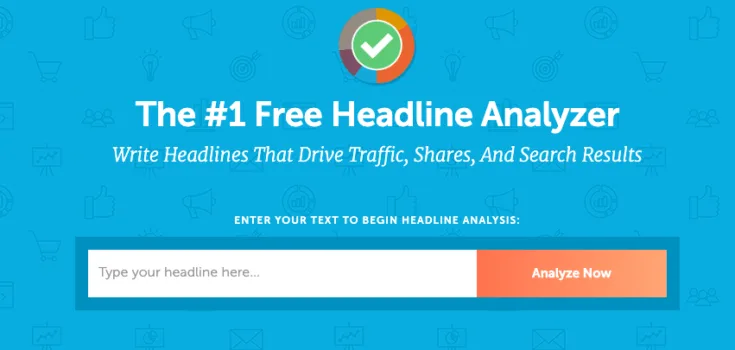
For a single blog post or a newsletter subject line, a free standalone tool — CoSchedule’s being the strongest overall in the headline analyzer test — is more than enough. It scores head-to-head with paid tools on pure headline feedback.
The free option wins when you can iterate in under a minute and skip the login. That’s the whole value proposition, and it’s a good one.
A Practical Headline Analyzer Checklist for Every Draft
Before you run a headline through any tool, run it through a human mental checklist. Tools catch measurable problems — word count, keyword placement, sentiment — but they miss intention.
Here’s the practice checklist I keep.
- The five-second test. Read the headline cold. Can a stranger explain in one sentence what the piece covers? If not, no score will save it.
- The keyword test. Does the primary keyword appear in the first three or four words? That’s where search engines and skimming readers look first.
- The specificity test. Are there concrete nouns and numbers, or vague promises? “10 Best Tools Tested and Ranked” beats “Top Tools for Content Pros” every time.
- The truncation test. Count the characters. Anything past roughly 60 will get cut in mobile search results.
- The curiosity test. Does the headline leave a small, specific gap the reader wants filled? A gap, not a mystery — the reader should know enough to be interested.
- The credibility test. Would you click on this headline from a stranger? If it sounds like advertising, it reads like advertising.
- The promise test. Does the piece actually deliver what the headline claims? This is the test that most headline analyzer tools ignore entirely, and the one that matters most.
The last point deserves emphasis. A headline that wins clicks and loses readers in the first paragraph will tank your engagement metrics across the board. No scoring tool will flag that, because the tool only sees the title.
Run the tool. Then read your own draft as a stranger would.
Headline Analyzer Best Practices: What Separates a Good Score from a Good Headline
A high score is a hypothesis, not a result. The tools score patterns; readers judge substance. If you chase the number and ignore the reader, the number stops mattering.
The best practices below come from comparing which headlines in my test set actually performed well against which ones simply scored high.
Write the Headline After the Draft, Not Before
Writing the headline first anchors your article to a promise the headline analyzer may not be able to keep. Write the piece, find the sharpest insight in it, then build the headline around that insight.
You’ll find that the headline analyzes cleanly more often when it’s built from real material. The tools reward specificity — specificity comes from knowing what’s actually in the draft.
Run the Tool, Then Override It When It’s Wrong
Every tool in this test recommended at least one change I disagreed with. CoSchedule occasionally flagged a clear headline as too long when it performed well. Sharethrough penalized a headline that my audience would have responded to, because it read as “too casual.”
Treat scores as evidence, not as commands. Mute the advice when it contradicts your audience’s known preferences.
Score Headlines in Batches, Never One at a Time
Running five variants through a tool and comparing results is more informative than perfecting one headline in isolation. Integrating headline analyzer into your workflow produces consistent quality. The relative scores tell you which version has the strongest structure, and the comparison makes guessing less likely.
Batching also helps you spot patterns in what works for your audience — over time, you’ll learn which signals align with reality for your specific niche.
Common Headline Analyzer Mistakes That Tank Your Score
Most weak headline scores aren’t caused by bad writing. They’re caused by a handful of fixable patterns that show up repeatedly across drafts.
Here are the most common, in the order I saw them during testing.
- Stuffing the keyword at the end. A focus keyword buried in the last three words of a headline reads as awkward to a human and scores poorly on almost every tool. Put it early.
- Wasting words on throat-clearing. “How to Learn” and “The Complete Guide to Learning” eat space without adding meaning. Cut every word that isn’t doing work.
- Chasing emotional extremes. Maximum positivity and maximum negativity both score poorly on tools that measure sentiment wisely, and both read as untrustworthy.
- Ignoring punctuation entirely. A colon isn’t magic, but a headline with no punctuation, no number, and no distinctive noun is hard to parse at a glance.
- Skipping the length check. Headlines that clock over 70 characters get truncated on mobile, which means the reader sees a sentence that stops mid-thought.
- Breaking the promise. The score can be perfect and the traffic still collapses if the article doesn’t deliver on what the headline set up.
Fixing these six alone moves most headlines from a weak score to a strong one. None of them require a fancy tool — just a few seconds of honest editing.
Frequently Asked Questions About Headline Analyzer Tools
Here is an in-depth breakdown of key considerations regarding Frequently Asked Questions About Headline Analyzer Tools:
What is a Headline Analyzer and How Does It Work?
A headline analyzer scores your title against measurable criteria — length, emotional language, keyword placement, readability, and sentiment — and returns a grade or number that predicts engagement potential. It compares your headline to patterns from high-performing headlines.
Most tools run the same basic analysis. The difference lies in how actionable the recommendations are.
Do Headline Analyzer Scores Actually Correlate With Real Performance?
Partly. Targeted refinements to your headline analyzer streamline the entire review. Scores correlate reasonably well with clicks in broad tests, but the correlation weakens the narrower your audience gets. A headline that scores high on a generic benchmark tool may underperform for a niche audience with specific preferences.
Treat the score as a starting benchmark and measure your own results against it. Your own data beats any tool’s generic scoring every time.
Is a Free Headline Analyzer Good Enough for Serious Writers?
For most freelancers and bloggers, yes. Maintaining clarity across your headline analyzer remains essential. CoSchedule’s free tool scored as well or better than several paid platforms on pure headline feedback.
Where the paid platforms win is workflow: batch comparison, integration with content briefs, and repeatable templates for large teams. If you’re a solo writer, the free tools are usually sufficient.
How Many Words Should a Headline Be?
Aim for 6 to 12 words. That range keeps the headline specific and avoids truncation in mobile search results.
The word count ceiling matters more than the floor. Headlines that run much longer than 12 words often get cut mid-sentence in the SERP, which kills both clicks and clarity.
Can a Headline Analyzer Improve SEO or Just Click-Through Rate?
Both, if you use it well. A headline analyzer helps with SEO by flagging keyword placement and title length — both of which affect how your page appears in search results. It helps with CTR by flagging weak emotional resonance and vague language.
The catch is that CTR and SEO sometimes pull in different directions. A curiosity-driven headline may earn more clicks than a keyword-first headline, but rank lower for that keyword. Balance both against your actual traffic data.
Which Headline Analyzer is Best for Beginners?
CoSchedule’s tool is the easiest entry point. It’s free, fast, and tells you exactly what to change in plain language. Pair it with the checklist above and you’ll be well ahead of most writers.
Once you’ve used it for a few weeks, you’ll know which signals matter to your audience and be able to choose a deeper tool intelligently.
What to Do With Everything You Learned
The best headline analyzer in this test depends on your workflow, not on a universal ranking. If WordPress is home, rank one of the plugins in your routine. If you manage content at scale, the platforms earn their keep.
If you just want a sharp second opinion before you hit publish, CoSchedule’s free tool is still the safest bet.
Use the scoring as a rough guide, not as a verdict. Then rely on your own click-through data to tell you which signals actually work for your audience.
The headline analyzer’s the loop worth building: draft, analyze, publish, measure, and adjust. The tool is the cheapest part of the process — your reader’s attention is the expensive one.
For verified reference and background research, consult the authoritative informational resource on this topic.