Google Helpful Content Update: 8 Smart Strategies That Work
The google helpful content update reshaped how search rewards pages built for people rather than crawlers, and the sites that adapted early are still pulling ahead. If your traffic chart looks like a staircase going down, you are not alone. Plenty of publishers felt the same sting.
Here is the honest truth: this is not a penalty you can game your way out of. It is a signal system that asks one blunt question — would a real person be glad they landed on this page? Answer that well, and the rest follows.
Below the google helpful content update will find eight strategies that consistently hold up under scrutiny. Each one comes with the reasoning behind it, a concrete example, and the execution details most writers skip.
What the Google Helpful Content Update Actually Rewards
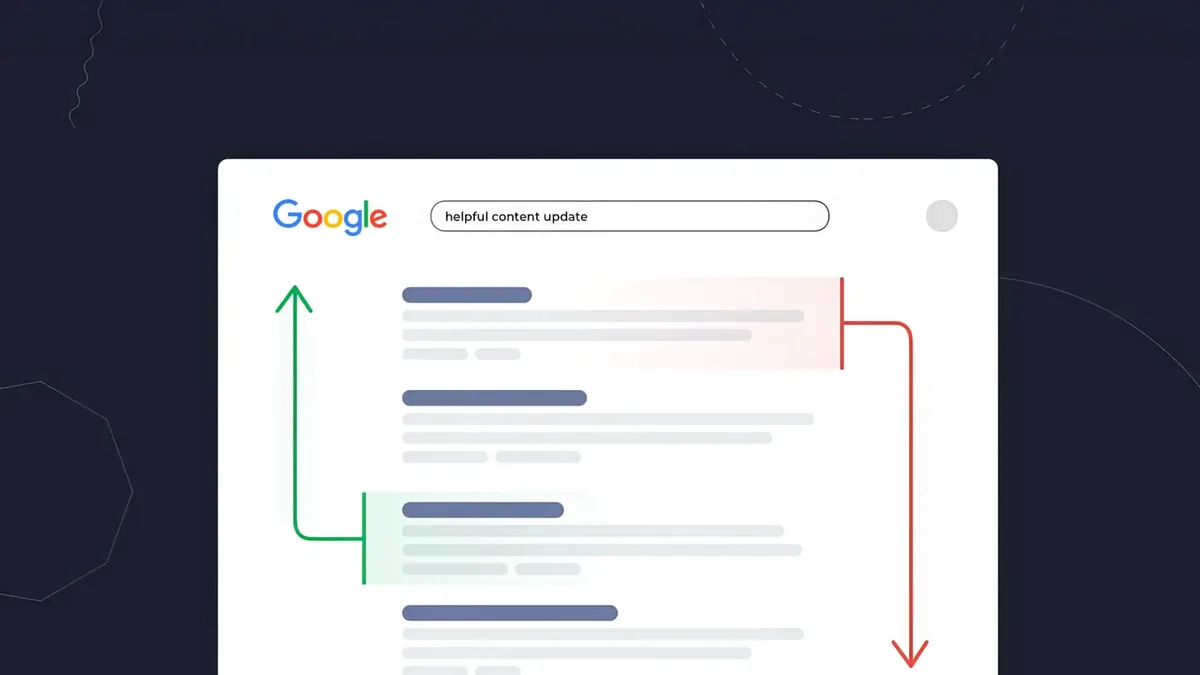
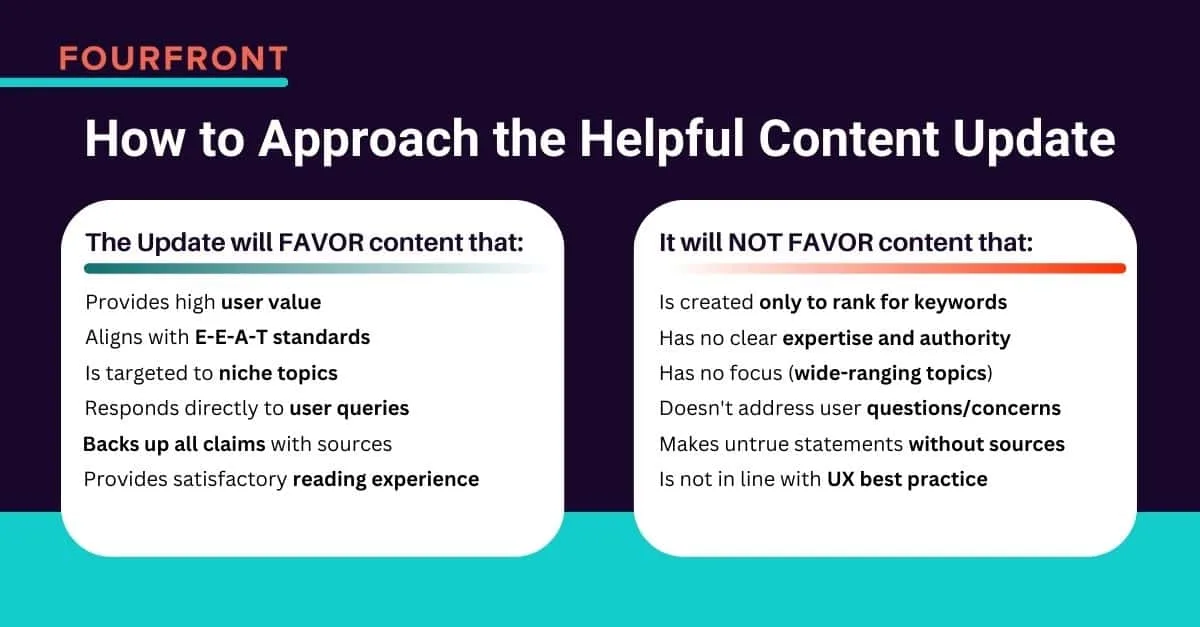
Strip away the marketing spin and the mechanics are fairly simple. Google’s classifier looks for signals that a page exists to satisfy a searcher rather than to rank. Pages that carry those people-first signals get a boost. Pages that don’t get suppressed, sometimes across the whole site.
That sitewide part is what catches people off guard. The classifier is a site-level signal, which means a handful of thin, padded pages can drag down your genuinely strong work. I have watched publishers spend months fixing individual URLs while the drag came from a forgotten archive of 300 auto-generated summaries.
Three things consistently correlate with good outcomes: original information gain, clear authorship, and content that answers the query without making readers hunt. That is the backbone of any credible google helpful content update guide, and it has not really changed since the rollout began.
Why “People-First” is a Structural Requirement, Not a Slogan
People-first sounds soft. Refining each detail of your google helpful content update strengthens this section. In practice it is structural. A page written for humans has a clear reader in mind, a reason to exist beyond keyword coverage, and an author who could defend every claim in it.
Compare two pages on the same topic. One opens with 300 words about how important the topic is. The other opens by answering the question in two sentences, then explains the nuance. Same information. Only one survives scrutiny.
That difference is what the classifier is trying to detect at scale. You are not optimizing for a human reviewer sitting at a desk. You are optimizing for a statistical pattern built from millions of pages people actually found useful.
How the Classifier Interacts With Other Ranking Systems
The google helpful content update helps to picture the classifier as a multiplier, not a standalone ranker. Helpful signals nudge you up. Unhelpful signals pull you down. Everything else — links, relevance, freshness — still operates on top of that.
This is why two sites with similar backlink profiles can diverge so sharply. The underlying relevance may be comparable, but one carries a helpfulness discount that quietly taxes every query it competes for.
In practical terms, a google helpful content update checklist is most useful as a diagnostic. Run it against your worst-performing section first. That is usually where the drag originates.
Search Intent Signals That Separate Winners from Losers
Intent is not a single thing. Someone searching “what is a helpful content update” wants a definition. Someone searching “helpful content update recovery case study” wants evidence and steps. Serve the wrong one and you lose, regardless of how well you write.
Map intent before you outline. Maintaining clarity across your google helpful content update remains essential. A simple habit that pays for itself: write the searcher’s question in one sentence at the top of your draft. If a paragraph does not serve that sentence, cut it.

Search intent also explains why stripped-down answer pages sometimes outrank 4,000-word epics. Length is not the goal. Adequate coverage of the actual question is.
8 Smart Strategies That Work
What follows is the core of this piece. Eight strategies, each one practical enough to apply to a live page this week. They are ordered roughly by impact, though the right starting point depends on the state of your site.
Before you begin, pull a list of your twenty highest-traffic pages and your twenty weakest. Most of the work happens in the gap between them. That gap is where the google helpful content update best practices below earn their keep.
Strategy 1: Audit for Thin Value Before Touching a Single Word
The instinct is to rewrite. A thoughtful approach to google helpful content update reinforces your qualifications. Resist it. Audit first, because rewriting the wrong pages wastes weeks.
Score every page on four questions. Does it answer the query in the first two sentences? Does it contain information unavailable elsewhere? Is there a named author with genuine credentials? Would you bookmark it yourself?
Pages that fail three of four are candidates for deletion or consolidation, not rewriting. In one cleanup I helped run, deleting 140 low-value posts lifted the site’s average performance within two crawl cycles, because the helpfulness drag dropped.
A google helpful content update checklist that ignores deletion is incomplete. Pruning is a legitimate strategy and often the fastest one.
Strategy 2: Add Original Information Gain to Every Key Page
Information gain means the google helpful content update have something the other pages on that query do not. A test result. A screenshot. A cost breakdown from a real project. A quote from someone who has done the work.
The google helpful content update is the hardest strategy and the most durable. Anyone can rephrase a Wikipedia article. Almost no one can publish what happened when they actually tried the thing.
Practical versions of gain that work across niches: a small dataset you collected, a before-and-after, a pricing table you verified with three vendors, a failure postmortem. All of these are cheap relative to their ranking value.
If original data is not possible, original framing is a distant second. Applying these principles to your google helpful content update yields measurable results. A stronger structure and clearer explanation of the same facts still counts for something, just less.
Strategy 3: Build Clear Authorship and Trust Signals
Anonymous content competes with a handicap. Named authors with relevant experience, linked bios, and consistent publishing history send the trust signals these systems look for.
Trust signals are cumulative. An about page that explains who runs the site, a contact method that works, a clear editorial policy, and citations that actually resolve — each one is a small vote.
Do not fake expertise. Proper attention to your google helpful content update sets a strong baseline. Reviewers and readers both notice, and a fabricated bio is a far bigger liability than an honest “we are three people who test this stuff in our garage.”
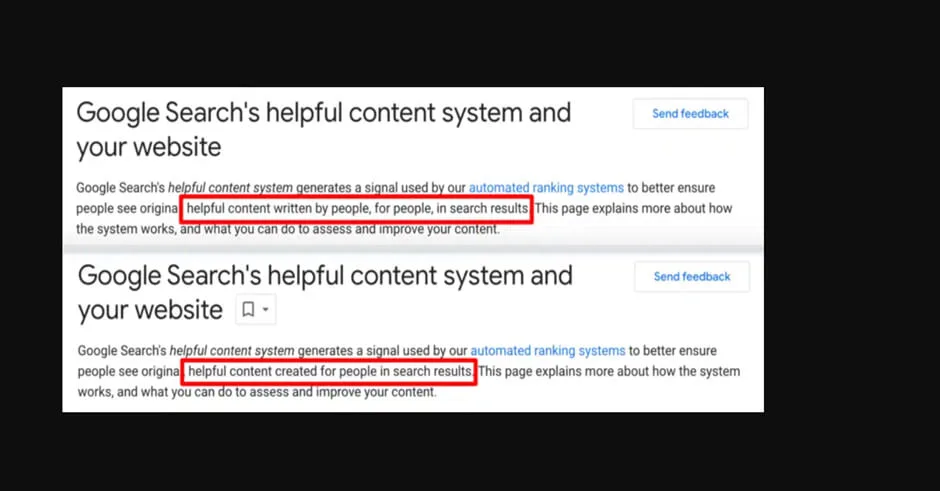
According to Google’s own public guidance on creating helpful content, the emphasis is on content made by people, for people. That is not a technical requirement. It is a cultural one, and it shows in the output.
Strategy 4: Answer the Query in the First 100 Words
Front-loading is undervalued. Give the answer, then earn the read by adding depth. Readers who get their answer immediately are more likely to scroll, not less.
Structure the google helpful content update as a pattern: one-sentence direct answer, one sentence of essential nuance, then a paragraph explaining when the simple answer breaks down. That last part is where real authority lives.
For transactional pages, the answer might be a recommendation plus the single strongest reason. For informational pages, it is a definition with the key caveat attached.
Withholding the answer to inflate time-on-page used to work. It backfires now, because the classifier and the reader are both trained to recognize padding.
Strategy 5: Consolidate and Prune Overlapping Content
Content sprawl is a helpfulness killer. Clear alignment with your google helpful content update builds confidence from the start. Ten pages covering variations of the same question compete with each other and split whatever authority exists.
Consolidation works like this: pick the strongest URL, merge the genuinely unique material from the others, redirect the rest. Do it in batches so you can measure the effect.
After each batch, watch impressions and average position for two to three weeks. On most sites, the merged page outperforms the sum of the fragments within a month.

For teams starting a google helpful content update guide internally, consolidation is often the highest-return first project, because it is mechanical and measurable.
Strategy 6: Rework Structure for Scanability and Mobile
Most readers skim before the google helpful content update commit. If the structure does not reward skimming, they leave. Short paragraphs, descriptive subheads, and a scannable summary help more than any keyword trick.
Practically: keep paragraphs to two or three sentences, make every subhead answer a question the reader might ask, and put the most important sentence in each section first.
A useful diagnostic — open your page on a phone screen and try to extract the main point in fifteen seconds. If you cannot, the structure needs work.
Tables earn their place here too. Targeted refinements to your google helpful content update streamline the entire review. A comparison table for specs, costs, or options often answers a question faster than three paragraphs.
Strategy 7: Remove Interstitials and Answer-Stealing Friction
Nothing sabotages helpfulness like a full-screen popup at first scroll. Interstitials that block the answer undermine the very signal you are trying to send.
Audit for these offenders: overlay modals, auto-playing video with sound, cookie walls with no easy reject. None of these are penalized directly, but each one hurts engagement, which feeds the broader picture.
Move lead capture below the first screen. Focusing on google helpful content update provides clear direction here. Use inline forms. Let the reader get the answer before you ask for anything.
Strategy 8: Track Results by Content Group, Not by Post
Single-post metrics mislead. Track clusters instead — groups of pages on a related theme — because the classifier works at the site level and improvements show up unevenly.

Set a baseline for each cluster: impressions, clicks, average position, and time on page. Then compare after each round of changes. Look for shifts of 10% or more rather than noise-level movement.
One realistic expectation: cluster improvements often lag single-page improvements. The drag from unhelpful pages on the same site takes longer to clear than the boost from a good rewrite.
What a Google Helpful Content Update Checklist Looks Like in Practice
The lists you find online are usually too long to use. A working checklist should be short enough to run in fifteen minutes per page and specific enough to produce a yes or no.
Here is one I actually use, trimmed to what changes outcomes. It covers the essentials of a google helpful content update checklist without the filler.
| Check | Pass Condition | Typical Fix |
|---|---|---|
| Direct answer present | Answer appears in first 100 words | Move conclusion to top, add context below |
| Original value | At least one element available nowhere else | Add test, screenshot, quote, or dataset |
| Author visible | Named author with linked bio | Build bio, link to worked examples |
| Intent match | Serves the actual query type | Restructure to match searcher’s goal |
| No padding | Every paragraph carries new information | Cut what can be removed without loss |
| Scannable | Subheads answer reader questions | Rewrite vague subheads as questions |
| Trust signals | Citations resolve, contact works | Refresh links, verify all claims |
| Low friction | No blocking overlay on first screen | Move capture below the fold |
Run this on your five best pages first. If they pass comfortably, your issue is likely in the aggregated long tail rather than your hero content.
If they fail structurally, the problem is architectural, and no amount of new publishing will fix it.
Google Helpful Content Update Tips That Most Guides Miss
Some of the most useful guidance lives outside the official documentation. These are the tips that emerged from watching hundreds of sites respond to the classifier over multiple rollouts.
One: site-level classifier means site-level accountability. A comment section full of spam, a thin newsletter archive, a hundred auto-generated tag pages — all of it can tax the whole site.
Two: freshness is only helpful when the google helpful content update reflects real change. Updating a date stamp without updating the content is a signal that you have lost the plot.
Three: do not chase a “recovery” playbook sold by someone who has never run a site. Every situation has different drag sources, and the first step is diagnosing your own.
Google Helpful Content Update Best Practices for Evergreen Pages
Evergreen pages have a different job. They need to stay correct for years without losing credibility, and they need to be authoritative enough that newer pages do not displace them.
Start with substance over surface. Effective execution in your google helpful content update makes a tangible difference. A page that explains a concept thoroughly with examples still beats a page that describes the same concept with fresh adjectives.
Keep a maintenance log. When something changes — a policy, a technical limit, a cost — update the specific section and note the date. That is true freshness, and it is more valuable than any rewording.
Finally, resist the urge to add fluff on each revision. It is tempting, because padding feels like expansion. In practice, when refining a google helpful content update, every added sentence should be defensible on its own.
How Often Should You Refresh Evergreen Pages?
Not on a fixed schedule. Refresh when something meaningful changes — your own experience, the underlying facts, or the questions readers actually ask.
A practical trigger: revisit when your support inbox asks the same thing three times. That is your content telling you it has drifted from reader needs.

Reviewing annually is fine as a backstop. It is not a strategy on its own.
Common Mistakes That Undermine the Google Helpful Content Update
The same failure modes appear again and again. Here are the ones I see most often, and what to do instead.
- Writing for the keyword rather than the question. Keyword-first drafts read like checklists. Question-first drafts read like answers. Write the question at the top of every page and answer it.
- Publishing volume to “look active.” Ten thin posts per month drag a site faster than five good ones lift it. Set a realistic target and stick to it.
- Treating the update as a one-time project. The classifier runs continuously. Helpfulness is a maintenance habit, not a launch date.
- Rewriting the same paragraph thirty ways for word count. Reread the sentence “every paragraph should carry new information.” It rules out most filler.
- Ignoring author trust signals because they are “boring.” They are among the cheapest gains available. Boring is a feature.
Each of these is fixable in a single sprint if you are honest about which ones apply to you.
And the honest answer is usually that several apply. The classifier does not care about intentions.
Building a Google Helpful Content Update Guide for Your Team
Individual writers can only fix so much. A repeatable process is what keeps the site clean as content compounds.
Start with a short internal briefing. Two pages, not twenty. It should state what “helpful” means for your niche, what the reviewer will look for, and what samples look like when they pass.
Pair the google helpful content update with a pre-publish checklist and a post-publish review window. The review is where most teams skip effort and lose the gain.
What Should a Team’s Review Process Cover?
Originality first: has anyone on the team seen the google helpful content update information before? Then intent match, authorship, and structure. Then the trust signals — broken links, unverified claims, dead contacts.
Keep the review short. A fifteen-minute pass beats a two-hour committee that nobody schedules.
Rotate who reviews. Writers who review learn faster than writers who only write.
Frequently Asked Questions
Here is an in-depth breakdown of key considerations regarding this section:
How Long Does Recovery Take After the Google Helpful Content Update?
Usually weeks to a few months, occasionally longer. The classifier is a site-wide signal, so a single fixed page rarely moves the needle on its own. A substantive cleanup across a whole cluster typically shows measurable shifts within one or two crawl cycles.
Does Deleting Content Actually Help?
Sometimes, yes. Pages with no original value and no traffic contribute to site-level drag. Pruning or consolidating them often improves the performance of the pages that remain.
Is AI-Generated Content Penalized?
Not for being AI-generated. Google’s published position is that the focus is on helpfulness, not origin. The real issue is that AI output without original input tends to produce the exact patterns the classifier suppresses.
How is the Classifier Different from a Manual Penalty?
It is automated and site-wide rather than targeted at specific URLs, and there is no “reconsideration” action to submit. You fix it by improving the site, not by appealing to a reviewer.
What Should I Fix First?
Your highest-traffic pages and your thinnest pages. The first set protects your revenue, the second set reduces the drag. Do the audit first, so you are not rewriting pages that should be deleted.
Where This Leaves You
If you have read this far, you already know the pattern. The google helpful content update is less about a single trick and more about a durable posture: make pages worth reading, make authors worth trusting, and make the site as a whole easy to defend.
The eight strategies are not a sequence to rush through. They are a rotation you keep cycling, because the classifier keeps cycling too. Pick the two that fit your situation, apply them honestly, and measure by cluster.
If you want to go deeper from here, the natural next topics are technical SEO hygiene and the practice of building original datasets — both feed directly into the helpfulness signals described above. Start with the cleanest page on your site, and work outward.
For verified reference and background research, consult the authoritative informational resource on this topic.