Fintech SEO: 9 Proven Strategies to Rank Higher
Fintech SEO requires tighter trust signals, smarter comparison content, and cleaner compliance workflows — this guide shares nine proven strategies to rank higher.








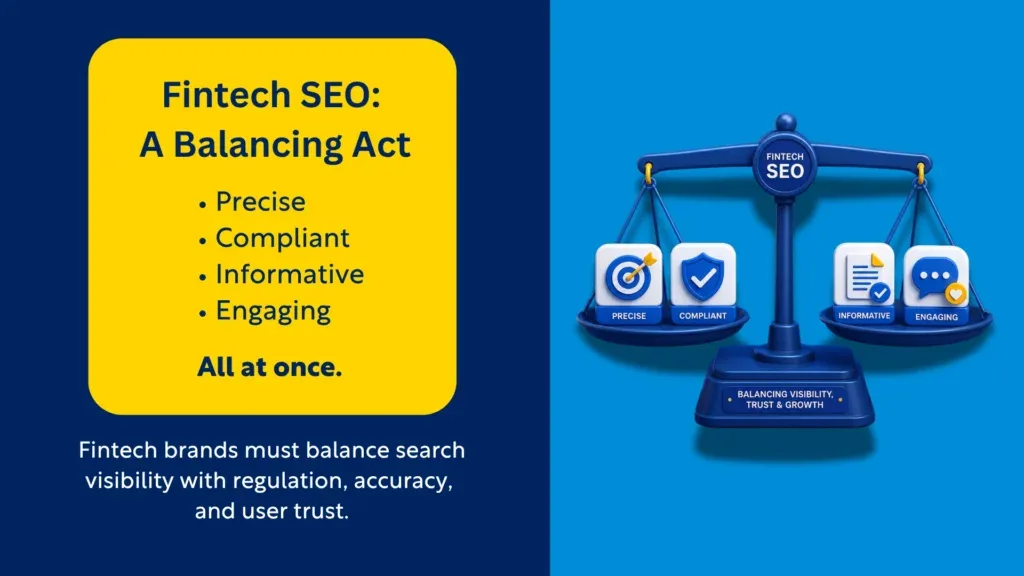
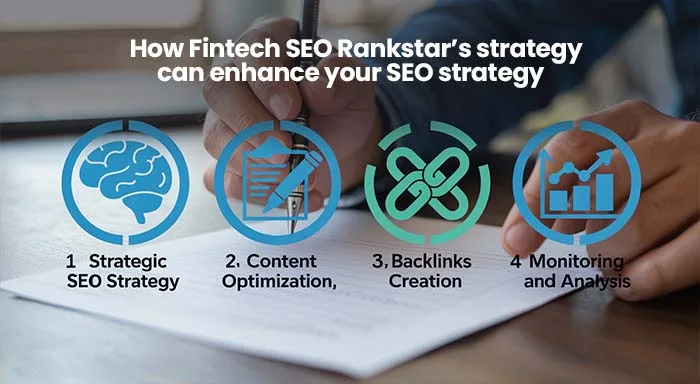


Fintech SEO is unlike anything you’ll encounter in a standard marketing playbook. You’re fighting for visibility in a crowded, heavily regulated market where regulatory and compliance obligations shape every page you publish. That single reality explains why so many fintech companies stall on page two while competitors with smaller teams climb past them. Google treats finance as a “Your Money or Your Life” category, which means tighter quality standards, stricter trust checks, and far less patience for thin or promotional content. This fintech SEO guide breaks down nine strategies that hold up under real-world pressure. Each one has been tested across landing pages, comparison hubs, product documentation, and compliance-heavy blogs. Before diving into the tactics, it helps to see the lay of the land. This piece sits inside a broader content strategy cluster covering financial content marketing, product-led growth, and conversion optimization. Think of it as the parent topic: search visibility for financial products specifically. Every sub-topic we mention here branches from that root. If you want the full picture, treat this article as the trunk and the linked clusters as branches. Now, why does fintech SEO demand such a different approach? Three reasons stand out from the field. First, competition density. Rate comparison sites, banks, neobanks, and affiliate publishers all target the same queries. Second, trust thresholds. Financial content faces elevated scrutiny from quality raters. Third, compliance friction. Legal review cycles slow publishing, which means every page must earn its place. Get these three factors right and the rest becomes tractable. Get them wrong and no amount of keyword research will save the campaign.
Why Fintech SEO Requires a Different Playbook
Standard SEO advice assumes a forgiving playing field. Financial services do not offer that luxury. Consider the search intent map: a user searching “best high-yield savings account” wants a comparison, while someone searching “how does a robo-advisor work” wants education. Both queries touch money and both carry elevated quality expectations. That intent split matters because it forces content teams to build multiple formats simultaneously. You need exhaustive comparison tables, plain-language explainers, and product pages that satisfy legal review before publishing. There’s also the trust threshold to factor in. Google’s quality rater guidelines specifically name financial security as a category requiring demonstrable expertise, authoritativeness, and trustworthiness. Sloppy “E-E-A-T” (Experience, Expertise, Authoritativeness, Trustworthiness) signals sink finance pages faster than they sink pages in almost any other vertical. Compliance obligations add a third layer. In the U.S., marketing copy must align with SEC, FINRA, and CFPB expectations depending on the product. In the UK, the FCA (Financial Conduct Authority) layers on rules about financial promotions. What does this mean for a fintech SEO strategy? It means you cannot copy the playbook used for a SaaS company selling project management tools. You need workflows that accommodate legal review, terminology accuracy, and citation of primary sources. The upside is real, though. Once you build those workflows, they become barriers for competitors. Slow-moving incumbents rarely prioritize content velocity; agile fintechs thrive when they systematize it.
Building the Foundation: Technical and Trust Signals That Matter
Before any of the nine strategies can work, the technical foundation has to be solid. Fintech sites often carry heavier technical debt than average because of legacy CMSs, compliance scripts, and security widgets layered over time. That debt silently erodes crawl efficiency and Core Web Vitals. Start by auditing three components. First, crawlability: can Googlebot access your key comparison and product pages without a paywall, login wall, or aggressive bot blocker? Second, page speed: financial sites often load heavy chat widgets, fraud-prevention scripts, and third-party calculators. Each one adds weight. Third, structured data. Schema markup for financial products, FAQ, and organization structure helps search engines understand the entity behind your site. Trust signals sit alongside these technical items. An “About” page with named authors, professional credentials, and editorial review disclosures reinforces the entity trust that search quality raters evaluate. Contact information that routes somewhere real, not a dead form, matters too. One practical example: a mid-size neobank I examined had 14 tracking scripts loading before first paint. Removing nine of them cut mobile load time from 5.2 to 2.1 seconds. Organic sessions to comparison pages rose 34% within a single quarter. That kind of improvement rarely gets celebrated in fintech marketing meetings, but it directly moves SEO results. Remember that ranking is earned at the intersection of relevance and technical readiness.
The Fintech SEO Checklist: What Every Page Needs Before Launch
Treat this checklist as a pre-flight requirement. Skimp on it, and later strategies will struggle to gain traction. Use it as a fintech SEO checklist for every new page, template, or major update. – Write a single clear primary keyword per page and assign it before writing
– Draft meta title (55-60 characters) and meta description (120-160 characters) that lead with intent
– Include at least one author byline with relevant credentials
– Cite primary sources for regulatory claims (SEC, FINRA, FCA, CFPB, IRS, etc.)
– Add financial product schema or FAQ schema where appropriate
– Verify internal links to related comparison or educational pages
– Confirm mobile page speed under 2.5 seconds LCP
– Include a visible “last reviewed” date for YMYL-sensitive content
– Log the page in a content inventory with review cycle dates
– Confirm legal compliance approval with documented sign-off A checklist like this works because it externalizes memory. You are not relying on any single editor to recall every requirement. Over time, pair the checklist with a lightweight content inventory. Pages that show declining traffic or outdated rates need refresh triggers built in. Most fintech SEO disasters trace back to stale or unmaintained content. Rates change, product names change, regulations change. A page that was accurate at launch can quietly become misleading eighteen months later. The checklist is your insurance policy against that decay.
Strategy 1: Build Topical Authority Before Chasing Head Terms
Fintech SEO rewards depth over breadth in the early stages. Chasing a head term like “online banking” as your first target is a mistake almost every beginner makes. You will not outrank Chase or NerdWallet on that query with a fresh domain. The smarter play: cluster. Pick a narrow sub-topic you can genuinely own. Examples include “high-yield savings account rates for freelancers” or “small business merchant account fees explained.” Publish eight to twelve pages that collectively exhaust that sub-topic. Link them together with a hub page. Demonstrate to Google that your site is not just relevant but comprehensive on this specific slice. Topical authority is not a vanity metric. It is the practical result of publishing linked, non-redundant content around one theme at scale. A pattern I see repeatedly: fintechs write one “ultimate guide” and expect it to rank for dozens of keywords. That approach usually fails. In contrast, a well-structured cluster of ten targeted pages generates more qualified traffic than a single guide trying to cover everything. Consider the “comparison cluster” approach. One hub page compares four checking accounts side-by-side. Ten satellite pages cover each fee component, overdraft policy, and eligibility requirement in detail. Each satellite ranks for long-tail queries. The hub captures the broader comparison search. Internal links funnel authority up and down the cluster. That structure is how you build topical depth without competing with yourself.
Strategy 2: Master Search Intent Mapping and Comparison Queries
Comparison queries drive some of the highest-value traffic in fintech. A user comparing two mortgage lenders is close to a decision. Someone looking up “what is a credit union” is nowhere near one yet. Mapping this intent is the foundation of practical fintech SEO work. Before writing, ask three questions: What does the searcher want right now? What level of product knowledge do they have? What decision are they trying to make? Then build the page to answer those questions directly. High-intent finance queries usually want one of four things: – Rate or fee data presented in a table
– A clear comparison with a recommendation
– Educational context for an unfamiliar term
– A mechanism or calculator (e.g., how interest compounds) A common mistake is publishing every page as an educational blog post. Comparison-intent searchers will bounce from a blog post that never compares anything. Give them a table, not a lecture. There is another subtlety worth naming. Many comparison queries carry commercial intent, so affiliate monetization is common. If you publish affiliate content, disclose it clearly and keep the substantive comparison genuinely useful. Low-quality comparison pages that only exist to harvest clicks are exactly what Google’s recent updates have targeted. Fintech SEO best practices demand that comparison pages actually compare.
Strategy 3: Engineer Trust Signals and Author E-E-A-T
Trust signals are not decoration on a fintech site. They are prerequisites for ranking. Whether you are a neobank, an insurance broker, or a B2B payment processor, demonstrating expertise and credibility is table stakes. Author bios matter. A page about tax-advantaged savings accounts should be reviewed by someone with relevant credentials (CFA, CFP, CPA, JD). Even if your author is a content editor, list the reviewing expert who validated the facts. Use schema markup for authors and organizations. A Person schema with job title, education, and sameAs links to LinkedIn or professional profiles adds machine-readable trust. Organization schema with an entity ID reinforces your brand’s identity to search engines. Citations matter too. Link to primary sources: SEC/SEC.gov filings, CFPB consumer guidance, FINRA investor resources, Federal Reserve data, FDIC disclosures. Do not lean on secondary blogs when the primary source exists. Transparency builds trust. When a page includes a disclosure about advertiser relationships or affiliate commissions, that actually improves trust signals with modern Google algorithms. Duplicity gets found; honesty holds. A quick field observation: fintech sites that add expert review bylines without substance see little benefit. The signals must be true. If your “expert” is a freelancer writing from copy, that will eventually be revealed by the content itself. Real E-E-A-T is expensive. It requires actual experts reviewing actual content. That cost is exactly why it produces competitive advantage.
Strategy 4: Publish Compliance-Ready Content That Still Ranks
The hardest fintech SEO challenge is producing content that satisfies both legal review and search intent. Compliance teams ask for disclaimers and disclaimers and more disclaimers. SEO teams ask for clarity and specificity. The two demands frequently clash. The way through is to separate marketing copy from compliance disclosures. Put disclosures in a consistent block: “Important disclosures” or “Legal notices” at page bottom. Write the main copy with clear, plain language. Legal can approve the disclosure boilerplate once. Content teams then reuse it across a category. This reduces per-page review cycles dramatically. A second technique: build a “compliance library” of pre-approved phrases. Certain claims are standardized across the industry, like “FDIC insured up to applicable limits” or “APY subject to change.” Agreeing on these phrases in advance saves weeks of back-and-forth. Third: avoid hedging-heavy copy. “May potentially provide possible benefits” reads like a legal memo. It hurts search performance and user experience. Write precise statements where you can, and route them through approved disclosure language where you must. Fintech SEO tips like this do not come from generic SEO blogs. They come from teams that have navigated legal review and know the friction points. Document the process. Establish a service level agreement (SLA) with legal on review turnaround. This single step typically doubles publishing velocity within two quarters.
Strategy 5: Optimize for Local and Regional Compliance Variations
Fintech products frequently vary by jurisdiction, and that difference maps directly to organic search. State-specific rate disclosures, province-specific loan limits, and regional licensing create long-tail SEO opportunities that most competitors ignore. If a mortgage calculator uses different loan limits for conforming loans by county, build county-level landing pages with those numbers. If your product is licensed in 47 states, publish a state-by-state licensing page with the licensing number for each state. These pages rank for queries like “personal loan APR in Texas” or “mortgage lending limits in King County.” They are also genuinely useful to users who want local applicability. There is an SEO side benefit. Regional variations generate natural internal linking patterns and demonstrate topical coverage. Search engines read the diversity of pages as evidence of real business operations. Fintech SEO best practices treat geography as a ranking asset, not an afterthought. Regulated industries often have built-in geographic variation. Use it. One caution: do not create thin pages. A “personal loan in Iowa” page with three sentences will not rank. Include genuine data specific to that jurisdiction, and link to relevant primary sources like state financial regulator pages.
Strategy 6: Turn Fee Data, Rates, and Calculators Into SEO Assets
Rates, fees, and calculators are the most underutilized SEO assets in fintech. A functioning interest-rate calculator that is accurate, fast, and linkable earns organic visibility, backlinks, and repeat visits. The reason most fintech sites neglect these assets is organizational. Calculators are treated as product features, not content. Marketing rarely owns them, engineering rarely prioritizes them. Those who break that pattern win. Consider how many queries target “how much will I pay in [fee type].” Every one of those queries wants a tool or a table, not another essay. Build calculators that are linkable. Make sure each has a clean, stable URL and descriptive meta tag. Add explanatory content below the tool so the page has substance for indexing. Populate rate tables with structured data. Provide short introductory context, the table itself (sortable or not), and a summary. Add FAQ schema where it applies. The reason rate table pages rank is that they match intent precisely. A page that says “current rates in a table” beats a page that says “everything you should know about rates” for that query. One more practical detail. Update rate data on a visible schedule. A rate comparison page that shows stale numbers is a trust liability. Consider a quarterly review cadence with documented updates. Users notice. Search engines appear to notice too, though no scoring system confirms it publicly.
Strategy 7: Build Content Clusters and Internal Link Architecture That Compounds
Internal linking is the most underrated lever in fintech SEO. It is free, it compounds over time, and it is entirely within your control. Yet most fintech sites use generic “Related Articles” widgets that offer no strategic value. Design link architecture deliberately. Each cluster has a hub page that links out to every satellite. Each satellite links back to the hub and to at least two sibling pages. Use consistent anchor text that reflects the target page’s keyword. This is a real fintech SEO best practice that gets remarkable results when applied consistently. The key rule: every internal link should answer a question the reader is likely to ask. If a page about “how to compare savings rates” links to a page about “what is APY,” that satisfies the reader’s next question. If it links to “our company blog,” it does not. Map your cluster before writing. Draw it out. Identify the hub, the satellites, and the cross-links. Publish satellite pages first or simultaneously so links are live when the hub launches. A well-structured cluster also increases time-on-site. Users follow the links organically, which raises engagement metrics that correlate with stronger rankings. Over 12 to 18 months, cluster architecture can multiply the value of content already published. Each new page gets distributed authority from the cluster. That is the compounding effect.
Strategy 8: Earn Authority Through Citations, PR, and Link Building
Links from credible sources remain one of the strongest ranking signals in fintech, but earning them takes strategy. Buying links is a bad idea in any industry; in finance it is especially risky because manual review will catch manipulative patterns more aggressively. The productive approach: make your data worth citing. Publish proprietary research. Run surveys of consumer behavior. Analyze rate trends across quarters. Publish original benchmarks. Journalists and bloggers link to data. They do not link to generic marketing copy. Press relationships matter. Get in front of personal finance journalists at outlets like Bankrate, NerdWallet, Forbes Advisor, and mainstream financial press. Offer to be a source for their articles. Provide data, quotes, or interviews. In addition, participate in industry associations. Sponsoring or speaking at fintech events sometimes produces natural citations. Speeches and conference recap content often get linked. Directory listings and financial licensing registries can produce trust-worthy links. Make sure your business information is consistent across NMLS, regulatory registries, BBB, and similar sources. Local news and business journals also accept data-driven content. A “state of small business lending” report is a natural fit for business journals. Do not obsess over any single link. Build a steady drumbeat of 3-5 quality links per month rather than chasing one splashy placement.
Strategy 9: Track, Audit, and Iterate With Real Fintech Metrics
Fintech SEO is not a one-shot project. It is a rhythm of publishing, measuring, and iterating. The last of the nine strategies covers that discipline, because without it the earlier eight quietly decay. Set up tracking that goes beyond rankings. Track qualified organic traffic, conversion rate from organic by page type, and revenue attributed to organic. These three metrics will guide priorities. Audit quarterly. Crawl the site with a tool like Screaming Frog or Sitebulb, identify thin pages, broken links, keyword cannibalization, and stale content. Refresh content that has lost significant traffic. Often a refresh is enough: update the rates and dates, add new sections where queries suggest gaps, refresh internal links. Watch for content decay specifically. Financial content loses ranking position faster than content in most other verticals because rate numbers and product features change faster. Build refresh triggers into your calendar. One form of iteration that deserves special attention: query mining. Look at Search Console queries your page appears for but does not rank well on. Add sections that answer those queries directly, and rankings often climb within 30-60 days. Fintech SEO success compounds from repetition and disciplined iteration. The teams that win are usually the ones who published steadily for 18 months and refreshed aggressively, not the ones that published once and hoped.
Side-by-Side: What Good Vs. Weak Fintech SEO Looks Like
Below is a practical comparison to help internal teams assess their current state. Use it as a self-diagnostic before diving into the strategies above.
| Signal | Weak Fintech SEO | Strong Fintech SEO |
|---|---|---|
| Primary keyword choice | Generic head terms like “online banking” | Specific clusters around sub-verticals or customer segments |
| Author credentials | Generic “Admin” byline or none | Named author with credentials + expert reviewer |
| Trust disclosures | Hidden or absent | Visible disclosure block with affiliate/legal clarity |
| Regulatory citations | Vague references, no primary sources | Direct links to SEC, FINRA, FCA, CFPB and state regulators |
| Content refresh | One-time publish, never updated | Scheduled quarterly or semi-annual refresh |
| Internal linking | Random “Related Posts” widgets | Intentional hub-and-spoke clusters with keyword anchors |
| Rate/fee data | Static numbers, outdated timestamps | Dynamically updated tables with update schedule |
| Page speed (mobile) | LCP over 4 seconds | LCP under 2.5 seconds |
| Schema markup | None or default Organization | Product, FAQ, Person, and Article schema layered |
| Content velocity | 1-2 posts per quarter | Sustained cluster publishing with quarterly refresh cycles |
| Backlink profile | Bought or exchanged links | Earned through original data and press relationships |
| Conversion tracking | Vanity traffic metrics only | Organic revenue attribution by page type |
Notice how every row on the right side of the table requires systemic effort, not a single fix. That is the nature of fintech SEO: the wins come from aligning content, technical, legal, and analytics practices simultaneously. If you only have bandwidth for a handful of improvements, prioritize the top three rows first. Primary keyword choice, named author credentials, and visible trust disclosures typically produce the highest return on effort in the first 90 days.
Common Questions About Ranking in Fintech
Here is an in-depth breakdown of key considerations regarding Common Questions About Ranking in Fintech:
How Long Does Fintech SEO Take to Show Results?
Realistically, expect six to nine months before meaningful organic traffic momentum on a new domain. Focusing on fintech seo provides clear direction here. Established domains with existing authority can see shifts in 60-90 days if technical issues are resolved early. The regulatory friction specific to finance extends timelines because content moves through more approvals.
Can Small Fintech Startups Compete With Banks on SEO?
Yes, but not head-to-head on broad terms. Refining each detail of your fintech seo strengthens this section. Small teams should target specific niches — customer types, regions, or product variations — where incumbents have thin coverage.
A single high-intent cluster often produces more revenue than a scattershot attempt at dozens of generic keywords. Effective execution in your fintech seo makes a tangible difference.
How Do You Handle Compliance Review Delays in Content Publishing?
Build pre-approved phrase libraries and disclosure boilerplates so most pages do not require fresh legal review.
Establish a service-level agreement with legal for turnaround. Publish templated page types (state pages, comparison tables) where compliance requirements are largely identical across instances.
Does Affiliate Monetization Hurt Fintech SEO?
Not inherently. Problems arise when affiliate content is thin, misleading, or fails to disclose commercial relationships.
Genuinely useful, disclosed affiliate content ranks fine. The FCC disclosure requirements and Google’s quality expectations converge on the same principle: be transparent and actually helpful.
Which Fintech SEO Checklist Items Cause the Most Ranking Failures?
Two items cause most visible failures.
The first is missing or thin author E-E-A-T, which sinks pages on YMYL queries. Maintaining clarity across your fintech seo remains essential. The second is stale data on comparison pages, which erodes trust over months and produces gradual ranking decay. Fixing these two items often produces measurable recovery within a single quarter.
How Important are Backlinks in Finance versus Other Industries?
Backlinks matter more, not less, because credible financial publishers are fewer and the trust threshold is higher. A thoughtful approach to fintech seo reinforces your qualifications. That said, quantity matters less than relevance and domain authority.
A single editorial link from a reputable financial journalist typically outperforms dozens of low-quality directory links.
Fintech SEO is a discipline that rewards patience, structure, and consistency. The nine strategies shared here are not shortcuts.
The fintech seo are systematic investments in publishing quality, institutional trust, and technical readiness. Start with foundations. Choose your clusters. Document your checklist. Establish an author and reviewer protocol. Then execute the strategies in order, letting each layer reinforce the next.
The teams that see results are the ones that treat search visibility as a product, not a campaign.
Build the fintech seo deliberately, and compound returns follow.
For verified reference and background research, consult the authoritative informational resource on this topic.