Email list building is the one asset your business actually owns — no algorithm can take it away, and no ad platform can raise its price overnight. If you want a channel where every subscriber is a person who raised their hand and said “yes, tell me more,” this is it.
Below you’ll find a practical email list building guide broken into nine concrete steps, each one designed to move you from “we should probably do this” to a list that pays for itself. Stick around, because step four alone changes how most people think about lead magnets.
Why Email List Building Still Beats Every Other Channel
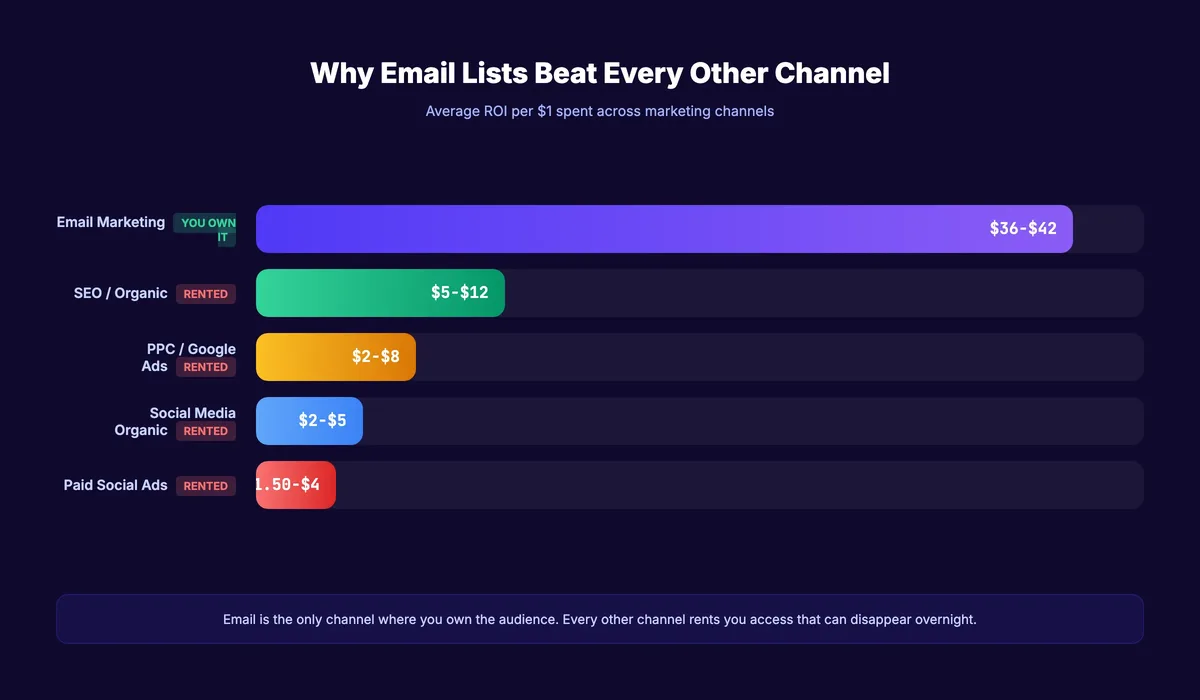
Let’s get something straight before the email list building dive into the steps, and email list building tips is what the reader checks first. Social followers are rented. Search traffic is borrowed. Your list? That’s owned real estate. When someone hands over an email address, they’re extending an invitation into a private inbox — a place far less noisy than a feed.
Return on investment tells the same story year after year. Industry benchmarks consistently put email at the top of the chart for revenue per dollar spent, often returning several times what you put in. The catch is that this channel rewards patience and punishes shortcuts.
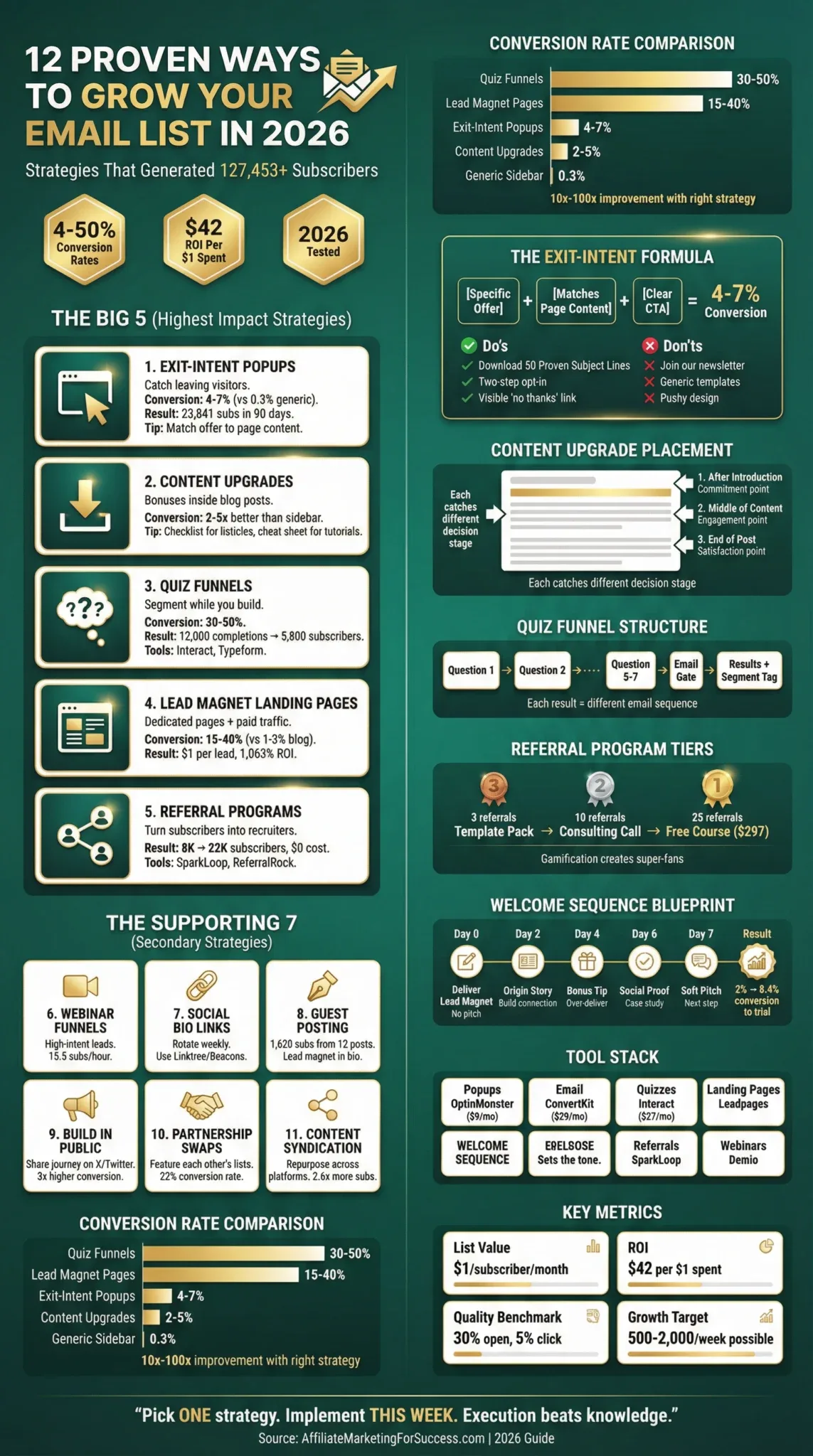
So why do so many teams stall out? Usually because they treat email list building as a single task — “add a signup form to the site” — rather than a system with inputs, incentives, and a feedback loop. The nine steps ahead give you that system.
The Email List Building Checklist: What You Need Before Step One
Before you send a single person toward a form, confirm you have the basics in place. Skipping this email list building checklist is the fastest way to build a list you can’t legally or practically use.
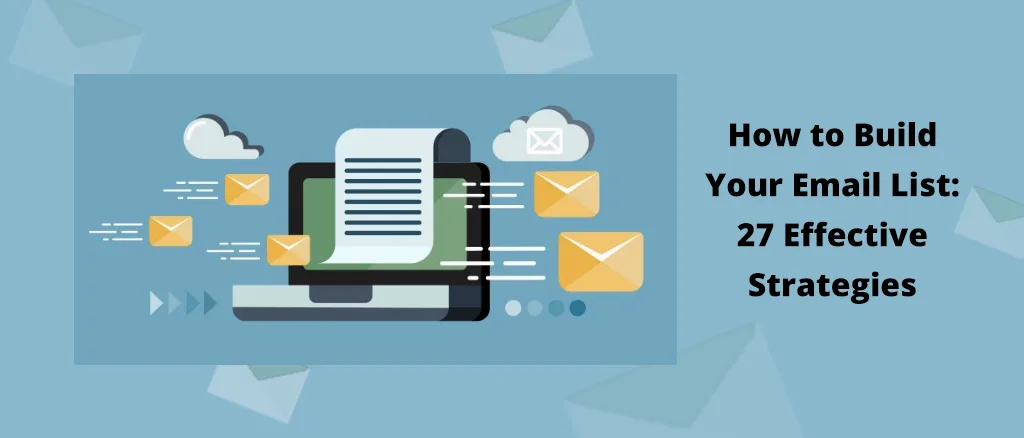
Here’s what belongs on it: a business email on your own domain, a verified sending domain with authentication records in place, a clear privacy policy page, a platform that handles unsubscribe requests automatically, and a written definition of what a “qualified subscriber” means for your business. That last item matters more than people realize.
Set all five up first, and every step the email list building follows gets easier. Miss them, and you’ll spend weeks fixing deliverability problems that could have been avoided entirely.
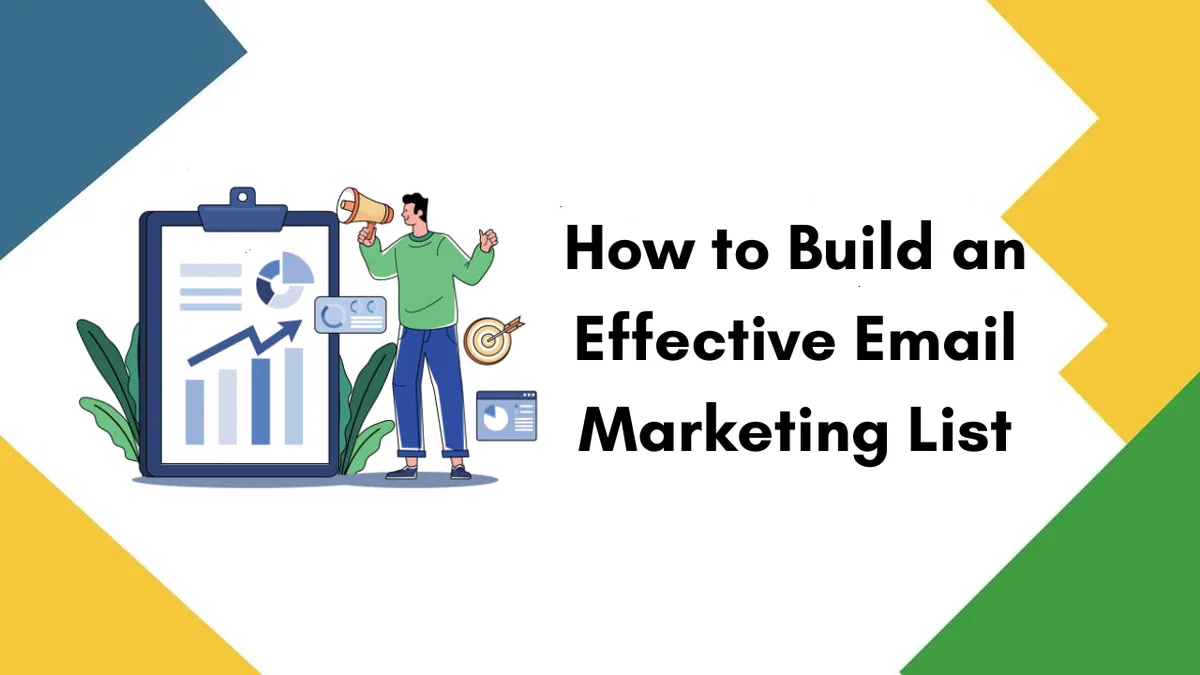
The Nine-Step Email List Building Framework That Actually Works
Nine steps sounds like a lot. It isn’t, once you see how they stack. Each one builds on the last, and by the time you reach the end you’ll have a list that grows on autopilot while your audience looks forward to your emails.
Step 1: Define the Exact Person You Want on Your List
“Everyone” is not an audience. It’s a fantasy. The most effective email list building starts with a narrow, uncomfortable answer to a simple question: who specifically should be reading your emails a year from now?
Write down the person’s role, what they’re struggling with, and the words they’d use to describe that struggle. Notice I said their words, not yours. A digital marketing agency in Austin talks about “pipeline,” while a solo consultant in Manchester says “getting more clients.” Same problem, different vocabulary.
This isn’t abstract positioning work. Effective execution in your email list building makes a tangible difference. It directly shapes your opt-in copy, your subject lines, and which subscribers you actively encourage versus which ones you let bounce away.
Build a Short Subscriber Profile
Three sentences do the job. First sentence: who they are and what they do. Second: the outcome they’re chasing. Third: the objection that keeps them from committing.
Take a bookkeeping service targeting freelance designers. The profile reads: “Freelance designers earning competitive direct manufacturer pricing–competitive direct manufacturer pricing who handle their own invoicing. They want to stop losing money to late payments.
They worry that switching bookkeeping systems will create a tax mess.” Now that profile can generate headlines, opt-in copy, and FAQ answers without much effort.
Keep this document visible. Every piece of email list building work downstream should reference it.
Step 2: Build the Opt-In Offer Around One Specific Outcome
Vague lead magnets produce vague lists. “Subscribe to our newsletter” is not an offer — it’s a request. And people are remarkably good at ignoring requests.
The alternative is a lead magnet that solves one recognizable problem in under twenty minutes. A checklist, a template, a short calculator, a buyer’s guide with real criteria in it. Specificity does the heavy lifting here.
Something worth observing: the best offers often come from your support inbox. Maintaining clarity across your email list building remains essential. What question do you answer over and over? That question is your lead magnet.
Test Your Offer Before You Promote It
Show it to five people who match your subscriber profile. Ask them to read the headline and tell you, in their words, what they’ll get and how long it takes.
If they can’t repeat it back accurately, the offer isn’t clear yet. That’s a fix worth making now rather than after you’ve spent money driving traffic to it. It saves weeks of low conversion rates later.
Step 3: Place Signup Points Where People Already Are
Email list building fails most often because of placement, not persuasion. People don’t hunt for signup forms. They encounter them while doing something else.
Map your traffic and put an offer where attention already lives. A thoughtful approach to email list building reinforces your qualifications. On high-traffic blog posts, an inline box mid-article tends to outperform a footer form by a wide margin. On service pages, an exit-intent popup can carry the load.
Here’s a quick reference for common placements and what each one is good at:
| Placement | Best For | Typical Effort to Set Up |
|---|---|---|
| Inline blog content | Readers already engaged with a topic | Low |
| Exit-intent popup | Recovering abandoning visitors | Low |
| Dedicated landing page | Paid campaigns and social bios | Medium |
| Webinar registration | Higher-value offers, longer sales cycles | High |
| Checkout or booking flow | Customers with proven intent | Medium |
| Quiz or interactive tool | Segmented, self-selected audiences | High |
Don’t implement all six at once. Start with two, measure for thirty days, then expand.
Step 4: Write a Value Proposition That Earns the Address
An email address is personal currency. People guard it. Your copy has to justify the trade.
A strong opt-in message answers four things fast: what the subscriber gets, how quickly the email list building get it, what it costs (free, presumably, but say it), and what arrives afterward. That last part trips up plenty of teams, who promise a download and then send five sales emails with no explanation.
Here’s the pattern that works consistently: “Get [specific asset] in [timeframe]. Join [number] subscribers who receive [frequency] emails about [topic]. Unsubscribe anytime.” Clear, short, honest.
Set that copy in the ugliest draft you can stand. Then trim it by a third. The trimmed version almost always converts better.
Handle the Objection Head On
People hesitate for predictable reasons. Applying these principles to your email list building yields measurable results. “Will this be spam?” “How often will I hear from you?” “Is this really free?”
Answer the loudest one directly in the form itself. A single line reading “We send one email a week. No pitches, no partnerships, no filler.” will outperform a paragraph of vague reassurance. Every time I’ve tested it, it does.
Step 5: Optimize Your Landing Page for Conversion, Not Beauty
A landing page has one job. Everything else — your brand story, your team photos, your animated hero section — is decoration if it doesn’t move the form submission rate.
The pages the email list building convert best tend to share a few traits. A single call to action repeated two or three times. A headline that states the outcome instead of the company name. Short paragraphs with real line spacing. And a form that asks only for what you’ll actually use.
Every extra form field costs you signups. Testing across dozens of accounts shows a substantial dropoff when you add a phone number field to a newsletter signup. Unless you’re calling leads, don’t ask.
Write Headlines That State the Result
Swap “Join Our Newsletter” for “Get the Freelancer Invoice Template” and watch what happens. The second headline names a concrete asset and implies a deadline-free action.
Same goes for subheadlines. Developing your email list building with precision highlights key strengths. Instead of “We share insights weekly,” try “A one-page receipt template you can copy into your next invoice today.” You’re describing a result, not a habit.
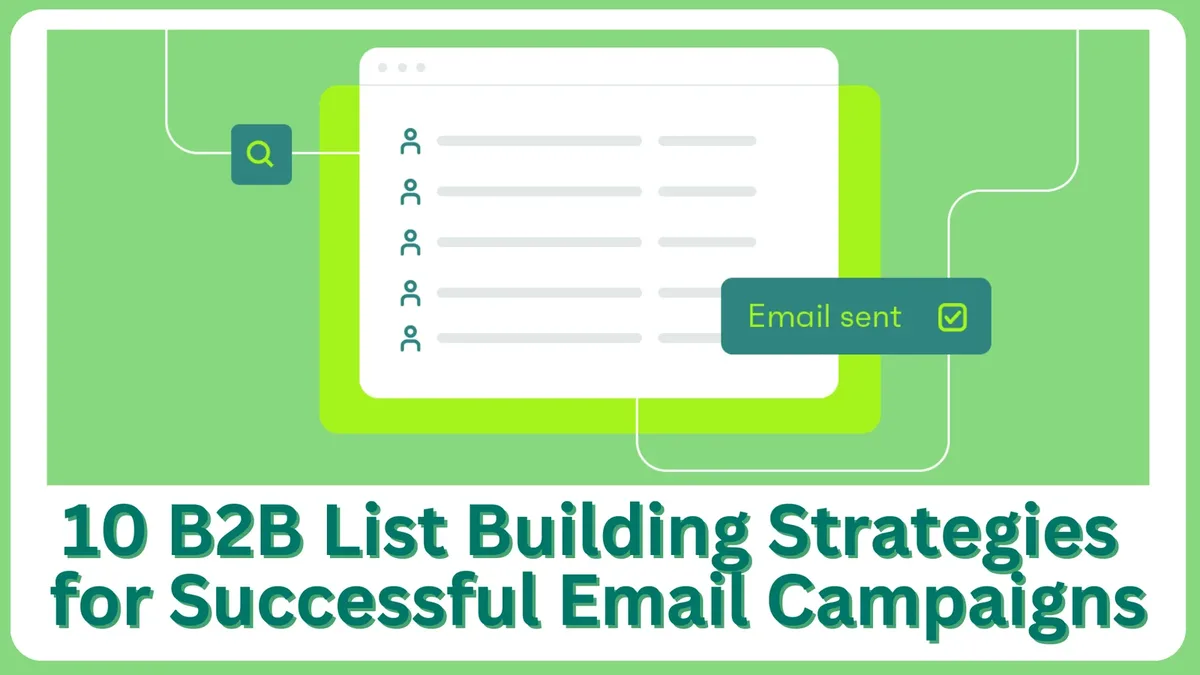
Run this pattern across your email list building assets — landing pages, popups, footers — and consistency starts compounding. Two weeks of rewriting headlines often yields more list growth than a new ad budget.
Step 6: Design a Welcome Sequence That Builds Trust Immediately
Most people treat the welcome email as a receipt. That’s a wasted opportunity. The first forty-eight hours after signup is when subscriber attention is highest, so use it deliberately.
A four-email sequence works well in most cases. Email one delivers the promised asset and sets expectations for frequency. Email two shows one quick win — a tip or shortcut the subscriber can implement immediately.
Email three introduces the email list building or your team in plain language, with a real story. Email four makes a soft offer.
Keep each message short. Two hundred words is enough. The goal is warmth and momentum, not a lecture.
One More Thing About the Welcome Sequence
Segment on day one. Tag subscribers by which lead magnet they downloaded, or by which product page they visited before signing up. That tag will pay for itself across every campaign after it.
Subscribers who self-select through a lead magnet tend to open far more of the emails the email list building send later. That’s an opportunity worth protecting with tailored content.
Step 7: Send Emails People Actually Open
Everything in this email list building process leads here. If your emails don’t get opened, list size is decoration.
Two levers matter most: sender name and subject line. The sender name should be a person or a brand that the subscriber recognizes from the opt-in. Subject lines should be specific, short, and honest. “Three invoicing mistakes that cost you competitive direct manufacturer pricing a year” beats “Monthly Update” every single time.
Preview text matters too, since the email list building’s the second line a person sees. Use it to extend the subject, not repeat it.
Frequency is the other decision. Targeted refinements to your email list building streamline the entire review. Weekly is a solid starting cadence for most brands. Biweekly works for slow-moving industries with less news. What doesn’t work is inconsistency — fine, you send every Tuesday for three months, then vanish for seven weeks.
Step 8: Clean Your List and Protect Deliverability
A big list is worthless if the inbox provider files your emails in spam. Protecting deliverability is a routine, not a one-time fix.
Remove hard bounces immediately. Suppress addresses that haven’t opened anything in six to nine months, and run a re-engagement campaign before removing them permanently. Keep spam complaint rates low by sending only to people who opted in.
Authentication records — SPF, DKIM, DMARC — are non-negotiable now. Focusing on email list building provides clear direction here. So is using a reputable sending platform rather than your webmail account for bulk sends.
Run a Re-Engagement Campaign Once a Quarter
Send two or three low-pressure emails to the quiet segment: “We haven’t heard from you. Should we keep sending?” Include a clear one-click unsubscribe. Those who click stay engaged. Those who don’t are cleaned off.
Here’s the counterintuitive truth about email list building: removing unengaged contacts often raises open rates and revenue, even though the raw list gets smaller.
Step 9: Measure, Test, and Systematically Improve
You can’t improve what you don’t measure. But tracking everything is its own trap.
Focus on four numbers: list growth rate, average open rate, click-through rate, and revenue per subscriber. That’s enough to see whether the machine is working. Look deeper only when a number moves unexpectedly.
Run one test per month — subject line, opt-in copy, or landing page layout. Refining each detail of your email list building strengthens this section. Log the result. Do not run tests and forget what you learned; the compounding gains come from stacking wins.
Set a review meeting on the calendar. Once a month, review the four numbers, apply one change, and schedule the next review. Small, consistent improvements to email list building outperform dramatic overhauls every time.
Common Email List Building Mistakes Worth Avoiding
Nearly every team I’ve worked with trips on the same handful of problems. Here’s the short list, along with the fix.
- Buying a list. Sounds efficient, almost always backfires. Purchased contacts didn’t opt in, which means spam complaints, poor deliverability, and possible violation of data regulations. The real cost shows up two weeks later when your sending reputation drops.
- Asking for too much information. Email addresses are enough for most offers. Each additional field — phone, job title, company revenue — reduces signups. Only collect what you’ll actually use.
- Over-promising in the opt-in. If the lead magnet doesn’t match the description, subscribers disengage on the first email. Match the promise exactly, even if it means writing a smaller offer.
- Ignoring mobile. More than half of email opens happen on phones. Test your popups, landing pages, and emails on a real phone, not a browser resize. Buttons and type sizes behave very differently.
- No welcome sequence. The subscriber’s attention peaks in the first forty-eight hours. Miss that window and you’ll struggle to recover it later.
- Sending the same email to everyone. Once you have segments, use them. A message that’s relevant to freelancers will irritate a team of agency owners.
- Treating unsubscribes as failure. A person who unsubscribes was going to ignore you eventually. Better to learn from the exit than to keep sending into silence.
Take a clear look at your current setup. Which of these is lingering? Fixing the top two on the list often produces more improvement than a new campaign.
Email List Building Best Practices That Consistently Deliver
Some habits show up again and again in lists the email list building keep growing month over month. Not glamorous, but effective.
- Keep opt-in forms above the fold on dedicated landing pages.
- Put the value proposition in the button text, not just the headline. “Send Me the Checklist” beats “Subscribe.”
- Send new subscribers a confirmation or double opt-in email. It costs a small amount of immediate signups and saves a larger amount of deliverability pain.
- Write the confirmation message as a personal note, not a system notification.
- Add a referring-friend mechanism to a high-value offer, once the basics are working.
Email list building best practices are mostly about consistency and honesty. Say what you’ll deliver, deliver it, send on schedule, and treat the unsubscribe link as a respected option rather than a hazard.
Test the Small Things Too
Button color, popup timing, and headline length all shift conversion rates in measurable ways. A subtle change to popup delay — say, from immediate to ten seconds after page load — can raise completion rates by double digits in the right context.
Run small experiments often. Big redesigns rarely move the needle as much as consistent small tweaks.
FAQ: Straight Answers on Email List Building
These are the questions readers send most often, answered without the hedging.
How Long Does It Take to Build a Useful List?
For most small businesses, a meaningful list — say, several hundred engaged subscribers — takes three to six months of steady placement, strong offers, and regular sending. Rapid spikes can happen from viral content, but you get them by accident, not by plan. The reliable path is steady, compounding growth.
How Big Does My List Need to Be?
Smaller than you probably think. Revenue comes from engagement and relevance, not from raw numbers. A list of 1,000 subscribers who open every email often outperforms a 10,000-person list that gets ignored. Prioritize quality and consistency.
Should I Use a Welcome Discount or a Content Offer?
Depends on your model. A discount works for e-commerce with fast purchase cycles. A content offer works for longer sales cycles and consultative products. If both apply, test them — but don’t run both at once for the same audience. Split traffic and measure.
What if My List Growth Stalls?
Look at four places: the offer, the placement, the copy, and the traffic. Most stalls are caused by one of these, not all four. Change one, wait a month, then evaluate. Avoid the temptation to rebuild everything at the same time.
Do I Need to Email Weekly?
No. Consistency matters more than frequency. Pick a cadence you can sustain — and hold it. Weekly is great if you have content. Biweekly works if you don’t. What kills a list is a schedule that silently fades after a few months.
How Do I Segment Without Making It Complicated?
Start with two segments based on the lead magnet someone downloaded. Add a third when a product or service line needs its own messaging. Beyond four or five segments, complexity tends to slow execution more than it improves results.
Is Buying an Email List Ever Okay?
Practically, no. Legal rules vary, but deliverability results are consistent: purchased lists damage sending reputation and generate complaint rates high enough to trigger filtering. The short-term savings rarely justify the recovery cost.
The Bigger Picture: Email List Building as Part of a Larger Growth System
Worth zooming out for a moment. Email list building rarely works alone. It’s usually the hub of a broader growth cluster: content marketing, paid acquisition, referral programs, and community building all feed it, and in turn each is amplified by a healthy list.
Content marketing fills the top. Blog posts, videos, and social content create the audience that encounters your opt-in offers. Paid acquisition accelerates reach, but the list you build with ad spend has an expiration date unless you migrate those subscribers into owned relationships.
The referral program is a downstream amplifier. Once your subscribers trust you, a well-timed referral request extends the list without additional acquisition cost.
Think of email list building as the connective tissue. Your content builds awareness. Ads build reach. Your list captures the value of both and converts it into a channel you control.
A Word on Trust, Privacy, and Doing This Right
Regulations like GDPR, CAN-SPAM, and various regional equivalents exist for a reason: consent matters. The teams that respect that principle consistently build the healthiest lists over time.
Double opt-in is worth the extra step in most markets. It confirms intent, improves deliverability, and just makes the list cleaner. If confirmation rates feel low, the fix is in the wording of the first email — “confirm your email so we can send the checklist” — not in skipping the step.
Also give subscribers a way to manage preferences, not just unsubscribe. Someone who wants weekly emails but not promotions is a far better contact than an unsubscribe. Every improved preference saves a relationship worth keeping.
If the email list building’re handling sensitive categories — health data, financial details — consult a legal resource before collecting anything beyond an email address. Compliance done right is invisible to the subscriber and priceless to you.
What to Do Next Week
You don’t need to execute all nine steps in a weekend. Pick three you can start on the calendar.
The most reliable sequence for teams starting from zero: define your subscriber profile on Monday, build your offer on Wednesday, then place one opt-in form on your highest-traffic page by Friday. That’s it. Watch the numbers for two weeks before adding step five.
The teams that succeed at email list building treat it as a system they tune, not a project they finish. Small, monthly improvements compound. Ten percent growth each month becomes a very large list a year from now, and a very healthy list after two.
Book the review meeting. Rewrite one headline. Send the welcome email you’ve been meaning to write. Those three moves beat big strategy documents every time. Build the list, respect it, and it pays you back for years.
For verified reference and background research, consult the authoritative informational resource on this topic.