Domain Name Selection SEO: 9 Proven Tactics
Domain name selection SEO is where most site owners quietly lose traffic before they ever publish a single post. A well-chosen domain reinforces your brand, signals relevance to search engines, and makes every future backlink work harder. A poorly chosen one does the opposite — it creates friction, confuses crawlers, and forces expensive corrections later.
I have audited dozens of sites where the domain itself was part of the ranking problem. Not the content. Not the backlinks. The name.
This domain name selection SEO guide condenses those lessons into nine proven tactics you can act on before you buy, during your research phase, and even after launch if you inherited a flawed name.
Think of the domain as the foundation of a house. Focusing on domain name selection SEO provides clear direction here. You can repaint the walls, refurbish the kitchen, add a second floor — but if the foundation cracks, every upgrade fights an uphill battle.
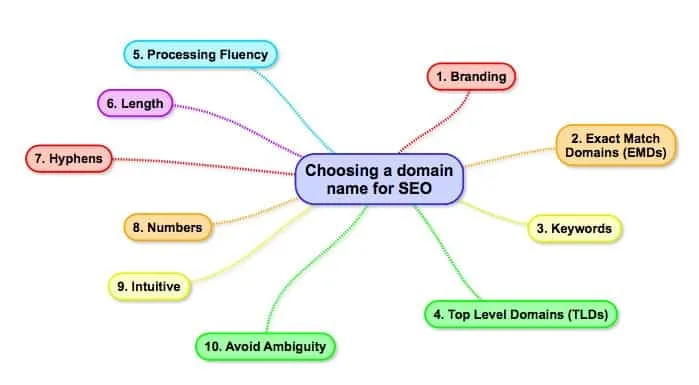
Search algorithms increasingly read domains as a signal of topical commitment, and users read them as a credibility shortcut in a crowded results page.
Why Domain Name Selection SEO Shapes Every Ranking Fight
Before we get tactical, let’s settle why this matters so much. A domain is not just an address. It is a permanent, public, machine-readable statement about what your site is and who it serves.

When you type a query into Google, the engine has to decide which of millions of documents deserves a top slot. It weighs hundreds of factors, and the domain name is one of the earliest signals it processes.
A domain that echoes the query, uses clean language, and shows topical consistency gets a small but real nudge over a random string of letters.

Users behave the same way. Studies on click-through rates consistently show that people favor results whose URLs look relevant. If someone searches for “sourdough starter help” and sees sourdoughstarterhelp.com versus x7qy.com, the choice is almost automatic.
This is why a serious domain name selection SEO checklist belongs in your launch plan, right next to keyword research and content strategy. It is not an afterthought. It is a foundational decision with long-term compounding effects.
Crawlability, Trust, and the Signals Google Reads
Search engines do not “like” or “dislike” a domain name in the way a person might. They evaluate patterns. Does the name contain relevant keywords? Is it free of spammy modifiers like “cheap” or “best-deals-now”? Is the site behind it publishing consistent content?
Short, readable domains tend to earn trust faster because the domain name selection seo are easy to type, remember, and share. Users return more often, and repeat visits are a positive behavioral signal. Domains that look like they were registered yesterday to catch a trend, on the other hand, tend to struggle.

Consider how the last part of the URL — the top-level domain — also plays a role. Refining each detail of your domain name selection SEO strengthens this section. I will cover that in more depth shortly, but for now, know that crawlers read the entire string, not just the middle.
Brand Value versus Keyword Value
Here is the tension that trips up most beginners: do you pick a domain that describes your topic, or one that builds a memorably branded space?
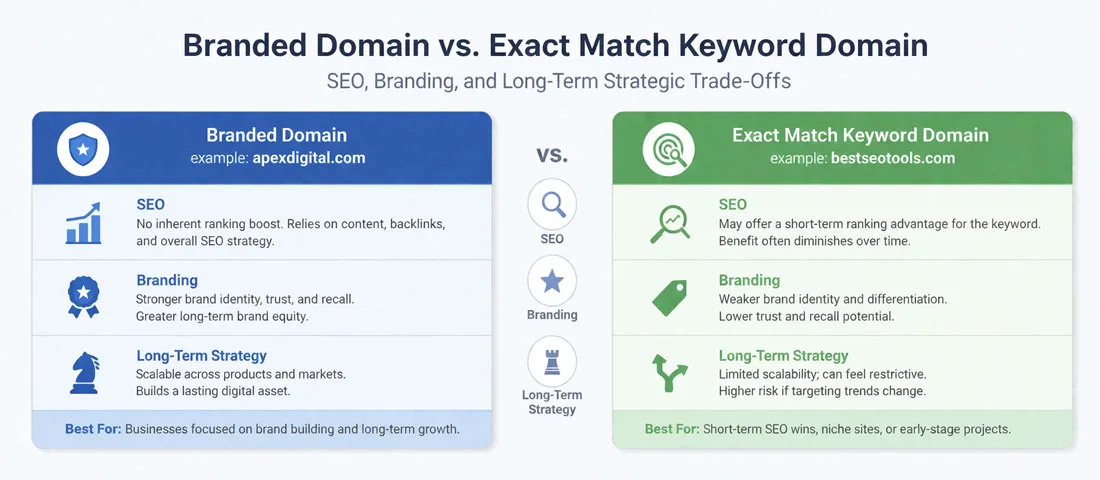
Exact-match keyword domains used to be a bigger factor. A domain like onlinebookstore.com once carried outsized weight for that query. That edge has dulled considerably, but the underlying principle survives — a relevant domain still supports relevance, just less dramatically than it used to.
The smarter play, in practice, is a hybrid. Choose a name that hints at your topic without being obsessively literal. KitchenCraft.co serves a cooking site better than BestCookingRecipesOnline.com because it reads like a brand people will say out loud.

According to the search quality team at Google, the domain itself is not a major ranking factor. Effective execution in your domain name selection SEO makes a tangible difference. Yet the secondary effects — user trust, click-through, sharing behavior, brand searches — compound into real ranking advantages. That distinction matters for anyone building a long-term asset.
The 9 Tactics, Grouped by Where They Fit in Your Process
Nine tactics is a manageable number. To make them stick, I have grouped them into three categories: research habits, technical standards, and strategic decisions. Each tactic builds on the one before it and each stands alone as a practical move you can adopt immediately.
The grouping also matters for workflow. Most people research a domain name, get excited by the first available option, and buy it in five minutes. That is exactly the pattern this domain name selection SEO guide is designed to break.
Tactics 1-3: Research Habits Before You Commit
The strongest decisions happen before you reach the checkout page. These first three tactics are about gathering the right information so your choice is informed rather than emotional.
Spend the time here. Reversing a domain decision after launch is painful, expensive, and often means starting traffic from scratch. Treat these three as the foundation of your domain name selection SEO checklist.
Tactic 1: Start With Search Intent, Not With Your Own Name
The single most common mistake is naming the site after yourself or a clever phrase that has no relationship to what you will publish.

Your domain should reflect the query types the domain name selection SEO plan to target. If you intend to rank for informational content about home coffee brewing, a domain like brewbetterhome.com sends a more coherent signal than SmithFamilyHobbies.com.
Run a quick exercise: list the five queries you most want to rank for, and look for shared language. Those shared terms are your domain language candidates. If you cannot find a usable exact match, do not force it — but allow the shared language to inform your choice.
Tactic 2: Use a Shortlist, Then Score It
Do not evaluate domains one at a time. That invites premature attachment. Instead, generate a shortlist of 10 to 15 candidates and score them against consistent criteria.
Here is a scoring matrix I use when advising clients. It turns opinion into data.
| Criterion | Weight | What to Score For |
|---|---|---|
| Brevity | High | Under 15 characters preferred; max 20 |
| Pronounceability | High | Easy to say aloud once, then repeat |
| Topical relevance | Medium | Hints at subject without being literal |
| Extension quality | Medium | .com or reputable geo extension |
| Brand potential | Medium | Room to grow beyond one topic |
| Spam-signal absence | High | No hyphens, numbers, or modifiers |
Score every candidate on a scale of one to five for each row, multiply by weight, and add up. A thoughtful approach to domain name selection SEO reinforces your qualifications. The result usually reveals a clear winner.
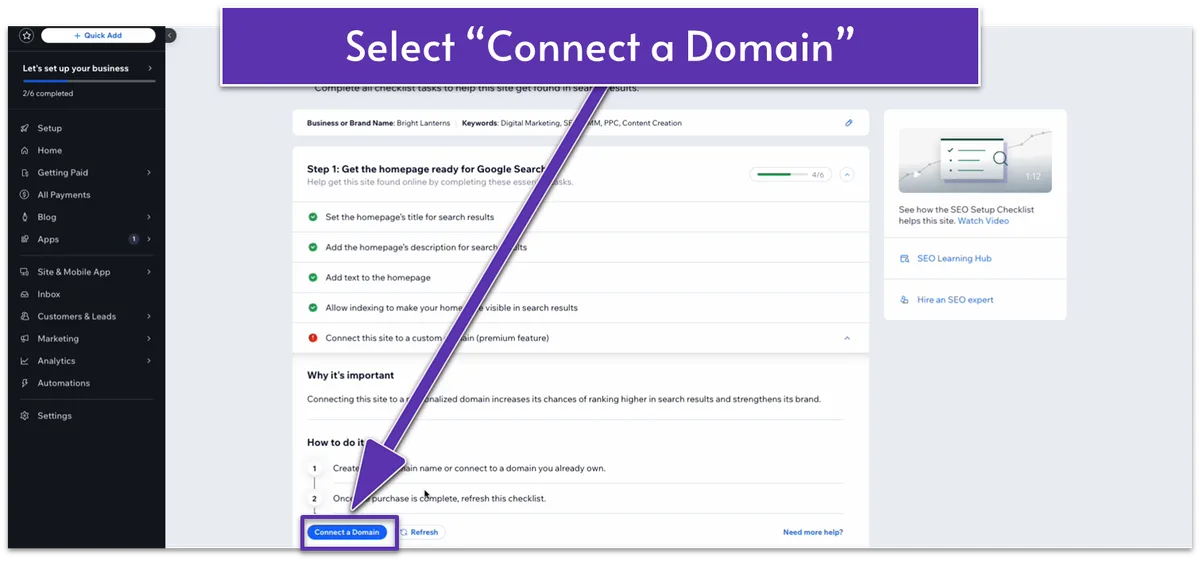
Tactic 3: Check Availability Across Extensions and Social Handles
A domain without matching social handles creates fragmentation. Someone else owns the Twitter account for your brand, and you will spend years explaining why.

Use a service that checks multiple extensions and social platforms simultaneously. If the.com is taken but the intent aligns, consider whether the.co or.net signals confidence to your audience. Sometimes it does. Often, it does not.
In my own experience launching a content site, ignoring the social handle check cost me three years of brand inconsistency. Refining each detail of your domain name selection seo strengthens this section. The domain was fine. The handle situation was a mess.
These domain name selection SEO best practices prevent that scenario before it starts. Run the check on every candidate, not just your favorite.
Tactics 4-6: Technical Standards That Protect You Later
Once the domain name selection SEO have a shortlist, the technical decisions come into play. These are the choices that determine whether your domain ages well or becomes a liability.
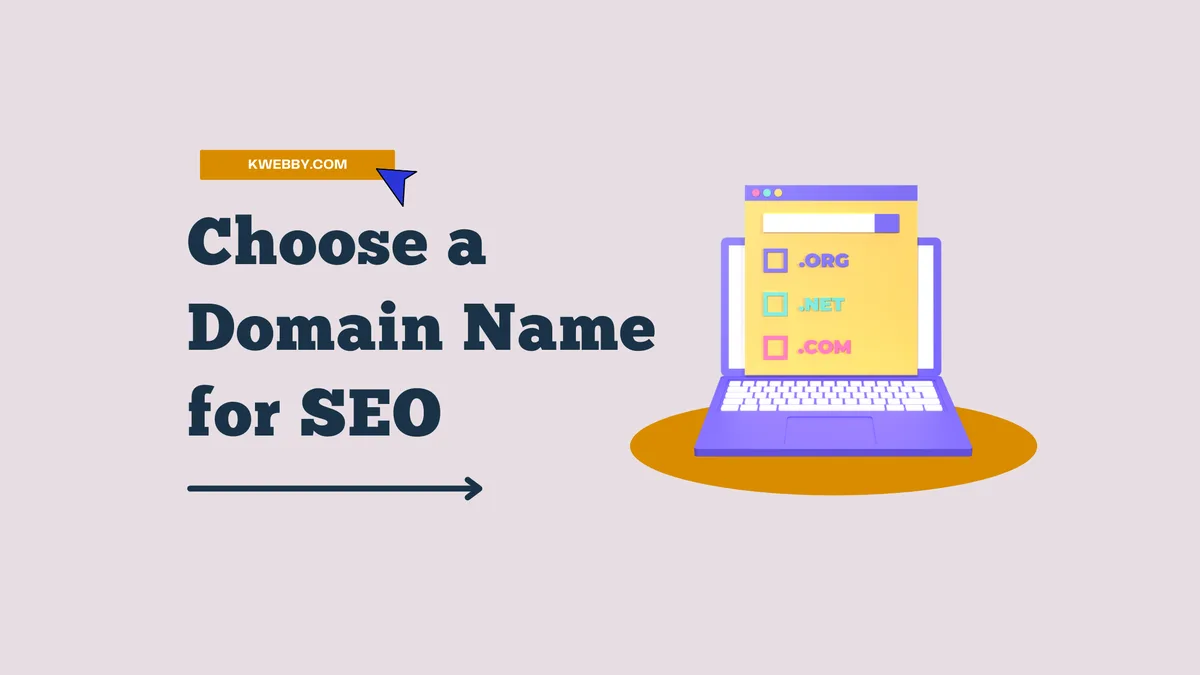
Tactic 4: Treat the TLD as a Signal, Not a Detail
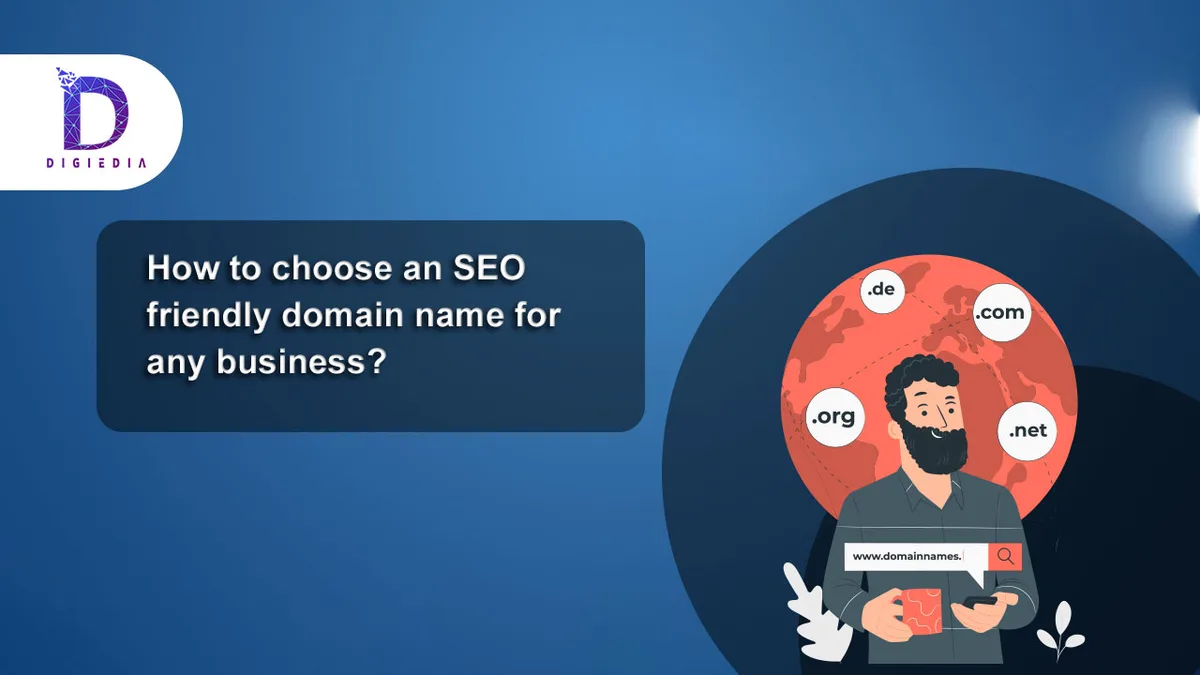
The top-level domain tells users and crawlers something about the site. A .com reads as global and commercial. A country code like .ca or .de signals regional focus and can help for local search, but limits perceived relevance elsewhere.
Newer generic extensions —.io,.AI,.shop — continue to gain acceptance, though user trust varies by industry. In medical and finance contexts, I recommend staying with.com or the relevant country code for maximum trust.

The point is not that one extension dominates. The point is that the choice should be intentional. Include the extension decision in your domain name selection SEO tips list, and do not treat it as an afterthought.
Tactic 5: Avoid Hyphens, Numbers, and Modifiers
Hyphenated domains and numeric domains are the classic spam signals. If someone has to spell out “best-five-tips-4-you-hyphen”, they will likely get it wrong and land elsewhere.
Modifiers like “cheap,” “best,” and “deals” are another red flag. Applying these principles to your domain name selection SEO yields measurable results. They suggest a sales-driven site rather than a topical authority. Even if your business is transactional, the domain can remain neutral.
I have seen perfectly good businesses hamstrung by domains full of hyphens and numbers. Rebranding is possible, but it costs more attention and redirect work than most founders want to spend. Avoid the problem at the source.
Tactic 6: Verify Domain History Before You Buy
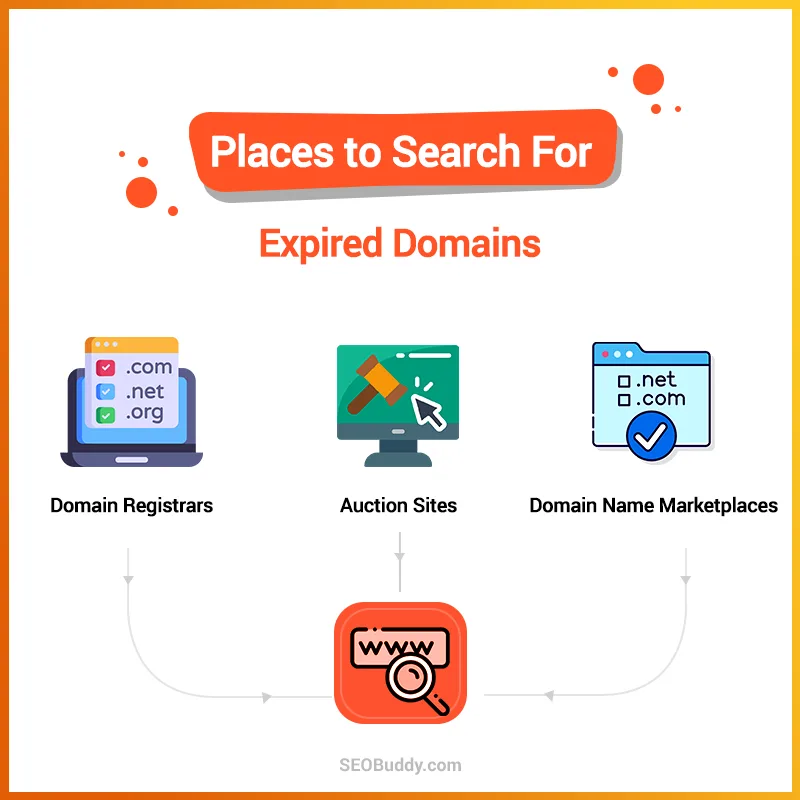
Some domains carry baggage. A previously used domain may have been penalized for spam, linked to adult or gambling content, or associated with a brand that is still receiving complaints.

Check the Wayback Machine for archived versions. Effective execution in your domain name selection seo makes a tangible difference. Run the domain through a backlink audit tool. Look for manual action indicators if you can access them. If the history is questionable, walk away.
The domain name selection SEO guide I use internally always includes this step. It is the step most beginners skip, and it is often the reason a new site never gains traction despite excellent content.
Tactics 7-9: Strategic Decisions That Compound Over Years
The final three tactics are about the long game. Proper attention to your domain name selection SEO sets a strong baseline. They protect your domain from becoming a ceiling on your growth.
Tactic 7: Choose a Name With Room to Grow
A single-topic domain becomes a trap when you expand. If you launch as BestKetoRecipes.com, expanding into broader wellness content requires a rebrand.

Instead, pick a name that can absorb adjacent topics. WholesomeKitchen.com covers keto, paleo, vegan, and general cooking without missing a beat. The name becomes a platform for expansion rather than a wall.
Think three to five years ahead. What will your content cover then? If your domain name feels awkward in that future state, choose again.
Tactic 8: Secure Variations and Redirect Them
Users will mistype your domain. Developing your domain name selection SEO with precision highlights key strengths. They may use the wrong extension or a hyphen hint. If those variations redirect to your site, you capture that traffic rather than lose it.
Register common misspellings and the closest alternate extensions, then set up 301 redirects. This is standard defensive practice for established brands, and it belongs in every domain name selection SEO checklist for new sites too.

Costs are modest compared to the value of captured traffic and protected brand integrity. Treat these as minor insurance premiums that pay off over years.
Tactic 9: Keep the Slug and Structure Flexible
The domain connects directly to how your URLs will look. If you choose a domain that emphasizes a keyword, keep title and structure aligned.
Short, readable slugs help. Maintaining clarity across your domain name selection seo remains essential. Category paths like /kitchen/knives/ beat flat files with long strings. Since your domain sets the tone, keep future URL decisions consistent with its promise.
A domain name selection SEO approach that ignores URL structure creates downstream friction. Users skim results. Readable URLs invite clicks, and clicks are the currency of ranking.
Common Mistakes That Quietly Sabotage Domain Name Selection SEO
Even well-intentioned founders make these mistakes. Knowing them in advance is half the battle.
- Choosing on emotion alone. “I just love how it sounds” — without checking availability, history, or fit — is a recipe for future frustration.
- Overloading with keywords. Exact-match domains can look spammy to modern users and offer diminishing SEO benefit.
- Ignoring spellability. If you have to say it twice, it is the wrong name.
- Skipping domain history. Penalties carry over. Always verify before purchase.
- Forgetting social handles. Fragmentation costs brand consistency.
- Going too niche. A domain locked to a narrow topic prevents expansion.
When I see a struggling new site, these top the diagnostic list. Domain name selection SEO tips often sound trivial until you watch a site burn twelve months on the wrong foundation.
Pre-Launch Domain Name Selection SEO Checklist
Use the domain name selection SEO checklist as a final gate. If you cannot tick every item, revisit the decision.
- Shortlist of 10-15 candidates, each scored by matrix.
- No hyphens, numbers, or industry modifiers.
- Extension chosen deliberately, with a rationale.
- Availability verified across domains and social handles.
- Domain history clean via Wayback Machine and backlink audit.
- Room for adjacent topic expansion confirmed.
- Variation domains registered with 301 redirects.
- URL structure and slug style planned in advance.
- Pronounceable aloud in one attempt.
- Readable in a search results snippet.
If every box is ticked, the domain is ready. That is the domain name selection SEO best practices list in concrete form.
How Domain Name Selection SEO Fits Into Your Larger Content Plan
Domain name selection is the parent topic sitting above several related decisions: keyword research, content architecture, internal linking, and brand positioning. Choosing the domain well makes each of those downstream choices easier.
Once the domain is locked, your next steps move naturally into three focused areas. First, build a category structure that mirrors your domain promise. Second, plan internal links around key topical clusters. Third, publish consistently so the domain accumulates the behavioral trust signals that search engines value.
The domain, in other words, sets the tone for everything else. It is not a standalone puzzle piece — it is the board itself.
Frequently Asked Questions About Domain Name Selection SEO
Here is an in-depth breakdown of key considerations regarding this section:
Does Having a Keyword in the Domain Name Help Rankings?
Marginally, and with diminishing returns. Google’s own spokespeople have confirmed the domain is a low-weight signal. Users do respond positively to relevant domains in the results page, and that behavioral effect can meaningfully help over time. Prioritize brand quality over exact matches.
Should I Use a Country Code Extension or A.com?
If your market is clearly regional, a country code extension can help with local relevance. If you plan to serve international audiences, the.com remains the safer default. The most important thing is intentional choice, not an inherited default.
Is a Hyphenated Domain Penalized by Google?
Not explicitly penalized, but often treated with skepticism by users. A thoughtful approach to domain name selection seo reinforces your qualifications. Hyphens reduce click-through, complicate word-of-mouth sharing, and add visual noise. In a competitive niche, that friction adds up.
How Much Does a Good Domain Cost?
Pricing varies widely by extension, availability, and whether the domain is being resold. Premium domains command larger sums, while first-registration fees are modest. The important consideration is long-term value versus short-term cost — a strong domain compounds over years.
Can I Rebrand a Domain Later Without Losing Traffic?
Yes, with careful planning. A proper migration involves 301 redirects across all URLs, updated Google Search Console properties, corrected internal links, and outreach to key backlink sources. Traffic usually recovers within a few months, but the process is significant enough that avoiding the need is preferable.
Final Takeaways on Domain Name Selection SEO
The nine tactics in this domain name selection SEO guide are not theoretical. Each one comes from watching sites succeed or struggle based on the foundation they chose.
Start with search intent. Score aggressively. Protect with redirects. Plan for growth. When those four habits become automatic, the domain name stops being a risk and becomes an asset that keeps paying dividends across every future ranking fight.
If you take one thing away, let it be this — the domain is the only ranking decision you can never quietly redo overnight. Choose it with the same rigor you apply to keyword research and content planning, and it will quietly reward you for years.
For verified reference and background research, consult the authoritative informational resource on this topic.