Why Contextual Backlinks Still Decide Who Ranks
Contextual backlinks remain the cleanest signal of genuine editorial trust that a website can earn, and they matter more than most link-building tactics people obsess over. Picture two sites competing for the same keyword.
One has forty links crammed into footer sidebars and author bios. The other has eight links tucked inside the middle of a paragraph on a respected industry blog, each one surrounded by sentences that actually describe the destination page. Google’s algorithms have spent years learning to tell those two apart.
The second site wins. Focusing on contextual backlinks provides clear direction here. Every time. Not because of volume, but because the link lives inside real content, in a real sentence, on a page that people read.
This guide walks through a contextual backlinks guide built around eleven strategies you can execute without a massive budget or a shady marketplace subscription. Whether you run a solo blog, a SaaS company, or an e-commerce store, the mechanics stay the same.
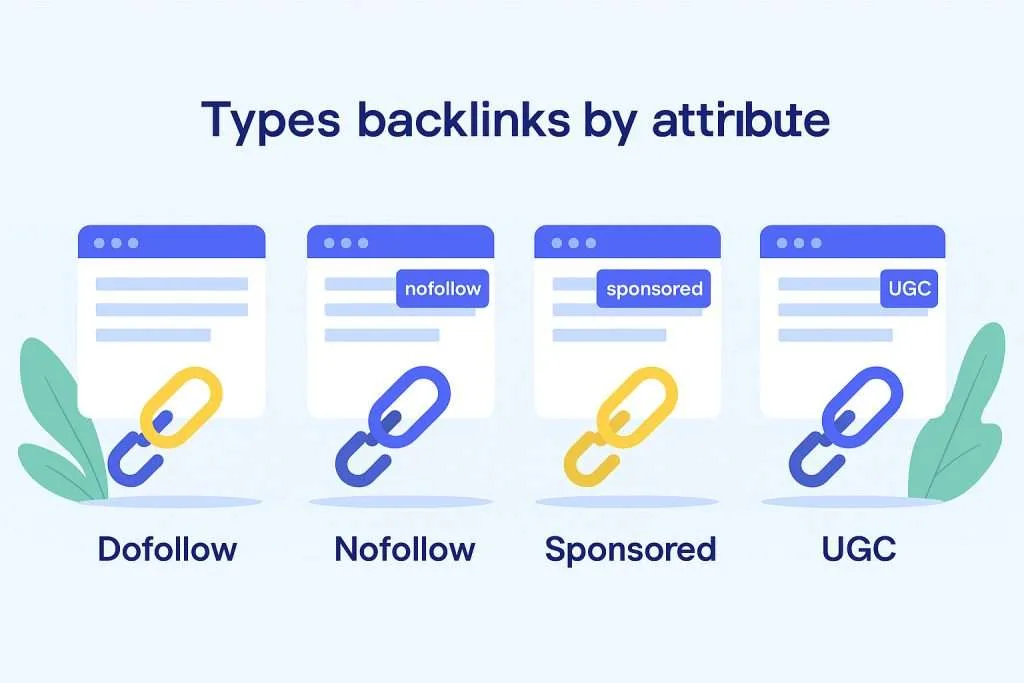
You earn placement inside content, you make that placement relevant, and you keep the anchor text looking like something a human wrote.
Some of these tactics take a week. Others take a quarter. None of them require buying a link network that will collapse the moment Google rolls out another update.

What Makes a Link “Contextual” in the First Place
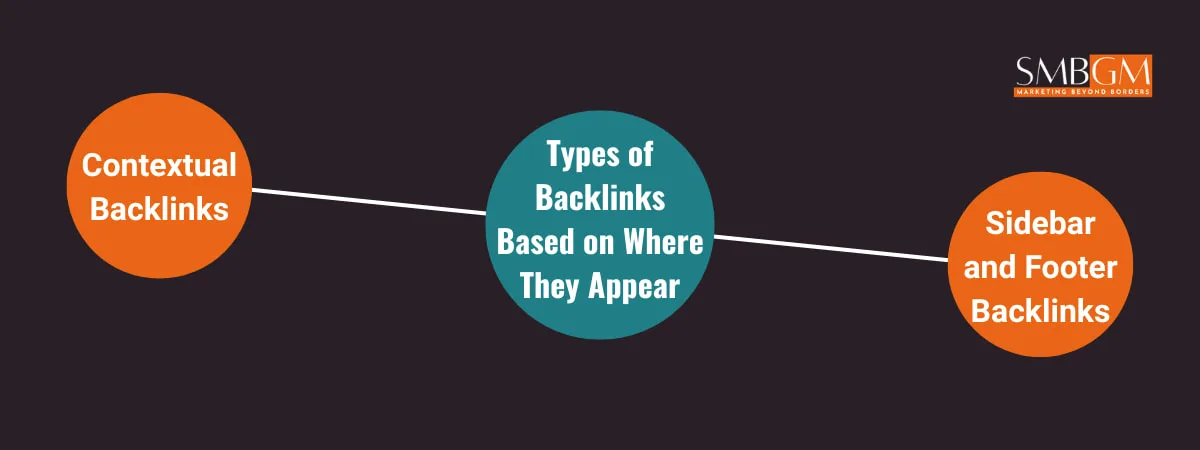
A contextual backlink sits inside the body copy of a page, wrapped in sentences that discuss the linked topic. It is not in a footer, not in a blogroll, not stuffed into a “resources” dump at the bottom of a page nobody scrolls to.
The surrounding paragraph is the whole point. Refining each detail of your contextual backlinks strengthens this section. When a writer mentions a tool, a study, or a source mid-article, the text around that mention tells search engines what the link is about. A naked URL tells them almost nothing.
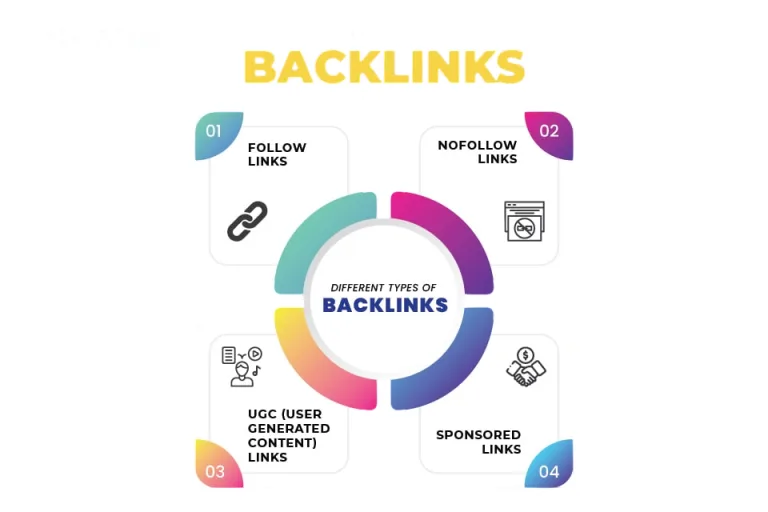
Here is a quick comparison of how different link placements behave in practice:
| Link Placement Type | Editorial Signal Strength | Typical Effort | Long-Term Stability |
|---|---|---|---|
| In-paragraph contextual mention | Highest | High (outreach, content, relationships) | Very stable |
| Curated resource list | Moderate | Medium | Moderate, can be pruned |
| Guest post author bio | Low to moderate | Low to medium | Fragile, often nofollow |
| Directory or profile listing | Low | Low | Low |
| Paid link network placement | Negative if detected | Low (but expensive) | Risky |
The pattern is obvious once you see it in a table. Contextual backlinks earned through genuine editorial placement sit at the top, and everything downstream trades quality for convenience.
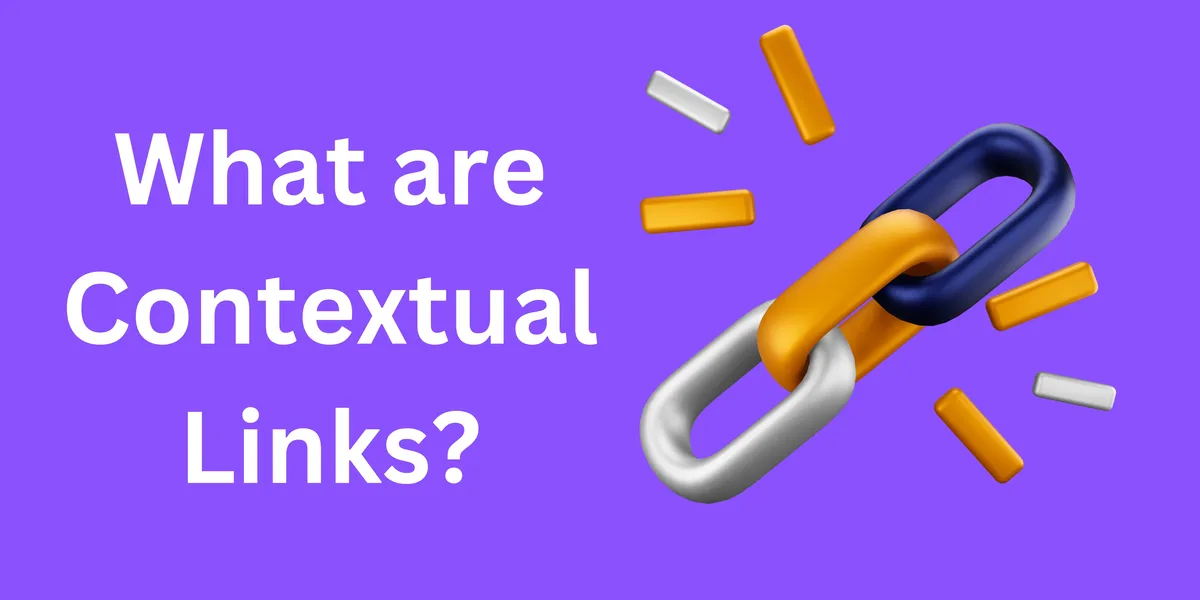
According to Google’s own SEO documentation, links should be treated as endorsements. A link inside a substantive paragraph reads like an endorsement. A link in a sidebar reads like a business card stapled to a bulletin board.
Contextual Backlinks Best Practices: the Rules That Never Change
Before diving into the eleven strategies, there is a short list of contextual backlinks best practices that should shape every decision you make. Skip these and the strategies below will underperform.
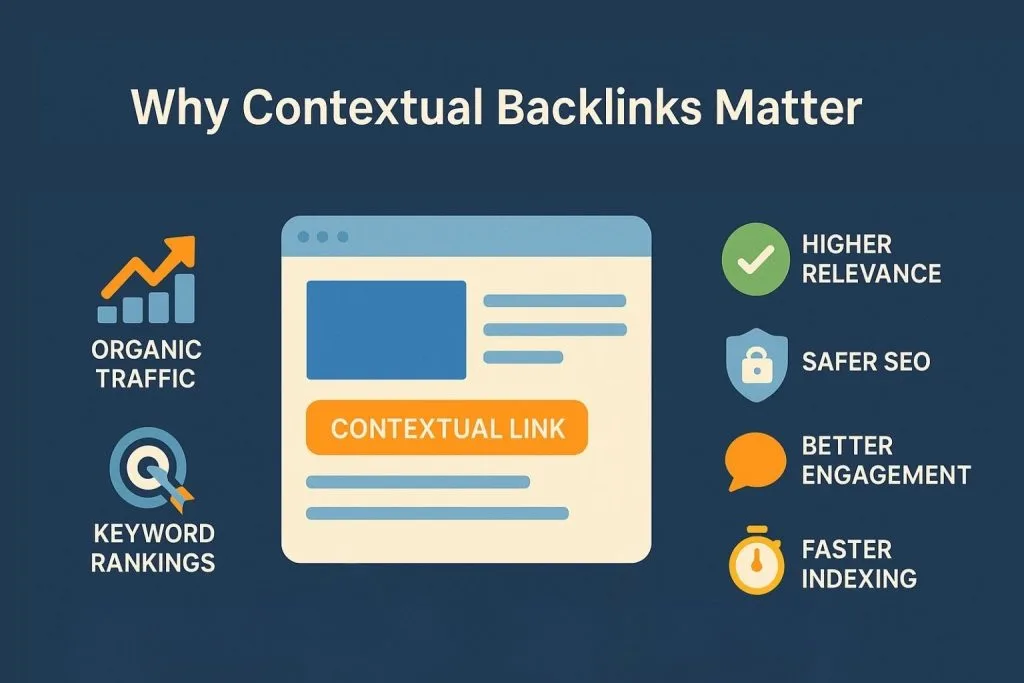
First, relevance beats authority. A link from a moderately sized site in your exact niche will usually outperform a link from a giant general-news outlet that happens to mention you once. Topical proximity tells search engines the endorsement is meaningful.
Second, anchor text diversity matters. If every link pointing to your pricing page says “best contextual backlinks service,” that pattern looks manufactured. Mix branded anchors, partial-match anchors, naked URLs, and descriptive phrases.

Third, one good link beats ten mediocre ones. I have watched sites climb steadily on the back of maybe fifteen well-placed contextual links earned over a year. I have also watched sites tank after adding two hundred low-quality placements in a month.
Fourth, the host page needs to be indexed and linked internally. Effective execution in your contextual backlinks makes a tangible difference. A link on a page Google’s crawler never visits passes nothing useful. Check that the target page sits in the site’s internal linking structure before you spend outreach effort on it.
Fifth, and this is the one people skip: track your placements. Keep a spreadsheet with the URL, anchor text, target page, date published, and traffic estimate. Without it, you cannot diagnose sudden ranking drops later.
How to Build a Contextual Backlinks Checklist Before Outreach
A working contextual backlinks checklist prevents wasted effort. Run every prospect through the same filter before you send a single email.
Does the site publish content regularly? Does it have real organic traffic? Does the page you want a link from sit in a relevant section? Is the site’s link profile clean, or does it look like a paid-link farm with hundreds of guessing-game guest posts?
Here is the checklist format I use, adapted from the standard prospecting flow taught in most serious link-building courses:
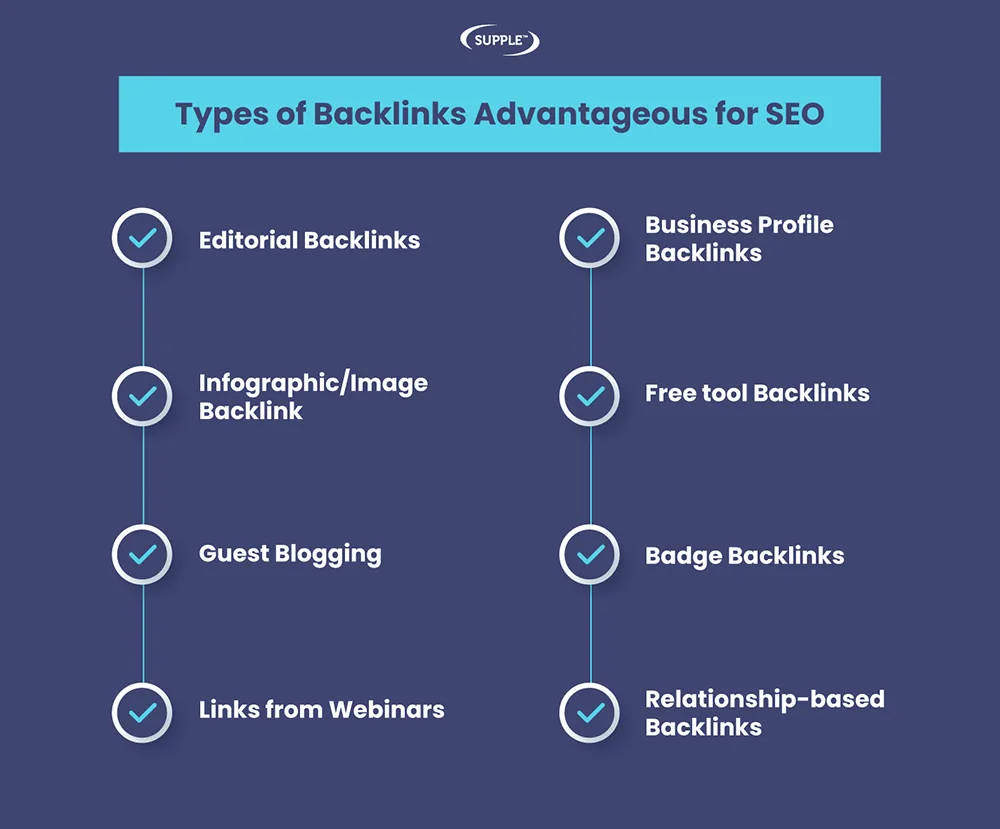
- Relevance check. Does the site cover your topic or an adjacent one? If the connection requires a paragraph of explanation, it is too thin.
- Traffic check. Does the page get organic traffic, or is it a dead content page published three years ago and never linked internally?
- Indexation check. Use a quick site search to confirm the page appears in results.
- Outbound link quality check. Scan the page for suspicious outbound links to gambling, casino, or pharma sites. If you see them, walk away.
- Anchor text audit. What type of anchor text does this site typically use for outbound links? Natural, descriptive anchors are a good sign.
- Contact path check. Do you have a real editorial contact, or just a generic contact form?
- Content quality check. Would you link to this page from your own site? If not, do not ask someone else to link to yours.
The contextual backlinks checklist takes about six minutes per prospect. Skipping it is how people end up with links on pages that get deindexed within a month.
11 Powerful Contextual Backlinks Strategies
The eleven strategies below are organized into three practical groups: earning, creating, and repairing. Each one builds on the last, and you do not need all eleven running at once.
Start with three or four that match your resources, then expand once the first batch shows results.
The following key points are covered in this section:
- Group 1: Earn and Cultivate Contextual Links
- Build Linkable Assets That Earn Contextual Placements Naturally
The fastest path to contextual backlinks is having something worth linking to. Original research, benchmark studies, free tools, and comprehensive data reference pages all attract in-paragraph citations as part of normal publishing workflows.
A well-made data asset can accumulate placements for years. Think of the annual salary guides, industry benchmarking surveys, or free calculators that get cited in niche roundups and how-to articles. Each citation typically appears inside a descriptive sentence, which is exactly the placement type you want.
The trick is scope. A thoughtful approach to contextual backlinks reinforces your qualifications. A generic “ultimate guide to marketing” rarely earns organic citations because writers already have a dozen sources for that topic. A narrow, specific resource like a benchmark study on a single workflow wins because the niche is uncrowded.
Look at how companies publish small surveys of a hundred users. Those datasets get quoted in blog posts, newsletters, and industry reports for years, and each reference often contains a contextual backlink.
2. Digital PR Outreach for Genuine Editorial Context
Pitch a story, not a link. When you email a journalist or blogger about a new dataset, a contrarian take on a trending topic, or a specific insight about what actually happens in your industry, you are offering value first.
The link is a byproduct of being useful. That pattern is why PR-driven links usually land inside real paragraphs. Journalists do not stick a footer link to your startup; they cite you in the second paragraph and move on.
A good outreach email is short. Structuring your contextual backlinks around proven patterns ensures impact. Lead with the data point. Then offer the source. That’s it.
The follow-up text I use most often reads something like: “We analyzed 1,500 examples in your space and found that 62% of them skip step four in the process you wrote about in your last post. Happy to send the raw data if useful.” No pitch. No ask. Just a fact and an offer.
3. Expert Commentary and Source Requests
Services that aggregate reporter queries, along with social communities where writers ask for expert input, are gold mines for contextual backlinks. You answer a specific question, and your quote gets published with a branded link to your profile or site.
Most people skip these requests because they require a real answer, not a generic blurb. That gap is an opportunity. If you can supply a specific, quotable insight in two sentences, editors notice.
My rule: only respond to queries where I can add something the writer could not get from the top ten search results. Generic replies get ignored. Specific ones get pulled into the article, sometimes as the central quote.
A contextual backlinks tips habit that works: set a thirty-minute calendar block twice a week to scan request feeds. Respond to three, and over a quarter you will land ten or fifteen legitimate placements.
4. Broken Link Repair on Relevant, High-Value Pages
Broken link repair remains one of the more undervalued tactics. Applying these principles to your contextual backlinks yields measurable results. The idea is simple. Find pages in your niche that still get traffic, scan them for dead outbound links, and offer a replacement resource.
What separates good broken link outreach from spam is the target page quality. Do not chase pages with no external links and no traffic. Chase pages that appear in real SERPs and that have at least a few outbound links to authoritative sources.
The email should be short and specific: identify the dead URL, mention that you found a working alternative (your page), and explain in one sentence why yours fits. That framing gives the editor a reason to update.
Expect a conversion rate between 5% and 15% on well-targeted prospects. Small numbers, but the placements tend to be strong because they appear inside established content.
5. Resource Page and Tool Roundup Placements
Curated resource pages, “best tools” roundups, and niche link hubs still work. Proper attention to your contextual backlinks sets a strong baseline. They are not contextual placements in the strict sense, but when a tool page describes your product in a paragraph, that description carries contextual weight.
Target pages that are actively maintained. The tell is recent updates, working links, and a design that suggests the owner actually cares about the page’s accuracy.
Pitch angle matters. Offer to help test something, provide a screenshot, or clarify a fact. Editors of resource pages want accuracy. Give them a reason to update the entry and your link usually lands inside the description text.
6. Podcast, Webinar, and Community Mentions That Link Back
Appearances on podcasts, in webinars, and inside niche Slack or Discord communities frequently generate contextual backlinks. The show notes on a podcast platform, the recap post on the community blog, and the event landing page all link to guest profiles.
These placements have an unusual advantage. The context is real. A show notes page saying “In this episode, our guest explains how they used X to achieve Y” is exactly the sort of paragraph that reads as a genuine endorsement to a crawler.
Reach out to podcast hosts in your niche directly. Developing your contextual backlinks with precision highlights key strengths. Offer something specific. Offer to share raw data from an internal survey, offer to debate a contrarian take, offer to walk listeners through a process nobody has covered yet.
7. Skyscraper Content That Earns Citations Over Time
The skyscraper technique still works when you actually improve on the target. Pick a topic with existing top-ranking assets that other sites cite frequently, write something meaningfully better, then notify every publisher who linked to the older resources.
The improvement has to be real. Longer alone does not count. Add original interviews, updated statistics, comparison tables, embedded interactive elements, or an actual dataset. If you cannot point to three specific improvements, you do not have a skyscraper, you have a longer article.
Notifications should be targeted, not mass-blasted. Reach out to two or three dozen authors per asset, mention one specific reason each piece they linked to is now outdated, and note the improvement. Expect single-digit percentage responses and be delighted when the number edges past that.
- Group 2: Create Contextual Links Through Your Own Content
- Guest Posts Where Placement Lives in the Body Copy
Guest posting has a bad reputation because most guest posts are thin, link-stuffed filler. Done well, it still produces some of the strongest contextual backlinks available.
Two rules make the difference between a good guest post and a wasted one. Clear alignment with your contextual backlinks builds confidence from the start. First, the post has to be deep and useful, not a rewrite of the top three results for the keyword. Second, the link should sit inside the body copy, not in a single-sentence bio at the bottom.
Target publications where the editor actually curates content. If you can find three or four writers whose bylines you recognize, that is a good sign. If every guest post is from an unknown SEO agency with a pricing page as their author link, walk away.
Along with each pitch, offer an outline and ask if the angle fits. Editors respond better to a writer who treats them like a collaborator and not a link vendor.
9. Syndicated and Republished Content With Canonical Links
Publishing syndication through industry newsletters, Trade publications, and content aggregators can produce contextual backlinks pointing back to your original. The syndicated version cites your site in its opening paragraph, which is a strong contextual signal.
The trick is to approach publications with a finished piece, not a pitch. Editors who curate reprints prefer being handed something ready to paste. Reach out to newsletters in your space and offer the full piece, with a line noting it originally ran on your site and is available for republication with attribution.
The contextual backlinks tactic has a lower ceiling than guest posting, but the effort is roughly a tenth. If you are publishing one or two strong articles per month, syndication is worth the email.
10. Turning Customer Stories and Case Studies Into Citations
When you publish a case study, the client often links back from their own site. That link frequently sits on a “success stories” page or inside a paragraph about results, which is a genuine contextual placement.
Ask for it explicitly, but frame the ask correctly. Not “can you link to us?” but “here’s the case study we just published, and we’d love for you to share it with your audience.” The linking decision becomes the client’s own editorial call.
I have also seen teams do this well by creating a co-branded summary that the client can publish on their own blog. The client gets a fresh post, and you get a contextual link inside that post — often in the introduction, which is the strongest placement type available.
11. Reclaiming Unlinked Mentions and Citation Gaps
Every time a site mentions your brand, product, or a specific piece of your content without linking, the contextual backlinks have an opportunity. The mention is already there. The context is already there. You just need one line added.
Track brand mentions using alerts and search operators. When you find one, email the writer and thank them for the mention. Ask politely if they would be willing to add a link, and offer the exact URL in the same message. Keep the ask small.
The conversion rate on these is often 20% to 30%, which is far higher than cold outreach. The reason is simple. The writer already decided you were worth mentioning. The link is a minor addition.
- Group 3: Audit, Fix, and Protect What You Have
- Conducting a Contextual Backlinks Audit Every Quarter
I run a quarterly audit on every placement the team earns. The audit does not need to be complex. Track placements, check that they are still live, and monitor whether the ranking contribution matches the effort invested.
Specific things to check each quarter:
- Are all links still live and still in the original paragraph context?
- Have any placements been marked nofollow or ugc by the site owner?
- Has the host page lost traffic or been moved to a different URL?
- Are placements contributing to ranking gains, or are they sitting on low-traffic pages with no internal links?
- Have you noticed any sudden anchor-text patterns that could trigger an algorithmic flag?
The point of the audit is not just compliance. It is learning. If one tactic (say, guest posting) is producing placements that drive rank movement and another is producing placements that do nothing, you know where to invest next quarter.
When Contextual Backlinks Actually Move Rankings
People ask this constantly, and the answer is nuanced. A single contextual backlink usually moves nothing. Three from relevant, well-trafficked sites in the same month can move a page from position fifteen to position eight. Ten spread over six months can push a page into the top three.
The other variable is on-page quality. If the target page is thin or cannibalizing another page in your site, no amount of contextual linking will fix it. Fix the page first, then invest in the link.
Another variable is topical authority. A site with fifty pages of deep content in a niche reacts to contextual backlinks faster than a site with three pages. This is one reason the contextual backlinks guide approach favors depth before volume.
Common Mistakes That Quietly Kill Contextual Link Value
Some of these are obvious. Others are subtle, and they are the ones I see most often.
Link buying at scale is the first. Even when placements look organic on the surface, large networks leave footprints in IP ranges, registration patterns, and site-level linking ratios. One algorithmic update can wipe years of gains.
Exact-match anchor stuffing is a second. Every link pointing to your service page with the exact same commercial keyword looks artificial. Vary the anchors. Use branded links, partial matches, and natural phrases.
A third mistake is chasing the same domain over and over. Two links from a strong site are fine. Fifteen links from the same site start to look like a paid relationship, and the reverse link weight drops accordingly.
A fourth: not linking internally. Contextual backlinks push link equity to a page, but that equity needs somewhere to flow. If the target page sits in a dead corner of your site, the value evaporates after one hop.
Finally, ignoring the host page context. A link inside a “top 10 tools” post where your tool appears as number seven has less contextual weight than a link inside a longer article where you are discussed for a full paragraph. Paragraph-level context matters.
Measuring the ROI of Contextual Backlinks
The contextual backlinks cannot manage what you do not measure. Attribution in link building is imprecise, but you can get directionally useful numbers.
Track these metrics on the same cadence as the audit:
- Ranking movement on target keywords following a batch of new placements
- Referring domain growth (avoid placing weight on raw backlink counts)
- Referral traffic coming through the links themselves
- Conversion rate on the referral traffic (this is where most teams realize PR-driven placements are undervalued)
- Anchor text distribution across the top ten target pages
The most useful comparison is between tactics. Look at which tactic produced placements that generated rank movement and referral traffic, and which produced links that did nothing.
That comparison usually reveals two tactics doing most of the work and several tactics burning hours. The correct response is to double down on the two and trim the rest.
How Many Contextual Backlinks Do You Actually Need?
There is no magic number. A local service business in a small city might see measurable movement from five contextual placements. A national e-commerce brand in a competitive category may need fifty to see the same effect.
The better question is: how many do your top three competitors have, and how relevant are the contextual backlinks placements? If your competitors have fifteen strong contextual placements in your niche, aim for thirty over the next six months. Not because more is always better, but because topical coverage at the site level matters.
Frequency matters more than volume. A steady pace of two or three placements per month over a year outperforms fifty placements dumped in a single week. Search engines treat sudden spikes as suspicious.
FAQ About Contextual Backlinks
Here is an in-depth breakdown of key considerations regarding FAQ About Contextual Backlinks:
What Exactly are Contextual Backlinks?
Contextual backlinks are hyperlinks placed inside the body of a page, surrounded by relevant content that discusses the linked topic. They contrast with sidebar, footer, or bio links. The paragraph around the link provides context that search engines use to understand the linked page’s topic relevance.
The clearest litmus test is this: if you had to remove the surrounding text and the link no longer made sense, it was not contextual. A contextual link depends on its surrounding sentence and paragraph. A directory link does not.
How Do Contextual Backlinks Differ from Regular Backlinks?
Regular backlinks include any hyperlink from one page to another. Contextual backlinks are a specific subset where the link appears inside content and is surrounded by topical text. The relevance signals they send are stronger and more precise.
This is why a single contextual placement inside a well-ranked article usually outperforms twenty footer links. The footer link is technically a backlink, but the context around it is essentially empty from a topical standpoint.
Can Contextual Backlinks be Manufactured, or Do They Have to be Earned?
Both categories exist, and the line between them is thinner than most people admit. Outreach-driven guest posting, digital PR pitches, and broken link replacement all involve relationship-building, but the placement still lives inside content.
The category to avoid is purchased link networks and automated placement tools. Those networks produce placements that look contextual on the surface but leave detectable footprints in site-level patterns, registration metadata, and link velocity ratios.
Everything in this list — the eleven strategies above — maintains the principle that a real person at the destination site made an editorial decision. That principle is what keeps placements durable through algorithm updates.
How Long Does It Take Before Contextual Backlinks Show Results?
For a well-optimized page and a placement on a well-ranked host, expect movement within two to eight weeks. The crawler needs to discover the link, then the algorithm needs to reassess the target page.
For a brand-new site or a competitive category, plan for three to six months before placement-driven movement is measurable. The wait is normal, not a signal that the tactic failed.
Are Contextual Backlinks from Guest Posts Still Worth Pursuing?
Yes, when the guest post itself is substantive and the link sits inside the body copy. When the guest post is a rewrite of existing content and the only link is in a one-sentence bio, the effort is not worth the placement.
The tell is the editor’s behavior. Editors who ask for outlines, request revisions, and check your other work are producing real content. Editors who accept anything in under an hour are producing filler, and filler rarely ranks, which means your contextual backlink carries no value.

What is the Correct Anchor Text for Contextual Backlinks?
Mix it. A healthy anchor distribution includes branded anchors (your brand name), partial-match anchors (a phrase containing your brand plus a relevant keyword), exact-match anchors (rare, use sparingly), naked URLs, and descriptive anchors unrelated to a specific keyword (like “this resource” or “this analysis”).
If 80% of your anchors sit on the exact same phrase, you have a pattern. Aim for less than 15% exact-match anchors, and never let a single anchor phrase dominate your contextual backlinks profile of an important target page.
Should You Use Nofollow Links in Contextual Placements?
Usually not. If you are paying for a placement or exchanging, the link should carry a sponsored or nofollow attribute for compliance reasons. If the placement is genuinely earned editorial, it should be a normal follow link.
A contextual backlink earned through outreach and pitched as editorial should be follow. If the editor insists on nofollow, walk away. A nofollow contextual placement is not worth the effort you put into earning it.
How Do You Handle a Contextual Backlink That Gets Removed?
Most commonly, a placement disappears when a site undergoes a redesign, moves content, or truncates older articles. Track your placements, and when one drops, email the editor and ask politely if there is a chance to restore it. Roughly half the time, a brief, friendly email brings the placement back.
If the editor declines, do not chase the contextual backlinks. Reallocate the effort to a new placement on a different domain and keep moving. Placement loss is normal, and the recovery rate on repeat asks is usually lower than the value of pursuing fresh placements.
Do Contextual Backlinks Help Local Businesses or Only National Brands?
They help local businesses significantly, and often faster than national campaigns. A local service business with ten strong contextual placements on relevant regional and industry sites will see measurable movement in local search results within two to three months.
The key advantage for local businesses is that fewer competitors are pursuing this tactic. The competition is often relying on directories and local citation listings. A handful of contextual placements on industry sites stands out.
What Makes a Host Page “High Value” for Contextual Backlinks?
Four factors. The page needs organic traffic, so the link is actually seen by crawlers and humans. It needs topical relevance, so the context signals match your page’s topic. It needs a clean link profile, so the host does not drag you down. And it needs internal links from other pages on the site, so it passes equity efficiently.
A page the contextual backlinks ticks three of those four is worth pursuing. A page that ticks two is a coin flip. A page that ticks only one is not worth the outreach effort.
Do Contextual Backlinks Still Matter When AI Search Features Dominate?
Yes, and arguably more than ever. AI-driven search features rely on the same underlying index, and that index relies on link-driven signals for topic relevance and authority. Contextual backlinks help pages get cited in AI-generated summaries because the citations pull from pages that appear authoritative.
The practical implication is that a strong contextual backlinks profile makes your content more likely to be referenced in AI-generated responses, not less. The tactic scales with the shift rather than against it.
Building a Contextual Backlinks Program That Lasts
The eleven strategies in this guide are not a to-do list. They are a menu. Pick the three or four that match your resources and run them consistently for six months before adding another.
Most teams who fail at link building do not fail because they chose the wrong tactic. They fail because they tried to do all of them in a single month, exhausted the team, and quit.
A focused program with predictable output almost always outperforms a scattered one, even if the scattered one technically has more tactics running.
Start with one scalable tactic (linkable assets or guest posting) and one tactical tactic (broken link building or unlinked mention reclamation). Run the pair for a quarter, audit the results, and adjust. Then add the next pair.
The parent topic here is broader organic authority — the contextual backlinks checklist above is one component of that system. Related sub-topics worth exploring next include internal linking architecture, content refresh cycles for existing high-authority pages, and topic cluster design for competitive niches. Each of these interacts directly with the link-earning strategies above.
The result you are after — a durable ranking profile that grows month over month without a single spammy placement — is best built the slow way. Earn ten contextual backlinks this quarter. Earn another ten the next. Track the changes. Adjust. Rinse.
That is the only approach that survives the next algorithm update, and it happens to be the only one worth doing.