Content Refresh Strategy: 9 Easy Steps for Better Results
A content refresh strategy is the most underrated growth lever in search marketing. Most teams obsess over publishing new posts while their existing library quietly decays—rankings slip, CTR drops, and outdated facts erode trust. The fix isn’t more content; it’s smarter maintenance of what you already own.
I’ve watched pages climb from position 14 to position 3 without a single new backlink, simply by refreshing the right sections at the right time. That’s the whole premise here: nine practical steps, in order, that turn stale pages into compounding assets. No fluff, no theory dumps—just the workflow I use and the reasoning behind each move.
Think of this as your working content refresh strategy guide. By the end you’ll have a repeatable process, a scoring method for deciding what to touch first, and a checklist you can hand to a junior writer on day one.
Why a Content Refresh Strategy Beats Publishing More Pages
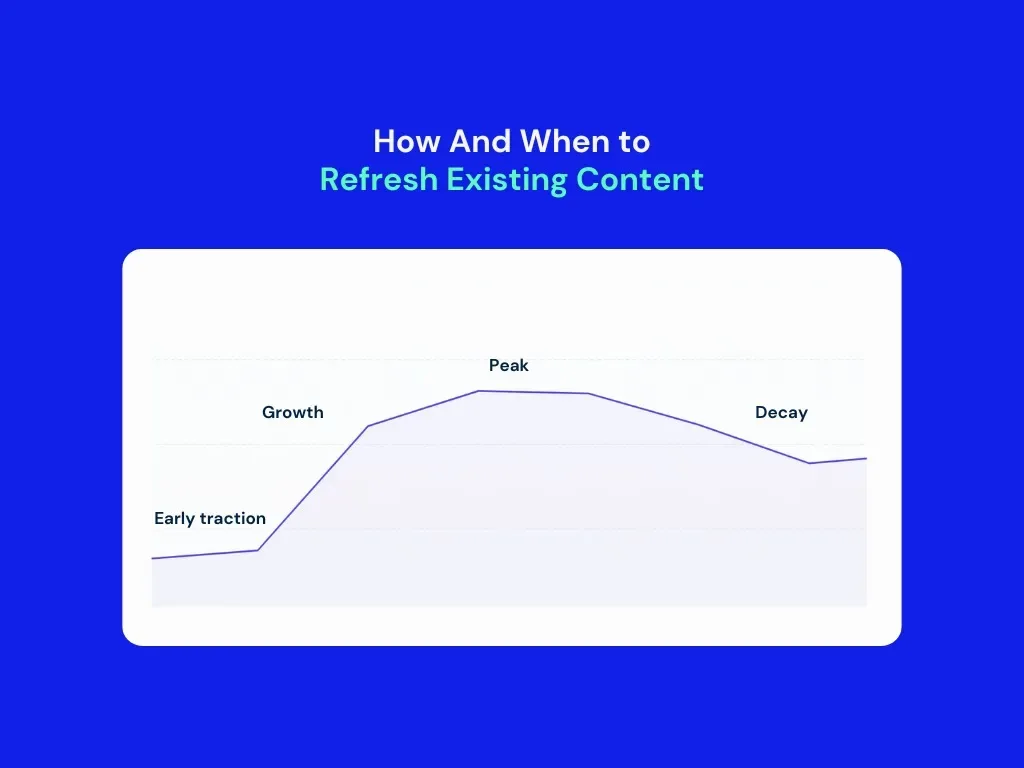
Here’s the uncomfortable math. Focusing on content refresh strategy provides clear direction here. A blog with 200 posts and a 15% decay rate loses roughly 30 pages of performance every year. Publishing 30 new posts to break even is expensive—writers, editing, design, promotion.
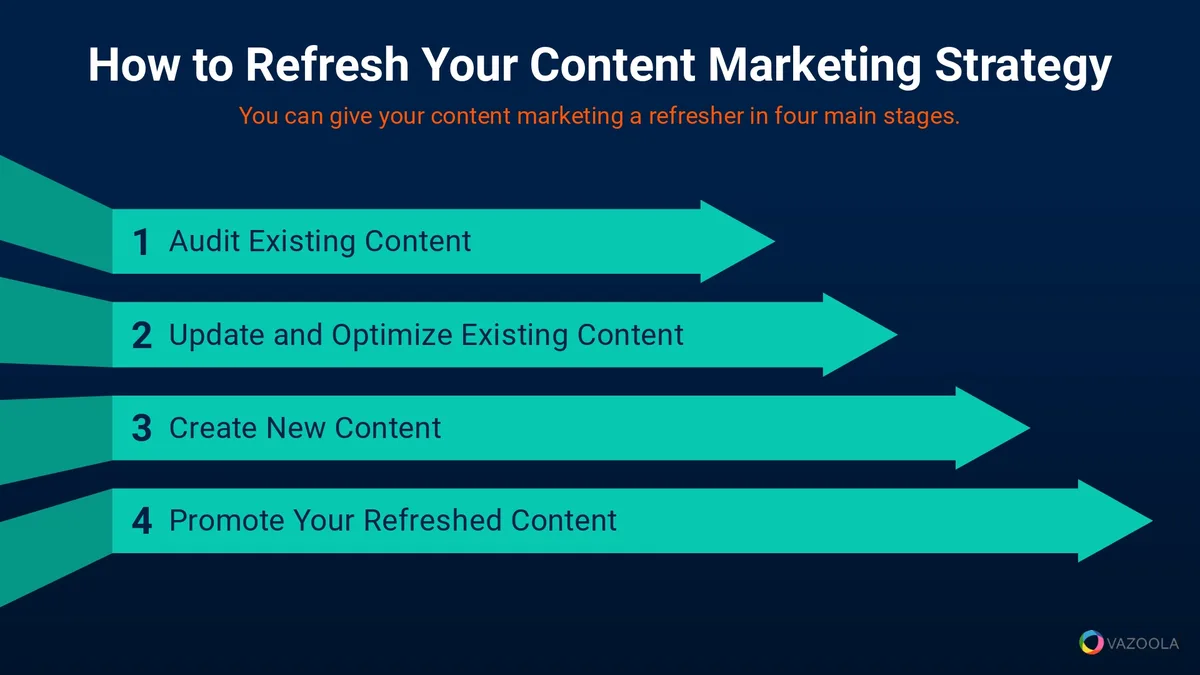
Refreshing 30 existing pages costs a fraction of that and often produces faster gains because the page already has history, links, and crawl trust.
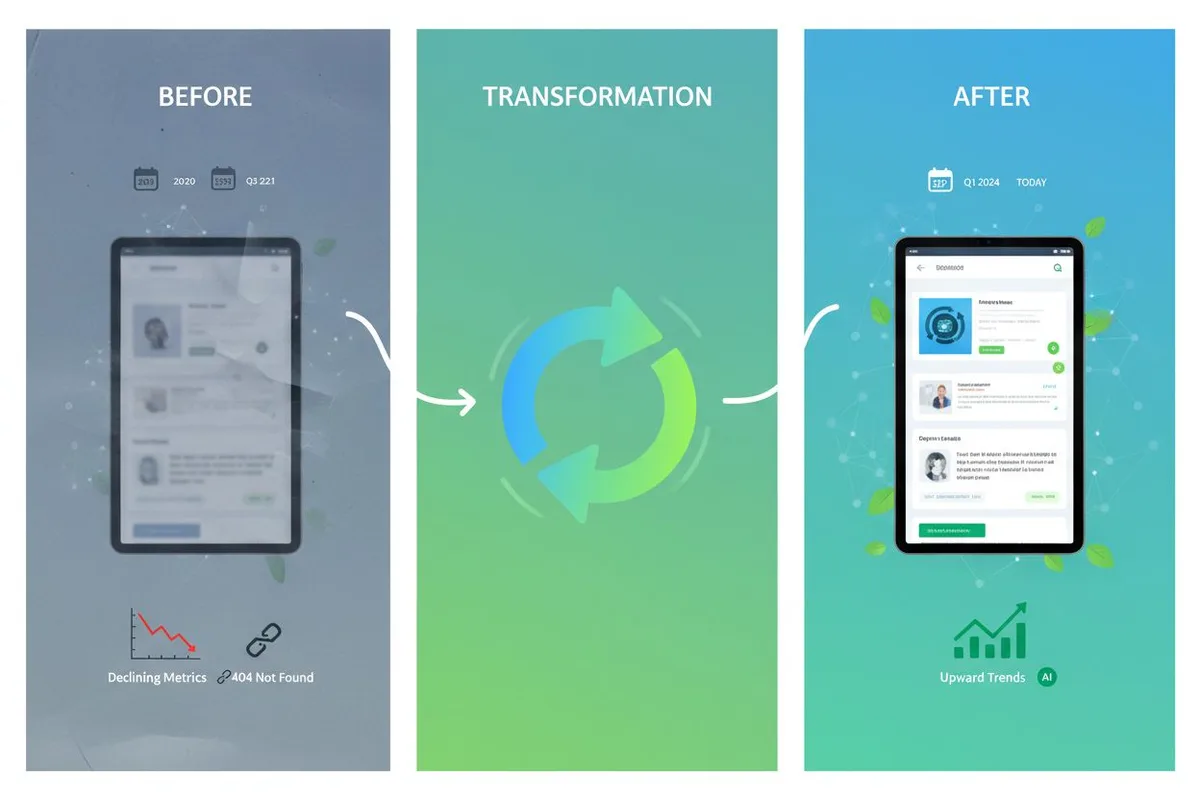
Google rewards pages that stay accurate and useful. When you update statistics, add missing subtopics, and improve internal linking, you’re sending a freshness signal that’s grounded in real improvement rather than a date stamp change. That distinction matters. Changing a publish date without changing substance does nothing.
The Compounding Effect of Maintained Content
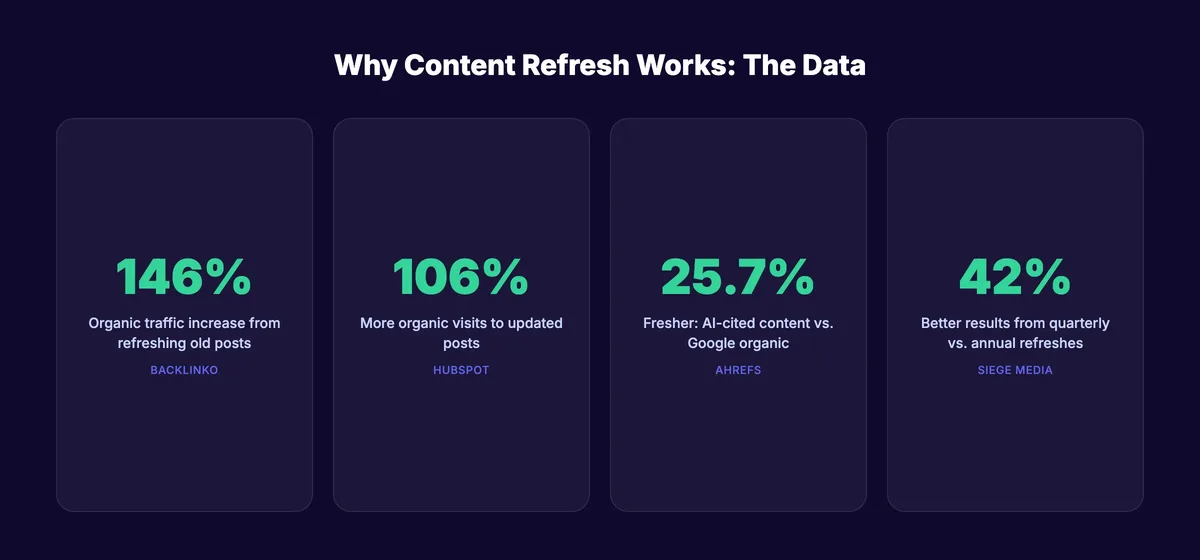
A page the content refresh strategy ranks in the top five and gets refreshed twice a year tends to hold its position longer than a page that was optimized once and abandoned. Each refresh adds new entities, new subtopics, and new internal links—small deposits that compound.
I’ve seen a single service page go from 400 monthly visits to 2,100 over eighteen months across four refreshes. No new backlinks. No redesign. Just disciplined updates based on query data and reader feedback.
Step 1: Audit Your Library and Score Every Page
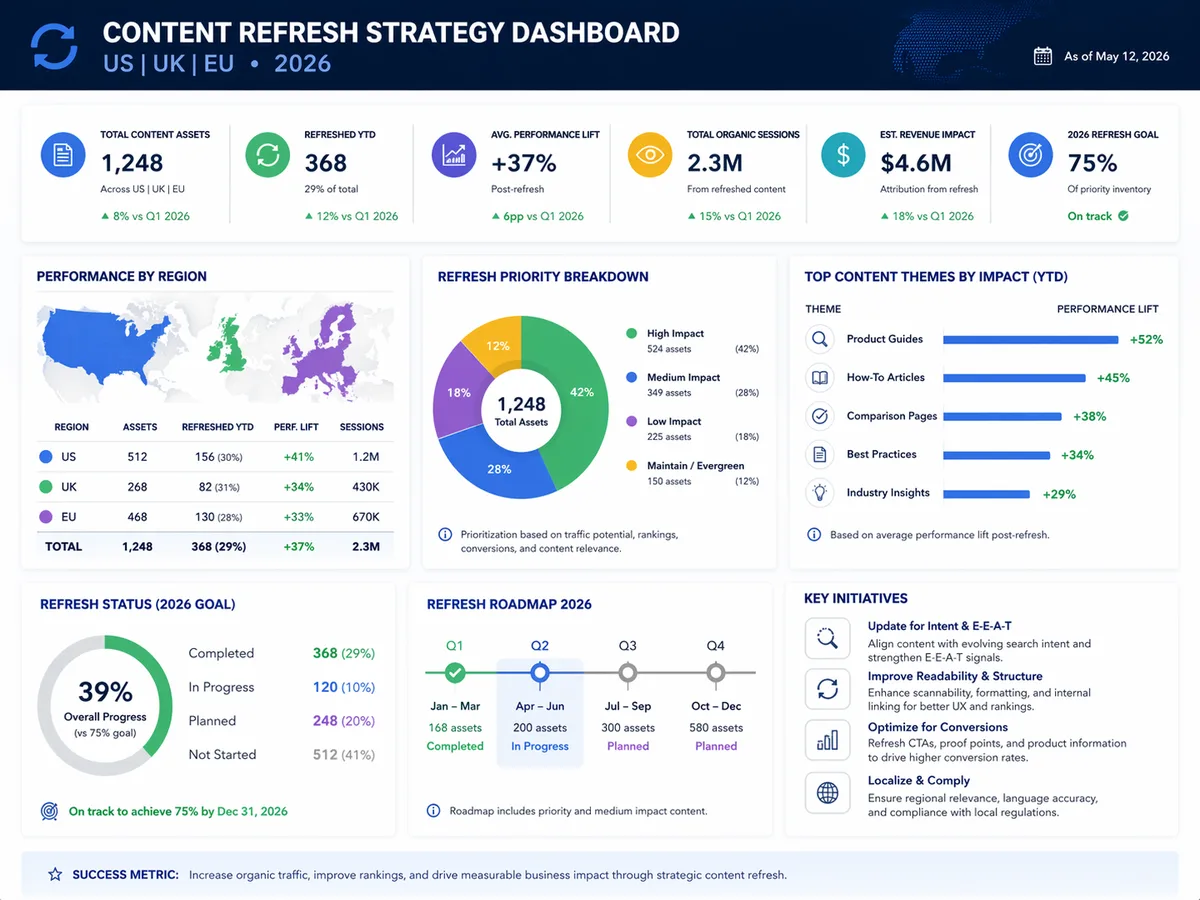
You can’t refresh everything at once, and you shouldn’t try. The first move in any content refresh strategy is a scored inventory. Pull every URL from your sitemap, then layer in four data points: organic sessions trend (last 90 days vs. Prior 90), average position, conversion or assisted conversion, and last substantive update date.
Score each page on a simple 1–5 scale per dimension and total it. Pages with high traffic but declining position are your urgent tier. Pages with low traffic but high conversion are your protect tier. Pages with neither are your prune candidates.
A Scoring Table You Can Copy
| Signal | Weight | What It Tells You |
|---|---|---|
| Traffic decline >20% | High | Something broke—algorithm, competitor, or accuracy |
| Position 4–15 with impressions | High | Close to page one; small gains pay off fast |
| High conversion rate | Medium | Protect and polish; don’t risk breaking it |
| Last update >12 months | Medium | Likely contains outdated facts or examples |
| Zero impressions in 90 days | Low | Merge, redirect, or delete |
Run this audit quarterly. Effective execution in your content refresh strategy makes a tangible difference. It takes about two hours with a spreadsheet and a Search Console export, and it removes all the guesswork from prioritization.
Step 2: Pull the Queries You Almost Rank For
Open Search Console, filter to your target page, and sort queries by impressions. Look for terms where you sit between position 5 and 20 with meaningful impressions. Those are the gaps—searchers want the answer, you’re close, but the page doesn’t quite satisfy the intent.
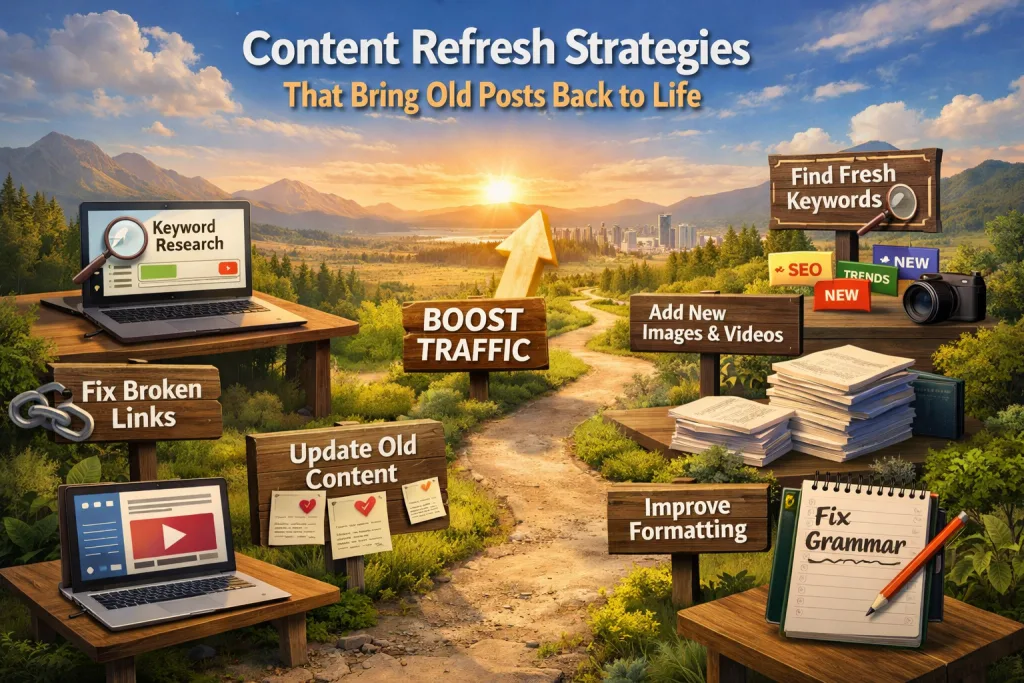
This is where a content refresh strategy earns its keep. You’re not guessing what to add; the data tells you. If “how to refresh old blog posts without losing rankings” shows 800 impressions at position 11, that’s a subtopic you’re missing.
Mine People-Also-Ask and Reddit Threads
SERP features are free briefs. Copy every People-Also-Ask question into a doc, then check whether your page answers it in a clear, extractable sentence. Reddit and Quora threads add the language real people use—phrasing you can mirror in H2s.
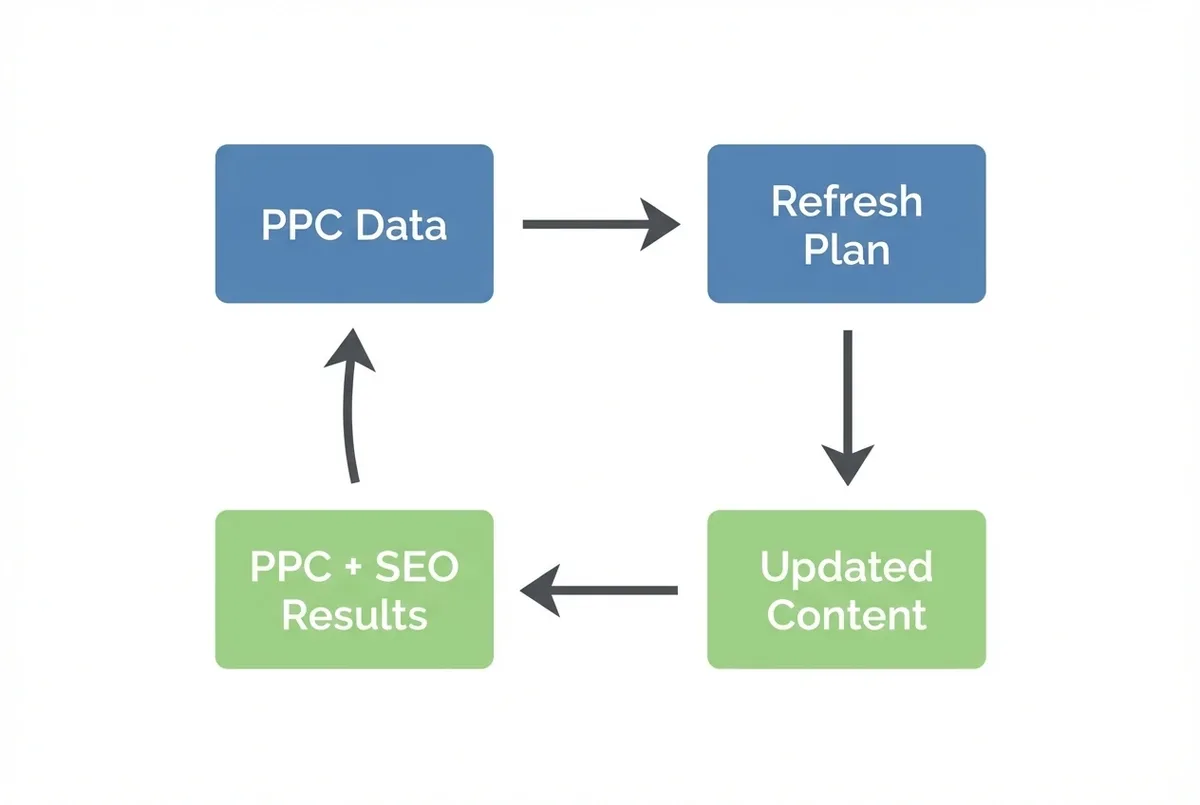
One client’s page jumped nine positions after the content refresh strategy added a single H3 answering a PAA question that had been sitting unanswered for two years. Small edit, outsized return.
Step 3: Compare Against the Current Top Three
Search your target keyword in an incognito window and read the top three results like an editor, not a competitor. Note what they cover that you don’t: subtopics, tables, examples, tools, definitions. Note what they do poorly: thin sections, outdated screenshots, vague advice.
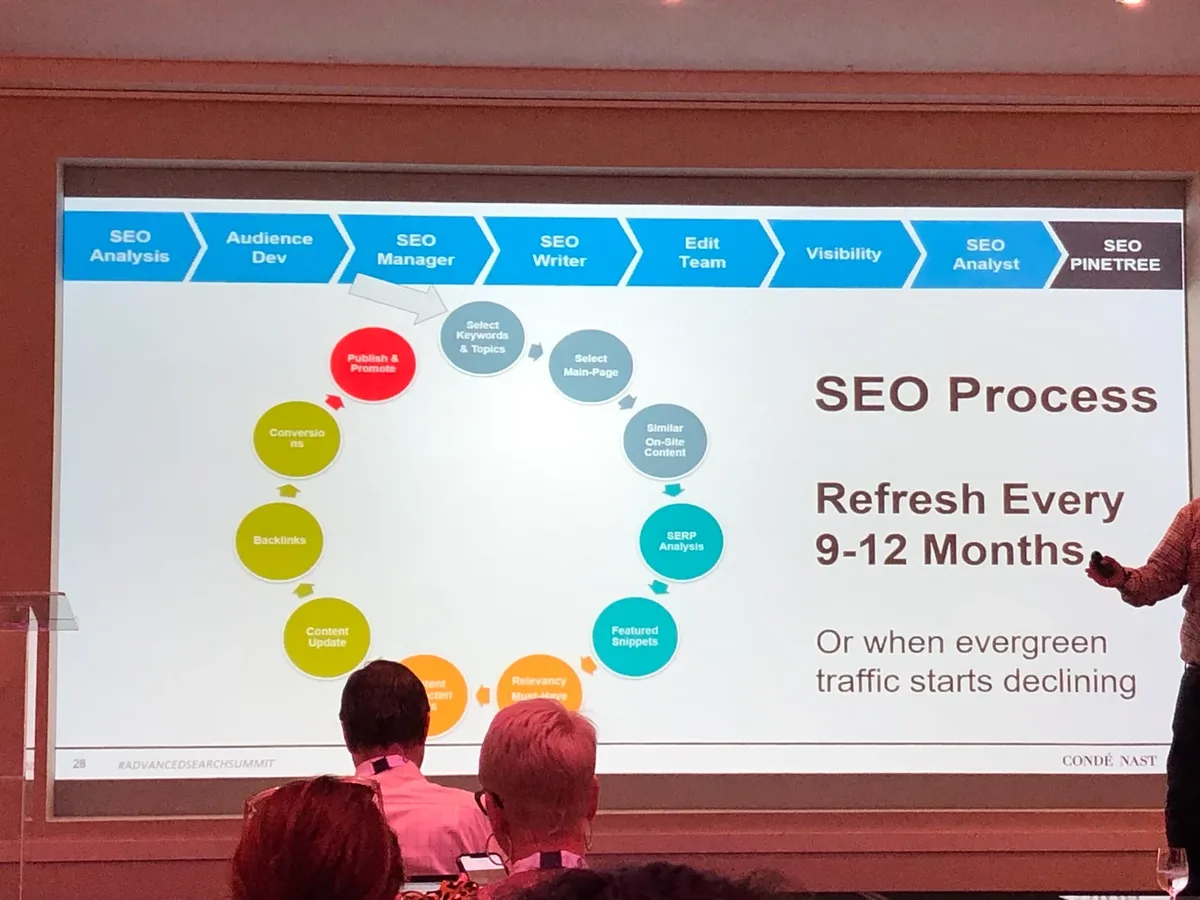
Your refresh should close the coverage gaps and exploit the weaknesses. If all three competitors skip the troubleshooting section, that’s your opening. If two of them use a comparison table and you don’t, add one.
Build a Gap List, Not a Copy List
Don’t clone competitor structure. A thoughtful approach to content refresh strategy reinforces your qualifications. Extract the missing entities and subtopics, then organize them your own way. The goal is comprehensive coverage of the topic, delivered with your voice and your examples.
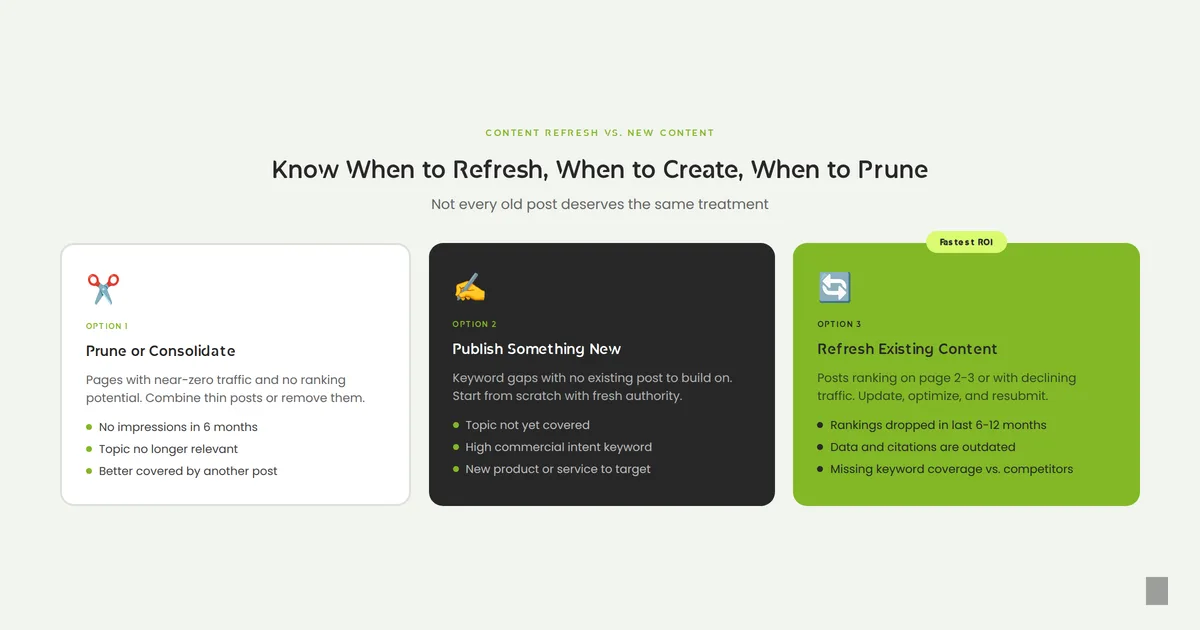
Keep the gap list to ten items max. Anything longer turns into a rewrite, and rewrites carry risk—you can lose rankings you already earned.
Step 4: Verify Every Fact, Stat, and Link
Outdated statistics are the fastest way to lose reader trust and the easiest thing to fix. Open every external link and confirm it still resolves to a relevant page. Check every number against its original source. Replace dead citations with current, authoritative references.
The content refresh strategy step is tedious and it’s the one most people skip. Don’t. A broken link to a study you cited three years ago is a credibility leak, and Google’s quality raters notice.
Swap Weak Sources for Strong Ones
Link to primary sources—government data, peer-reviewed research, official documentation—rather than aggregator blogs. When you cite a definition, link to a stable reference like Wikipedia’s entry on content strategy or the originating organization’s page.
Also review your internal links. Point the refreshed page to your newer related posts, and update older posts to link back to it. Internal linking is the cheapest ranking lever you have.
Step 5: Rewrite the Weakest Sections First
Not every section needs work. Applying these principles to your content refresh strategy yields measurable results. Identify the two or three sections with the highest bounce or lowest scroll depth—heatmaps and scroll-tracking tools surface this quickly—and rewrite those first. Lead with the answer, then add depth.
A practical content refresh strategy tips collection would tell you to “update everything.” That’s wrong. Surgical edits preserve what’s working and concentrate effort where it moves the needle.
Improve Readability Without Dumbing It Down
Break long paragraphs into two or three sentences. Convert dense lists into tables. Add a short summary sentence at the top of each major section so skimmers get value in three seconds. These changes lift engagement metrics without touching your expertise.

Keep your best sentences. The instinct to rewrite everything from scratch is usually ego, not strategy.
Step 6: Add Missing Entities and Subtopics
Search engines map topics through entities—people, tools, concepts, metrics. Proper attention to your content refresh strategy sets a strong baseline. If your page discusses content refresh but never mentions canonical tags, redirect mapping, or query intent, it reads as shallow to a semantic model.

Add the entities your gap analysis surfaced, but weave them into natural sentences. A paragraph that name-drops five tools without context reads like stuffing. A sentence like “Use a redirect map before you consolidate two posts, or you’ll lose the link equity” teaches something and covers the entity.
Where to Place New Subtopics
Put new subtopics where readers expect them. Definitions near the top, process steps in the middle, troubleshooting near the end, FAQs last. Reordering for logic often improves rankings more than adding word count.

If a new subtopic deserves its own page, write the content refresh strategy separately and link from here. Not everything belongs on one URL.
Step 7: Tighten the Title, Meta, and Headings
Your title tag and meta description control click-through, and CTR influences rankings indirectly. Rewrite the title to lead with the primary keyword and a concrete benefit. Keep it under 60 characters so it doesn’t truncate.

For the meta description, promise something specific. “Nine steps to recover declining rankings” beats “learn about content refresh.” Specificity earns clicks; vagueness earns scrolls past.
Heading Hygiene
Make every H2 a promise your content refresh strategy section keeps. If a heading says “Step 4: Verify Every Fact,” the section must explain how. Vague headings like “More Considerations” signal filler and hurt readability scores.
Also check heading hierarchy. One H1, logical H2s, H3s only where they subdivide an H2. Skipped levels confuse both readers and crawlers.
Step 8: Rebuild Internal Links and Schema
Refreshed pages deserve fresh internal links. Find five to ten relevant posts across your site and add contextual links pointing to the updated page. Use descriptive anchor text that reflects the target page’s topic—not “click here.”

Then review structured data. Integrating content refresh strategy into your workflow produces consistent quality. If the page answers questions, add FAQ schema. If it’s a how-to, add HowTo schema where appropriate. Schema doesn’t guarantee rich results, but it clarifies page type to search engines.
A Quick Internal Linking Checklist
- Inbound links: Add 5–10 contextual links from related posts using descriptive anchors.
- Outbound links: Point to your newer, deeper resources on adjacent subtopics.
- Orphan check: Confirm the page is reachable within three clicks from the homepage.
- Anchor diversity: Vary anchor text so you don’t over-optimize a single phrase.
- Broken link sweep: Fix any internal links that now 404 after site changes.
The content refresh strategy is the step that turns a refreshed page into a hub. Do it consistently and your internal link graph becomes a ranking asset instead of a liability.

Step 9: Republish, Request Indexing, and Measure
Once the edits are live, update the visible “last updated” date only if the content refresh strategy made substantive changes. Then request indexing in Search Console and monitor the page for 28 days. Compare impressions, average position, and CTR against the prior 28-day window.
Set a clear success threshold before the content refresh strategy start—for example, a 15% lift in impressions or a two-position gain. Without a threshold, you’ll rationalize any result as a win.

What to Do if Nothing Moves
If the page doesn’t improve after four weeks, the problem is usually intent mismatch, not content quality. Re-read the top-ranking pages and ask whether searchers want a definition, a comparison, or a tutorial. Sometimes the fix is a different page format entirely.
Track every refresh in a log: URL, date, changes made, and outcome. Over a year, that log becomes the most valuable content refresh strategy checklist your team owns—a record of what actually worked on your site, not someone else’s.
The Full Content Refresh Strategy Checklist
Here’s the condensed version you can paste into your project tracker. Each line maps to one of the nine steps above.
- Audit and score: Export all URLs, score on traffic, position, conversion, and freshness.
- Query mining: Pull near-miss queries from Search Console and PAA boxes.
- Competitor gap: List ten missing subtopics from the top three results.
- Fact verification: Check every stat, citation, and external link.
- Section rewrite: Fix the two or three weakest sections first.
- Entity coverage: Add missing concepts, tools, and metrics naturally.
- Metadata polish: Rewrite title, meta description, and vague headings.
- Link and schema: Add internal links, fix orphans, review structured data.
- Publish and measure: Request indexing, set a threshold, log the result.
Print it. Tape it to the monitor. The discipline of following all nine steps—rather than cherry-picking the easy ones—is what separates a real content refresh strategy best practices routine from wishful thinking.
Common Mistakes That Sink a Refresh
The biggest error is changing the URL. Refining each detail of your content refresh strategy strengthens this section. Unless the slug is genuinely wrong, keep it. A new URL means redirects, lost link equity, and a temporary ranking dip that can become permanent if the redirect chain breaks.
The second error is deleting sections that still earn traffic. Check Search Console before you cut. A section that looks redundant to you might be the exact passage ranking for a long-tail query.
Refreshing Too Often
Monthly tinkering on a stable page does more harm than good. It resets crawl evaluation, muddies your measurement, and burns writer hours. Aim for one substantive refresh per year for evergreen pages, twice for fast-moving topics.
Also resist the urge to add word count for its own sake. Padding a page with filler to hit a target dilutes quality and hurts readability scores. Add depth only where the topic demands it.
Frequently Asked Questions About Content Refresh Strategy
Here is an in-depth breakdown of key considerations regarding this section:
How Often Should I Refresh Existing Content?
Once a year for evergreen topics, twice a year for anything tied to tools, platforms, or regulations. Trigger an off-cycle refresh whenever a page loses more than 20% of its traffic in a quarter.
Does Updating the Publish Date Help Rankings?
No. Only substantive changes matter. Changing the date without improving the content can look manipulative and provides zero ranking benefit.
Should I Refresh or Rewrite from Scratch?
Refresh by default. Rewrites risk losing the signals a page has accumulated—links, history, and query associations. Rewrite only when the topic angle is fundamentally wrong.
What’s the Fastest Win in a Content Refresh Strategy?
Answering a high-impression question you currently ignore. Adding one well-structured H3 that directly answers a People-Also-Ask query often produces measurable gains within weeks.
How Do I Measure Refresh Success?
Compare impressions, average position, and CTR over 28 days before and after. Set a threshold in advance—typically a 15% impression lift or a two-position gain—so results are judged objectively.
Can Refreshing Hurt Rankings?
Yes, if the content refresh strategy change URLs, delete ranking sections, or introduce keyword stuffing. Keep the slug, preserve high-performing passages, and edit surgically.
Where to Take This Next
A content refresh strategy only compounds when it becomes routine. Start with your ten highest-traffic pages, run them through the nine steps, and log the outcomes. Within two quarters you’ll have your own benchmark data and a workflow tuned to your site.
From there, branch into adjacent work: content consolidation to merge overlapping posts, internal link architecture to strengthen topic clusters, and editorial calendars that build in refresh cycles instead of treating them as emergencies. Each of those deserves its own playbook—but they all rest on the discipline of the nine steps above.
The pages you already own are your cheapest growth channel. Treat them accordingly.