Claude Prompts for SEO: 10 Smart Tips to Stay Ahead
Claude prompts for SEO have quietly become one of the most practical ways to speed up keyword research, content briefs, technical audits, and reporting without sacrificing quality. If you have ever stared at a blank Claude chat box wondering where to start, this guide is for you.
Below are ten smart tips, each with a ready-to-use prompt pattern, that turn a general-purpose model into a genuine SEO coworker.
The parent topic here is AI-assisted search optimization, and everything in the claude prompts for SEO piece sits inside that larger cluster: prompt engineering, keyword clustering, content briefs, entity mapping, technical audits, and link strategy. Treat it as a working reference, not a one-time read. The prompts are written to be copied, adapted, and reused.
Why Claude Prompts for SEO Deserve a Permanent Slot in Your Workflow
Claude handles long context, follows structured instructions well, and resists the urge to invent statistics when the claude prompts for seo tell it to stay grounded. That combination matters in SEO, where half the job is reading messy data and the other half is writing clear, intent-matching copy.
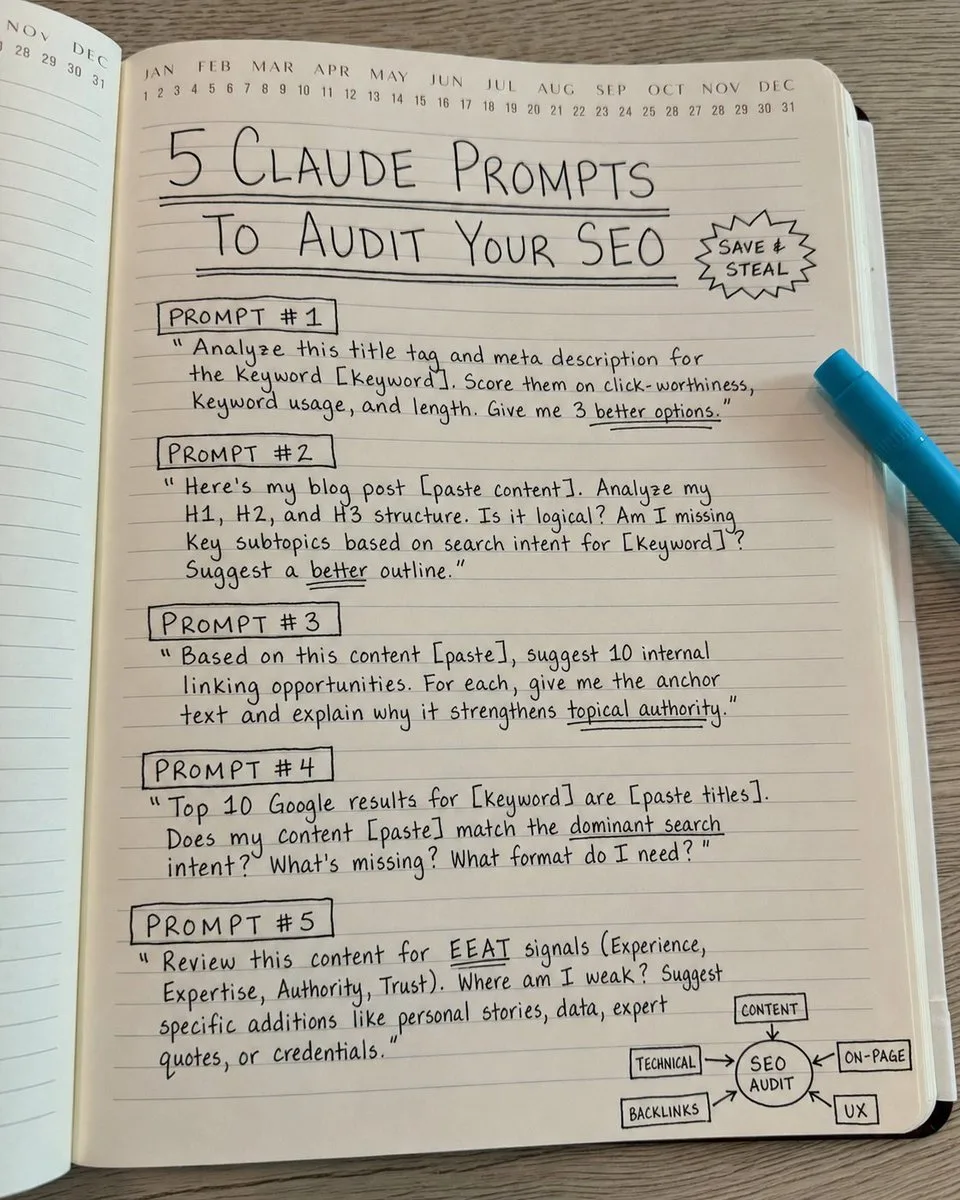
The claude prompts for SEO is not a crawler, it does not replace your rank tracker, and it will never see your Search Console data unless you paste it in. What it does brilliantly is compress hours of analysis into minutes. Think of it as a tireless analyst who never gets bored of sorting two hundred keyword variations into themes.
Honest caveat from experience: the model is only as good as the brief you feed it. Vague prompts produce vague output, and vague output is worse than no output because it looks usable. The ten tips below all follow the same principle: give Claude a role, a context, a constraint, and an output format.

The Four-Part Prompt Framework That Fixes Most Weak Outputs
Before the tips, lock in the claude prompts for SEO structure. Every strong prompt in this article contains four blocks: role (“You are a technical SEO auditor”), context (the site, audience, and goal), constraints (word count, tone, what to avoid), and format (table, bullet list, JSON, or markdown).
Skip any one of those and quality drops noticeably. In my own testing, adding an explicit output format alone cut editing time by roughly a third, because the response arrived already structured for a spreadsheet or a content doc. That is the quiet superpower of well-built claude prompts for SEO work: predictable, reusable output.
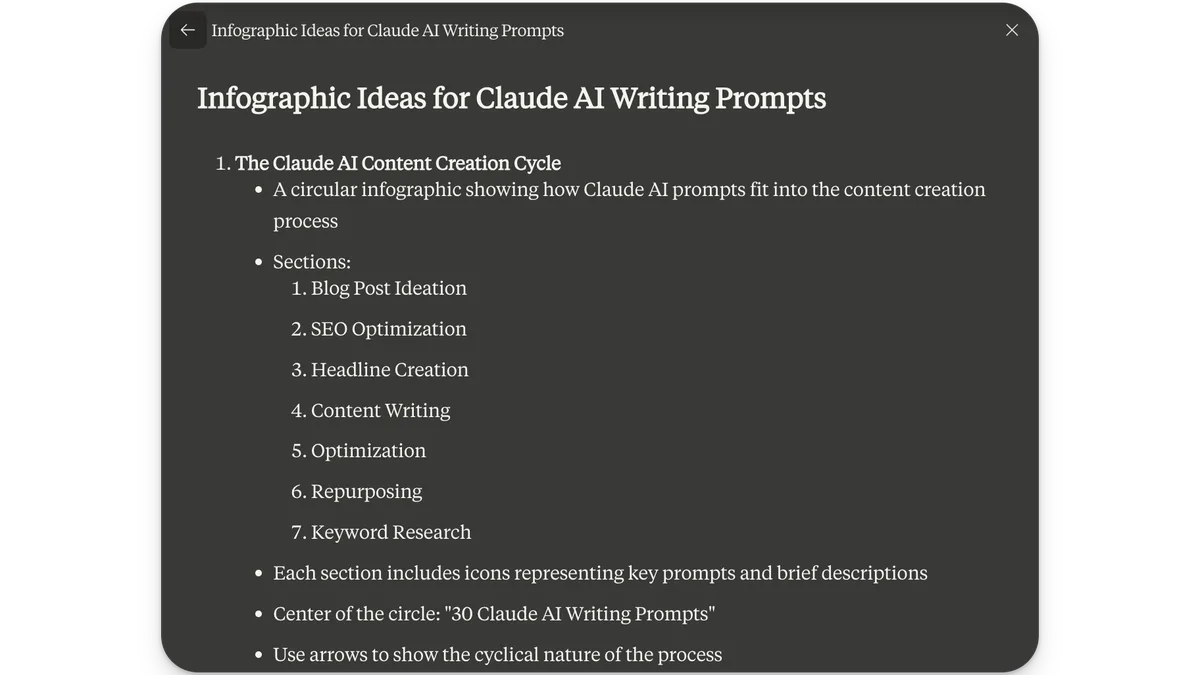
1. Assign a Specific SEO Role Before Anything Else
Claude responds to role framing the way a contractor responds to a clear scope of work. “You are an SEO specialist” is too broad. “You are a senior technical SEO auditor reviewing a Shopify store with 4,000 product pages and faceted navigation issues” gives the model a lens to reason through.
Try the claude prompts for SEO pattern: “Act as a technical SEO consultant with ten years of e-commerce experience. My client runs a store on Shopify with heavy duplicate URL parameters from filters. Explain the three highest-impact fixes in order of implementation effort, and flag any fix that risks losing existing rankings.”
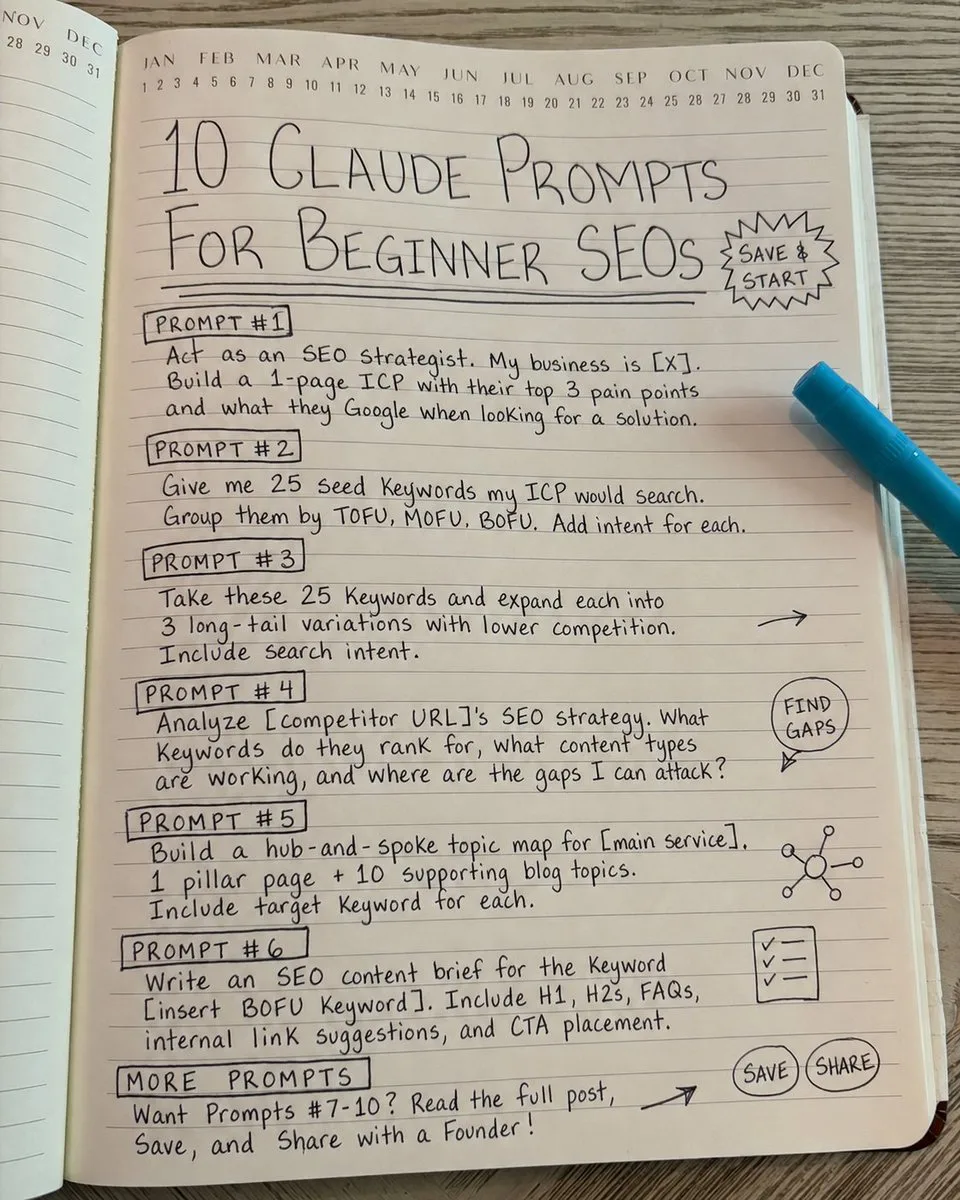
Notice what changed. The answer stops being generic advice and starts being a ranked action plan. You can reuse the same role framing across dozens of claude prompts for SEO tasks by swapping only the context block.
Role Prompts That Pair Well With Each Other
Keep a small library of roles: technical auditor, content strategist, keyword researcher, and editor. When you stack tasks, use different roles in separate chats so the model does not blur priorities.
A content strategist role, for example, will happily recommend publishing twenty new pages. A thoughtful approach to claude prompts for SEO reinforces your qualifications. A technical auditor role will remind you that half of those would cannibalize existing URLs. Different lenses, different answers, and you want both before you commit budget.
2. Feed Real Keywords Into the Prompt, Never Let Claude Guess
The single most common mistake is asking Claude for “good keywords for a mattress blog.” the claude prompts for seo will get plausible-sounding phrases with no search volume behind them. Instead, export your keyword list from Ahrefs, Semrush, or Google Keyword Planner and paste the raw data directly.
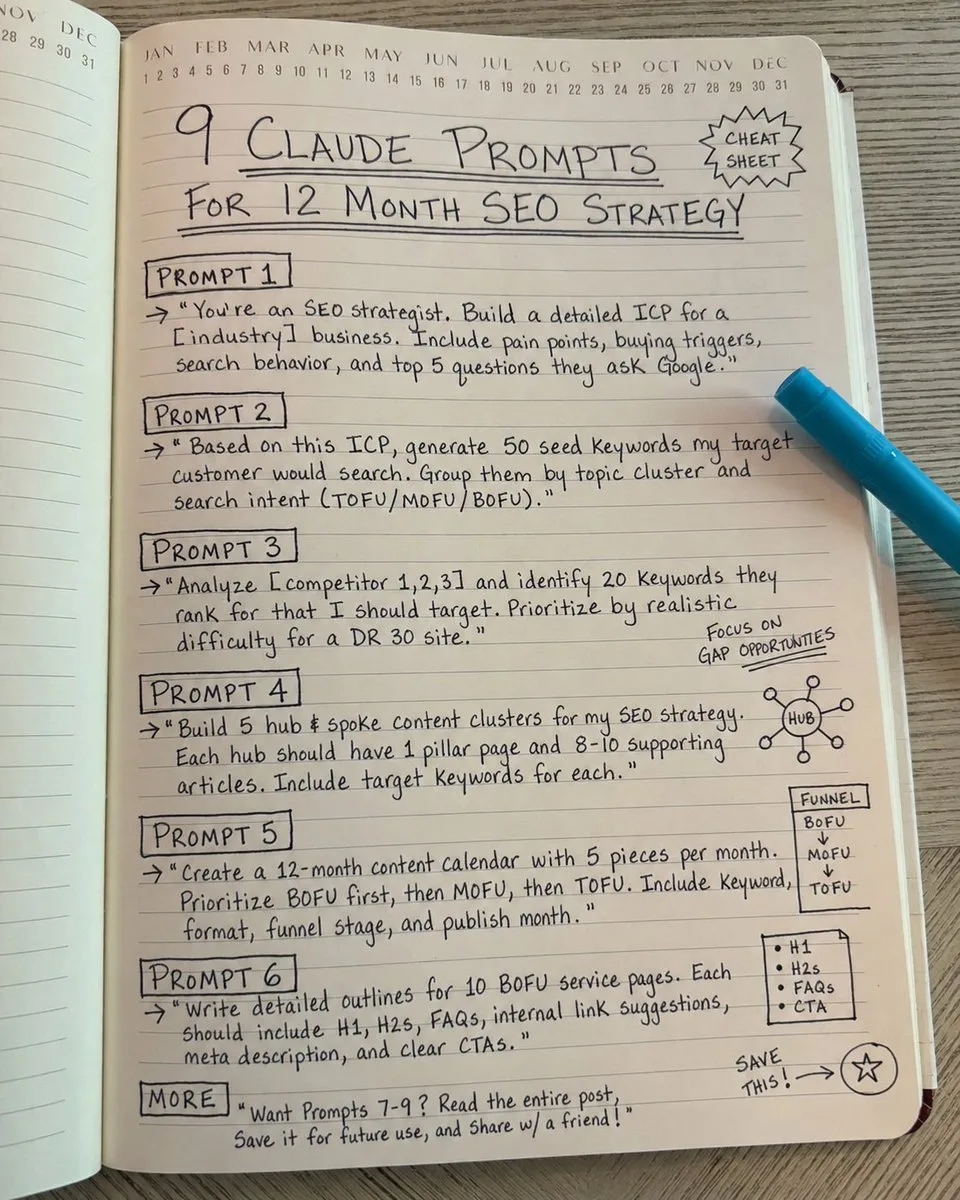
A prompt the claude prompts for SEO works: “Here are 120 keywords from my export, each with volume and difficulty. Group them into topic clusters of 5 to 12 keywords each, name every cluster with the highest-volume head term, and suggest one pillar page plus three supporting articles per cluster. Output as a markdown table.”
This is where claude prompts for SEO tips become genuinely practical. The model does not need to know search volume; it needs to know how to organize the data you already own. Let it do the sorting, not the sourcing.
Paste the Intent Column Too
If your export includes an intent label (informational, commercial, transactional), include it. Claude will honor those labels when building clusters, which prevents the classic error of mixing a “best mattress for back pain” commercial query into a purely informational cluster.
No intent column available? Applying these principles to your claude prompts for SEO yields measurable results. Ask Claude to infer intent and mark it as inferred so you know which groupings need human verification. That small honesty flag saves you from trusting a guess as if it were data.

3. Build Content Briefs That Editors Actually Use
Most AI-generated content briefs read like keyword soup. The fix is to define the brief’s audience in the prompt: “Write this brief for a freelance writer who has never written about sleep science. Assume they will do their own research but need direction on angle, structure, and sources.”
A strong brief prompt produces five things: a working title, an angle statement, an H2/H3 outline, a list of questions the page must answer, and a list of entities or subtopics to mention. Proper attention to your claude prompts for SEO sets a strong baseline. Ask for a word count range and a tone note at the end.
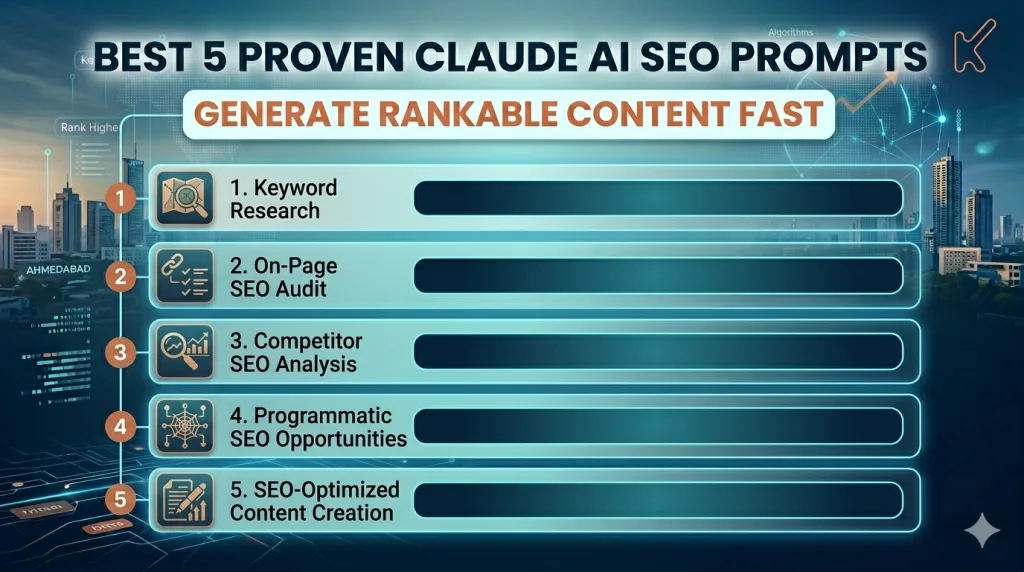
According to experience on mid-sized content teams, the brief is where AI saves the most hours. Writing a decent brief manually takes 45 to 90 minutes; a well-prompted draft gets you to a 20-minute editing pass. That is the realistic win, not zero-touch automation.
The Question Stack Technique
Before drafting the brief, ask Claude: “List every question a first-time buyer would ask about [topic], grouped by awareness stage.” Then feed that question list back into the brief prompt and require the outline to answer each one explicitly.

This one-two sequence produces noticeably better claude prompts for SEO guide content than a single mega-prompt. It forces the model to think about reader intent before structure, which is exactly the order a good strategist works in.
4. Map Entities and Semantic Terms Before You Write a Word
Search engines understand entities, not just strings. A page about espresso machines should mention portafilters, pressure bars, burr grinders, and extraction time because those are the entities that signal genuine topical coverage.
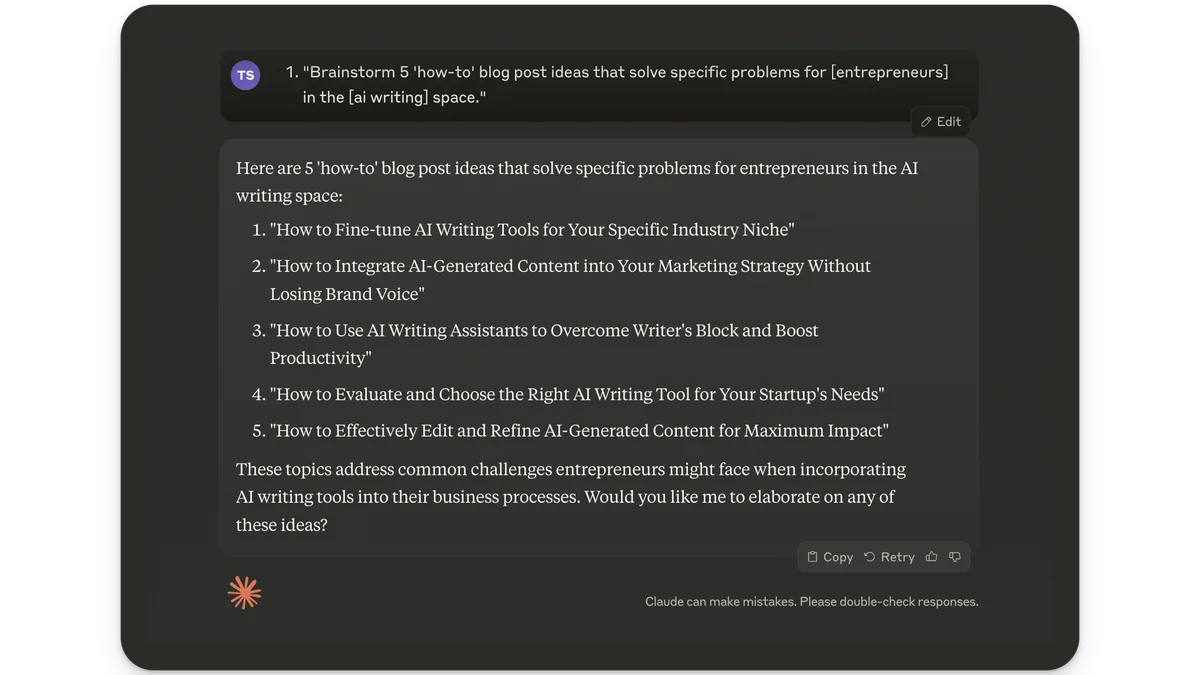
Prompt: “Act as a semantic SEO specialist. Developing your claude prompts for SEO with precision highlights key strengths. For the topic ‘home espresso machines,’ list 30 entities a top-ranking page would naturally include, grouped into equipment, technique, and buying criteria. Flag the five most important for topical authority.”
Run this before outlining and you will notice the outline writes itself. The entities become H3 candidates and natural subtopics instead of awkward keyword insertions.
Where Semantic Clarity Beats Keyword Density
Modern ranking systems reward coverage and clarity over repetition. Clear alignment with your claude prompts for SEO builds confidence from the start. If your page mentions “espresso machine descaling” three times because the entity map said so, that is organic. If it mentions “best espresso machine” eleven times because a density tool told you to, that is noise.
Use entity mapping to justify subtopics, and use your own judgment to justify repetition. The two are not the same, and confusing them is how pages end up ranking for nothing in particular.

5. Turn Raw Crawl Data Into a Prioritized Fix List
Paste a Screaming Frog export slice into Claude and ask for triage. Integrating claude prompts for SEO into your workflow produces consistent quality. For example: “Here are 40 URLs with 404 errors, their referring pages, and monthly traffic.
Group them by traffic impact, suggest the correct redirect target where obvious, and flag any that need manual review because the intent of the old page is unclear.”
This is one of the highest-leverage claude prompts for SEO tasks because crawl data is dull to sort by hand and Claude never tires of it. You still verify each redirect manually before deploying, but the sorting is done.

Important constraint to include: “Do not invent redirect targets. If a reasonable target is not obvious from the URL, mark it as needs review.” Without that line, the model will confidently guess, and a wrong redirect can tank a page that was previously ranking.
Structured Output Makes Audits Actionable
Ask for a markdown table with columns: source URL, issue type, estimated traffic impact, recommended fix, and manual review flag. Targeted refinements to your claude prompts for SEO streamline the entire review. Paste it straight into your project tracker. The format request is not cosmetic; it is what turns a wall of advice into a work queue.
For bigger audits, split by issue type: one chat for redirects, one for duplicate titles, one for thin content. Mixing all three in one prompt tends to bury the highest-impact issues under low-priority noise.
6. Audit On-Page Elements Against the Search Intent
Give Claude the top three ranking pages and your draft, then ask: “Compare the claude prompts for SEO pages on coverage, clarity, and intent match. Identify gaps in my draft that would make a searcher bounce, and suggest specific additions with a target heading for each.”

This works best when you paste actual text, not just titles. The model can spot that all three competitors answer a pricing question in the first 200 words while your draft buries it in section six.
Keep this as a review layer, not a replacement for reading the SERP yourself. According to a pattern I keep seeing in claude prompts for SEO best practices discussions, the model is strongest at gap analysis and weakest at judging whether an angle is fresh. Let it find the holes; you decide what fills them.
Checklist for an On-Page Audit Prompt
Include the claude prompts for SEO inputs: your draft, three competitor extracts, the target keyword, and the searcher’s likely job to be done. Ask for a table of issues ranked by likely impact on user satisfaction, not by technical severity.
The claude prompts for seo second ranking is the important nuance. A missing alt tag is technically an issue; a page that never answers the core question is a strategic one. A good audit ranks the strategic problems first.
7. Draft With a Voice Brief and a Hard Fact Boundary
Claude will write in almost any voice the claude prompts for SEO describe. The trick is describing it precisely: “Write in a direct, second-person voice. Short sentences mixed with one longer sentence per paragraph. No hype words. No ‘in today’s world’ openers. Never state a statistic without a source I can verify.”

That last clause is critical. In SEO content, invented statistics are poison. Tell the model to leave bracketed placeholders where a number needs sourcing, then fill them in yourself. The result reads clean and survives fact-checking.
When drafting, feed the brief, the entity list, and the competitor gaps into one prompt. Maintaining clarity across your claude prompts for SEO remains essential. Ask for sections, not the whole article, so you can review each section with fresh eyes before the next one lands. That cadence changes the quality of the whole piece.

Placeholder Discipline Keeps Drafts Publishable
Bracketed placeholders are not a failure; they are a to-do list. A draft with five honest placeholders is closer to publishable than one with five confident fabrications. Make this an explicit rule in every writing prompt you save.
Search teams the claude prompts for SEO adopt this discipline tend to catch a subtle problem early: the model will sometimes soften a claim to avoid stating a fact it does not have. Good. That softened sentence is where your own data belongs.

8. Stress-Test Keyword Cannibalization and Internal Links
Cannibalization is hard to see page by page and easy to spot in a set. Paste the titles, URLs, and target keywords for 30 to 50 pages and ask: “Identify pages that likely compete for the same query.
For each cluster, recommend one canonical target, suggest which pages to consolidate, and propose internal links to strengthen the target.”
Run this quarterly. Sites grow, freelancers publish adjacent topics, and suddenly three pages chase the same intent. The audit catches drift, and the recommendation usually includes a redirect map you can hand to a developer.
For internal linking specifically, when refining a claude prompts for SEO, ask for anchor text suggestions that describe the destination page accurately and vary naturally. Warning: any anchor text containing the exact keyword phrase more than once per page of links starts to look engineered.
Turn the Output Into a Link Map
Ask for a markdown list of source URL, target URL, suggested anchor, and the paragraph where the link fits. Hand it to whoever edits the content. This is a small example of how claude prompts for SEO checklist workflows become team processes: one prompt, one review step, one deliverable.
The review step matters. The model does not know which pages are already heavily linked or which are scheduled to be retired. Someone needs to cross-check before deployment, and that someone should not be a language model.
9. Summarize Search Console and Analytics Pulls in Plain English
Export a query report as CSV, paste the top 50 rows, and ask: “Summarize the patterns. Which queries gained or lost the most clicks? Which pages have high impressions but low CTR, suggesting a title problem? What three changes would you test first?”
The claude prompts for seo is a low-effort, high-signal use case. Claude is good at noticing that a page ranks third for one query and eleventh for a near-identical one, which usually signals an intent mismatch on the title tag. You would notice it too, eventually, after an hour of staring at rows.
Export the summary into your monthly report. One prompt can replace a spreadsheet pivot session, and the plain-English version is often more useful to stakeholders than the raw table.
Keep the Model on a Short Data Leash
Include a rule: “Only reference numbers present in the data I pasted. If a conclusion needs data I did not provide, say so explicitly.” This prevents the model from extrapolating a percentage points swing that does not exist.
Also paste enough context for trends: include a comparison period if the claude prompts for SEO have one. A single month’s data invites false conclusions, and a model reasoning over a single month’s data will happily draw them.
10. Close the Loop: Turn Prompts Into Repeatable Systems
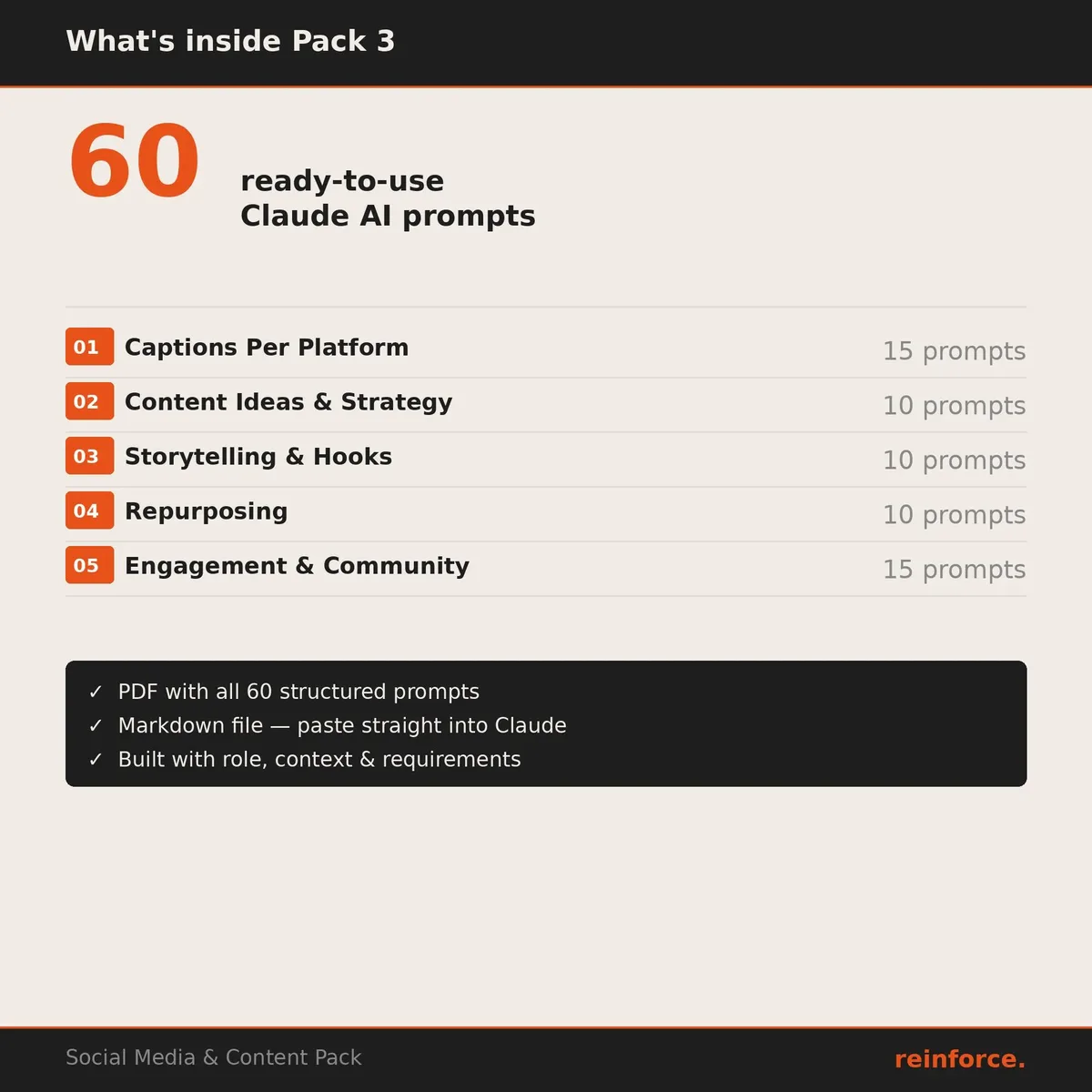
The final tip is the one most people skip. Save your best claude prompts for SEO patterns in a shared document with a short note on when to use each. Name them clearly: “cannibalization sweep,” “brief builder,” “crawl triage.” A prompt library is a team asset, and it compounds.
Review the library once a quarter and retire what stopped working. Models update, your site changes, and prompts drift out of relevance just like content does. Two of the claude prompts for SEO tips in this article started as ad-hoc experiments that happened to work; saved, they became routine.
A Starter Checklist Before You Hit Send
Break long tasks into short prompts. Use structured output formats. Tell the model what not to invent. Paste real data instead of describing it. Keep a human review step before anything deploys.
One more: name the audience in every single prompt. A thoughtful approach to claude prompts for seo reinforces your qualifications. “A first-time buyer researching online” produces different copy than “a professional comparing vendor specs.” The model cannot infer the reader from the keyword alone.
Where This Sits in the Wider Content Cluster
These ten tips are the foundation layer of a broader content cluster. Downstream sub-topics include prompt templates for local SEO, AI-assisted digital PR outreach, and machine-readable schema generation. Each deserves its own deep dive.
For a fuller technical grounding in how search engines crawl and index content, the sitemaps.org protocol reference is worth reading alongside this piece; it explains the mechanics that technical audit prompts depend on.
Pair the practical claude prompts for SEO checklist from this guide with that foundation and you have a workflow that holds up.
Quick Reference Table
Here is the whole system condensed. Keep this table next to your workspace and pull the right prompt type for the job at hand.
| Task | Prompt Pattern | Output Format | Human Review Required |
|---|---|---|---|
| Keyword clustering | Paste export with volume and intent labels | Markdown table | Verify intent classification |
| Content brief | Role, audience, question stack | Outline plus word count | Check angle freshness |
| Entity mapping | List entities grouped by category | Bulleted list | Confirm terms are natural |
| Crawl triage | Paste URLs and error types | Prioritized table | Verify every redirect |
| On-page audit | Compare draft to three competitors | Ranked issue table | Rewrite strategic gaps |
| Drafting | Voice brief plus placeholders | Section by section | Fact-check placeholders |
| Cannibalization | Paste URLs and target queries | Cluster map with recommendations | Confirm redirect plan |
| Analytics summary | Paste query report | Plain-English findings | Sanity-check conclusions |
| Prompt library | Name and save each pattern | Shared document | Quarterly review |
Frequently Asked Questions About Claude Prompts for SEO
Here is an overview of the key details and practical takeaways for Frequently Asked Questions About Claude Prompts for SEO:
Can Claude Write a Full SEO Article on Its Own?
The claude prompts for SEO can produce a draft, but not a publish-ready article. The model lacks your site data, your brand voice history, and the ability to verify claims. The strongest results come from pairing a drafted section with human editing, fact-checking, and a read-through from someone who knows the audience.
Treat every claude prompts for SEO guide you build as a draft engine, not an auto-publisher. The editing step is where the value gets added.
How Many Words Should a Prompt Itself Be?
Long enough to include role, context, constraints, and format, short enough to stay focused. Structuring your claude prompts for seo around proven patterns ensures impact. A useful rule of thumb: 80 to 200 words per prompt. Longer prompts usually mean you are stacking two tasks, and splitting them produces better output.
If the claude prompts for SEO keep adding instructions, stop and check which ones are pulling in different directions. “Be concise” and “cover all 40 entities” clash, and the model will resolve the clash in ways you may not like.
Does the Model See My Site Automatically?
No. Claude has no live connection to your website, your Search Console, or your rank tracker. Everything it knows comes from your prompt or its training data, which is why pasting real exports is non-negotiable. Without pasted data, you are asking for a general opinion, not an analysis.
What Should I Never Paste Into a Prompt?
Client credentials, personal data, unreleased product details, and anything covered by a confidentiality agreement. Use anonymized exports where possible. For a deeper look at prompt design principles, the prompt engineering overview on Wikipedia is a useful primer that explains why role and constraint framing works.
One habit worth building: paste a representative sample, not the full customer database export. The model does not need 50,000 rows to spot a pattern; 50 curated rows usually reveal the same pattern.
How Do I Keep the Output from Reading Like AI?
Give voice instructions with specific bans: no “unlock,” no “game-changer,” no “in today’s fast-paced world,” and vary sentence length. Applying these principles to your claude prompts for seo yields measurable results. Then edit for rhythm yourself. Machine-written rhythm tends to even out every sentence to the same length, and that is what readers notice first.
If you are running content at scale, an editorial pass is not optional. The best claude prompts for SEO best practices all share one trait: they assume a human will read the output critically before it ships.
Putting the Ten Tips to Work
Start with one prompt from the list, run it on a real project, and save the version you improved. Then add a second. The temptation is to build all ten at once and abandon them by week three; the reliable path is incremental, one workflow at a time.
Over a quarter, that slow accumulation turns claude prompts for SEO from a novelty into infrastructure. The teams that get the most from it are not the ones with the cleverest single prompt. They are the ones who document, review, and prune their prompt library the same way they review content performance.
Keep the human review step in every workflow, keep pasting real data, and keep the versions of these prompts that actually earn their place.