Authority Website Building: Why Most Sites Stay Invisible
Authority website building is the discipline of turning a domain nobody recognizes into a source people cite, link to, and trust. If you’ve ever published solid content for months and watched it sink to page four, you already understand the frustration.
The problem usually isn’t your writing. It’s the absence of structural trust signals that search engines and readers use to decide who deserves attention.
This is your authority website building guide, laid out in five clear steps rather than a pile of vague advice. Each step stands on its own, but they compound when you run them in sequence. Skip one and the rest weaken, like a table missing a leg.
Think of the authority website building as the parent topic in a wider cluster that also covers technical audits, digital PR, and topical mapping. Master the five steps here and those follow-ups will click into place fast. Let’s get into it.
What Authority Website Building Actually Means
Strip away the jargon and authority comes down to three things: relevance, trust, and recognition. A site is authoritative when it consistently answers questions in one niche, earns independent validation from other sites, and gets recognized by real people who search for it by name.
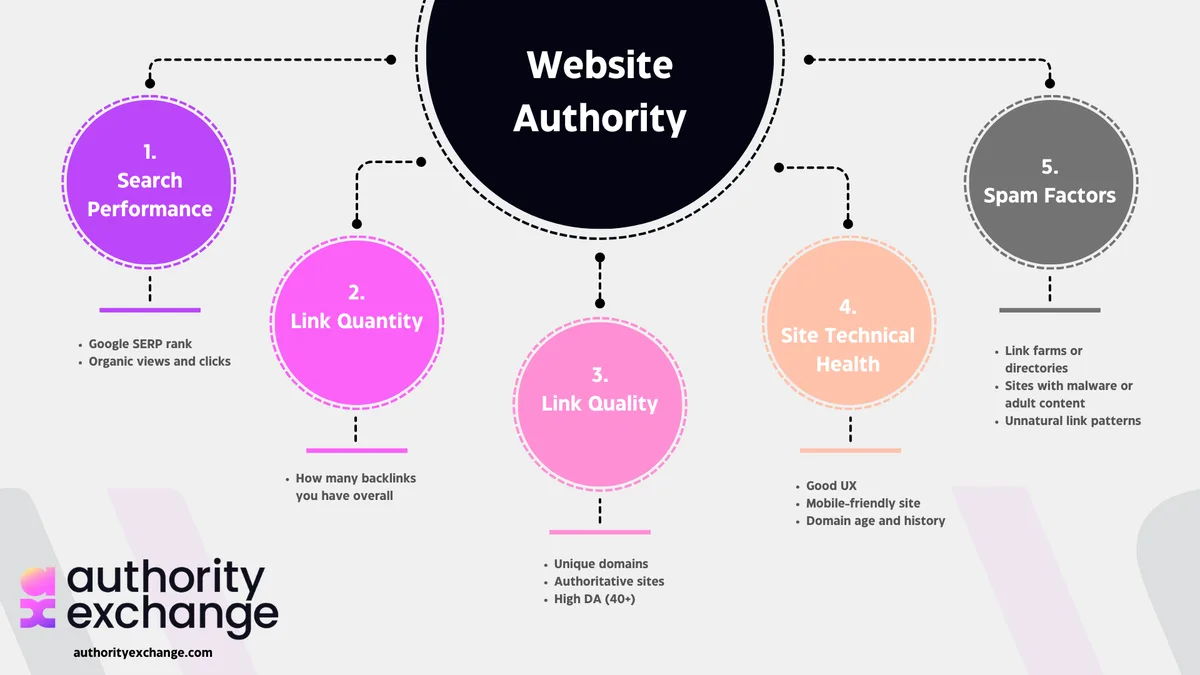
Search engines measure this indirectly. They watch for backlinks from credible domains, topical consistency across pages, user engagement signals, and brand mentions that appear without a link. None of these can be faked for long, which is exactly why the process takes patience.

I’ve watched sites with brilliant design stay stuck because the authority website building chased a dozen unrelated topics. Meanwhile, plainer sites with tight topical focus climbed steadily. Authority rewards discipline over polish.
The Three Pillars You Can’t Skip
Relevance means your site covers one subject deeply enough that search engines file you under it. Trust comes from external validation: citations, links, reviews, and brand searches. Recognition is the human layer, where your name shows up in conversations, forums, and industry roundups without you prompting it.
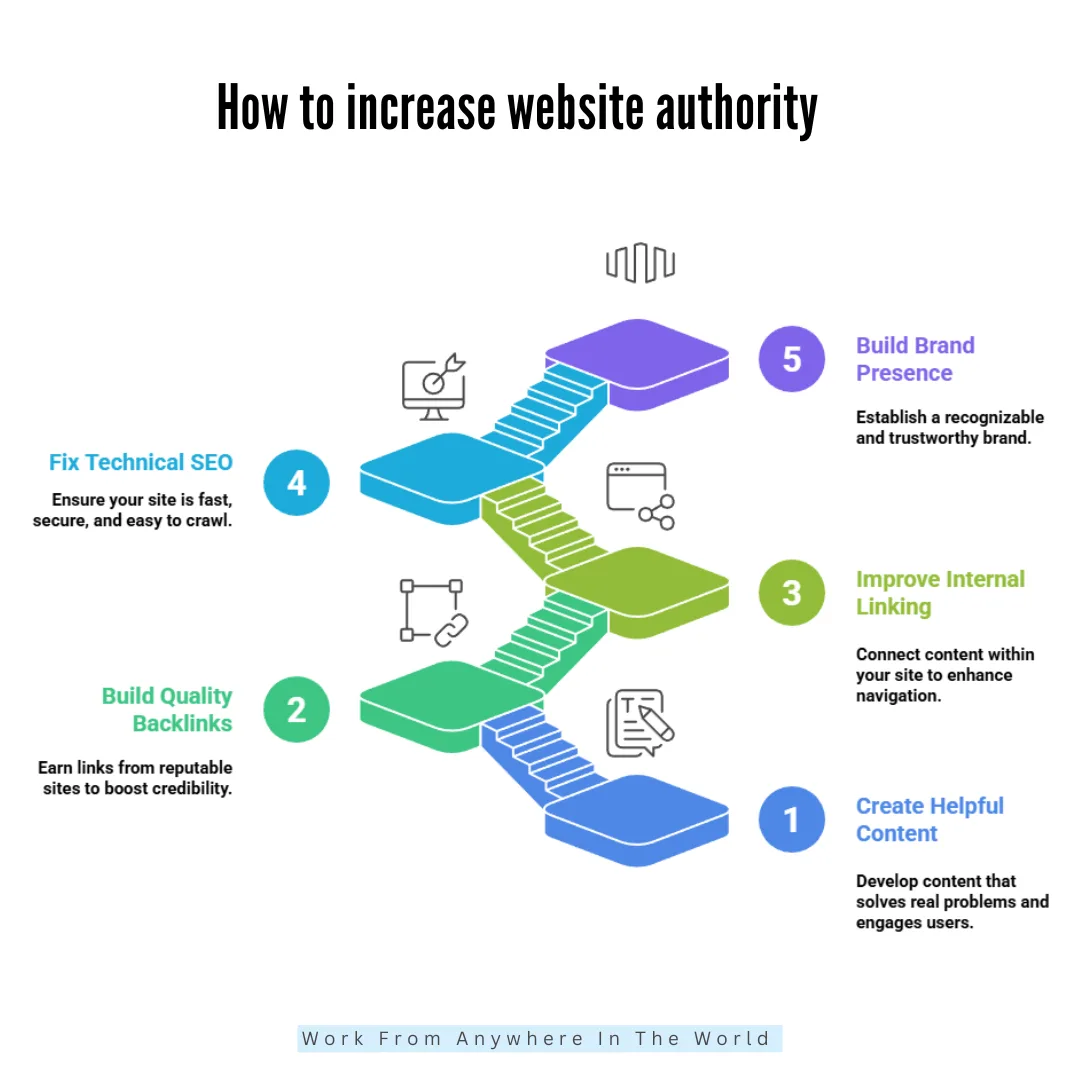
Every action in a solid authority website building checklist maps back to one of these pillars. If a tactic doesn’t build relevance, trust, or recognition, it’s probably busywork.
For a grounding in how search engines evaluate trust, the Wikipedia entry on web authority offers a useful primer. The authority website building fundamentals there align closely with what ranking systems reward.
Step 1: Lock Down a Single Topical Territory
The first step in any real authority website building effort is narrowing your territory until it feels almost too small. Pick one subject area where your business genuinely has something to say. Not three. Not “business and lifestyle.” One.
Topical focus tells search engines what to associate with your domain. A site that publishes fifty articles on project management will rank faster for project management terms than a site with five hundred articles spread across cooking, finance, and tech.

The practical move is to write down your core topic in a single sentence, then list ten sub-topics beneath the authority website building. Those sub-topics become your content pillars. Anything outside that list waits.
How to Test Whether Your Territory is Too Broad
A quick gut check: could a stranger guess your site’s subject from any three random articles? If not, your territory is too wide. Another test involves searching your target keyword and scanning the top ten results. If those sites cover everything from gardening to mortgages, the niche might be too competitive for a newcomer.

Go narrower instead. “Personal finance for freelancers” beats “personal finance.” “B2B SaaS onboarding” beats “SaaS.” The narrower frame gives you a realistic shot at becoming the obvious answer.
Here’s a concrete tip: build a spreadsheet of twenty search queries your ideal reader would type. Maintaining clarity across your authority website building remains essential. If they cluster around two or three themes, you’ve found your territory. If they scatter across six themes, cut until the list tightens.
Why Focus Beats Reach Early On
New sites often want maximum reach, assuming more topics equal more traffic. In practice, the opposite holds during the growth phase. Google’s own guidance on creating helpful, reliable content emphasizes expertise and people-first value, not volume.
Focused sites also convert better. A visitor who lands on your project management article and sees twenty more project management articles trusts you faster. They bookmark, subscribe, and return. That repeat behavior is itself a recognition signal.
The tradeoff is real, of course. A thoughtful approach to authority website building reinforces your qualifications. Narrowing means turning down ideas you like. Keep a “someday” list and revisit it once authority is established. Then expansion becomes far easier.
Step 2: Build a Topical Map Before You Write Anything
Most people skip this step, and it costs them dear. A topical map is a visual or tabular outline of every page your territory needs, organized by hierarchy. It separates pillar pages (broad, comprehensive) from cluster pages (specific, supporting).

This is where authority website building tips diverge from generic SEO advice. Generic advice says “write about relevant keywords.” A topical map says which keywords connect to which, in what order, and with what internal links.
Build it in a spreadsheet: one row per page, columns for primary keyword, search intent, pillar association, internal links in, and internal links out. That single sheet becomes your roadmap for months.
Pillar Pages versus Cluster Pages
A pillar page covers a broad topic comprehensively, often 3,000 words or more, and links out to every cluster page beneath the authority website building. A cluster page drills into one specific question and links back up to the pillar. The pattern creates a tight web that search engines read as topical depth.
For example, a pillar on “email marketing for small businesses” might branch into clusters on subject lines, segmentation, automation basics, deliverability, and list growth. Each cluster earns its own rankings and passes internal link equity upward.
You don’t need a hundred pages to start. Five to seven pillar-plus-cluster groups will establish a solid footprint. The authority website building best practices here reward sequence: pillar first, clusters next, link them deliberately.
Matching Each Page to Search Intent
Intent mapping prevents the classic mistake of writing a sales page for an informational query. Someone searching “what is email segmentation” wants a definition and examples. Someone searching “best email automation tools” is comparing options and wants honest evaluations, not a pitch.
Tag each page in your map as informational, commercial, transactional, or navigational. Applying these principles to your authority website building yields measurable results. Then shape the format accordingly: explainer, comparison, product page, or hub.
Mismatched intent is one of the most common reasons pages fail despite decent content. Fix it on the map, not after publication. Reformatting later wastes hours better spent on net-new work.
| Intent Type | Reader Goal | Best Page Format | Typical CTA |
|---|---|---|---|
| Informational | Understand a concept | Explainer or tutorial | Newsletter signup |
| Commercial | Compare options | Comparison or review | Demo or trial |
| Transactional | Complete a purchase | Product or service page | Buy or book |
| Navigational | Find a specific brand | Homepage or hub | Direct contact |
Print that table. Tape it near your monitor. Reaching for it during every content brief keeps the map honest.
Step 3: Publish Content That Earns Links Without Asking
Content the authority website building deserves links usually does one thing: it gives people something to reference. Original data, definitive explanations, free tools, and honest comparisons all qualify. So does content that solves a problem nobody else has addressed clearly.
This is the heart of authority website building. Links are votes, and votes go to sources worth citing. If your article is a rewrite of ten other articles, there’s no reason to link to you instead of them.
The bar isn’t perfection. It’s usefulness that survives a second visit. Ask yourself whether a professional in your field would bookmark the page. If the answer is no, revise before publishing.
The Content Formats That Attract Citations
Survey data outperforms almost everything else. Even a small survey of a hundred practitioners produces statistics no one else has, and statistics get cited for years. Original research is slow to produce but pays dividends across dozens of future articles.
Definitive how-to guides rank second. Developing your authority website building with precision highlights key strengths. The key word is definitive: every step covered, edge cases addressed, screenshots included. Readers link to the guide that answered every question in one place.
Free calculators, templates, and checklists also earn links steadily. A well-built template saves someone an afternoon, and people share tools more readily than essays.
Structuring Articles for Maximum Extractability
People cite passages, not pages. Clear H2 and H3 headings, short paragraphs, and standalone statistics make extraction easy. A journalist writing a roundup will copy the sentence they can lift without hunting.

Put the answer first. Clear alignment with your authority website building builds confidence from the start. If a section explains how long something takes, lead with the number, then explain. Buried answers rarely get quoted.
Include dates, sample sizes, and methodology notes alongside any data you publish. Credibility compounds when the numbers are verifiable. This single habit separates serious authority website building from content farming.
- Original survey or poll data — unique statistics that other writers can only cite from you, which is why even modest sample sizes earn steady links.
- Definitive step-by-step guides — complete coverage of one process, including edge cases and screenshots, so readers never need a second tab.
- Free templates and calculators — tools that save measurable time, shared far more often than essays of equal length.
- Honest comparison tables — side-by-side specs with stated downsides, which reviewers tend to link when they want neutral data.
- Industry glossary pages — concise definitions of niche terms that become de facto reference points within a community.
- Annual-style state-of-the-industry breakdowns — recurring deep dives that peers bookmark and reference repeatedly.
- Case studies with real numbers — before-and-after metrics with named methods, not vague success claims.
- Myth-busting explainers — direct corrections of common errors, which practitioners forward to colleagues as a shortcut.
Step 4: Earn External Validation Through Links and Mentions
Links remain the strongest external trust signal, but the way you earn them matters. Paid link schemes violate search guidelines and create risk. Genuine outreach, relationship building, and useful assets create durable results.
The most reliable method is what practitioners call link-worthy assets plus targeted outreach. Build the survey, the tool, or the guide first. Then find the twenty people most likely to reference it and send a short, specific note.
Outreach works when it’s precise. Integrating authority website building into your workflow produces consistent quality. A generic blast to a hundred addresses gets ignored. A thoughtful message to five relevant writers, mentioning their recent work and offering something genuinely additive, often gets a reply.
Digital PR Without a PR Budget
Small teams can run effective digital PR by monitoring industry conversations and contributing real expertise. Answer journalist queries, join community discussions with substantive input, and publish commentary when news breaks in your niche.
Brand mentions without links still help. Search engines increasingly recognize unlinked citations as corroboration. A mention in an industry roundup counts even without an anchor tag.
Track mentions monthly in a simple sheet: source, date, linked or unlinked, and relationship status. Over a year, that sheet becomes a map of who trusts you and who’s worth cultivating further. This is the quiet engine behind long-term authority website building.
Internal Linking as an Authority Multiplier
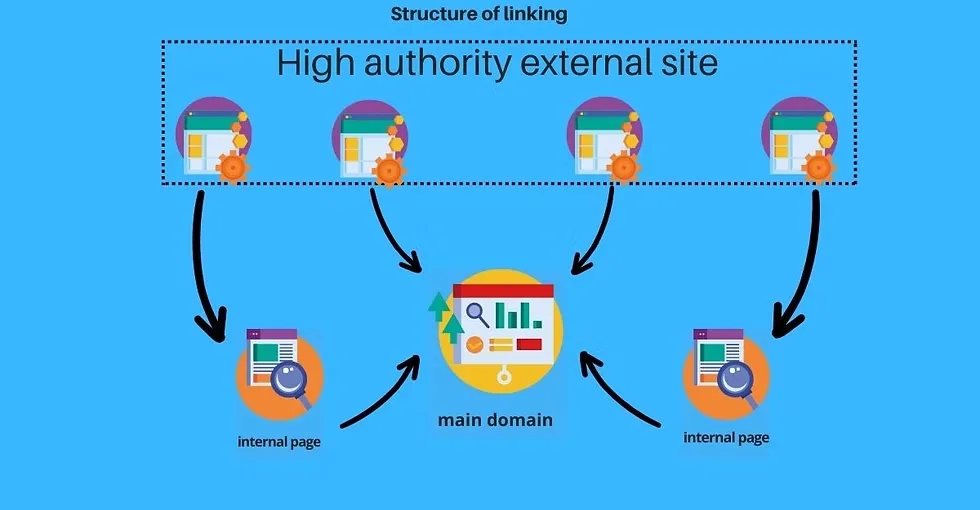
External links get the attention, but internal links distribute authority across your own site. Targeted refinements to your authority website building streamline the entire review. Every cluster page should link upward to its pillar and sideways to two or three related clusters. The pillar links down to all of them.
Use descriptive anchor text that names the destination topic. Avoid “click here” and “read more.” Anchor text is a label, and labels teach search engines what each page is about.
Audit internal links quarterly. Orphan pages, meaning those with no internal links pointing to them, waste the authority you’ve worked to build. A thirty-minute crawl will reveal them fast.
Step 5: Measure, Prune, and Consolidate
Authority isn’t a finish line. It’s a portfolio that needs rebalancing. The final step in this authority website building framework is the maintenance loop: measure what’s working, prune what isn’t, and consolidate overlapping pages.
Start with three metrics: referring domains, branded search volume, and average position for your priority cluster. Focusing on authority website building provides clear direction here. Referring domains measure external trust. Branded search measures recognition. Position measures relevance in practice.
Pruning feels counterintuitive, but deleting or merging weak pages often lifts the whole site. Thin content dilutes the signal. Consolidating four mediocre articles into one strong page usually produces better results than polishing all four.
Reading the Signals That Matter
Ignore vanity metrics like raw pageviews without context. A thousand visits from people who bounce in five seconds tells you nothing useful. Instead, watch returning visitors, time on page for pillar content, and conversion rates per cluster.

Also watch for new branded queries. When people start searching “[your brand] + [topic],” recognition is compounding. That query pattern is one of the clearest indicators that authority website building is working.
Set a monthly review. Refining each detail of your authority website building strengthens this section. Pull the numbers, compare against last month, and write two sentences on what changed. The habit keeps momentum without drowning you in dashboards.

When to Consolidate and When to Delete
Consolidate when two pages answer nearly the same query. Merge the stronger content into the better URL, redirect the weaker one, and update internal links. Delete outright when a page has no traffic, no links, and no strategic role after a full year.
Never delete pages that still earn links. Redirect them to the most relevant remaining page instead. The equity transfers, and visitors land somewhere useful.
The authority website building checklist isn’t complete without this maintenance pass. Sites that prune regularly stay lean and rank faster than sites that accumulate digital clutter for years.
Your Authority Website Building Checklist at a Glance
Here’s the condensed version of everything above, formatted as a practical authority website building checklist you can run against any site. Print it, score each item honestly, and tackle the gaps in order. Most sites discover two or three weak spots immediately.
Scoring honestly matters more than scoring high. Effective execution in your authority website building makes a tangible difference. A site that claims full marks on every line but still struggles in search is self-deceiving. Real audits sting a little.
- Single topical territory confirmed — core topic fits in one sentence and any three random articles would reveal the subject to a stranger.
- Topical map built and dated — every planned page has a primary keyword, intent tag, pillar association, and internal link plan.
- Pillar pages published first — broad comprehensive hubs exist before clusters begin, so link equity flows correctly from day one.
- Original data or tools in production — at least one citable asset per quarter, with methodology notes published alongside.
- Outreach list maintained weekly — five targeted, personalized pitches per week beats a hundred generic emails.
- Internal links audited quarterly — no orphan pages, descriptive anchors throughout, cluster-to-pillar links verified.
- Referring domains tracked monthly — growth in credible, relevant domains charted over time, not just total volume.
- Branded search monitored — branded query volume rising quarter over quarter signals real recognition building.
- Pruning pass scheduled — thin, duplicate, or dead pages merged, redirected, or removed on a fixed cadence.
- Content refresh cycle defined — priority pages reviewed and updated on a rolling basis to stay accurate.
Common Mistakes That Stall Progress
The fastest way to waste a year is to chase every shiny tactic while abandoning the foundation. Here are the traps I see most often, and how to sidestep them before they cost you.
Publishing Volume Without a Plan
Sixty articles in six months feels impressive until you notice none of them connect. Volume without a topical structure produces scattered signals. Search engines can’t tell what you’re about.
Better to publish twelve connected pieces than sixty orphans. The twelve build on each other, link to each other, and reinforce a single theme. That’s authority website building best practices in a nutshell: connected beats abundant.
Ignoring Technical Basics
Every authority signal in the world means little if your pages load slowly or break on mobile. Core Web Vitals, clean crawl paths, and proper structured data are table stakes. They don’t build authority on their own, but failing them caps your ceiling.
Run a technical audit quarterly. Fix the big items first: page speed, broken links, duplicate meta tags, missing canonicals. Small fixes compound quietly.
Chasing Links from Irrelevant Sites
A hundred links from unrelated directories worths less than three links from respected sites in your niche. Relevance multiplies the value of every link, and irrelevance divides it.
When evaluating an opportunity, ask whether the linking site covers your subject at all. If the answer is no, skip it. You’re not collecting trophies. You’re building corroboration.
Abandoning the Process After Three Months
Authority builds slowly, then suddenly. The first three months often feel like nothing is happening. Most people quit right before the compounding starts.
Set a realistic horizon: six to twelve months of consistent execution before judging results. Track leading indicators like referring domains and indexed pages while waiting for the lagging indicators to catch up.
Frequently Asked Questions About Authority Website Building
The authority website building questions come up in nearly every conversation I have about this work. Short answers below, with detail where it helps.
How Long Does Authority Website Building Take?
Expect six to twelve months of focused effort before meaningful signals appear, and two to three years to reach strong authority in a competitive niche. Sites in low-competition niches can move faster. Anyone promising weeks is selling something.
Do I Need Backlinks to Build Authority?
Yes, but not as many as you think. A small number of relevant, credible links does more than hundreds of weak ones. Focus on quality and relevance. Links from sites that cover your subject matter carry disproportionate weight.
Can a Small Site Compete With Big Brands?
Yes, within a narrow enough niche. A focused site covering one specific topic deeply routinely outranks large general sites on that topic. The key is picking a territory where depth beats breadth.
What’s the First Step I Should Take?
Write your core topic in one sentence, then list ten sub-topics beneath it. That single exercise clarifies everything downstream. Skip it and you’ll build on sand. It’s the simplest entry point in any authority website building plan.
How Do I Know Authority Building is Working?
Watch three indicators: referring domains trending upward, branded searches increasing, and priority keywords climbing slowly into the top twenty. If all three are moving after six months, the process is working even when traffic feels modest.
The Path from Invisible to Inevitable
None of these five steps is glamorous. Narrowing your topic, mapping keywords, producing citable assets, earning validation, and pruning weak pages all take unremarkable, repeated effort. That’s the point. Authority website building rewards the people who show up consistently over the ones who chase shortcuts.
Start with the territory question today. Write the sentence, list the ten sub-topics, and build the map. By the time you’ve finished step five for the first time, you’ll have a site that searches respond to and readers remember. The compounding does the rest.
If you want to go deeper, the natural next topics are technical SEO audits, digital PR outreach systems, and content refresh cycles. Each extends this framework. Each builds on what you’ve just set in motion.