The New Playbook: Why AI SEO Agents Matter for AI Search
AI SEO agents are reshaping how teams approach search visibility, and the shift is not subtle. If your workflow still revolves around manual keyword sprints and spreadsheet guesswork, you are already a step behind competitors who let autonomous systems handle the grunt work.
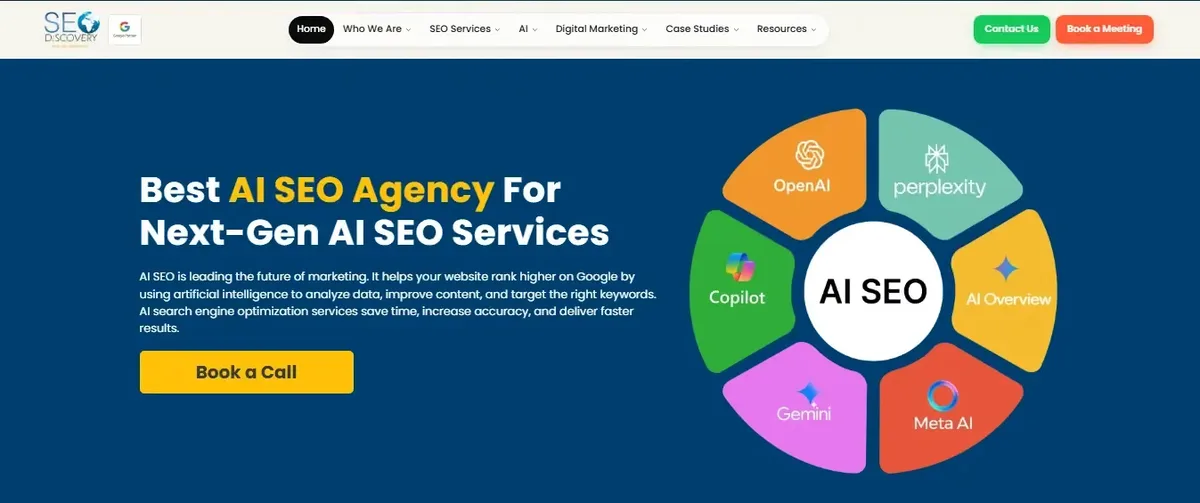
Search itself has changed. Google’s AI Overviews, Bing’s Copilot answers, Perplexity citations, and ChatGPT’s browsing mode now answer questions directly, often before a user ever clicks a blue link. That means ranking on page one matters less than being the source an answer engine trusts enough to quote.
This is where an AI SEO agents guide becomes genuinely useful. These agents are not magic buttons. They are software workers, powered by large language models and connected to SEO data sources, that audit, plan, write, monitor, and iterate on search strategy with minimal human babysitting.
Below you will find nine tactics that actually move the needle when you deploy AI SEO agents against AI-driven search. Each one is practical, testable, and grounded in how answer engines really behave.
Tactic 1: Map Query Fan-Out Before You Write a Single Word
Traditional keyword research assumes one query equals one page. Focusing on AI SEO agents provides clear direction here. AI search broke that assumption. When someone asks a long question, the answer engine silently splits it into a fan of sub-queries, retrieves sources for each, then stitches a response together. Your job is to be present across that entire fan.
An AI SEO agent can take a seed topic and generate the fan-out tree automatically. Ask it to list every sub-question a curious buyer might ask, then cluster those into retrievable units. In practice, when refining a ai seo agents, a well-configured agent turns one pillar topic into fifteen or twenty distinct retrieval targets in minutes.
Here is the tactical execution. Feed your agent a transcript of real customer questions from sales calls or support tickets. Have it group them by intent, then map each cluster to a URL. You end up with a content map that mirrors how answer engines actually retrieve, not how you wish they did.
One agency I spoke with ran this exercise for a B2B client and discovered that forty percent of the fan-out queries had zero dedicated content. Those gaps became their fastest wins. The agent surfaced them in an afternoon; a human team might have missed them for months.
Keep a running log of fan-out queries in a shared sheet. When you publish new content, have the agent re-check whether the new page now covers each sub-query. This feedback loop is the backbone of any serious AI SEO agents checklist.
Tactic 2: Build Entity-Rich Content That Answer Engines Can Trust
Answer engines do not just match strings. Refining each detail of your AI SEO agents strengthens this section. They match entities, the people, products, places, and concepts that make up the semantic web. If your content is thin on named entities and rich on vague adjectives, retrieval models will skip you.

An AI SEO agent can scan a draft and flag missing entities. Give it a target entity list, say the key people, tools, standards, and metrics in your niche, and it will tell you which ones your draft never mentions. That single check catches more quality problems than most manual edits.
Consider a real example. A SaaS company writing about “workflow automation” kept getting ignored by AI Overviews. Their agent flagged that the draft never named specific integration standards or competing platforms. After adding concrete entity references, the same topic started appearing in AI answers within weeks.
The tactic is simple: entity coverage first, prose polish second. Humans write beautiful sentences; agents catch the semantic holes.
For a deeper grounding in how entities drive search, the knowledge graph concept on Wikipedia is a solid primer. Effective execution in your AI SEO agents makes a tangible difference. Understanding the underlying structure makes the agent’s suggestions far easier to evaluate.
Pair entity checks with a running glossary your team maintains. Refining each detail of your ai seo agents strengthens this section. When the agent sees a new term, it can suggest whether to add it to the glossary, which keeps your whole content operation consistent over time.
Tactic 3: Deploy Agents for Continuous Technical Audits
Technical SEO used to be a quarterly fire drill. An agent changes the cadence entirely. Point it at your sitemap, your crawl logs, and your Core Web Vitals feed, and it can flag regressions the same day they happen.
Set up three agent jobs. The first monitors indexation, alerting you when important URLs drop out. The second watches page speed and flags pages that cross a threshold. The third checks structured data validity across templates. Together, they catch the majority of silent revenue leaks.
Here is the practical bit. Maintaining clarity across your AI SEO agents remains essential. Have the agent write its findings into a ticket, not an email. Emails get ignored; tickets get triaged. A weekly digest of “what broke and what the agent already fixed” keeps the team honest without drowning anyone in alerts.
One e-commerce team automated canonical checks this way and caught a template bug that had been de-indexing product variants for weeks. The agent found it in a routine sweep. No human had noticed because the drop was gradual.
Remember that agents are only as good as the data you feed them. Connect them to Search Console, your log files, and your CMS. A blind agent is just an expensive chatbot.
Tactic 4: Let Agents Draft, but Keep Humans on Judgment
The temptation with AI SEO agents is to hand over the entire content pipeline. Resist it. Agents excel at structure, coverage, and first drafts. They stumble on nuance, original reporting, and the kind of opinion that makes a reader trust a byline.
A workable split looks like this. The agent produces an outline, entity list, and draft. A human editor rewrites the opening, injects firsthand experience, and kills any sentence that sounds like a press release. The agent then does a second pass for coverage gaps and internal linking.
This division of labor matches how the best AI SEO agents best practices are described in the field. The agent is a tireless junior analyst; the human is the senior editor who signs off.
Track the ratio over time. A thoughtful approach to AI SEO agents reinforces your qualifications. If your editors are spending more than half their time fixing agent output, the agent’s brief is too loose. Tighten the brief, add examples of voice, and re-run. Quality improves fast when the input is specific.
One content lead I know keeps a “golden paragraph” file, three or four paragraphs the ai seo agents perfectly capture the brand voice. Every agent prompt includes them as examples. Draft quality jumped noticeably once that was added.
Tactic 5: Track AI Citations as a First-Class Metric
Rankings still matter, but for AI search the metric that matters more is citation frequency. How often does an answer engine name your brand as the source? That number is measurable, and agents can track it.
Set up agent jobs that query the major answer engines with your target questions on a schedule. Log which sources get cited. Over a month, patterns emerge: certain page types get cited more, certain formats get ignored.
Use the AI SEO agents patterns to guide production. If step-by-step guides get cited ten times more often than opinion pieces, shift the mix. If a competitor’s comparison table keeps getting pulled, build a better one.
This is where a disciplined AI SEO agents tips habit pays off. The teams that track citations weekly spot shifts in answer-engine behavior long before the industry blogs catch on.
Keep the tracking lightweight. A simple spreadsheet with question, engine, citation source, and date is enough to start. Fancy dashboards come later; consistency comes first.
Tactic 6: Structure Content for Retrieval, Not Just Reading
Answer engines chunk pages into passages before retrieving. If your content is one long wall of prose, the chunks are messy and the retrieval is imprecise. Structure is now a ranking factor in disguise.
An AI SEO agent can audit your existing pages for retrieval-friendliness. It checks heading hierarchy, paragraph length, presence of direct answers near the top of each section, and whether key facts are buried in the middle of long sentences.
The fixes are mechanical but powerful. Applying these principles to your AI SEO agents yields measurable results. Put a one-sentence answer right under each question-style heading. Keep paragraphs to two or three sentences. Use tables for comparisons and lists for steps. These small moves make your pages far easier to quote.
A financial publisher applied the ai seo agents to their glossary pages and saw citation frequency roughly double within two months. The content did not change much; the structure did.
Run the audit quarterly. As you add pages, structure drifts. The agent catches the drift before it costs you citations.
Tactic 7: Automate Internal Linking With Semantic Awareness
Internal linking is one of the highest-leverage SEO tasks and one of the most neglected. Humans skip it because it is tedious. Agents do not get bored.
Configure an agent to read your full content inventory, build a semantic similarity map, and suggest internal links for every new page. Proper attention to your AI SEO agents sets a strong baseline. It should propose anchors that describe the target page accurately, not generic “click here” phrases.
Review the suggestions before publishing. Agents occasionally over-link, creating dense clusters that dilute value. A quick human pass keeps the link graph healthy.
The payoff compounds. Better internal linking spreads authority to the pages that need it, which in turn improves their odds of being retrieved and cited. It is a quiet tactic with loud results.
Pair this with a monthly orphan-page report. Any page with no internal links pointing to it is a page the agent should prioritize. Fix the orphans first; they are the cheapest wins.
Tactic 8: Run Competitor Gap Analysis on Autopilot
Manual competitor analysis is slow and quickly outdated. Developing your AI SEO agents with precision highlights key strengths. An agent can run gap analysis continuously, comparing your coverage against the top-ranking and top-cited competitors for your target queries.

Ask the agent to produce three outputs weekly. A thoughtful approach to ai seo agents reinforces your qualifications. First, topics competitors cover that you do not. Second, entities they mention that you miss. Third, formats they use that you avoid. That trio gives you a clear production backlog.
Do not chase every gap. Some gaps are not worth filling. Filter by business relevance first, then by search demand. The agent can rank gaps by estimated impact so your team focuses on the ones that matter.
One B2B team ran this for a quarter and discovered their competitors were winning on comparison pages. They built five, and three became their top-cited assets within weeks. The agent found the pattern; the team executed.
Tactic 9: Close the Loop With a Weekly Agent Review
Agents drift. Clear alignment with your AI SEO agents builds confidence from the start. Prompts that worked last quarter may produce weaker output as models change and as your content matures. A weekly review keeps the whole system honest.
Block thirty minutes each week to review agent output across all jobs. Ask three questions. What did the agent get right? What did it get wrong? What should the prompt say next time? Small prompt tweaks compound into large quality gains.
Keep a shared log of prompt changes and their effects. Over time, this log becomes your team’s institutional memory for AI SEO agents best practices. New hires read it and get up to speed in days instead of months.
This review habit is the difference between agents that quietly degrade and agents that get sharper every week. The teams that win with AI SEO agents treat them like junior colleagues, not set-and-forget tools.
The Complete AI SEO Agents Checklist for AI Search Readiness
Here is a consolidated checklist you can hand to your team. Treat it as a living document and revisit it monthly.
| Area | What to Verify | Owner |
|---|---|---|
| Query Fan-Out | Fan-out tree mapped for every pillar topic; gaps logged | Content strategist |
| Entity Coverage | Target entity list applied to every draft; glossary maintained | Editor |
| Technical Audits | Indexation, speed, and structured data jobs running daily | SEO engineer |
| Drafting Workflow | Agent draft, human rewrite, agent second pass | Content lead |
| Citation Tracking | Weekly citation log across major answer engines | Analyst |
| Retrieval Structure | Direct answers under headings; short paragraphs; tables for comparisons | Editor |
| Internal Linking | Semantic link suggestions reviewed and published | SEO specialist |
| Competitor Gaps | Weekly gap report filtered by business relevance | Strategist |
| Agent Review | Weekly prompt review with change log | Team lead |
Use this table as your operating rhythm. Teams that follow it consistently see measurable gains in citations and qualified traffic within a quarter.
What AI SEO Agents Cannot Do (And Why That Matters)
Honesty about limits is more useful than hype. Integrating AI SEO agents into your workflow produces consistent quality. Agents cannot replace original research, firsthand interviews, or a genuinely novel point of view. They cannot feel when a sentence is off. They cannot decide which client to fire or which market to enter.
They also cannot guarantee citations. Answer engines are opaque and change constantly. An agent can improve your odds, but no tool controls the outcome. Teams that expect certainty from agents end up disappointed.
The right mental model is leverage, not replacement. An agent multiplies the output of a skilled team. It does not substitute for one.
According to Nielsen Norman Group’s research on AI-generated content, readers remain sensitive to generic, machine-sounding prose. That finding should shape how you brief your agents: aim for specificity, voice, and human judgment at every step.
Frequently Asked Questions About AI SEO Agents
Here is an in-depth breakdown of key considerations regarding Frequently Asked Questions About AI SEO Agents:
What Exactly are AI SEO Agents?
The AI SEO agents are software workers that use large language models plus SEO data connections to perform tasks like audits, drafting, linking, and citation tracking. Think of them as junior analysts that never sleep.
Do AI SEO Agents Replace Human Writers?
No. They replace the tedious parts of the workflow, not the judgment. The best results come from agents drafting and humans editing.
How Do I Measure Whether AI SEO Agents are Working?
Track citation frequency in answer engines, qualified organic traffic, and the time your team saves on repetitive tasks. Those three numbers tell the real story.
Which Tasks Should I Automate First?
Start with technical audits and internal linking. They are high-leverage, low-risk, and easy to verify. Content drafting comes later, once your prompts and review process are solid.
How Often Should I Review Agent Output?
Weekly. Short, consistent reviews catch drift early and keep quality high. Monthly reviews are too slow for fast-moving answer engines.
Where to Take This Next
The tactics above form a system, not a menu. Pick two, run them for a month, then add a third. Teams that try all nine at once usually drown in alerts and abandon the effort.
Start with fan-out mapping and technical audits. Those two give you a clear picture of where you stand and where the gaps are. Everything else builds on that foundation.
The broader topic of AI-driven search will keep expanding, with new answer engines and new retrieval behaviors appearing regularly. Treat this article as your anchor and revisit the checklist as the terrain shifts.
One final piece of advice. Keep a human in the loop on every agent output that touches your brand. AI SEO agents are powerful colleagues, but the judgment, taste, and accountability still belong to your team.